
Category: Interior
Louisiana Lottery Headquarters Renovation
This interior renovation project transformed a dated office building into a vibrant, modern workspace. The renovation aimed to align the office design with the company’s branding and accommodate new work styles, including hybrid work, collaboration, and transparency. To achieve this, several design solutions were implemented.
Strategic interior walls were demolished to create a more open office area, allowing for the addition of collaboration zones that encourage a more interactive work environment. Storefront glass was added to all perimeter offices to allow natural light to filter through the entire space for the benefit of all employees in the building. Core spaces such as the lobby, elevator lobbies, restrooms, breakroom, and corridors received new finishes, lighting, and artwork to align with the updated aesthetic. All furniture was updated to include adjustable height work surfaces for employee ergonomic wellness, lower panels for greater visibility, and collaborative furniture to encourage impromptu meetings. The color scheme was based on the company’s logo and aimed to create a more festive atmosphere that was in line with the company’s public-facing work. Custom graphic wallcoverings and accent carpet tiles were used to designate different zones within the office.
This renovation successfully transformed the office building into a vibrant, modern workspace that fosters collaboration, transparency, wellbeing, and a welcoming atmosphere.
FEATURED STORIES

Holly & Smith Announces Matthew Romano as a Newly Licensed Architect
July 8, 2026Holly & Smith Architects is proud to announce that Matthew Romano has successfully completed the Architect Registration Examination (ARE) and is now a licensed architect. Matt earned a Bachelor of Science in Architecture from the University of Louisiana at Lafayette......

Holly & Smith Announces Phoebe Roussel as a Newly Licensed Architect
February 2, 2026Holly & Smith Architects is proud to announce Phoebe Roussel has successfully completed her Architect Registration Examination (ARE) and is now a licensed architect. Phoebe graduated from University of Louisiana at Lafayette with a Bachelor of Architectural Studies in 2022,......
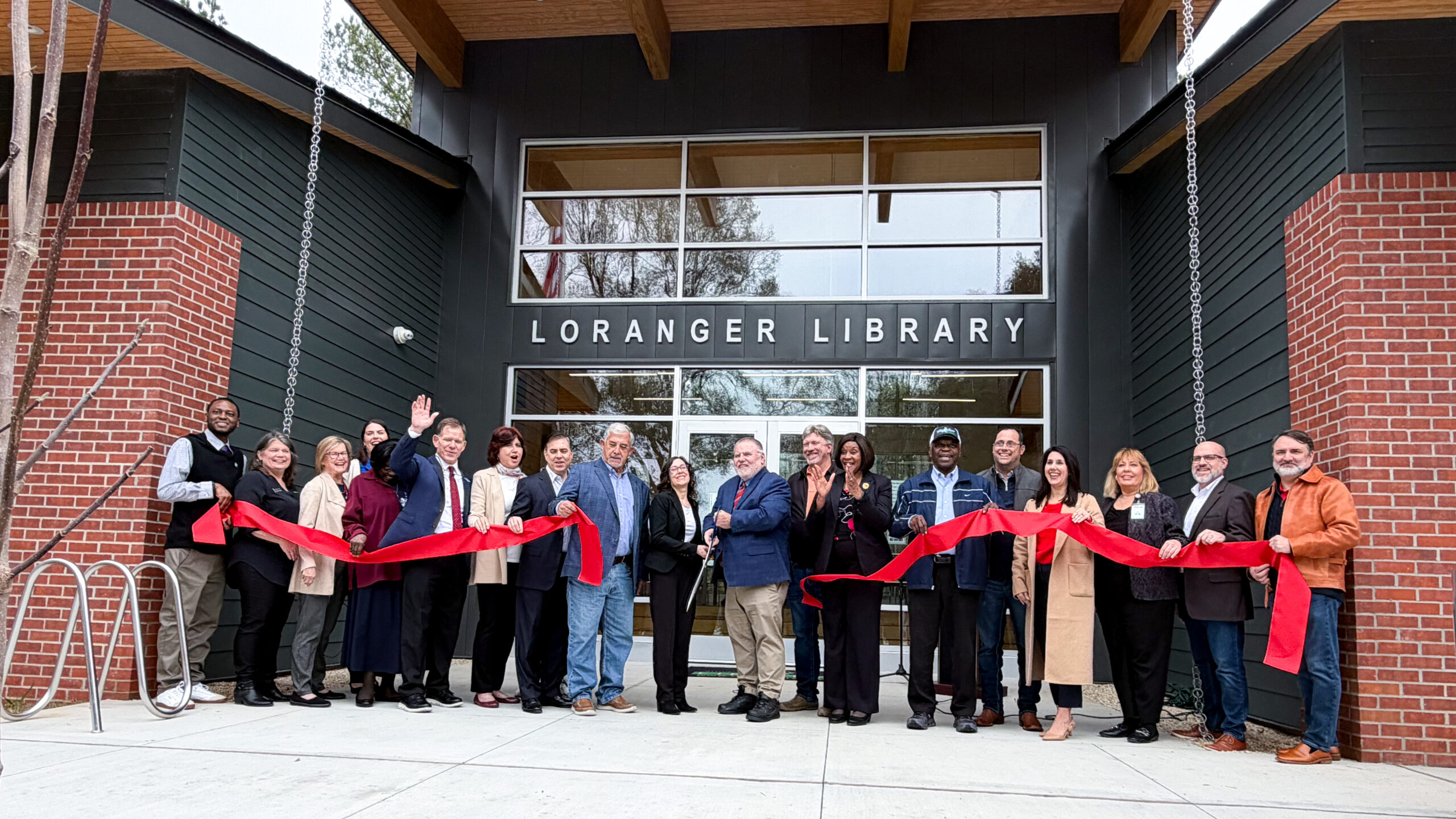
Tangipahoa Parish Library System Celebrates New Loranger Branch
January 27, 2026On January 23, the Tangipahoa Parish Library System hosted a ribbon-cutting ceremony to celebrate the opening of the new Loranger Branch. Designed as a modern and welcoming space, the library supports education, creativity, and lifelong learning through thoughtful design and......
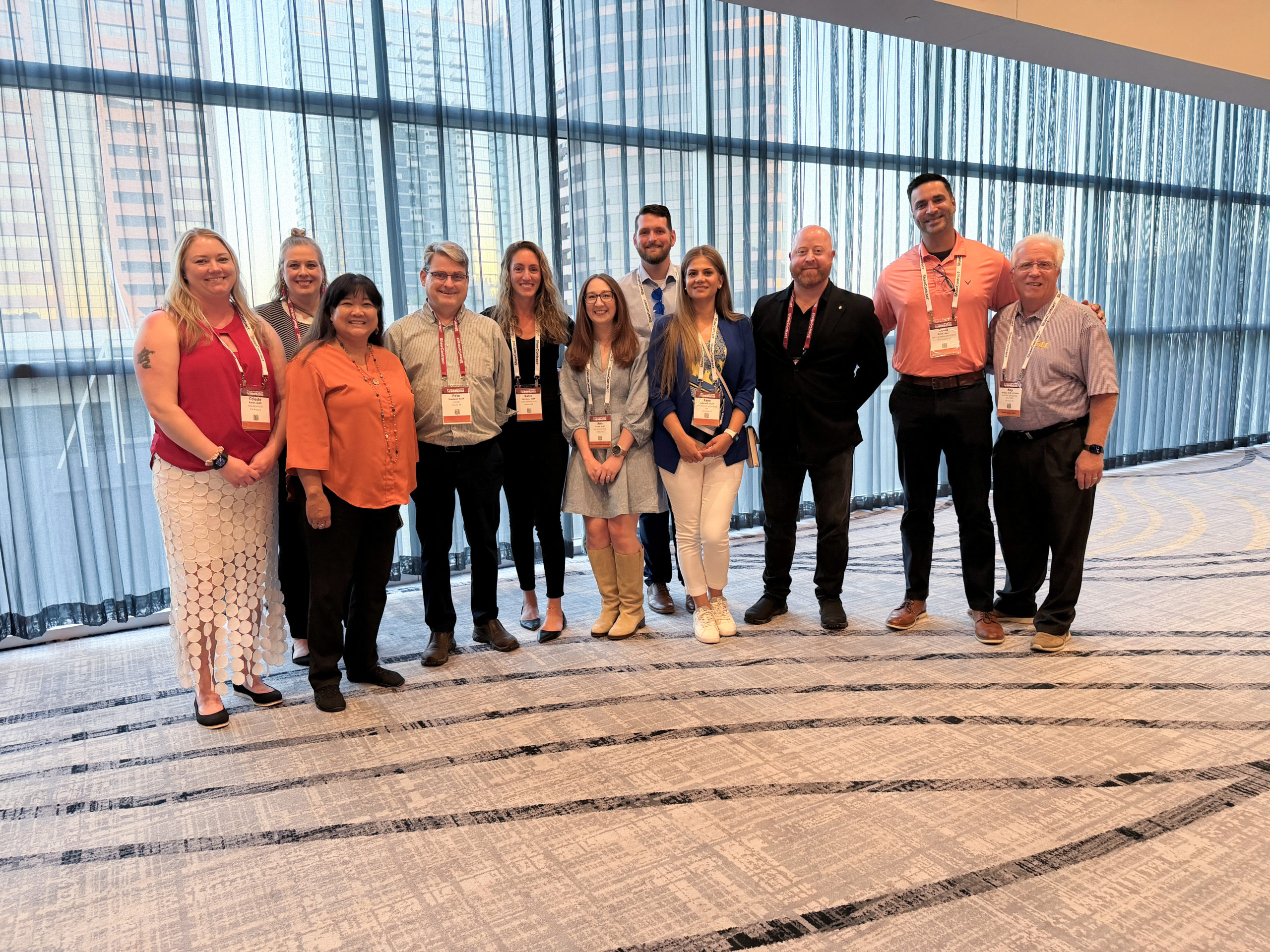
Rohit Sood, ALEP, Attends A4LE LearningSCAPES Conference in Phoenix
November 6, 2025H/S Principal Rohit Sood, ALEP, recently attended the A4LE LearningSCAPES Conference in Phoenix, joining fellow members of the A4LE Advanced Academy for a national discussion on the future of educational design. The event featured a special recognition of new ALEP......
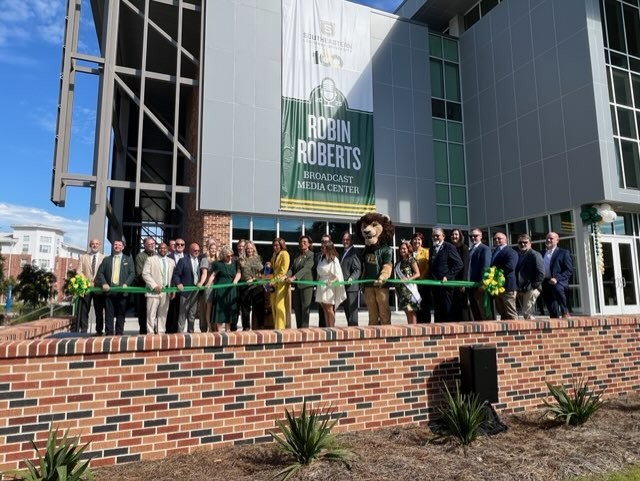
Renovated D Vickers Hall Unveiled, Featuring the Robin Roberts Broadcast Media Center
October 20, 2025On Friday, October 17, 2025, Southeastern Louisiana University celebrated a significant milestone with the dedication of the newly renovated D Vickers Hall and the state-of-the-art Robin Roberts Broadcasting Center in Hammond. The event was highlighted by a generous donation from......
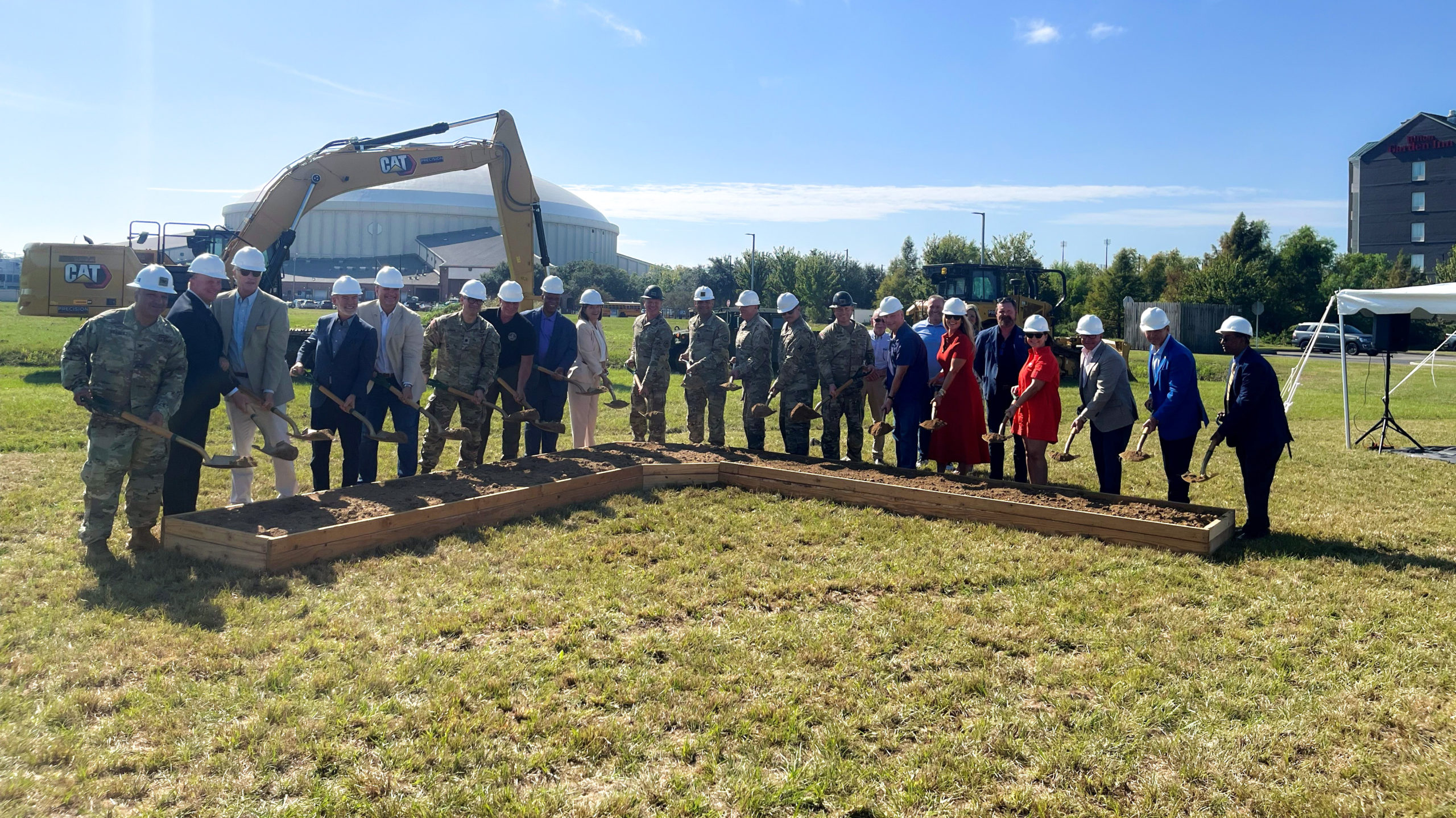
Louisiana Army National Guard Breaks Ground on Lafayette Readiness Center
October 13, 2025The Louisiana Army National Guard held a groundbreaking ceremony on October 8, 2025 for the new Readiness Center in Lafayette. Located on West Congress Street, this sustainably designed 83,943 sq, ft. facility will be highly energy-efficient, constructed from highly resilient,......
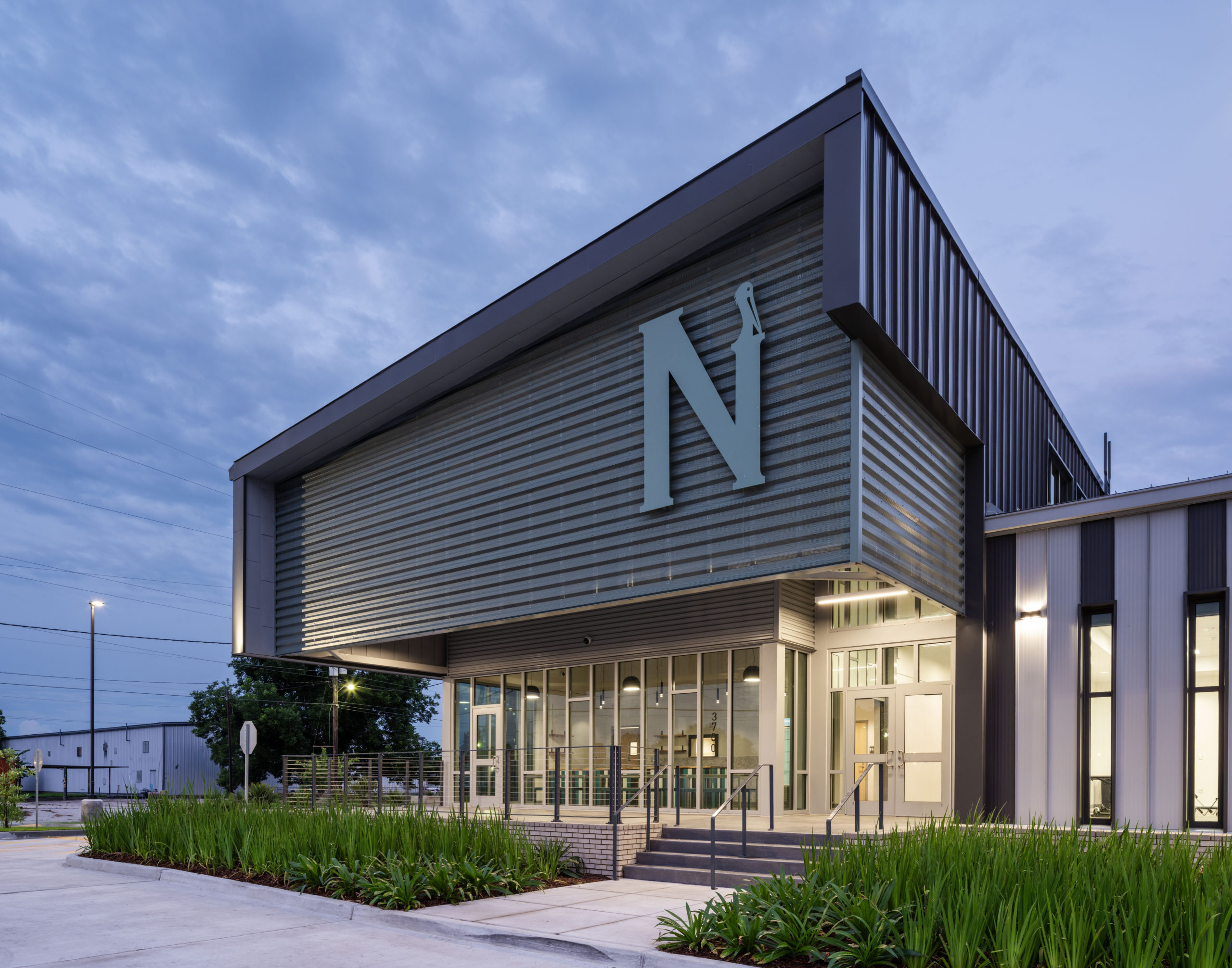
Nunez Community College Student Testing and Career Counseling Center Honored with AIA Louisiana Award of Merit
September 30, 2025Holly & Smith Architects is honored to announce that the Nunez Community College Student Testing and Career Counseling Center has been recognized with an Award of Merit at the 2025 AIA Louisiana Design Awards. This student-centered facility was envisioned as......
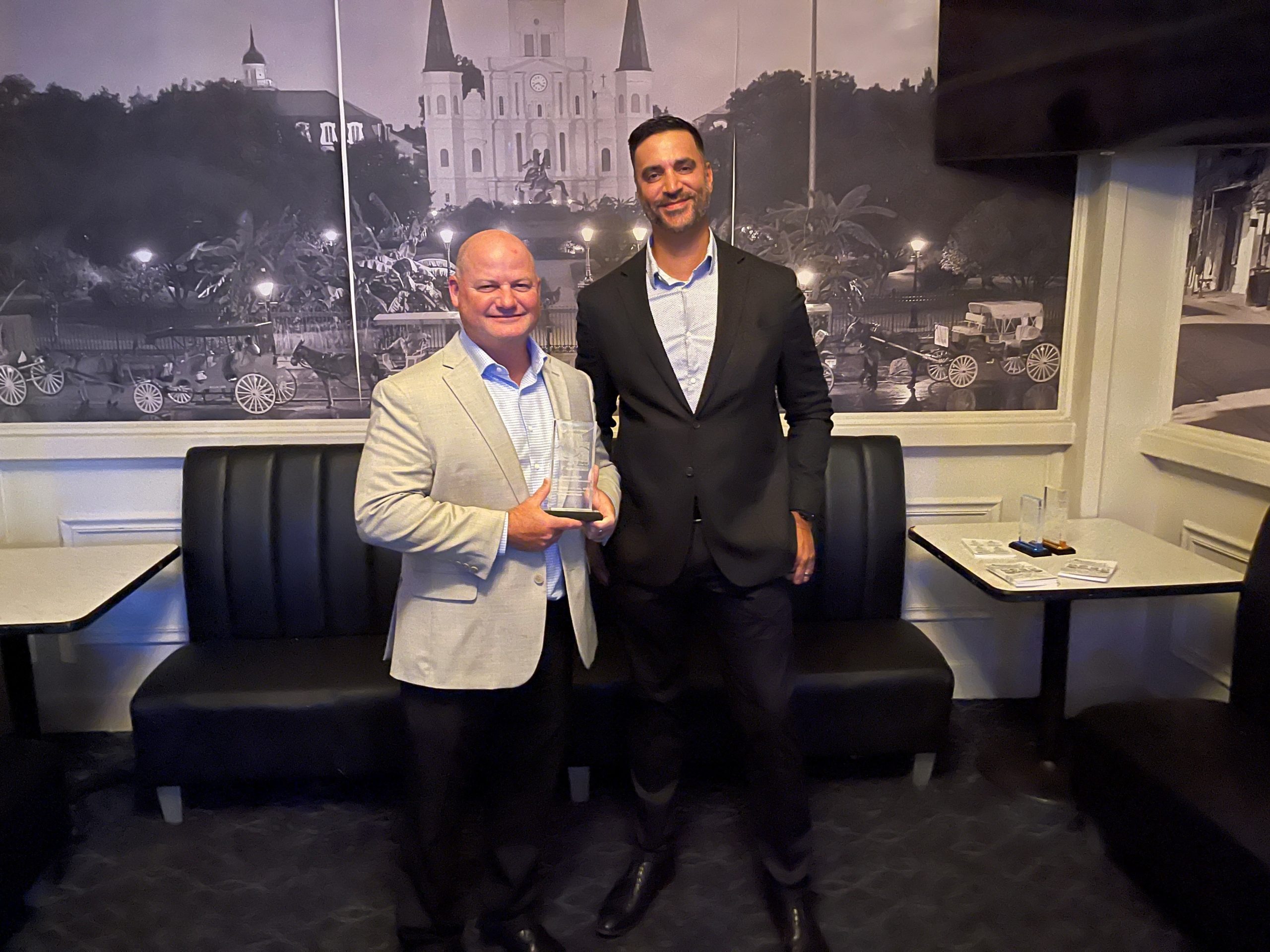
639 Desire Street Honored with AIA New Orleans Award of Merit for Historic Preservation and Restoration
July 23, 2025Holly & Smith Architects is honored to announce that our restoration of 639 Desire Street has been recognized with a 2025 AIA New Orleans Award of Merit in Historic Preservation and Restoration. Presented at the AIA New Orleans Design Awards......
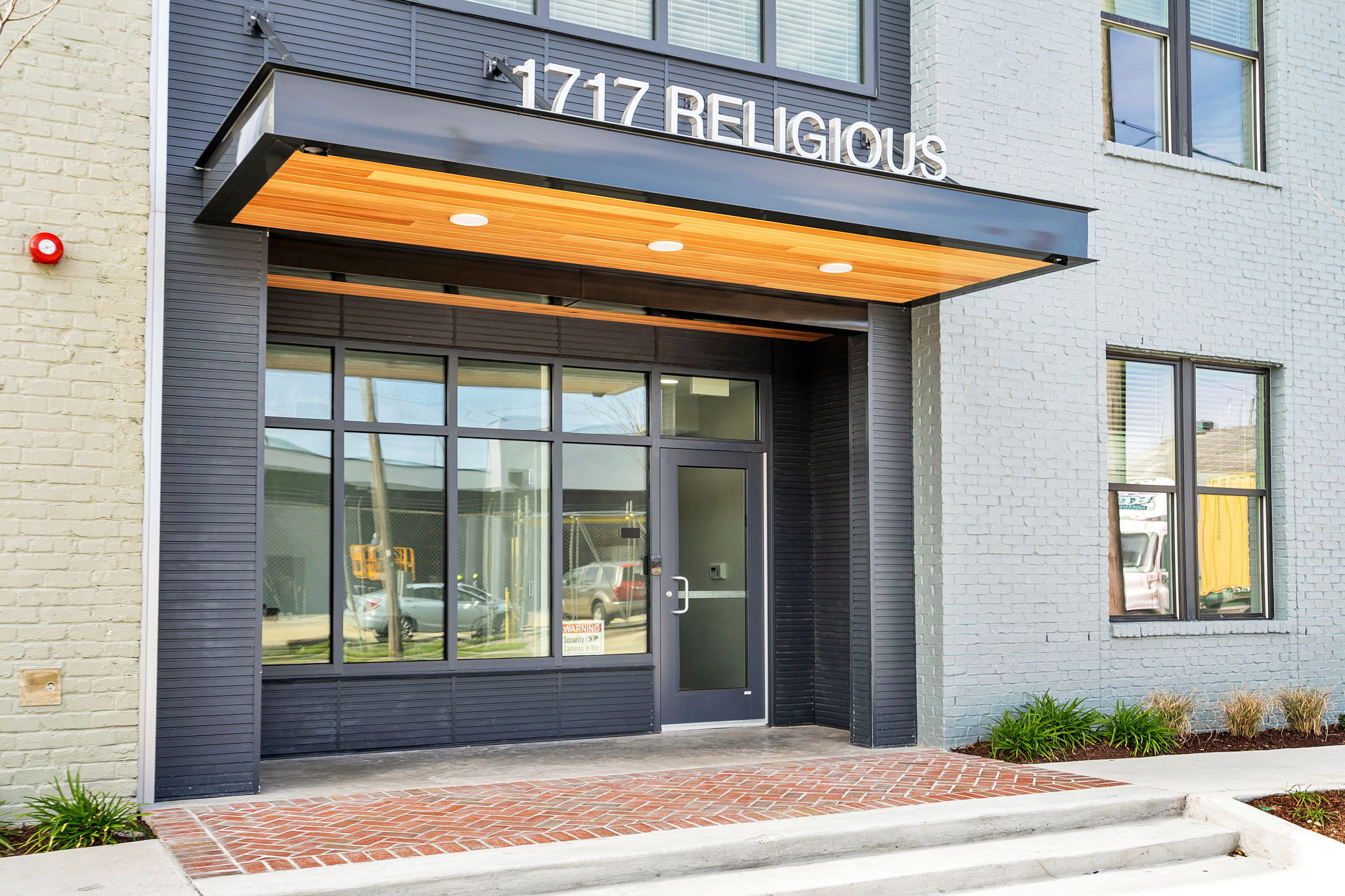
Celeste Landing Celebrates Grand Opening in New Orleans’ Lower Garden District
April 14, 2025Holly & Smith Architects (H/S) is proud to celebrate the grand opening of Celeste Landing, a transformative affordable housing development in New Orleans' Lower Garden District. Designed by H/S, the project combines the thoughtful restoration of a historic structure with......
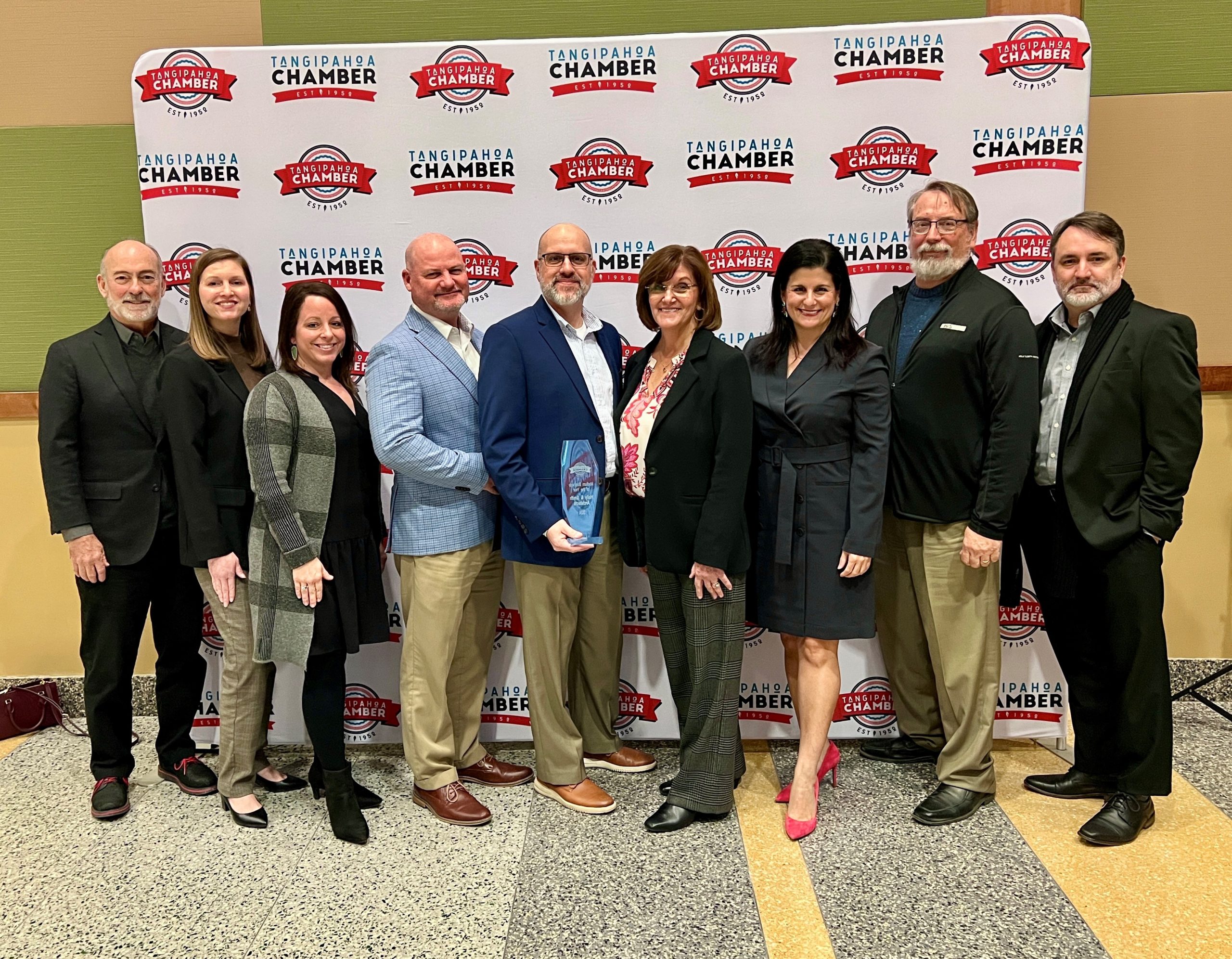
Holly & Smith Architects Named Medium Business of the Year by Tangipahoa Chamber
January 28, 2025Holly & Smith Architects (H/S) is proud to announce its recognition as Medium Business of the Year at the 2025 Tangipahoa Chamber Annual Installation and Awards Luncheon. This prestigious honor celebrates the firm’s longstanding commitment to excellence in design, innovation,......
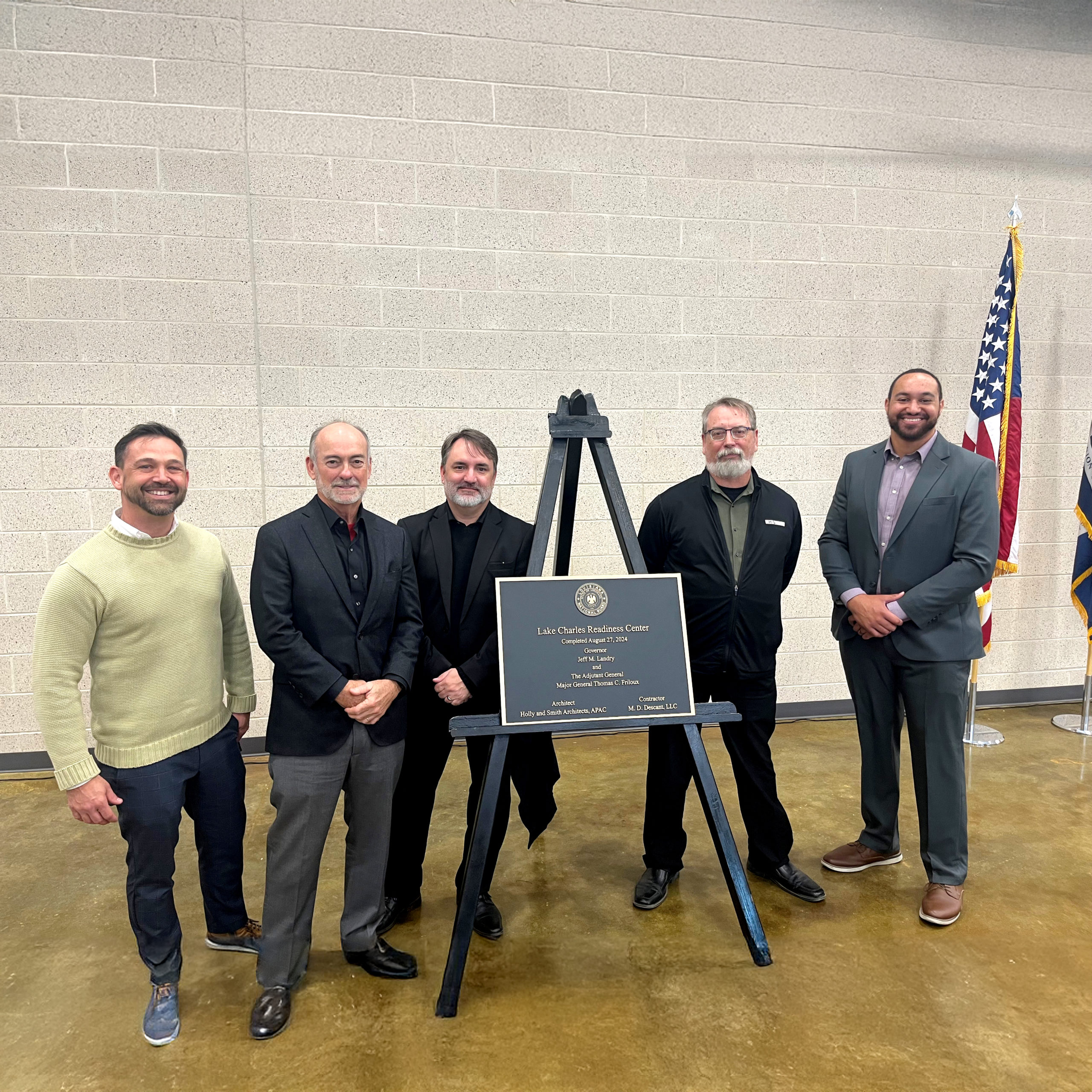
Ribbon-Cutting Ceremony Held for New Louisiana National Guard Readiness Center in Lake Charles
October 21, 2024The Louisiana National Guard celebrated the ribbon-cutting of the new Readiness Center at Chennault International Airport in Lake Charles today, marking a significant milestone for the 3rd Battalion, 156th Infantry Regiment. The new 60,391-square-foot facility, owned by the State of......
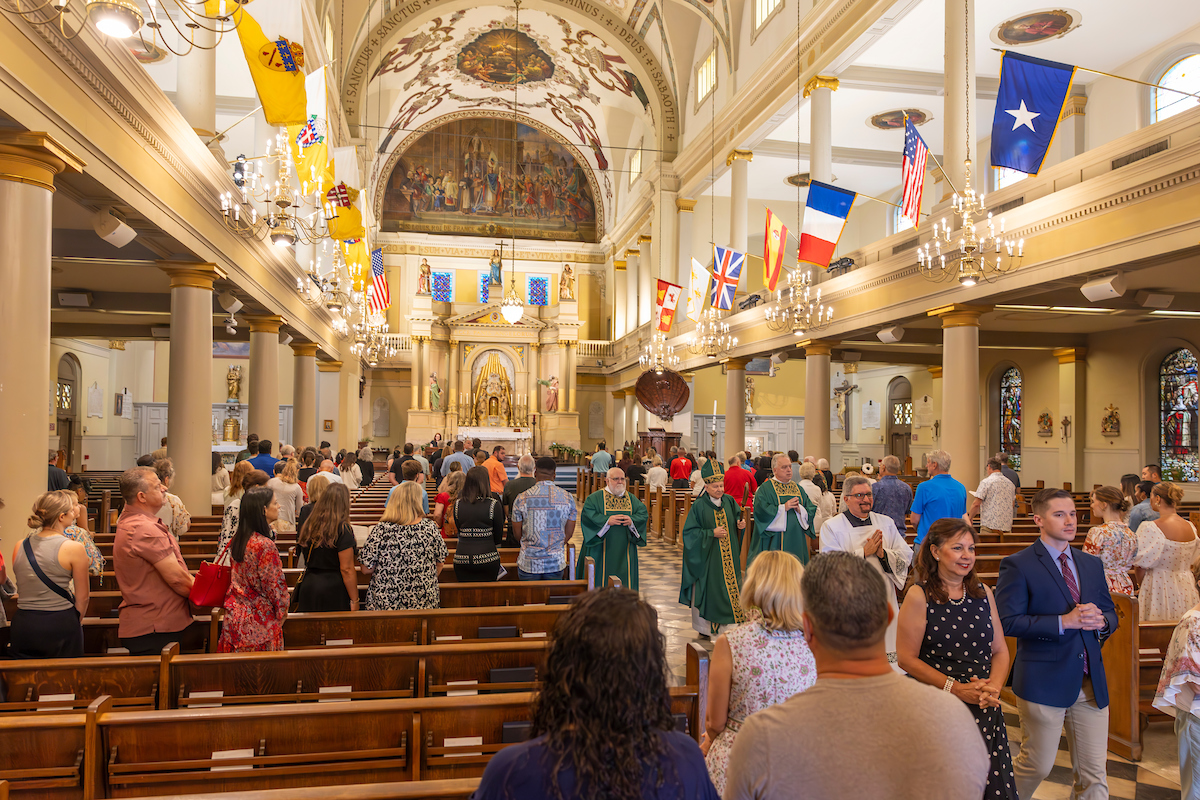
Holly & Smith Architects to lead St. Louis Cathedral renovation | Preservation Resource Center of New Orleans (prcno.org)
October 16, 2024Over the last year, Holly & Smith Architects has had the privilege of serving the Catholic Community Foundation, as well as the Archdiocese of New Orleans, in providing a study for the historic St. Louis Cathedral. The goal of this......

UL Lafayette Breaks Ground on New Engineering Building
August 6, 2024Holly & Smith Architects, in joint venture with The Sellers Group, is thrilled to announce the groundbreaking of the University of Louisiana at Lafayette’s new Engineering Building. This 64,700-square-foot facility is designed to meet the needs of UL Lafayette’s expanding......
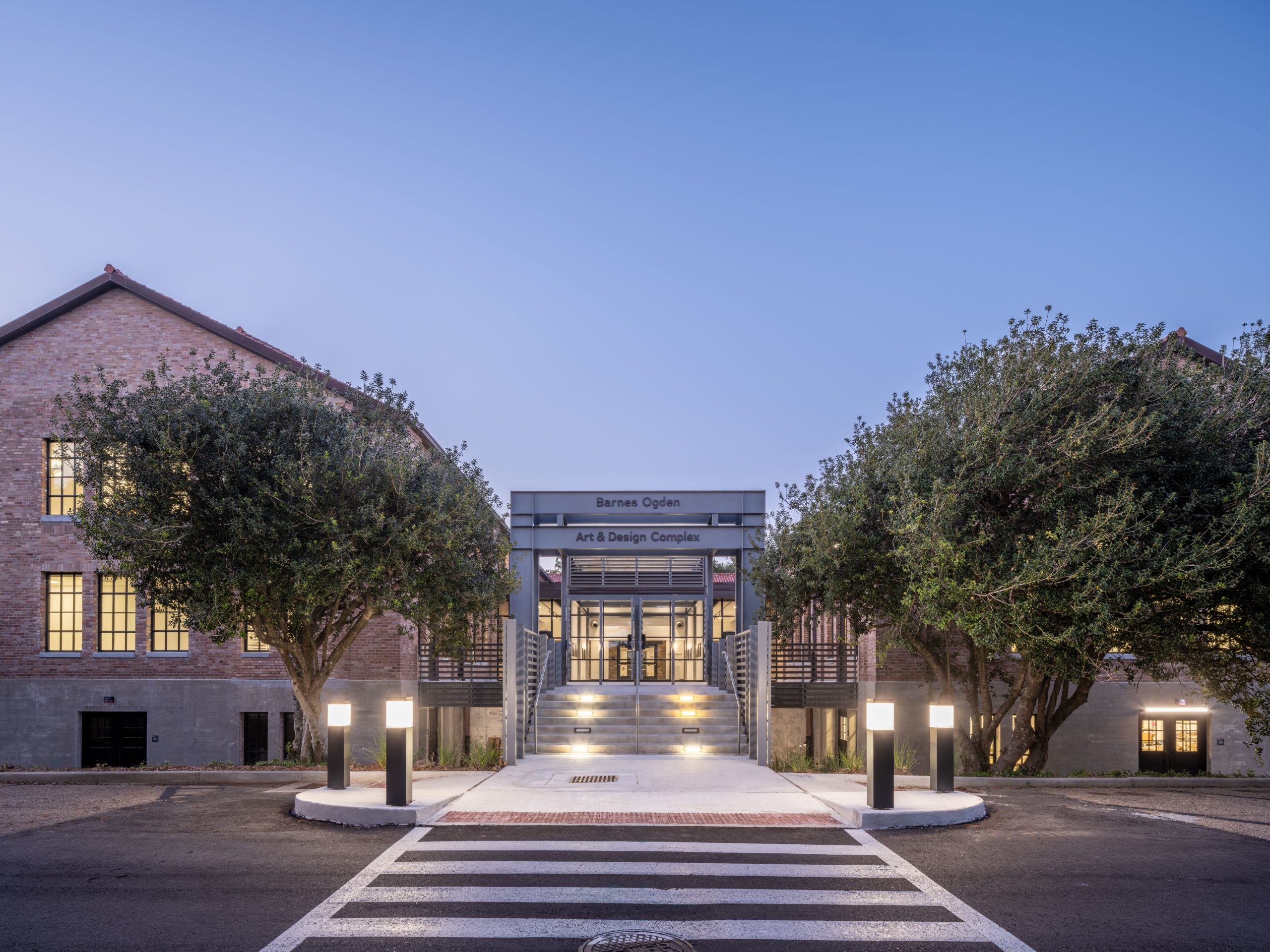
LSU Barnes Ogden Art and Design Complex, Kentwood Library Branch, and Stoa Group Headquarters each win at the AIA Baton Rouge Rose Awards Gala
July 17, 2024On Thursday, April 25th, AIA Baton Rouge held its annual Rose Awards Gala at The Water Campus, celebrating outstanding design projects in various categories. The H/S team was thrilled to receive the Gold Rose Award for LSU Barnes Ogden Art and......
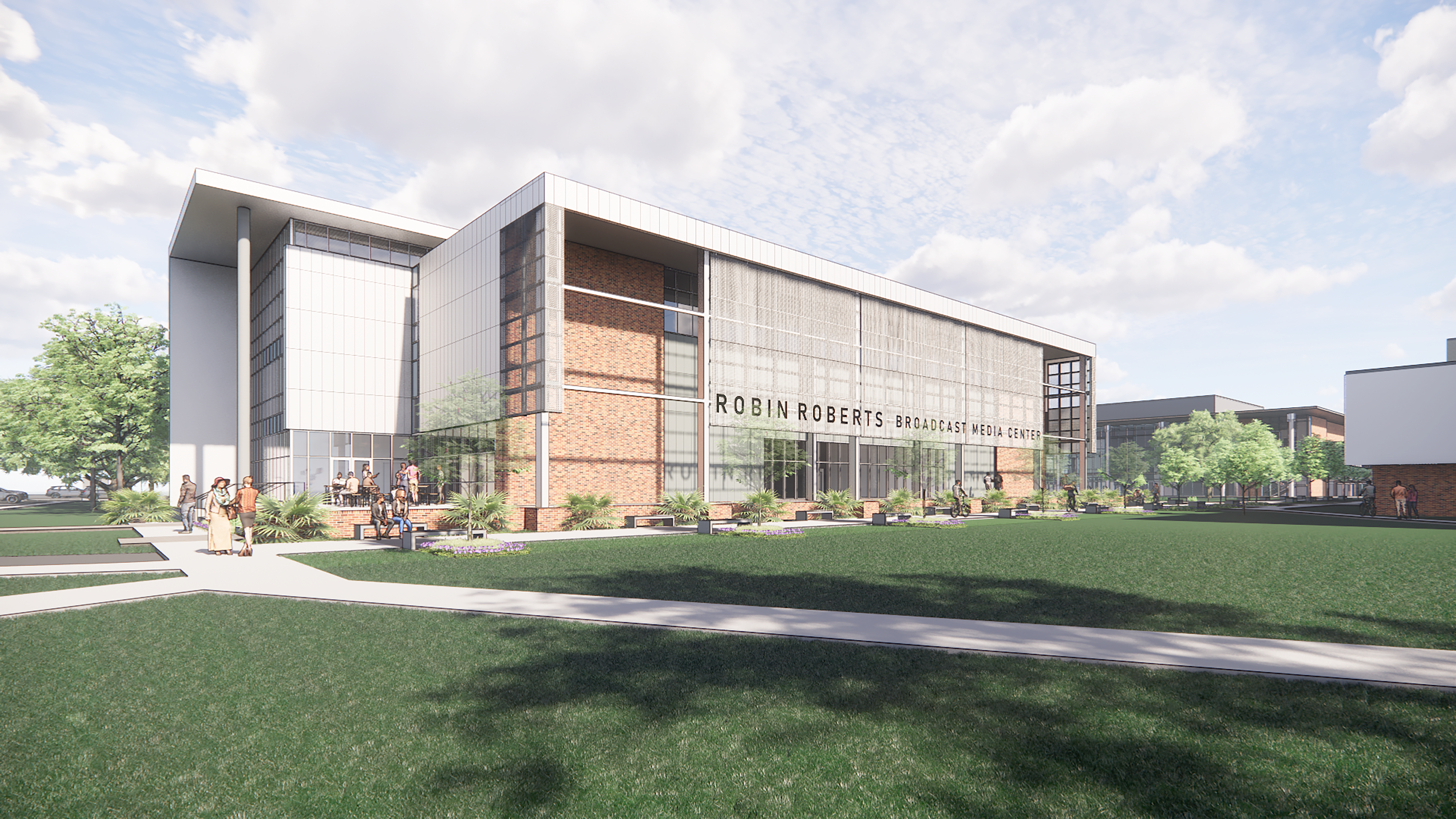
Southeastern Louisiana University breaks ground on new Robin Roberts Broadcast Media Center at D. Vickers Hall
November 16, 2023In a momentous ceremony attended by Good Morning America Co-Anchor Robin Roberts, Louisiana Governor John Bel Edwards, and representatives from Southeastern Louisiana University, the official groundbreaking for the Robin Roberts Broadcast Media Center and the $40 million renovation of D. Vickers Hall......
Holly & Smith Architects opens new office in Lafayette
June 21, 2022Allons a Lafayette…The Heart of Acadiana! Holly & Smith Architects is returning to its roots! We are thrilled to announce that the firm has expanded to southwest Louisiana with a new office in Lafayette. Around 40 years ago, both H/S......
Corporate Headquarters – Executive Floor
The 28th floor of this high-rise office building in the New Orleans Central Business District served as the executive area for the company’s headquarters. The space had not been renovated in over 25 years and was in need of an update to modernize the form and function. The public interface areas included the lobby, a new conference room, the main corridor, and ante room. The staff interface areas included a corridor and the adjacent administrative work area, which serves the executive offices.
The lobby area was reduced in size with the addition of a new conference room in the space. A fully operable glass wall separates the conference room from the lobby and can be opened to create a larger space for entertaining. The new conference room includes full technology for productive meetings. The existing marble tile flooring remained, but all other finishes were updated to provide a modern look. The existing light wood paneling was refinished in a white tone, while the existing mahogany raised panel walls were faced with new, sleek walnut veneer walls. The DIRTT wall system was used and placed in front of the existing mahogany walls in order to reduce downtime during construction and to provide a consistent look throughout the lobby, conference room, and corridor. All new linear ceilings and MEP systems were incorporated as well. The ante room was reoriented to provide better flow for serving and entertaining. Custom DIRTT millwork was added to provide storage and serving surfaces. The administrative work area was reorganized to create a more open space. Custom reception desks were designed for each administrative personnel, and seating areas with a residential feel were included in keeping with the design of the existing executive offices. New furniture was provided throughout the spaces. New artwork was curated from local artists and galleries in order to create a warm, welcoming, modern space for the company’s executive area.
FEATURED STORIES
Holly & Smith Announces Matthew Romano as a Newly Licensed Architect
July 8, 2026Holly & Smith Architects is proud to announce that Matthew Romano has successfully completed the Architect Registration Examination (ARE) and is now a licensed architect. Matt earned a Bachelor of Science in Architecture from the University of Louisiana at Lafayette......
Holly & Smith Announces Phoebe Roussel as a Newly Licensed Architect
February 2, 2026Holly & Smith Architects is proud to announce Phoebe Roussel has successfully completed her Architect Registration Examination (ARE) and is now a licensed architect. Phoebe graduated from University of Louisiana at Lafayette with a Bachelor of Architectural Studies in 2022,......
Tangipahoa Parish Library System Celebrates New Loranger Branch
January 27, 2026On January 23, the Tangipahoa Parish Library System hosted a ribbon-cutting ceremony to celebrate the opening of the new Loranger Branch. Designed as a modern and welcoming space, the library supports education, creativity, and lifelong learning through thoughtful design and......
Rohit Sood, ALEP, Attends A4LE LearningSCAPES Conference in Phoenix
November 6, 2025H/S Principal Rohit Sood, ALEP, recently attended the A4LE LearningSCAPES Conference in Phoenix, joining fellow members of the A4LE Advanced Academy for a national discussion on the future of educational design. The event featured a special recognition of new ALEP......
Renovated D Vickers Hall Unveiled, Featuring the Robin Roberts Broadcast Media Center
October 20, 2025On Friday, October 17, 2025, Southeastern Louisiana University celebrated a significant milestone with the dedication of the newly renovated D Vickers Hall and the state-of-the-art Robin Roberts Broadcasting Center in Hammond. The event was highlighted by a generous donation from......
Louisiana Army National Guard Breaks Ground on Lafayette Readiness Center
October 13, 2025The Louisiana Army National Guard held a groundbreaking ceremony on October 8, 2025 for the new Readiness Center in Lafayette. Located on West Congress Street, this sustainably designed 83,943 sq, ft. facility will be highly energy-efficient, constructed from highly resilient,......
Nunez Community College Student Testing and Career Counseling Center Honored with AIA Louisiana Award of Merit
September 30, 2025Holly & Smith Architects is honored to announce that the Nunez Community College Student Testing and Career Counseling Center has been recognized with an Award of Merit at the 2025 AIA Louisiana Design Awards. This student-centered facility was envisioned as......
639 Desire Street Honored with AIA New Orleans Award of Merit for Historic Preservation and Restoration
July 23, 2025Holly & Smith Architects is honored to announce that our restoration of 639 Desire Street has been recognized with a 2025 AIA New Orleans Award of Merit in Historic Preservation and Restoration. Presented at the AIA New Orleans Design Awards......
Celeste Landing Celebrates Grand Opening in New Orleans’ Lower Garden District
April 14, 2025Holly & Smith Architects (H/S) is proud to celebrate the grand opening of Celeste Landing, a transformative affordable housing development in New Orleans' Lower Garden District. Designed by H/S, the project combines the thoughtful restoration of a historic structure with......
Holly & Smith Architects Named Medium Business of the Year by Tangipahoa Chamber
January 28, 2025Holly & Smith Architects (H/S) is proud to announce its recognition as Medium Business of the Year at the 2025 Tangipahoa Chamber Annual Installation and Awards Luncheon. This prestigious honor celebrates the firm’s longstanding commitment to excellence in design, innovation,......
Ribbon-Cutting Ceremony Held for New Louisiana National Guard Readiness Center in Lake Charles
October 21, 2024The Louisiana National Guard celebrated the ribbon-cutting of the new Readiness Center at Chennault International Airport in Lake Charles today, marking a significant milestone for the 3rd Battalion, 156th Infantry Regiment. The new 60,391-square-foot facility, owned by the State of......
Holly & Smith Architects to lead St. Louis Cathedral renovation | Preservation Resource Center of New Orleans (prcno.org)
October 16, 2024Over the last year, Holly & Smith Architects has had the privilege of serving the Catholic Community Foundation, as well as the Archdiocese of New Orleans, in providing a study for the historic St. Louis Cathedral. The goal of this......
UL Lafayette Breaks Ground on New Engineering Building
August 6, 2024Holly & Smith Architects, in joint venture with The Sellers Group, is thrilled to announce the groundbreaking of the University of Louisiana at Lafayette’s new Engineering Building. This 64,700-square-foot facility is designed to meet the needs of UL Lafayette’s expanding......
LSU Barnes Ogden Art and Design Complex, Kentwood Library Branch, and Stoa Group Headquarters each win at the AIA Baton Rouge Rose Awards Gala
July 17, 2024On Thursday, April 25th, AIA Baton Rouge held its annual Rose Awards Gala at The Water Campus, celebrating outstanding design projects in various categories. The H/S team was thrilled to receive the Gold Rose Award for LSU Barnes Ogden Art and......
Southeastern Louisiana University breaks ground on new Robin Roberts Broadcast Media Center at D. Vickers Hall
November 16, 2023In a momentous ceremony attended by Good Morning America Co-Anchor Robin Roberts, Louisiana Governor John Bel Edwards, and representatives from Southeastern Louisiana University, the official groundbreaking for the Robin Roberts Broadcast Media Center and the $40 million renovation of D. Vickers Hall......
Holly & Smith Architects opens new office in Lafayette
June 21, 2022Allons a Lafayette…The Heart of Acadiana! Holly & Smith Architects is returning to its roots! We are thrilled to announce that the firm has expanded to southwest Louisiana with a new office in Lafayette. Around 40 years ago, both H/S......
Chapter IV Restaurant by Dook Chase
The new Chapter IV restaurant by Chef Edgar “Dook” Chase, IV is located in Downtown New Orleans. At 1315 Gravier Avenue on the first floor of the Thirteen15 Building, the restaurant provides guests with a light-filled and art-filled environment.
This space was designed with a fresh, modern feel with touches of culture woven through the original artwork. The restaurant features ample natural light and a welcoming atmosphere. The mid-century time period of the building lent itself to the interior materials used in the restaurant as well as the style of the furnishings. The overall feel is a modern take on mid-century design, clean and simple, allowing the artwork to tell the generational story of Chapter IV. The large bar serves grab-and-go items as well as hand-crafted cocktails. An outdoor patio engages the community and provides an area for live music.
“Dook” Chase is the fourth-generation son of the Chase family, known as the first family of New Orleans Creole cuisine, and the grandson of the late Leah Chase. This new restaurant spot will serve breakfast, brunch, and lunch and feature modern Creole dishes and hand-crafted cocktails, all with a nod to the past.
FEATURED STORIES
Holly & Smith Announces Matthew Romano as a Newly Licensed Architect
July 8, 2026Holly & Smith Architects is proud to announce that Matthew Romano has successfully completed the Architect Registration Examination (ARE) and is now a licensed architect. Matt earned a Bachelor of Science in Architecture from the University of Louisiana at Lafayette......
Holly & Smith Announces Phoebe Roussel as a Newly Licensed Architect
February 2, 2026Holly & Smith Architects is proud to announce Phoebe Roussel has successfully completed her Architect Registration Examination (ARE) and is now a licensed architect. Phoebe graduated from University of Louisiana at Lafayette with a Bachelor of Architectural Studies in 2022,......
Tangipahoa Parish Library System Celebrates New Loranger Branch
January 27, 2026On January 23, the Tangipahoa Parish Library System hosted a ribbon-cutting ceremony to celebrate the opening of the new Loranger Branch. Designed as a modern and welcoming space, the library supports education, creativity, and lifelong learning through thoughtful design and......
Rohit Sood, ALEP, Attends A4LE LearningSCAPES Conference in Phoenix
November 6, 2025H/S Principal Rohit Sood, ALEP, recently attended the A4LE LearningSCAPES Conference in Phoenix, joining fellow members of the A4LE Advanced Academy for a national discussion on the future of educational design. The event featured a special recognition of new ALEP......
Renovated D Vickers Hall Unveiled, Featuring the Robin Roberts Broadcast Media Center
October 20, 2025On Friday, October 17, 2025, Southeastern Louisiana University celebrated a significant milestone with the dedication of the newly renovated D Vickers Hall and the state-of-the-art Robin Roberts Broadcasting Center in Hammond. The event was highlighted by a generous donation from......
Louisiana Army National Guard Breaks Ground on Lafayette Readiness Center
October 13, 2025The Louisiana Army National Guard held a groundbreaking ceremony on October 8, 2025 for the new Readiness Center in Lafayette. Located on West Congress Street, this sustainably designed 83,943 sq, ft. facility will be highly energy-efficient, constructed from highly resilient,......
Nunez Community College Student Testing and Career Counseling Center Honored with AIA Louisiana Award of Merit
September 30, 2025Holly & Smith Architects is honored to announce that the Nunez Community College Student Testing and Career Counseling Center has been recognized with an Award of Merit at the 2025 AIA Louisiana Design Awards. This student-centered facility was envisioned as......
639 Desire Street Honored with AIA New Orleans Award of Merit for Historic Preservation and Restoration
July 23, 2025Holly & Smith Architects is honored to announce that our restoration of 639 Desire Street has been recognized with a 2025 AIA New Orleans Award of Merit in Historic Preservation and Restoration. Presented at the AIA New Orleans Design Awards......
Celeste Landing Celebrates Grand Opening in New Orleans’ Lower Garden District
April 14, 2025Holly & Smith Architects (H/S) is proud to celebrate the grand opening of Celeste Landing, a transformative affordable housing development in New Orleans' Lower Garden District. Designed by H/S, the project combines the thoughtful restoration of a historic structure with......
Holly & Smith Architects Named Medium Business of the Year by Tangipahoa Chamber
January 28, 2025Holly & Smith Architects (H/S) is proud to announce its recognition as Medium Business of the Year at the 2025 Tangipahoa Chamber Annual Installation and Awards Luncheon. This prestigious honor celebrates the firm’s longstanding commitment to excellence in design, innovation,......
Ribbon-Cutting Ceremony Held for New Louisiana National Guard Readiness Center in Lake Charles
October 21, 2024The Louisiana National Guard celebrated the ribbon-cutting of the new Readiness Center at Chennault International Airport in Lake Charles today, marking a significant milestone for the 3rd Battalion, 156th Infantry Regiment. The new 60,391-square-foot facility, owned by the State of......
Holly & Smith Architects to lead St. Louis Cathedral renovation | Preservation Resource Center of New Orleans (prcno.org)
October 16, 2024Over the last year, Holly & Smith Architects has had the privilege of serving the Catholic Community Foundation, as well as the Archdiocese of New Orleans, in providing a study for the historic St. Louis Cathedral. The goal of this......
UL Lafayette Breaks Ground on New Engineering Building
August 6, 2024Holly & Smith Architects, in joint venture with The Sellers Group, is thrilled to announce the groundbreaking of the University of Louisiana at Lafayette’s new Engineering Building. This 64,700-square-foot facility is designed to meet the needs of UL Lafayette’s expanding......
LSU Barnes Ogden Art and Design Complex, Kentwood Library Branch, and Stoa Group Headquarters each win at the AIA Baton Rouge Rose Awards Gala
July 17, 2024On Thursday, April 25th, AIA Baton Rouge held its annual Rose Awards Gala at The Water Campus, celebrating outstanding design projects in various categories. The H/S team was thrilled to receive the Gold Rose Award for LSU Barnes Ogden Art and......
Southeastern Louisiana University breaks ground on new Robin Roberts Broadcast Media Center at D. Vickers Hall
November 16, 2023In a momentous ceremony attended by Good Morning America Co-Anchor Robin Roberts, Louisiana Governor John Bel Edwards, and representatives from Southeastern Louisiana University, the official groundbreaking for the Robin Roberts Broadcast Media Center and the $40 million renovation of D. Vickers Hall......
Holly & Smith Architects opens new office in Lafayette
June 21, 2022Allons a Lafayette…The Heart of Acadiana! Holly & Smith Architects is returning to its roots! We are thrilled to announce that the firm has expanded to southwest Louisiana with a new office in Lafayette. Around 40 years ago, both H/S......
Claiborne State Office Building 7th Floor
H/S worked with the State of Louisiana to prepare updated Interior Design Standards for state office buildings. This included more efficient space allocations to align with the future of the workplace, updated finishes, signage, and furniture standards. These new Interior Design Standards will be used on all state office buildings moving forward, and the first implementation of them was the 7th floor of the Claiborne Building in the Capitol Park Complex in Baton Rouge.
Phase one of the implementation included two tenant spaces totaling 20,000 sq. ft. These suites were completely renovated to provide an updated, fresh space that emphasizes transparency and collaboration with a focus on providing access to natural light to as many people as possible. The existing solid walls, doors, and ceilings were demolished and replaced with glass fronts for transparency and light transmission, sliding doors for spatial efficiency, and ceiling clouds with exposed structure to add the feeling of volume to the space. Sound masking was incorporated to provide acoustical privacy. Frosted film was applied to the glass to provide visual privacy. Systems furniture panels were lowered and the materiality was lightened for a more modern aesthetic. Elements were designed to provide a palette of place and a palette of posture for users – adjustable height work surfaces, lounge seating, huddle areas, and semi-private booths – allowing users to choose if they want to work or meet sitting down, standing up, or lounging. The concept of choice and control is a critical in the workplace of the future, and this project exemplifies that.
FEATURED STORIES
Holly & Smith Announces Matthew Romano as a Newly Licensed Architect
July 8, 2026Holly & Smith Architects is proud to announce that Matthew Romano has successfully completed the Architect Registration Examination (ARE) and is now a licensed architect. Matt earned a Bachelor of Science in Architecture from the University of Louisiana at Lafayette......
Holly & Smith Announces Phoebe Roussel as a Newly Licensed Architect
February 2, 2026Holly & Smith Architects is proud to announce Phoebe Roussel has successfully completed her Architect Registration Examination (ARE) and is now a licensed architect. Phoebe graduated from University of Louisiana at Lafayette with a Bachelor of Architectural Studies in 2022,......
Tangipahoa Parish Library System Celebrates New Loranger Branch
January 27, 2026On January 23, the Tangipahoa Parish Library System hosted a ribbon-cutting ceremony to celebrate the opening of the new Loranger Branch. Designed as a modern and welcoming space, the library supports education, creativity, and lifelong learning through thoughtful design and......
Rohit Sood, ALEP, Attends A4LE LearningSCAPES Conference in Phoenix
November 6, 2025H/S Principal Rohit Sood, ALEP, recently attended the A4LE LearningSCAPES Conference in Phoenix, joining fellow members of the A4LE Advanced Academy for a national discussion on the future of educational design. The event featured a special recognition of new ALEP......
Renovated D Vickers Hall Unveiled, Featuring the Robin Roberts Broadcast Media Center
October 20, 2025On Friday, October 17, 2025, Southeastern Louisiana University celebrated a significant milestone with the dedication of the newly renovated D Vickers Hall and the state-of-the-art Robin Roberts Broadcasting Center in Hammond. The event was highlighted by a generous donation from......
Louisiana Army National Guard Breaks Ground on Lafayette Readiness Center
October 13, 2025The Louisiana Army National Guard held a groundbreaking ceremony on October 8, 2025 for the new Readiness Center in Lafayette. Located on West Congress Street, this sustainably designed 83,943 sq, ft. facility will be highly energy-efficient, constructed from highly resilient,......
Nunez Community College Student Testing and Career Counseling Center Honored with AIA Louisiana Award of Merit
September 30, 2025Holly & Smith Architects is honored to announce that the Nunez Community College Student Testing and Career Counseling Center has been recognized with an Award of Merit at the 2025 AIA Louisiana Design Awards. This student-centered facility was envisioned as......
639 Desire Street Honored with AIA New Orleans Award of Merit for Historic Preservation and Restoration
July 23, 2025Holly & Smith Architects is honored to announce that our restoration of 639 Desire Street has been recognized with a 2025 AIA New Orleans Award of Merit in Historic Preservation and Restoration. Presented at the AIA New Orleans Design Awards......
Celeste Landing Celebrates Grand Opening in New Orleans’ Lower Garden District
April 14, 2025Holly & Smith Architects (H/S) is proud to celebrate the grand opening of Celeste Landing, a transformative affordable housing development in New Orleans' Lower Garden District. Designed by H/S, the project combines the thoughtful restoration of a historic structure with......
Holly & Smith Architects Named Medium Business of the Year by Tangipahoa Chamber
January 28, 2025Holly & Smith Architects (H/S) is proud to announce its recognition as Medium Business of the Year at the 2025 Tangipahoa Chamber Annual Installation and Awards Luncheon. This prestigious honor celebrates the firm’s longstanding commitment to excellence in design, innovation,......
Ribbon-Cutting Ceremony Held for New Louisiana National Guard Readiness Center in Lake Charles
October 21, 2024The Louisiana National Guard celebrated the ribbon-cutting of the new Readiness Center at Chennault International Airport in Lake Charles today, marking a significant milestone for the 3rd Battalion, 156th Infantry Regiment. The new 60,391-square-foot facility, owned by the State of......
Holly & Smith Architects to lead St. Louis Cathedral renovation | Preservation Resource Center of New Orleans (prcno.org)
October 16, 2024Over the last year, Holly & Smith Architects has had the privilege of serving the Catholic Community Foundation, as well as the Archdiocese of New Orleans, in providing a study for the historic St. Louis Cathedral. The goal of this......
UL Lafayette Breaks Ground on New Engineering Building
August 6, 2024Holly & Smith Architects, in joint venture with The Sellers Group, is thrilled to announce the groundbreaking of the University of Louisiana at Lafayette’s new Engineering Building. This 64,700-square-foot facility is designed to meet the needs of UL Lafayette’s expanding......
LSU Barnes Ogden Art and Design Complex, Kentwood Library Branch, and Stoa Group Headquarters each win at the AIA Baton Rouge Rose Awards Gala
July 17, 2024On Thursday, April 25th, AIA Baton Rouge held its annual Rose Awards Gala at The Water Campus, celebrating outstanding design projects in various categories. The H/S team was thrilled to receive the Gold Rose Award for LSU Barnes Ogden Art and......
Southeastern Louisiana University breaks ground on new Robin Roberts Broadcast Media Center at D. Vickers Hall
November 16, 2023In a momentous ceremony attended by Good Morning America Co-Anchor Robin Roberts, Louisiana Governor John Bel Edwards, and representatives from Southeastern Louisiana University, the official groundbreaking for the Robin Roberts Broadcast Media Center and the $40 million renovation of D. Vickers Hall......
Holly & Smith Architects opens new office in Lafayette
June 21, 2022Allons a Lafayette…The Heart of Acadiana! Holly & Smith Architects is returning to its roots! We are thrilled to announce that the firm has expanded to southwest Louisiana with a new office in Lafayette. Around 40 years ago, both H/S......
Envoc City Farm
When software development company Envoc decided to relocate its Baton Rouge office from the Perkins Rowe mixed-use development to City Farm office park, it enlisted Holly & Smith Architects to design the build-out of the 3,400 square foot shell space. H/S designed Envoc’s previous space around the company’s branding and culture of Think – Work – Play. That concept was carried over to the new space but with a twist. Since the new building shell had a modern farmhouse aesthetic, the interior of the space needed to acknowledge that. H/S was tasked with combining Envoc’s edgy, techy style with the building’s modern farmhouse style. The new office space is the perfect combination of both.
A building envelope with soft white walls and black trim creates a clean, crisp backdrop for the colorful elements within the space. The space is divided into zones and color-coded accordingly: Think [purple] – Work [blue] – Play [green]. The playful culture of Envocians is exhibited in the playful break room, where unlimited snacks are always on hand, as well as in the lounge area outside the large conference room, where impromptu Scrabble games can take place at any time. Each office pod has a full glass front with a sliding door, allowing acoustic privacy for focused work while still allowing transparency to the rest of the office.
Special attention was given to the branding elements within the office space. The wood slat ceiling that spans the center of the space was crafted of local cypress wood and includes a charcoal gray stain in the shape of Envoc’s signature Ō. The light fixture at the entryway is in the shape of an O. The custom-designed lightbox signage element in the lobby features Envoc’s signature branding color of green. The flooring materials all feature the company’s branding colors of gray, purple, blue, and green.
FEATURED STORIES
Holly & Smith Announces Matthew Romano as a Newly Licensed Architect
July 8, 2026Holly & Smith Architects is proud to announce that Matthew Romano has successfully completed the Architect Registration Examination (ARE) and is now a licensed architect. Matt earned a Bachelor of Science in Architecture from the University of Louisiana at Lafayette......
Holly & Smith Announces Phoebe Roussel as a Newly Licensed Architect
February 2, 2026Holly & Smith Architects is proud to announce Phoebe Roussel has successfully completed her Architect Registration Examination (ARE) and is now a licensed architect. Phoebe graduated from University of Louisiana at Lafayette with a Bachelor of Architectural Studies in 2022,......
Tangipahoa Parish Library System Celebrates New Loranger Branch
January 27, 2026On January 23, the Tangipahoa Parish Library System hosted a ribbon-cutting ceremony to celebrate the opening of the new Loranger Branch. Designed as a modern and welcoming space, the library supports education, creativity, and lifelong learning through thoughtful design and......
Rohit Sood, ALEP, Attends A4LE LearningSCAPES Conference in Phoenix
November 6, 2025H/S Principal Rohit Sood, ALEP, recently attended the A4LE LearningSCAPES Conference in Phoenix, joining fellow members of the A4LE Advanced Academy for a national discussion on the future of educational design. The event featured a special recognition of new ALEP......
Renovated D Vickers Hall Unveiled, Featuring the Robin Roberts Broadcast Media Center
October 20, 2025On Friday, October 17, 2025, Southeastern Louisiana University celebrated a significant milestone with the dedication of the newly renovated D Vickers Hall and the state-of-the-art Robin Roberts Broadcasting Center in Hammond. The event was highlighted by a generous donation from......
Louisiana Army National Guard Breaks Ground on Lafayette Readiness Center
October 13, 2025The Louisiana Army National Guard held a groundbreaking ceremony on October 8, 2025 for the new Readiness Center in Lafayette. Located on West Congress Street, this sustainably designed 83,943 sq, ft. facility will be highly energy-efficient, constructed from highly resilient,......
Nunez Community College Student Testing and Career Counseling Center Honored with AIA Louisiana Award of Merit
September 30, 2025Holly & Smith Architects is honored to announce that the Nunez Community College Student Testing and Career Counseling Center has been recognized with an Award of Merit at the 2025 AIA Louisiana Design Awards. This student-centered facility was envisioned as......
639 Desire Street Honored with AIA New Orleans Award of Merit for Historic Preservation and Restoration
July 23, 2025Holly & Smith Architects is honored to announce that our restoration of 639 Desire Street has been recognized with a 2025 AIA New Orleans Award of Merit in Historic Preservation and Restoration. Presented at the AIA New Orleans Design Awards......
Celeste Landing Celebrates Grand Opening in New Orleans’ Lower Garden District
April 14, 2025Holly & Smith Architects (H/S) is proud to celebrate the grand opening of Celeste Landing, a transformative affordable housing development in New Orleans' Lower Garden District. Designed by H/S, the project combines the thoughtful restoration of a historic structure with......
Holly & Smith Architects Named Medium Business of the Year by Tangipahoa Chamber
January 28, 2025Holly & Smith Architects (H/S) is proud to announce its recognition as Medium Business of the Year at the 2025 Tangipahoa Chamber Annual Installation and Awards Luncheon. This prestigious honor celebrates the firm’s longstanding commitment to excellence in design, innovation,......
Ribbon-Cutting Ceremony Held for New Louisiana National Guard Readiness Center in Lake Charles
October 21, 2024The Louisiana National Guard celebrated the ribbon-cutting of the new Readiness Center at Chennault International Airport in Lake Charles today, marking a significant milestone for the 3rd Battalion, 156th Infantry Regiment. The new 60,391-square-foot facility, owned by the State of......
Holly & Smith Architects to lead St. Louis Cathedral renovation | Preservation Resource Center of New Orleans (prcno.org)
October 16, 2024Over the last year, Holly & Smith Architects has had the privilege of serving the Catholic Community Foundation, as well as the Archdiocese of New Orleans, in providing a study for the historic St. Louis Cathedral. The goal of this......
UL Lafayette Breaks Ground on New Engineering Building
August 6, 2024Holly & Smith Architects, in joint venture with The Sellers Group, is thrilled to announce the groundbreaking of the University of Louisiana at Lafayette’s new Engineering Building. This 64,700-square-foot facility is designed to meet the needs of UL Lafayette’s expanding......
LSU Barnes Ogden Art and Design Complex, Kentwood Library Branch, and Stoa Group Headquarters each win at the AIA Baton Rouge Rose Awards Gala
July 17, 2024On Thursday, April 25th, AIA Baton Rouge held its annual Rose Awards Gala at The Water Campus, celebrating outstanding design projects in various categories. The H/S team was thrilled to receive the Gold Rose Award for LSU Barnes Ogden Art and......
Southeastern Louisiana University breaks ground on new Robin Roberts Broadcast Media Center at D. Vickers Hall
November 16, 2023In a momentous ceremony attended by Good Morning America Co-Anchor Robin Roberts, Louisiana Governor John Bel Edwards, and representatives from Southeastern Louisiana University, the official groundbreaking for the Robin Roberts Broadcast Media Center and the $40 million renovation of D. Vickers Hall......
Holly & Smith Architects opens new office in Lafayette
June 21, 2022Allons a Lafayette…The Heart of Acadiana! Holly & Smith Architects is returning to its roots! We are thrilled to announce that the firm has expanded to southwest Louisiana with a new office in Lafayette. Around 40 years ago, both H/S......
Entergy Aerosol Building
In response to the pandemic, this large corporation adapted its work style to a hybrid model, which required a significant overhaul of its workspace. Rather than maintaining the “desk for everyone” approach, the new design focused on creating collaborative areas that foster intentional interaction between employees.
This interior renovation included a completely revised space plan to reflect the new hybrid working style, which involved reducing the number of desks and increasing the number of shared spaces. The design concept was based on creating intentional, collaborative spaces, including lounges around the perimeter with saturated pops of color, a flexible break room, phone rooms, huddle rooms, and meeting rooms of varying sizes. To provide an open feel, the office areas were fitted with lower panels that included glass screens and sound-masking to address acoustics.
The Aerosol Building is a former warehouse with very few windows. The new plan removed most of the interior walls, increased the size of the large training room, replaced all floor, wall, and ceiling finishes, replaced all millwork, integrated adequate electrical for technology, and upgraded the existing restrooms. The result is a vibrant, open space that allows both hybrid and non-hybrid work styles, accommodates meetings of all sizes, and promotes collaboration.
FEATURED STORIES
Holly & Smith Announces Matthew Romano as a Newly Licensed Architect
July 8, 2026Holly & Smith Architects is proud to announce that Matthew Romano has successfully completed the Architect Registration Examination (ARE) and is now a licensed architect. Matt earned a Bachelor of Science in Architecture from the University of Louisiana at Lafayette......
Holly & Smith Announces Phoebe Roussel as a Newly Licensed Architect
February 2, 2026Holly & Smith Architects is proud to announce Phoebe Roussel has successfully completed her Architect Registration Examination (ARE) and is now a licensed architect. Phoebe graduated from University of Louisiana at Lafayette with a Bachelor of Architectural Studies in 2022,......
Tangipahoa Parish Library System Celebrates New Loranger Branch
January 27, 2026On January 23, the Tangipahoa Parish Library System hosted a ribbon-cutting ceremony to celebrate the opening of the new Loranger Branch. Designed as a modern and welcoming space, the library supports education, creativity, and lifelong learning through thoughtful design and......
Rohit Sood, ALEP, Attends A4LE LearningSCAPES Conference in Phoenix
November 6, 2025H/S Principal Rohit Sood, ALEP, recently attended the A4LE LearningSCAPES Conference in Phoenix, joining fellow members of the A4LE Advanced Academy for a national discussion on the future of educational design. The event featured a special recognition of new ALEP......
Renovated D Vickers Hall Unveiled, Featuring the Robin Roberts Broadcast Media Center
October 20, 2025On Friday, October 17, 2025, Southeastern Louisiana University celebrated a significant milestone with the dedication of the newly renovated D Vickers Hall and the state-of-the-art Robin Roberts Broadcasting Center in Hammond. The event was highlighted by a generous donation from......
Louisiana Army National Guard Breaks Ground on Lafayette Readiness Center
October 13, 2025The Louisiana Army National Guard held a groundbreaking ceremony on October 8, 2025 for the new Readiness Center in Lafayette. Located on West Congress Street, this sustainably designed 83,943 sq, ft. facility will be highly energy-efficient, constructed from highly resilient,......
Nunez Community College Student Testing and Career Counseling Center Honored with AIA Louisiana Award of Merit
September 30, 2025Holly & Smith Architects is honored to announce that the Nunez Community College Student Testing and Career Counseling Center has been recognized with an Award of Merit at the 2025 AIA Louisiana Design Awards. This student-centered facility was envisioned as......
639 Desire Street Honored with AIA New Orleans Award of Merit for Historic Preservation and Restoration
July 23, 2025Holly & Smith Architects is honored to announce that our restoration of 639 Desire Street has been recognized with a 2025 AIA New Orleans Award of Merit in Historic Preservation and Restoration. Presented at the AIA New Orleans Design Awards......
Celeste Landing Celebrates Grand Opening in New Orleans’ Lower Garden District
April 14, 2025Holly & Smith Architects (H/S) is proud to celebrate the grand opening of Celeste Landing, a transformative affordable housing development in New Orleans' Lower Garden District. Designed by H/S, the project combines the thoughtful restoration of a historic structure with......
Holly & Smith Architects Named Medium Business of the Year by Tangipahoa Chamber
January 28, 2025Holly & Smith Architects (H/S) is proud to announce its recognition as Medium Business of the Year at the 2025 Tangipahoa Chamber Annual Installation and Awards Luncheon. This prestigious honor celebrates the firm’s longstanding commitment to excellence in design, innovation,......
Ribbon-Cutting Ceremony Held for New Louisiana National Guard Readiness Center in Lake Charles
October 21, 2024The Louisiana National Guard celebrated the ribbon-cutting of the new Readiness Center at Chennault International Airport in Lake Charles today, marking a significant milestone for the 3rd Battalion, 156th Infantry Regiment. The new 60,391-square-foot facility, owned by the State of......
Holly & Smith Architects to lead St. Louis Cathedral renovation | Preservation Resource Center of New Orleans (prcno.org)
October 16, 2024Over the last year, Holly & Smith Architects has had the privilege of serving the Catholic Community Foundation, as well as the Archdiocese of New Orleans, in providing a study for the historic St. Louis Cathedral. The goal of this......
UL Lafayette Breaks Ground on New Engineering Building
August 6, 2024Holly & Smith Architects, in joint venture with The Sellers Group, is thrilled to announce the groundbreaking of the University of Louisiana at Lafayette’s new Engineering Building. This 64,700-square-foot facility is designed to meet the needs of UL Lafayette’s expanding......
LSU Barnes Ogden Art and Design Complex, Kentwood Library Branch, and Stoa Group Headquarters each win at the AIA Baton Rouge Rose Awards Gala
July 17, 2024On Thursday, April 25th, AIA Baton Rouge held its annual Rose Awards Gala at The Water Campus, celebrating outstanding design projects in various categories. The H/S team was thrilled to receive the Gold Rose Award for LSU Barnes Ogden Art and......
Southeastern Louisiana University breaks ground on new Robin Roberts Broadcast Media Center at D. Vickers Hall
November 16, 2023In a momentous ceremony attended by Good Morning America Co-Anchor Robin Roberts, Louisiana Governor John Bel Edwards, and representatives from Southeastern Louisiana University, the official groundbreaking for the Robin Roberts Broadcast Media Center and the $40 million renovation of D. Vickers Hall......
Holly & Smith Architects opens new office in Lafayette
June 21, 2022Allons a Lafayette…The Heart of Acadiana! Holly & Smith Architects is returning to its roots! We are thrilled to announce that the firm has expanded to southwest Louisiana with a new office in Lafayette. Around 40 years ago, both H/S......
Scotia Howard Weil New Orleans
Scotia Howard Weil New Orleans is an energy investment boutique that provides equity research, institutional sales and trading, and investment banking services. Howard Weil was established in 1946. In 2012 it became part of Scotia Capital (USA), Inc., which is owned by Scotiabank, one of North America’s premier financial institutions and Canada’s most international bank. Scotiabank began updating the design standards for its offices worldwide, with New Orleans being only the 4th office to be updated. Holly & Smith Architects used Scotiabank’s new design standards from its New York office (designed by Gensler) and incorporated those into the New Orleans office’s renovation. The 16,000 sq. ft. space was completely gutted and received a design overhaul. The new design is sleek and modern, boasting large open spaces with vast views of the New Orleans skyline.
The client areas include the lobby, board room, and conference room. The lobby space is open and inviting, providing ample room for hosting clients and other events. The white marble floors and white lacquer wood wall panels contrast nicely with the walnut wood veneer wall panels and concierge desk. The custom-made pivot doors into the board room provide a way to open the space to the lobby or close it off for private meetings. The conference room offers a space for smaller meetings while still capitalizing on the city skyline views. The boardroom table, conference room table, and the credenzas in both rooms were custom designed and built for this project. The employee areas include a large open sales and trading floor as well as private offices for the research department. Smaller phone rooms and breakout rooms are provided to allow for private conversations or small impromptu meetings. A moveable wall system was used for all glass walls and sliding glass doors at the offices. A large servery provides plenty of space for employee breaks and catered lunches. The investment banking department is located in an adjacent but separate space. Overall, the renovated space provides a modern design for a progressive, international company.
FEATURED STORIES
Holly & Smith Announces Matthew Romano as a Newly Licensed Architect
July 8, 2026Holly & Smith Architects is proud to announce that Matthew Romano has successfully completed the Architect Registration Examination (ARE) and is now a licensed architect. Matt earned a Bachelor of Science in Architecture from the University of Louisiana at Lafayette......
Holly & Smith Announces Phoebe Roussel as a Newly Licensed Architect
February 2, 2026Holly & Smith Architects is proud to announce Phoebe Roussel has successfully completed her Architect Registration Examination (ARE) and is now a licensed architect. Phoebe graduated from University of Louisiana at Lafayette with a Bachelor of Architectural Studies in 2022,......
Tangipahoa Parish Library System Celebrates New Loranger Branch
January 27, 2026On January 23, the Tangipahoa Parish Library System hosted a ribbon-cutting ceremony to celebrate the opening of the new Loranger Branch. Designed as a modern and welcoming space, the library supports education, creativity, and lifelong learning through thoughtful design and......
Rohit Sood, ALEP, Attends A4LE LearningSCAPES Conference in Phoenix
November 6, 2025H/S Principal Rohit Sood, ALEP, recently attended the A4LE LearningSCAPES Conference in Phoenix, joining fellow members of the A4LE Advanced Academy for a national discussion on the future of educational design. The event featured a special recognition of new ALEP......
Renovated D Vickers Hall Unveiled, Featuring the Robin Roberts Broadcast Media Center
October 20, 2025On Friday, October 17, 2025, Southeastern Louisiana University celebrated a significant milestone with the dedication of the newly renovated D Vickers Hall and the state-of-the-art Robin Roberts Broadcasting Center in Hammond. The event was highlighted by a generous donation from......
Louisiana Army National Guard Breaks Ground on Lafayette Readiness Center
October 13, 2025The Louisiana Army National Guard held a groundbreaking ceremony on October 8, 2025 for the new Readiness Center in Lafayette. Located on West Congress Street, this sustainably designed 83,943 sq, ft. facility will be highly energy-efficient, constructed from highly resilient,......
Nunez Community College Student Testing and Career Counseling Center Honored with AIA Louisiana Award of Merit
September 30, 2025Holly & Smith Architects is honored to announce that the Nunez Community College Student Testing and Career Counseling Center has been recognized with an Award of Merit at the 2025 AIA Louisiana Design Awards. This student-centered facility was envisioned as......
639 Desire Street Honored with AIA New Orleans Award of Merit for Historic Preservation and Restoration
July 23, 2025Holly & Smith Architects is honored to announce that our restoration of 639 Desire Street has been recognized with a 2025 AIA New Orleans Award of Merit in Historic Preservation and Restoration. Presented at the AIA New Orleans Design Awards......
Celeste Landing Celebrates Grand Opening in New Orleans’ Lower Garden District
April 14, 2025Holly & Smith Architects (H/S) is proud to celebrate the grand opening of Celeste Landing, a transformative affordable housing development in New Orleans' Lower Garden District. Designed by H/S, the project combines the thoughtful restoration of a historic structure with......
Holly & Smith Architects Named Medium Business of the Year by Tangipahoa Chamber
January 28, 2025Holly & Smith Architects (H/S) is proud to announce its recognition as Medium Business of the Year at the 2025 Tangipahoa Chamber Annual Installation and Awards Luncheon. This prestigious honor celebrates the firm’s longstanding commitment to excellence in design, innovation,......
Ribbon-Cutting Ceremony Held for New Louisiana National Guard Readiness Center in Lake Charles
October 21, 2024The Louisiana National Guard celebrated the ribbon-cutting of the new Readiness Center at Chennault International Airport in Lake Charles today, marking a significant milestone for the 3rd Battalion, 156th Infantry Regiment. The new 60,391-square-foot facility, owned by the State of......
Holly & Smith Architects to lead St. Louis Cathedral renovation | Preservation Resource Center of New Orleans (prcno.org)
October 16, 2024Over the last year, Holly & Smith Architects has had the privilege of serving the Catholic Community Foundation, as well as the Archdiocese of New Orleans, in providing a study for the historic St. Louis Cathedral. The goal of this......
UL Lafayette Breaks Ground on New Engineering Building
August 6, 2024Holly & Smith Architects, in joint venture with The Sellers Group, is thrilled to announce the groundbreaking of the University of Louisiana at Lafayette’s new Engineering Building. This 64,700-square-foot facility is designed to meet the needs of UL Lafayette’s expanding......
LSU Barnes Ogden Art and Design Complex, Kentwood Library Branch, and Stoa Group Headquarters each win at the AIA Baton Rouge Rose Awards Gala
July 17, 2024On Thursday, April 25th, AIA Baton Rouge held its annual Rose Awards Gala at The Water Campus, celebrating outstanding design projects in various categories. The H/S team was thrilled to receive the Gold Rose Award for LSU Barnes Ogden Art and......
Southeastern Louisiana University breaks ground on new Robin Roberts Broadcast Media Center at D. Vickers Hall
November 16, 2023In a momentous ceremony attended by Good Morning America Co-Anchor Robin Roberts, Louisiana Governor John Bel Edwards, and representatives from Southeastern Louisiana University, the official groundbreaking for the Robin Roberts Broadcast Media Center and the $40 million renovation of D. Vickers Hall......
Holly & Smith Architects opens new office in Lafayette
June 21, 2022Allons a Lafayette…The Heart of Acadiana! Holly & Smith Architects is returning to its roots! We are thrilled to announce that the firm has expanded to southwest Louisiana with a new office in Lafayette. Around 40 years ago, both H/S......
Entergy Corporate Headquarters – 7th Floor
The 7th floor of this high-rise office building in the New Orleans Central Business District served as a conference center for most of the building’s occupants. The space had not been renovated in many years and was in need of modernization. All walls, ceilings, and flooring materials were demolished, and the design team started from scratch with a new, more progressive design. The design concept was to pull all rooms off the exterior wall and use that exterior wall as a circulation path, providing every occupant with access to natural light and spectacular views of the city. Since the rooms are on the interior, glass was used generously to bring in borrowed light. Modular walls were used throughout the space to keep in line with the company’s standards and provide flexibility for future change. Technology was incorporated in each space to elevate the ability to communicate both in-person and virtually. A clean, sleek color palette of gray, white, charcoal, and red was used to modernize the space, providing an updated look and feel for this progressive space.
FEATURED STORIES
Holly & Smith Announces Matthew Romano as a Newly Licensed Architect
July 8, 2026Holly & Smith Architects is proud to announce that Matthew Romano has successfully completed the Architect Registration Examination (ARE) and is now a licensed architect. Matt earned a Bachelor of Science in Architecture from the University of Louisiana at Lafayette......
Holly & Smith Announces Phoebe Roussel as a Newly Licensed Architect
February 2, 2026Holly & Smith Architects is proud to announce Phoebe Roussel has successfully completed her Architect Registration Examination (ARE) and is now a licensed architect. Phoebe graduated from University of Louisiana at Lafayette with a Bachelor of Architectural Studies in 2022,......
Tangipahoa Parish Library System Celebrates New Loranger Branch
January 27, 2026On January 23, the Tangipahoa Parish Library System hosted a ribbon-cutting ceremony to celebrate the opening of the new Loranger Branch. Designed as a modern and welcoming space, the library supports education, creativity, and lifelong learning through thoughtful design and......
Rohit Sood, ALEP, Attends A4LE LearningSCAPES Conference in Phoenix
November 6, 2025H/S Principal Rohit Sood, ALEP, recently attended the A4LE LearningSCAPES Conference in Phoenix, joining fellow members of the A4LE Advanced Academy for a national discussion on the future of educational design. The event featured a special recognition of new ALEP......
Renovated D Vickers Hall Unveiled, Featuring the Robin Roberts Broadcast Media Center
October 20, 2025On Friday, October 17, 2025, Southeastern Louisiana University celebrated a significant milestone with the dedication of the newly renovated D Vickers Hall and the state-of-the-art Robin Roberts Broadcasting Center in Hammond. The event was highlighted by a generous donation from......
Louisiana Army National Guard Breaks Ground on Lafayette Readiness Center
October 13, 2025The Louisiana Army National Guard held a groundbreaking ceremony on October 8, 2025 for the new Readiness Center in Lafayette. Located on West Congress Street, this sustainably designed 83,943 sq, ft. facility will be highly energy-efficient, constructed from highly resilient,......
Nunez Community College Student Testing and Career Counseling Center Honored with AIA Louisiana Award of Merit
September 30, 2025Holly & Smith Architects is honored to announce that the Nunez Community College Student Testing and Career Counseling Center has been recognized with an Award of Merit at the 2025 AIA Louisiana Design Awards. This student-centered facility was envisioned as......
639 Desire Street Honored with AIA New Orleans Award of Merit for Historic Preservation and Restoration
July 23, 2025Holly & Smith Architects is honored to announce that our restoration of 639 Desire Street has been recognized with a 2025 AIA New Orleans Award of Merit in Historic Preservation and Restoration. Presented at the AIA New Orleans Design Awards......
Celeste Landing Celebrates Grand Opening in New Orleans’ Lower Garden District
April 14, 2025Holly & Smith Architects (H/S) is proud to celebrate the grand opening of Celeste Landing, a transformative affordable housing development in New Orleans' Lower Garden District. Designed by H/S, the project combines the thoughtful restoration of a historic structure with......
Holly & Smith Architects Named Medium Business of the Year by Tangipahoa Chamber
January 28, 2025Holly & Smith Architects (H/S) is proud to announce its recognition as Medium Business of the Year at the 2025 Tangipahoa Chamber Annual Installation and Awards Luncheon. This prestigious honor celebrates the firm’s longstanding commitment to excellence in design, innovation,......
Ribbon-Cutting Ceremony Held for New Louisiana National Guard Readiness Center in Lake Charles
October 21, 2024The Louisiana National Guard celebrated the ribbon-cutting of the new Readiness Center at Chennault International Airport in Lake Charles today, marking a significant milestone for the 3rd Battalion, 156th Infantry Regiment. The new 60,391-square-foot facility, owned by the State of......
Holly & Smith Architects to lead St. Louis Cathedral renovation | Preservation Resource Center of New Orleans (prcno.org)
October 16, 2024Over the last year, Holly & Smith Architects has had the privilege of serving the Catholic Community Foundation, as well as the Archdiocese of New Orleans, in providing a study for the historic St. Louis Cathedral. The goal of this......
UL Lafayette Breaks Ground on New Engineering Building
August 6, 2024Holly & Smith Architects, in joint venture with The Sellers Group, is thrilled to announce the groundbreaking of the University of Louisiana at Lafayette’s new Engineering Building. This 64,700-square-foot facility is designed to meet the needs of UL Lafayette’s expanding......
LSU Barnes Ogden Art and Design Complex, Kentwood Library Branch, and Stoa Group Headquarters each win at the AIA Baton Rouge Rose Awards Gala
July 17, 2024On Thursday, April 25th, AIA Baton Rouge held its annual Rose Awards Gala at The Water Campus, celebrating outstanding design projects in various categories. The H/S team was thrilled to receive the Gold Rose Award for LSU Barnes Ogden Art and......
Southeastern Louisiana University breaks ground on new Robin Roberts Broadcast Media Center at D. Vickers Hall
November 16, 2023In a momentous ceremony attended by Good Morning America Co-Anchor Robin Roberts, Louisiana Governor John Bel Edwards, and representatives from Southeastern Louisiana University, the official groundbreaking for the Robin Roberts Broadcast Media Center and the $40 million renovation of D. Vickers Hall......
Holly & Smith Architects opens new office in Lafayette
June 21, 2022Allons a Lafayette…The Heart of Acadiana! Holly & Smith Architects is returning to its roots! We are thrilled to announce that the firm has expanded to southwest Louisiana with a new office in Lafayette. Around 40 years ago, both H/S......
Reily Foods Tenant Build-Out
The Reily Foods Co. interior tenant build-out in New Orleans was a substantial move for the company previously housed in the same historic building for over 100 years. Reily Foods Co. wanted to utilize a progressive design approach that encouraged collaboration while also bringing the 100-year-old company into the 21st century. This interior tenant build-out provides a progressive design approach while being sensitive to the company’s history by incorporating the history of the company into the design of the new space.
The space’s layout features continuous offices along the north and south perimeter walls with continuous glazing, which allows natural daylight and city views into the main office space. The open office environment is separated by departments with workstations with lower-height partitions and a glass panel above to provide a sense of privacy. The open workstations are pulled away from the perimeter of the high-rise office building to allow for collaboration space along the east and west walls. The collaboration areas have ample seating and writable surfaces to encourage interaction between the different departments while providing natural light and views to the city skyline.
Additional spaces include a large conference room that can be separated by an operable partition, smaller conference rooms, a large print room, a large break room, and a reception/lounge area. Large panelized graphics of the company’s brands are incorporated throughout the space and delineate the separation between the corridor and the open workstations. The large conference room features two murals recreated from a painting that was set to be demolished from the company’s original office building.
FEATURED STORIES
Holly & Smith Announces Matthew Romano as a Newly Licensed Architect
July 8, 2026Holly & Smith Architects is proud to announce that Matthew Romano has successfully completed the Architect Registration Examination (ARE) and is now a licensed architect. Matt earned a Bachelor of Science in Architecture from the University of Louisiana at Lafayette......
Holly & Smith Announces Phoebe Roussel as a Newly Licensed Architect
February 2, 2026Holly & Smith Architects is proud to announce Phoebe Roussel has successfully completed her Architect Registration Examination (ARE) and is now a licensed architect. Phoebe graduated from University of Louisiana at Lafayette with a Bachelor of Architectural Studies in 2022,......
Tangipahoa Parish Library System Celebrates New Loranger Branch
January 27, 2026On January 23, the Tangipahoa Parish Library System hosted a ribbon-cutting ceremony to celebrate the opening of the new Loranger Branch. Designed as a modern and welcoming space, the library supports education, creativity, and lifelong learning through thoughtful design and......
Rohit Sood, ALEP, Attends A4LE LearningSCAPES Conference in Phoenix
November 6, 2025H/S Principal Rohit Sood, ALEP, recently attended the A4LE LearningSCAPES Conference in Phoenix, joining fellow members of the A4LE Advanced Academy for a national discussion on the future of educational design. The event featured a special recognition of new ALEP......
Renovated D Vickers Hall Unveiled, Featuring the Robin Roberts Broadcast Media Center
October 20, 2025On Friday, October 17, 2025, Southeastern Louisiana University celebrated a significant milestone with the dedication of the newly renovated D Vickers Hall and the state-of-the-art Robin Roberts Broadcasting Center in Hammond. The event was highlighted by a generous donation from......
Louisiana Army National Guard Breaks Ground on Lafayette Readiness Center
October 13, 2025The Louisiana Army National Guard held a groundbreaking ceremony on October 8, 2025 for the new Readiness Center in Lafayette. Located on West Congress Street, this sustainably designed 83,943 sq, ft. facility will be highly energy-efficient, constructed from highly resilient,......
Nunez Community College Student Testing and Career Counseling Center Honored with AIA Louisiana Award of Merit
September 30, 2025Holly & Smith Architects is honored to announce that the Nunez Community College Student Testing and Career Counseling Center has been recognized with an Award of Merit at the 2025 AIA Louisiana Design Awards. This student-centered facility was envisioned as......
639 Desire Street Honored with AIA New Orleans Award of Merit for Historic Preservation and Restoration
July 23, 2025Holly & Smith Architects is honored to announce that our restoration of 639 Desire Street has been recognized with a 2025 AIA New Orleans Award of Merit in Historic Preservation and Restoration. Presented at the AIA New Orleans Design Awards......
Celeste Landing Celebrates Grand Opening in New Orleans’ Lower Garden District
April 14, 2025Holly & Smith Architects (H/S) is proud to celebrate the grand opening of Celeste Landing, a transformative affordable housing development in New Orleans' Lower Garden District. Designed by H/S, the project combines the thoughtful restoration of a historic structure with......
Holly & Smith Architects Named Medium Business of the Year by Tangipahoa Chamber
January 28, 2025Holly & Smith Architects (H/S) is proud to announce its recognition as Medium Business of the Year at the 2025 Tangipahoa Chamber Annual Installation and Awards Luncheon. This prestigious honor celebrates the firm’s longstanding commitment to excellence in design, innovation,......
Ribbon-Cutting Ceremony Held for New Louisiana National Guard Readiness Center in Lake Charles
October 21, 2024The Louisiana National Guard celebrated the ribbon-cutting of the new Readiness Center at Chennault International Airport in Lake Charles today, marking a significant milestone for the 3rd Battalion, 156th Infantry Regiment. The new 60,391-square-foot facility, owned by the State of......
Holly & Smith Architects to lead St. Louis Cathedral renovation | Preservation Resource Center of New Orleans (prcno.org)
October 16, 2024Over the last year, Holly & Smith Architects has had the privilege of serving the Catholic Community Foundation, as well as the Archdiocese of New Orleans, in providing a study for the historic St. Louis Cathedral. The goal of this......
UL Lafayette Breaks Ground on New Engineering Building
August 6, 2024Holly & Smith Architects, in joint venture with The Sellers Group, is thrilled to announce the groundbreaking of the University of Louisiana at Lafayette’s new Engineering Building. This 64,700-square-foot facility is designed to meet the needs of UL Lafayette’s expanding......
LSU Barnes Ogden Art and Design Complex, Kentwood Library Branch, and Stoa Group Headquarters each win at the AIA Baton Rouge Rose Awards Gala
July 17, 2024On Thursday, April 25th, AIA Baton Rouge held its annual Rose Awards Gala at The Water Campus, celebrating outstanding design projects in various categories. The H/S team was thrilled to receive the Gold Rose Award for LSU Barnes Ogden Art and......
Southeastern Louisiana University breaks ground on new Robin Roberts Broadcast Media Center at D. Vickers Hall
November 16, 2023In a momentous ceremony attended by Good Morning America Co-Anchor Robin Roberts, Louisiana Governor John Bel Edwards, and representatives from Southeastern Louisiana University, the official groundbreaking for the Robin Roberts Broadcast Media Center and the $40 million renovation of D. Vickers Hall......
Holly & Smith Architects opens new office in Lafayette
June 21, 2022Allons a Lafayette…The Heart of Acadiana! Holly & Smith Architects is returning to its roots! We are thrilled to announce that the firm has expanded to southwest Louisiana with a new office in Lafayette. Around 40 years ago, both H/S......
1400 Poydras Interior Tenant Build-Out
This interior build-out of an 80,000 sq ft. tenant space spanned 3 floors. The building was originally a major department store, then was a make-shift medical clinic following Hurricane Katrina. The interior was gutted and rebuilt to house office space for 500 Ochsner employees. Because the building was originally designed as a department store, there were very few exterior windows. An atrium with clerestory glass was created in the center of the space to provide a natural light well. A monumental stair was designed to replace the previous department store escalators. Because this stair spanned 3 floors, code required that it be enclosed.
An interior storefront enclosure was designed to meet code requirements while still allowing natural light to flow into the office space on each floor. All offices are kept off the exterior windows, allowing collaborative areas and open offices to take advantage of the natural light from those exterior windows. All offices have clerestory windows to allow for borrowed light. The open office floor plan is dense to fit the client’s required number of employees into the space. Light finishes were used on systems furniture and interior walls to give the space an airy feel. Small breakout rooms are provided throughout the space to allow employees areas for private phone calls or focused work. Several conference rooms and training rooms are dispersed throughout the 3 floors to accommodate the client’s heavy meeting schedule. H/S also handled all FF&E selections and served as the move coordinator for the 10-phase project.
FEATURED STORIES
Holly & Smith Announces Matthew Romano as a Newly Licensed Architect
July 8, 2026Holly & Smith Architects is proud to announce that Matthew Romano has successfully completed the Architect Registration Examination (ARE) and is now a licensed architect. Matt earned a Bachelor of Science in Architecture from the University of Louisiana at Lafayette......
Holly & Smith Announces Phoebe Roussel as a Newly Licensed Architect
February 2, 2026Holly & Smith Architects is proud to announce Phoebe Roussel has successfully completed her Architect Registration Examination (ARE) and is now a licensed architect. Phoebe graduated from University of Louisiana at Lafayette with a Bachelor of Architectural Studies in 2022,......
Tangipahoa Parish Library System Celebrates New Loranger Branch
January 27, 2026On January 23, the Tangipahoa Parish Library System hosted a ribbon-cutting ceremony to celebrate the opening of the new Loranger Branch. Designed as a modern and welcoming space, the library supports education, creativity, and lifelong learning through thoughtful design and......
Rohit Sood, ALEP, Attends A4LE LearningSCAPES Conference in Phoenix
November 6, 2025H/S Principal Rohit Sood, ALEP, recently attended the A4LE LearningSCAPES Conference in Phoenix, joining fellow members of the A4LE Advanced Academy for a national discussion on the future of educational design. The event featured a special recognition of new ALEP......
Renovated D Vickers Hall Unveiled, Featuring the Robin Roberts Broadcast Media Center
October 20, 2025On Friday, October 17, 2025, Southeastern Louisiana University celebrated a significant milestone with the dedication of the newly renovated D Vickers Hall and the state-of-the-art Robin Roberts Broadcasting Center in Hammond. The event was highlighted by a generous donation from......
Louisiana Army National Guard Breaks Ground on Lafayette Readiness Center
October 13, 2025The Louisiana Army National Guard held a groundbreaking ceremony on October 8, 2025 for the new Readiness Center in Lafayette. Located on West Congress Street, this sustainably designed 83,943 sq, ft. facility will be highly energy-efficient, constructed from highly resilient,......
Nunez Community College Student Testing and Career Counseling Center Honored with AIA Louisiana Award of Merit
September 30, 2025Holly & Smith Architects is honored to announce that the Nunez Community College Student Testing and Career Counseling Center has been recognized with an Award of Merit at the 2025 AIA Louisiana Design Awards. This student-centered facility was envisioned as......
639 Desire Street Honored with AIA New Orleans Award of Merit for Historic Preservation and Restoration
July 23, 2025Holly & Smith Architects is honored to announce that our restoration of 639 Desire Street has been recognized with a 2025 AIA New Orleans Award of Merit in Historic Preservation and Restoration. Presented at the AIA New Orleans Design Awards......
Celeste Landing Celebrates Grand Opening in New Orleans’ Lower Garden District
April 14, 2025Holly & Smith Architects (H/S) is proud to celebrate the grand opening of Celeste Landing, a transformative affordable housing development in New Orleans' Lower Garden District. Designed by H/S, the project combines the thoughtful restoration of a historic structure with......
Holly & Smith Architects Named Medium Business of the Year by Tangipahoa Chamber
January 28, 2025Holly & Smith Architects (H/S) is proud to announce its recognition as Medium Business of the Year at the 2025 Tangipahoa Chamber Annual Installation and Awards Luncheon. This prestigious honor celebrates the firm’s longstanding commitment to excellence in design, innovation,......
Ribbon-Cutting Ceremony Held for New Louisiana National Guard Readiness Center in Lake Charles
October 21, 2024The Louisiana National Guard celebrated the ribbon-cutting of the new Readiness Center at Chennault International Airport in Lake Charles today, marking a significant milestone for the 3rd Battalion, 156th Infantry Regiment. The new 60,391-square-foot facility, owned by the State of......
Holly & Smith Architects to lead St. Louis Cathedral renovation | Preservation Resource Center of New Orleans (prcno.org)
October 16, 2024Over the last year, Holly & Smith Architects has had the privilege of serving the Catholic Community Foundation, as well as the Archdiocese of New Orleans, in providing a study for the historic St. Louis Cathedral. The goal of this......
UL Lafayette Breaks Ground on New Engineering Building
August 6, 2024Holly & Smith Architects, in joint venture with The Sellers Group, is thrilled to announce the groundbreaking of the University of Louisiana at Lafayette’s new Engineering Building. This 64,700-square-foot facility is designed to meet the needs of UL Lafayette’s expanding......
LSU Barnes Ogden Art and Design Complex, Kentwood Library Branch, and Stoa Group Headquarters each win at the AIA Baton Rouge Rose Awards Gala
July 17, 2024On Thursday, April 25th, AIA Baton Rouge held its annual Rose Awards Gala at The Water Campus, celebrating outstanding design projects in various categories. The H/S team was thrilled to receive the Gold Rose Award for LSU Barnes Ogden Art and......
Southeastern Louisiana University breaks ground on new Robin Roberts Broadcast Media Center at D. Vickers Hall
November 16, 2023In a momentous ceremony attended by Good Morning America Co-Anchor Robin Roberts, Louisiana Governor John Bel Edwards, and representatives from Southeastern Louisiana University, the official groundbreaking for the Robin Roberts Broadcast Media Center and the $40 million renovation of D. Vickers Hall......
Holly & Smith Architects opens new office in Lafayette
June 21, 2022Allons a Lafayette…The Heart of Acadiana! Holly & Smith Architects is returning to its roots! We are thrilled to announce that the firm has expanded to southwest Louisiana with a new office in Lafayette. Around 40 years ago, both H/S......
Southeastern Louisiana University Student Union Renovations and Additions Interiors
Southeastern Louisiana University proposed a major expansion and renovation to the existing War Memorial Student Union. The project includes a new 87,163 sq. ft. addition to house multiple new dining operations on two floors, a Multipurpose Ballroom, meeting and conference facilities, on the third floor, and offices and support areas distributed throughout the addition.
The design intent was for the exterior facades to express a vibrant translucent building that welcomes visitors and serves as the ‘Front Door’ to the University. Glazing is abundant, especially on the north facade, with brick and limestone trim to match adjacent campus buildings’ character. The first floor encourages student circulation from residence halls on north campus thru the dining and lounge areas and current mall to the academic buildings south of the union. While circulating through the union, students can observe their friends on multiple floors, dining, lounging, meeting, and hanging out in the union.
The North addition, with its three-story glass facade, distinctive columns, and engaging roof overhang, completes the southern edge of the quad complementing the Linus A. Sims Memorial Library, Vickers Hall, and Fayard Hall. The north glass facade showcases student activities within and is an evening lantern on the quad, inviting student participation in the union’s activities. The exterior of the War Memorial Student Union was maintained with selected exterior walls featured with new windows for displaying retail activities at the bookstore and dining spaces. The replaced mall windows highlight the energy of the student organizations and student lounges on the second floor and retail on the first level. The project was in association with WTW Architects.
FEATURED STORIES
Holly & Smith Announces Matthew Romano as a Newly Licensed Architect
July 8, 2026Holly & Smith Architects is proud to announce that Matthew Romano has successfully completed the Architect Registration Examination (ARE) and is now a licensed architect. Matt earned a Bachelor of Science in Architecture from the University of Louisiana at Lafayette......
Holly & Smith Announces Phoebe Roussel as a Newly Licensed Architect
February 2, 2026Holly & Smith Architects is proud to announce Phoebe Roussel has successfully completed her Architect Registration Examination (ARE) and is now a licensed architect. Phoebe graduated from University of Louisiana at Lafayette with a Bachelor of Architectural Studies in 2022,......
Tangipahoa Parish Library System Celebrates New Loranger Branch
January 27, 2026On January 23, the Tangipahoa Parish Library System hosted a ribbon-cutting ceremony to celebrate the opening of the new Loranger Branch. Designed as a modern and welcoming space, the library supports education, creativity, and lifelong learning through thoughtful design and......
Rohit Sood, ALEP, Attends A4LE LearningSCAPES Conference in Phoenix
November 6, 2025H/S Principal Rohit Sood, ALEP, recently attended the A4LE LearningSCAPES Conference in Phoenix, joining fellow members of the A4LE Advanced Academy for a national discussion on the future of educational design. The event featured a special recognition of new ALEP......
Renovated D Vickers Hall Unveiled, Featuring the Robin Roberts Broadcast Media Center
October 20, 2025On Friday, October 17, 2025, Southeastern Louisiana University celebrated a significant milestone with the dedication of the newly renovated D Vickers Hall and the state-of-the-art Robin Roberts Broadcasting Center in Hammond. The event was highlighted by a generous donation from......
Louisiana Army National Guard Breaks Ground on Lafayette Readiness Center
October 13, 2025The Louisiana Army National Guard held a groundbreaking ceremony on October 8, 2025 for the new Readiness Center in Lafayette. Located on West Congress Street, this sustainably designed 83,943 sq, ft. facility will be highly energy-efficient, constructed from highly resilient,......
Nunez Community College Student Testing and Career Counseling Center Honored with AIA Louisiana Award of Merit
September 30, 2025Holly & Smith Architects is honored to announce that the Nunez Community College Student Testing and Career Counseling Center has been recognized with an Award of Merit at the 2025 AIA Louisiana Design Awards. This student-centered facility was envisioned as......
639 Desire Street Honored with AIA New Orleans Award of Merit for Historic Preservation and Restoration
July 23, 2025Holly & Smith Architects is honored to announce that our restoration of 639 Desire Street has been recognized with a 2025 AIA New Orleans Award of Merit in Historic Preservation and Restoration. Presented at the AIA New Orleans Design Awards......
Celeste Landing Celebrates Grand Opening in New Orleans’ Lower Garden District
April 14, 2025Holly & Smith Architects (H/S) is proud to celebrate the grand opening of Celeste Landing, a transformative affordable housing development in New Orleans' Lower Garden District. Designed by H/S, the project combines the thoughtful restoration of a historic structure with......
Holly & Smith Architects Named Medium Business of the Year by Tangipahoa Chamber
January 28, 2025Holly & Smith Architects (H/S) is proud to announce its recognition as Medium Business of the Year at the 2025 Tangipahoa Chamber Annual Installation and Awards Luncheon. This prestigious honor celebrates the firm’s longstanding commitment to excellence in design, innovation,......
Ribbon-Cutting Ceremony Held for New Louisiana National Guard Readiness Center in Lake Charles
October 21, 2024The Louisiana National Guard celebrated the ribbon-cutting of the new Readiness Center at Chennault International Airport in Lake Charles today, marking a significant milestone for the 3rd Battalion, 156th Infantry Regiment. The new 60,391-square-foot facility, owned by the State of......
Holly & Smith Architects to lead St. Louis Cathedral renovation | Preservation Resource Center of New Orleans (prcno.org)
October 16, 2024Over the last year, Holly & Smith Architects has had the privilege of serving the Catholic Community Foundation, as well as the Archdiocese of New Orleans, in providing a study for the historic St. Louis Cathedral. The goal of this......
UL Lafayette Breaks Ground on New Engineering Building
August 6, 2024Holly & Smith Architects, in joint venture with The Sellers Group, is thrilled to announce the groundbreaking of the University of Louisiana at Lafayette’s new Engineering Building. This 64,700-square-foot facility is designed to meet the needs of UL Lafayette’s expanding......
LSU Barnes Ogden Art and Design Complex, Kentwood Library Branch, and Stoa Group Headquarters each win at the AIA Baton Rouge Rose Awards Gala
July 17, 2024On Thursday, April 25th, AIA Baton Rouge held its annual Rose Awards Gala at The Water Campus, celebrating outstanding design projects in various categories. The H/S team was thrilled to receive the Gold Rose Award for LSU Barnes Ogden Art and......
Southeastern Louisiana University breaks ground on new Robin Roberts Broadcast Media Center at D. Vickers Hall
November 16, 2023In a momentous ceremony attended by Good Morning America Co-Anchor Robin Roberts, Louisiana Governor John Bel Edwards, and representatives from Southeastern Louisiana University, the official groundbreaking for the Robin Roberts Broadcast Media Center and the $40 million renovation of D. Vickers Hall......
Holly & Smith Architects opens new office in Lafayette
June 21, 2022Allons a Lafayette…The Heart of Acadiana! Holly & Smith Architects is returning to its roots! We are thrilled to announce that the firm has expanded to southwest Louisiana with a new office in Lafayette. Around 40 years ago, both H/S......
iHub at Southeastern Louisiana University
Southeastern Louisiana University desired to create an Innovation Hub within an underutilized space in its existing Library building. The goal of the Innovation Hub was to innovate, collaborate, and educate. The existing library stacks and study carrels were removed and replaced with modern, flexible furnishings that would allow the space to be used in a myriad of ways. The existing baffled ceiling and lighting were removed and replaced with a painted exposed structure and linear light fixtures for a more industrial feel. All walls were painted in crisp neutral white to allow for accents of bright green throughout the space. The existing carpet tile flooring was replaced with new LVT flooring and the purposeful placement of bright green/yellow area rugs. The renovated space allows for podcast broadcasting, news story broadcasting, training sessions, workshops, group collaboration, and many other innovative functions.
The iHub exists to serve the community of Southeastern Louisiana University in interdisciplinary collaboration and education, resulting in innovative synergies that directly impact not only the university community but the state as a whole. This is realized through dynamic programming that includes professional development workshops, conferences, and interdisciplinary projects. In addition, through collaborative partnerships with industry, the iHub seeks to harvest the university’s intellectual capital in a way that brings economic benefits to all.
FEATURED STORIES
Holly & Smith Announces Matthew Romano as a Newly Licensed Architect
July 8, 2026Holly & Smith Architects is proud to announce that Matthew Romano has successfully completed the Architect Registration Examination (ARE) and is now a licensed architect. Matt earned a Bachelor of Science in Architecture from the University of Louisiana at Lafayette......
Holly & Smith Announces Phoebe Roussel as a Newly Licensed Architect
February 2, 2026Holly & Smith Architects is proud to announce Phoebe Roussel has successfully completed her Architect Registration Examination (ARE) and is now a licensed architect. Phoebe graduated from University of Louisiana at Lafayette with a Bachelor of Architectural Studies in 2022,......
Tangipahoa Parish Library System Celebrates New Loranger Branch
January 27, 2026On January 23, the Tangipahoa Parish Library System hosted a ribbon-cutting ceremony to celebrate the opening of the new Loranger Branch. Designed as a modern and welcoming space, the library supports education, creativity, and lifelong learning through thoughtful design and......
Rohit Sood, ALEP, Attends A4LE LearningSCAPES Conference in Phoenix
November 6, 2025H/S Principal Rohit Sood, ALEP, recently attended the A4LE LearningSCAPES Conference in Phoenix, joining fellow members of the A4LE Advanced Academy for a national discussion on the future of educational design. The event featured a special recognition of new ALEP......
Renovated D Vickers Hall Unveiled, Featuring the Robin Roberts Broadcast Media Center
October 20, 2025On Friday, October 17, 2025, Southeastern Louisiana University celebrated a significant milestone with the dedication of the newly renovated D Vickers Hall and the state-of-the-art Robin Roberts Broadcasting Center in Hammond. The event was highlighted by a generous donation from......
Louisiana Army National Guard Breaks Ground on Lafayette Readiness Center
October 13, 2025The Louisiana Army National Guard held a groundbreaking ceremony on October 8, 2025 for the new Readiness Center in Lafayette. Located on West Congress Street, this sustainably designed 83,943 sq, ft. facility will be highly energy-efficient, constructed from highly resilient,......
Nunez Community College Student Testing and Career Counseling Center Honored with AIA Louisiana Award of Merit
September 30, 2025Holly & Smith Architects is honored to announce that the Nunez Community College Student Testing and Career Counseling Center has been recognized with an Award of Merit at the 2025 AIA Louisiana Design Awards. This student-centered facility was envisioned as......
639 Desire Street Honored with AIA New Orleans Award of Merit for Historic Preservation and Restoration
July 23, 2025Holly & Smith Architects is honored to announce that our restoration of 639 Desire Street has been recognized with a 2025 AIA New Orleans Award of Merit in Historic Preservation and Restoration. Presented at the AIA New Orleans Design Awards......
Celeste Landing Celebrates Grand Opening in New Orleans’ Lower Garden District
April 14, 2025Holly & Smith Architects (H/S) is proud to celebrate the grand opening of Celeste Landing, a transformative affordable housing development in New Orleans' Lower Garden District. Designed by H/S, the project combines the thoughtful restoration of a historic structure with......
Holly & Smith Architects Named Medium Business of the Year by Tangipahoa Chamber
January 28, 2025Holly & Smith Architects (H/S) is proud to announce its recognition as Medium Business of the Year at the 2025 Tangipahoa Chamber Annual Installation and Awards Luncheon. This prestigious honor celebrates the firm’s longstanding commitment to excellence in design, innovation,......
Ribbon-Cutting Ceremony Held for New Louisiana National Guard Readiness Center in Lake Charles
October 21, 2024The Louisiana National Guard celebrated the ribbon-cutting of the new Readiness Center at Chennault International Airport in Lake Charles today, marking a significant milestone for the 3rd Battalion, 156th Infantry Regiment. The new 60,391-square-foot facility, owned by the State of......
Holly & Smith Architects to lead St. Louis Cathedral renovation | Preservation Resource Center of New Orleans (prcno.org)
October 16, 2024Over the last year, Holly & Smith Architects has had the privilege of serving the Catholic Community Foundation, as well as the Archdiocese of New Orleans, in providing a study for the historic St. Louis Cathedral. The goal of this......
UL Lafayette Breaks Ground on New Engineering Building
August 6, 2024Holly & Smith Architects, in joint venture with The Sellers Group, is thrilled to announce the groundbreaking of the University of Louisiana at Lafayette’s new Engineering Building. This 64,700-square-foot facility is designed to meet the needs of UL Lafayette’s expanding......
LSU Barnes Ogden Art and Design Complex, Kentwood Library Branch, and Stoa Group Headquarters each win at the AIA Baton Rouge Rose Awards Gala
July 17, 2024On Thursday, April 25th, AIA Baton Rouge held its annual Rose Awards Gala at The Water Campus, celebrating outstanding design projects in various categories. The H/S team was thrilled to receive the Gold Rose Award for LSU Barnes Ogden Art and......
Southeastern Louisiana University breaks ground on new Robin Roberts Broadcast Media Center at D. Vickers Hall
November 16, 2023In a momentous ceremony attended by Good Morning America Co-Anchor Robin Roberts, Louisiana Governor John Bel Edwards, and representatives from Southeastern Louisiana University, the official groundbreaking for the Robin Roberts Broadcast Media Center and the $40 million renovation of D. Vickers Hall......
Holly & Smith Architects opens new office in Lafayette
June 21, 2022Allons a Lafayette…The Heart of Acadiana! Holly & Smith Architects is returning to its roots! We are thrilled to announce that the firm has expanded to southwest Louisiana with a new office in Lafayette. Around 40 years ago, both H/S......
Loyola Monroe Hall Interiors
The existing building was a 1970’s original (5) story construction, which housed the majority of Loyola’s classroom space within 170,000 sq. ft. The building’s program required a consolidation of the Math, Sciences, Performing, and Visual Arts to create a more collaborative learning environment. As a result, the spatial demand required an additional 100,000 sq. ft. of building area to be added to the existing footprint. Due to site constraints, the building was expanded vertically to include (2) additional floors and a roof-top utility penthouse and greenhouse.
The project scope’s complexity included a renovation of all existing floors from top to bottom, which involved a complete replacement of all mechanical, electrical, plumbing, and special systems. All new vertical transportation and egress were provided, including total replacement of the exterior façade. The building was renovated over a duration of (5) years while maintaining full occupancy throughout the demolition and construction for the Academic Schedule. This project was a joint venture between Holabird & Root and Holly & Smith Architects.
FEATURED STORIES
Holly & Smith Announces Matthew Romano as a Newly Licensed Architect
July 8, 2026Holly & Smith Architects is proud to announce that Matthew Romano has successfully completed the Architect Registration Examination (ARE) and is now a licensed architect. Matt earned a Bachelor of Science in Architecture from the University of Louisiana at Lafayette......
Holly & Smith Announces Phoebe Roussel as a Newly Licensed Architect
February 2, 2026Holly & Smith Architects is proud to announce Phoebe Roussel has successfully completed her Architect Registration Examination (ARE) and is now a licensed architect. Phoebe graduated from University of Louisiana at Lafayette with a Bachelor of Architectural Studies in 2022,......
Tangipahoa Parish Library System Celebrates New Loranger Branch
January 27, 2026On January 23, the Tangipahoa Parish Library System hosted a ribbon-cutting ceremony to celebrate the opening of the new Loranger Branch. Designed as a modern and welcoming space, the library supports education, creativity, and lifelong learning through thoughtful design and......
Rohit Sood, ALEP, Attends A4LE LearningSCAPES Conference in Phoenix
November 6, 2025H/S Principal Rohit Sood, ALEP, recently attended the A4LE LearningSCAPES Conference in Phoenix, joining fellow members of the A4LE Advanced Academy for a national discussion on the future of educational design. The event featured a special recognition of new ALEP......
Renovated D Vickers Hall Unveiled, Featuring the Robin Roberts Broadcast Media Center
October 20, 2025On Friday, October 17, 2025, Southeastern Louisiana University celebrated a significant milestone with the dedication of the newly renovated D Vickers Hall and the state-of-the-art Robin Roberts Broadcasting Center in Hammond. The event was highlighted by a generous donation from......
Louisiana Army National Guard Breaks Ground on Lafayette Readiness Center
October 13, 2025The Louisiana Army National Guard held a groundbreaking ceremony on October 8, 2025 for the new Readiness Center in Lafayette. Located on West Congress Street, this sustainably designed 83,943 sq, ft. facility will be highly energy-efficient, constructed from highly resilient,......
Nunez Community College Student Testing and Career Counseling Center Honored with AIA Louisiana Award of Merit
September 30, 2025Holly & Smith Architects is honored to announce that the Nunez Community College Student Testing and Career Counseling Center has been recognized with an Award of Merit at the 2025 AIA Louisiana Design Awards. This student-centered facility was envisioned as......
639 Desire Street Honored with AIA New Orleans Award of Merit for Historic Preservation and Restoration
July 23, 2025Holly & Smith Architects is honored to announce that our restoration of 639 Desire Street has been recognized with a 2025 AIA New Orleans Award of Merit in Historic Preservation and Restoration. Presented at the AIA New Orleans Design Awards......
Celeste Landing Celebrates Grand Opening in New Orleans’ Lower Garden District
April 14, 2025Holly & Smith Architects (H/S) is proud to celebrate the grand opening of Celeste Landing, a transformative affordable housing development in New Orleans' Lower Garden District. Designed by H/S, the project combines the thoughtful restoration of a historic structure with......
Holly & Smith Architects Named Medium Business of the Year by Tangipahoa Chamber
January 28, 2025Holly & Smith Architects (H/S) is proud to announce its recognition as Medium Business of the Year at the 2025 Tangipahoa Chamber Annual Installation and Awards Luncheon. This prestigious honor celebrates the firm’s longstanding commitment to excellence in design, innovation,......
Ribbon-Cutting Ceremony Held for New Louisiana National Guard Readiness Center in Lake Charles
October 21, 2024The Louisiana National Guard celebrated the ribbon-cutting of the new Readiness Center at Chennault International Airport in Lake Charles today, marking a significant milestone for the 3rd Battalion, 156th Infantry Regiment. The new 60,391-square-foot facility, owned by the State of......
Holly & Smith Architects to lead St. Louis Cathedral renovation | Preservation Resource Center of New Orleans (prcno.org)
October 16, 2024Over the last year, Holly & Smith Architects has had the privilege of serving the Catholic Community Foundation, as well as the Archdiocese of New Orleans, in providing a study for the historic St. Louis Cathedral. The goal of this......
UL Lafayette Breaks Ground on New Engineering Building
August 6, 2024Holly & Smith Architects, in joint venture with The Sellers Group, is thrilled to announce the groundbreaking of the University of Louisiana at Lafayette’s new Engineering Building. This 64,700-square-foot facility is designed to meet the needs of UL Lafayette’s expanding......
LSU Barnes Ogden Art and Design Complex, Kentwood Library Branch, and Stoa Group Headquarters each win at the AIA Baton Rouge Rose Awards Gala
July 17, 2024On Thursday, April 25th, AIA Baton Rouge held its annual Rose Awards Gala at The Water Campus, celebrating outstanding design projects in various categories. The H/S team was thrilled to receive the Gold Rose Award for LSU Barnes Ogden Art and......
Southeastern Louisiana University breaks ground on new Robin Roberts Broadcast Media Center at D. Vickers Hall
November 16, 2023In a momentous ceremony attended by Good Morning America Co-Anchor Robin Roberts, Louisiana Governor John Bel Edwards, and representatives from Southeastern Louisiana University, the official groundbreaking for the Robin Roberts Broadcast Media Center and the $40 million renovation of D. Vickers Hall......
Holly & Smith Architects opens new office in Lafayette
June 21, 2022Allons a Lafayette…The Heart of Acadiana! Holly & Smith Architects is returning to its roots! We are thrilled to announce that the firm has expanded to southwest Louisiana with a new office in Lafayette. Around 40 years ago, both H/S......
Envoc Tenant Build-out
Envoc is a full-service digital agency with services ranging from custom software and mobile app development to web design and branding. Envoc’s goal is to create a better reality. When they outgrew their original, building-standard office space, the company decided to move to a larger space to accommodate growth and create an environment better aligned with its culture. The project goals were to (1) create a better reality for clients and employees, (2) attract new young talent, and (3) be innovative. The design tools utilized by H/S were: to provide spaces for impromptu collaboration, to offer a palette of place (employees can choose where they want to work), to provide a palette for posture (stand up, sit down, walk, lounge, swing), to provide natural lighting for employee wellbeing, and to make the space vibrant, fun and unique. The concept of dividing the space into zones of Think, Work, Play came from the organization of Envoc’s website. The Think zone includes collaborative/meeting spaces, the Work zone includes offices, and the Play zone includes the hospitality room, lounge, and swing area. These zones are color-coded by using flooring and paint selections. The color palette for the space took from Envoc’s branding standards. H/S worked closely with the client to incorporate those branding standards into the space.
Beyond the reception area is a lounge space that looks into the main conference room. A suspended gypsum board ceiling, with Envoc’s “O” cut into it, connects the lounge space to the conference room. When the double sliding conference room doors are open, the two spaces can function as one, which is especially useful for large meetings or events. The conference room also features writeable paint on one wall for jotting down ideas. Also adjacent to the conference room is the hospitality area used as a break room for staff and an entertaining space for clients. The custom made booth enclosures give a sense of privacy to users. Another meeting room and a smaller nook are also available for smaller gatherings or “think” time. The largest block of offices is in the center of the space. To keep the structure above exposed, H/S designed a lower height enclosure to define the space. Two sides of the office block are full-height glass, with sliding doors to reduce the amount of space needed. The existing space had exposed X-bracing bisecting a large portion of it, which was converted into a feature element with a writeable glass for inspiration. A custom-made steel structure with the “O” cut into it provided the perfect place to hang the office swing. It has become a regular occurrence for Envoc to feature #clientsintheswing.
FEATURED STORIES
Holly & Smith Announces Matthew Romano as a Newly Licensed Architect
July 8, 2026Holly & Smith Architects is proud to announce that Matthew Romano has successfully completed the Architect Registration Examination (ARE) and is now a licensed architect. Matt earned a Bachelor of Science in Architecture from the University of Louisiana at Lafayette......
Holly & Smith Announces Phoebe Roussel as a Newly Licensed Architect
February 2, 2026Holly & Smith Architects is proud to announce Phoebe Roussel has successfully completed her Architect Registration Examination (ARE) and is now a licensed architect. Phoebe graduated from University of Louisiana at Lafayette with a Bachelor of Architectural Studies in 2022,......
Tangipahoa Parish Library System Celebrates New Loranger Branch
January 27, 2026On January 23, the Tangipahoa Parish Library System hosted a ribbon-cutting ceremony to celebrate the opening of the new Loranger Branch. Designed as a modern and welcoming space, the library supports education, creativity, and lifelong learning through thoughtful design and......
Rohit Sood, ALEP, Attends A4LE LearningSCAPES Conference in Phoenix
November 6, 2025H/S Principal Rohit Sood, ALEP, recently attended the A4LE LearningSCAPES Conference in Phoenix, joining fellow members of the A4LE Advanced Academy for a national discussion on the future of educational design. The event featured a special recognition of new ALEP......
Renovated D Vickers Hall Unveiled, Featuring the Robin Roberts Broadcast Media Center
October 20, 2025On Friday, October 17, 2025, Southeastern Louisiana University celebrated a significant milestone with the dedication of the newly renovated D Vickers Hall and the state-of-the-art Robin Roberts Broadcasting Center in Hammond. The event was highlighted by a generous donation from......
Louisiana Army National Guard Breaks Ground on Lafayette Readiness Center
October 13, 2025The Louisiana Army National Guard held a groundbreaking ceremony on October 8, 2025 for the new Readiness Center in Lafayette. Located on West Congress Street, this sustainably designed 83,943 sq, ft. facility will be highly energy-efficient, constructed from highly resilient,......
Nunez Community College Student Testing and Career Counseling Center Honored with AIA Louisiana Award of Merit
September 30, 2025Holly & Smith Architects is honored to announce that the Nunez Community College Student Testing and Career Counseling Center has been recognized with an Award of Merit at the 2025 AIA Louisiana Design Awards. This student-centered facility was envisioned as......
639 Desire Street Honored with AIA New Orleans Award of Merit for Historic Preservation and Restoration
July 23, 2025Holly & Smith Architects is honored to announce that our restoration of 639 Desire Street has been recognized with a 2025 AIA New Orleans Award of Merit in Historic Preservation and Restoration. Presented at the AIA New Orleans Design Awards......
Celeste Landing Celebrates Grand Opening in New Orleans’ Lower Garden District
April 14, 2025Holly & Smith Architects (H/S) is proud to celebrate the grand opening of Celeste Landing, a transformative affordable housing development in New Orleans' Lower Garden District. Designed by H/S, the project combines the thoughtful restoration of a historic structure with......
Holly & Smith Architects Named Medium Business of the Year by Tangipahoa Chamber
January 28, 2025Holly & Smith Architects (H/S) is proud to announce its recognition as Medium Business of the Year at the 2025 Tangipahoa Chamber Annual Installation and Awards Luncheon. This prestigious honor celebrates the firm’s longstanding commitment to excellence in design, innovation,......
Ribbon-Cutting Ceremony Held for New Louisiana National Guard Readiness Center in Lake Charles
October 21, 2024The Louisiana National Guard celebrated the ribbon-cutting of the new Readiness Center at Chennault International Airport in Lake Charles today, marking a significant milestone for the 3rd Battalion, 156th Infantry Regiment. The new 60,391-square-foot facility, owned by the State of......
Holly & Smith Architects to lead St. Louis Cathedral renovation | Preservation Resource Center of New Orleans (prcno.org)
October 16, 2024Over the last year, Holly & Smith Architects has had the privilege of serving the Catholic Community Foundation, as well as the Archdiocese of New Orleans, in providing a study for the historic St. Louis Cathedral. The goal of this......
UL Lafayette Breaks Ground on New Engineering Building
August 6, 2024Holly & Smith Architects, in joint venture with The Sellers Group, is thrilled to announce the groundbreaking of the University of Louisiana at Lafayette’s new Engineering Building. This 64,700-square-foot facility is designed to meet the needs of UL Lafayette’s expanding......
LSU Barnes Ogden Art and Design Complex, Kentwood Library Branch, and Stoa Group Headquarters each win at the AIA Baton Rouge Rose Awards Gala
July 17, 2024On Thursday, April 25th, AIA Baton Rouge held its annual Rose Awards Gala at The Water Campus, celebrating outstanding design projects in various categories. The H/S team was thrilled to receive the Gold Rose Award for LSU Barnes Ogden Art and......
Southeastern Louisiana University breaks ground on new Robin Roberts Broadcast Media Center at D. Vickers Hall
November 16, 2023In a momentous ceremony attended by Good Morning America Co-Anchor Robin Roberts, Louisiana Governor John Bel Edwards, and representatives from Southeastern Louisiana University, the official groundbreaking for the Robin Roberts Broadcast Media Center and the $40 million renovation of D. Vickers Hall......
Holly & Smith Architects opens new office in Lafayette
June 21, 2022Allons a Lafayette…The Heart of Acadiana! Holly & Smith Architects is returning to its roots! We are thrilled to announce that the firm has expanded to southwest Louisiana with a new office in Lafayette. Around 40 years ago, both H/S......
Saint Scholastica Academy Chapel Interiors
The Chapel is located at the intersection of two main axes on the S.S.A. campus and is a key element to be completed from the recent campus-wide master plan. The chapel entry is aligned with the formal campus entry and developing promenade. Transversely, the orientation of the altar and seating is aligned with the campus green. An expansive glazed wall provides transparent visual access to this green space and plaza. A free-standing wall at the main entry provides a historical reference to the original campus buildings’ architectural language, detailed in the Mission style. Within the wall is a large solid mahogany wood door six feet wide and eleven feet tall. The door operates on a central pivot hinge. This large door provides a significant point of threshold into a small prayer garden surrounding the entry. This prayer garden serves as preparation for the sacred space to come.
Finishes within the Chapel are simple yet refined. The monolithic plastered interior walls are sculpted with a ribbon of scripture passages. The minimally detailed walls are balanced with a warmth of strip wood floors and ceilings. The west wall behind the altar is a catcher of indirect sunlight. Ten plaster monoliths are separated in series across the face of the wall and allow a blue hue to emanate from in between. The blue hue is created from a reflection of a blue painted surface behind each of the monoliths. A narrow slit of clear glass is positioned directly behind each of the monoliths. Neither the blue painted surface or the slit of glass can be seen directly from within the space. The effect is a subtle ghostly reflection offering a spiritual quality to the space.
FEATURED STORIES
Holly & Smith Announces Matthew Romano as a Newly Licensed Architect
July 8, 2026Holly & Smith Architects is proud to announce that Matthew Romano has successfully completed the Architect Registration Examination (ARE) and is now a licensed architect. Matt earned a Bachelor of Science in Architecture from the University of Louisiana at Lafayette......
Holly & Smith Announces Phoebe Roussel as a Newly Licensed Architect
February 2, 2026Holly & Smith Architects is proud to announce Phoebe Roussel has successfully completed her Architect Registration Examination (ARE) and is now a licensed architect. Phoebe graduated from University of Louisiana at Lafayette with a Bachelor of Architectural Studies in 2022,......
Tangipahoa Parish Library System Celebrates New Loranger Branch
January 27, 2026On January 23, the Tangipahoa Parish Library System hosted a ribbon-cutting ceremony to celebrate the opening of the new Loranger Branch. Designed as a modern and welcoming space, the library supports education, creativity, and lifelong learning through thoughtful design and......
Rohit Sood, ALEP, Attends A4LE LearningSCAPES Conference in Phoenix
November 6, 2025H/S Principal Rohit Sood, ALEP, recently attended the A4LE LearningSCAPES Conference in Phoenix, joining fellow members of the A4LE Advanced Academy for a national discussion on the future of educational design. The event featured a special recognition of new ALEP......
Renovated D Vickers Hall Unveiled, Featuring the Robin Roberts Broadcast Media Center
October 20, 2025On Friday, October 17, 2025, Southeastern Louisiana University celebrated a significant milestone with the dedication of the newly renovated D Vickers Hall and the state-of-the-art Robin Roberts Broadcasting Center in Hammond. The event was highlighted by a generous donation from......
Louisiana Army National Guard Breaks Ground on Lafayette Readiness Center
October 13, 2025The Louisiana Army National Guard held a groundbreaking ceremony on October 8, 2025 for the new Readiness Center in Lafayette. Located on West Congress Street, this sustainably designed 83,943 sq, ft. facility will be highly energy-efficient, constructed from highly resilient,......
Nunez Community College Student Testing and Career Counseling Center Honored with AIA Louisiana Award of Merit
September 30, 2025Holly & Smith Architects is honored to announce that the Nunez Community College Student Testing and Career Counseling Center has been recognized with an Award of Merit at the 2025 AIA Louisiana Design Awards. This student-centered facility was envisioned as......
639 Desire Street Honored with AIA New Orleans Award of Merit for Historic Preservation and Restoration
July 23, 2025Holly & Smith Architects is honored to announce that our restoration of 639 Desire Street has been recognized with a 2025 AIA New Orleans Award of Merit in Historic Preservation and Restoration. Presented at the AIA New Orleans Design Awards......
Celeste Landing Celebrates Grand Opening in New Orleans’ Lower Garden District
April 14, 2025Holly & Smith Architects (H/S) is proud to celebrate the grand opening of Celeste Landing, a transformative affordable housing development in New Orleans' Lower Garden District. Designed by H/S, the project combines the thoughtful restoration of a historic structure with......
Holly & Smith Architects Named Medium Business of the Year by Tangipahoa Chamber
January 28, 2025Holly & Smith Architects (H/S) is proud to announce its recognition as Medium Business of the Year at the 2025 Tangipahoa Chamber Annual Installation and Awards Luncheon. This prestigious honor celebrates the firm’s longstanding commitment to excellence in design, innovation,......
Ribbon-Cutting Ceremony Held for New Louisiana National Guard Readiness Center in Lake Charles
October 21, 2024The Louisiana National Guard celebrated the ribbon-cutting of the new Readiness Center at Chennault International Airport in Lake Charles today, marking a significant milestone for the 3rd Battalion, 156th Infantry Regiment. The new 60,391-square-foot facility, owned by the State of......
Holly & Smith Architects to lead St. Louis Cathedral renovation | Preservation Resource Center of New Orleans (prcno.org)
October 16, 2024Over the last year, Holly & Smith Architects has had the privilege of serving the Catholic Community Foundation, as well as the Archdiocese of New Orleans, in providing a study for the historic St. Louis Cathedral. The goal of this......
UL Lafayette Breaks Ground on New Engineering Building
August 6, 2024Holly & Smith Architects, in joint venture with The Sellers Group, is thrilled to announce the groundbreaking of the University of Louisiana at Lafayette’s new Engineering Building. This 64,700-square-foot facility is designed to meet the needs of UL Lafayette’s expanding......
LSU Barnes Ogden Art and Design Complex, Kentwood Library Branch, and Stoa Group Headquarters each win at the AIA Baton Rouge Rose Awards Gala
July 17, 2024On Thursday, April 25th, AIA Baton Rouge held its annual Rose Awards Gala at The Water Campus, celebrating outstanding design projects in various categories. The H/S team was thrilled to receive the Gold Rose Award for LSU Barnes Ogden Art and......
Southeastern Louisiana University breaks ground on new Robin Roberts Broadcast Media Center at D. Vickers Hall
November 16, 2023In a momentous ceremony attended by Good Morning America Co-Anchor Robin Roberts, Louisiana Governor John Bel Edwards, and representatives from Southeastern Louisiana University, the official groundbreaking for the Robin Roberts Broadcast Media Center and the $40 million renovation of D. Vickers Hall......
Holly & Smith Architects opens new office in Lafayette
June 21, 2022Allons a Lafayette…The Heart of Acadiana! Holly & Smith Architects is returning to its roots! We are thrilled to announce that the firm has expanded to southwest Louisiana with a new office in Lafayette. Around 40 years ago, both H/S......
Saint Scholastica Academy Benedictine Hall Renovation
The Benedictine Hall STEM Center at St. Scholastica Academy in Covington, Louisiana, is a renovation at the all-girls Catholic high school that provides a cutting edge collaborative learning environment focused on STEM (Science Technology Engineering & Math). All spaces are considered opportunities for learning. This includes the corridor space, which has been re-envisioned to become the epicenter for collaboration. The space is equipped with widened areas containing comfortable seating and floor-to-ceiling writable wall surfaces. There is also a “maker-space,” which is a flexible workshop learning space that provides hands-on experience through collaborative work, creativity, and problem-solving.
FEATURED STORIES
Holly & Smith Announces Matthew Romano as a Newly Licensed Architect
July 8, 2026Holly & Smith Architects is proud to announce that Matthew Romano has successfully completed the Architect Registration Examination (ARE) and is now a licensed architect. Matt earned a Bachelor of Science in Architecture from the University of Louisiana at Lafayette......
Holly & Smith Announces Phoebe Roussel as a Newly Licensed Architect
February 2, 2026Holly & Smith Architects is proud to announce Phoebe Roussel has successfully completed her Architect Registration Examination (ARE) and is now a licensed architect. Phoebe graduated from University of Louisiana at Lafayette with a Bachelor of Architectural Studies in 2022,......
Tangipahoa Parish Library System Celebrates New Loranger Branch
January 27, 2026On January 23, the Tangipahoa Parish Library System hosted a ribbon-cutting ceremony to celebrate the opening of the new Loranger Branch. Designed as a modern and welcoming space, the library supports education, creativity, and lifelong learning through thoughtful design and......
Rohit Sood, ALEP, Attends A4LE LearningSCAPES Conference in Phoenix
November 6, 2025H/S Principal Rohit Sood, ALEP, recently attended the A4LE LearningSCAPES Conference in Phoenix, joining fellow members of the A4LE Advanced Academy for a national discussion on the future of educational design. The event featured a special recognition of new ALEP......
Renovated D Vickers Hall Unveiled, Featuring the Robin Roberts Broadcast Media Center
October 20, 2025On Friday, October 17, 2025, Southeastern Louisiana University celebrated a significant milestone with the dedication of the newly renovated D Vickers Hall and the state-of-the-art Robin Roberts Broadcasting Center in Hammond. The event was highlighted by a generous donation from......
Louisiana Army National Guard Breaks Ground on Lafayette Readiness Center
October 13, 2025The Louisiana Army National Guard held a groundbreaking ceremony on October 8, 2025 for the new Readiness Center in Lafayette. Located on West Congress Street, this sustainably designed 83,943 sq, ft. facility will be highly energy-efficient, constructed from highly resilient,......
Nunez Community College Student Testing and Career Counseling Center Honored with AIA Louisiana Award of Merit
September 30, 2025Holly & Smith Architects is honored to announce that the Nunez Community College Student Testing and Career Counseling Center has been recognized with an Award of Merit at the 2025 AIA Louisiana Design Awards. This student-centered facility was envisioned as......
639 Desire Street Honored with AIA New Orleans Award of Merit for Historic Preservation and Restoration
July 23, 2025Holly & Smith Architects is honored to announce that our restoration of 639 Desire Street has been recognized with a 2025 AIA New Orleans Award of Merit in Historic Preservation and Restoration. Presented at the AIA New Orleans Design Awards......
Celeste Landing Celebrates Grand Opening in New Orleans’ Lower Garden District
April 14, 2025Holly & Smith Architects (H/S) is proud to celebrate the grand opening of Celeste Landing, a transformative affordable housing development in New Orleans' Lower Garden District. Designed by H/S, the project combines the thoughtful restoration of a historic structure with......
Holly & Smith Architects Named Medium Business of the Year by Tangipahoa Chamber
January 28, 2025Holly & Smith Architects (H/S) is proud to announce its recognition as Medium Business of the Year at the 2025 Tangipahoa Chamber Annual Installation and Awards Luncheon. This prestigious honor celebrates the firm’s longstanding commitment to excellence in design, innovation,......
Ribbon-Cutting Ceremony Held for New Louisiana National Guard Readiness Center in Lake Charles
October 21, 2024The Louisiana National Guard celebrated the ribbon-cutting of the new Readiness Center at Chennault International Airport in Lake Charles today, marking a significant milestone for the 3rd Battalion, 156th Infantry Regiment. The new 60,391-square-foot facility, owned by the State of......
Holly & Smith Architects to lead St. Louis Cathedral renovation | Preservation Resource Center of New Orleans (prcno.org)
October 16, 2024Over the last year, Holly & Smith Architects has had the privilege of serving the Catholic Community Foundation, as well as the Archdiocese of New Orleans, in providing a study for the historic St. Louis Cathedral. The goal of this......
UL Lafayette Breaks Ground on New Engineering Building
August 6, 2024Holly & Smith Architects, in joint venture with The Sellers Group, is thrilled to announce the groundbreaking of the University of Louisiana at Lafayette’s new Engineering Building. This 64,700-square-foot facility is designed to meet the needs of UL Lafayette’s expanding......
LSU Barnes Ogden Art and Design Complex, Kentwood Library Branch, and Stoa Group Headquarters each win at the AIA Baton Rouge Rose Awards Gala
July 17, 2024On Thursday, April 25th, AIA Baton Rouge held its annual Rose Awards Gala at The Water Campus, celebrating outstanding design projects in various categories. The H/S team was thrilled to receive the Gold Rose Award for LSU Barnes Ogden Art and......
Southeastern Louisiana University breaks ground on new Robin Roberts Broadcast Media Center at D. Vickers Hall
November 16, 2023In a momentous ceremony attended by Good Morning America Co-Anchor Robin Roberts, Louisiana Governor John Bel Edwards, and representatives from Southeastern Louisiana University, the official groundbreaking for the Robin Roberts Broadcast Media Center and the $40 million renovation of D. Vickers Hall......
Holly & Smith Architects opens new office in Lafayette
June 21, 2022Allons a Lafayette…The Heart of Acadiana! Holly & Smith Architects is returning to its roots! We are thrilled to announce that the firm has expanded to southwest Louisiana with a new office in Lafayette. Around 40 years ago, both H/S......
Napoleon M.O.B
The Napoleon Medical Office Building is a well-known medical facility in New Orleans’ mid-city area. When new owners purchased the building, they decided to give the lobby area an upgrade. H/S worked with the owner, real estate management team, and building manager to facilitate a renovation that would provide a fresh look and feel for the space. The building renovation had to take place while fully occupied. The lobby space was small, so the design team’s goal was to add warmth and interest to the space without making it feel smaller. The renovation included new porcelain tile flooring, a wood slat ceiling element that continued to create a feature wall, new lighting, renovated elevator cabs, and a new sliding storefront wall between the lobby and café area. The result is an upgraded lobby area that is welcoming to visitors and the medical professionals who work in the building.
FEATURED STORIES
Holly & Smith Announces Matthew Romano as a Newly Licensed Architect
July 8, 2026Holly & Smith Architects is proud to announce that Matthew Romano has successfully completed the Architect Registration Examination (ARE) and is now a licensed architect. Matt earned a Bachelor of Science in Architecture from the University of Louisiana at Lafayette......
Holly & Smith Announces Phoebe Roussel as a Newly Licensed Architect
February 2, 2026Holly & Smith Architects is proud to announce Phoebe Roussel has successfully completed her Architect Registration Examination (ARE) and is now a licensed architect. Phoebe graduated from University of Louisiana at Lafayette with a Bachelor of Architectural Studies in 2022,......
Tangipahoa Parish Library System Celebrates New Loranger Branch
January 27, 2026On January 23, the Tangipahoa Parish Library System hosted a ribbon-cutting ceremony to celebrate the opening of the new Loranger Branch. Designed as a modern and welcoming space, the library supports education, creativity, and lifelong learning through thoughtful design and......
Rohit Sood, ALEP, Attends A4LE LearningSCAPES Conference in Phoenix
November 6, 2025H/S Principal Rohit Sood, ALEP, recently attended the A4LE LearningSCAPES Conference in Phoenix, joining fellow members of the A4LE Advanced Academy for a national discussion on the future of educational design. The event featured a special recognition of new ALEP......
Renovated D Vickers Hall Unveiled, Featuring the Robin Roberts Broadcast Media Center
October 20, 2025On Friday, October 17, 2025, Southeastern Louisiana University celebrated a significant milestone with the dedication of the newly renovated D Vickers Hall and the state-of-the-art Robin Roberts Broadcasting Center in Hammond. The event was highlighted by a generous donation from......
Louisiana Army National Guard Breaks Ground on Lafayette Readiness Center
October 13, 2025The Louisiana Army National Guard held a groundbreaking ceremony on October 8, 2025 for the new Readiness Center in Lafayette. Located on West Congress Street, this sustainably designed 83,943 sq, ft. facility will be highly energy-efficient, constructed from highly resilient,......
Nunez Community College Student Testing and Career Counseling Center Honored with AIA Louisiana Award of Merit
September 30, 2025Holly & Smith Architects is honored to announce that the Nunez Community College Student Testing and Career Counseling Center has been recognized with an Award of Merit at the 2025 AIA Louisiana Design Awards. This student-centered facility was envisioned as......
639 Desire Street Honored with AIA New Orleans Award of Merit for Historic Preservation and Restoration
July 23, 2025Holly & Smith Architects is honored to announce that our restoration of 639 Desire Street has been recognized with a 2025 AIA New Orleans Award of Merit in Historic Preservation and Restoration. Presented at the AIA New Orleans Design Awards......
Celeste Landing Celebrates Grand Opening in New Orleans’ Lower Garden District
April 14, 2025Holly & Smith Architects (H/S) is proud to celebrate the grand opening of Celeste Landing, a transformative affordable housing development in New Orleans' Lower Garden District. Designed by H/S, the project combines the thoughtful restoration of a historic structure with......
Holly & Smith Architects Named Medium Business of the Year by Tangipahoa Chamber
January 28, 2025Holly & Smith Architects (H/S) is proud to announce its recognition as Medium Business of the Year at the 2025 Tangipahoa Chamber Annual Installation and Awards Luncheon. This prestigious honor celebrates the firm’s longstanding commitment to excellence in design, innovation,......
Ribbon-Cutting Ceremony Held for New Louisiana National Guard Readiness Center in Lake Charles
October 21, 2024The Louisiana National Guard celebrated the ribbon-cutting of the new Readiness Center at Chennault International Airport in Lake Charles today, marking a significant milestone for the 3rd Battalion, 156th Infantry Regiment. The new 60,391-square-foot facility, owned by the State of......
Holly & Smith Architects to lead St. Louis Cathedral renovation | Preservation Resource Center of New Orleans (prcno.org)
October 16, 2024Over the last year, Holly & Smith Architects has had the privilege of serving the Catholic Community Foundation, as well as the Archdiocese of New Orleans, in providing a study for the historic St. Louis Cathedral. The goal of this......
UL Lafayette Breaks Ground on New Engineering Building
August 6, 2024Holly & Smith Architects, in joint venture with The Sellers Group, is thrilled to announce the groundbreaking of the University of Louisiana at Lafayette’s new Engineering Building. This 64,700-square-foot facility is designed to meet the needs of UL Lafayette’s expanding......
LSU Barnes Ogden Art and Design Complex, Kentwood Library Branch, and Stoa Group Headquarters each win at the AIA Baton Rouge Rose Awards Gala
July 17, 2024On Thursday, April 25th, AIA Baton Rouge held its annual Rose Awards Gala at The Water Campus, celebrating outstanding design projects in various categories. The H/S team was thrilled to receive the Gold Rose Award for LSU Barnes Ogden Art and......
Southeastern Louisiana University breaks ground on new Robin Roberts Broadcast Media Center at D. Vickers Hall
November 16, 2023In a momentous ceremony attended by Good Morning America Co-Anchor Robin Roberts, Louisiana Governor John Bel Edwards, and representatives from Southeastern Louisiana University, the official groundbreaking for the Robin Roberts Broadcast Media Center and the $40 million renovation of D. Vickers Hall......
Holly & Smith Architects opens new office in Lafayette
June 21, 2022Allons a Lafayette…The Heart of Acadiana! Holly & Smith Architects is returning to its roots! We are thrilled to announce that the firm has expanded to southwest Louisiana with a new office in Lafayette. Around 40 years ago, both H/S......
Benson Tower – Cafe Z
This 1,000 sq. ft. grab-and-go retail foodservice center will be a focal point within the existing Benson Tower lobby, originally designed in 1980. The fresh and unique design aesthetic reflects the cafe’s mission to provide fresh, healthy beverages and food items made daily at an offsite location. Cafe Z will be owned and operated by Ochsner Health Systems.
FEATURED STORIES
Holly & Smith Announces Matthew Romano as a Newly Licensed Architect
July 8, 2026Holly & Smith Architects is proud to announce that Matthew Romano has successfully completed the Architect Registration Examination (ARE) and is now a licensed architect. Matt earned a Bachelor of Science in Architecture from the University of Louisiana at Lafayette......
Holly & Smith Announces Phoebe Roussel as a Newly Licensed Architect
February 2, 2026Holly & Smith Architects is proud to announce Phoebe Roussel has successfully completed her Architect Registration Examination (ARE) and is now a licensed architect. Phoebe graduated from University of Louisiana at Lafayette with a Bachelor of Architectural Studies in 2022,......
Tangipahoa Parish Library System Celebrates New Loranger Branch
January 27, 2026On January 23, the Tangipahoa Parish Library System hosted a ribbon-cutting ceremony to celebrate the opening of the new Loranger Branch. Designed as a modern and welcoming space, the library supports education, creativity, and lifelong learning through thoughtful design and......
Rohit Sood, ALEP, Attends A4LE LearningSCAPES Conference in Phoenix
November 6, 2025H/S Principal Rohit Sood, ALEP, recently attended the A4LE LearningSCAPES Conference in Phoenix, joining fellow members of the A4LE Advanced Academy for a national discussion on the future of educational design. The event featured a special recognition of new ALEP......
Renovated D Vickers Hall Unveiled, Featuring the Robin Roberts Broadcast Media Center
October 20, 2025On Friday, October 17, 2025, Southeastern Louisiana University celebrated a significant milestone with the dedication of the newly renovated D Vickers Hall and the state-of-the-art Robin Roberts Broadcasting Center in Hammond. The event was highlighted by a generous donation from......
Louisiana Army National Guard Breaks Ground on Lafayette Readiness Center
October 13, 2025The Louisiana Army National Guard held a groundbreaking ceremony on October 8, 2025 for the new Readiness Center in Lafayette. Located on West Congress Street, this sustainably designed 83,943 sq, ft. facility will be highly energy-efficient, constructed from highly resilient,......
Nunez Community College Student Testing and Career Counseling Center Honored with AIA Louisiana Award of Merit
September 30, 2025Holly & Smith Architects is honored to announce that the Nunez Community College Student Testing and Career Counseling Center has been recognized with an Award of Merit at the 2025 AIA Louisiana Design Awards. This student-centered facility was envisioned as......
639 Desire Street Honored with AIA New Orleans Award of Merit for Historic Preservation and Restoration
July 23, 2025Holly & Smith Architects is honored to announce that our restoration of 639 Desire Street has been recognized with a 2025 AIA New Orleans Award of Merit in Historic Preservation and Restoration. Presented at the AIA New Orleans Design Awards......
Celeste Landing Celebrates Grand Opening in New Orleans’ Lower Garden District
April 14, 2025Holly & Smith Architects (H/S) is proud to celebrate the grand opening of Celeste Landing, a transformative affordable housing development in New Orleans' Lower Garden District. Designed by H/S, the project combines the thoughtful restoration of a historic structure with......
Holly & Smith Architects Named Medium Business of the Year by Tangipahoa Chamber
January 28, 2025Holly & Smith Architects (H/S) is proud to announce its recognition as Medium Business of the Year at the 2025 Tangipahoa Chamber Annual Installation and Awards Luncheon. This prestigious honor celebrates the firm’s longstanding commitment to excellence in design, innovation,......
Ribbon-Cutting Ceremony Held for New Louisiana National Guard Readiness Center in Lake Charles
October 21, 2024The Louisiana National Guard celebrated the ribbon-cutting of the new Readiness Center at Chennault International Airport in Lake Charles today, marking a significant milestone for the 3rd Battalion, 156th Infantry Regiment. The new 60,391-square-foot facility, owned by the State of......
Holly & Smith Architects to lead St. Louis Cathedral renovation | Preservation Resource Center of New Orleans (prcno.org)
October 16, 2024Over the last year, Holly & Smith Architects has had the privilege of serving the Catholic Community Foundation, as well as the Archdiocese of New Orleans, in providing a study for the historic St. Louis Cathedral. The goal of this......
UL Lafayette Breaks Ground on New Engineering Building
August 6, 2024Holly & Smith Architects, in joint venture with The Sellers Group, is thrilled to announce the groundbreaking of the University of Louisiana at Lafayette’s new Engineering Building. This 64,700-square-foot facility is designed to meet the needs of UL Lafayette’s expanding......
LSU Barnes Ogden Art and Design Complex, Kentwood Library Branch, and Stoa Group Headquarters each win at the AIA Baton Rouge Rose Awards Gala
July 17, 2024On Thursday, April 25th, AIA Baton Rouge held its annual Rose Awards Gala at The Water Campus, celebrating outstanding design projects in various categories. The H/S team was thrilled to receive the Gold Rose Award for LSU Barnes Ogden Art and......
Southeastern Louisiana University breaks ground on new Robin Roberts Broadcast Media Center at D. Vickers Hall
November 16, 2023In a momentous ceremony attended by Good Morning America Co-Anchor Robin Roberts, Louisiana Governor John Bel Edwards, and representatives from Southeastern Louisiana University, the official groundbreaking for the Robin Roberts Broadcast Media Center and the $40 million renovation of D. Vickers Hall......
Holly & Smith Architects opens new office in Lafayette
June 21, 2022Allons a Lafayette…The Heart of Acadiana! Holly & Smith Architects is returning to its roots! We are thrilled to announce that the firm has expanded to southwest Louisiana with a new office in Lafayette. Around 40 years ago, both H/S......
Benson Tower: Ochsner Administrative Offices
While the State of Louisiana occupies a large part of Benson Tower, Ochsner Health Systems is the next largest occupant of the building. Occupying 100,000 sq. ft. of lease space are Ochsner’s administrative functions, including a call center and several departments, as well as a conference center and small fitness center. Ochsner’s main goal was to consolidate its employees into a very efficient yet effective office environment. H/S worked with Ochsner to review programmatic information to determine which departments would fit best within the spaces, both functionally and practically. H/S provided multiple space planning options to assist Ochsner in determining which groups would be relocated to Benson Tower. The 2nd floor houses the conference center which will be used for in-house employee training and orientation, as well as the fitness center for employee use. The 3rd floor houses an administrative department as well as the facilities services department. The 23rd, 24th & 25th floors house a department which functions as a call center. The 26th floor houses the human resources department and several conference rooms. One of Ochsner’s goals was to utilize as much natural light as possible, so H/S designed the space with offices and conference rooms along the core, which kept the open office areas and workstations along the windows. Because a large amount of space is comprised of open offices, this design allows the majority of the employees to have natural light within their workspaces. H/S was able to take the design of these areas from conception to reality and to provide the client with efficient, well-designed spaces to meet their needs.
FEATURED STORIES
Holly & Smith Announces Matthew Romano as a Newly Licensed Architect
July 8, 2026Holly & Smith Architects is proud to announce that Matthew Romano has successfully completed the Architect Registration Examination (ARE) and is now a licensed architect. Matt earned a Bachelor of Science in Architecture from the University of Louisiana at Lafayette......
Holly & Smith Announces Phoebe Roussel as a Newly Licensed Architect
February 2, 2026Holly & Smith Architects is proud to announce Phoebe Roussel has successfully completed her Architect Registration Examination (ARE) and is now a licensed architect. Phoebe graduated from University of Louisiana at Lafayette with a Bachelor of Architectural Studies in 2022,......
Tangipahoa Parish Library System Celebrates New Loranger Branch
January 27, 2026On January 23, the Tangipahoa Parish Library System hosted a ribbon-cutting ceremony to celebrate the opening of the new Loranger Branch. Designed as a modern and welcoming space, the library supports education, creativity, and lifelong learning through thoughtful design and......
Rohit Sood, ALEP, Attends A4LE LearningSCAPES Conference in Phoenix
November 6, 2025H/S Principal Rohit Sood, ALEP, recently attended the A4LE LearningSCAPES Conference in Phoenix, joining fellow members of the A4LE Advanced Academy for a national discussion on the future of educational design. The event featured a special recognition of new ALEP......
Renovated D Vickers Hall Unveiled, Featuring the Robin Roberts Broadcast Media Center
October 20, 2025On Friday, October 17, 2025, Southeastern Louisiana University celebrated a significant milestone with the dedication of the newly renovated D Vickers Hall and the state-of-the-art Robin Roberts Broadcasting Center in Hammond. The event was highlighted by a generous donation from......
Louisiana Army National Guard Breaks Ground on Lafayette Readiness Center
October 13, 2025The Louisiana Army National Guard held a groundbreaking ceremony on October 8, 2025 for the new Readiness Center in Lafayette. Located on West Congress Street, this sustainably designed 83,943 sq, ft. facility will be highly energy-efficient, constructed from highly resilient,......
Nunez Community College Student Testing and Career Counseling Center Honored with AIA Louisiana Award of Merit
September 30, 2025Holly & Smith Architects is honored to announce that the Nunez Community College Student Testing and Career Counseling Center has been recognized with an Award of Merit at the 2025 AIA Louisiana Design Awards. This student-centered facility was envisioned as......
639 Desire Street Honored with AIA New Orleans Award of Merit for Historic Preservation and Restoration
July 23, 2025Holly & Smith Architects is honored to announce that our restoration of 639 Desire Street has been recognized with a 2025 AIA New Orleans Award of Merit in Historic Preservation and Restoration. Presented at the AIA New Orleans Design Awards......
Celeste Landing Celebrates Grand Opening in New Orleans’ Lower Garden District
April 14, 2025Holly & Smith Architects (H/S) is proud to celebrate the grand opening of Celeste Landing, a transformative affordable housing development in New Orleans' Lower Garden District. Designed by H/S, the project combines the thoughtful restoration of a historic structure with......
Holly & Smith Architects Named Medium Business of the Year by Tangipahoa Chamber
January 28, 2025Holly & Smith Architects (H/S) is proud to announce its recognition as Medium Business of the Year at the 2025 Tangipahoa Chamber Annual Installation and Awards Luncheon. This prestigious honor celebrates the firm’s longstanding commitment to excellence in design, innovation,......
Ribbon-Cutting Ceremony Held for New Louisiana National Guard Readiness Center in Lake Charles
October 21, 2024The Louisiana National Guard celebrated the ribbon-cutting of the new Readiness Center at Chennault International Airport in Lake Charles today, marking a significant milestone for the 3rd Battalion, 156th Infantry Regiment. The new 60,391-square-foot facility, owned by the State of......
Holly & Smith Architects to lead St. Louis Cathedral renovation | Preservation Resource Center of New Orleans (prcno.org)
October 16, 2024Over the last year, Holly & Smith Architects has had the privilege of serving the Catholic Community Foundation, as well as the Archdiocese of New Orleans, in providing a study for the historic St. Louis Cathedral. The goal of this......
UL Lafayette Breaks Ground on New Engineering Building
August 6, 2024Holly & Smith Architects, in joint venture with The Sellers Group, is thrilled to announce the groundbreaking of the University of Louisiana at Lafayette’s new Engineering Building. This 64,700-square-foot facility is designed to meet the needs of UL Lafayette’s expanding......
LSU Barnes Ogden Art and Design Complex, Kentwood Library Branch, and Stoa Group Headquarters each win at the AIA Baton Rouge Rose Awards Gala
July 17, 2024On Thursday, April 25th, AIA Baton Rouge held its annual Rose Awards Gala at The Water Campus, celebrating outstanding design projects in various categories. The H/S team was thrilled to receive the Gold Rose Award for LSU Barnes Ogden Art and......
Southeastern Louisiana University breaks ground on new Robin Roberts Broadcast Media Center at D. Vickers Hall
November 16, 2023In a momentous ceremony attended by Good Morning America Co-Anchor Robin Roberts, Louisiana Governor John Bel Edwards, and representatives from Southeastern Louisiana University, the official groundbreaking for the Robin Roberts Broadcast Media Center and the $40 million renovation of D. Vickers Hall......
Holly & Smith Architects opens new office in Lafayette
June 21, 2022Allons a Lafayette…The Heart of Acadiana! Holly & Smith Architects is returning to its roots! We are thrilled to announce that the firm has expanded to southwest Louisiana with a new office in Lafayette. Around 40 years ago, both H/S......
Holly and Smith Office Renovation Interiors
As a follow-up to the H/S new brand image’s unveiling in 2008, we completed a renovation of our Hammond office’s exterior storefront, lobby, and conference room. Holly & Smith Architects’ main office in Hammond, Louisiana, was first renovated in 1984 when Michael Holly obtained an old building in historic downtown Hammond. At that time, the Hammond Downtown, including our building, was in serious need of repair. H/S’s renovated office was one of the first buildings renovated in what is now, almost 30 years later, a fully renovated historic district.
At the time, the building’s renovated design responded to the popular design focus of Postmodernism. In the past, this approach had served the firm well, but as times have changed, the firm’s design focus has changed. The new storefront entry is a more modern approach that utilizes cutting-edge structural glazing technologies to overcome an unfortunate unavoidable predicament, due-west exposure. The structural glass is composed of 2 layers of 3/8″ thick glass laminated with a PVB interlayer for impact protection, high-performance Low-E, and patterned with 1/8″ horizontal silkscreened frit lines. All of these factors allow a certain degree of transparency while still combatting the harsh due-west sun.
On the interior, a system of similar type glass suspended from above creates a ceiling within the lobby. This ceiling extends out of the front face of the storefront as a glass canopy above the 4” x 9” pivoting entry door. The reception desk has been fully redesigned, utilizing a 3″ thick heart pine top with black bronze facing. Behind the reception desk is a screen wall faced with alternating slats of antique heart pine and sinker cypress. Inserted within the slats are randomly placed slivers of 1″ thick blue acrylic. As a main focus in the lobby, a 52″ touch screen monitor was installed to displays images of H/S work and a touch screen interface to the H/S website.
The conference room has also been renovated to include new lighting, a full-height natural cork display surface, and a new conference table. The new conference table, custom fabricated from clear powder-coated steel and antique heart pine, rotates 90 degrees to allow for varying presentation scenarios.
The new entry spaces of H/S’sH/S’s Hammond office portray the firm’s passionately inspired design focus, which is rooted in a regionally responsive and progressive approach to architecture.
FEATURED STORIES
Holly & Smith Announces Matthew Romano as a Newly Licensed Architect
July 8, 2026Holly & Smith Architects is proud to announce that Matthew Romano has successfully completed the Architect Registration Examination (ARE) and is now a licensed architect. Matt earned a Bachelor of Science in Architecture from the University of Louisiana at Lafayette......
Holly & Smith Announces Phoebe Roussel as a Newly Licensed Architect
February 2, 2026Holly & Smith Architects is proud to announce Phoebe Roussel has successfully completed her Architect Registration Examination (ARE) and is now a licensed architect. Phoebe graduated from University of Louisiana at Lafayette with a Bachelor of Architectural Studies in 2022,......
Tangipahoa Parish Library System Celebrates New Loranger Branch
January 27, 2026On January 23, the Tangipahoa Parish Library System hosted a ribbon-cutting ceremony to celebrate the opening of the new Loranger Branch. Designed as a modern and welcoming space, the library supports education, creativity, and lifelong learning through thoughtful design and......
Rohit Sood, ALEP, Attends A4LE LearningSCAPES Conference in Phoenix
November 6, 2025H/S Principal Rohit Sood, ALEP, recently attended the A4LE LearningSCAPES Conference in Phoenix, joining fellow members of the A4LE Advanced Academy for a national discussion on the future of educational design. The event featured a special recognition of new ALEP......
Renovated D Vickers Hall Unveiled, Featuring the Robin Roberts Broadcast Media Center
October 20, 2025On Friday, October 17, 2025, Southeastern Louisiana University celebrated a significant milestone with the dedication of the newly renovated D Vickers Hall and the state-of-the-art Robin Roberts Broadcasting Center in Hammond. The event was highlighted by a generous donation from......
Louisiana Army National Guard Breaks Ground on Lafayette Readiness Center
October 13, 2025The Louisiana Army National Guard held a groundbreaking ceremony on October 8, 2025 for the new Readiness Center in Lafayette. Located on West Congress Street, this sustainably designed 83,943 sq, ft. facility will be highly energy-efficient, constructed from highly resilient,......
Nunez Community College Student Testing and Career Counseling Center Honored with AIA Louisiana Award of Merit
September 30, 2025Holly & Smith Architects is honored to announce that the Nunez Community College Student Testing and Career Counseling Center has been recognized with an Award of Merit at the 2025 AIA Louisiana Design Awards. This student-centered facility was envisioned as......
639 Desire Street Honored with AIA New Orleans Award of Merit for Historic Preservation and Restoration
July 23, 2025Holly & Smith Architects is honored to announce that our restoration of 639 Desire Street has been recognized with a 2025 AIA New Orleans Award of Merit in Historic Preservation and Restoration. Presented at the AIA New Orleans Design Awards......
Celeste Landing Celebrates Grand Opening in New Orleans’ Lower Garden District
April 14, 2025Holly & Smith Architects (H/S) is proud to celebrate the grand opening of Celeste Landing, a transformative affordable housing development in New Orleans' Lower Garden District. Designed by H/S, the project combines the thoughtful restoration of a historic structure with......
Holly & Smith Architects Named Medium Business of the Year by Tangipahoa Chamber
January 28, 2025Holly & Smith Architects (H/S) is proud to announce its recognition as Medium Business of the Year at the 2025 Tangipahoa Chamber Annual Installation and Awards Luncheon. This prestigious honor celebrates the firm’s longstanding commitment to excellence in design, innovation,......
Ribbon-Cutting Ceremony Held for New Louisiana National Guard Readiness Center in Lake Charles
October 21, 2024The Louisiana National Guard celebrated the ribbon-cutting of the new Readiness Center at Chennault International Airport in Lake Charles today, marking a significant milestone for the 3rd Battalion, 156th Infantry Regiment. The new 60,391-square-foot facility, owned by the State of......
Holly & Smith Architects to lead St. Louis Cathedral renovation | Preservation Resource Center of New Orleans (prcno.org)
October 16, 2024Over the last year, Holly & Smith Architects has had the privilege of serving the Catholic Community Foundation, as well as the Archdiocese of New Orleans, in providing a study for the historic St. Louis Cathedral. The goal of this......
UL Lafayette Breaks Ground on New Engineering Building
August 6, 2024Holly & Smith Architects, in joint venture with The Sellers Group, is thrilled to announce the groundbreaking of the University of Louisiana at Lafayette’s new Engineering Building. This 64,700-square-foot facility is designed to meet the needs of UL Lafayette’s expanding......
LSU Barnes Ogden Art and Design Complex, Kentwood Library Branch, and Stoa Group Headquarters each win at the AIA Baton Rouge Rose Awards Gala
July 17, 2024On Thursday, April 25th, AIA Baton Rouge held its annual Rose Awards Gala at The Water Campus, celebrating outstanding design projects in various categories. The H/S team was thrilled to receive the Gold Rose Award for LSU Barnes Ogden Art and......
Southeastern Louisiana University breaks ground on new Robin Roberts Broadcast Media Center at D. Vickers Hall
November 16, 2023In a momentous ceremony attended by Good Morning America Co-Anchor Robin Roberts, Louisiana Governor John Bel Edwards, and representatives from Southeastern Louisiana University, the official groundbreaking for the Robin Roberts Broadcast Media Center and the $40 million renovation of D. Vickers Hall......
Holly & Smith Architects opens new office in Lafayette
June 21, 2022Allons a Lafayette…The Heart of Acadiana! Holly & Smith Architects is returning to its roots! We are thrilled to announce that the firm has expanded to southwest Louisiana with a new office in Lafayette. Around 40 years ago, both H/S......
LSU Coates Hall Interior Renovation
The basement of Coates Hall had been in the same condition for over 20 years. When the relocation of student services departments became necessary, the university chose to renovate the space to make it more appealing to students visiting the space and staff members working in the space. The first design element that’s visible to visitors is the monumental stair space. This area received a fresh coat of paint, new flooring, and super graphics applied to the wall to indicate which departments are located in the basement area. This cosmetic change helped to activate the space and make the entry more exciting. The restrooms were completely gutted and renovated in the basement. The existing corridors and offices received new finishes and lighting, and the existing media production space was renovated to become a student lounge area.
FEATURED STORIES
Holly & Smith Announces Matthew Romano as a Newly Licensed Architect
July 8, 2026Holly & Smith Architects is proud to announce that Matthew Romano has successfully completed the Architect Registration Examination (ARE) and is now a licensed architect. Matt earned a Bachelor of Science in Architecture from the University of Louisiana at Lafayette......
Holly & Smith Announces Phoebe Roussel as a Newly Licensed Architect
February 2, 2026Holly & Smith Architects is proud to announce Phoebe Roussel has successfully completed her Architect Registration Examination (ARE) and is now a licensed architect. Phoebe graduated from University of Louisiana at Lafayette with a Bachelor of Architectural Studies in 2022,......
Tangipahoa Parish Library System Celebrates New Loranger Branch
January 27, 2026On January 23, the Tangipahoa Parish Library System hosted a ribbon-cutting ceremony to celebrate the opening of the new Loranger Branch. Designed as a modern and welcoming space, the library supports education, creativity, and lifelong learning through thoughtful design and......
Rohit Sood, ALEP, Attends A4LE LearningSCAPES Conference in Phoenix
November 6, 2025H/S Principal Rohit Sood, ALEP, recently attended the A4LE LearningSCAPES Conference in Phoenix, joining fellow members of the A4LE Advanced Academy for a national discussion on the future of educational design. The event featured a special recognition of new ALEP......
Renovated D Vickers Hall Unveiled, Featuring the Robin Roberts Broadcast Media Center
October 20, 2025On Friday, October 17, 2025, Southeastern Louisiana University celebrated a significant milestone with the dedication of the newly renovated D Vickers Hall and the state-of-the-art Robin Roberts Broadcasting Center in Hammond. The event was highlighted by a generous donation from......
Louisiana Army National Guard Breaks Ground on Lafayette Readiness Center
October 13, 2025The Louisiana Army National Guard held a groundbreaking ceremony on October 8, 2025 for the new Readiness Center in Lafayette. Located on West Congress Street, this sustainably designed 83,943 sq, ft. facility will be highly energy-efficient, constructed from highly resilient,......
Nunez Community College Student Testing and Career Counseling Center Honored with AIA Louisiana Award of Merit
September 30, 2025Holly & Smith Architects is honored to announce that the Nunez Community College Student Testing and Career Counseling Center has been recognized with an Award of Merit at the 2025 AIA Louisiana Design Awards. This student-centered facility was envisioned as......
639 Desire Street Honored with AIA New Orleans Award of Merit for Historic Preservation and Restoration
July 23, 2025Holly & Smith Architects is honored to announce that our restoration of 639 Desire Street has been recognized with a 2025 AIA New Orleans Award of Merit in Historic Preservation and Restoration. Presented at the AIA New Orleans Design Awards......
Celeste Landing Celebrates Grand Opening in New Orleans’ Lower Garden District
April 14, 2025Holly & Smith Architects (H/S) is proud to celebrate the grand opening of Celeste Landing, a transformative affordable housing development in New Orleans' Lower Garden District. Designed by H/S, the project combines the thoughtful restoration of a historic structure with......
Holly & Smith Architects Named Medium Business of the Year by Tangipahoa Chamber
January 28, 2025Holly & Smith Architects (H/S) is proud to announce its recognition as Medium Business of the Year at the 2025 Tangipahoa Chamber Annual Installation and Awards Luncheon. This prestigious honor celebrates the firm’s longstanding commitment to excellence in design, innovation,......
Ribbon-Cutting Ceremony Held for New Louisiana National Guard Readiness Center in Lake Charles
October 21, 2024The Louisiana National Guard celebrated the ribbon-cutting of the new Readiness Center at Chennault International Airport in Lake Charles today, marking a significant milestone for the 3rd Battalion, 156th Infantry Regiment. The new 60,391-square-foot facility, owned by the State of......
Holly & Smith Architects to lead St. Louis Cathedral renovation | Preservation Resource Center of New Orleans (prcno.org)
October 16, 2024Over the last year, Holly & Smith Architects has had the privilege of serving the Catholic Community Foundation, as well as the Archdiocese of New Orleans, in providing a study for the historic St. Louis Cathedral. The goal of this......
UL Lafayette Breaks Ground on New Engineering Building
August 6, 2024Holly & Smith Architects, in joint venture with The Sellers Group, is thrilled to announce the groundbreaking of the University of Louisiana at Lafayette’s new Engineering Building. This 64,700-square-foot facility is designed to meet the needs of UL Lafayette’s expanding......
LSU Barnes Ogden Art and Design Complex, Kentwood Library Branch, and Stoa Group Headquarters each win at the AIA Baton Rouge Rose Awards Gala
July 17, 2024On Thursday, April 25th, AIA Baton Rouge held its annual Rose Awards Gala at The Water Campus, celebrating outstanding design projects in various categories. The H/S team was thrilled to receive the Gold Rose Award for LSU Barnes Ogden Art and......
Southeastern Louisiana University breaks ground on new Robin Roberts Broadcast Media Center at D. Vickers Hall
November 16, 2023In a momentous ceremony attended by Good Morning America Co-Anchor Robin Roberts, Louisiana Governor John Bel Edwards, and representatives from Southeastern Louisiana University, the official groundbreaking for the Robin Roberts Broadcast Media Center and the $40 million renovation of D. Vickers Hall......
Holly & Smith Architects opens new office in Lafayette
June 21, 2022Allons a Lafayette…The Heart of Acadiana! Holly & Smith Architects is returning to its roots! We are thrilled to announce that the firm has expanded to southwest Louisiana with a new office in Lafayette. Around 40 years ago, both H/S......
University of New Orleans: The Cove
The Cove, a campus dining facility on the University of New Orleans campus, was severely damaged during Hurricane Katrina. After the storm, this project was repaired and renovated along with many other damaged buildings on UNO’s campus. The Cove is a contemporary campus dining facility that boasts a varied selection of dining establishments. In addition to the dining services, The Sandbar, a popular student hangout located inside The Cove, has been fully renovated and includes a full-service bar that is accompanied by a stage equipped with professional lighting and sound for small-scale musical venues.
FEATURED STORIES
Holly & Smith Announces Matthew Romano as a Newly Licensed Architect
July 8, 2026Holly & Smith Architects is proud to announce that Matthew Romano has successfully completed the Architect Registration Examination (ARE) and is now a licensed architect. Matt earned a Bachelor of Science in Architecture from the University of Louisiana at Lafayette......
Holly & Smith Announces Phoebe Roussel as a Newly Licensed Architect
February 2, 2026Holly & Smith Architects is proud to announce Phoebe Roussel has successfully completed her Architect Registration Examination (ARE) and is now a licensed architect. Phoebe graduated from University of Louisiana at Lafayette with a Bachelor of Architectural Studies in 2022,......
Tangipahoa Parish Library System Celebrates New Loranger Branch
January 27, 2026On January 23, the Tangipahoa Parish Library System hosted a ribbon-cutting ceremony to celebrate the opening of the new Loranger Branch. Designed as a modern and welcoming space, the library supports education, creativity, and lifelong learning through thoughtful design and......
Rohit Sood, ALEP, Attends A4LE LearningSCAPES Conference in Phoenix
November 6, 2025H/S Principal Rohit Sood, ALEP, recently attended the A4LE LearningSCAPES Conference in Phoenix, joining fellow members of the A4LE Advanced Academy for a national discussion on the future of educational design. The event featured a special recognition of new ALEP......
Renovated D Vickers Hall Unveiled, Featuring the Robin Roberts Broadcast Media Center
October 20, 2025On Friday, October 17, 2025, Southeastern Louisiana University celebrated a significant milestone with the dedication of the newly renovated D Vickers Hall and the state-of-the-art Robin Roberts Broadcasting Center in Hammond. The event was highlighted by a generous donation from......
Louisiana Army National Guard Breaks Ground on Lafayette Readiness Center
October 13, 2025The Louisiana Army National Guard held a groundbreaking ceremony on October 8, 2025 for the new Readiness Center in Lafayette. Located on West Congress Street, this sustainably designed 83,943 sq, ft. facility will be highly energy-efficient, constructed from highly resilient,......
Nunez Community College Student Testing and Career Counseling Center Honored with AIA Louisiana Award of Merit
September 30, 2025Holly & Smith Architects is honored to announce that the Nunez Community College Student Testing and Career Counseling Center has been recognized with an Award of Merit at the 2025 AIA Louisiana Design Awards. This student-centered facility was envisioned as......
639 Desire Street Honored with AIA New Orleans Award of Merit for Historic Preservation and Restoration
July 23, 2025Holly & Smith Architects is honored to announce that our restoration of 639 Desire Street has been recognized with a 2025 AIA New Orleans Award of Merit in Historic Preservation and Restoration. Presented at the AIA New Orleans Design Awards......
Celeste Landing Celebrates Grand Opening in New Orleans’ Lower Garden District
April 14, 2025Holly & Smith Architects (H/S) is proud to celebrate the grand opening of Celeste Landing, a transformative affordable housing development in New Orleans' Lower Garden District. Designed by H/S, the project combines the thoughtful restoration of a historic structure with......
Holly & Smith Architects Named Medium Business of the Year by Tangipahoa Chamber
January 28, 2025Holly & Smith Architects (H/S) is proud to announce its recognition as Medium Business of the Year at the 2025 Tangipahoa Chamber Annual Installation and Awards Luncheon. This prestigious honor celebrates the firm’s longstanding commitment to excellence in design, innovation,......
Ribbon-Cutting Ceremony Held for New Louisiana National Guard Readiness Center in Lake Charles
October 21, 2024The Louisiana National Guard celebrated the ribbon-cutting of the new Readiness Center at Chennault International Airport in Lake Charles today, marking a significant milestone for the 3rd Battalion, 156th Infantry Regiment. The new 60,391-square-foot facility, owned by the State of......
Holly & Smith Architects to lead St. Louis Cathedral renovation | Preservation Resource Center of New Orleans (prcno.org)
October 16, 2024Over the last year, Holly & Smith Architects has had the privilege of serving the Catholic Community Foundation, as well as the Archdiocese of New Orleans, in providing a study for the historic St. Louis Cathedral. The goal of this......
UL Lafayette Breaks Ground on New Engineering Building
August 6, 2024Holly & Smith Architects, in joint venture with The Sellers Group, is thrilled to announce the groundbreaking of the University of Louisiana at Lafayette’s new Engineering Building. This 64,700-square-foot facility is designed to meet the needs of UL Lafayette’s expanding......
LSU Barnes Ogden Art and Design Complex, Kentwood Library Branch, and Stoa Group Headquarters each win at the AIA Baton Rouge Rose Awards Gala
July 17, 2024On Thursday, April 25th, AIA Baton Rouge held its annual Rose Awards Gala at The Water Campus, celebrating outstanding design projects in various categories. The H/S team was thrilled to receive the Gold Rose Award for LSU Barnes Ogden Art and......
Southeastern Louisiana University breaks ground on new Robin Roberts Broadcast Media Center at D. Vickers Hall
November 16, 2023In a momentous ceremony attended by Good Morning America Co-Anchor Robin Roberts, Louisiana Governor John Bel Edwards, and representatives from Southeastern Louisiana University, the official groundbreaking for the Robin Roberts Broadcast Media Center and the $40 million renovation of D. Vickers Hall......
Holly & Smith Architects opens new office in Lafayette
June 21, 2022Allons a Lafayette…The Heart of Acadiana! Holly & Smith Architects is returning to its roots! We are thrilled to announce that the firm has expanded to southwest Louisiana with a new office in Lafayette. Around 40 years ago, both H/S......
Iberville State Office Building Interiors
Conceived as one of the brother buildings by the Capitol Park Interpretive Master Plan, the Iberville Building houses the Department of Social Services and forms one half of the new Capitol Park gateway. The 270,000 sq.ft., 9-story office building design is in cooperation with its adjacent gateway brother, the Bienville Building, to complete a group of four buildings facing the Louisiana State Capitol. The gateway concept draws from history in that the exploring brothers, Iberville and Bienville, discovered a gulf route to the mouth of the Mississippi River, the gate to Louisiana. The buildings both incorporate a third-floor roof terrace facing the capitol and a nine-story linear tower element. The elevator shafts are positioned so that exiting the cab provides a profound direct view of the WPA art deco design of the Louisiana state capitol and its expansive formal gardens. The majority of the buildings (including the Iberville) within the capitol park complex reference the forms and details of the WPA art deco influence. Primary materials include precast concrete panels, glass curtain walls, and aluminum wall panels. The tower is detailed with seven protruding curtain elements, serving as illuminated lanterns to contribute to the gateway marking.
FEATURED STORIES
Holly & Smith Announces Matthew Romano as a Newly Licensed Architect
July 8, 2026Holly & Smith Architects is proud to announce that Matthew Romano has successfully completed the Architect Registration Examination (ARE) and is now a licensed architect. Matt earned a Bachelor of Science in Architecture from the University of Louisiana at Lafayette......
Holly & Smith Announces Phoebe Roussel as a Newly Licensed Architect
February 2, 2026Holly & Smith Architects is proud to announce Phoebe Roussel has successfully completed her Architect Registration Examination (ARE) and is now a licensed architect. Phoebe graduated from University of Louisiana at Lafayette with a Bachelor of Architectural Studies in 2022,......
Tangipahoa Parish Library System Celebrates New Loranger Branch
January 27, 2026On January 23, the Tangipahoa Parish Library System hosted a ribbon-cutting ceremony to celebrate the opening of the new Loranger Branch. Designed as a modern and welcoming space, the library supports education, creativity, and lifelong learning through thoughtful design and......
Rohit Sood, ALEP, Attends A4LE LearningSCAPES Conference in Phoenix
November 6, 2025H/S Principal Rohit Sood, ALEP, recently attended the A4LE LearningSCAPES Conference in Phoenix, joining fellow members of the A4LE Advanced Academy for a national discussion on the future of educational design. The event featured a special recognition of new ALEP......
Renovated D Vickers Hall Unveiled, Featuring the Robin Roberts Broadcast Media Center
October 20, 2025On Friday, October 17, 2025, Southeastern Louisiana University celebrated a significant milestone with the dedication of the newly renovated D Vickers Hall and the state-of-the-art Robin Roberts Broadcasting Center in Hammond. The event was highlighted by a generous donation from......
Louisiana Army National Guard Breaks Ground on Lafayette Readiness Center
October 13, 2025The Louisiana Army National Guard held a groundbreaking ceremony on October 8, 2025 for the new Readiness Center in Lafayette. Located on West Congress Street, this sustainably designed 83,943 sq, ft. facility will be highly energy-efficient, constructed from highly resilient,......
Nunez Community College Student Testing and Career Counseling Center Honored with AIA Louisiana Award of Merit
September 30, 2025Holly & Smith Architects is honored to announce that the Nunez Community College Student Testing and Career Counseling Center has been recognized with an Award of Merit at the 2025 AIA Louisiana Design Awards. This student-centered facility was envisioned as......
639 Desire Street Honored with AIA New Orleans Award of Merit for Historic Preservation and Restoration
July 23, 2025Holly & Smith Architects is honored to announce that our restoration of 639 Desire Street has been recognized with a 2025 AIA New Orleans Award of Merit in Historic Preservation and Restoration. Presented at the AIA New Orleans Design Awards......
Celeste Landing Celebrates Grand Opening in New Orleans’ Lower Garden District
April 14, 2025Holly & Smith Architects (H/S) is proud to celebrate the grand opening of Celeste Landing, a transformative affordable housing development in New Orleans' Lower Garden District. Designed by H/S, the project combines the thoughtful restoration of a historic structure with......
Holly & Smith Architects Named Medium Business of the Year by Tangipahoa Chamber
January 28, 2025Holly & Smith Architects (H/S) is proud to announce its recognition as Medium Business of the Year at the 2025 Tangipahoa Chamber Annual Installation and Awards Luncheon. This prestigious honor celebrates the firm’s longstanding commitment to excellence in design, innovation,......
Ribbon-Cutting Ceremony Held for New Louisiana National Guard Readiness Center in Lake Charles
October 21, 2024The Louisiana National Guard celebrated the ribbon-cutting of the new Readiness Center at Chennault International Airport in Lake Charles today, marking a significant milestone for the 3rd Battalion, 156th Infantry Regiment. The new 60,391-square-foot facility, owned by the State of......
Holly & Smith Architects to lead St. Louis Cathedral renovation | Preservation Resource Center of New Orleans (prcno.org)
October 16, 2024Over the last year, Holly & Smith Architects has had the privilege of serving the Catholic Community Foundation, as well as the Archdiocese of New Orleans, in providing a study for the historic St. Louis Cathedral. The goal of this......
UL Lafayette Breaks Ground on New Engineering Building
August 6, 2024Holly & Smith Architects, in joint venture with The Sellers Group, is thrilled to announce the groundbreaking of the University of Louisiana at Lafayette’s new Engineering Building. This 64,700-square-foot facility is designed to meet the needs of UL Lafayette’s expanding......
LSU Barnes Ogden Art and Design Complex, Kentwood Library Branch, and Stoa Group Headquarters each win at the AIA Baton Rouge Rose Awards Gala
July 17, 2024On Thursday, April 25th, AIA Baton Rouge held its annual Rose Awards Gala at The Water Campus, celebrating outstanding design projects in various categories. The H/S team was thrilled to receive the Gold Rose Award for LSU Barnes Ogden Art and......
Southeastern Louisiana University breaks ground on new Robin Roberts Broadcast Media Center at D. Vickers Hall
November 16, 2023In a momentous ceremony attended by Good Morning America Co-Anchor Robin Roberts, Louisiana Governor John Bel Edwards, and representatives from Southeastern Louisiana University, the official groundbreaking for the Robin Roberts Broadcast Media Center and the $40 million renovation of D. Vickers Hall......
Holly & Smith Architects opens new office in Lafayette
June 21, 2022Allons a Lafayette…The Heart of Acadiana! Holly & Smith Architects is returning to its roots! We are thrilled to announce that the firm has expanded to southwest Louisiana with a new office in Lafayette. Around 40 years ago, both H/S......
Fidelity Homestead Bank Interiors
On the heels of hurricane Katrina, Fidelity Homestead was looking to establish a presence in Hammond, Louisiana. This new branch was envisioned as a flagship location, with spaces programmed for the potential temporary relocation of personnel from New Orleans in the event of disaster.
The concept of the building developed around the client’s namesake as well as their primary business function. A study of the historical establishment of the city of Hammond reveals a strong development of traditional residential neighborhood districts. One district, known as the Iowa district was used as a vernacular backbone for the design of the bank.
FEATURED STORIES
Holly & Smith Announces Matthew Romano as a Newly Licensed Architect
July 8, 2026Holly & Smith Architects is proud to announce that Matthew Romano has successfully completed the Architect Registration Examination (ARE) and is now a licensed architect. Matt earned a Bachelor of Science in Architecture from the University of Louisiana at Lafayette......
Holly & Smith Announces Phoebe Roussel as a Newly Licensed Architect
February 2, 2026Holly & Smith Architects is proud to announce Phoebe Roussel has successfully completed her Architect Registration Examination (ARE) and is now a licensed architect. Phoebe graduated from University of Louisiana at Lafayette with a Bachelor of Architectural Studies in 2022,......
Tangipahoa Parish Library System Celebrates New Loranger Branch
January 27, 2026On January 23, the Tangipahoa Parish Library System hosted a ribbon-cutting ceremony to celebrate the opening of the new Loranger Branch. Designed as a modern and welcoming space, the library supports education, creativity, and lifelong learning through thoughtful design and......
Rohit Sood, ALEP, Attends A4LE LearningSCAPES Conference in Phoenix
November 6, 2025H/S Principal Rohit Sood, ALEP, recently attended the A4LE LearningSCAPES Conference in Phoenix, joining fellow members of the A4LE Advanced Academy for a national discussion on the future of educational design. The event featured a special recognition of new ALEP......
Renovated D Vickers Hall Unveiled, Featuring the Robin Roberts Broadcast Media Center
October 20, 2025On Friday, October 17, 2025, Southeastern Louisiana University celebrated a significant milestone with the dedication of the newly renovated D Vickers Hall and the state-of-the-art Robin Roberts Broadcasting Center in Hammond. The event was highlighted by a generous donation from......
Louisiana Army National Guard Breaks Ground on Lafayette Readiness Center
October 13, 2025The Louisiana Army National Guard held a groundbreaking ceremony on October 8, 2025 for the new Readiness Center in Lafayette. Located on West Congress Street, this sustainably designed 83,943 sq, ft. facility will be highly energy-efficient, constructed from highly resilient,......
Nunez Community College Student Testing and Career Counseling Center Honored with AIA Louisiana Award of Merit
September 30, 2025Holly & Smith Architects is honored to announce that the Nunez Community College Student Testing and Career Counseling Center has been recognized with an Award of Merit at the 2025 AIA Louisiana Design Awards. This student-centered facility was envisioned as......
639 Desire Street Honored with AIA New Orleans Award of Merit for Historic Preservation and Restoration
July 23, 2025Holly & Smith Architects is honored to announce that our restoration of 639 Desire Street has been recognized with a 2025 AIA New Orleans Award of Merit in Historic Preservation and Restoration. Presented at the AIA New Orleans Design Awards......
Celeste Landing Celebrates Grand Opening in New Orleans’ Lower Garden District
April 14, 2025Holly & Smith Architects (H/S) is proud to celebrate the grand opening of Celeste Landing, a transformative affordable housing development in New Orleans' Lower Garden District. Designed by H/S, the project combines the thoughtful restoration of a historic structure with......
Holly & Smith Architects Named Medium Business of the Year by Tangipahoa Chamber
January 28, 2025Holly & Smith Architects (H/S) is proud to announce its recognition as Medium Business of the Year at the 2025 Tangipahoa Chamber Annual Installation and Awards Luncheon. This prestigious honor celebrates the firm’s longstanding commitment to excellence in design, innovation,......
Ribbon-Cutting Ceremony Held for New Louisiana National Guard Readiness Center in Lake Charles
October 21, 2024The Louisiana National Guard celebrated the ribbon-cutting of the new Readiness Center at Chennault International Airport in Lake Charles today, marking a significant milestone for the 3rd Battalion, 156th Infantry Regiment. The new 60,391-square-foot facility, owned by the State of......
Holly & Smith Architects to lead St. Louis Cathedral renovation | Preservation Resource Center of New Orleans (prcno.org)
October 16, 2024Over the last year, Holly & Smith Architects has had the privilege of serving the Catholic Community Foundation, as well as the Archdiocese of New Orleans, in providing a study for the historic St. Louis Cathedral. The goal of this......
UL Lafayette Breaks Ground on New Engineering Building
August 6, 2024Holly & Smith Architects, in joint venture with The Sellers Group, is thrilled to announce the groundbreaking of the University of Louisiana at Lafayette’s new Engineering Building. This 64,700-square-foot facility is designed to meet the needs of UL Lafayette’s expanding......
LSU Barnes Ogden Art and Design Complex, Kentwood Library Branch, and Stoa Group Headquarters each win at the AIA Baton Rouge Rose Awards Gala
July 17, 2024On Thursday, April 25th, AIA Baton Rouge held its annual Rose Awards Gala at The Water Campus, celebrating outstanding design projects in various categories. The H/S team was thrilled to receive the Gold Rose Award for LSU Barnes Ogden Art and......
Southeastern Louisiana University breaks ground on new Robin Roberts Broadcast Media Center at D. Vickers Hall
November 16, 2023In a momentous ceremony attended by Good Morning America Co-Anchor Robin Roberts, Louisiana Governor John Bel Edwards, and representatives from Southeastern Louisiana University, the official groundbreaking for the Robin Roberts Broadcast Media Center and the $40 million renovation of D. Vickers Hall......
Holly & Smith Architects opens new office in Lafayette
June 21, 2022Allons a Lafayette…The Heart of Acadiana! Holly & Smith Architects is returning to its roots! We are thrilled to announce that the firm has expanded to southwest Louisiana with a new office in Lafayette. Around 40 years ago, both H/S......
Ochsner Urgent Care Hancock Whitney Building
Expanding on the concept of “Bringing Patient Care to the Patient,” Ochsner recently completed a New Urgent Care Facility in the Hancock Whitney Center in New Orleans CBD. Conveniently located in the former One Shell Square Entrance Lobby, this new 2,600 sq. ft. Facility provides immediate Urgent Care services to Downtown’s businesses, minimizing travel times to local Hospitals and Clinics to receive treatment for minor ailments. The facility is open for extended hours and includes Exams Rooms, Treatment, and Point of Care Testing Services. Project challenges that were overcome included the introduction of plumbing to the existing high-rise’s ground floor area, which was previously utilized as office space. Through careful collaboration with the Contractor, the project Design Team and Engineers cleverly worked to develop a plan to navigate the new plumbing into the existing foundation and provide minimal modifications to the original foundation. Overall the project was a success completing Design and Construction on schedule. This model delivery is being considered for other opportunities as Ochsner expands throughout the region.
FEATURED STORIES
Holly & Smith Announces Matthew Romano as a Newly Licensed Architect
July 8, 2026Holly & Smith Architects is proud to announce that Matthew Romano has successfully completed the Architect Registration Examination (ARE) and is now a licensed architect. Matt earned a Bachelor of Science in Architecture from the University of Louisiana at Lafayette......
Holly & Smith Announces Phoebe Roussel as a Newly Licensed Architect
February 2, 2026Holly & Smith Architects is proud to announce Phoebe Roussel has successfully completed her Architect Registration Examination (ARE) and is now a licensed architect. Phoebe graduated from University of Louisiana at Lafayette with a Bachelor of Architectural Studies in 2022,......
Tangipahoa Parish Library System Celebrates New Loranger Branch
January 27, 2026On January 23, the Tangipahoa Parish Library System hosted a ribbon-cutting ceremony to celebrate the opening of the new Loranger Branch. Designed as a modern and welcoming space, the library supports education, creativity, and lifelong learning through thoughtful design and......
Rohit Sood, ALEP, Attends A4LE LearningSCAPES Conference in Phoenix
November 6, 2025H/S Principal Rohit Sood, ALEP, recently attended the A4LE LearningSCAPES Conference in Phoenix, joining fellow members of the A4LE Advanced Academy for a national discussion on the future of educational design. The event featured a special recognition of new ALEP......
Renovated D Vickers Hall Unveiled, Featuring the Robin Roberts Broadcast Media Center
October 20, 2025On Friday, October 17, 2025, Southeastern Louisiana University celebrated a significant milestone with the dedication of the newly renovated D Vickers Hall and the state-of-the-art Robin Roberts Broadcasting Center in Hammond. The event was highlighted by a generous donation from......
Louisiana Army National Guard Breaks Ground on Lafayette Readiness Center
October 13, 2025The Louisiana Army National Guard held a groundbreaking ceremony on October 8, 2025 for the new Readiness Center in Lafayette. Located on West Congress Street, this sustainably designed 83,943 sq, ft. facility will be highly energy-efficient, constructed from highly resilient,......
Nunez Community College Student Testing and Career Counseling Center Honored with AIA Louisiana Award of Merit
September 30, 2025Holly & Smith Architects is honored to announce that the Nunez Community College Student Testing and Career Counseling Center has been recognized with an Award of Merit at the 2025 AIA Louisiana Design Awards. This student-centered facility was envisioned as......
639 Desire Street Honored with AIA New Orleans Award of Merit for Historic Preservation and Restoration
July 23, 2025Holly & Smith Architects is honored to announce that our restoration of 639 Desire Street has been recognized with a 2025 AIA New Orleans Award of Merit in Historic Preservation and Restoration. Presented at the AIA New Orleans Design Awards......
Celeste Landing Celebrates Grand Opening in New Orleans’ Lower Garden District
April 14, 2025Holly & Smith Architects (H/S) is proud to celebrate the grand opening of Celeste Landing, a transformative affordable housing development in New Orleans' Lower Garden District. Designed by H/S, the project combines the thoughtful restoration of a historic structure with......
Holly & Smith Architects Named Medium Business of the Year by Tangipahoa Chamber
January 28, 2025Holly & Smith Architects (H/S) is proud to announce its recognition as Medium Business of the Year at the 2025 Tangipahoa Chamber Annual Installation and Awards Luncheon. This prestigious honor celebrates the firm’s longstanding commitment to excellence in design, innovation,......
Ribbon-Cutting Ceremony Held for New Louisiana National Guard Readiness Center in Lake Charles
October 21, 2024The Louisiana National Guard celebrated the ribbon-cutting of the new Readiness Center at Chennault International Airport in Lake Charles today, marking a significant milestone for the 3rd Battalion, 156th Infantry Regiment. The new 60,391-square-foot facility, owned by the State of......
Holly & Smith Architects to lead St. Louis Cathedral renovation | Preservation Resource Center of New Orleans (prcno.org)
October 16, 2024Over the last year, Holly & Smith Architects has had the privilege of serving the Catholic Community Foundation, as well as the Archdiocese of New Orleans, in providing a study for the historic St. Louis Cathedral. The goal of this......
UL Lafayette Breaks Ground on New Engineering Building
August 6, 2024Holly & Smith Architects, in joint venture with The Sellers Group, is thrilled to announce the groundbreaking of the University of Louisiana at Lafayette’s new Engineering Building. This 64,700-square-foot facility is designed to meet the needs of UL Lafayette’s expanding......
LSU Barnes Ogden Art and Design Complex, Kentwood Library Branch, and Stoa Group Headquarters each win at the AIA Baton Rouge Rose Awards Gala
July 17, 2024On Thursday, April 25th, AIA Baton Rouge held its annual Rose Awards Gala at The Water Campus, celebrating outstanding design projects in various categories. The H/S team was thrilled to receive the Gold Rose Award for LSU Barnes Ogden Art and......
Southeastern Louisiana University breaks ground on new Robin Roberts Broadcast Media Center at D. Vickers Hall
November 16, 2023In a momentous ceremony attended by Good Morning America Co-Anchor Robin Roberts, Louisiana Governor John Bel Edwards, and representatives from Southeastern Louisiana University, the official groundbreaking for the Robin Roberts Broadcast Media Center and the $40 million renovation of D. Vickers Hall......
Holly & Smith Architects opens new office in Lafayette
June 21, 2022Allons a Lafayette…The Heart of Acadiana! Holly & Smith Architects is returning to its roots! We are thrilled to announce that the firm has expanded to southwest Louisiana with a new office in Lafayette. Around 40 years ago, both H/S......
Ochsner Pediatrics Clinic
To say that this was a “Fast Track” project might be an understatement. Physicians associated with Ochsner Pediatrics Network seized upon an opportunity to acquire Clinical Office Space in River Ridge, which was predominantly underserved by Clinics or Pediatric Specialist. As a result, the Team of H/S Architects and Clement Building Company was notified of the spatial availability and commissioned with the task of getting a new Pediatric Clinic up and running immediately. This project involved converting (3) independent commercial lease spaces into a single combined unit to accommodate the new 4,500 sq. ft. facility. The overall clinic would provide (12) new exam rooms and treatment rooms, and clinical support spaces.
The team strategized by initiating an immediate demolition phase to get the Contractor into the space to commence the renovation scope of work. While demolition occurred, the H/S Team worked with the user group to identify the Program and provide options for the layout, locking down the under-slab plumbing locations and initiating orders for long-lead items. Once approved, the Design Team turned around a set of Construction Documents in a matter of weeks for Permitting and Final Pricing Confirmation. Following the Regulatory Agency approval, the Contractor was required to complete the Construction within 60 days of receiving the Permit. The overall project from Start to Finish was executed in 120 days, resulting from the team’s excellent communication skills, forward-thinking, and ability to identify critical milestones to be maintained throughout the schedule. Overall the project was an incredible success, and the user agency was ecstatic with the results and the time frame achieved.
FEATURED STORIES
Holly & Smith Announces Matthew Romano as a Newly Licensed Architect
July 8, 2026Holly & Smith Architects is proud to announce that Matthew Romano has successfully completed the Architect Registration Examination (ARE) and is now a licensed architect. Matt earned a Bachelor of Science in Architecture from the University of Louisiana at Lafayette......
Holly & Smith Announces Phoebe Roussel as a Newly Licensed Architect
February 2, 2026Holly & Smith Architects is proud to announce Phoebe Roussel has successfully completed her Architect Registration Examination (ARE) and is now a licensed architect. Phoebe graduated from University of Louisiana at Lafayette with a Bachelor of Architectural Studies in 2022,......
Tangipahoa Parish Library System Celebrates New Loranger Branch
January 27, 2026On January 23, the Tangipahoa Parish Library System hosted a ribbon-cutting ceremony to celebrate the opening of the new Loranger Branch. Designed as a modern and welcoming space, the library supports education, creativity, and lifelong learning through thoughtful design and......
Rohit Sood, ALEP, Attends A4LE LearningSCAPES Conference in Phoenix
November 6, 2025H/S Principal Rohit Sood, ALEP, recently attended the A4LE LearningSCAPES Conference in Phoenix, joining fellow members of the A4LE Advanced Academy for a national discussion on the future of educational design. The event featured a special recognition of new ALEP......
Renovated D Vickers Hall Unveiled, Featuring the Robin Roberts Broadcast Media Center
October 20, 2025On Friday, October 17, 2025, Southeastern Louisiana University celebrated a significant milestone with the dedication of the newly renovated D Vickers Hall and the state-of-the-art Robin Roberts Broadcasting Center in Hammond. The event was highlighted by a generous donation from......
Louisiana Army National Guard Breaks Ground on Lafayette Readiness Center
October 13, 2025The Louisiana Army National Guard held a groundbreaking ceremony on October 8, 2025 for the new Readiness Center in Lafayette. Located on West Congress Street, this sustainably designed 83,943 sq, ft. facility will be highly energy-efficient, constructed from highly resilient,......
Nunez Community College Student Testing and Career Counseling Center Honored with AIA Louisiana Award of Merit
September 30, 2025Holly & Smith Architects is honored to announce that the Nunez Community College Student Testing and Career Counseling Center has been recognized with an Award of Merit at the 2025 AIA Louisiana Design Awards. This student-centered facility was envisioned as......
639 Desire Street Honored with AIA New Orleans Award of Merit for Historic Preservation and Restoration
July 23, 2025Holly & Smith Architects is honored to announce that our restoration of 639 Desire Street has been recognized with a 2025 AIA New Orleans Award of Merit in Historic Preservation and Restoration. Presented at the AIA New Orleans Design Awards......
Celeste Landing Celebrates Grand Opening in New Orleans’ Lower Garden District
April 14, 2025Holly & Smith Architects (H/S) is proud to celebrate the grand opening of Celeste Landing, a transformative affordable housing development in New Orleans' Lower Garden District. Designed by H/S, the project combines the thoughtful restoration of a historic structure with......
Holly & Smith Architects Named Medium Business of the Year by Tangipahoa Chamber
January 28, 2025Holly & Smith Architects (H/S) is proud to announce its recognition as Medium Business of the Year at the 2025 Tangipahoa Chamber Annual Installation and Awards Luncheon. This prestigious honor celebrates the firm’s longstanding commitment to excellence in design, innovation,......
Ribbon-Cutting Ceremony Held for New Louisiana National Guard Readiness Center in Lake Charles
October 21, 2024The Louisiana National Guard celebrated the ribbon-cutting of the new Readiness Center at Chennault International Airport in Lake Charles today, marking a significant milestone for the 3rd Battalion, 156th Infantry Regiment. The new 60,391-square-foot facility, owned by the State of......
Holly & Smith Architects to lead St. Louis Cathedral renovation | Preservation Resource Center of New Orleans (prcno.org)
October 16, 2024Over the last year, Holly & Smith Architects has had the privilege of serving the Catholic Community Foundation, as well as the Archdiocese of New Orleans, in providing a study for the historic St. Louis Cathedral. The goal of this......
UL Lafayette Breaks Ground on New Engineering Building
August 6, 2024Holly & Smith Architects, in joint venture with The Sellers Group, is thrilled to announce the groundbreaking of the University of Louisiana at Lafayette’s new Engineering Building. This 64,700-square-foot facility is designed to meet the needs of UL Lafayette’s expanding......
LSU Barnes Ogden Art and Design Complex, Kentwood Library Branch, and Stoa Group Headquarters each win at the AIA Baton Rouge Rose Awards Gala
July 17, 2024On Thursday, April 25th, AIA Baton Rouge held its annual Rose Awards Gala at The Water Campus, celebrating outstanding design projects in various categories. The H/S team was thrilled to receive the Gold Rose Award for LSU Barnes Ogden Art and......
Southeastern Louisiana University breaks ground on new Robin Roberts Broadcast Media Center at D. Vickers Hall
November 16, 2023In a momentous ceremony attended by Good Morning America Co-Anchor Robin Roberts, Louisiana Governor John Bel Edwards, and representatives from Southeastern Louisiana University, the official groundbreaking for the Robin Roberts Broadcast Media Center and the $40 million renovation of D. Vickers Hall......
Holly & Smith Architects opens new office in Lafayette
June 21, 2022Allons a Lafayette…The Heart of Acadiana! Holly & Smith Architects is returning to its roots! We are thrilled to announce that the firm has expanded to southwest Louisiana with a new office in Lafayette. Around 40 years ago, both H/S......
Paris Parker Studio at Hammond Square Interiors
The Neil Corporation commissioned H/S to provide a new Parish Parker Studio in the recently renovated Hammond Square retail facility (formerly Hammond Square Mall). The main design theme for the interior architecture was to invoke the sense of Historic Downtown Hammond by using materials such as brick, antique wood, and metal to simulate the railroad. The main design concept was to install the antique wood ceiling grid above a ceiling cloud which floated down the center of the space as a raceway for electrical and data. The front retail area was separated from the hair cutting and hair washing stations with interior brick archways. The ceiling cloud penetrated the archway and continued throughout the space. The wood floor was punctuated with metal to simulate the railroad tracks extending down the length of the space. Structural glass and millwork helped define various spaces and screened views from the retail to cutting stations. LED lighting accentuates products in the retail area.
FEATURED STORIES
Holly & Smith Announces Matthew Romano as a Newly Licensed Architect
July 8, 2026Holly & Smith Architects is proud to announce that Matthew Romano has successfully completed the Architect Registration Examination (ARE) and is now a licensed architect. Matt earned a Bachelor of Science in Architecture from the University of Louisiana at Lafayette......
Holly & Smith Announces Phoebe Roussel as a Newly Licensed Architect
February 2, 2026Holly & Smith Architects is proud to announce Phoebe Roussel has successfully completed her Architect Registration Examination (ARE) and is now a licensed architect. Phoebe graduated from University of Louisiana at Lafayette with a Bachelor of Architectural Studies in 2022,......
Tangipahoa Parish Library System Celebrates New Loranger Branch
January 27, 2026On January 23, the Tangipahoa Parish Library System hosted a ribbon-cutting ceremony to celebrate the opening of the new Loranger Branch. Designed as a modern and welcoming space, the library supports education, creativity, and lifelong learning through thoughtful design and......
Rohit Sood, ALEP, Attends A4LE LearningSCAPES Conference in Phoenix
November 6, 2025H/S Principal Rohit Sood, ALEP, recently attended the A4LE LearningSCAPES Conference in Phoenix, joining fellow members of the A4LE Advanced Academy for a national discussion on the future of educational design. The event featured a special recognition of new ALEP......
Renovated D Vickers Hall Unveiled, Featuring the Robin Roberts Broadcast Media Center
October 20, 2025On Friday, October 17, 2025, Southeastern Louisiana University celebrated a significant milestone with the dedication of the newly renovated D Vickers Hall and the state-of-the-art Robin Roberts Broadcasting Center in Hammond. The event was highlighted by a generous donation from......
Louisiana Army National Guard Breaks Ground on Lafayette Readiness Center
October 13, 2025The Louisiana Army National Guard held a groundbreaking ceremony on October 8, 2025 for the new Readiness Center in Lafayette. Located on West Congress Street, this sustainably designed 83,943 sq, ft. facility will be highly energy-efficient, constructed from highly resilient,......
Nunez Community College Student Testing and Career Counseling Center Honored with AIA Louisiana Award of Merit
September 30, 2025Holly & Smith Architects is honored to announce that the Nunez Community College Student Testing and Career Counseling Center has been recognized with an Award of Merit at the 2025 AIA Louisiana Design Awards. This student-centered facility was envisioned as......
639 Desire Street Honored with AIA New Orleans Award of Merit for Historic Preservation and Restoration
July 23, 2025Holly & Smith Architects is honored to announce that our restoration of 639 Desire Street has been recognized with a 2025 AIA New Orleans Award of Merit in Historic Preservation and Restoration. Presented at the AIA New Orleans Design Awards......
Celeste Landing Celebrates Grand Opening in New Orleans’ Lower Garden District
April 14, 2025Holly & Smith Architects (H/S) is proud to celebrate the grand opening of Celeste Landing, a transformative affordable housing development in New Orleans' Lower Garden District. Designed by H/S, the project combines the thoughtful restoration of a historic structure with......
Holly & Smith Architects Named Medium Business of the Year by Tangipahoa Chamber
January 28, 2025Holly & Smith Architects (H/S) is proud to announce its recognition as Medium Business of the Year at the 2025 Tangipahoa Chamber Annual Installation and Awards Luncheon. This prestigious honor celebrates the firm’s longstanding commitment to excellence in design, innovation,......
Ribbon-Cutting Ceremony Held for New Louisiana National Guard Readiness Center in Lake Charles
October 21, 2024The Louisiana National Guard celebrated the ribbon-cutting of the new Readiness Center at Chennault International Airport in Lake Charles today, marking a significant milestone for the 3rd Battalion, 156th Infantry Regiment. The new 60,391-square-foot facility, owned by the State of......
Holly & Smith Architects to lead St. Louis Cathedral renovation | Preservation Resource Center of New Orleans (prcno.org)
October 16, 2024Over the last year, Holly & Smith Architects has had the privilege of serving the Catholic Community Foundation, as well as the Archdiocese of New Orleans, in providing a study for the historic St. Louis Cathedral. The goal of this......
UL Lafayette Breaks Ground on New Engineering Building
August 6, 2024Holly & Smith Architects, in joint venture with The Sellers Group, is thrilled to announce the groundbreaking of the University of Louisiana at Lafayette’s new Engineering Building. This 64,700-square-foot facility is designed to meet the needs of UL Lafayette’s expanding......
LSU Barnes Ogden Art and Design Complex, Kentwood Library Branch, and Stoa Group Headquarters each win at the AIA Baton Rouge Rose Awards Gala
July 17, 2024On Thursday, April 25th, AIA Baton Rouge held its annual Rose Awards Gala at The Water Campus, celebrating outstanding design projects in various categories. The H/S team was thrilled to receive the Gold Rose Award for LSU Barnes Ogden Art and......
Southeastern Louisiana University breaks ground on new Robin Roberts Broadcast Media Center at D. Vickers Hall
November 16, 2023In a momentous ceremony attended by Good Morning America Co-Anchor Robin Roberts, Louisiana Governor John Bel Edwards, and representatives from Southeastern Louisiana University, the official groundbreaking for the Robin Roberts Broadcast Media Center and the $40 million renovation of D. Vickers Hall......
Holly & Smith Architects opens new office in Lafayette
June 21, 2022Allons a Lafayette…The Heart of Acadiana! Holly & Smith Architects is returning to its roots! We are thrilled to announce that the firm has expanded to southwest Louisiana with a new office in Lafayette. Around 40 years ago, both H/S......