
Category: Learn
Southeastern Louisiana University D Vickers Hall
The project scope includes a complete renovation of an existing 80,000 sq. ft. academic building on the campus of Southeastern Louisiana with a new addition of 33,000 sq. ft. The new facility will continue to serve its existing academic programs in English, Theatre, Foreign Language, and Communication. However, the Communication & Media Studies department will benefit most with a major expansion of the curriculum for a cutting-edge Broadcast/Media facility. The addition will feature film and tv studios, radio studios, foley and film audio studios, and their associated control, support, and edit rooms. The third floor of the addition will contain additional shared classroom spaces for all 4 departments within the building. The renovation will also include a new reconfiguration of faculty office space to increase access to natural light and offer more opportunities for student/faculty collaboration.
The exterior design strives to completely transform the image of D Vickers Hall and its relationship to the adjacent campus quadrangle. Two new lobby spaces on the north and south ends of the addition take cues from the recent addition to the Student Union, while the remainder of the addition is purposely identifiable as the Broadcast/Media Center while maintaining its formal contribution to the total design. A prefinished perforated metal scrim is deployed on the western exposure to shield the interior spaces from the harsh afternoon sun. It also contains building information supergraphics announcing the Broadcast/Media’s facilities contributing donor. The southern façade, which faces the quadrangle, is opened up with an expansive curtain wall system to provide natural light views for the faculty offices and collaboration spaces within and a canopy at ground level for pedestrian circulation.
FEATURED STORIES

Holly & Smith Announces Matthew Romano as a Newly Licensed Architect
July 8, 2026Holly & Smith Architects is proud to announce that Matthew Romano has successfully completed the Architect Registration Examination (ARE) and is now a licensed architect. Matt earned a Bachelor of Science in Architecture from the University of Louisiana at Lafayette......

Holly & Smith Announces Phoebe Roussel as a Newly Licensed Architect
February 2, 2026Holly & Smith Architects is proud to announce Phoebe Roussel has successfully completed her Architect Registration Examination (ARE) and is now a licensed architect. Phoebe graduated from University of Louisiana at Lafayette with a Bachelor of Architectural Studies in 2022,......
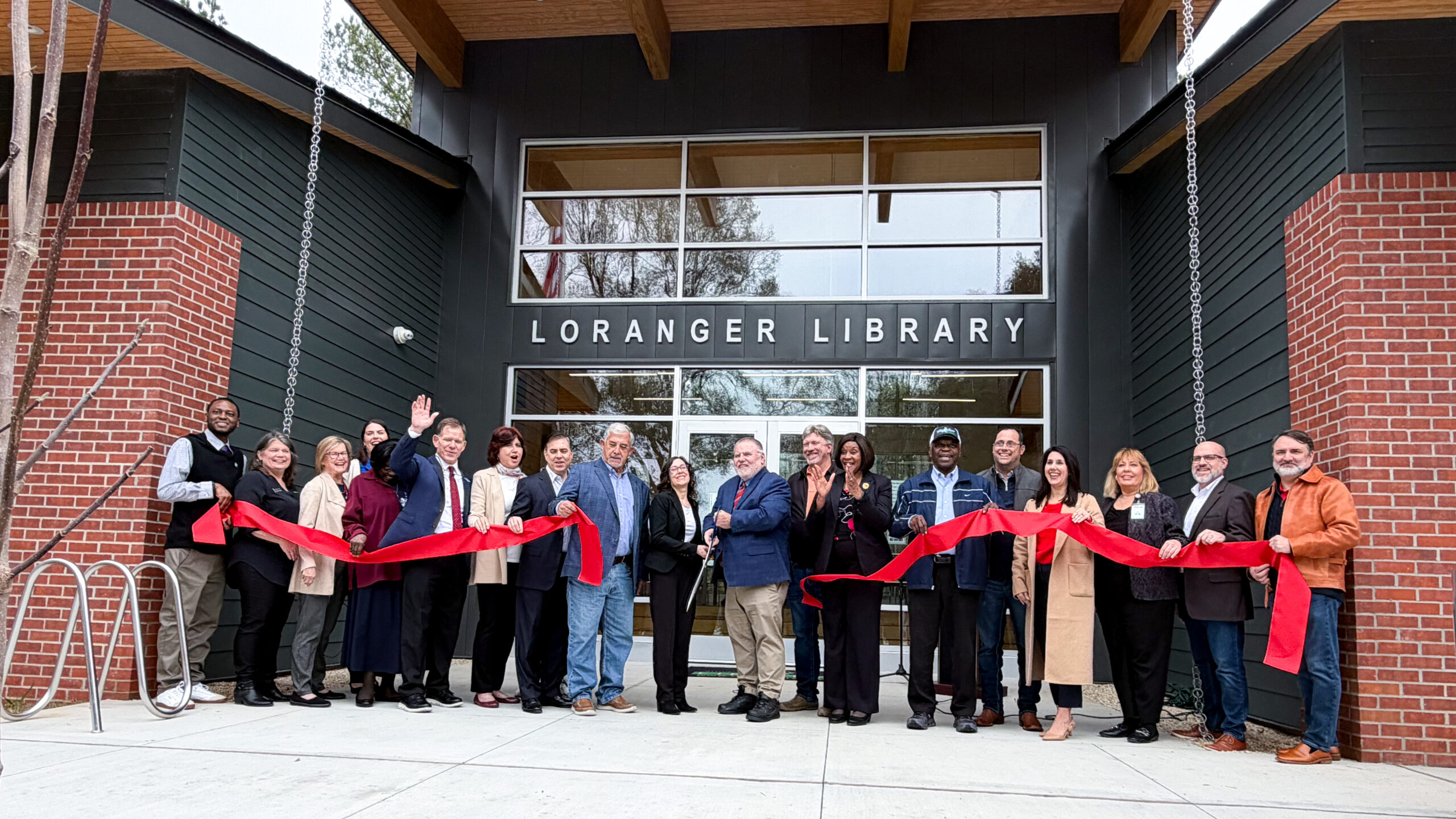
Tangipahoa Parish Library System Celebrates New Loranger Branch
January 27, 2026On January 23, the Tangipahoa Parish Library System hosted a ribbon-cutting ceremony to celebrate the opening of the new Loranger Branch. Designed as a modern and welcoming space, the library supports education, creativity, and lifelong learning through thoughtful design and......
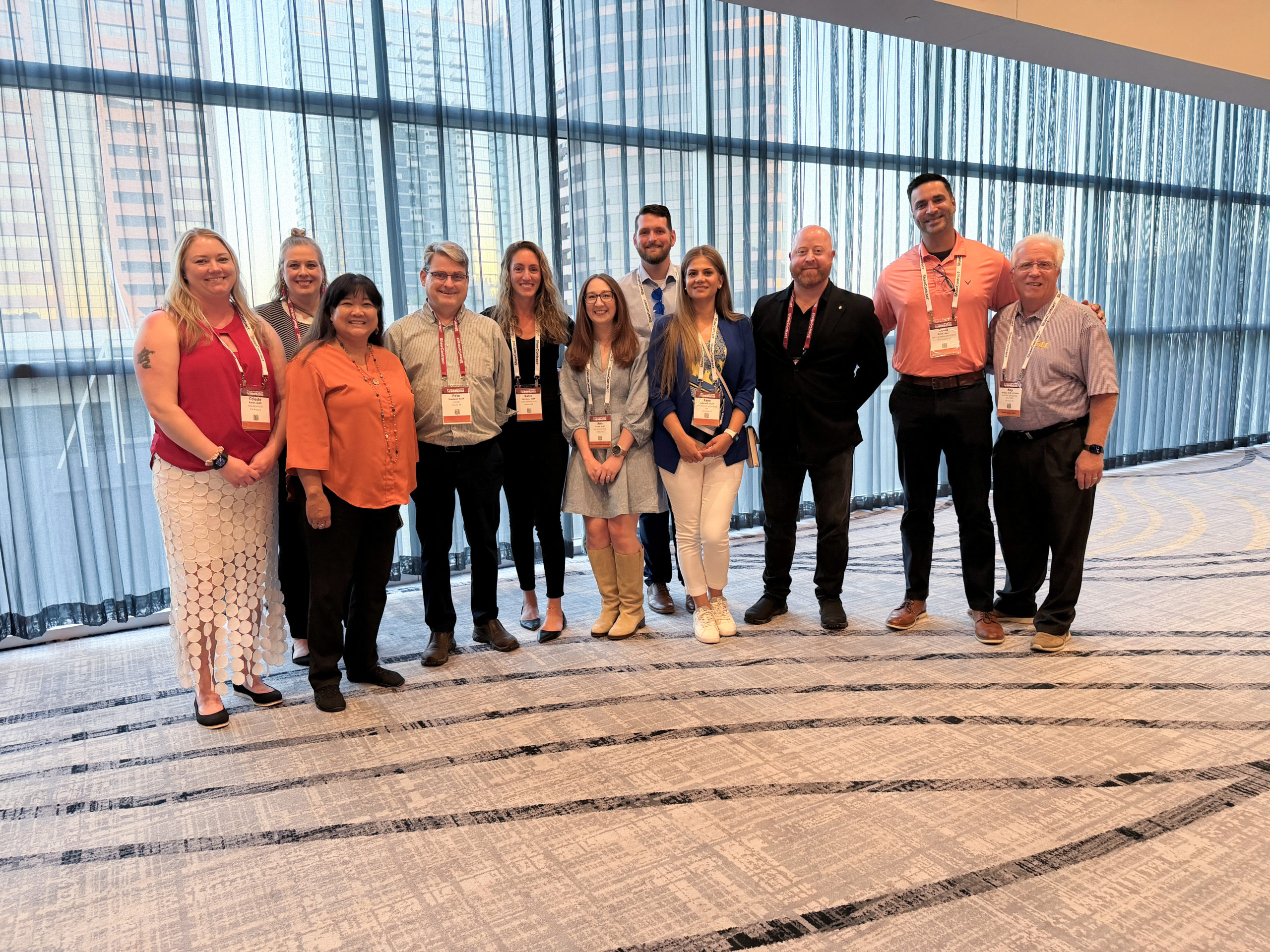
Rohit Sood, ALEP, Attends A4LE LearningSCAPES Conference in Phoenix
November 6, 2025H/S Principal Rohit Sood, ALEP, recently attended the A4LE LearningSCAPES Conference in Phoenix, joining fellow members of the A4LE Advanced Academy for a national discussion on the future of educational design. The event featured a special recognition of new ALEP......
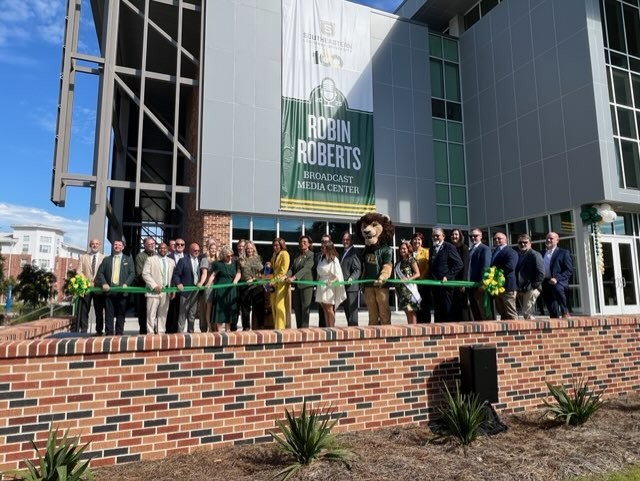
Renovated D Vickers Hall Unveiled, Featuring the Robin Roberts Broadcast Media Center
October 20, 2025On Friday, October 17, 2025, Southeastern Louisiana University celebrated a significant milestone with the dedication of the newly renovated D Vickers Hall and the state-of-the-art Robin Roberts Broadcasting Center in Hammond. The event was highlighted by a generous donation from......
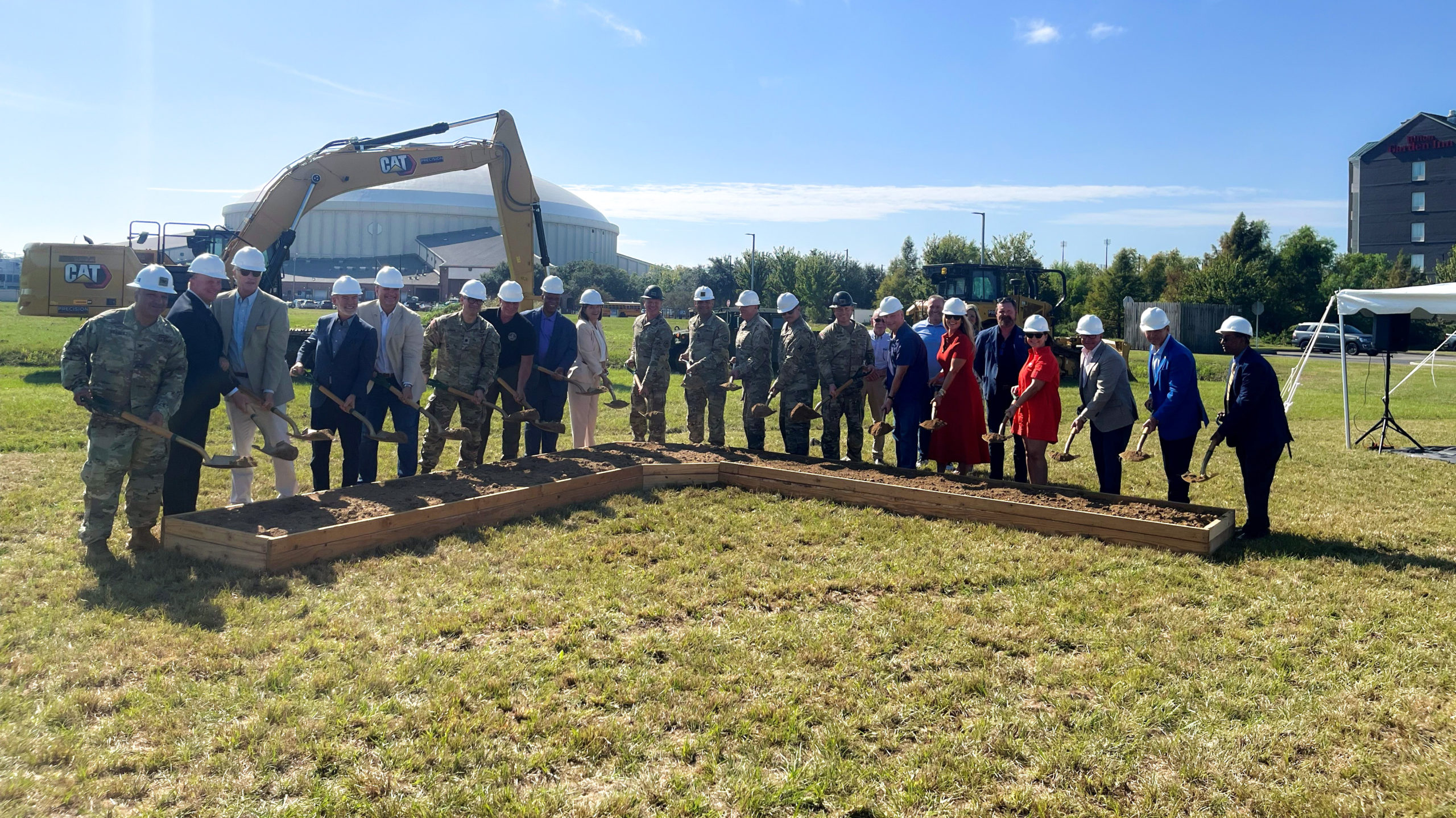
Louisiana Army National Guard Breaks Ground on Lafayette Readiness Center
October 13, 2025The Louisiana Army National Guard held a groundbreaking ceremony on October 8, 2025 for the new Readiness Center in Lafayette. Located on West Congress Street, this sustainably designed 83,943 sq, ft. facility will be highly energy-efficient, constructed from highly resilient,......
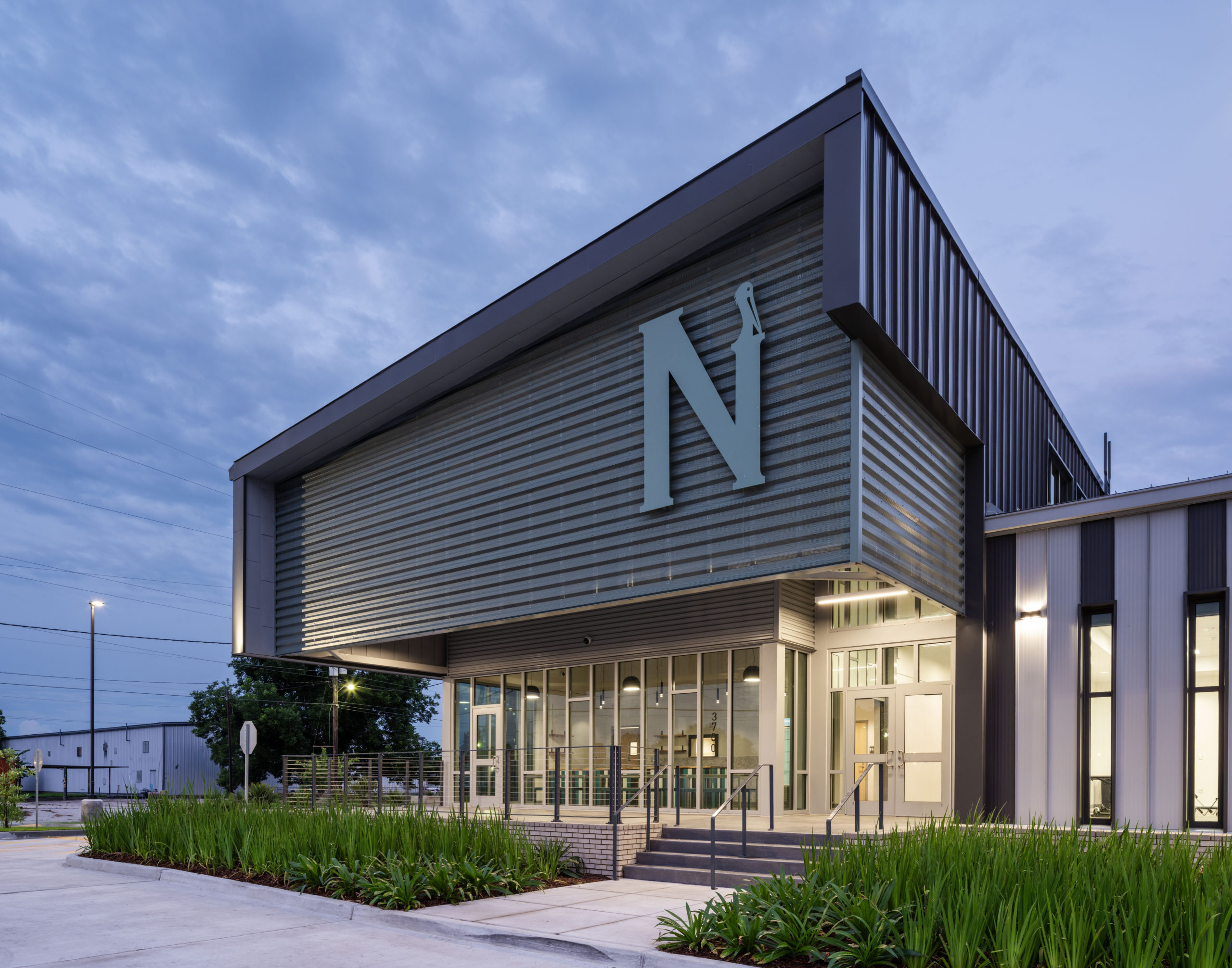
Nunez Community College Student Testing and Career Counseling Center Honored with AIA Louisiana Award of Merit
September 30, 2025Holly & Smith Architects is honored to announce that the Nunez Community College Student Testing and Career Counseling Center has been recognized with an Award of Merit at the 2025 AIA Louisiana Design Awards. This student-centered facility was envisioned as......

639 Desire Street Honored with AIA New Orleans Award of Merit for Historic Preservation and Restoration
July 23, 2025Holly & Smith Architects is honored to announce that our restoration of 639 Desire Street has been recognized with a 2025 AIA New Orleans Award of Merit in Historic Preservation and Restoration. Presented at the AIA New Orleans Design Awards......
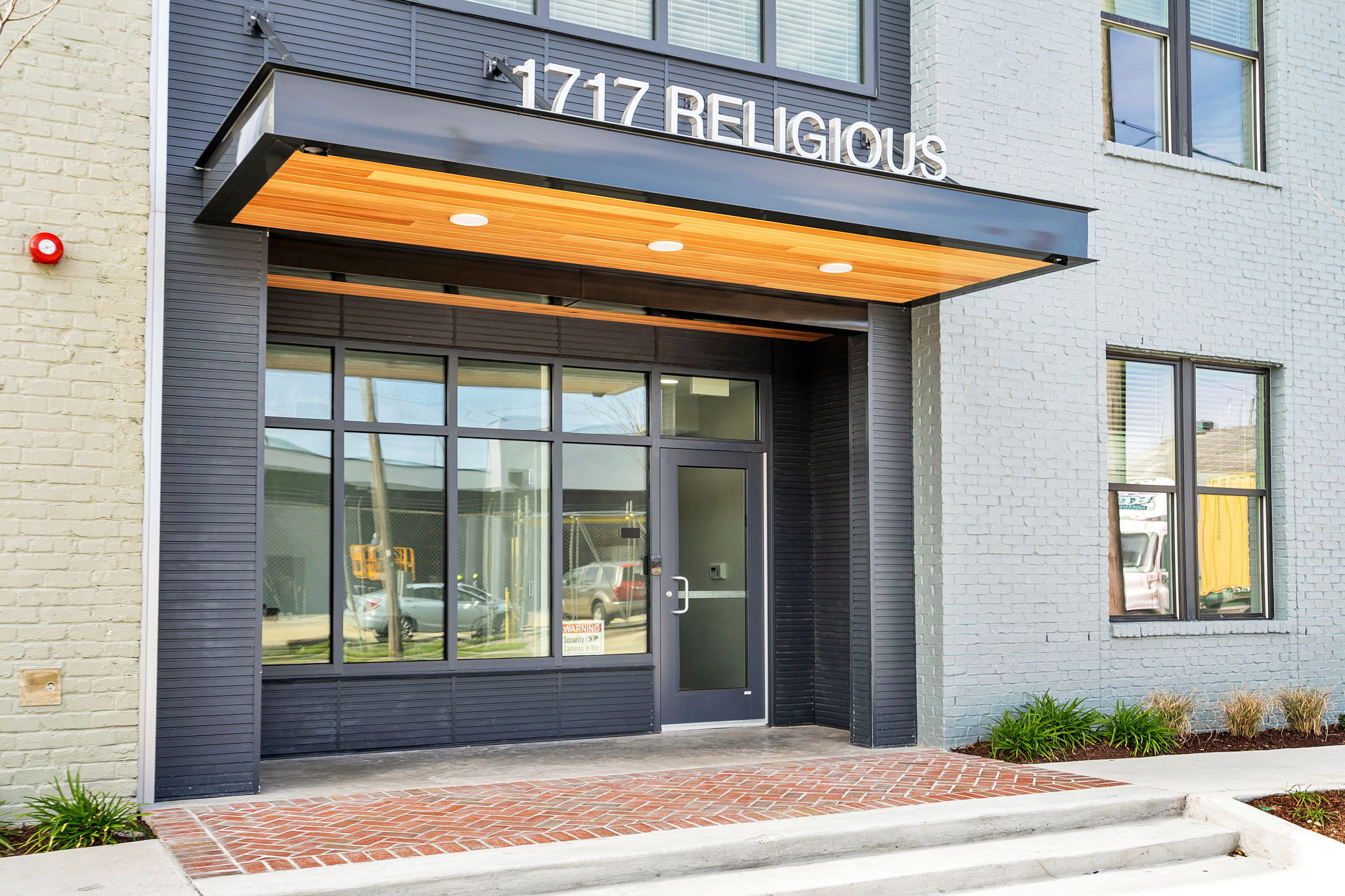
Celeste Landing Celebrates Grand Opening in New Orleans’ Lower Garden District
April 14, 2025Holly & Smith Architects (H/S) is proud to celebrate the grand opening of Celeste Landing, a transformative affordable housing development in New Orleans' Lower Garden District. Designed by H/S, the project combines the thoughtful restoration of a historic structure with......
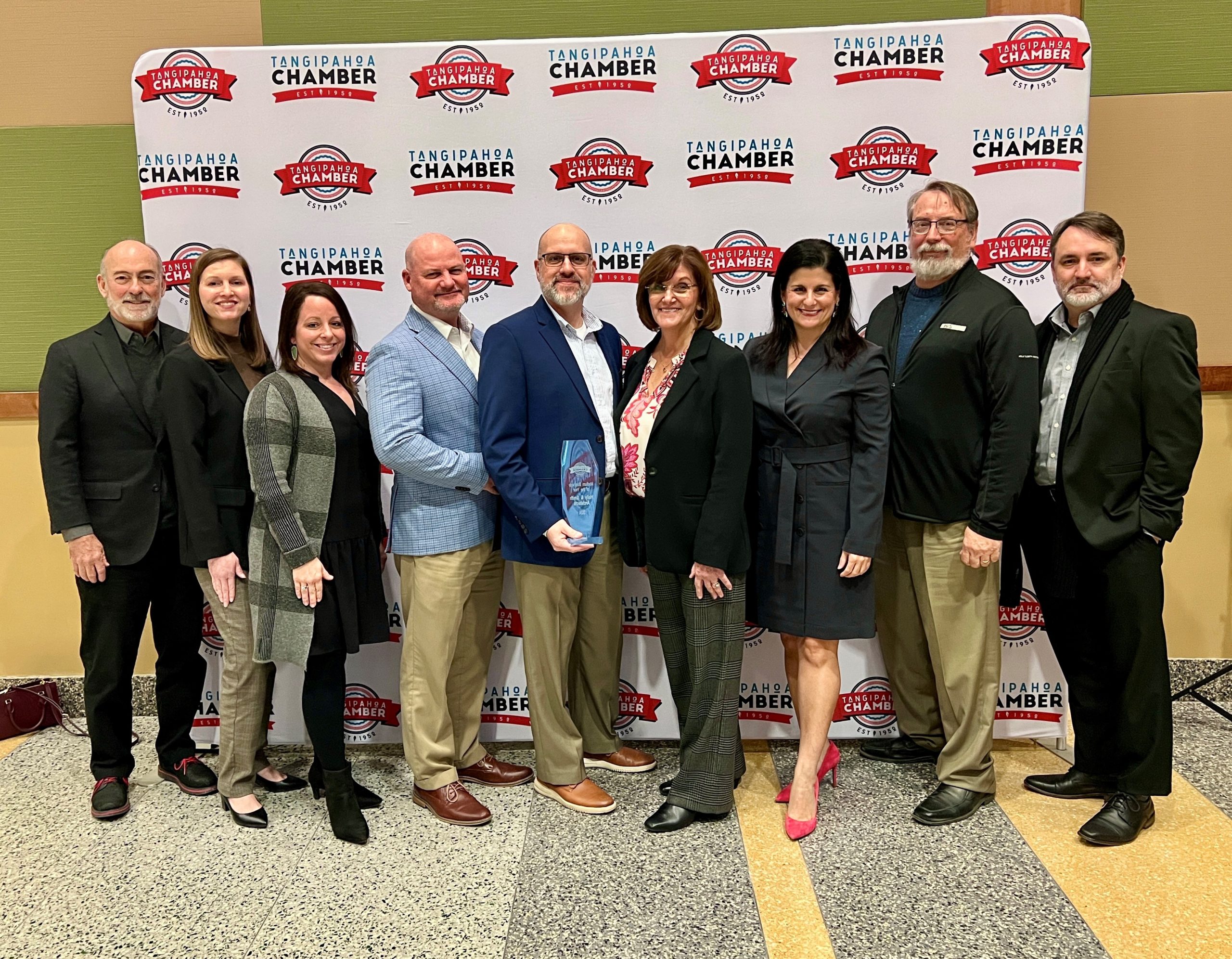
Holly & Smith Architects Named Medium Business of the Year by Tangipahoa Chamber
January 28, 2025Holly & Smith Architects (H/S) is proud to announce its recognition as Medium Business of the Year at the 2025 Tangipahoa Chamber Annual Installation and Awards Luncheon. This prestigious honor celebrates the firm’s longstanding commitment to excellence in design, innovation,......
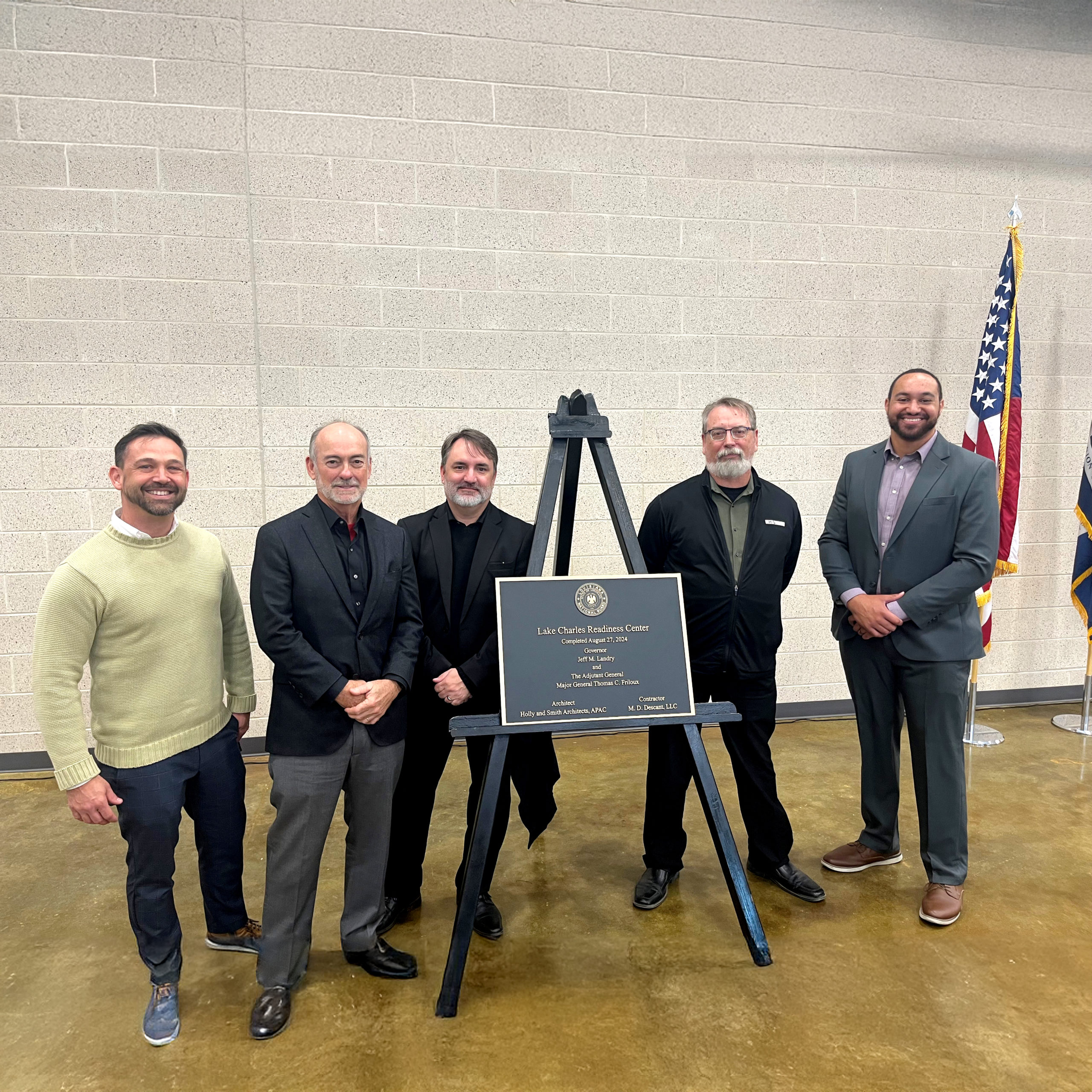
Ribbon-Cutting Ceremony Held for New Louisiana National Guard Readiness Center in Lake Charles
October 21, 2024The Louisiana National Guard celebrated the ribbon-cutting of the new Readiness Center at Chennault International Airport in Lake Charles today, marking a significant milestone for the 3rd Battalion, 156th Infantry Regiment. The new 60,391-square-foot facility, owned by the State of......
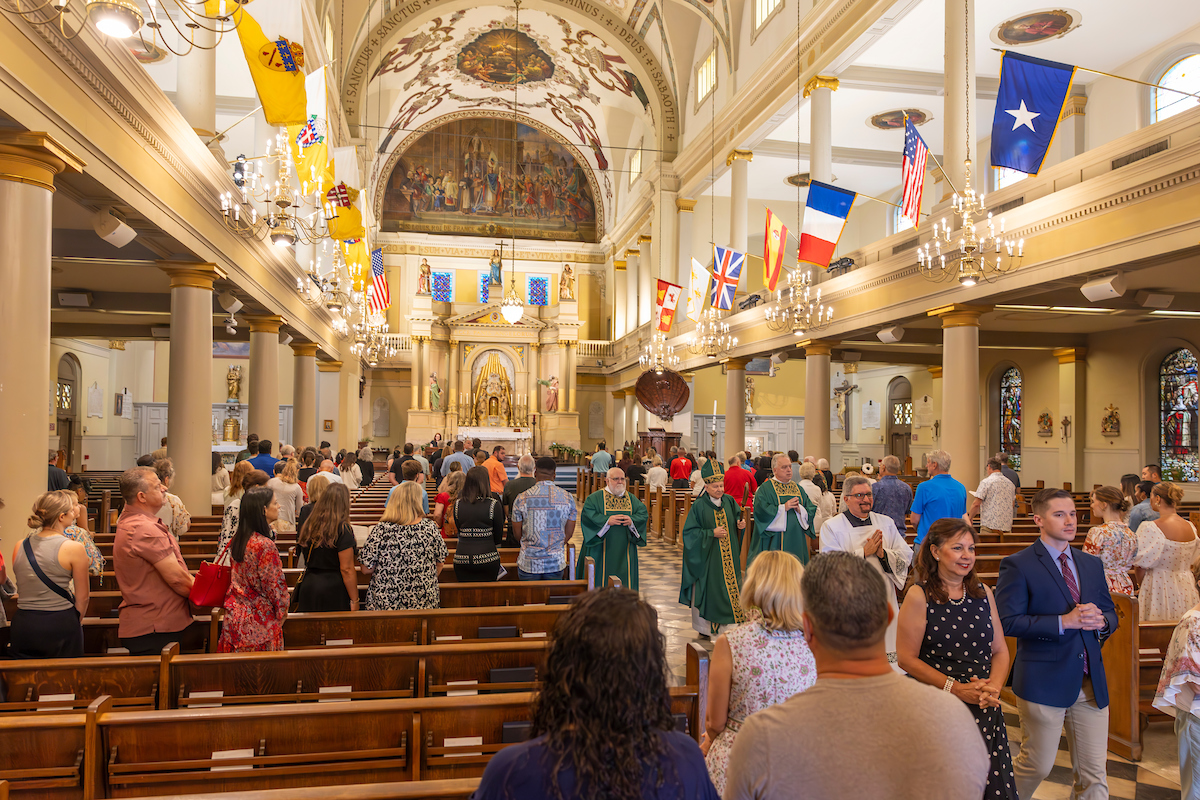
Holly & Smith Architects to lead St. Louis Cathedral renovation | Preservation Resource Center of New Orleans (prcno.org)
October 16, 2024Over the last year, Holly & Smith Architects has had the privilege of serving the Catholic Community Foundation, as well as the Archdiocese of New Orleans, in providing a study for the historic St. Louis Cathedral. The goal of this......

UL Lafayette Breaks Ground on New Engineering Building
August 6, 2024Holly & Smith Architects, in joint venture with The Sellers Group, is thrilled to announce the groundbreaking of the University of Louisiana at Lafayette’s new Engineering Building. This 64,700-square-foot facility is designed to meet the needs of UL Lafayette’s expanding......
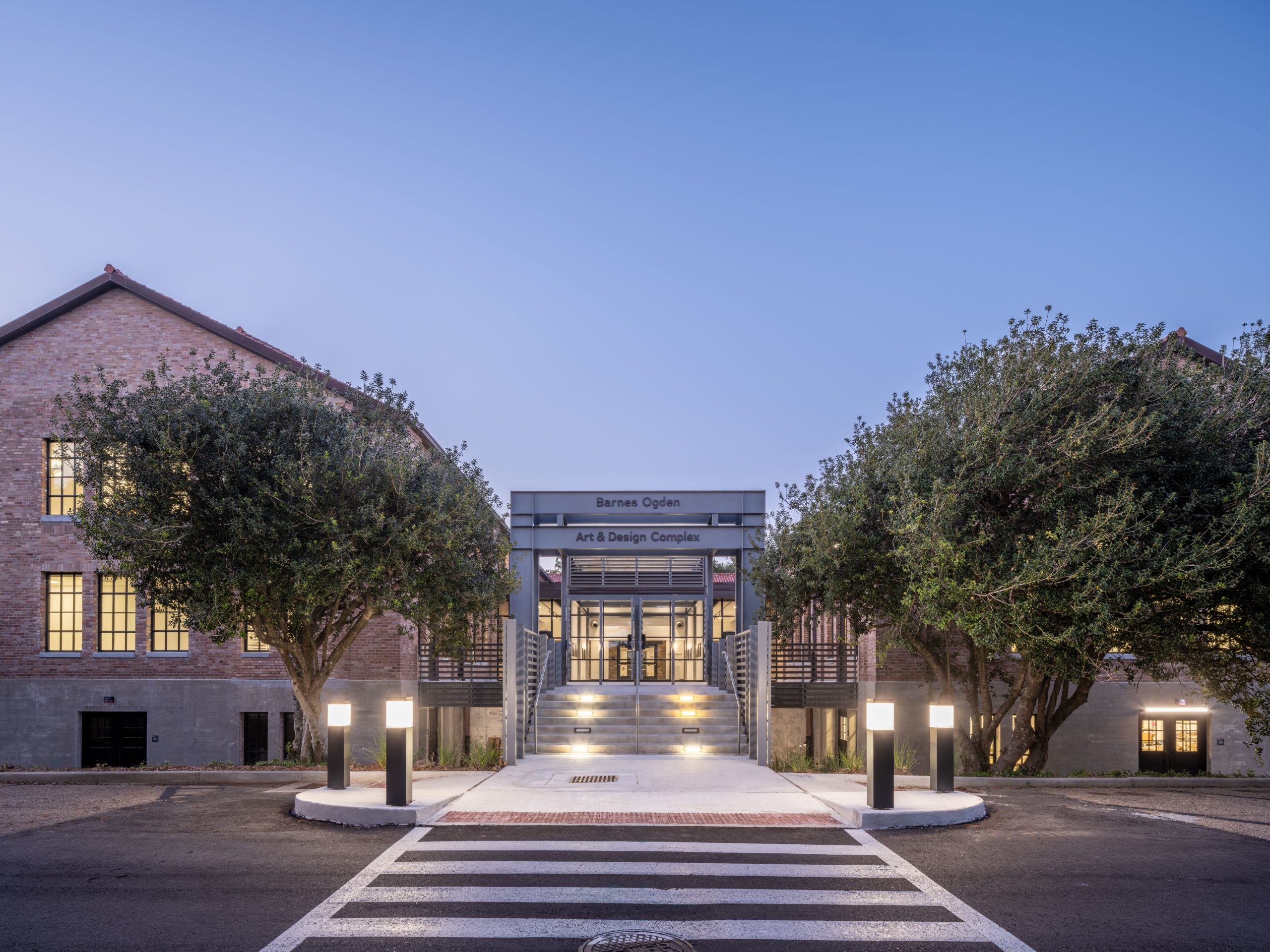
LSU Barnes Ogden Art and Design Complex, Kentwood Library Branch, and Stoa Group Headquarters each win at the AIA Baton Rouge Rose Awards Gala
July 17, 2024On Thursday, April 25th, AIA Baton Rouge held its annual Rose Awards Gala at The Water Campus, celebrating outstanding design projects in various categories. The H/S team was thrilled to receive the Gold Rose Award for LSU Barnes Ogden Art and......
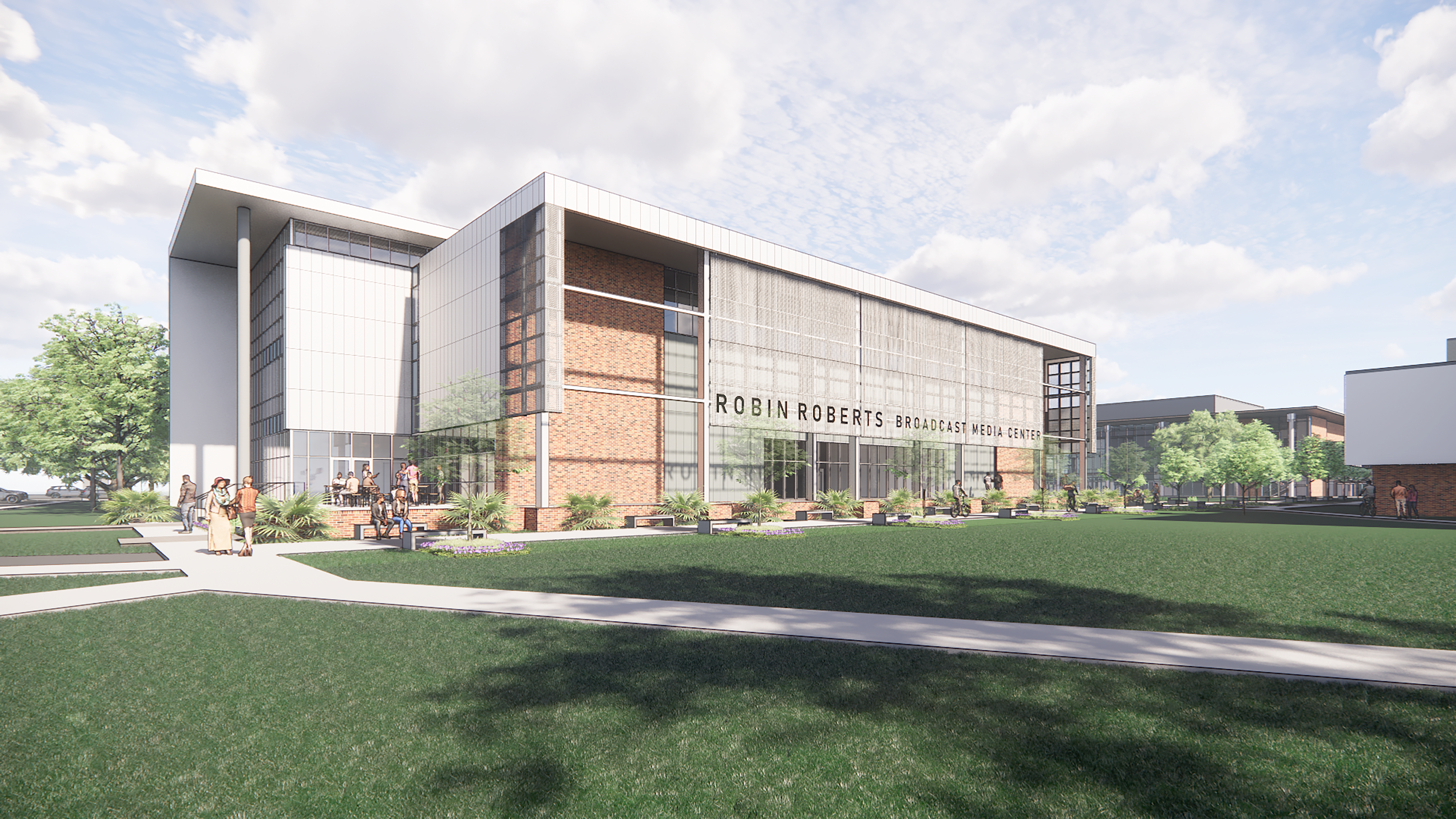
Southeastern Louisiana University breaks ground on new Robin Roberts Broadcast Media Center at D. Vickers Hall
November 16, 2023In a momentous ceremony attended by Good Morning America Co-Anchor Robin Roberts, Louisiana Governor John Bel Edwards, and representatives from Southeastern Louisiana University, the official groundbreaking for the Robin Roberts Broadcast Media Center and the $40 million renovation of D. Vickers Hall......
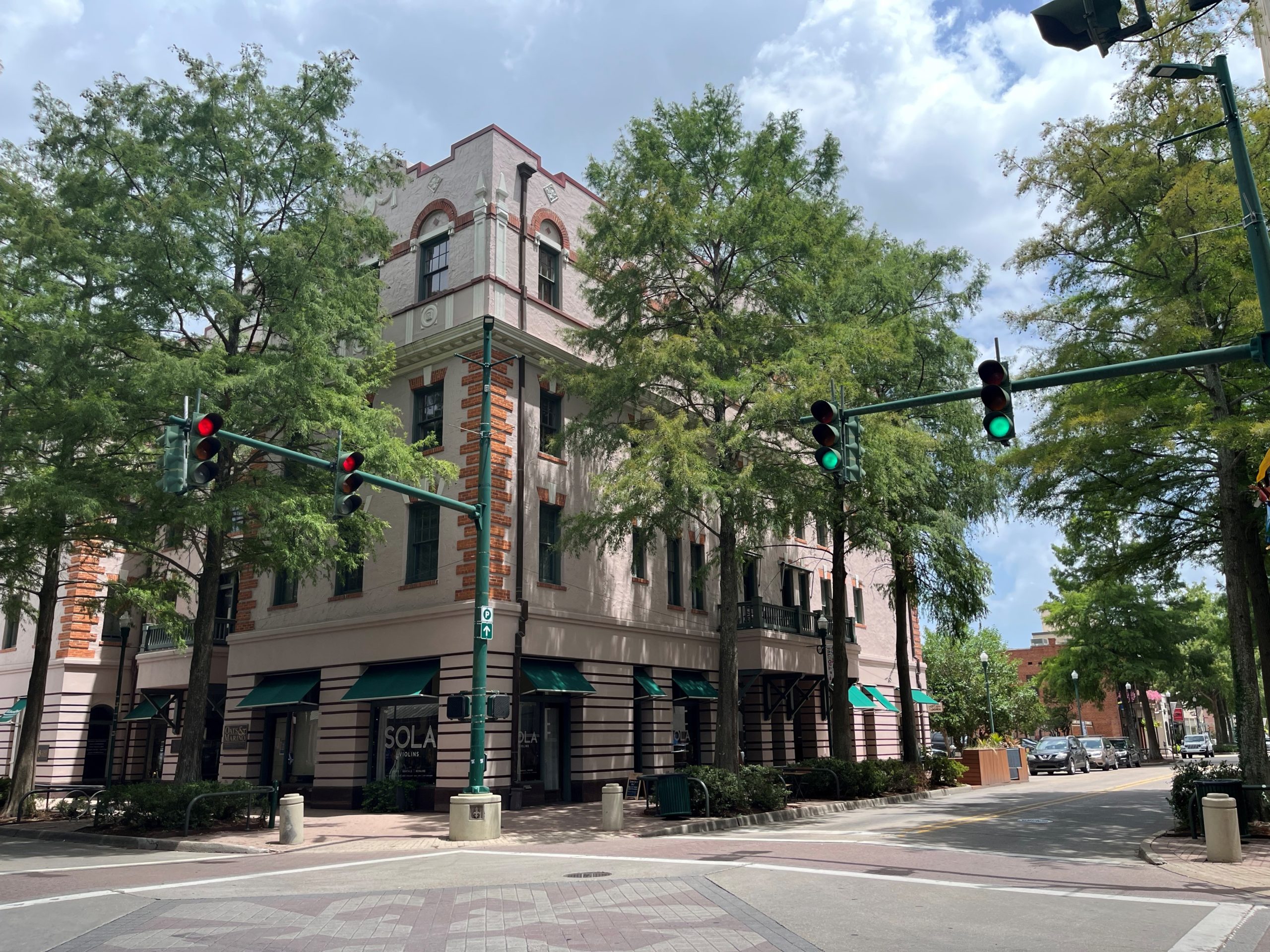
Holly & Smith Architects opens new office in Lafayette
June 21, 2022Allons a Lafayette…The Heart of Acadiana! Holly & Smith Architects is returning to its roots! We are thrilled to announce that the firm has expanded to southwest Louisiana with a new office in Lafayette. Around 40 years ago, both H/S......
LSU Barnes Ogden Art and Design Complex
Originally built in 1926, the building housed engineering shops on the southern end of the historic quad, adjacent to the Mississippi River Escarpment. These shops were instrumental in constructing the first buildings on campus. As the campus engineering program expanded, the shops were no longer needed and were subsequently taken over by the art department. In a haphazard Bohemian style, the art department repurposed the space for various art disciplines.
The objective of the renovation was to restore the historic facade, adhering to preservation guidelines. The plan aimed to establish connectivity between the four wings. Many of the existing art studios and instructional spaces were updated and modernized, while department offices and restrooms were added. The interior retained an industrial look with exposed structural elements.
Historic research enabled analysis of the 1926 design documents and photos, allowing the recreation of windows and door openings to resemble the original aesthetic. The 1926 design had a one-story structure with basements beneath each of the four wings. In the 1960s, two wings were expanded with a second floor.
To comply with building codes and enhance accessibility, a bridge, elevator, and stairs were added to the wings. The sloped grade area between the wings became courtyards, with the gallery and new south entry as the central focal point.
The design embraced an industrial aesthetic, incorporating steel sections and angles for bridges and handrails. Wood elements and exposed concrete were strategically placed to serve as screens for courtyards and stairs, enhancing the overall visual appeal.
FEATURED STORIES
Holly & Smith Announces Matthew Romano as a Newly Licensed Architect
July 8, 2026Holly & Smith Architects is proud to announce that Matthew Romano has successfully completed the Architect Registration Examination (ARE) and is now a licensed architect. Matt earned a Bachelor of Science in Architecture from the University of Louisiana at Lafayette......
Holly & Smith Announces Phoebe Roussel as a Newly Licensed Architect
February 2, 2026Holly & Smith Architects is proud to announce Phoebe Roussel has successfully completed her Architect Registration Examination (ARE) and is now a licensed architect. Phoebe graduated from University of Louisiana at Lafayette with a Bachelor of Architectural Studies in 2022,......
Tangipahoa Parish Library System Celebrates New Loranger Branch
January 27, 2026On January 23, the Tangipahoa Parish Library System hosted a ribbon-cutting ceremony to celebrate the opening of the new Loranger Branch. Designed as a modern and welcoming space, the library supports education, creativity, and lifelong learning through thoughtful design and......
Rohit Sood, ALEP, Attends A4LE LearningSCAPES Conference in Phoenix
November 6, 2025H/S Principal Rohit Sood, ALEP, recently attended the A4LE LearningSCAPES Conference in Phoenix, joining fellow members of the A4LE Advanced Academy for a national discussion on the future of educational design. The event featured a special recognition of new ALEP......
Renovated D Vickers Hall Unveiled, Featuring the Robin Roberts Broadcast Media Center
October 20, 2025On Friday, October 17, 2025, Southeastern Louisiana University celebrated a significant milestone with the dedication of the newly renovated D Vickers Hall and the state-of-the-art Robin Roberts Broadcasting Center in Hammond. The event was highlighted by a generous donation from......
Louisiana Army National Guard Breaks Ground on Lafayette Readiness Center
October 13, 2025The Louisiana Army National Guard held a groundbreaking ceremony on October 8, 2025 for the new Readiness Center in Lafayette. Located on West Congress Street, this sustainably designed 83,943 sq, ft. facility will be highly energy-efficient, constructed from highly resilient,......
Nunez Community College Student Testing and Career Counseling Center Honored with AIA Louisiana Award of Merit
September 30, 2025Holly & Smith Architects is honored to announce that the Nunez Community College Student Testing and Career Counseling Center has been recognized with an Award of Merit at the 2025 AIA Louisiana Design Awards. This student-centered facility was envisioned as......
639 Desire Street Honored with AIA New Orleans Award of Merit for Historic Preservation and Restoration
July 23, 2025Holly & Smith Architects is honored to announce that our restoration of 639 Desire Street has been recognized with a 2025 AIA New Orleans Award of Merit in Historic Preservation and Restoration. Presented at the AIA New Orleans Design Awards......
Celeste Landing Celebrates Grand Opening in New Orleans’ Lower Garden District
April 14, 2025Holly & Smith Architects (H/S) is proud to celebrate the grand opening of Celeste Landing, a transformative affordable housing development in New Orleans' Lower Garden District. Designed by H/S, the project combines the thoughtful restoration of a historic structure with......
Holly & Smith Architects Named Medium Business of the Year by Tangipahoa Chamber
January 28, 2025Holly & Smith Architects (H/S) is proud to announce its recognition as Medium Business of the Year at the 2025 Tangipahoa Chamber Annual Installation and Awards Luncheon. This prestigious honor celebrates the firm’s longstanding commitment to excellence in design, innovation,......
Ribbon-Cutting Ceremony Held for New Louisiana National Guard Readiness Center in Lake Charles
October 21, 2024The Louisiana National Guard celebrated the ribbon-cutting of the new Readiness Center at Chennault International Airport in Lake Charles today, marking a significant milestone for the 3rd Battalion, 156th Infantry Regiment. The new 60,391-square-foot facility, owned by the State of......
Holly & Smith Architects to lead St. Louis Cathedral renovation | Preservation Resource Center of New Orleans (prcno.org)
October 16, 2024Over the last year, Holly & Smith Architects has had the privilege of serving the Catholic Community Foundation, as well as the Archdiocese of New Orleans, in providing a study for the historic St. Louis Cathedral. The goal of this......
UL Lafayette Breaks Ground on New Engineering Building
August 6, 2024Holly & Smith Architects, in joint venture with The Sellers Group, is thrilled to announce the groundbreaking of the University of Louisiana at Lafayette’s new Engineering Building. This 64,700-square-foot facility is designed to meet the needs of UL Lafayette’s expanding......
LSU Barnes Ogden Art and Design Complex, Kentwood Library Branch, and Stoa Group Headquarters each win at the AIA Baton Rouge Rose Awards Gala
July 17, 2024On Thursday, April 25th, AIA Baton Rouge held its annual Rose Awards Gala at The Water Campus, celebrating outstanding design projects in various categories. The H/S team was thrilled to receive the Gold Rose Award for LSU Barnes Ogden Art and......
Southeastern Louisiana University breaks ground on new Robin Roberts Broadcast Media Center at D. Vickers Hall
November 16, 2023In a momentous ceremony attended by Good Morning America Co-Anchor Robin Roberts, Louisiana Governor John Bel Edwards, and representatives from Southeastern Louisiana University, the official groundbreaking for the Robin Roberts Broadcast Media Center and the $40 million renovation of D. Vickers Hall......
Holly & Smith Architects opens new office in Lafayette
June 21, 2022Allons a Lafayette…The Heart of Acadiana! Holly & Smith Architects is returning to its roots! We are thrilled to announce that the firm has expanded to southwest Louisiana with a new office in Lafayette. Around 40 years ago, both H/S......
Champ Cooper School Additions Phase 1
The Champ Cooper School Classroom building is a 22,060 sq. ft. one-story building that is the first of three phases to the school campus. The building consists of two separate hubs with five classrooms within each hub, totaling ten classrooms. Each hub has an interior shared project collaboration space and an exterior shared collaboration space. The primary objective of the design of both the interior and exterior collaboration spaces is to promote additional learning opportunities and enhance and enrich the educational needs of middle school students by providing space for experiments or activities. Additionally, the building contains a dining commons area with a serving kitchen, a special education classroom, two teacher work rooms, a reception area, and two offices for administrative staff. The building was designed for natural light to be incorporated into each space, which allows students to access daylight to improve and positively contribute to the student’s academic performance.
FEATURED STORIES
Holly & Smith Announces Matthew Romano as a Newly Licensed Architect
July 8, 2026Holly & Smith Architects is proud to announce that Matthew Romano has successfully completed the Architect Registration Examination (ARE) and is now a licensed architect. Matt earned a Bachelor of Science in Architecture from the University of Louisiana at Lafayette......
Holly & Smith Announces Phoebe Roussel as a Newly Licensed Architect
February 2, 2026Holly & Smith Architects is proud to announce Phoebe Roussel has successfully completed her Architect Registration Examination (ARE) and is now a licensed architect. Phoebe graduated from University of Louisiana at Lafayette with a Bachelor of Architectural Studies in 2022,......
Tangipahoa Parish Library System Celebrates New Loranger Branch
January 27, 2026On January 23, the Tangipahoa Parish Library System hosted a ribbon-cutting ceremony to celebrate the opening of the new Loranger Branch. Designed as a modern and welcoming space, the library supports education, creativity, and lifelong learning through thoughtful design and......
Rohit Sood, ALEP, Attends A4LE LearningSCAPES Conference in Phoenix
November 6, 2025H/S Principal Rohit Sood, ALEP, recently attended the A4LE LearningSCAPES Conference in Phoenix, joining fellow members of the A4LE Advanced Academy for a national discussion on the future of educational design. The event featured a special recognition of new ALEP......
Renovated D Vickers Hall Unveiled, Featuring the Robin Roberts Broadcast Media Center
October 20, 2025On Friday, October 17, 2025, Southeastern Louisiana University celebrated a significant milestone with the dedication of the newly renovated D Vickers Hall and the state-of-the-art Robin Roberts Broadcasting Center in Hammond. The event was highlighted by a generous donation from......
Louisiana Army National Guard Breaks Ground on Lafayette Readiness Center
October 13, 2025The Louisiana Army National Guard held a groundbreaking ceremony on October 8, 2025 for the new Readiness Center in Lafayette. Located on West Congress Street, this sustainably designed 83,943 sq, ft. facility will be highly energy-efficient, constructed from highly resilient,......
Nunez Community College Student Testing and Career Counseling Center Honored with AIA Louisiana Award of Merit
September 30, 2025Holly & Smith Architects is honored to announce that the Nunez Community College Student Testing and Career Counseling Center has been recognized with an Award of Merit at the 2025 AIA Louisiana Design Awards. This student-centered facility was envisioned as......
639 Desire Street Honored with AIA New Orleans Award of Merit for Historic Preservation and Restoration
July 23, 2025Holly & Smith Architects is honored to announce that our restoration of 639 Desire Street has been recognized with a 2025 AIA New Orleans Award of Merit in Historic Preservation and Restoration. Presented at the AIA New Orleans Design Awards......
Celeste Landing Celebrates Grand Opening in New Orleans’ Lower Garden District
April 14, 2025Holly & Smith Architects (H/S) is proud to celebrate the grand opening of Celeste Landing, a transformative affordable housing development in New Orleans' Lower Garden District. Designed by H/S, the project combines the thoughtful restoration of a historic structure with......
Holly & Smith Architects Named Medium Business of the Year by Tangipahoa Chamber
January 28, 2025Holly & Smith Architects (H/S) is proud to announce its recognition as Medium Business of the Year at the 2025 Tangipahoa Chamber Annual Installation and Awards Luncheon. This prestigious honor celebrates the firm’s longstanding commitment to excellence in design, innovation,......
Ribbon-Cutting Ceremony Held for New Louisiana National Guard Readiness Center in Lake Charles
October 21, 2024The Louisiana National Guard celebrated the ribbon-cutting of the new Readiness Center at Chennault International Airport in Lake Charles today, marking a significant milestone for the 3rd Battalion, 156th Infantry Regiment. The new 60,391-square-foot facility, owned by the State of......
Holly & Smith Architects to lead St. Louis Cathedral renovation | Preservation Resource Center of New Orleans (prcno.org)
October 16, 2024Over the last year, Holly & Smith Architects has had the privilege of serving the Catholic Community Foundation, as well as the Archdiocese of New Orleans, in providing a study for the historic St. Louis Cathedral. The goal of this......
UL Lafayette Breaks Ground on New Engineering Building
August 6, 2024Holly & Smith Architects, in joint venture with The Sellers Group, is thrilled to announce the groundbreaking of the University of Louisiana at Lafayette’s new Engineering Building. This 64,700-square-foot facility is designed to meet the needs of UL Lafayette’s expanding......
LSU Barnes Ogden Art and Design Complex, Kentwood Library Branch, and Stoa Group Headquarters each win at the AIA Baton Rouge Rose Awards Gala
July 17, 2024On Thursday, April 25th, AIA Baton Rouge held its annual Rose Awards Gala at The Water Campus, celebrating outstanding design projects in various categories. The H/S team was thrilled to receive the Gold Rose Award for LSU Barnes Ogden Art and......
Southeastern Louisiana University breaks ground on new Robin Roberts Broadcast Media Center at D. Vickers Hall
November 16, 2023In a momentous ceremony attended by Good Morning America Co-Anchor Robin Roberts, Louisiana Governor John Bel Edwards, and representatives from Southeastern Louisiana University, the official groundbreaking for the Robin Roberts Broadcast Media Center and the $40 million renovation of D. Vickers Hall......
Holly & Smith Architects opens new office in Lafayette
June 21, 2022Allons a Lafayette…The Heart of Acadiana! Holly & Smith Architects is returning to its roots! We are thrilled to announce that the firm has expanded to southwest Louisiana with a new office in Lafayette. Around 40 years ago, both H/S......
Covington High School Classroom Building Expansion
The project scope includes a significant addition to the high school campus with 70,000 sq. ft. of new classroom space on two floors. The new addition replaces 28 existing modular classroom buildings and creates a new eastern campus edge contiguous to the original 1970’s main classroom building. At the point of connection to the existing building, a new two-story commons allows space for student gathering. The north end of the addition is anchored by a new music and band facility that allows the entire high school band to rehearse as one, along with adequate storage space for all of their band equipment. The exterior design relates to the existing campus vernacular through the use of a light tan modular brick veneer and corrugated metal wall panels. East and western façade openings are shaded with terracotta baguette louver systems.
FEATURED STORIES
Holly & Smith Announces Matthew Romano as a Newly Licensed Architect
July 8, 2026Holly & Smith Architects is proud to announce that Matthew Romano has successfully completed the Architect Registration Examination (ARE) and is now a licensed architect. Matt earned a Bachelor of Science in Architecture from the University of Louisiana at Lafayette......
Holly & Smith Announces Phoebe Roussel as a Newly Licensed Architect
February 2, 2026Holly & Smith Architects is proud to announce Phoebe Roussel has successfully completed her Architect Registration Examination (ARE) and is now a licensed architect. Phoebe graduated from University of Louisiana at Lafayette with a Bachelor of Architectural Studies in 2022,......
Tangipahoa Parish Library System Celebrates New Loranger Branch
January 27, 2026On January 23, the Tangipahoa Parish Library System hosted a ribbon-cutting ceremony to celebrate the opening of the new Loranger Branch. Designed as a modern and welcoming space, the library supports education, creativity, and lifelong learning through thoughtful design and......
Rohit Sood, ALEP, Attends A4LE LearningSCAPES Conference in Phoenix
November 6, 2025H/S Principal Rohit Sood, ALEP, recently attended the A4LE LearningSCAPES Conference in Phoenix, joining fellow members of the A4LE Advanced Academy for a national discussion on the future of educational design. The event featured a special recognition of new ALEP......
Renovated D Vickers Hall Unveiled, Featuring the Robin Roberts Broadcast Media Center
October 20, 2025On Friday, October 17, 2025, Southeastern Louisiana University celebrated a significant milestone with the dedication of the newly renovated D Vickers Hall and the state-of-the-art Robin Roberts Broadcasting Center in Hammond. The event was highlighted by a generous donation from......
Louisiana Army National Guard Breaks Ground on Lafayette Readiness Center
October 13, 2025The Louisiana Army National Guard held a groundbreaking ceremony on October 8, 2025 for the new Readiness Center in Lafayette. Located on West Congress Street, this sustainably designed 83,943 sq, ft. facility will be highly energy-efficient, constructed from highly resilient,......
Nunez Community College Student Testing and Career Counseling Center Honored with AIA Louisiana Award of Merit
September 30, 2025Holly & Smith Architects is honored to announce that the Nunez Community College Student Testing and Career Counseling Center has been recognized with an Award of Merit at the 2025 AIA Louisiana Design Awards. This student-centered facility was envisioned as......
639 Desire Street Honored with AIA New Orleans Award of Merit for Historic Preservation and Restoration
July 23, 2025Holly & Smith Architects is honored to announce that our restoration of 639 Desire Street has been recognized with a 2025 AIA New Orleans Award of Merit in Historic Preservation and Restoration. Presented at the AIA New Orleans Design Awards......
Celeste Landing Celebrates Grand Opening in New Orleans’ Lower Garden District
April 14, 2025Holly & Smith Architects (H/S) is proud to celebrate the grand opening of Celeste Landing, a transformative affordable housing development in New Orleans' Lower Garden District. Designed by H/S, the project combines the thoughtful restoration of a historic structure with......
Holly & Smith Architects Named Medium Business of the Year by Tangipahoa Chamber
January 28, 2025Holly & Smith Architects (H/S) is proud to announce its recognition as Medium Business of the Year at the 2025 Tangipahoa Chamber Annual Installation and Awards Luncheon. This prestigious honor celebrates the firm’s longstanding commitment to excellence in design, innovation,......
Ribbon-Cutting Ceremony Held for New Louisiana National Guard Readiness Center in Lake Charles
October 21, 2024The Louisiana National Guard celebrated the ribbon-cutting of the new Readiness Center at Chennault International Airport in Lake Charles today, marking a significant milestone for the 3rd Battalion, 156th Infantry Regiment. The new 60,391-square-foot facility, owned by the State of......
Holly & Smith Architects to lead St. Louis Cathedral renovation | Preservation Resource Center of New Orleans (prcno.org)
October 16, 2024Over the last year, Holly & Smith Architects has had the privilege of serving the Catholic Community Foundation, as well as the Archdiocese of New Orleans, in providing a study for the historic St. Louis Cathedral. The goal of this......
UL Lafayette Breaks Ground on New Engineering Building
August 6, 2024Holly & Smith Architects, in joint venture with The Sellers Group, is thrilled to announce the groundbreaking of the University of Louisiana at Lafayette’s new Engineering Building. This 64,700-square-foot facility is designed to meet the needs of UL Lafayette’s expanding......
LSU Barnes Ogden Art and Design Complex, Kentwood Library Branch, and Stoa Group Headquarters each win at the AIA Baton Rouge Rose Awards Gala
July 17, 2024On Thursday, April 25th, AIA Baton Rouge held its annual Rose Awards Gala at The Water Campus, celebrating outstanding design projects in various categories. The H/S team was thrilled to receive the Gold Rose Award for LSU Barnes Ogden Art and......
Southeastern Louisiana University breaks ground on new Robin Roberts Broadcast Media Center at D. Vickers Hall
November 16, 2023In a momentous ceremony attended by Good Morning America Co-Anchor Robin Roberts, Louisiana Governor John Bel Edwards, and representatives from Southeastern Louisiana University, the official groundbreaking for the Robin Roberts Broadcast Media Center and the $40 million renovation of D. Vickers Hall......
Holly & Smith Architects opens new office in Lafayette
June 21, 2022Allons a Lafayette…The Heart of Acadiana! Holly & Smith Architects is returning to its roots! We are thrilled to announce that the firm has expanded to southwest Louisiana with a new office in Lafayette. Around 40 years ago, both H/S......
Nunez Community College Student Testing and Career Counseling Center
Nunez Community College, aiming to establish a bold new identity and a student-centered welcoming facility, has developed a comprehensive building program that includes career counseling, testing services, meeting and training spaces, and a café. The design had to navigate several site constraints, such as a live oak tree grove, existing structures, a drive-thru café, and flood elevation requirements. The building’s exterior utilizes brick and metal, aligning with the existing campus architecture, while the interior design features an industrial aesthetic, with added wood elements in more intimate spaces, reflecting the core curriculum focus on industrial training.
The career counseling area is positioned to offer expansive views of the live oak grove and interfaces with the main circulation spine, featuring booths open on both sides. This design combines intimacy and transparency, enhancing the industrial aesthetic with the warmth of wood. The café and multipurpose meeting room are located on the community-facing side of the building, while counseling and other student activities face the campus, integrating with the broader student environment.
A high-volume circulation spine with clerestory windows floods the interior with natural light, and perforated and corrugated metal create a transparent veil over the outdoor café lounge and student entry, reinforcing the industrial theme. The site planning connects the new facility to the administration building, preserves the live oak grove, and accommodates the drive-thru café, ensuring integration with existing campus facilities. This design not only meets the functional needs of the college but also creates a vibrant, inviting space that reflects the industrial training emphasis of the institution while maintaining a connection with nature and existing campus elements.
FEATURED STORIES
Holly & Smith Announces Matthew Romano as a Newly Licensed Architect
July 8, 2026Holly & Smith Architects is proud to announce that Matthew Romano has successfully completed the Architect Registration Examination (ARE) and is now a licensed architect. Matt earned a Bachelor of Science in Architecture from the University of Louisiana at Lafayette......
Holly & Smith Announces Phoebe Roussel as a Newly Licensed Architect
February 2, 2026Holly & Smith Architects is proud to announce Phoebe Roussel has successfully completed her Architect Registration Examination (ARE) and is now a licensed architect. Phoebe graduated from University of Louisiana at Lafayette with a Bachelor of Architectural Studies in 2022,......
Tangipahoa Parish Library System Celebrates New Loranger Branch
January 27, 2026On January 23, the Tangipahoa Parish Library System hosted a ribbon-cutting ceremony to celebrate the opening of the new Loranger Branch. Designed as a modern and welcoming space, the library supports education, creativity, and lifelong learning through thoughtful design and......
Rohit Sood, ALEP, Attends A4LE LearningSCAPES Conference in Phoenix
November 6, 2025H/S Principal Rohit Sood, ALEP, recently attended the A4LE LearningSCAPES Conference in Phoenix, joining fellow members of the A4LE Advanced Academy for a national discussion on the future of educational design. The event featured a special recognition of new ALEP......
Renovated D Vickers Hall Unveiled, Featuring the Robin Roberts Broadcast Media Center
October 20, 2025On Friday, October 17, 2025, Southeastern Louisiana University celebrated a significant milestone with the dedication of the newly renovated D Vickers Hall and the state-of-the-art Robin Roberts Broadcasting Center in Hammond. The event was highlighted by a generous donation from......
Louisiana Army National Guard Breaks Ground on Lafayette Readiness Center
October 13, 2025The Louisiana Army National Guard held a groundbreaking ceremony on October 8, 2025 for the new Readiness Center in Lafayette. Located on West Congress Street, this sustainably designed 83,943 sq, ft. facility will be highly energy-efficient, constructed from highly resilient,......
Nunez Community College Student Testing and Career Counseling Center Honored with AIA Louisiana Award of Merit
September 30, 2025Holly & Smith Architects is honored to announce that the Nunez Community College Student Testing and Career Counseling Center has been recognized with an Award of Merit at the 2025 AIA Louisiana Design Awards. This student-centered facility was envisioned as......
639 Desire Street Honored with AIA New Orleans Award of Merit for Historic Preservation and Restoration
July 23, 2025Holly & Smith Architects is honored to announce that our restoration of 639 Desire Street has been recognized with a 2025 AIA New Orleans Award of Merit in Historic Preservation and Restoration. Presented at the AIA New Orleans Design Awards......
Celeste Landing Celebrates Grand Opening in New Orleans’ Lower Garden District
April 14, 2025Holly & Smith Architects (H/S) is proud to celebrate the grand opening of Celeste Landing, a transformative affordable housing development in New Orleans' Lower Garden District. Designed by H/S, the project combines the thoughtful restoration of a historic structure with......
Holly & Smith Architects Named Medium Business of the Year by Tangipahoa Chamber
January 28, 2025Holly & Smith Architects (H/S) is proud to announce its recognition as Medium Business of the Year at the 2025 Tangipahoa Chamber Annual Installation and Awards Luncheon. This prestigious honor celebrates the firm’s longstanding commitment to excellence in design, innovation,......
Ribbon-Cutting Ceremony Held for New Louisiana National Guard Readiness Center in Lake Charles
October 21, 2024The Louisiana National Guard celebrated the ribbon-cutting of the new Readiness Center at Chennault International Airport in Lake Charles today, marking a significant milestone for the 3rd Battalion, 156th Infantry Regiment. The new 60,391-square-foot facility, owned by the State of......
Holly & Smith Architects to lead St. Louis Cathedral renovation | Preservation Resource Center of New Orleans (prcno.org)
October 16, 2024Over the last year, Holly & Smith Architects has had the privilege of serving the Catholic Community Foundation, as well as the Archdiocese of New Orleans, in providing a study for the historic St. Louis Cathedral. The goal of this......
UL Lafayette Breaks Ground on New Engineering Building
August 6, 2024Holly & Smith Architects, in joint venture with The Sellers Group, is thrilled to announce the groundbreaking of the University of Louisiana at Lafayette’s new Engineering Building. This 64,700-square-foot facility is designed to meet the needs of UL Lafayette’s expanding......
LSU Barnes Ogden Art and Design Complex, Kentwood Library Branch, and Stoa Group Headquarters each win at the AIA Baton Rouge Rose Awards Gala
July 17, 2024On Thursday, April 25th, AIA Baton Rouge held its annual Rose Awards Gala at The Water Campus, celebrating outstanding design projects in various categories. The H/S team was thrilled to receive the Gold Rose Award for LSU Barnes Ogden Art and......
Southeastern Louisiana University breaks ground on new Robin Roberts Broadcast Media Center at D. Vickers Hall
November 16, 2023In a momentous ceremony attended by Good Morning America Co-Anchor Robin Roberts, Louisiana Governor John Bel Edwards, and representatives from Southeastern Louisiana University, the official groundbreaking for the Robin Roberts Broadcast Media Center and the $40 million renovation of D. Vickers Hall......
Holly & Smith Architects opens new office in Lafayette
June 21, 2022Allons a Lafayette…The Heart of Acadiana! Holly & Smith Architects is returning to its roots! We are thrilled to announce that the firm has expanded to southwest Louisiana with a new office in Lafayette. Around 40 years ago, both H/S......
Kentwood Library Branch
In a semi-rural community committed to revitalizing its underutilized downtown, a new library branch in Kentwood, Louisiana has transformed an abandoned brownfield site. With a comprehensive program encompassing office and workspaces, a service desk, restrooms, stacks, a youth area, computers, indoor and outdoor community rooms, and a cutting-edge interactive omni-globe, this new building has become the centerpiece of the neighborhood’s urban fabric.
The design embraces the downtown context, situating the library’s facade at the property line, adorned with an elegant canopy and clerestory windows. A meticulously crafted masonry wall maintains the building’s presence along the sidewalk, creating an outdoor gathering space accentuated by a brise-soleil. Historic concrete steps were preserved and run the entire length of the block, now complemented by a new brick-screened access ramp meeting code requirements.
The planning parti thoughtfully addresses the street entry and rear parking entry, where a strategically positioned lobby and service desk create a seamless transition between the public spaces and functional work areas. The structural system displays steel columns and pine timber beams. Cypress ceilings, soffits, and pine timber pay homage to the area’s rich timber industry heritage, utilizing locally sourced lumber to establish a sense of belonging.
More than just a library, this project catalyzes neighborhood improvement, providing the community with valuable access to high-speed internet, fostering gatherings, and serving traditional library patrons and modern innovations. Revitalizing a neglected brownfield site and integrating it with the urban fabric makes this library branch a beacon of progress, connecting the community and ushering in a vibrant future.
FEATURED STORIES
Holly & Smith Announces Matthew Romano as a Newly Licensed Architect
July 8, 2026Holly & Smith Architects is proud to announce that Matthew Romano has successfully completed the Architect Registration Examination (ARE) and is now a licensed architect. Matt earned a Bachelor of Science in Architecture from the University of Louisiana at Lafayette......
Holly & Smith Announces Phoebe Roussel as a Newly Licensed Architect
February 2, 2026Holly & Smith Architects is proud to announce Phoebe Roussel has successfully completed her Architect Registration Examination (ARE) and is now a licensed architect. Phoebe graduated from University of Louisiana at Lafayette with a Bachelor of Architectural Studies in 2022,......
Tangipahoa Parish Library System Celebrates New Loranger Branch
January 27, 2026On January 23, the Tangipahoa Parish Library System hosted a ribbon-cutting ceremony to celebrate the opening of the new Loranger Branch. Designed as a modern and welcoming space, the library supports education, creativity, and lifelong learning through thoughtful design and......
Rohit Sood, ALEP, Attends A4LE LearningSCAPES Conference in Phoenix
November 6, 2025H/S Principal Rohit Sood, ALEP, recently attended the A4LE LearningSCAPES Conference in Phoenix, joining fellow members of the A4LE Advanced Academy for a national discussion on the future of educational design. The event featured a special recognition of new ALEP......
Renovated D Vickers Hall Unveiled, Featuring the Robin Roberts Broadcast Media Center
October 20, 2025On Friday, October 17, 2025, Southeastern Louisiana University celebrated a significant milestone with the dedication of the newly renovated D Vickers Hall and the state-of-the-art Robin Roberts Broadcasting Center in Hammond. The event was highlighted by a generous donation from......
Louisiana Army National Guard Breaks Ground on Lafayette Readiness Center
October 13, 2025The Louisiana Army National Guard held a groundbreaking ceremony on October 8, 2025 for the new Readiness Center in Lafayette. Located on West Congress Street, this sustainably designed 83,943 sq, ft. facility will be highly energy-efficient, constructed from highly resilient,......
Nunez Community College Student Testing and Career Counseling Center Honored with AIA Louisiana Award of Merit
September 30, 2025Holly & Smith Architects is honored to announce that the Nunez Community College Student Testing and Career Counseling Center has been recognized with an Award of Merit at the 2025 AIA Louisiana Design Awards. This student-centered facility was envisioned as......
639 Desire Street Honored with AIA New Orleans Award of Merit for Historic Preservation and Restoration
July 23, 2025Holly & Smith Architects is honored to announce that our restoration of 639 Desire Street has been recognized with a 2025 AIA New Orleans Award of Merit in Historic Preservation and Restoration. Presented at the AIA New Orleans Design Awards......
Celeste Landing Celebrates Grand Opening in New Orleans’ Lower Garden District
April 14, 2025Holly & Smith Architects (H/S) is proud to celebrate the grand opening of Celeste Landing, a transformative affordable housing development in New Orleans' Lower Garden District. Designed by H/S, the project combines the thoughtful restoration of a historic structure with......
Holly & Smith Architects Named Medium Business of the Year by Tangipahoa Chamber
January 28, 2025Holly & Smith Architects (H/S) is proud to announce its recognition as Medium Business of the Year at the 2025 Tangipahoa Chamber Annual Installation and Awards Luncheon. This prestigious honor celebrates the firm’s longstanding commitment to excellence in design, innovation,......
Ribbon-Cutting Ceremony Held for New Louisiana National Guard Readiness Center in Lake Charles
October 21, 2024The Louisiana National Guard celebrated the ribbon-cutting of the new Readiness Center at Chennault International Airport in Lake Charles today, marking a significant milestone for the 3rd Battalion, 156th Infantry Regiment. The new 60,391-square-foot facility, owned by the State of......
Holly & Smith Architects to lead St. Louis Cathedral renovation | Preservation Resource Center of New Orleans (prcno.org)
October 16, 2024Over the last year, Holly & Smith Architects has had the privilege of serving the Catholic Community Foundation, as well as the Archdiocese of New Orleans, in providing a study for the historic St. Louis Cathedral. The goal of this......
UL Lafayette Breaks Ground on New Engineering Building
August 6, 2024Holly & Smith Architects, in joint venture with The Sellers Group, is thrilled to announce the groundbreaking of the University of Louisiana at Lafayette’s new Engineering Building. This 64,700-square-foot facility is designed to meet the needs of UL Lafayette’s expanding......
LSU Barnes Ogden Art and Design Complex, Kentwood Library Branch, and Stoa Group Headquarters each win at the AIA Baton Rouge Rose Awards Gala
July 17, 2024On Thursday, April 25th, AIA Baton Rouge held its annual Rose Awards Gala at The Water Campus, celebrating outstanding design projects in various categories. The H/S team was thrilled to receive the Gold Rose Award for LSU Barnes Ogden Art and......
Southeastern Louisiana University breaks ground on new Robin Roberts Broadcast Media Center at D. Vickers Hall
November 16, 2023In a momentous ceremony attended by Good Morning America Co-Anchor Robin Roberts, Louisiana Governor John Bel Edwards, and representatives from Southeastern Louisiana University, the official groundbreaking for the Robin Roberts Broadcast Media Center and the $40 million renovation of D. Vickers Hall......
Holly & Smith Architects opens new office in Lafayette
June 21, 2022Allons a Lafayette…The Heart of Acadiana! Holly & Smith Architects is returning to its roots! We are thrilled to announce that the firm has expanded to southwest Louisiana with a new office in Lafayette. Around 40 years ago, both H/S......
St. Michael Special School
St. Michael Special School has been educating students with special needs since 1965 from its campus in the historic Lower Garden District of New Orleans. The school asked Holly & Smith to assist them in the restoration of their most historic structure, the “Convent” building, and the design of a new student chapel. The project includes the exterior restoration of the circa 1850’s Greek Revival “Convent” building to its original appearance, including the removal of later, insensitive additions and modifications. The restoration of the exterior was based on a pair of undated historic images from the late 19th Century, and on information gleaned from Sanborn maps of the period. The interior of the building, which housed a small student chapel, offices, and storage space, was renovated to include new teaching and special function spaces. The bedroom once used by St. Teresa of Calcutta during her visit to New Orleans was restored to its original appearance.
To the rear of the Convent, a new chapel and support spaces was constructed, sized to approximate the footprint of the original service wing. The new construction has a distinctly contemporary appearance, but utilizes traditional forms and materials in deference to the restored Convent building.
Images © 2019 Neil Alexander
FEATURED STORIES
Holly & Smith Announces Matthew Romano as a Newly Licensed Architect
July 8, 2026Holly & Smith Architects is proud to announce that Matthew Romano has successfully completed the Architect Registration Examination (ARE) and is now a licensed architect. Matt earned a Bachelor of Science in Architecture from the University of Louisiana at Lafayette......
Holly & Smith Announces Phoebe Roussel as a Newly Licensed Architect
February 2, 2026Holly & Smith Architects is proud to announce Phoebe Roussel has successfully completed her Architect Registration Examination (ARE) and is now a licensed architect. Phoebe graduated from University of Louisiana at Lafayette with a Bachelor of Architectural Studies in 2022,......
Tangipahoa Parish Library System Celebrates New Loranger Branch
January 27, 2026On January 23, the Tangipahoa Parish Library System hosted a ribbon-cutting ceremony to celebrate the opening of the new Loranger Branch. Designed as a modern and welcoming space, the library supports education, creativity, and lifelong learning through thoughtful design and......
Rohit Sood, ALEP, Attends A4LE LearningSCAPES Conference in Phoenix
November 6, 2025H/S Principal Rohit Sood, ALEP, recently attended the A4LE LearningSCAPES Conference in Phoenix, joining fellow members of the A4LE Advanced Academy for a national discussion on the future of educational design. The event featured a special recognition of new ALEP......
Renovated D Vickers Hall Unveiled, Featuring the Robin Roberts Broadcast Media Center
October 20, 2025On Friday, October 17, 2025, Southeastern Louisiana University celebrated a significant milestone with the dedication of the newly renovated D Vickers Hall and the state-of-the-art Robin Roberts Broadcasting Center in Hammond. The event was highlighted by a generous donation from......
Louisiana Army National Guard Breaks Ground on Lafayette Readiness Center
October 13, 2025The Louisiana Army National Guard held a groundbreaking ceremony on October 8, 2025 for the new Readiness Center in Lafayette. Located on West Congress Street, this sustainably designed 83,943 sq, ft. facility will be highly energy-efficient, constructed from highly resilient,......
Nunez Community College Student Testing and Career Counseling Center Honored with AIA Louisiana Award of Merit
September 30, 2025Holly & Smith Architects is honored to announce that the Nunez Community College Student Testing and Career Counseling Center has been recognized with an Award of Merit at the 2025 AIA Louisiana Design Awards. This student-centered facility was envisioned as......
639 Desire Street Honored with AIA New Orleans Award of Merit for Historic Preservation and Restoration
July 23, 2025Holly & Smith Architects is honored to announce that our restoration of 639 Desire Street has been recognized with a 2025 AIA New Orleans Award of Merit in Historic Preservation and Restoration. Presented at the AIA New Orleans Design Awards......
Celeste Landing Celebrates Grand Opening in New Orleans’ Lower Garden District
April 14, 2025Holly & Smith Architects (H/S) is proud to celebrate the grand opening of Celeste Landing, a transformative affordable housing development in New Orleans' Lower Garden District. Designed by H/S, the project combines the thoughtful restoration of a historic structure with......
Holly & Smith Architects Named Medium Business of the Year by Tangipahoa Chamber
January 28, 2025Holly & Smith Architects (H/S) is proud to announce its recognition as Medium Business of the Year at the 2025 Tangipahoa Chamber Annual Installation and Awards Luncheon. This prestigious honor celebrates the firm’s longstanding commitment to excellence in design, innovation,......
Ribbon-Cutting Ceremony Held for New Louisiana National Guard Readiness Center in Lake Charles
October 21, 2024The Louisiana National Guard celebrated the ribbon-cutting of the new Readiness Center at Chennault International Airport in Lake Charles today, marking a significant milestone for the 3rd Battalion, 156th Infantry Regiment. The new 60,391-square-foot facility, owned by the State of......
Holly & Smith Architects to lead St. Louis Cathedral renovation | Preservation Resource Center of New Orleans (prcno.org)
October 16, 2024Over the last year, Holly & Smith Architects has had the privilege of serving the Catholic Community Foundation, as well as the Archdiocese of New Orleans, in providing a study for the historic St. Louis Cathedral. The goal of this......
UL Lafayette Breaks Ground on New Engineering Building
August 6, 2024Holly & Smith Architects, in joint venture with The Sellers Group, is thrilled to announce the groundbreaking of the University of Louisiana at Lafayette’s new Engineering Building. This 64,700-square-foot facility is designed to meet the needs of UL Lafayette’s expanding......
LSU Barnes Ogden Art and Design Complex, Kentwood Library Branch, and Stoa Group Headquarters each win at the AIA Baton Rouge Rose Awards Gala
July 17, 2024On Thursday, April 25th, AIA Baton Rouge held its annual Rose Awards Gala at The Water Campus, celebrating outstanding design projects in various categories. The H/S team was thrilled to receive the Gold Rose Award for LSU Barnes Ogden Art and......
Southeastern Louisiana University breaks ground on new Robin Roberts Broadcast Media Center at D. Vickers Hall
November 16, 2023In a momentous ceremony attended by Good Morning America Co-Anchor Robin Roberts, Louisiana Governor John Bel Edwards, and representatives from Southeastern Louisiana University, the official groundbreaking for the Robin Roberts Broadcast Media Center and the $40 million renovation of D. Vickers Hall......
Holly & Smith Architects opens new office in Lafayette
June 21, 2022Allons a Lafayette…The Heart of Acadiana! Holly & Smith Architects is returning to its roots! We are thrilled to announce that the firm has expanded to southwest Louisiana with a new office in Lafayette. Around 40 years ago, both H/S......
Delgado Community College – Advanced Technology Center
The Delgado Community College West Bank Campus’ new Advanced Technology Center represents a significant expansion of the footprint of the Delgado West Bank Campus in Algiers. This center houses all academic STEM programs, labs, and faculty to serve academic and workforce programs for Algiers and the West Bank of New Orleans, specifically, the healthcare, petro-chemical, digital media, and transportation logistics industries. This facility is located within the Federal City footprint, directly adjacent to the Delgado West Bank Campus Student Life Building, and occupies 134,363 sq. ft. of land. The 38,000 sq. ft. building serves an additional 2,000 students annually. The spaces in the Advanced Technology Center include an administrative area, an open common space serving as a lobby/collaborative space, academic classrooms and laboratories, faculty offices, and meeting spaces. This facility will be a place to foster innovation, education, and technology in an academic environment. It will serve as a place of gathering, study, research, active learning, and collaboration.
FEATURED STORIES
Holly & Smith Announces Matthew Romano as a Newly Licensed Architect
July 8, 2026Holly & Smith Architects is proud to announce that Matthew Romano has successfully completed the Architect Registration Examination (ARE) and is now a licensed architect. Matt earned a Bachelor of Science in Architecture from the University of Louisiana at Lafayette......
Holly & Smith Announces Phoebe Roussel as a Newly Licensed Architect
February 2, 2026Holly & Smith Architects is proud to announce Phoebe Roussel has successfully completed her Architect Registration Examination (ARE) and is now a licensed architect. Phoebe graduated from University of Louisiana at Lafayette with a Bachelor of Architectural Studies in 2022,......
Tangipahoa Parish Library System Celebrates New Loranger Branch
January 27, 2026On January 23, the Tangipahoa Parish Library System hosted a ribbon-cutting ceremony to celebrate the opening of the new Loranger Branch. Designed as a modern and welcoming space, the library supports education, creativity, and lifelong learning through thoughtful design and......
Rohit Sood, ALEP, Attends A4LE LearningSCAPES Conference in Phoenix
November 6, 2025H/S Principal Rohit Sood, ALEP, recently attended the A4LE LearningSCAPES Conference in Phoenix, joining fellow members of the A4LE Advanced Academy for a national discussion on the future of educational design. The event featured a special recognition of new ALEP......
Renovated D Vickers Hall Unveiled, Featuring the Robin Roberts Broadcast Media Center
October 20, 2025On Friday, October 17, 2025, Southeastern Louisiana University celebrated a significant milestone with the dedication of the newly renovated D Vickers Hall and the state-of-the-art Robin Roberts Broadcasting Center in Hammond. The event was highlighted by a generous donation from......
Louisiana Army National Guard Breaks Ground on Lafayette Readiness Center
October 13, 2025The Louisiana Army National Guard held a groundbreaking ceremony on October 8, 2025 for the new Readiness Center in Lafayette. Located on West Congress Street, this sustainably designed 83,943 sq, ft. facility will be highly energy-efficient, constructed from highly resilient,......
Nunez Community College Student Testing and Career Counseling Center Honored with AIA Louisiana Award of Merit
September 30, 2025Holly & Smith Architects is honored to announce that the Nunez Community College Student Testing and Career Counseling Center has been recognized with an Award of Merit at the 2025 AIA Louisiana Design Awards. This student-centered facility was envisioned as......
639 Desire Street Honored with AIA New Orleans Award of Merit for Historic Preservation and Restoration
July 23, 2025Holly & Smith Architects is honored to announce that our restoration of 639 Desire Street has been recognized with a 2025 AIA New Orleans Award of Merit in Historic Preservation and Restoration. Presented at the AIA New Orleans Design Awards......
Celeste Landing Celebrates Grand Opening in New Orleans’ Lower Garden District
April 14, 2025Holly & Smith Architects (H/S) is proud to celebrate the grand opening of Celeste Landing, a transformative affordable housing development in New Orleans' Lower Garden District. Designed by H/S, the project combines the thoughtful restoration of a historic structure with......
Holly & Smith Architects Named Medium Business of the Year by Tangipahoa Chamber
January 28, 2025Holly & Smith Architects (H/S) is proud to announce its recognition as Medium Business of the Year at the 2025 Tangipahoa Chamber Annual Installation and Awards Luncheon. This prestigious honor celebrates the firm’s longstanding commitment to excellence in design, innovation,......
Ribbon-Cutting Ceremony Held for New Louisiana National Guard Readiness Center in Lake Charles
October 21, 2024The Louisiana National Guard celebrated the ribbon-cutting of the new Readiness Center at Chennault International Airport in Lake Charles today, marking a significant milestone for the 3rd Battalion, 156th Infantry Regiment. The new 60,391-square-foot facility, owned by the State of......
Holly & Smith Architects to lead St. Louis Cathedral renovation | Preservation Resource Center of New Orleans (prcno.org)
October 16, 2024Over the last year, Holly & Smith Architects has had the privilege of serving the Catholic Community Foundation, as well as the Archdiocese of New Orleans, in providing a study for the historic St. Louis Cathedral. The goal of this......
UL Lafayette Breaks Ground on New Engineering Building
August 6, 2024Holly & Smith Architects, in joint venture with The Sellers Group, is thrilled to announce the groundbreaking of the University of Louisiana at Lafayette’s new Engineering Building. This 64,700-square-foot facility is designed to meet the needs of UL Lafayette’s expanding......
LSU Barnes Ogden Art and Design Complex, Kentwood Library Branch, and Stoa Group Headquarters each win at the AIA Baton Rouge Rose Awards Gala
July 17, 2024On Thursday, April 25th, AIA Baton Rouge held its annual Rose Awards Gala at The Water Campus, celebrating outstanding design projects in various categories. The H/S team was thrilled to receive the Gold Rose Award for LSU Barnes Ogden Art and......
Southeastern Louisiana University breaks ground on new Robin Roberts Broadcast Media Center at D. Vickers Hall
November 16, 2023In a momentous ceremony attended by Good Morning America Co-Anchor Robin Roberts, Louisiana Governor John Bel Edwards, and representatives from Southeastern Louisiana University, the official groundbreaking for the Robin Roberts Broadcast Media Center and the $40 million renovation of D. Vickers Hall......
Holly & Smith Architects opens new office in Lafayette
June 21, 2022Allons a Lafayette…The Heart of Acadiana! Holly & Smith Architects is returning to its roots! We are thrilled to announce that the firm has expanded to southwest Louisiana with a new office in Lafayette. Around 40 years ago, both H/S......
Mandeville High School Classroom Building and Gymnasium Addition
This new three-story classroom building nestled in Mandeville High School’s campus provides 38 classrooms (12 reduced number/special education classrooms, 26 regular classrooms and support spaces) that replaced 32 existing modular classrooms with a permanent building. The façade of this new building, while appearing random, is in fact a twist on the Fibonacci Sequence and will be used as a teaching tool in the classroom. In addition to the new classroom building, existing locker rooms were renovated and the addition of a new wrestling practice facility cradles the outdoor collaboration courtyard.
FEATURED STORIES
Holly & Smith Announces Matthew Romano as a Newly Licensed Architect
July 8, 2026Holly & Smith Architects is proud to announce that Matthew Romano has successfully completed the Architect Registration Examination (ARE) and is now a licensed architect. Matt earned a Bachelor of Science in Architecture from the University of Louisiana at Lafayette......
Holly & Smith Announces Phoebe Roussel as a Newly Licensed Architect
February 2, 2026Holly & Smith Architects is proud to announce Phoebe Roussel has successfully completed her Architect Registration Examination (ARE) and is now a licensed architect. Phoebe graduated from University of Louisiana at Lafayette with a Bachelor of Architectural Studies in 2022,......
Tangipahoa Parish Library System Celebrates New Loranger Branch
January 27, 2026On January 23, the Tangipahoa Parish Library System hosted a ribbon-cutting ceremony to celebrate the opening of the new Loranger Branch. Designed as a modern and welcoming space, the library supports education, creativity, and lifelong learning through thoughtful design and......
Rohit Sood, ALEP, Attends A4LE LearningSCAPES Conference in Phoenix
November 6, 2025H/S Principal Rohit Sood, ALEP, recently attended the A4LE LearningSCAPES Conference in Phoenix, joining fellow members of the A4LE Advanced Academy for a national discussion on the future of educational design. The event featured a special recognition of new ALEP......
Renovated D Vickers Hall Unveiled, Featuring the Robin Roberts Broadcast Media Center
October 20, 2025On Friday, October 17, 2025, Southeastern Louisiana University celebrated a significant milestone with the dedication of the newly renovated D Vickers Hall and the state-of-the-art Robin Roberts Broadcasting Center in Hammond. The event was highlighted by a generous donation from......
Louisiana Army National Guard Breaks Ground on Lafayette Readiness Center
October 13, 2025The Louisiana Army National Guard held a groundbreaking ceremony on October 8, 2025 for the new Readiness Center in Lafayette. Located on West Congress Street, this sustainably designed 83,943 sq, ft. facility will be highly energy-efficient, constructed from highly resilient,......
Nunez Community College Student Testing and Career Counseling Center Honored with AIA Louisiana Award of Merit
September 30, 2025Holly & Smith Architects is honored to announce that the Nunez Community College Student Testing and Career Counseling Center has been recognized with an Award of Merit at the 2025 AIA Louisiana Design Awards. This student-centered facility was envisioned as......
639 Desire Street Honored with AIA New Orleans Award of Merit for Historic Preservation and Restoration
July 23, 2025Holly & Smith Architects is honored to announce that our restoration of 639 Desire Street has been recognized with a 2025 AIA New Orleans Award of Merit in Historic Preservation and Restoration. Presented at the AIA New Orleans Design Awards......
Celeste Landing Celebrates Grand Opening in New Orleans’ Lower Garden District
April 14, 2025Holly & Smith Architects (H/S) is proud to celebrate the grand opening of Celeste Landing, a transformative affordable housing development in New Orleans' Lower Garden District. Designed by H/S, the project combines the thoughtful restoration of a historic structure with......
Holly & Smith Architects Named Medium Business of the Year by Tangipahoa Chamber
January 28, 2025Holly & Smith Architects (H/S) is proud to announce its recognition as Medium Business of the Year at the 2025 Tangipahoa Chamber Annual Installation and Awards Luncheon. This prestigious honor celebrates the firm’s longstanding commitment to excellence in design, innovation,......
Ribbon-Cutting Ceremony Held for New Louisiana National Guard Readiness Center in Lake Charles
October 21, 2024The Louisiana National Guard celebrated the ribbon-cutting of the new Readiness Center at Chennault International Airport in Lake Charles today, marking a significant milestone for the 3rd Battalion, 156th Infantry Regiment. The new 60,391-square-foot facility, owned by the State of......
Holly & Smith Architects to lead St. Louis Cathedral renovation | Preservation Resource Center of New Orleans (prcno.org)
October 16, 2024Over the last year, Holly & Smith Architects has had the privilege of serving the Catholic Community Foundation, as well as the Archdiocese of New Orleans, in providing a study for the historic St. Louis Cathedral. The goal of this......
UL Lafayette Breaks Ground on New Engineering Building
August 6, 2024Holly & Smith Architects, in joint venture with The Sellers Group, is thrilled to announce the groundbreaking of the University of Louisiana at Lafayette’s new Engineering Building. This 64,700-square-foot facility is designed to meet the needs of UL Lafayette’s expanding......
LSU Barnes Ogden Art and Design Complex, Kentwood Library Branch, and Stoa Group Headquarters each win at the AIA Baton Rouge Rose Awards Gala
July 17, 2024On Thursday, April 25th, AIA Baton Rouge held its annual Rose Awards Gala at The Water Campus, celebrating outstanding design projects in various categories. The H/S team was thrilled to receive the Gold Rose Award for LSU Barnes Ogden Art and......
Southeastern Louisiana University breaks ground on new Robin Roberts Broadcast Media Center at D. Vickers Hall
November 16, 2023In a momentous ceremony attended by Good Morning America Co-Anchor Robin Roberts, Louisiana Governor John Bel Edwards, and representatives from Southeastern Louisiana University, the official groundbreaking for the Robin Roberts Broadcast Media Center and the $40 million renovation of D. Vickers Hall......
Holly & Smith Architects opens new office in Lafayette
June 21, 2022Allons a Lafayette…The Heart of Acadiana! Holly & Smith Architects is returning to its roots! We are thrilled to announce that the firm has expanded to southwest Louisiana with a new office in Lafayette. Around 40 years ago, both H/S......
Southeastern Louisiana University Science and Technology Building
It is the designer’s belief that it is a requirement today to develop educational places that address 21st Century needs in an academic community-based environment. Such an environment should completely support and allow work, play & study within a learning community.
After Hurricane Katrina, came a diaspora of faculty from various institutions in New Orleans, many of which landed at Southeastern Louisiana University in Hammond, Louisiana, one of the first stops north out of New Orleans. The Southeastern Industrial Technology Department was the beneficiary of many of these faculty. With the University’s vision, the conceptualization of a new facility was developed to address the needs of the 21st Century. The department’s mission is to “Support the economic development of the region by providing a premier, industry-relevant, undergraduate education, rich in real-world-ready experiences, undergraduate research, and a mixture of theoretical and hands-on coursework.”.
In the past, the University prided itself in the student career placement within the industry as ready to work. They recently joined a consortium of higher educational institutions that will supply work-ready individuals to the 2nd largest economic development announcement made in 2017, nationally. DXC Technology, Inc., one of the largest digital transformation companies in today’s world, has committed to the region the development of a center for digital transformation that will produce 2,000 jobs by 2025. This building and its products will feed this need.
The building designers collaborated with the building’s users and developed specific approaches to address the building’s purpose. The building itself was used as a teaching tool, where the building systems were exposed so that participants can experience and use these systems as examples. Laboratories spaces are transparent to exhibit to students’ work efforts, and students can see the on-going educational energy. Finally, the building addresses the 21st-century need of providing informal social spaces where students and faculty can collaborate in a community atmosphere for discussion and idea-making.
In addition to the specifics of this cutting-edge building’s internal working, the placement of this facility located on the extreme southeast edge of the campus anchors the edge of the campus. It offers an image of progress while relating to the historic core of the campus in a contemporary fashion.
The building consists of high bay laboratory spaces on the first floor, smaller labs, classrooms, and computer labs on the second floor, and faculty offices, research labs, and the department suite on the third floor. Many sustainable strategies have been integrated into the site design. Built-in controls for building operations have reduced energy consumption and cost.
Additionally, an apparatus was installed at the west facade of the building that serves a dual purpose. It is a west-facing shading scrim and veils a research-focused roof deck on the third floor. The scrim’s grid framework allows for the attachment of instruments such as wind turbines, solar photovoltaic panels, and various types of robotics-based research equipment for experimentation purposes.
FEATURED STORIES
Holly & Smith Announces Matthew Romano as a Newly Licensed Architect
July 8, 2026Holly & Smith Architects is proud to announce that Matthew Romano has successfully completed the Architect Registration Examination (ARE) and is now a licensed architect. Matt earned a Bachelor of Science in Architecture from the University of Louisiana at Lafayette......
Holly & Smith Announces Phoebe Roussel as a Newly Licensed Architect
February 2, 2026Holly & Smith Architects is proud to announce Phoebe Roussel has successfully completed her Architect Registration Examination (ARE) and is now a licensed architect. Phoebe graduated from University of Louisiana at Lafayette with a Bachelor of Architectural Studies in 2022,......
Tangipahoa Parish Library System Celebrates New Loranger Branch
January 27, 2026On January 23, the Tangipahoa Parish Library System hosted a ribbon-cutting ceremony to celebrate the opening of the new Loranger Branch. Designed as a modern and welcoming space, the library supports education, creativity, and lifelong learning through thoughtful design and......
Rohit Sood, ALEP, Attends A4LE LearningSCAPES Conference in Phoenix
November 6, 2025H/S Principal Rohit Sood, ALEP, recently attended the A4LE LearningSCAPES Conference in Phoenix, joining fellow members of the A4LE Advanced Academy for a national discussion on the future of educational design. The event featured a special recognition of new ALEP......
Renovated D Vickers Hall Unveiled, Featuring the Robin Roberts Broadcast Media Center
October 20, 2025On Friday, October 17, 2025, Southeastern Louisiana University celebrated a significant milestone with the dedication of the newly renovated D Vickers Hall and the state-of-the-art Robin Roberts Broadcasting Center in Hammond. The event was highlighted by a generous donation from......
Louisiana Army National Guard Breaks Ground on Lafayette Readiness Center
October 13, 2025The Louisiana Army National Guard held a groundbreaking ceremony on October 8, 2025 for the new Readiness Center in Lafayette. Located on West Congress Street, this sustainably designed 83,943 sq, ft. facility will be highly energy-efficient, constructed from highly resilient,......
Nunez Community College Student Testing and Career Counseling Center Honored with AIA Louisiana Award of Merit
September 30, 2025Holly & Smith Architects is honored to announce that the Nunez Community College Student Testing and Career Counseling Center has been recognized with an Award of Merit at the 2025 AIA Louisiana Design Awards. This student-centered facility was envisioned as......
639 Desire Street Honored with AIA New Orleans Award of Merit for Historic Preservation and Restoration
July 23, 2025Holly & Smith Architects is honored to announce that our restoration of 639 Desire Street has been recognized with a 2025 AIA New Orleans Award of Merit in Historic Preservation and Restoration. Presented at the AIA New Orleans Design Awards......
Celeste Landing Celebrates Grand Opening in New Orleans’ Lower Garden District
April 14, 2025Holly & Smith Architects (H/S) is proud to celebrate the grand opening of Celeste Landing, a transformative affordable housing development in New Orleans' Lower Garden District. Designed by H/S, the project combines the thoughtful restoration of a historic structure with......
Holly & Smith Architects Named Medium Business of the Year by Tangipahoa Chamber
January 28, 2025Holly & Smith Architects (H/S) is proud to announce its recognition as Medium Business of the Year at the 2025 Tangipahoa Chamber Annual Installation and Awards Luncheon. This prestigious honor celebrates the firm’s longstanding commitment to excellence in design, innovation,......
Ribbon-Cutting Ceremony Held for New Louisiana National Guard Readiness Center in Lake Charles
October 21, 2024The Louisiana National Guard celebrated the ribbon-cutting of the new Readiness Center at Chennault International Airport in Lake Charles today, marking a significant milestone for the 3rd Battalion, 156th Infantry Regiment. The new 60,391-square-foot facility, owned by the State of......
Holly & Smith Architects to lead St. Louis Cathedral renovation | Preservation Resource Center of New Orleans (prcno.org)
October 16, 2024Over the last year, Holly & Smith Architects has had the privilege of serving the Catholic Community Foundation, as well as the Archdiocese of New Orleans, in providing a study for the historic St. Louis Cathedral. The goal of this......
UL Lafayette Breaks Ground on New Engineering Building
August 6, 2024Holly & Smith Architects, in joint venture with The Sellers Group, is thrilled to announce the groundbreaking of the University of Louisiana at Lafayette’s new Engineering Building. This 64,700-square-foot facility is designed to meet the needs of UL Lafayette’s expanding......
LSU Barnes Ogden Art and Design Complex, Kentwood Library Branch, and Stoa Group Headquarters each win at the AIA Baton Rouge Rose Awards Gala
July 17, 2024On Thursday, April 25th, AIA Baton Rouge held its annual Rose Awards Gala at The Water Campus, celebrating outstanding design projects in various categories. The H/S team was thrilled to receive the Gold Rose Award for LSU Barnes Ogden Art and......
Southeastern Louisiana University breaks ground on new Robin Roberts Broadcast Media Center at D. Vickers Hall
November 16, 2023In a momentous ceremony attended by Good Morning America Co-Anchor Robin Roberts, Louisiana Governor John Bel Edwards, and representatives from Southeastern Louisiana University, the official groundbreaking for the Robin Roberts Broadcast Media Center and the $40 million renovation of D. Vickers Hall......
Holly & Smith Architects opens new office in Lafayette
June 21, 2022Allons a Lafayette…The Heart of Acadiana! Holly & Smith Architects is returning to its roots! We are thrilled to announce that the firm has expanded to southwest Louisiana with a new office in Lafayette. Around 40 years ago, both H/S......
Southeastern Louisiana University Student Housing
The new student housing center consists of two 4-story residence halls on the western part of the main campus. The two L-shaped residence halls are oriented to reflect the two primary grids of the existing campus. The juxtaposition of the two L-shaped residence halls creates an internal green space, which serves as a dynamic, open space for central programming and student gathering. The orientation and position of the south building accentuate the view corridor to the Union and serves as a prominent gateway landmark that enhances the sense of arrival for visitors to the campus as they arrive at the Student Union’s west entrance.
The new student housing significantly activates the western part of the campus while strengthening the circulation pathway through various campus parts. Paved walkways with low scale pedestrian light poles are located throughout the site and provide convenient pedestrian connections to the surrounding campus while connecting the two buildings. Each of the two 4-story buildings is configured in an L-shape orientation with wings organized around an active, central core area. The first floor of each building consists of a centralized security desk, lobby areas, shared lounge spaces, a multi-purpose space, and a laundry room.
With integrated technology and kitchen space, the multi-purpose space is designed to be used for many types of social, entertainment, and educational events. It is capable of seating up to 125 people in a lecture-style format with moveable chairs or multiple configurations of tables and chairs. Central core areas on the second, third, and fourth floors of each building include a spacious lobby, a corner social lounge, and a quiet study room. Interior spaces, including common spaces and resident rooms, are designed to promote socializing and encourage & support educational activities.
The north building includes a retail foodservice venue with seating for up to 50 people and facilities for food storage, preparation, and serving. A paved plaza will be connected to the foodservice retail space. The south building includes a living/learning classroom space and a resident director’s apartment on the first floor. The classroom space is capable of seating up to 125 students and is outfitted with technology designed for teaching purposes.
The 558 beds, comprising three resident room types, include private double semi-suites, shared double semi-suites, and private single rooms.
Additionally, the building utilizes several sustainable features, including geothermal wells for heating and cooling, operable windows at each bed, shading louvers at the corners (where fully glazed), and LED light fixtures.
FEATURED STORIES
Holly & Smith Announces Matthew Romano as a Newly Licensed Architect
July 8, 2026Holly & Smith Architects is proud to announce that Matthew Romano has successfully completed the Architect Registration Examination (ARE) and is now a licensed architect. Matt earned a Bachelor of Science in Architecture from the University of Louisiana at Lafayette......
Holly & Smith Announces Phoebe Roussel as a Newly Licensed Architect
February 2, 2026Holly & Smith Architects is proud to announce Phoebe Roussel has successfully completed her Architect Registration Examination (ARE) and is now a licensed architect. Phoebe graduated from University of Louisiana at Lafayette with a Bachelor of Architectural Studies in 2022,......
Tangipahoa Parish Library System Celebrates New Loranger Branch
January 27, 2026On January 23, the Tangipahoa Parish Library System hosted a ribbon-cutting ceremony to celebrate the opening of the new Loranger Branch. Designed as a modern and welcoming space, the library supports education, creativity, and lifelong learning through thoughtful design and......
Rohit Sood, ALEP, Attends A4LE LearningSCAPES Conference in Phoenix
November 6, 2025H/S Principal Rohit Sood, ALEP, recently attended the A4LE LearningSCAPES Conference in Phoenix, joining fellow members of the A4LE Advanced Academy for a national discussion on the future of educational design. The event featured a special recognition of new ALEP......
Renovated D Vickers Hall Unveiled, Featuring the Robin Roberts Broadcast Media Center
October 20, 2025On Friday, October 17, 2025, Southeastern Louisiana University celebrated a significant milestone with the dedication of the newly renovated D Vickers Hall and the state-of-the-art Robin Roberts Broadcasting Center in Hammond. The event was highlighted by a generous donation from......
Louisiana Army National Guard Breaks Ground on Lafayette Readiness Center
October 13, 2025The Louisiana Army National Guard held a groundbreaking ceremony on October 8, 2025 for the new Readiness Center in Lafayette. Located on West Congress Street, this sustainably designed 83,943 sq, ft. facility will be highly energy-efficient, constructed from highly resilient,......
Nunez Community College Student Testing and Career Counseling Center Honored with AIA Louisiana Award of Merit
September 30, 2025Holly & Smith Architects is honored to announce that the Nunez Community College Student Testing and Career Counseling Center has been recognized with an Award of Merit at the 2025 AIA Louisiana Design Awards. This student-centered facility was envisioned as......
639 Desire Street Honored with AIA New Orleans Award of Merit for Historic Preservation and Restoration
July 23, 2025Holly & Smith Architects is honored to announce that our restoration of 639 Desire Street has been recognized with a 2025 AIA New Orleans Award of Merit in Historic Preservation and Restoration. Presented at the AIA New Orleans Design Awards......
Celeste Landing Celebrates Grand Opening in New Orleans’ Lower Garden District
April 14, 2025Holly & Smith Architects (H/S) is proud to celebrate the grand opening of Celeste Landing, a transformative affordable housing development in New Orleans' Lower Garden District. Designed by H/S, the project combines the thoughtful restoration of a historic structure with......
Holly & Smith Architects Named Medium Business of the Year by Tangipahoa Chamber
January 28, 2025Holly & Smith Architects (H/S) is proud to announce its recognition as Medium Business of the Year at the 2025 Tangipahoa Chamber Annual Installation and Awards Luncheon. This prestigious honor celebrates the firm’s longstanding commitment to excellence in design, innovation,......
Ribbon-Cutting Ceremony Held for New Louisiana National Guard Readiness Center in Lake Charles
October 21, 2024The Louisiana National Guard celebrated the ribbon-cutting of the new Readiness Center at Chennault International Airport in Lake Charles today, marking a significant milestone for the 3rd Battalion, 156th Infantry Regiment. The new 60,391-square-foot facility, owned by the State of......
Holly & Smith Architects to lead St. Louis Cathedral renovation | Preservation Resource Center of New Orleans (prcno.org)
October 16, 2024Over the last year, Holly & Smith Architects has had the privilege of serving the Catholic Community Foundation, as well as the Archdiocese of New Orleans, in providing a study for the historic St. Louis Cathedral. The goal of this......
UL Lafayette Breaks Ground on New Engineering Building
August 6, 2024Holly & Smith Architects, in joint venture with The Sellers Group, is thrilled to announce the groundbreaking of the University of Louisiana at Lafayette’s new Engineering Building. This 64,700-square-foot facility is designed to meet the needs of UL Lafayette’s expanding......
LSU Barnes Ogden Art and Design Complex, Kentwood Library Branch, and Stoa Group Headquarters each win at the AIA Baton Rouge Rose Awards Gala
July 17, 2024On Thursday, April 25th, AIA Baton Rouge held its annual Rose Awards Gala at The Water Campus, celebrating outstanding design projects in various categories. The H/S team was thrilled to receive the Gold Rose Award for LSU Barnes Ogden Art and......
Southeastern Louisiana University breaks ground on new Robin Roberts Broadcast Media Center at D. Vickers Hall
November 16, 2023In a momentous ceremony attended by Good Morning America Co-Anchor Robin Roberts, Louisiana Governor John Bel Edwards, and representatives from Southeastern Louisiana University, the official groundbreaking for the Robin Roberts Broadcast Media Center and the $40 million renovation of D. Vickers Hall......
Holly & Smith Architects opens new office in Lafayette
June 21, 2022Allons a Lafayette…The Heart of Acadiana! Holly & Smith Architects is returning to its roots! We are thrilled to announce that the firm has expanded to southwest Louisiana with a new office in Lafayette. Around 40 years ago, both H/S......
Loyola Monroe Hall
The existing building was a 1970’s original (5) story construction, which housed the majority of Loyola’s classroom space within 170,000 sq. ft. The building’s program required a consolidation of the Math, Sciences, Performing, and Visual Arts to create a more collaborative learning environment. As a result, the spatial demand required an additional 100,000 sq. ft. of building area to be added to the existing footprint. Due to site constraints, the building was expanded vertically to include (2) additional floors and a roof-top utility penthouse and greenhouse.
The project scope’s complexity included a renovation of all existing floors from top to bottom, which involved a complete replacement of all mechanical, electrical, plumbing, and special systems. All new vertical transportation and egress were provided, including total replacement of the exterior façade. The building was renovated over a duration of (5) years while maintaining full occupancy throughout the demolition and construction for the Academic Schedule. This project was a joint venture between Holabird & Root and Holly & Smith Architects.
FEATURED STORIES
Holly & Smith Announces Matthew Romano as a Newly Licensed Architect
July 8, 2026Holly & Smith Architects is proud to announce that Matthew Romano has successfully completed the Architect Registration Examination (ARE) and is now a licensed architect. Matt earned a Bachelor of Science in Architecture from the University of Louisiana at Lafayette......
Holly & Smith Announces Phoebe Roussel as a Newly Licensed Architect
February 2, 2026Holly & Smith Architects is proud to announce Phoebe Roussel has successfully completed her Architect Registration Examination (ARE) and is now a licensed architect. Phoebe graduated from University of Louisiana at Lafayette with a Bachelor of Architectural Studies in 2022,......
Tangipahoa Parish Library System Celebrates New Loranger Branch
January 27, 2026On January 23, the Tangipahoa Parish Library System hosted a ribbon-cutting ceremony to celebrate the opening of the new Loranger Branch. Designed as a modern and welcoming space, the library supports education, creativity, and lifelong learning through thoughtful design and......
Rohit Sood, ALEP, Attends A4LE LearningSCAPES Conference in Phoenix
November 6, 2025H/S Principal Rohit Sood, ALEP, recently attended the A4LE LearningSCAPES Conference in Phoenix, joining fellow members of the A4LE Advanced Academy for a national discussion on the future of educational design. The event featured a special recognition of new ALEP......
Renovated D Vickers Hall Unveiled, Featuring the Robin Roberts Broadcast Media Center
October 20, 2025On Friday, October 17, 2025, Southeastern Louisiana University celebrated a significant milestone with the dedication of the newly renovated D Vickers Hall and the state-of-the-art Robin Roberts Broadcasting Center in Hammond. The event was highlighted by a generous donation from......
Louisiana Army National Guard Breaks Ground on Lafayette Readiness Center
October 13, 2025The Louisiana Army National Guard held a groundbreaking ceremony on October 8, 2025 for the new Readiness Center in Lafayette. Located on West Congress Street, this sustainably designed 83,943 sq, ft. facility will be highly energy-efficient, constructed from highly resilient,......
Nunez Community College Student Testing and Career Counseling Center Honored with AIA Louisiana Award of Merit
September 30, 2025Holly & Smith Architects is honored to announce that the Nunez Community College Student Testing and Career Counseling Center has been recognized with an Award of Merit at the 2025 AIA Louisiana Design Awards. This student-centered facility was envisioned as......
639 Desire Street Honored with AIA New Orleans Award of Merit for Historic Preservation and Restoration
July 23, 2025Holly & Smith Architects is honored to announce that our restoration of 639 Desire Street has been recognized with a 2025 AIA New Orleans Award of Merit in Historic Preservation and Restoration. Presented at the AIA New Orleans Design Awards......
Celeste Landing Celebrates Grand Opening in New Orleans’ Lower Garden District
April 14, 2025Holly & Smith Architects (H/S) is proud to celebrate the grand opening of Celeste Landing, a transformative affordable housing development in New Orleans' Lower Garden District. Designed by H/S, the project combines the thoughtful restoration of a historic structure with......
Holly & Smith Architects Named Medium Business of the Year by Tangipahoa Chamber
January 28, 2025Holly & Smith Architects (H/S) is proud to announce its recognition as Medium Business of the Year at the 2025 Tangipahoa Chamber Annual Installation and Awards Luncheon. This prestigious honor celebrates the firm’s longstanding commitment to excellence in design, innovation,......
Ribbon-Cutting Ceremony Held for New Louisiana National Guard Readiness Center in Lake Charles
October 21, 2024The Louisiana National Guard celebrated the ribbon-cutting of the new Readiness Center at Chennault International Airport in Lake Charles today, marking a significant milestone for the 3rd Battalion, 156th Infantry Regiment. The new 60,391-square-foot facility, owned by the State of......
Holly & Smith Architects to lead St. Louis Cathedral renovation | Preservation Resource Center of New Orleans (prcno.org)
October 16, 2024Over the last year, Holly & Smith Architects has had the privilege of serving the Catholic Community Foundation, as well as the Archdiocese of New Orleans, in providing a study for the historic St. Louis Cathedral. The goal of this......
UL Lafayette Breaks Ground on New Engineering Building
August 6, 2024Holly & Smith Architects, in joint venture with The Sellers Group, is thrilled to announce the groundbreaking of the University of Louisiana at Lafayette’s new Engineering Building. This 64,700-square-foot facility is designed to meet the needs of UL Lafayette’s expanding......
LSU Barnes Ogden Art and Design Complex, Kentwood Library Branch, and Stoa Group Headquarters each win at the AIA Baton Rouge Rose Awards Gala
July 17, 2024On Thursday, April 25th, AIA Baton Rouge held its annual Rose Awards Gala at The Water Campus, celebrating outstanding design projects in various categories. The H/S team was thrilled to receive the Gold Rose Award for LSU Barnes Ogden Art and......
Southeastern Louisiana University breaks ground on new Robin Roberts Broadcast Media Center at D. Vickers Hall
November 16, 2023In a momentous ceremony attended by Good Morning America Co-Anchor Robin Roberts, Louisiana Governor John Bel Edwards, and representatives from Southeastern Louisiana University, the official groundbreaking for the Robin Roberts Broadcast Media Center and the $40 million renovation of D. Vickers Hall......
Holly & Smith Architects opens new office in Lafayette
June 21, 2022Allons a Lafayette…The Heart of Acadiana! Holly & Smith Architects is returning to its roots! We are thrilled to announce that the firm has expanded to southwest Louisiana with a new office in Lafayette. Around 40 years ago, both H/S......
Delgado River City Campus
Delgado’s new River City Campus is located on a 10.4-acre site in Avondale, a city historically known for shipbuilding. The design for this new facility was inspired by its context, including Delgado’s City Park campus, the Avondale shipyard, and the surrounding local architecture. Approaching the site, you are greeted by an earth-toned, masonry façade that mimics the material palette found at the City Park campus. The large, covered entry element welcomes visitors with a masonry arch, which is then translated into ornamental, structural arch trusses that sail through the entry lobby following a similar rhythm to a ship’s ribbed framing. The ribs are the structure for the building, giving it shape and strength, similar to the ship’s frame. The structure of this building is also emphasized through the exterior masonry pilasters and metal fins. The fins allow for the attachment of shading devices where needed and will act as gutters that will guide roof water into the courtyard’s bio-swales. The rhythm is further emphasized through the brick colonnade entry and the staggered paving throughout the courtyard. The material palette for the sides and rear facades are earth-toned masonries and corrugated metal panels, further bringing light to this building’s industrial program. The new campus design promotes Delgado’s mission to provide an environment centered on learning that will prepare students for their future.
FEATURED STORIES
Holly & Smith Announces Matthew Romano as a Newly Licensed Architect
July 8, 2026Holly & Smith Architects is proud to announce that Matthew Romano has successfully completed the Architect Registration Examination (ARE) and is now a licensed architect. Matt earned a Bachelor of Science in Architecture from the University of Louisiana at Lafayette......
Holly & Smith Announces Phoebe Roussel as a Newly Licensed Architect
February 2, 2026Holly & Smith Architects is proud to announce Phoebe Roussel has successfully completed her Architect Registration Examination (ARE) and is now a licensed architect. Phoebe graduated from University of Louisiana at Lafayette with a Bachelor of Architectural Studies in 2022,......
Tangipahoa Parish Library System Celebrates New Loranger Branch
January 27, 2026On January 23, the Tangipahoa Parish Library System hosted a ribbon-cutting ceremony to celebrate the opening of the new Loranger Branch. Designed as a modern and welcoming space, the library supports education, creativity, and lifelong learning through thoughtful design and......
Rohit Sood, ALEP, Attends A4LE LearningSCAPES Conference in Phoenix
November 6, 2025H/S Principal Rohit Sood, ALEP, recently attended the A4LE LearningSCAPES Conference in Phoenix, joining fellow members of the A4LE Advanced Academy for a national discussion on the future of educational design. The event featured a special recognition of new ALEP......
Renovated D Vickers Hall Unveiled, Featuring the Robin Roberts Broadcast Media Center
October 20, 2025On Friday, October 17, 2025, Southeastern Louisiana University celebrated a significant milestone with the dedication of the newly renovated D Vickers Hall and the state-of-the-art Robin Roberts Broadcasting Center in Hammond. The event was highlighted by a generous donation from......
Louisiana Army National Guard Breaks Ground on Lafayette Readiness Center
October 13, 2025The Louisiana Army National Guard held a groundbreaking ceremony on October 8, 2025 for the new Readiness Center in Lafayette. Located on West Congress Street, this sustainably designed 83,943 sq, ft. facility will be highly energy-efficient, constructed from highly resilient,......
Nunez Community College Student Testing and Career Counseling Center Honored with AIA Louisiana Award of Merit
September 30, 2025Holly & Smith Architects is honored to announce that the Nunez Community College Student Testing and Career Counseling Center has been recognized with an Award of Merit at the 2025 AIA Louisiana Design Awards. This student-centered facility was envisioned as......
639 Desire Street Honored with AIA New Orleans Award of Merit for Historic Preservation and Restoration
July 23, 2025Holly & Smith Architects is honored to announce that our restoration of 639 Desire Street has been recognized with a 2025 AIA New Orleans Award of Merit in Historic Preservation and Restoration. Presented at the AIA New Orleans Design Awards......
Celeste Landing Celebrates Grand Opening in New Orleans’ Lower Garden District
April 14, 2025Holly & Smith Architects (H/S) is proud to celebrate the grand opening of Celeste Landing, a transformative affordable housing development in New Orleans' Lower Garden District. Designed by H/S, the project combines the thoughtful restoration of a historic structure with......
Holly & Smith Architects Named Medium Business of the Year by Tangipahoa Chamber
January 28, 2025Holly & Smith Architects (H/S) is proud to announce its recognition as Medium Business of the Year at the 2025 Tangipahoa Chamber Annual Installation and Awards Luncheon. This prestigious honor celebrates the firm’s longstanding commitment to excellence in design, innovation,......
Ribbon-Cutting Ceremony Held for New Louisiana National Guard Readiness Center in Lake Charles
October 21, 2024The Louisiana National Guard celebrated the ribbon-cutting of the new Readiness Center at Chennault International Airport in Lake Charles today, marking a significant milestone for the 3rd Battalion, 156th Infantry Regiment. The new 60,391-square-foot facility, owned by the State of......
Holly & Smith Architects to lead St. Louis Cathedral renovation | Preservation Resource Center of New Orleans (prcno.org)
October 16, 2024Over the last year, Holly & Smith Architects has had the privilege of serving the Catholic Community Foundation, as well as the Archdiocese of New Orleans, in providing a study for the historic St. Louis Cathedral. The goal of this......
UL Lafayette Breaks Ground on New Engineering Building
August 6, 2024Holly & Smith Architects, in joint venture with The Sellers Group, is thrilled to announce the groundbreaking of the University of Louisiana at Lafayette’s new Engineering Building. This 64,700-square-foot facility is designed to meet the needs of UL Lafayette’s expanding......
LSU Barnes Ogden Art and Design Complex, Kentwood Library Branch, and Stoa Group Headquarters each win at the AIA Baton Rouge Rose Awards Gala
July 17, 2024On Thursday, April 25th, AIA Baton Rouge held its annual Rose Awards Gala at The Water Campus, celebrating outstanding design projects in various categories. The H/S team was thrilled to receive the Gold Rose Award for LSU Barnes Ogden Art and......
Southeastern Louisiana University breaks ground on new Robin Roberts Broadcast Media Center at D. Vickers Hall
November 16, 2023In a momentous ceremony attended by Good Morning America Co-Anchor Robin Roberts, Louisiana Governor John Bel Edwards, and representatives from Southeastern Louisiana University, the official groundbreaking for the Robin Roberts Broadcast Media Center and the $40 million renovation of D. Vickers Hall......
Holly & Smith Architects opens new office in Lafayette
June 21, 2022Allons a Lafayette…The Heart of Acadiana! Holly & Smith Architects is returning to its roots! We are thrilled to announce that the firm has expanded to southwest Louisiana with a new office in Lafayette. Around 40 years ago, both H/S......
Southeastern Louisiana University Student Union Renovations and Additions
Southeastern Louisiana University proposed a major expansion and renovation to the existing War Memorial Student Union. The project includes a new 87,163 sq. ft. addition to house multiple new dining operations on two floors, a Multipurpose Ballroom, meeting and conference facilities, on the third floor, and offices and support areas distributed throughout the addition.
The design intent was for the exterior facades to express a vibrant translucent building that welcomes visitors and serves as the ‘Front Door’ to the University. Glazing is abundant, especially on the north facade, with brick and limestone trim to match adjacent campus buildings’ character. The first floor encourages student circulation from residence halls on north campus thru the dining and lounge areas and current mall to the academic buildings south of the union. While circulating through the union, students can observe their friends on multiple floors, dining, lounging, meeting, and hanging out in the union.
The North addition, with its three-story glass facade, distinctive columns, and engaging roof overhang, completes the southern edge of the quad complementing the Linus A. Sims Memorial Library, Vickers Hall, and Fayard Hall. The north glass facade showcases student activities within and is an evening lantern on the quad, inviting student participation in the union’s activities. The exterior of the War Memorial Student Union was maintained with selected exterior walls featured with new windows for displaying retail activities at the bookstore and dining spaces. The replaced mall windows highlight the energy of the student organizations and student lounges on the second floor and retail on the first level. The project was in association with WTW Architects.
FEATURED STORIES
Holly & Smith Announces Matthew Romano as a Newly Licensed Architect
July 8, 2026Holly & Smith Architects is proud to announce that Matthew Romano has successfully completed the Architect Registration Examination (ARE) and is now a licensed architect. Matt earned a Bachelor of Science in Architecture from the University of Louisiana at Lafayette......
Holly & Smith Announces Phoebe Roussel as a Newly Licensed Architect
February 2, 2026Holly & Smith Architects is proud to announce Phoebe Roussel has successfully completed her Architect Registration Examination (ARE) and is now a licensed architect. Phoebe graduated from University of Louisiana at Lafayette with a Bachelor of Architectural Studies in 2022,......
Tangipahoa Parish Library System Celebrates New Loranger Branch
January 27, 2026On January 23, the Tangipahoa Parish Library System hosted a ribbon-cutting ceremony to celebrate the opening of the new Loranger Branch. Designed as a modern and welcoming space, the library supports education, creativity, and lifelong learning through thoughtful design and......
Rohit Sood, ALEP, Attends A4LE LearningSCAPES Conference in Phoenix
November 6, 2025H/S Principal Rohit Sood, ALEP, recently attended the A4LE LearningSCAPES Conference in Phoenix, joining fellow members of the A4LE Advanced Academy for a national discussion on the future of educational design. The event featured a special recognition of new ALEP......
Renovated D Vickers Hall Unveiled, Featuring the Robin Roberts Broadcast Media Center
October 20, 2025On Friday, October 17, 2025, Southeastern Louisiana University celebrated a significant milestone with the dedication of the newly renovated D Vickers Hall and the state-of-the-art Robin Roberts Broadcasting Center in Hammond. The event was highlighted by a generous donation from......
Louisiana Army National Guard Breaks Ground on Lafayette Readiness Center
October 13, 2025The Louisiana Army National Guard held a groundbreaking ceremony on October 8, 2025 for the new Readiness Center in Lafayette. Located on West Congress Street, this sustainably designed 83,943 sq, ft. facility will be highly energy-efficient, constructed from highly resilient,......
Nunez Community College Student Testing and Career Counseling Center Honored with AIA Louisiana Award of Merit
September 30, 2025Holly & Smith Architects is honored to announce that the Nunez Community College Student Testing and Career Counseling Center has been recognized with an Award of Merit at the 2025 AIA Louisiana Design Awards. This student-centered facility was envisioned as......
639 Desire Street Honored with AIA New Orleans Award of Merit for Historic Preservation and Restoration
July 23, 2025Holly & Smith Architects is honored to announce that our restoration of 639 Desire Street has been recognized with a 2025 AIA New Orleans Award of Merit in Historic Preservation and Restoration. Presented at the AIA New Orleans Design Awards......
Celeste Landing Celebrates Grand Opening in New Orleans’ Lower Garden District
April 14, 2025Holly & Smith Architects (H/S) is proud to celebrate the grand opening of Celeste Landing, a transformative affordable housing development in New Orleans' Lower Garden District. Designed by H/S, the project combines the thoughtful restoration of a historic structure with......
Holly & Smith Architects Named Medium Business of the Year by Tangipahoa Chamber
January 28, 2025Holly & Smith Architects (H/S) is proud to announce its recognition as Medium Business of the Year at the 2025 Tangipahoa Chamber Annual Installation and Awards Luncheon. This prestigious honor celebrates the firm’s longstanding commitment to excellence in design, innovation,......
Ribbon-Cutting Ceremony Held for New Louisiana National Guard Readiness Center in Lake Charles
October 21, 2024The Louisiana National Guard celebrated the ribbon-cutting of the new Readiness Center at Chennault International Airport in Lake Charles today, marking a significant milestone for the 3rd Battalion, 156th Infantry Regiment. The new 60,391-square-foot facility, owned by the State of......
Holly & Smith Architects to lead St. Louis Cathedral renovation | Preservation Resource Center of New Orleans (prcno.org)
October 16, 2024Over the last year, Holly & Smith Architects has had the privilege of serving the Catholic Community Foundation, as well as the Archdiocese of New Orleans, in providing a study for the historic St. Louis Cathedral. The goal of this......
UL Lafayette Breaks Ground on New Engineering Building
August 6, 2024Holly & Smith Architects, in joint venture with The Sellers Group, is thrilled to announce the groundbreaking of the University of Louisiana at Lafayette’s new Engineering Building. This 64,700-square-foot facility is designed to meet the needs of UL Lafayette’s expanding......
LSU Barnes Ogden Art and Design Complex, Kentwood Library Branch, and Stoa Group Headquarters each win at the AIA Baton Rouge Rose Awards Gala
July 17, 2024On Thursday, April 25th, AIA Baton Rouge held its annual Rose Awards Gala at The Water Campus, celebrating outstanding design projects in various categories. The H/S team was thrilled to receive the Gold Rose Award for LSU Barnes Ogden Art and......
Southeastern Louisiana University breaks ground on new Robin Roberts Broadcast Media Center at D. Vickers Hall
November 16, 2023In a momentous ceremony attended by Good Morning America Co-Anchor Robin Roberts, Louisiana Governor John Bel Edwards, and representatives from Southeastern Louisiana University, the official groundbreaking for the Robin Roberts Broadcast Media Center and the $40 million renovation of D. Vickers Hall......
Holly & Smith Architects opens new office in Lafayette
June 21, 2022Allons a Lafayette…The Heart of Acadiana! Holly & Smith Architects is returning to its roots! We are thrilled to announce that the firm has expanded to southwest Louisiana with a new office in Lafayette. Around 40 years ago, both H/S......
Xavier South Building
The project reimagines the north side of Xavier South and the existing parking lot to create a more inviting and dignified entrance to the building, screen the existing mechanical equipment, and visually integrate the structure with the other campus buildings, using common building materials, lighting, and landscaping.
The existing parking lot was reduced in size to create a new pedestrian plaza in front of the main entrance. The plaza was covered with the same concrete pavers that were used in Phase I of the Art Mall on the historic campus. It includes low height brick masonry walls that screen the existing mechanical equipment, and also define shaded seating areas with benches and space for bike racks. Planting areas and trees were interspersed throughout the new plaza to soften the hard edges and provide shade.
A new canopy was designed to cover the entrance doors, and give an updated look to the circa 1950’s office building. Blonde brick and bronze-colored metal, similar to the materials palette used at the new entrance arch on Drexel Drive, helps to visually tie Xavier South to the rest of campus, and updated building signage will clearly mark the entry.
A new paved walkway stretches from the plaza, along Dixon Street, and toward S. Clark Street. The walkway mimics the first phase of the Art Mall, using the same pavers, patterning, and lighting fixtures.
Two landscaped islands were added, and a crosswalk was added to connect the new plaza with the student fitness center next door.
FEATURED STORIES
Holly & Smith Announces Matthew Romano as a Newly Licensed Architect
July 8, 2026Holly & Smith Architects is proud to announce that Matthew Romano has successfully completed the Architect Registration Examination (ARE) and is now a licensed architect. Matt earned a Bachelor of Science in Architecture from the University of Louisiana at Lafayette......
Holly & Smith Announces Phoebe Roussel as a Newly Licensed Architect
February 2, 2026Holly & Smith Architects is proud to announce Phoebe Roussel has successfully completed her Architect Registration Examination (ARE) and is now a licensed architect. Phoebe graduated from University of Louisiana at Lafayette with a Bachelor of Architectural Studies in 2022,......
Tangipahoa Parish Library System Celebrates New Loranger Branch
January 27, 2026On January 23, the Tangipahoa Parish Library System hosted a ribbon-cutting ceremony to celebrate the opening of the new Loranger Branch. Designed as a modern and welcoming space, the library supports education, creativity, and lifelong learning through thoughtful design and......
Rohit Sood, ALEP, Attends A4LE LearningSCAPES Conference in Phoenix
November 6, 2025H/S Principal Rohit Sood, ALEP, recently attended the A4LE LearningSCAPES Conference in Phoenix, joining fellow members of the A4LE Advanced Academy for a national discussion on the future of educational design. The event featured a special recognition of new ALEP......
Renovated D Vickers Hall Unveiled, Featuring the Robin Roberts Broadcast Media Center
October 20, 2025On Friday, October 17, 2025, Southeastern Louisiana University celebrated a significant milestone with the dedication of the newly renovated D Vickers Hall and the state-of-the-art Robin Roberts Broadcasting Center in Hammond. The event was highlighted by a generous donation from......
Louisiana Army National Guard Breaks Ground on Lafayette Readiness Center
October 13, 2025The Louisiana Army National Guard held a groundbreaking ceremony on October 8, 2025 for the new Readiness Center in Lafayette. Located on West Congress Street, this sustainably designed 83,943 sq, ft. facility will be highly energy-efficient, constructed from highly resilient,......
Nunez Community College Student Testing and Career Counseling Center Honored with AIA Louisiana Award of Merit
September 30, 2025Holly & Smith Architects is honored to announce that the Nunez Community College Student Testing and Career Counseling Center has been recognized with an Award of Merit at the 2025 AIA Louisiana Design Awards. This student-centered facility was envisioned as......
639 Desire Street Honored with AIA New Orleans Award of Merit for Historic Preservation and Restoration
July 23, 2025Holly & Smith Architects is honored to announce that our restoration of 639 Desire Street has been recognized with a 2025 AIA New Orleans Award of Merit in Historic Preservation and Restoration. Presented at the AIA New Orleans Design Awards......
Celeste Landing Celebrates Grand Opening in New Orleans’ Lower Garden District
April 14, 2025Holly & Smith Architects (H/S) is proud to celebrate the grand opening of Celeste Landing, a transformative affordable housing development in New Orleans' Lower Garden District. Designed by H/S, the project combines the thoughtful restoration of a historic structure with......
Holly & Smith Architects Named Medium Business of the Year by Tangipahoa Chamber
January 28, 2025Holly & Smith Architects (H/S) is proud to announce its recognition as Medium Business of the Year at the 2025 Tangipahoa Chamber Annual Installation and Awards Luncheon. This prestigious honor celebrates the firm’s longstanding commitment to excellence in design, innovation,......
Ribbon-Cutting Ceremony Held for New Louisiana National Guard Readiness Center in Lake Charles
October 21, 2024The Louisiana National Guard celebrated the ribbon-cutting of the new Readiness Center at Chennault International Airport in Lake Charles today, marking a significant milestone for the 3rd Battalion, 156th Infantry Regiment. The new 60,391-square-foot facility, owned by the State of......
Holly & Smith Architects to lead St. Louis Cathedral renovation | Preservation Resource Center of New Orleans (prcno.org)
October 16, 2024Over the last year, Holly & Smith Architects has had the privilege of serving the Catholic Community Foundation, as well as the Archdiocese of New Orleans, in providing a study for the historic St. Louis Cathedral. The goal of this......
UL Lafayette Breaks Ground on New Engineering Building
August 6, 2024Holly & Smith Architects, in joint venture with The Sellers Group, is thrilled to announce the groundbreaking of the University of Louisiana at Lafayette’s new Engineering Building. This 64,700-square-foot facility is designed to meet the needs of UL Lafayette’s expanding......
LSU Barnes Ogden Art and Design Complex, Kentwood Library Branch, and Stoa Group Headquarters each win at the AIA Baton Rouge Rose Awards Gala
July 17, 2024On Thursday, April 25th, AIA Baton Rouge held its annual Rose Awards Gala at The Water Campus, celebrating outstanding design projects in various categories. The H/S team was thrilled to receive the Gold Rose Award for LSU Barnes Ogden Art and......
Southeastern Louisiana University breaks ground on new Robin Roberts Broadcast Media Center at D. Vickers Hall
November 16, 2023In a momentous ceremony attended by Good Morning America Co-Anchor Robin Roberts, Louisiana Governor John Bel Edwards, and representatives from Southeastern Louisiana University, the official groundbreaking for the Robin Roberts Broadcast Media Center and the $40 million renovation of D. Vickers Hall......
Holly & Smith Architects opens new office in Lafayette
June 21, 2022Allons a Lafayette…The Heart of Acadiana! Holly & Smith Architects is returning to its roots! We are thrilled to announce that the firm has expanded to southwest Louisiana with a new office in Lafayette. Around 40 years ago, both H/S......
Northshore Technical Community College – Livingston Campus
FEATURED STORIES
Holly & Smith Announces Matthew Romano as a Newly Licensed Architect
July 8, 2026Holly & Smith Architects is proud to announce that Matthew Romano has successfully completed the Architect Registration Examination (ARE) and is now a licensed architect. Matt earned a Bachelor of Science in Architecture from the University of Louisiana at Lafayette......
Holly & Smith Announces Phoebe Roussel as a Newly Licensed Architect
February 2, 2026Holly & Smith Architects is proud to announce Phoebe Roussel has successfully completed her Architect Registration Examination (ARE) and is now a licensed architect. Phoebe graduated from University of Louisiana at Lafayette with a Bachelor of Architectural Studies in 2022,......
Tangipahoa Parish Library System Celebrates New Loranger Branch
January 27, 2026On January 23, the Tangipahoa Parish Library System hosted a ribbon-cutting ceremony to celebrate the opening of the new Loranger Branch. Designed as a modern and welcoming space, the library supports education, creativity, and lifelong learning through thoughtful design and......
Rohit Sood, ALEP, Attends A4LE LearningSCAPES Conference in Phoenix
November 6, 2025H/S Principal Rohit Sood, ALEP, recently attended the A4LE LearningSCAPES Conference in Phoenix, joining fellow members of the A4LE Advanced Academy for a national discussion on the future of educational design. The event featured a special recognition of new ALEP......
Renovated D Vickers Hall Unveiled, Featuring the Robin Roberts Broadcast Media Center
October 20, 2025On Friday, October 17, 2025, Southeastern Louisiana University celebrated a significant milestone with the dedication of the newly renovated D Vickers Hall and the state-of-the-art Robin Roberts Broadcasting Center in Hammond. The event was highlighted by a generous donation from......
Louisiana Army National Guard Breaks Ground on Lafayette Readiness Center
October 13, 2025The Louisiana Army National Guard held a groundbreaking ceremony on October 8, 2025 for the new Readiness Center in Lafayette. Located on West Congress Street, this sustainably designed 83,943 sq, ft. facility will be highly energy-efficient, constructed from highly resilient,......
Nunez Community College Student Testing and Career Counseling Center Honored with AIA Louisiana Award of Merit
September 30, 2025Holly & Smith Architects is honored to announce that the Nunez Community College Student Testing and Career Counseling Center has been recognized with an Award of Merit at the 2025 AIA Louisiana Design Awards. This student-centered facility was envisioned as......
639 Desire Street Honored with AIA New Orleans Award of Merit for Historic Preservation and Restoration
July 23, 2025Holly & Smith Architects is honored to announce that our restoration of 639 Desire Street has been recognized with a 2025 AIA New Orleans Award of Merit in Historic Preservation and Restoration. Presented at the AIA New Orleans Design Awards......
Celeste Landing Celebrates Grand Opening in New Orleans’ Lower Garden District
April 14, 2025Holly & Smith Architects (H/S) is proud to celebrate the grand opening of Celeste Landing, a transformative affordable housing development in New Orleans' Lower Garden District. Designed by H/S, the project combines the thoughtful restoration of a historic structure with......
Holly & Smith Architects Named Medium Business of the Year by Tangipahoa Chamber
January 28, 2025Holly & Smith Architects (H/S) is proud to announce its recognition as Medium Business of the Year at the 2025 Tangipahoa Chamber Annual Installation and Awards Luncheon. This prestigious honor celebrates the firm’s longstanding commitment to excellence in design, innovation,......
Ribbon-Cutting Ceremony Held for New Louisiana National Guard Readiness Center in Lake Charles
October 21, 2024The Louisiana National Guard celebrated the ribbon-cutting of the new Readiness Center at Chennault International Airport in Lake Charles today, marking a significant milestone for the 3rd Battalion, 156th Infantry Regiment. The new 60,391-square-foot facility, owned by the State of......
Holly & Smith Architects to lead St. Louis Cathedral renovation | Preservation Resource Center of New Orleans (prcno.org)
October 16, 2024Over the last year, Holly & Smith Architects has had the privilege of serving the Catholic Community Foundation, as well as the Archdiocese of New Orleans, in providing a study for the historic St. Louis Cathedral. The goal of this......
UL Lafayette Breaks Ground on New Engineering Building
August 6, 2024Holly & Smith Architects, in joint venture with The Sellers Group, is thrilled to announce the groundbreaking of the University of Louisiana at Lafayette’s new Engineering Building. This 64,700-square-foot facility is designed to meet the needs of UL Lafayette’s expanding......
LSU Barnes Ogden Art and Design Complex, Kentwood Library Branch, and Stoa Group Headquarters each win at the AIA Baton Rouge Rose Awards Gala
July 17, 2024On Thursday, April 25th, AIA Baton Rouge held its annual Rose Awards Gala at The Water Campus, celebrating outstanding design projects in various categories. The H/S team was thrilled to receive the Gold Rose Award for LSU Barnes Ogden Art and......
Southeastern Louisiana University breaks ground on new Robin Roberts Broadcast Media Center at D. Vickers Hall
November 16, 2023In a momentous ceremony attended by Good Morning America Co-Anchor Robin Roberts, Louisiana Governor John Bel Edwards, and representatives from Southeastern Louisiana University, the official groundbreaking for the Robin Roberts Broadcast Media Center and the $40 million renovation of D. Vickers Hall......
Holly & Smith Architects opens new office in Lafayette
June 21, 2022Allons a Lafayette…The Heart of Acadiana! Holly & Smith Architects is returning to its roots! We are thrilled to announce that the firm has expanded to southwest Louisiana with a new office in Lafayette. Around 40 years ago, both H/S......
St. Ann Early Childhood Center New School Addition
The project consisted of a new Early Childhood Classroom Addition for the expanding two-year old program. The new 3,900 sq. ft. space provides (2) new additional classrooms outfitted with private entrance drive, reception, play areas and restroom facilities. Daylighting is maximized through a number of north facing windows. The architecture and decor are playful and appealing through the use of color and pattern graphics.
FEATURED STORIES
Holly & Smith Announces Matthew Romano as a Newly Licensed Architect
July 8, 2026Holly & Smith Architects is proud to announce that Matthew Romano has successfully completed the Architect Registration Examination (ARE) and is now a licensed architect. Matt earned a Bachelor of Science in Architecture from the University of Louisiana at Lafayette......
Holly & Smith Announces Phoebe Roussel as a Newly Licensed Architect
February 2, 2026Holly & Smith Architects is proud to announce Phoebe Roussel has successfully completed her Architect Registration Examination (ARE) and is now a licensed architect. Phoebe graduated from University of Louisiana at Lafayette with a Bachelor of Architectural Studies in 2022,......
Tangipahoa Parish Library System Celebrates New Loranger Branch
January 27, 2026On January 23, the Tangipahoa Parish Library System hosted a ribbon-cutting ceremony to celebrate the opening of the new Loranger Branch. Designed as a modern and welcoming space, the library supports education, creativity, and lifelong learning through thoughtful design and......
Rohit Sood, ALEP, Attends A4LE LearningSCAPES Conference in Phoenix
November 6, 2025H/S Principal Rohit Sood, ALEP, recently attended the A4LE LearningSCAPES Conference in Phoenix, joining fellow members of the A4LE Advanced Academy for a national discussion on the future of educational design. The event featured a special recognition of new ALEP......
Renovated D Vickers Hall Unveiled, Featuring the Robin Roberts Broadcast Media Center
October 20, 2025On Friday, October 17, 2025, Southeastern Louisiana University celebrated a significant milestone with the dedication of the newly renovated D Vickers Hall and the state-of-the-art Robin Roberts Broadcasting Center in Hammond. The event was highlighted by a generous donation from......
Louisiana Army National Guard Breaks Ground on Lafayette Readiness Center
October 13, 2025The Louisiana Army National Guard held a groundbreaking ceremony on October 8, 2025 for the new Readiness Center in Lafayette. Located on West Congress Street, this sustainably designed 83,943 sq, ft. facility will be highly energy-efficient, constructed from highly resilient,......
Nunez Community College Student Testing and Career Counseling Center Honored with AIA Louisiana Award of Merit
September 30, 2025Holly & Smith Architects is honored to announce that the Nunez Community College Student Testing and Career Counseling Center has been recognized with an Award of Merit at the 2025 AIA Louisiana Design Awards. This student-centered facility was envisioned as......
639 Desire Street Honored with AIA New Orleans Award of Merit for Historic Preservation and Restoration
July 23, 2025Holly & Smith Architects is honored to announce that our restoration of 639 Desire Street has been recognized with a 2025 AIA New Orleans Award of Merit in Historic Preservation and Restoration. Presented at the AIA New Orleans Design Awards......
Celeste Landing Celebrates Grand Opening in New Orleans’ Lower Garden District
April 14, 2025Holly & Smith Architects (H/S) is proud to celebrate the grand opening of Celeste Landing, a transformative affordable housing development in New Orleans' Lower Garden District. Designed by H/S, the project combines the thoughtful restoration of a historic structure with......
Holly & Smith Architects Named Medium Business of the Year by Tangipahoa Chamber
January 28, 2025Holly & Smith Architects (H/S) is proud to announce its recognition as Medium Business of the Year at the 2025 Tangipahoa Chamber Annual Installation and Awards Luncheon. This prestigious honor celebrates the firm’s longstanding commitment to excellence in design, innovation,......
Ribbon-Cutting Ceremony Held for New Louisiana National Guard Readiness Center in Lake Charles
October 21, 2024The Louisiana National Guard celebrated the ribbon-cutting of the new Readiness Center at Chennault International Airport in Lake Charles today, marking a significant milestone for the 3rd Battalion, 156th Infantry Regiment. The new 60,391-square-foot facility, owned by the State of......
Holly & Smith Architects to lead St. Louis Cathedral renovation | Preservation Resource Center of New Orleans (prcno.org)
October 16, 2024Over the last year, Holly & Smith Architects has had the privilege of serving the Catholic Community Foundation, as well as the Archdiocese of New Orleans, in providing a study for the historic St. Louis Cathedral. The goal of this......
UL Lafayette Breaks Ground on New Engineering Building
August 6, 2024Holly & Smith Architects, in joint venture with The Sellers Group, is thrilled to announce the groundbreaking of the University of Louisiana at Lafayette’s new Engineering Building. This 64,700-square-foot facility is designed to meet the needs of UL Lafayette’s expanding......
LSU Barnes Ogden Art and Design Complex, Kentwood Library Branch, and Stoa Group Headquarters each win at the AIA Baton Rouge Rose Awards Gala
July 17, 2024On Thursday, April 25th, AIA Baton Rouge held its annual Rose Awards Gala at The Water Campus, celebrating outstanding design projects in various categories. The H/S team was thrilled to receive the Gold Rose Award for LSU Barnes Ogden Art and......
Southeastern Louisiana University breaks ground on new Robin Roberts Broadcast Media Center at D. Vickers Hall
November 16, 2023In a momentous ceremony attended by Good Morning America Co-Anchor Robin Roberts, Louisiana Governor John Bel Edwards, and representatives from Southeastern Louisiana University, the official groundbreaking for the Robin Roberts Broadcast Media Center and the $40 million renovation of D. Vickers Hall......
Holly & Smith Architects opens new office in Lafayette
June 21, 2022Allons a Lafayette…The Heart of Acadiana! Holly & Smith Architects is returning to its roots! We are thrilled to announce that the firm has expanded to southwest Louisiana with a new office in Lafayette. Around 40 years ago, both H/S......
Amite High School Gymnasium Renovation
The historic gymnasium, originally built in the 1930’s, had seen a lot of use over the past 80 years. Despite the numerous achievements of state championships & accolades, the facilities had seen better days. The building had endured several renovations, including many of the original historic windows being infilled with masonry. Although the seating capacity was large, the locker rooms and support facilities located beneath the seats were inadequate and the seating was not ADA accessible.
The H/S team proposed a radical solution which involved the removal of all the existing seating and the replacement of new retractable bleachers. New locker rooms and support facilities were provided in an addition to the rear of the gym. The original wood floor was replaced with a new high-performance wood athletic floor system and all the lighting and mechanical systems were replaced. In addition to the improvements to the interior, the exterior was also restored to its original condition. Original openings, that had since been closed in, were restored with new windows to match the original.
FEATURED STORIES
Holly & Smith Announces Matthew Romano as a Newly Licensed Architect
July 8, 2026Holly & Smith Architects is proud to announce that Matthew Romano has successfully completed the Architect Registration Examination (ARE) and is now a licensed architect. Matt earned a Bachelor of Science in Architecture from the University of Louisiana at Lafayette......
Holly & Smith Announces Phoebe Roussel as a Newly Licensed Architect
February 2, 2026Holly & Smith Architects is proud to announce Phoebe Roussel has successfully completed her Architect Registration Examination (ARE) and is now a licensed architect. Phoebe graduated from University of Louisiana at Lafayette with a Bachelor of Architectural Studies in 2022,......
Tangipahoa Parish Library System Celebrates New Loranger Branch
January 27, 2026On January 23, the Tangipahoa Parish Library System hosted a ribbon-cutting ceremony to celebrate the opening of the new Loranger Branch. Designed as a modern and welcoming space, the library supports education, creativity, and lifelong learning through thoughtful design and......
Rohit Sood, ALEP, Attends A4LE LearningSCAPES Conference in Phoenix
November 6, 2025H/S Principal Rohit Sood, ALEP, recently attended the A4LE LearningSCAPES Conference in Phoenix, joining fellow members of the A4LE Advanced Academy for a national discussion on the future of educational design. The event featured a special recognition of new ALEP......
Renovated D Vickers Hall Unveiled, Featuring the Robin Roberts Broadcast Media Center
October 20, 2025On Friday, October 17, 2025, Southeastern Louisiana University celebrated a significant milestone with the dedication of the newly renovated D Vickers Hall and the state-of-the-art Robin Roberts Broadcasting Center in Hammond. The event was highlighted by a generous donation from......
Louisiana Army National Guard Breaks Ground on Lafayette Readiness Center
October 13, 2025The Louisiana Army National Guard held a groundbreaking ceremony on October 8, 2025 for the new Readiness Center in Lafayette. Located on West Congress Street, this sustainably designed 83,943 sq, ft. facility will be highly energy-efficient, constructed from highly resilient,......
Nunez Community College Student Testing and Career Counseling Center Honored with AIA Louisiana Award of Merit
September 30, 2025Holly & Smith Architects is honored to announce that the Nunez Community College Student Testing and Career Counseling Center has been recognized with an Award of Merit at the 2025 AIA Louisiana Design Awards. This student-centered facility was envisioned as......
639 Desire Street Honored with AIA New Orleans Award of Merit for Historic Preservation and Restoration
July 23, 2025Holly & Smith Architects is honored to announce that our restoration of 639 Desire Street has been recognized with a 2025 AIA New Orleans Award of Merit in Historic Preservation and Restoration. Presented at the AIA New Orleans Design Awards......
Celeste Landing Celebrates Grand Opening in New Orleans’ Lower Garden District
April 14, 2025Holly & Smith Architects (H/S) is proud to celebrate the grand opening of Celeste Landing, a transformative affordable housing development in New Orleans' Lower Garden District. Designed by H/S, the project combines the thoughtful restoration of a historic structure with......
Holly & Smith Architects Named Medium Business of the Year by Tangipahoa Chamber
January 28, 2025Holly & Smith Architects (H/S) is proud to announce its recognition as Medium Business of the Year at the 2025 Tangipahoa Chamber Annual Installation and Awards Luncheon. This prestigious honor celebrates the firm’s longstanding commitment to excellence in design, innovation,......
Ribbon-Cutting Ceremony Held for New Louisiana National Guard Readiness Center in Lake Charles
October 21, 2024The Louisiana National Guard celebrated the ribbon-cutting of the new Readiness Center at Chennault International Airport in Lake Charles today, marking a significant milestone for the 3rd Battalion, 156th Infantry Regiment. The new 60,391-square-foot facility, owned by the State of......
Holly & Smith Architects to lead St. Louis Cathedral renovation | Preservation Resource Center of New Orleans (prcno.org)
October 16, 2024Over the last year, Holly & Smith Architects has had the privilege of serving the Catholic Community Foundation, as well as the Archdiocese of New Orleans, in providing a study for the historic St. Louis Cathedral. The goal of this......
UL Lafayette Breaks Ground on New Engineering Building
August 6, 2024Holly & Smith Architects, in joint venture with The Sellers Group, is thrilled to announce the groundbreaking of the University of Louisiana at Lafayette’s new Engineering Building. This 64,700-square-foot facility is designed to meet the needs of UL Lafayette’s expanding......
LSU Barnes Ogden Art and Design Complex, Kentwood Library Branch, and Stoa Group Headquarters each win at the AIA Baton Rouge Rose Awards Gala
July 17, 2024On Thursday, April 25th, AIA Baton Rouge held its annual Rose Awards Gala at The Water Campus, celebrating outstanding design projects in various categories. The H/S team was thrilled to receive the Gold Rose Award for LSU Barnes Ogden Art and......
Southeastern Louisiana University breaks ground on new Robin Roberts Broadcast Media Center at D. Vickers Hall
November 16, 2023In a momentous ceremony attended by Good Morning America Co-Anchor Robin Roberts, Louisiana Governor John Bel Edwards, and representatives from Southeastern Louisiana University, the official groundbreaking for the Robin Roberts Broadcast Media Center and the $40 million renovation of D. Vickers Hall......
Holly & Smith Architects opens new office in Lafayette
June 21, 2022Allons a Lafayette…The Heart of Acadiana! Holly & Smith Architects is returning to its roots! We are thrilled to announce that the firm has expanded to southwest Louisiana with a new office in Lafayette. Around 40 years ago, both H/S......
Northshore Technical Community College
H/S Architects prepared the bridging documents for this project. The new Northshore Technical Community College campus will focus primarily on Science, Technology, Engineering & Math. This facility will be called the STEM Center and will be located in a new development in Lacombe, Louisiana. Adjacent to the STEM Center will be the Advanced Technology Center, which is also part of NTCC. In addition to these NTCC facilities, the master planned development will also include other facilities such as a town center, offices, warehouses and housing developments, which will provide a collaboration between parish government, private companies, and individuals. The types of spaces included in the STEM Center include an administrative area, an open common space serving as a center for innovation, academic classrooms and laboratories, faculty offices, and flexible meeting spaces such as large meeting rooms that can be utilized to hold lectures, conferences, and other activities that support the STEM curriculum.
The STEM Center is a place to foster innovation, education, and technology in an academic environment. It serves as a place of gathering, study, research, active learning, and collaboration.
FEATURED STORIES
Holly & Smith Announces Matthew Romano as a Newly Licensed Architect
July 8, 2026Holly & Smith Architects is proud to announce that Matthew Romano has successfully completed the Architect Registration Examination (ARE) and is now a licensed architect. Matt earned a Bachelor of Science in Architecture from the University of Louisiana at Lafayette......
Holly & Smith Announces Phoebe Roussel as a Newly Licensed Architect
February 2, 2026Holly & Smith Architects is proud to announce Phoebe Roussel has successfully completed her Architect Registration Examination (ARE) and is now a licensed architect. Phoebe graduated from University of Louisiana at Lafayette with a Bachelor of Architectural Studies in 2022,......
Tangipahoa Parish Library System Celebrates New Loranger Branch
January 27, 2026On January 23, the Tangipahoa Parish Library System hosted a ribbon-cutting ceremony to celebrate the opening of the new Loranger Branch. Designed as a modern and welcoming space, the library supports education, creativity, and lifelong learning through thoughtful design and......
Rohit Sood, ALEP, Attends A4LE LearningSCAPES Conference in Phoenix
November 6, 2025H/S Principal Rohit Sood, ALEP, recently attended the A4LE LearningSCAPES Conference in Phoenix, joining fellow members of the A4LE Advanced Academy for a national discussion on the future of educational design. The event featured a special recognition of new ALEP......
Renovated D Vickers Hall Unveiled, Featuring the Robin Roberts Broadcast Media Center
October 20, 2025On Friday, October 17, 2025, Southeastern Louisiana University celebrated a significant milestone with the dedication of the newly renovated D Vickers Hall and the state-of-the-art Robin Roberts Broadcasting Center in Hammond. The event was highlighted by a generous donation from......
Louisiana Army National Guard Breaks Ground on Lafayette Readiness Center
October 13, 2025The Louisiana Army National Guard held a groundbreaking ceremony on October 8, 2025 for the new Readiness Center in Lafayette. Located on West Congress Street, this sustainably designed 83,943 sq, ft. facility will be highly energy-efficient, constructed from highly resilient,......
Nunez Community College Student Testing and Career Counseling Center Honored with AIA Louisiana Award of Merit
September 30, 2025Holly & Smith Architects is honored to announce that the Nunez Community College Student Testing and Career Counseling Center has been recognized with an Award of Merit at the 2025 AIA Louisiana Design Awards. This student-centered facility was envisioned as......
639 Desire Street Honored with AIA New Orleans Award of Merit for Historic Preservation and Restoration
July 23, 2025Holly & Smith Architects is honored to announce that our restoration of 639 Desire Street has been recognized with a 2025 AIA New Orleans Award of Merit in Historic Preservation and Restoration. Presented at the AIA New Orleans Design Awards......
Celeste Landing Celebrates Grand Opening in New Orleans’ Lower Garden District
April 14, 2025Holly & Smith Architects (H/S) is proud to celebrate the grand opening of Celeste Landing, a transformative affordable housing development in New Orleans' Lower Garden District. Designed by H/S, the project combines the thoughtful restoration of a historic structure with......
Holly & Smith Architects Named Medium Business of the Year by Tangipahoa Chamber
January 28, 2025Holly & Smith Architects (H/S) is proud to announce its recognition as Medium Business of the Year at the 2025 Tangipahoa Chamber Annual Installation and Awards Luncheon. This prestigious honor celebrates the firm’s longstanding commitment to excellence in design, innovation,......
Ribbon-Cutting Ceremony Held for New Louisiana National Guard Readiness Center in Lake Charles
October 21, 2024The Louisiana National Guard celebrated the ribbon-cutting of the new Readiness Center at Chennault International Airport in Lake Charles today, marking a significant milestone for the 3rd Battalion, 156th Infantry Regiment. The new 60,391-square-foot facility, owned by the State of......
Holly & Smith Architects to lead St. Louis Cathedral renovation | Preservation Resource Center of New Orleans (prcno.org)
October 16, 2024Over the last year, Holly & Smith Architects has had the privilege of serving the Catholic Community Foundation, as well as the Archdiocese of New Orleans, in providing a study for the historic St. Louis Cathedral. The goal of this......
UL Lafayette Breaks Ground on New Engineering Building
August 6, 2024Holly & Smith Architects, in joint venture with The Sellers Group, is thrilled to announce the groundbreaking of the University of Louisiana at Lafayette’s new Engineering Building. This 64,700-square-foot facility is designed to meet the needs of UL Lafayette’s expanding......
LSU Barnes Ogden Art and Design Complex, Kentwood Library Branch, and Stoa Group Headquarters each win at the AIA Baton Rouge Rose Awards Gala
July 17, 2024On Thursday, April 25th, AIA Baton Rouge held its annual Rose Awards Gala at The Water Campus, celebrating outstanding design projects in various categories. The H/S team was thrilled to receive the Gold Rose Award for LSU Barnes Ogden Art and......
Southeastern Louisiana University breaks ground on new Robin Roberts Broadcast Media Center at D. Vickers Hall
November 16, 2023In a momentous ceremony attended by Good Morning America Co-Anchor Robin Roberts, Louisiana Governor John Bel Edwards, and representatives from Southeastern Louisiana University, the official groundbreaking for the Robin Roberts Broadcast Media Center and the $40 million renovation of D. Vickers Hall......
Holly & Smith Architects opens new office in Lafayette
June 21, 2022Allons a Lafayette…The Heart of Acadiana! Holly & Smith Architects is returning to its roots! We are thrilled to announce that the firm has expanded to southwest Louisiana with a new office in Lafayette. Around 40 years ago, both H/S......
Zachary High School Gymnasium
The successful Zachary Community School System was in need of a larger, more up to date gymnasium at Zachary High School. The project consists of a new building to house a 1,500 seat competition gymnasium, practice gymnasium, physical education locker room as well as visitor and varsity locker rooms. The large linear lobby of the facility provides a connection between both gym spaces and the services available to the public. Inside the competition gym space is available for basketball, volleyball and wrestling. The locker rooms serving the competition gymnasium allow for everyday use by the varsity and junior varsity while providing private space for visiting teams on game day. The physical education gymnasium is used for daily p.e. classes and here is found the girls and boys p.e. locker rooms. The exterior reflects the school systems desire to remain true to their traditional ideals while incorporating some more modern elements. A brick arcade extends across the south face of the gymnasium allowing for a connection between the two separate lobby’s serving the competition and physical education gymnasiums. A large gable structure rises over the competition gym which from inside it structure of trusses remains exposed. Lower barrel vaulted structures, again exposed within the interior, tie in to either side of the large gable form above the practice gym and mechanical space. A lower height single slope roof housing the locker rooms wraps the upper forms bring the scale down for the campus and patrons.
FEATURED STORIES
Holly & Smith Announces Matthew Romano as a Newly Licensed Architect
July 8, 2026Holly & Smith Architects is proud to announce that Matthew Romano has successfully completed the Architect Registration Examination (ARE) and is now a licensed architect. Matt earned a Bachelor of Science in Architecture from the University of Louisiana at Lafayette......
Holly & Smith Announces Phoebe Roussel as a Newly Licensed Architect
February 2, 2026Holly & Smith Architects is proud to announce Phoebe Roussel has successfully completed her Architect Registration Examination (ARE) and is now a licensed architect. Phoebe graduated from University of Louisiana at Lafayette with a Bachelor of Architectural Studies in 2022,......
Tangipahoa Parish Library System Celebrates New Loranger Branch
January 27, 2026On January 23, the Tangipahoa Parish Library System hosted a ribbon-cutting ceremony to celebrate the opening of the new Loranger Branch. Designed as a modern and welcoming space, the library supports education, creativity, and lifelong learning through thoughtful design and......
Rohit Sood, ALEP, Attends A4LE LearningSCAPES Conference in Phoenix
November 6, 2025H/S Principal Rohit Sood, ALEP, recently attended the A4LE LearningSCAPES Conference in Phoenix, joining fellow members of the A4LE Advanced Academy for a national discussion on the future of educational design. The event featured a special recognition of new ALEP......
Renovated D Vickers Hall Unveiled, Featuring the Robin Roberts Broadcast Media Center
October 20, 2025On Friday, October 17, 2025, Southeastern Louisiana University celebrated a significant milestone with the dedication of the newly renovated D Vickers Hall and the state-of-the-art Robin Roberts Broadcasting Center in Hammond. The event was highlighted by a generous donation from......
Louisiana Army National Guard Breaks Ground on Lafayette Readiness Center
October 13, 2025The Louisiana Army National Guard held a groundbreaking ceremony on October 8, 2025 for the new Readiness Center in Lafayette. Located on West Congress Street, this sustainably designed 83,943 sq, ft. facility will be highly energy-efficient, constructed from highly resilient,......
Nunez Community College Student Testing and Career Counseling Center Honored with AIA Louisiana Award of Merit
September 30, 2025Holly & Smith Architects is honored to announce that the Nunez Community College Student Testing and Career Counseling Center has been recognized with an Award of Merit at the 2025 AIA Louisiana Design Awards. This student-centered facility was envisioned as......
639 Desire Street Honored with AIA New Orleans Award of Merit for Historic Preservation and Restoration
July 23, 2025Holly & Smith Architects is honored to announce that our restoration of 639 Desire Street has been recognized with a 2025 AIA New Orleans Award of Merit in Historic Preservation and Restoration. Presented at the AIA New Orleans Design Awards......
Celeste Landing Celebrates Grand Opening in New Orleans’ Lower Garden District
April 14, 2025Holly & Smith Architects (H/S) is proud to celebrate the grand opening of Celeste Landing, a transformative affordable housing development in New Orleans' Lower Garden District. Designed by H/S, the project combines the thoughtful restoration of a historic structure with......
Holly & Smith Architects Named Medium Business of the Year by Tangipahoa Chamber
January 28, 2025Holly & Smith Architects (H/S) is proud to announce its recognition as Medium Business of the Year at the 2025 Tangipahoa Chamber Annual Installation and Awards Luncheon. This prestigious honor celebrates the firm’s longstanding commitment to excellence in design, innovation,......
Ribbon-Cutting Ceremony Held for New Louisiana National Guard Readiness Center in Lake Charles
October 21, 2024The Louisiana National Guard celebrated the ribbon-cutting of the new Readiness Center at Chennault International Airport in Lake Charles today, marking a significant milestone for the 3rd Battalion, 156th Infantry Regiment. The new 60,391-square-foot facility, owned by the State of......
Holly & Smith Architects to lead St. Louis Cathedral renovation | Preservation Resource Center of New Orleans (prcno.org)
October 16, 2024Over the last year, Holly & Smith Architects has had the privilege of serving the Catholic Community Foundation, as well as the Archdiocese of New Orleans, in providing a study for the historic St. Louis Cathedral. The goal of this......
UL Lafayette Breaks Ground on New Engineering Building
August 6, 2024Holly & Smith Architects, in joint venture with The Sellers Group, is thrilled to announce the groundbreaking of the University of Louisiana at Lafayette’s new Engineering Building. This 64,700-square-foot facility is designed to meet the needs of UL Lafayette’s expanding......
LSU Barnes Ogden Art and Design Complex, Kentwood Library Branch, and Stoa Group Headquarters each win at the AIA Baton Rouge Rose Awards Gala
July 17, 2024On Thursday, April 25th, AIA Baton Rouge held its annual Rose Awards Gala at The Water Campus, celebrating outstanding design projects in various categories. The H/S team was thrilled to receive the Gold Rose Award for LSU Barnes Ogden Art and......
Southeastern Louisiana University breaks ground on new Robin Roberts Broadcast Media Center at D. Vickers Hall
November 16, 2023In a momentous ceremony attended by Good Morning America Co-Anchor Robin Roberts, Louisiana Governor John Bel Edwards, and representatives from Southeastern Louisiana University, the official groundbreaking for the Robin Roberts Broadcast Media Center and the $40 million renovation of D. Vickers Hall......
Holly & Smith Architects opens new office in Lafayette
June 21, 2022Allons a Lafayette…The Heart of Acadiana! Holly & Smith Architects is returning to its roots! We are thrilled to announce that the firm has expanded to southwest Louisiana with a new office in Lafayette. Around 40 years ago, both H/S......
Zachary High School Auditorium
The successful Zachary Community School System needed a larger, more up to date auditorium at Zachary High School. The project consists of a new 450-seat auditorium with a modified fly tower and all back of the house supporting spaces required to host a wide range of productions. Directly connected to the lobby is a 2,100 sq. ft. black box that allows for rehearsal as well as smaller productions. Flanking either side of the performance space are art studios and music rehearsal spaces. To the North, there are two art classrooms, a computer lab as well as a 3D art studio, all of which open into a fenced art courtyard. On the south side are found large rehearsal spaces for band and chorus, private practice spaces of various sizes, and all associated storage and office space.
The exterior reflects the school system’s desire to remain true to their traditional ideals while incorporating some more modern elements. The east-facing entry glass is protected by a deep, radiused brick portico whose openings are infilled with a steel and aluminum solar shading louver system. This detail extends across the entire east facade of the building allowing for a continuous colonnade to protect patrons from the elements. A bowstring radiused metal roof projects upward, allowing for extra volume in the spaces that require it. These forms are clad in stucco and deep ribbed corrugated metal panels. These metal panels are also found on the fly tower form that emerges as a backdrop to receive the house’s radiused roof.
FEATURED STORIES
Holly & Smith Announces Matthew Romano as a Newly Licensed Architect
July 8, 2026Holly & Smith Architects is proud to announce that Matthew Romano has successfully completed the Architect Registration Examination (ARE) and is now a licensed architect. Matt earned a Bachelor of Science in Architecture from the University of Louisiana at Lafayette......
Holly & Smith Announces Phoebe Roussel as a Newly Licensed Architect
February 2, 2026Holly & Smith Architects is proud to announce Phoebe Roussel has successfully completed her Architect Registration Examination (ARE) and is now a licensed architect. Phoebe graduated from University of Louisiana at Lafayette with a Bachelor of Architectural Studies in 2022,......
Tangipahoa Parish Library System Celebrates New Loranger Branch
January 27, 2026On January 23, the Tangipahoa Parish Library System hosted a ribbon-cutting ceremony to celebrate the opening of the new Loranger Branch. Designed as a modern and welcoming space, the library supports education, creativity, and lifelong learning through thoughtful design and......
Rohit Sood, ALEP, Attends A4LE LearningSCAPES Conference in Phoenix
November 6, 2025H/S Principal Rohit Sood, ALEP, recently attended the A4LE LearningSCAPES Conference in Phoenix, joining fellow members of the A4LE Advanced Academy for a national discussion on the future of educational design. The event featured a special recognition of new ALEP......
Renovated D Vickers Hall Unveiled, Featuring the Robin Roberts Broadcast Media Center
October 20, 2025On Friday, October 17, 2025, Southeastern Louisiana University celebrated a significant milestone with the dedication of the newly renovated D Vickers Hall and the state-of-the-art Robin Roberts Broadcasting Center in Hammond. The event was highlighted by a generous donation from......
Louisiana Army National Guard Breaks Ground on Lafayette Readiness Center
October 13, 2025The Louisiana Army National Guard held a groundbreaking ceremony on October 8, 2025 for the new Readiness Center in Lafayette. Located on West Congress Street, this sustainably designed 83,943 sq, ft. facility will be highly energy-efficient, constructed from highly resilient,......
Nunez Community College Student Testing and Career Counseling Center Honored with AIA Louisiana Award of Merit
September 30, 2025Holly & Smith Architects is honored to announce that the Nunez Community College Student Testing and Career Counseling Center has been recognized with an Award of Merit at the 2025 AIA Louisiana Design Awards. This student-centered facility was envisioned as......
639 Desire Street Honored with AIA New Orleans Award of Merit for Historic Preservation and Restoration
July 23, 2025Holly & Smith Architects is honored to announce that our restoration of 639 Desire Street has been recognized with a 2025 AIA New Orleans Award of Merit in Historic Preservation and Restoration. Presented at the AIA New Orleans Design Awards......
Celeste Landing Celebrates Grand Opening in New Orleans’ Lower Garden District
April 14, 2025Holly & Smith Architects (H/S) is proud to celebrate the grand opening of Celeste Landing, a transformative affordable housing development in New Orleans' Lower Garden District. Designed by H/S, the project combines the thoughtful restoration of a historic structure with......
Holly & Smith Architects Named Medium Business of the Year by Tangipahoa Chamber
January 28, 2025Holly & Smith Architects (H/S) is proud to announce its recognition as Medium Business of the Year at the 2025 Tangipahoa Chamber Annual Installation and Awards Luncheon. This prestigious honor celebrates the firm’s longstanding commitment to excellence in design, innovation,......
Ribbon-Cutting Ceremony Held for New Louisiana National Guard Readiness Center in Lake Charles
October 21, 2024The Louisiana National Guard celebrated the ribbon-cutting of the new Readiness Center at Chennault International Airport in Lake Charles today, marking a significant milestone for the 3rd Battalion, 156th Infantry Regiment. The new 60,391-square-foot facility, owned by the State of......
Holly & Smith Architects to lead St. Louis Cathedral renovation | Preservation Resource Center of New Orleans (prcno.org)
October 16, 2024Over the last year, Holly & Smith Architects has had the privilege of serving the Catholic Community Foundation, as well as the Archdiocese of New Orleans, in providing a study for the historic St. Louis Cathedral. The goal of this......
UL Lafayette Breaks Ground on New Engineering Building
August 6, 2024Holly & Smith Architects, in joint venture with The Sellers Group, is thrilled to announce the groundbreaking of the University of Louisiana at Lafayette’s new Engineering Building. This 64,700-square-foot facility is designed to meet the needs of UL Lafayette’s expanding......
LSU Barnes Ogden Art and Design Complex, Kentwood Library Branch, and Stoa Group Headquarters each win at the AIA Baton Rouge Rose Awards Gala
July 17, 2024On Thursday, April 25th, AIA Baton Rouge held its annual Rose Awards Gala at The Water Campus, celebrating outstanding design projects in various categories. The H/S team was thrilled to receive the Gold Rose Award for LSU Barnes Ogden Art and......
Southeastern Louisiana University breaks ground on new Robin Roberts Broadcast Media Center at D. Vickers Hall
November 16, 2023In a momentous ceremony attended by Good Morning America Co-Anchor Robin Roberts, Louisiana Governor John Bel Edwards, and representatives from Southeastern Louisiana University, the official groundbreaking for the Robin Roberts Broadcast Media Center and the $40 million renovation of D. Vickers Hall......
Holly & Smith Architects opens new office in Lafayette
June 21, 2022Allons a Lafayette…The Heart of Acadiana! Holly & Smith Architects is returning to its roots! We are thrilled to announce that the firm has expanded to southwest Louisiana with a new office in Lafayette. Around 40 years ago, both H/S......
Xavier University Pedestrian Art Mall & Gallery
The Pedestrian Art Mall at Xavier University reorganizes the historic core of the campus along a central pedestrian walkway, and includes small plazas, seating areas, and landscaping to enhance the student experience. The walkway will eventually be lined with sculptures from Xavier’s extensive collection of African-American art, and occasionally highlight work from its student art programs. A modern indoor art gallery was created inside the historic Administration Building to showcase a revolving collection of visiting and student works. A new campus gateway on Drexel Drive was constructed to mark the main entrance to campus, and act as a beacon to the surrounding neighborhood.
FEATURED STORIES
Holly & Smith Announces Matthew Romano as a Newly Licensed Architect
July 8, 2026Holly & Smith Architects is proud to announce that Matthew Romano has successfully completed the Architect Registration Examination (ARE) and is now a licensed architect. Matt earned a Bachelor of Science in Architecture from the University of Louisiana at Lafayette......
Holly & Smith Announces Phoebe Roussel as a Newly Licensed Architect
February 2, 2026Holly & Smith Architects is proud to announce Phoebe Roussel has successfully completed her Architect Registration Examination (ARE) and is now a licensed architect. Phoebe graduated from University of Louisiana at Lafayette with a Bachelor of Architectural Studies in 2022,......
Tangipahoa Parish Library System Celebrates New Loranger Branch
January 27, 2026On January 23, the Tangipahoa Parish Library System hosted a ribbon-cutting ceremony to celebrate the opening of the new Loranger Branch. Designed as a modern and welcoming space, the library supports education, creativity, and lifelong learning through thoughtful design and......
Rohit Sood, ALEP, Attends A4LE LearningSCAPES Conference in Phoenix
November 6, 2025H/S Principal Rohit Sood, ALEP, recently attended the A4LE LearningSCAPES Conference in Phoenix, joining fellow members of the A4LE Advanced Academy for a national discussion on the future of educational design. The event featured a special recognition of new ALEP......
Renovated D Vickers Hall Unveiled, Featuring the Robin Roberts Broadcast Media Center
October 20, 2025On Friday, October 17, 2025, Southeastern Louisiana University celebrated a significant milestone with the dedication of the newly renovated D Vickers Hall and the state-of-the-art Robin Roberts Broadcasting Center in Hammond. The event was highlighted by a generous donation from......
Louisiana Army National Guard Breaks Ground on Lafayette Readiness Center
October 13, 2025The Louisiana Army National Guard held a groundbreaking ceremony on October 8, 2025 for the new Readiness Center in Lafayette. Located on West Congress Street, this sustainably designed 83,943 sq, ft. facility will be highly energy-efficient, constructed from highly resilient,......
Nunez Community College Student Testing and Career Counseling Center Honored with AIA Louisiana Award of Merit
September 30, 2025Holly & Smith Architects is honored to announce that the Nunez Community College Student Testing and Career Counseling Center has been recognized with an Award of Merit at the 2025 AIA Louisiana Design Awards. This student-centered facility was envisioned as......
639 Desire Street Honored with AIA New Orleans Award of Merit for Historic Preservation and Restoration
July 23, 2025Holly & Smith Architects is honored to announce that our restoration of 639 Desire Street has been recognized with a 2025 AIA New Orleans Award of Merit in Historic Preservation and Restoration. Presented at the AIA New Orleans Design Awards......
Celeste Landing Celebrates Grand Opening in New Orleans’ Lower Garden District
April 14, 2025Holly & Smith Architects (H/S) is proud to celebrate the grand opening of Celeste Landing, a transformative affordable housing development in New Orleans' Lower Garden District. Designed by H/S, the project combines the thoughtful restoration of a historic structure with......
Holly & Smith Architects Named Medium Business of the Year by Tangipahoa Chamber
January 28, 2025Holly & Smith Architects (H/S) is proud to announce its recognition as Medium Business of the Year at the 2025 Tangipahoa Chamber Annual Installation and Awards Luncheon. This prestigious honor celebrates the firm’s longstanding commitment to excellence in design, innovation,......
Ribbon-Cutting Ceremony Held for New Louisiana National Guard Readiness Center in Lake Charles
October 21, 2024The Louisiana National Guard celebrated the ribbon-cutting of the new Readiness Center at Chennault International Airport in Lake Charles today, marking a significant milestone for the 3rd Battalion, 156th Infantry Regiment. The new 60,391-square-foot facility, owned by the State of......
Holly & Smith Architects to lead St. Louis Cathedral renovation | Preservation Resource Center of New Orleans (prcno.org)
October 16, 2024Over the last year, Holly & Smith Architects has had the privilege of serving the Catholic Community Foundation, as well as the Archdiocese of New Orleans, in providing a study for the historic St. Louis Cathedral. The goal of this......
UL Lafayette Breaks Ground on New Engineering Building
August 6, 2024Holly & Smith Architects, in joint venture with The Sellers Group, is thrilled to announce the groundbreaking of the University of Louisiana at Lafayette’s new Engineering Building. This 64,700-square-foot facility is designed to meet the needs of UL Lafayette’s expanding......
LSU Barnes Ogden Art and Design Complex, Kentwood Library Branch, and Stoa Group Headquarters each win at the AIA Baton Rouge Rose Awards Gala
July 17, 2024On Thursday, April 25th, AIA Baton Rouge held its annual Rose Awards Gala at The Water Campus, celebrating outstanding design projects in various categories. The H/S team was thrilled to receive the Gold Rose Award for LSU Barnes Ogden Art and......
Southeastern Louisiana University breaks ground on new Robin Roberts Broadcast Media Center at D. Vickers Hall
November 16, 2023In a momentous ceremony attended by Good Morning America Co-Anchor Robin Roberts, Louisiana Governor John Bel Edwards, and representatives from Southeastern Louisiana University, the official groundbreaking for the Robin Roberts Broadcast Media Center and the $40 million renovation of D. Vickers Hall......
Holly & Smith Architects opens new office in Lafayette
June 21, 2022Allons a Lafayette…The Heart of Acadiana! Holly & Smith Architects is returning to its roots! We are thrilled to announce that the firm has expanded to southwest Louisiana with a new office in Lafayette. Around 40 years ago, both H/S......
West Feliciana Middle School
The 89,000 sq. ft. campus is located in the expanding historic community of St. Francisville, Louisiana. The planning and forms of the campus are abstracted from the antebellum agrarian estates which dot the countryside – The big house (classroom building), outbuildings (cafeteria) and the barn (gymnasium). The three primary buildings are arrayed around a wooded hollow and a picturesque pond. The classroom building is organized around the synergistic concept of team teaching in which classrooms are grouped around exploratory areas. Generous spaces, durable materials and sophisticated technological features create a high quality learning environment that is sensitive to the local vernacular.
FEATURED STORIES
Holly & Smith Announces Matthew Romano as a Newly Licensed Architect
July 8, 2026Holly & Smith Architects is proud to announce that Matthew Romano has successfully completed the Architect Registration Examination (ARE) and is now a licensed architect. Matt earned a Bachelor of Science in Architecture from the University of Louisiana at Lafayette......
Holly & Smith Announces Phoebe Roussel as a Newly Licensed Architect
February 2, 2026Holly & Smith Architects is proud to announce Phoebe Roussel has successfully completed her Architect Registration Examination (ARE) and is now a licensed architect. Phoebe graduated from University of Louisiana at Lafayette with a Bachelor of Architectural Studies in 2022,......
Tangipahoa Parish Library System Celebrates New Loranger Branch
January 27, 2026On January 23, the Tangipahoa Parish Library System hosted a ribbon-cutting ceremony to celebrate the opening of the new Loranger Branch. Designed as a modern and welcoming space, the library supports education, creativity, and lifelong learning through thoughtful design and......
Rohit Sood, ALEP, Attends A4LE LearningSCAPES Conference in Phoenix
November 6, 2025H/S Principal Rohit Sood, ALEP, recently attended the A4LE LearningSCAPES Conference in Phoenix, joining fellow members of the A4LE Advanced Academy for a national discussion on the future of educational design. The event featured a special recognition of new ALEP......
Renovated D Vickers Hall Unveiled, Featuring the Robin Roberts Broadcast Media Center
October 20, 2025On Friday, October 17, 2025, Southeastern Louisiana University celebrated a significant milestone with the dedication of the newly renovated D Vickers Hall and the state-of-the-art Robin Roberts Broadcasting Center in Hammond. The event was highlighted by a generous donation from......
Louisiana Army National Guard Breaks Ground on Lafayette Readiness Center
October 13, 2025The Louisiana Army National Guard held a groundbreaking ceremony on October 8, 2025 for the new Readiness Center in Lafayette. Located on West Congress Street, this sustainably designed 83,943 sq, ft. facility will be highly energy-efficient, constructed from highly resilient,......
Nunez Community College Student Testing and Career Counseling Center Honored with AIA Louisiana Award of Merit
September 30, 2025Holly & Smith Architects is honored to announce that the Nunez Community College Student Testing and Career Counseling Center has been recognized with an Award of Merit at the 2025 AIA Louisiana Design Awards. This student-centered facility was envisioned as......
639 Desire Street Honored with AIA New Orleans Award of Merit for Historic Preservation and Restoration
July 23, 2025Holly & Smith Architects is honored to announce that our restoration of 639 Desire Street has been recognized with a 2025 AIA New Orleans Award of Merit in Historic Preservation and Restoration. Presented at the AIA New Orleans Design Awards......
Celeste Landing Celebrates Grand Opening in New Orleans’ Lower Garden District
April 14, 2025Holly & Smith Architects (H/S) is proud to celebrate the grand opening of Celeste Landing, a transformative affordable housing development in New Orleans' Lower Garden District. Designed by H/S, the project combines the thoughtful restoration of a historic structure with......
Holly & Smith Architects Named Medium Business of the Year by Tangipahoa Chamber
January 28, 2025Holly & Smith Architects (H/S) is proud to announce its recognition as Medium Business of the Year at the 2025 Tangipahoa Chamber Annual Installation and Awards Luncheon. This prestigious honor celebrates the firm’s longstanding commitment to excellence in design, innovation,......
Ribbon-Cutting Ceremony Held for New Louisiana National Guard Readiness Center in Lake Charles
October 21, 2024The Louisiana National Guard celebrated the ribbon-cutting of the new Readiness Center at Chennault International Airport in Lake Charles today, marking a significant milestone for the 3rd Battalion, 156th Infantry Regiment. The new 60,391-square-foot facility, owned by the State of......
Holly & Smith Architects to lead St. Louis Cathedral renovation | Preservation Resource Center of New Orleans (prcno.org)
October 16, 2024Over the last year, Holly & Smith Architects has had the privilege of serving the Catholic Community Foundation, as well as the Archdiocese of New Orleans, in providing a study for the historic St. Louis Cathedral. The goal of this......
UL Lafayette Breaks Ground on New Engineering Building
August 6, 2024Holly & Smith Architects, in joint venture with The Sellers Group, is thrilled to announce the groundbreaking of the University of Louisiana at Lafayette’s new Engineering Building. This 64,700-square-foot facility is designed to meet the needs of UL Lafayette’s expanding......
LSU Barnes Ogden Art and Design Complex, Kentwood Library Branch, and Stoa Group Headquarters each win at the AIA Baton Rouge Rose Awards Gala
July 17, 2024On Thursday, April 25th, AIA Baton Rouge held its annual Rose Awards Gala at The Water Campus, celebrating outstanding design projects in various categories. The H/S team was thrilled to receive the Gold Rose Award for LSU Barnes Ogden Art and......
Southeastern Louisiana University breaks ground on new Robin Roberts Broadcast Media Center at D. Vickers Hall
November 16, 2023In a momentous ceremony attended by Good Morning America Co-Anchor Robin Roberts, Louisiana Governor John Bel Edwards, and representatives from Southeastern Louisiana University, the official groundbreaking for the Robin Roberts Broadcast Media Center and the $40 million renovation of D. Vickers Hall......
Holly & Smith Architects opens new office in Lafayette
June 21, 2022Allons a Lafayette…The Heart of Acadiana! Holly & Smith Architects is returning to its roots! We are thrilled to announce that the firm has expanded to southwest Louisiana with a new office in Lafayette. Around 40 years ago, both H/S......
Tangipahoa Parish Library
The new Tangipahoa Parish Library Headquarters is located in downtown Amite, La. along Central Avenue, next to the fire station. The building is two stories, comprising 19,948 sq. ft. Because the site is a long and narrow piece of property that spans across the entire block, the design uses this as an opportunity to connect the downtown with the historic residential neighborhood facing N. Laurel St. The building sits close to the street on the downtown side. It allows for visitor parking in the rear. Although the primary entrance is located on the west side facing the railroad tracks, the building can also be entered from the east. At the western entry, visitors are greeted by an outdoor plaza, followed by a fenced-in children’s courtyard. A portion of the building extends out closer to the street on the northwest. This piece houses the public meeting room with a rooftop terrace above. Upon entering, the visitor is guided through the library along a main spinal circulation corridor extending through to the rear parking. All public library functions are located to the right while administration and library staff positioned along the left. This spinal circulation space is expressed in the building’s architecture and repeated on the second floor. This planning tool allows for clarity in way finding and simplicity in the organization of the library functions. The public library portion includes a large area for the children’s library, a multi-media and browsing area, a young adult area, fiction and non-fiction, and finally, a closed-off quiet area called the “living room.”
On the second floor, accessible via elevator or stair, is the local history/ genealogy area. This space is situated within a double-height volume, which over-looks down into the first-floor library spaces. There is a public use computer lab directly across from the local history area and access to the public-use roof terrace. The design utilizes daylighting strategies to harvest natural light, allowing the library to function with primarily natural lighting only for most of the day. Daylighting provides for a much greater energy savings and better quality of light for reading. Exterior materials are primarily brick with some use of standing seam metal wall panels in key locations. The new library is be a great asset for Tangipahoa Parish and an economic stimulus for downtown Amite.
FEATURED STORIES
Holly & Smith Announces Matthew Romano as a Newly Licensed Architect
July 8, 2026Holly & Smith Architects is proud to announce that Matthew Romano has successfully completed the Architect Registration Examination (ARE) and is now a licensed architect. Matt earned a Bachelor of Science in Architecture from the University of Louisiana at Lafayette......
Holly & Smith Announces Phoebe Roussel as a Newly Licensed Architect
February 2, 2026Holly & Smith Architects is proud to announce Phoebe Roussel has successfully completed her Architect Registration Examination (ARE) and is now a licensed architect. Phoebe graduated from University of Louisiana at Lafayette with a Bachelor of Architectural Studies in 2022,......
Tangipahoa Parish Library System Celebrates New Loranger Branch
January 27, 2026On January 23, the Tangipahoa Parish Library System hosted a ribbon-cutting ceremony to celebrate the opening of the new Loranger Branch. Designed as a modern and welcoming space, the library supports education, creativity, and lifelong learning through thoughtful design and......
Rohit Sood, ALEP, Attends A4LE LearningSCAPES Conference in Phoenix
November 6, 2025H/S Principal Rohit Sood, ALEP, recently attended the A4LE LearningSCAPES Conference in Phoenix, joining fellow members of the A4LE Advanced Academy for a national discussion on the future of educational design. The event featured a special recognition of new ALEP......
Renovated D Vickers Hall Unveiled, Featuring the Robin Roberts Broadcast Media Center
October 20, 2025On Friday, October 17, 2025, Southeastern Louisiana University celebrated a significant milestone with the dedication of the newly renovated D Vickers Hall and the state-of-the-art Robin Roberts Broadcasting Center in Hammond. The event was highlighted by a generous donation from......
Louisiana Army National Guard Breaks Ground on Lafayette Readiness Center
October 13, 2025The Louisiana Army National Guard held a groundbreaking ceremony on October 8, 2025 for the new Readiness Center in Lafayette. Located on West Congress Street, this sustainably designed 83,943 sq, ft. facility will be highly energy-efficient, constructed from highly resilient,......
Nunez Community College Student Testing and Career Counseling Center Honored with AIA Louisiana Award of Merit
September 30, 2025Holly & Smith Architects is honored to announce that the Nunez Community College Student Testing and Career Counseling Center has been recognized with an Award of Merit at the 2025 AIA Louisiana Design Awards. This student-centered facility was envisioned as......
639 Desire Street Honored with AIA New Orleans Award of Merit for Historic Preservation and Restoration
July 23, 2025Holly & Smith Architects is honored to announce that our restoration of 639 Desire Street has been recognized with a 2025 AIA New Orleans Award of Merit in Historic Preservation and Restoration. Presented at the AIA New Orleans Design Awards......
Celeste Landing Celebrates Grand Opening in New Orleans’ Lower Garden District
April 14, 2025Holly & Smith Architects (H/S) is proud to celebrate the grand opening of Celeste Landing, a transformative affordable housing development in New Orleans' Lower Garden District. Designed by H/S, the project combines the thoughtful restoration of a historic structure with......
Holly & Smith Architects Named Medium Business of the Year by Tangipahoa Chamber
January 28, 2025Holly & Smith Architects (H/S) is proud to announce its recognition as Medium Business of the Year at the 2025 Tangipahoa Chamber Annual Installation and Awards Luncheon. This prestigious honor celebrates the firm’s longstanding commitment to excellence in design, innovation,......
Ribbon-Cutting Ceremony Held for New Louisiana National Guard Readiness Center in Lake Charles
October 21, 2024The Louisiana National Guard celebrated the ribbon-cutting of the new Readiness Center at Chennault International Airport in Lake Charles today, marking a significant milestone for the 3rd Battalion, 156th Infantry Regiment. The new 60,391-square-foot facility, owned by the State of......
Holly & Smith Architects to lead St. Louis Cathedral renovation | Preservation Resource Center of New Orleans (prcno.org)
October 16, 2024Over the last year, Holly & Smith Architects has had the privilege of serving the Catholic Community Foundation, as well as the Archdiocese of New Orleans, in providing a study for the historic St. Louis Cathedral. The goal of this......
UL Lafayette Breaks Ground on New Engineering Building
August 6, 2024Holly & Smith Architects, in joint venture with The Sellers Group, is thrilled to announce the groundbreaking of the University of Louisiana at Lafayette’s new Engineering Building. This 64,700-square-foot facility is designed to meet the needs of UL Lafayette’s expanding......
LSU Barnes Ogden Art and Design Complex, Kentwood Library Branch, and Stoa Group Headquarters each win at the AIA Baton Rouge Rose Awards Gala
July 17, 2024On Thursday, April 25th, AIA Baton Rouge held its annual Rose Awards Gala at The Water Campus, celebrating outstanding design projects in various categories. The H/S team was thrilled to receive the Gold Rose Award for LSU Barnes Ogden Art and......
Southeastern Louisiana University breaks ground on new Robin Roberts Broadcast Media Center at D. Vickers Hall
November 16, 2023In a momentous ceremony attended by Good Morning America Co-Anchor Robin Roberts, Louisiana Governor John Bel Edwards, and representatives from Southeastern Louisiana University, the official groundbreaking for the Robin Roberts Broadcast Media Center and the $40 million renovation of D. Vickers Hall......
Holly & Smith Architects opens new office in Lafayette
June 21, 2022Allons a Lafayette…The Heart of Acadiana! Holly & Smith Architects is returning to its roots! We are thrilled to announce that the firm has expanded to southwest Louisiana with a new office in Lafayette. Around 40 years ago, both H/S......
Southeastern Louisiana University: Pursley Hall
The expansion to the existing chemistry and physics building for Southeastern Louisiana University includes 8 new advanced laboratories, 2 stairwells, expressed with curved glass block forms, and an embracing entry forecourt with circular drive. The forms of the addition respond to the Art Deco influence on the campus and blend into the existing modernist building to create an addition that is harmonious. Strong focal elements are created to address the functional requirements of the fire stairs and the accessible rooftop mechanical penthouse.
FEATURED STORIES
Holly & Smith Announces Matthew Romano as a Newly Licensed Architect
July 8, 2026Holly & Smith Architects is proud to announce that Matthew Romano has successfully completed the Architect Registration Examination (ARE) and is now a licensed architect. Matt earned a Bachelor of Science in Architecture from the University of Louisiana at Lafayette......
Holly & Smith Announces Phoebe Roussel as a Newly Licensed Architect
February 2, 2026Holly & Smith Architects is proud to announce Phoebe Roussel has successfully completed her Architect Registration Examination (ARE) and is now a licensed architect. Phoebe graduated from University of Louisiana at Lafayette with a Bachelor of Architectural Studies in 2022,......
Tangipahoa Parish Library System Celebrates New Loranger Branch
January 27, 2026On January 23, the Tangipahoa Parish Library System hosted a ribbon-cutting ceremony to celebrate the opening of the new Loranger Branch. Designed as a modern and welcoming space, the library supports education, creativity, and lifelong learning through thoughtful design and......
Rohit Sood, ALEP, Attends A4LE LearningSCAPES Conference in Phoenix
November 6, 2025H/S Principal Rohit Sood, ALEP, recently attended the A4LE LearningSCAPES Conference in Phoenix, joining fellow members of the A4LE Advanced Academy for a national discussion on the future of educational design. The event featured a special recognition of new ALEP......
Renovated D Vickers Hall Unveiled, Featuring the Robin Roberts Broadcast Media Center
October 20, 2025On Friday, October 17, 2025, Southeastern Louisiana University celebrated a significant milestone with the dedication of the newly renovated D Vickers Hall and the state-of-the-art Robin Roberts Broadcasting Center in Hammond. The event was highlighted by a generous donation from......
Louisiana Army National Guard Breaks Ground on Lafayette Readiness Center
October 13, 2025The Louisiana Army National Guard held a groundbreaking ceremony on October 8, 2025 for the new Readiness Center in Lafayette. Located on West Congress Street, this sustainably designed 83,943 sq, ft. facility will be highly energy-efficient, constructed from highly resilient,......
Nunez Community College Student Testing and Career Counseling Center Honored with AIA Louisiana Award of Merit
September 30, 2025Holly & Smith Architects is honored to announce that the Nunez Community College Student Testing and Career Counseling Center has been recognized with an Award of Merit at the 2025 AIA Louisiana Design Awards. This student-centered facility was envisioned as......
639 Desire Street Honored with AIA New Orleans Award of Merit for Historic Preservation and Restoration
July 23, 2025Holly & Smith Architects is honored to announce that our restoration of 639 Desire Street has been recognized with a 2025 AIA New Orleans Award of Merit in Historic Preservation and Restoration. Presented at the AIA New Orleans Design Awards......
Celeste Landing Celebrates Grand Opening in New Orleans’ Lower Garden District
April 14, 2025Holly & Smith Architects (H/S) is proud to celebrate the grand opening of Celeste Landing, a transformative affordable housing development in New Orleans' Lower Garden District. Designed by H/S, the project combines the thoughtful restoration of a historic structure with......
Holly & Smith Architects Named Medium Business of the Year by Tangipahoa Chamber
January 28, 2025Holly & Smith Architects (H/S) is proud to announce its recognition as Medium Business of the Year at the 2025 Tangipahoa Chamber Annual Installation and Awards Luncheon. This prestigious honor celebrates the firm’s longstanding commitment to excellence in design, innovation,......
Ribbon-Cutting Ceremony Held for New Louisiana National Guard Readiness Center in Lake Charles
October 21, 2024The Louisiana National Guard celebrated the ribbon-cutting of the new Readiness Center at Chennault International Airport in Lake Charles today, marking a significant milestone for the 3rd Battalion, 156th Infantry Regiment. The new 60,391-square-foot facility, owned by the State of......
Holly & Smith Architects to lead St. Louis Cathedral renovation | Preservation Resource Center of New Orleans (prcno.org)
October 16, 2024Over the last year, Holly & Smith Architects has had the privilege of serving the Catholic Community Foundation, as well as the Archdiocese of New Orleans, in providing a study for the historic St. Louis Cathedral. The goal of this......
UL Lafayette Breaks Ground on New Engineering Building
August 6, 2024Holly & Smith Architects, in joint venture with The Sellers Group, is thrilled to announce the groundbreaking of the University of Louisiana at Lafayette’s new Engineering Building. This 64,700-square-foot facility is designed to meet the needs of UL Lafayette’s expanding......
LSU Barnes Ogden Art and Design Complex, Kentwood Library Branch, and Stoa Group Headquarters each win at the AIA Baton Rouge Rose Awards Gala
July 17, 2024On Thursday, April 25th, AIA Baton Rouge held its annual Rose Awards Gala at The Water Campus, celebrating outstanding design projects in various categories. The H/S team was thrilled to receive the Gold Rose Award for LSU Barnes Ogden Art and......
Southeastern Louisiana University breaks ground on new Robin Roberts Broadcast Media Center at D. Vickers Hall
November 16, 2023In a momentous ceremony attended by Good Morning America Co-Anchor Robin Roberts, Louisiana Governor John Bel Edwards, and representatives from Southeastern Louisiana University, the official groundbreaking for the Robin Roberts Broadcast Media Center and the $40 million renovation of D. Vickers Hall......
Holly & Smith Architects opens new office in Lafayette
June 21, 2022Allons a Lafayette…The Heart of Acadiana! Holly & Smith Architects is returning to its roots! We are thrilled to announce that the firm has expanded to southwest Louisiana with a new office in Lafayette. Around 40 years ago, both H/S......
Southeastern Louisiana University Kinesiology and Health Studies Building
The project consists of a 35,000 sq. ft. addition and renovation to the existing Kinesiology and Health Studies Building. The existing building, a late 1970’s modern design, posed significant problems in allowing for an addition. The design team developed a scheme that allowed for new entry and a new identity for the existing structure. The university desired the addition to speak to the predominate art deco language of the existing campus, but still blend with the current and speak to the future. Three lantern-like tower elements are located at the entries which reference the forms of the art deco vocabulary. The building is situated with its long faces oriented north-south to maximize solar control. Shading elements are deployed along the south facade, which will provide total shading for the office spaces within while allowing for maximum views into the historic live oaks which line the street. An Iconic landmark mansard structure houses the computer lab and relates to the existing building’s existing natatorium form. A breezeway and catwalk provide an outdoor plaza connection from existing to new.
FEATURED STORIES
Holly & Smith Announces Matthew Romano as a Newly Licensed Architect
July 8, 2026Holly & Smith Architects is proud to announce that Matthew Romano has successfully completed the Architect Registration Examination (ARE) and is now a licensed architect. Matt earned a Bachelor of Science in Architecture from the University of Louisiana at Lafayette......
Holly & Smith Announces Phoebe Roussel as a Newly Licensed Architect
February 2, 2026Holly & Smith Architects is proud to announce Phoebe Roussel has successfully completed her Architect Registration Examination (ARE) and is now a licensed architect. Phoebe graduated from University of Louisiana at Lafayette with a Bachelor of Architectural Studies in 2022,......
Tangipahoa Parish Library System Celebrates New Loranger Branch
January 27, 2026On January 23, the Tangipahoa Parish Library System hosted a ribbon-cutting ceremony to celebrate the opening of the new Loranger Branch. Designed as a modern and welcoming space, the library supports education, creativity, and lifelong learning through thoughtful design and......
Rohit Sood, ALEP, Attends A4LE LearningSCAPES Conference in Phoenix
November 6, 2025H/S Principal Rohit Sood, ALEP, recently attended the A4LE LearningSCAPES Conference in Phoenix, joining fellow members of the A4LE Advanced Academy for a national discussion on the future of educational design. The event featured a special recognition of new ALEP......
Renovated D Vickers Hall Unveiled, Featuring the Robin Roberts Broadcast Media Center
October 20, 2025On Friday, October 17, 2025, Southeastern Louisiana University celebrated a significant milestone with the dedication of the newly renovated D Vickers Hall and the state-of-the-art Robin Roberts Broadcasting Center in Hammond. The event was highlighted by a generous donation from......
Louisiana Army National Guard Breaks Ground on Lafayette Readiness Center
October 13, 2025The Louisiana Army National Guard held a groundbreaking ceremony on October 8, 2025 for the new Readiness Center in Lafayette. Located on West Congress Street, this sustainably designed 83,943 sq, ft. facility will be highly energy-efficient, constructed from highly resilient,......
Nunez Community College Student Testing and Career Counseling Center Honored with AIA Louisiana Award of Merit
September 30, 2025Holly & Smith Architects is honored to announce that the Nunez Community College Student Testing and Career Counseling Center has been recognized with an Award of Merit at the 2025 AIA Louisiana Design Awards. This student-centered facility was envisioned as......
639 Desire Street Honored with AIA New Orleans Award of Merit for Historic Preservation and Restoration
July 23, 2025Holly & Smith Architects is honored to announce that our restoration of 639 Desire Street has been recognized with a 2025 AIA New Orleans Award of Merit in Historic Preservation and Restoration. Presented at the AIA New Orleans Design Awards......
Celeste Landing Celebrates Grand Opening in New Orleans’ Lower Garden District
April 14, 2025Holly & Smith Architects (H/S) is proud to celebrate the grand opening of Celeste Landing, a transformative affordable housing development in New Orleans' Lower Garden District. Designed by H/S, the project combines the thoughtful restoration of a historic structure with......
Holly & Smith Architects Named Medium Business of the Year by Tangipahoa Chamber
January 28, 2025Holly & Smith Architects (H/S) is proud to announce its recognition as Medium Business of the Year at the 2025 Tangipahoa Chamber Annual Installation and Awards Luncheon. This prestigious honor celebrates the firm’s longstanding commitment to excellence in design, innovation,......
Ribbon-Cutting Ceremony Held for New Louisiana National Guard Readiness Center in Lake Charles
October 21, 2024The Louisiana National Guard celebrated the ribbon-cutting of the new Readiness Center at Chennault International Airport in Lake Charles today, marking a significant milestone for the 3rd Battalion, 156th Infantry Regiment. The new 60,391-square-foot facility, owned by the State of......
Holly & Smith Architects to lead St. Louis Cathedral renovation | Preservation Resource Center of New Orleans (prcno.org)
October 16, 2024Over the last year, Holly & Smith Architects has had the privilege of serving the Catholic Community Foundation, as well as the Archdiocese of New Orleans, in providing a study for the historic St. Louis Cathedral. The goal of this......
UL Lafayette Breaks Ground on New Engineering Building
August 6, 2024Holly & Smith Architects, in joint venture with The Sellers Group, is thrilled to announce the groundbreaking of the University of Louisiana at Lafayette’s new Engineering Building. This 64,700-square-foot facility is designed to meet the needs of UL Lafayette’s expanding......
LSU Barnes Ogden Art and Design Complex, Kentwood Library Branch, and Stoa Group Headquarters each win at the AIA Baton Rouge Rose Awards Gala
July 17, 2024On Thursday, April 25th, AIA Baton Rouge held its annual Rose Awards Gala at The Water Campus, celebrating outstanding design projects in various categories. The H/S team was thrilled to receive the Gold Rose Award for LSU Barnes Ogden Art and......
Southeastern Louisiana University breaks ground on new Robin Roberts Broadcast Media Center at D. Vickers Hall
November 16, 2023In a momentous ceremony attended by Good Morning America Co-Anchor Robin Roberts, Louisiana Governor John Bel Edwards, and representatives from Southeastern Louisiana University, the official groundbreaking for the Robin Roberts Broadcast Media Center and the $40 million renovation of D. Vickers Hall......
Holly & Smith Architects opens new office in Lafayette
June 21, 2022Allons a Lafayette…The Heart of Acadiana! Holly & Smith Architects is returning to its roots! We are thrilled to announce that the firm has expanded to southwest Louisiana with a new office in Lafayette. Around 40 years ago, both H/S......
Southeastern Louisiana University: Fayard Hall
The 96,500 sq. ft. multi-use classroom/ computer lab is designed to meet the needs of the rapidly growing Southeastern Louisiana University. Three large lecture halls, three open computer labs, 24 classrooms and over 100 faculty offices serve four departments. The design is intended to create a gateway to the campus through its covered entranceway, form a strong edge for a new quadrangle and mediate between the primary contextual references of Art Deco and late Modernism.
FEATURED STORIES
Holly & Smith Announces Matthew Romano as a Newly Licensed Architect
July 8, 2026Holly & Smith Architects is proud to announce that Matthew Romano has successfully completed the Architect Registration Examination (ARE) and is now a licensed architect. Matt earned a Bachelor of Science in Architecture from the University of Louisiana at Lafayette......
Holly & Smith Announces Phoebe Roussel as a Newly Licensed Architect
February 2, 2026Holly & Smith Architects is proud to announce Phoebe Roussel has successfully completed her Architect Registration Examination (ARE) and is now a licensed architect. Phoebe graduated from University of Louisiana at Lafayette with a Bachelor of Architectural Studies in 2022,......
Tangipahoa Parish Library System Celebrates New Loranger Branch
January 27, 2026On January 23, the Tangipahoa Parish Library System hosted a ribbon-cutting ceremony to celebrate the opening of the new Loranger Branch. Designed as a modern and welcoming space, the library supports education, creativity, and lifelong learning through thoughtful design and......
Rohit Sood, ALEP, Attends A4LE LearningSCAPES Conference in Phoenix
November 6, 2025H/S Principal Rohit Sood, ALEP, recently attended the A4LE LearningSCAPES Conference in Phoenix, joining fellow members of the A4LE Advanced Academy for a national discussion on the future of educational design. The event featured a special recognition of new ALEP......
Renovated D Vickers Hall Unveiled, Featuring the Robin Roberts Broadcast Media Center
October 20, 2025On Friday, October 17, 2025, Southeastern Louisiana University celebrated a significant milestone with the dedication of the newly renovated D Vickers Hall and the state-of-the-art Robin Roberts Broadcasting Center in Hammond. The event was highlighted by a generous donation from......
Louisiana Army National Guard Breaks Ground on Lafayette Readiness Center
October 13, 2025The Louisiana Army National Guard held a groundbreaking ceremony on October 8, 2025 for the new Readiness Center in Lafayette. Located on West Congress Street, this sustainably designed 83,943 sq, ft. facility will be highly energy-efficient, constructed from highly resilient,......
Nunez Community College Student Testing and Career Counseling Center Honored with AIA Louisiana Award of Merit
September 30, 2025Holly & Smith Architects is honored to announce that the Nunez Community College Student Testing and Career Counseling Center has been recognized with an Award of Merit at the 2025 AIA Louisiana Design Awards. This student-centered facility was envisioned as......
639 Desire Street Honored with AIA New Orleans Award of Merit for Historic Preservation and Restoration
July 23, 2025Holly & Smith Architects is honored to announce that our restoration of 639 Desire Street has been recognized with a 2025 AIA New Orleans Award of Merit in Historic Preservation and Restoration. Presented at the AIA New Orleans Design Awards......
Celeste Landing Celebrates Grand Opening in New Orleans’ Lower Garden District
April 14, 2025Holly & Smith Architects (H/S) is proud to celebrate the grand opening of Celeste Landing, a transformative affordable housing development in New Orleans' Lower Garden District. Designed by H/S, the project combines the thoughtful restoration of a historic structure with......
Holly & Smith Architects Named Medium Business of the Year by Tangipahoa Chamber
January 28, 2025Holly & Smith Architects (H/S) is proud to announce its recognition as Medium Business of the Year at the 2025 Tangipahoa Chamber Annual Installation and Awards Luncheon. This prestigious honor celebrates the firm’s longstanding commitment to excellence in design, innovation,......
Ribbon-Cutting Ceremony Held for New Louisiana National Guard Readiness Center in Lake Charles
October 21, 2024The Louisiana National Guard celebrated the ribbon-cutting of the new Readiness Center at Chennault International Airport in Lake Charles today, marking a significant milestone for the 3rd Battalion, 156th Infantry Regiment. The new 60,391-square-foot facility, owned by the State of......
Holly & Smith Architects to lead St. Louis Cathedral renovation | Preservation Resource Center of New Orleans (prcno.org)
October 16, 2024Over the last year, Holly & Smith Architects has had the privilege of serving the Catholic Community Foundation, as well as the Archdiocese of New Orleans, in providing a study for the historic St. Louis Cathedral. The goal of this......
UL Lafayette Breaks Ground on New Engineering Building
August 6, 2024Holly & Smith Architects, in joint venture with The Sellers Group, is thrilled to announce the groundbreaking of the University of Louisiana at Lafayette’s new Engineering Building. This 64,700-square-foot facility is designed to meet the needs of UL Lafayette’s expanding......
LSU Barnes Ogden Art and Design Complex, Kentwood Library Branch, and Stoa Group Headquarters each win at the AIA Baton Rouge Rose Awards Gala
July 17, 2024On Thursday, April 25th, AIA Baton Rouge held its annual Rose Awards Gala at The Water Campus, celebrating outstanding design projects in various categories. The H/S team was thrilled to receive the Gold Rose Award for LSU Barnes Ogden Art and......
Southeastern Louisiana University breaks ground on new Robin Roberts Broadcast Media Center at D. Vickers Hall
November 16, 2023In a momentous ceremony attended by Good Morning America Co-Anchor Robin Roberts, Louisiana Governor John Bel Edwards, and representatives from Southeastern Louisiana University, the official groundbreaking for the Robin Roberts Broadcast Media Center and the $40 million renovation of D. Vickers Hall......
Holly & Smith Architects opens new office in Lafayette
June 21, 2022Allons a Lafayette…The Heart of Acadiana! Holly & Smith Architects is returning to its roots! We are thrilled to announce that the firm has expanded to southwest Louisiana with a new office in Lafayette. Around 40 years ago, both H/S......
Southeastern Louisiana University Charles E. Cate Teacher Education Center
The project consists of an addition and renovation to the late modernist Lab School & Teacher Education building designed in the 1970’s by prolific Louisiana modern architect John Desmond. The addition is comprised of 35,050 sq. ft. of spaces programmed as classrooms, distance learning labs, faculty offices and a 125 seat lecture hall. Special attention is given to formally and contextually link the street facade to the existing modern design. As the program develops into functions which are new to the building, the form, materials and plan begin to diverge. The end of the street facade is anchored by a masonry mass which is shifted 10 degrees from the purely pragmatic original building grid. The campus facade, also shifted 10 degrees and almost entirely glass, uses metal clad vertical fins to provide shading from the eastern sun. A spinal saw tooth corridor becomes a spatial dialogue between the classroom functions and the faculty departments. This spatial theme is intended to reinforce interaction between faculty and student teachers.
FEATURED STORIES
Holly & Smith Announces Matthew Romano as a Newly Licensed Architect
July 8, 2026Holly & Smith Architects is proud to announce that Matthew Romano has successfully completed the Architect Registration Examination (ARE) and is now a licensed architect. Matt earned a Bachelor of Science in Architecture from the University of Louisiana at Lafayette......
Holly & Smith Announces Phoebe Roussel as a Newly Licensed Architect
February 2, 2026Holly & Smith Architects is proud to announce Phoebe Roussel has successfully completed her Architect Registration Examination (ARE) and is now a licensed architect. Phoebe graduated from University of Louisiana at Lafayette with a Bachelor of Architectural Studies in 2022,......
Tangipahoa Parish Library System Celebrates New Loranger Branch
January 27, 2026On January 23, the Tangipahoa Parish Library System hosted a ribbon-cutting ceremony to celebrate the opening of the new Loranger Branch. Designed as a modern and welcoming space, the library supports education, creativity, and lifelong learning through thoughtful design and......
Rohit Sood, ALEP, Attends A4LE LearningSCAPES Conference in Phoenix
November 6, 2025H/S Principal Rohit Sood, ALEP, recently attended the A4LE LearningSCAPES Conference in Phoenix, joining fellow members of the A4LE Advanced Academy for a national discussion on the future of educational design. The event featured a special recognition of new ALEP......
Renovated D Vickers Hall Unveiled, Featuring the Robin Roberts Broadcast Media Center
October 20, 2025On Friday, October 17, 2025, Southeastern Louisiana University celebrated a significant milestone with the dedication of the newly renovated D Vickers Hall and the state-of-the-art Robin Roberts Broadcasting Center in Hammond. The event was highlighted by a generous donation from......
Louisiana Army National Guard Breaks Ground on Lafayette Readiness Center
October 13, 2025The Louisiana Army National Guard held a groundbreaking ceremony on October 8, 2025 for the new Readiness Center in Lafayette. Located on West Congress Street, this sustainably designed 83,943 sq, ft. facility will be highly energy-efficient, constructed from highly resilient,......
Nunez Community College Student Testing and Career Counseling Center Honored with AIA Louisiana Award of Merit
September 30, 2025Holly & Smith Architects is honored to announce that the Nunez Community College Student Testing and Career Counseling Center has been recognized with an Award of Merit at the 2025 AIA Louisiana Design Awards. This student-centered facility was envisioned as......
639 Desire Street Honored with AIA New Orleans Award of Merit for Historic Preservation and Restoration
July 23, 2025Holly & Smith Architects is honored to announce that our restoration of 639 Desire Street has been recognized with a 2025 AIA New Orleans Award of Merit in Historic Preservation and Restoration. Presented at the AIA New Orleans Design Awards......
Celeste Landing Celebrates Grand Opening in New Orleans’ Lower Garden District
April 14, 2025Holly & Smith Architects (H/S) is proud to celebrate the grand opening of Celeste Landing, a transformative affordable housing development in New Orleans' Lower Garden District. Designed by H/S, the project combines the thoughtful restoration of a historic structure with......
Holly & Smith Architects Named Medium Business of the Year by Tangipahoa Chamber
January 28, 2025Holly & Smith Architects (H/S) is proud to announce its recognition as Medium Business of the Year at the 2025 Tangipahoa Chamber Annual Installation and Awards Luncheon. This prestigious honor celebrates the firm’s longstanding commitment to excellence in design, innovation,......
Ribbon-Cutting Ceremony Held for New Louisiana National Guard Readiness Center in Lake Charles
October 21, 2024The Louisiana National Guard celebrated the ribbon-cutting of the new Readiness Center at Chennault International Airport in Lake Charles today, marking a significant milestone for the 3rd Battalion, 156th Infantry Regiment. The new 60,391-square-foot facility, owned by the State of......
Holly & Smith Architects to lead St. Louis Cathedral renovation | Preservation Resource Center of New Orleans (prcno.org)
October 16, 2024Over the last year, Holly & Smith Architects has had the privilege of serving the Catholic Community Foundation, as well as the Archdiocese of New Orleans, in providing a study for the historic St. Louis Cathedral. The goal of this......
UL Lafayette Breaks Ground on New Engineering Building
August 6, 2024Holly & Smith Architects, in joint venture with The Sellers Group, is thrilled to announce the groundbreaking of the University of Louisiana at Lafayette’s new Engineering Building. This 64,700-square-foot facility is designed to meet the needs of UL Lafayette’s expanding......
LSU Barnes Ogden Art and Design Complex, Kentwood Library Branch, and Stoa Group Headquarters each win at the AIA Baton Rouge Rose Awards Gala
July 17, 2024On Thursday, April 25th, AIA Baton Rouge held its annual Rose Awards Gala at The Water Campus, celebrating outstanding design projects in various categories. The H/S team was thrilled to receive the Gold Rose Award for LSU Barnes Ogden Art and......
Southeastern Louisiana University breaks ground on new Robin Roberts Broadcast Media Center at D. Vickers Hall
November 16, 2023In a momentous ceremony attended by Good Morning America Co-Anchor Robin Roberts, Louisiana Governor John Bel Edwards, and representatives from Southeastern Louisiana University, the official groundbreaking for the Robin Roberts Broadcast Media Center and the $40 million renovation of D. Vickers Hall......
Holly & Smith Architects opens new office in Lafayette
June 21, 2022Allons a Lafayette…The Heart of Acadiana! Holly & Smith Architects is returning to its roots! We are thrilled to announce that the firm has expanded to southwest Louisiana with a new office in Lafayette. Around 40 years ago, both H/S......
Ponchatoula Junior High School
This circa 1938 three-story building was formally the Ponchatoula High School facility. The growing community was in need of an expansion of its Junior High School. This need coupled with the desire to save the vintage structure played into a major renovation and addition project. The designers respected the original lines of the building and drew from the vocabulary of the period to redevelop this state of the facility.
FEATURED STORIES
Holly & Smith Announces Matthew Romano as a Newly Licensed Architect
July 8, 2026Holly & Smith Architects is proud to announce that Matthew Romano has successfully completed the Architect Registration Examination (ARE) and is now a licensed architect. Matt earned a Bachelor of Science in Architecture from the University of Louisiana at Lafayette......
Holly & Smith Announces Phoebe Roussel as a Newly Licensed Architect
February 2, 2026Holly & Smith Architects is proud to announce Phoebe Roussel has successfully completed her Architect Registration Examination (ARE) and is now a licensed architect. Phoebe graduated from University of Louisiana at Lafayette with a Bachelor of Architectural Studies in 2022,......
Tangipahoa Parish Library System Celebrates New Loranger Branch
January 27, 2026On January 23, the Tangipahoa Parish Library System hosted a ribbon-cutting ceremony to celebrate the opening of the new Loranger Branch. Designed as a modern and welcoming space, the library supports education, creativity, and lifelong learning through thoughtful design and......
Rohit Sood, ALEP, Attends A4LE LearningSCAPES Conference in Phoenix
November 6, 2025H/S Principal Rohit Sood, ALEP, recently attended the A4LE LearningSCAPES Conference in Phoenix, joining fellow members of the A4LE Advanced Academy for a national discussion on the future of educational design. The event featured a special recognition of new ALEP......
Renovated D Vickers Hall Unveiled, Featuring the Robin Roberts Broadcast Media Center
October 20, 2025On Friday, October 17, 2025, Southeastern Louisiana University celebrated a significant milestone with the dedication of the newly renovated D Vickers Hall and the state-of-the-art Robin Roberts Broadcasting Center in Hammond. The event was highlighted by a generous donation from......
Louisiana Army National Guard Breaks Ground on Lafayette Readiness Center
October 13, 2025The Louisiana Army National Guard held a groundbreaking ceremony on October 8, 2025 for the new Readiness Center in Lafayette. Located on West Congress Street, this sustainably designed 83,943 sq, ft. facility will be highly energy-efficient, constructed from highly resilient,......
Nunez Community College Student Testing and Career Counseling Center Honored with AIA Louisiana Award of Merit
September 30, 2025Holly & Smith Architects is honored to announce that the Nunez Community College Student Testing and Career Counseling Center has been recognized with an Award of Merit at the 2025 AIA Louisiana Design Awards. This student-centered facility was envisioned as......
639 Desire Street Honored with AIA New Orleans Award of Merit for Historic Preservation and Restoration
July 23, 2025Holly & Smith Architects is honored to announce that our restoration of 639 Desire Street has been recognized with a 2025 AIA New Orleans Award of Merit in Historic Preservation and Restoration. Presented at the AIA New Orleans Design Awards......
Celeste Landing Celebrates Grand Opening in New Orleans’ Lower Garden District
April 14, 2025Holly & Smith Architects (H/S) is proud to celebrate the grand opening of Celeste Landing, a transformative affordable housing development in New Orleans' Lower Garden District. Designed by H/S, the project combines the thoughtful restoration of a historic structure with......
Holly & Smith Architects Named Medium Business of the Year by Tangipahoa Chamber
January 28, 2025Holly & Smith Architects (H/S) is proud to announce its recognition as Medium Business of the Year at the 2025 Tangipahoa Chamber Annual Installation and Awards Luncheon. This prestigious honor celebrates the firm’s longstanding commitment to excellence in design, innovation,......
Ribbon-Cutting Ceremony Held for New Louisiana National Guard Readiness Center in Lake Charles
October 21, 2024The Louisiana National Guard celebrated the ribbon-cutting of the new Readiness Center at Chennault International Airport in Lake Charles today, marking a significant milestone for the 3rd Battalion, 156th Infantry Regiment. The new 60,391-square-foot facility, owned by the State of......
Holly & Smith Architects to lead St. Louis Cathedral renovation | Preservation Resource Center of New Orleans (prcno.org)
October 16, 2024Over the last year, Holly & Smith Architects has had the privilege of serving the Catholic Community Foundation, as well as the Archdiocese of New Orleans, in providing a study for the historic St. Louis Cathedral. The goal of this......
UL Lafayette Breaks Ground on New Engineering Building
August 6, 2024Holly & Smith Architects, in joint venture with The Sellers Group, is thrilled to announce the groundbreaking of the University of Louisiana at Lafayette’s new Engineering Building. This 64,700-square-foot facility is designed to meet the needs of UL Lafayette’s expanding......
LSU Barnes Ogden Art and Design Complex, Kentwood Library Branch, and Stoa Group Headquarters each win at the AIA Baton Rouge Rose Awards Gala
July 17, 2024On Thursday, April 25th, AIA Baton Rouge held its annual Rose Awards Gala at The Water Campus, celebrating outstanding design projects in various categories. The H/S team was thrilled to receive the Gold Rose Award for LSU Barnes Ogden Art and......
Southeastern Louisiana University breaks ground on new Robin Roberts Broadcast Media Center at D. Vickers Hall
November 16, 2023In a momentous ceremony attended by Good Morning America Co-Anchor Robin Roberts, Louisiana Governor John Bel Edwards, and representatives from Southeastern Louisiana University, the official groundbreaking for the Robin Roberts Broadcast Media Center and the $40 million renovation of D. Vickers Hall......
Holly & Smith Architects opens new office in Lafayette
June 21, 2022Allons a Lafayette…The Heart of Acadiana! Holly & Smith Architects is returning to its roots! We are thrilled to announce that the firm has expanded to southwest Louisiana with a new office in Lafayette. Around 40 years ago, both H/S......
Phillis Wheatley Elementary
This FEMA funded building serves as an improved replacement of the existing school and includes cutting edge technology related to education. The design and construction integrates within the Treme neighborhood. The $25.75 M project is anticipated to be LEED Silver and includes a 100,000 sq. ft. facility on the existing site. The elementary school provides multiple educational delivery systems including self contained instruction, team teaching, thematic instruction, and departmental organization. The building is organized to support team teaching in order to address year to year changes in educational approaches. The Pre-K through 8th grade is organized in zones to define schools-within -schools and small learning facilities. The new school includes a 9500 sq. ft. gymnasium on the second floor with seating for 450 people. The seating consists of retractable bleacher sections on both sides of the multi-purpose gym sports floor, which fold up against the walls when not in use. The sports floor is set-up for basketball and volleyball configurations with folding basketball goals, storable volleyball equipment, a scoreboard, and PA system. Adjacent support spaces include Boys’ and Girls’ Locker rooms, Team Locker rooms, Public restrooms, Concessions, and Equipment Storage. The Second Floor of the new school also incorporates a Music/Performance room of approximately 2400 sq. ft. The room has operable walls which allow the space to provide a Music classroom and a Choir classroom in one configuration, and a ‘Black Box’ Theater in another configuration. Operable wall panels allow for the space to have the multiple configurations. When the operable wall panels are stacked to the sidewalls for the theater configuration, the platform stage panels will be brought out from an adjacent storage room and set up. A pipe grid for stage lighting is provided, along with a sound system for live performances and recitals.
FEATURED STORIES
Holly & Smith Announces Matthew Romano as a Newly Licensed Architect
July 8, 2026Holly & Smith Architects is proud to announce that Matthew Romano has successfully completed the Architect Registration Examination (ARE) and is now a licensed architect. Matt earned a Bachelor of Science in Architecture from the University of Louisiana at Lafayette......
Holly & Smith Announces Phoebe Roussel as a Newly Licensed Architect
February 2, 2026Holly & Smith Architects is proud to announce Phoebe Roussel has successfully completed her Architect Registration Examination (ARE) and is now a licensed architect. Phoebe graduated from University of Louisiana at Lafayette with a Bachelor of Architectural Studies in 2022,......
Tangipahoa Parish Library System Celebrates New Loranger Branch
January 27, 2026On January 23, the Tangipahoa Parish Library System hosted a ribbon-cutting ceremony to celebrate the opening of the new Loranger Branch. Designed as a modern and welcoming space, the library supports education, creativity, and lifelong learning through thoughtful design and......
Rohit Sood, ALEP, Attends A4LE LearningSCAPES Conference in Phoenix
November 6, 2025H/S Principal Rohit Sood, ALEP, recently attended the A4LE LearningSCAPES Conference in Phoenix, joining fellow members of the A4LE Advanced Academy for a national discussion on the future of educational design. The event featured a special recognition of new ALEP......
Renovated D Vickers Hall Unveiled, Featuring the Robin Roberts Broadcast Media Center
October 20, 2025On Friday, October 17, 2025, Southeastern Louisiana University celebrated a significant milestone with the dedication of the newly renovated D Vickers Hall and the state-of-the-art Robin Roberts Broadcasting Center in Hammond. The event was highlighted by a generous donation from......
Louisiana Army National Guard Breaks Ground on Lafayette Readiness Center
October 13, 2025The Louisiana Army National Guard held a groundbreaking ceremony on October 8, 2025 for the new Readiness Center in Lafayette. Located on West Congress Street, this sustainably designed 83,943 sq, ft. facility will be highly energy-efficient, constructed from highly resilient,......
Nunez Community College Student Testing and Career Counseling Center Honored with AIA Louisiana Award of Merit
September 30, 2025Holly & Smith Architects is honored to announce that the Nunez Community College Student Testing and Career Counseling Center has been recognized with an Award of Merit at the 2025 AIA Louisiana Design Awards. This student-centered facility was envisioned as......
639 Desire Street Honored with AIA New Orleans Award of Merit for Historic Preservation and Restoration
July 23, 2025Holly & Smith Architects is honored to announce that our restoration of 639 Desire Street has been recognized with a 2025 AIA New Orleans Award of Merit in Historic Preservation and Restoration. Presented at the AIA New Orleans Design Awards......
Celeste Landing Celebrates Grand Opening in New Orleans’ Lower Garden District
April 14, 2025Holly & Smith Architects (H/S) is proud to celebrate the grand opening of Celeste Landing, a transformative affordable housing development in New Orleans' Lower Garden District. Designed by H/S, the project combines the thoughtful restoration of a historic structure with......
Holly & Smith Architects Named Medium Business of the Year by Tangipahoa Chamber
January 28, 2025Holly & Smith Architects (H/S) is proud to announce its recognition as Medium Business of the Year at the 2025 Tangipahoa Chamber Annual Installation and Awards Luncheon. This prestigious honor celebrates the firm’s longstanding commitment to excellence in design, innovation,......
Ribbon-Cutting Ceremony Held for New Louisiana National Guard Readiness Center in Lake Charles
October 21, 2024The Louisiana National Guard celebrated the ribbon-cutting of the new Readiness Center at Chennault International Airport in Lake Charles today, marking a significant milestone for the 3rd Battalion, 156th Infantry Regiment. The new 60,391-square-foot facility, owned by the State of......
Holly & Smith Architects to lead St. Louis Cathedral renovation | Preservation Resource Center of New Orleans (prcno.org)
October 16, 2024Over the last year, Holly & Smith Architects has had the privilege of serving the Catholic Community Foundation, as well as the Archdiocese of New Orleans, in providing a study for the historic St. Louis Cathedral. The goal of this......
UL Lafayette Breaks Ground on New Engineering Building
August 6, 2024Holly & Smith Architects, in joint venture with The Sellers Group, is thrilled to announce the groundbreaking of the University of Louisiana at Lafayette’s new Engineering Building. This 64,700-square-foot facility is designed to meet the needs of UL Lafayette’s expanding......
LSU Barnes Ogden Art and Design Complex, Kentwood Library Branch, and Stoa Group Headquarters each win at the AIA Baton Rouge Rose Awards Gala
July 17, 2024On Thursday, April 25th, AIA Baton Rouge held its annual Rose Awards Gala at The Water Campus, celebrating outstanding design projects in various categories. The H/S team was thrilled to receive the Gold Rose Award for LSU Barnes Ogden Art and......
Southeastern Louisiana University breaks ground on new Robin Roberts Broadcast Media Center at D. Vickers Hall
November 16, 2023In a momentous ceremony attended by Good Morning America Co-Anchor Robin Roberts, Louisiana Governor John Bel Edwards, and representatives from Southeastern Louisiana University, the official groundbreaking for the Robin Roberts Broadcast Media Center and the $40 million renovation of D. Vickers Hall......
Holly & Smith Architects opens new office in Lafayette
June 21, 2022Allons a Lafayette…The Heart of Acadiana! Holly & Smith Architects is returning to its roots! We are thrilled to announce that the firm has expanded to southwest Louisiana with a new office in Lafayette. Around 40 years ago, both H/S......
O.W. Dillon Elementary
The new O.W. Dillon Elementary School incorporates several innovative strategies to create optimal learning environments. The initial challenge was not solely to provide a standard educational facility but also to re-evaluate the space-planning that activated the school and increase the contact time between educators and students. With O.W. Dillion Elementary School being in an underserved community, the proposed solution to this challenge was focusing the design process towards leadership and empowerment.
To enable the building to become an integral tool for learning, with the help of the school administration, H/S developed a theme for O.W. Dillon Elementary based on leadership by incorporating graphics, quotes, and spaces dedicated to local, national, and global leaders. H/S reached out to community members and students, asking them to submit quotes from their favorite heroes and leaders to create the graphics that would be displayed throughout the school. Seeing the quotes daily will instill a level of discovery and encouragement for students from pre-k- 6th grade. Involving the community to take ownership of their school not only empowered the community but activated the school with a spirit of strength for future young minds and educators.
The New Elementary School for O.W Dillon Elementary provides learning facilities for approximately 500 students in grades pre-k through 6th. The plan’s layout is separated into three wings, each of which is anchored by a large programmatic function; administration, media center, and cafetorium. Because of the significantly contoured site, the three wings are incrementally stepped down a hill. The wings are connected with transparent ramped corridors. Each of these helps create a courtyard space used as an outdoor hard surface play area. The classrooms are particularly special because of their “fat-L” configuration. This layout allows for flexibility in learning environments and various activity areas. The corridors are widened periodically to allow for “out of class” activity space and display area. The exterior design capitalizes on the expressive qualities of brick detailing, as Kentwood is widely known for is brick production industry.
FEATURED STORIES
Holly & Smith Announces Matthew Romano as a Newly Licensed Architect
July 8, 2026Holly & Smith Architects is proud to announce that Matthew Romano has successfully completed the Architect Registration Examination (ARE) and is now a licensed architect. Matt earned a Bachelor of Science in Architecture from the University of Louisiana at Lafayette......
Holly & Smith Announces Phoebe Roussel as a Newly Licensed Architect
February 2, 2026Holly & Smith Architects is proud to announce Phoebe Roussel has successfully completed her Architect Registration Examination (ARE) and is now a licensed architect. Phoebe graduated from University of Louisiana at Lafayette with a Bachelor of Architectural Studies in 2022,......
Tangipahoa Parish Library System Celebrates New Loranger Branch
January 27, 2026On January 23, the Tangipahoa Parish Library System hosted a ribbon-cutting ceremony to celebrate the opening of the new Loranger Branch. Designed as a modern and welcoming space, the library supports education, creativity, and lifelong learning through thoughtful design and......
Rohit Sood, ALEP, Attends A4LE LearningSCAPES Conference in Phoenix
November 6, 2025H/S Principal Rohit Sood, ALEP, recently attended the A4LE LearningSCAPES Conference in Phoenix, joining fellow members of the A4LE Advanced Academy for a national discussion on the future of educational design. The event featured a special recognition of new ALEP......
Renovated D Vickers Hall Unveiled, Featuring the Robin Roberts Broadcast Media Center
October 20, 2025On Friday, October 17, 2025, Southeastern Louisiana University celebrated a significant milestone with the dedication of the newly renovated D Vickers Hall and the state-of-the-art Robin Roberts Broadcasting Center in Hammond. The event was highlighted by a generous donation from......
Louisiana Army National Guard Breaks Ground on Lafayette Readiness Center
October 13, 2025The Louisiana Army National Guard held a groundbreaking ceremony on October 8, 2025 for the new Readiness Center in Lafayette. Located on West Congress Street, this sustainably designed 83,943 sq, ft. facility will be highly energy-efficient, constructed from highly resilient,......
Nunez Community College Student Testing and Career Counseling Center Honored with AIA Louisiana Award of Merit
September 30, 2025Holly & Smith Architects is honored to announce that the Nunez Community College Student Testing and Career Counseling Center has been recognized with an Award of Merit at the 2025 AIA Louisiana Design Awards. This student-centered facility was envisioned as......
639 Desire Street Honored with AIA New Orleans Award of Merit for Historic Preservation and Restoration
July 23, 2025Holly & Smith Architects is honored to announce that our restoration of 639 Desire Street has been recognized with a 2025 AIA New Orleans Award of Merit in Historic Preservation and Restoration. Presented at the AIA New Orleans Design Awards......
Celeste Landing Celebrates Grand Opening in New Orleans’ Lower Garden District
April 14, 2025Holly & Smith Architects (H/S) is proud to celebrate the grand opening of Celeste Landing, a transformative affordable housing development in New Orleans' Lower Garden District. Designed by H/S, the project combines the thoughtful restoration of a historic structure with......
Holly & Smith Architects Named Medium Business of the Year by Tangipahoa Chamber
January 28, 2025Holly & Smith Architects (H/S) is proud to announce its recognition as Medium Business of the Year at the 2025 Tangipahoa Chamber Annual Installation and Awards Luncheon. This prestigious honor celebrates the firm’s longstanding commitment to excellence in design, innovation,......
Ribbon-Cutting Ceremony Held for New Louisiana National Guard Readiness Center in Lake Charles
October 21, 2024The Louisiana National Guard celebrated the ribbon-cutting of the new Readiness Center at Chennault International Airport in Lake Charles today, marking a significant milestone for the 3rd Battalion, 156th Infantry Regiment. The new 60,391-square-foot facility, owned by the State of......
Holly & Smith Architects to lead St. Louis Cathedral renovation | Preservation Resource Center of New Orleans (prcno.org)
October 16, 2024Over the last year, Holly & Smith Architects has had the privilege of serving the Catholic Community Foundation, as well as the Archdiocese of New Orleans, in providing a study for the historic St. Louis Cathedral. The goal of this......
UL Lafayette Breaks Ground on New Engineering Building
August 6, 2024Holly & Smith Architects, in joint venture with The Sellers Group, is thrilled to announce the groundbreaking of the University of Louisiana at Lafayette’s new Engineering Building. This 64,700-square-foot facility is designed to meet the needs of UL Lafayette’s expanding......
LSU Barnes Ogden Art and Design Complex, Kentwood Library Branch, and Stoa Group Headquarters each win at the AIA Baton Rouge Rose Awards Gala
July 17, 2024On Thursday, April 25th, AIA Baton Rouge held its annual Rose Awards Gala at The Water Campus, celebrating outstanding design projects in various categories. The H/S team was thrilled to receive the Gold Rose Award for LSU Barnes Ogden Art and......
Southeastern Louisiana University breaks ground on new Robin Roberts Broadcast Media Center at D. Vickers Hall
November 16, 2023In a momentous ceremony attended by Good Morning America Co-Anchor Robin Roberts, Louisiana Governor John Bel Edwards, and representatives from Southeastern Louisiana University, the official groundbreaking for the Robin Roberts Broadcast Media Center and the $40 million renovation of D. Vickers Hall......
Holly & Smith Architects opens new office in Lafayette
June 21, 2022Allons a Lafayette…The Heart of Acadiana! Holly & Smith Architects is returning to its roots! We are thrilled to announce that the firm has expanded to southwest Louisiana with a new office in Lafayette. Around 40 years ago, both H/S......
Northshore High School Auditorium
The architecture of this 500-seat capacity performing arts theatre took clues from the existing architecture of the campus. The acoustically engineered theater is equipped with a state of the art sound system and a high-tech lighting and rigging fly tower.
FEATURED STORIES
Holly & Smith Announces Matthew Romano as a Newly Licensed Architect
July 8, 2026Holly & Smith Architects is proud to announce that Matthew Romano has successfully completed the Architect Registration Examination (ARE) and is now a licensed architect. Matt earned a Bachelor of Science in Architecture from the University of Louisiana at Lafayette......
Holly & Smith Announces Phoebe Roussel as a Newly Licensed Architect
February 2, 2026Holly & Smith Architects is proud to announce Phoebe Roussel has successfully completed her Architect Registration Examination (ARE) and is now a licensed architect. Phoebe graduated from University of Louisiana at Lafayette with a Bachelor of Architectural Studies in 2022,......
Tangipahoa Parish Library System Celebrates New Loranger Branch
January 27, 2026On January 23, the Tangipahoa Parish Library System hosted a ribbon-cutting ceremony to celebrate the opening of the new Loranger Branch. Designed as a modern and welcoming space, the library supports education, creativity, and lifelong learning through thoughtful design and......
Rohit Sood, ALEP, Attends A4LE LearningSCAPES Conference in Phoenix
November 6, 2025H/S Principal Rohit Sood, ALEP, recently attended the A4LE LearningSCAPES Conference in Phoenix, joining fellow members of the A4LE Advanced Academy for a national discussion on the future of educational design. The event featured a special recognition of new ALEP......
Renovated D Vickers Hall Unveiled, Featuring the Robin Roberts Broadcast Media Center
October 20, 2025On Friday, October 17, 2025, Southeastern Louisiana University celebrated a significant milestone with the dedication of the newly renovated D Vickers Hall and the state-of-the-art Robin Roberts Broadcasting Center in Hammond. The event was highlighted by a generous donation from......
Louisiana Army National Guard Breaks Ground on Lafayette Readiness Center
October 13, 2025The Louisiana Army National Guard held a groundbreaking ceremony on October 8, 2025 for the new Readiness Center in Lafayette. Located on West Congress Street, this sustainably designed 83,943 sq, ft. facility will be highly energy-efficient, constructed from highly resilient,......
Nunez Community College Student Testing and Career Counseling Center Honored with AIA Louisiana Award of Merit
September 30, 2025Holly & Smith Architects is honored to announce that the Nunez Community College Student Testing and Career Counseling Center has been recognized with an Award of Merit at the 2025 AIA Louisiana Design Awards. This student-centered facility was envisioned as......
639 Desire Street Honored with AIA New Orleans Award of Merit for Historic Preservation and Restoration
July 23, 2025Holly & Smith Architects is honored to announce that our restoration of 639 Desire Street has been recognized with a 2025 AIA New Orleans Award of Merit in Historic Preservation and Restoration. Presented at the AIA New Orleans Design Awards......
Celeste Landing Celebrates Grand Opening in New Orleans’ Lower Garden District
April 14, 2025Holly & Smith Architects (H/S) is proud to celebrate the grand opening of Celeste Landing, a transformative affordable housing development in New Orleans' Lower Garden District. Designed by H/S, the project combines the thoughtful restoration of a historic structure with......
Holly & Smith Architects Named Medium Business of the Year by Tangipahoa Chamber
January 28, 2025Holly & Smith Architects (H/S) is proud to announce its recognition as Medium Business of the Year at the 2025 Tangipahoa Chamber Annual Installation and Awards Luncheon. This prestigious honor celebrates the firm’s longstanding commitment to excellence in design, innovation,......
Ribbon-Cutting Ceremony Held for New Louisiana National Guard Readiness Center in Lake Charles
October 21, 2024The Louisiana National Guard celebrated the ribbon-cutting of the new Readiness Center at Chennault International Airport in Lake Charles today, marking a significant milestone for the 3rd Battalion, 156th Infantry Regiment. The new 60,391-square-foot facility, owned by the State of......
Holly & Smith Architects to lead St. Louis Cathedral renovation | Preservation Resource Center of New Orleans (prcno.org)
October 16, 2024Over the last year, Holly & Smith Architects has had the privilege of serving the Catholic Community Foundation, as well as the Archdiocese of New Orleans, in providing a study for the historic St. Louis Cathedral. The goal of this......
UL Lafayette Breaks Ground on New Engineering Building
August 6, 2024Holly & Smith Architects, in joint venture with The Sellers Group, is thrilled to announce the groundbreaking of the University of Louisiana at Lafayette’s new Engineering Building. This 64,700-square-foot facility is designed to meet the needs of UL Lafayette’s expanding......
LSU Barnes Ogden Art and Design Complex, Kentwood Library Branch, and Stoa Group Headquarters each win at the AIA Baton Rouge Rose Awards Gala
July 17, 2024On Thursday, April 25th, AIA Baton Rouge held its annual Rose Awards Gala at The Water Campus, celebrating outstanding design projects in various categories. The H/S team was thrilled to receive the Gold Rose Award for LSU Barnes Ogden Art and......
Southeastern Louisiana University breaks ground on new Robin Roberts Broadcast Media Center at D. Vickers Hall
November 16, 2023In a momentous ceremony attended by Good Morning America Co-Anchor Robin Roberts, Louisiana Governor John Bel Edwards, and representatives from Southeastern Louisiana University, the official groundbreaking for the Robin Roberts Broadcast Media Center and the $40 million renovation of D. Vickers Hall......
Holly & Smith Architects opens new office in Lafayette
June 21, 2022Allons a Lafayette…The Heart of Acadiana! Holly & Smith Architects is returning to its roots! We are thrilled to announce that the firm has expanded to southwest Louisiana with a new office in Lafayette. Around 40 years ago, both H/S......
Mandeville High School Auditorium
The architecture of this 500-seat capacity performing arts theatre took clues from the existing architecture of the campus. The acoustically engineered theater is equipped with a state of the art sound system and a high-tech lighting and rigging fly tower.
FEATURED STORIES
Holly & Smith Announces Matthew Romano as a Newly Licensed Architect
July 8, 2026Holly & Smith Architects is proud to announce that Matthew Romano has successfully completed the Architect Registration Examination (ARE) and is now a licensed architect. Matt earned a Bachelor of Science in Architecture from the University of Louisiana at Lafayette......
Holly & Smith Announces Phoebe Roussel as a Newly Licensed Architect
February 2, 2026Holly & Smith Architects is proud to announce Phoebe Roussel has successfully completed her Architect Registration Examination (ARE) and is now a licensed architect. Phoebe graduated from University of Louisiana at Lafayette with a Bachelor of Architectural Studies in 2022,......
Tangipahoa Parish Library System Celebrates New Loranger Branch
January 27, 2026On January 23, the Tangipahoa Parish Library System hosted a ribbon-cutting ceremony to celebrate the opening of the new Loranger Branch. Designed as a modern and welcoming space, the library supports education, creativity, and lifelong learning through thoughtful design and......
Rohit Sood, ALEP, Attends A4LE LearningSCAPES Conference in Phoenix
November 6, 2025H/S Principal Rohit Sood, ALEP, recently attended the A4LE LearningSCAPES Conference in Phoenix, joining fellow members of the A4LE Advanced Academy for a national discussion on the future of educational design. The event featured a special recognition of new ALEP......
Renovated D Vickers Hall Unveiled, Featuring the Robin Roberts Broadcast Media Center
October 20, 2025On Friday, October 17, 2025, Southeastern Louisiana University celebrated a significant milestone with the dedication of the newly renovated D Vickers Hall and the state-of-the-art Robin Roberts Broadcasting Center in Hammond. The event was highlighted by a generous donation from......
Louisiana Army National Guard Breaks Ground on Lafayette Readiness Center
October 13, 2025The Louisiana Army National Guard held a groundbreaking ceremony on October 8, 2025 for the new Readiness Center in Lafayette. Located on West Congress Street, this sustainably designed 83,943 sq, ft. facility will be highly energy-efficient, constructed from highly resilient,......
Nunez Community College Student Testing and Career Counseling Center Honored with AIA Louisiana Award of Merit
September 30, 2025Holly & Smith Architects is honored to announce that the Nunez Community College Student Testing and Career Counseling Center has been recognized with an Award of Merit at the 2025 AIA Louisiana Design Awards. This student-centered facility was envisioned as......
639 Desire Street Honored with AIA New Orleans Award of Merit for Historic Preservation and Restoration
July 23, 2025Holly & Smith Architects is honored to announce that our restoration of 639 Desire Street has been recognized with a 2025 AIA New Orleans Award of Merit in Historic Preservation and Restoration. Presented at the AIA New Orleans Design Awards......
Celeste Landing Celebrates Grand Opening in New Orleans’ Lower Garden District
April 14, 2025Holly & Smith Architects (H/S) is proud to celebrate the grand opening of Celeste Landing, a transformative affordable housing development in New Orleans' Lower Garden District. Designed by H/S, the project combines the thoughtful restoration of a historic structure with......
Holly & Smith Architects Named Medium Business of the Year by Tangipahoa Chamber
January 28, 2025Holly & Smith Architects (H/S) is proud to announce its recognition as Medium Business of the Year at the 2025 Tangipahoa Chamber Annual Installation and Awards Luncheon. This prestigious honor celebrates the firm’s longstanding commitment to excellence in design, innovation,......
Ribbon-Cutting Ceremony Held for New Louisiana National Guard Readiness Center in Lake Charles
October 21, 2024The Louisiana National Guard celebrated the ribbon-cutting of the new Readiness Center at Chennault International Airport in Lake Charles today, marking a significant milestone for the 3rd Battalion, 156th Infantry Regiment. The new 60,391-square-foot facility, owned by the State of......
Holly & Smith Architects to lead St. Louis Cathedral renovation | Preservation Resource Center of New Orleans (prcno.org)
October 16, 2024Over the last year, Holly & Smith Architects has had the privilege of serving the Catholic Community Foundation, as well as the Archdiocese of New Orleans, in providing a study for the historic St. Louis Cathedral. The goal of this......
UL Lafayette Breaks Ground on New Engineering Building
August 6, 2024Holly & Smith Architects, in joint venture with The Sellers Group, is thrilled to announce the groundbreaking of the University of Louisiana at Lafayette’s new Engineering Building. This 64,700-square-foot facility is designed to meet the needs of UL Lafayette’s expanding......
LSU Barnes Ogden Art and Design Complex, Kentwood Library Branch, and Stoa Group Headquarters each win at the AIA Baton Rouge Rose Awards Gala
July 17, 2024On Thursday, April 25th, AIA Baton Rouge held its annual Rose Awards Gala at The Water Campus, celebrating outstanding design projects in various categories. The H/S team was thrilled to receive the Gold Rose Award for LSU Barnes Ogden Art and......
Southeastern Louisiana University breaks ground on new Robin Roberts Broadcast Media Center at D. Vickers Hall
November 16, 2023In a momentous ceremony attended by Good Morning America Co-Anchor Robin Roberts, Louisiana Governor John Bel Edwards, and representatives from Southeastern Louisiana University, the official groundbreaking for the Robin Roberts Broadcast Media Center and the $40 million renovation of D. Vickers Hall......
Holly & Smith Architects opens new office in Lafayette
June 21, 2022Allons a Lafayette…The Heart of Acadiana! Holly & Smith Architects is returning to its roots! We are thrilled to announce that the firm has expanded to southwest Louisiana with a new office in Lafayette. Around 40 years ago, both H/S......
Mandeville High School Administration Addition
Holly and Smith Architects’ third project on this existing high school campus, this new 13,000 sq. ft. addition is intended to serve multiple purposes. The addition creates a new entrance to an aging campus and serves to tie the front portion of the campus together through materiality and form. The main building provides approximately 8,000 sq. ft. for new school administration offices and reception spaces, as well as student services and counseling areas. The floor plan operates in function to separate and provide a greater degree of privacy between these areas. The administration areas are separated from the existing portion of the school by a large, linear corridor with exposed structural columns, perforated metal ceilings and polished concrete flooring. This corridor serves as the main student entry into the central portion of the existing school campus and will serve as an indoor commons area with linear bench seating the full length of the corridor. Existing administration offices will be reconfigured and renovated to accommodate a computer lab and a new broadcasting studio for a growing program. Additionally, a new gymnasium lobby was constructed to complete the entry facade. This serves as a pre-function space to the existing gymnasium and provides for a greater degree of control for visitor entry during events into the gymnasium. The design strategy increases green space by providing an enlarged commons area which also provides a greater degree of security by isolating the student commons from open interface with a large parking lot to the north. Total square footage of addition is approx. 10,690.
FEATURED STORIES
Holly & Smith Announces Matthew Romano as a Newly Licensed Architect
July 8, 2026Holly & Smith Architects is proud to announce that Matthew Romano has successfully completed the Architect Registration Examination (ARE) and is now a licensed architect. Matt earned a Bachelor of Science in Architecture from the University of Louisiana at Lafayette......
Holly & Smith Announces Phoebe Roussel as a Newly Licensed Architect
February 2, 2026Holly & Smith Architects is proud to announce Phoebe Roussel has successfully completed her Architect Registration Examination (ARE) and is now a licensed architect. Phoebe graduated from University of Louisiana at Lafayette with a Bachelor of Architectural Studies in 2022,......
Tangipahoa Parish Library System Celebrates New Loranger Branch
January 27, 2026On January 23, the Tangipahoa Parish Library System hosted a ribbon-cutting ceremony to celebrate the opening of the new Loranger Branch. Designed as a modern and welcoming space, the library supports education, creativity, and lifelong learning through thoughtful design and......
Rohit Sood, ALEP, Attends A4LE LearningSCAPES Conference in Phoenix
November 6, 2025H/S Principal Rohit Sood, ALEP, recently attended the A4LE LearningSCAPES Conference in Phoenix, joining fellow members of the A4LE Advanced Academy for a national discussion on the future of educational design. The event featured a special recognition of new ALEP......
Renovated D Vickers Hall Unveiled, Featuring the Robin Roberts Broadcast Media Center
October 20, 2025On Friday, October 17, 2025, Southeastern Louisiana University celebrated a significant milestone with the dedication of the newly renovated D Vickers Hall and the state-of-the-art Robin Roberts Broadcasting Center in Hammond. The event was highlighted by a generous donation from......
Louisiana Army National Guard Breaks Ground on Lafayette Readiness Center
October 13, 2025The Louisiana Army National Guard held a groundbreaking ceremony on October 8, 2025 for the new Readiness Center in Lafayette. Located on West Congress Street, this sustainably designed 83,943 sq, ft. facility will be highly energy-efficient, constructed from highly resilient,......
Nunez Community College Student Testing and Career Counseling Center Honored with AIA Louisiana Award of Merit
September 30, 2025Holly & Smith Architects is honored to announce that the Nunez Community College Student Testing and Career Counseling Center has been recognized with an Award of Merit at the 2025 AIA Louisiana Design Awards. This student-centered facility was envisioned as......
639 Desire Street Honored with AIA New Orleans Award of Merit for Historic Preservation and Restoration
July 23, 2025Holly & Smith Architects is honored to announce that our restoration of 639 Desire Street has been recognized with a 2025 AIA New Orleans Award of Merit in Historic Preservation and Restoration. Presented at the AIA New Orleans Design Awards......
Celeste Landing Celebrates Grand Opening in New Orleans’ Lower Garden District
April 14, 2025Holly & Smith Architects (H/S) is proud to celebrate the grand opening of Celeste Landing, a transformative affordable housing development in New Orleans' Lower Garden District. Designed by H/S, the project combines the thoughtful restoration of a historic structure with......
Holly & Smith Architects Named Medium Business of the Year by Tangipahoa Chamber
January 28, 2025Holly & Smith Architects (H/S) is proud to announce its recognition as Medium Business of the Year at the 2025 Tangipahoa Chamber Annual Installation and Awards Luncheon. This prestigious honor celebrates the firm’s longstanding commitment to excellence in design, innovation,......
Ribbon-Cutting Ceremony Held for New Louisiana National Guard Readiness Center in Lake Charles
October 21, 2024The Louisiana National Guard celebrated the ribbon-cutting of the new Readiness Center at Chennault International Airport in Lake Charles today, marking a significant milestone for the 3rd Battalion, 156th Infantry Regiment. The new 60,391-square-foot facility, owned by the State of......
Holly & Smith Architects to lead St. Louis Cathedral renovation | Preservation Resource Center of New Orleans (prcno.org)
October 16, 2024Over the last year, Holly & Smith Architects has had the privilege of serving the Catholic Community Foundation, as well as the Archdiocese of New Orleans, in providing a study for the historic St. Louis Cathedral. The goal of this......
UL Lafayette Breaks Ground on New Engineering Building
August 6, 2024Holly & Smith Architects, in joint venture with The Sellers Group, is thrilled to announce the groundbreaking of the University of Louisiana at Lafayette’s new Engineering Building. This 64,700-square-foot facility is designed to meet the needs of UL Lafayette’s expanding......
LSU Barnes Ogden Art and Design Complex, Kentwood Library Branch, and Stoa Group Headquarters each win at the AIA Baton Rouge Rose Awards Gala
July 17, 2024On Thursday, April 25th, AIA Baton Rouge held its annual Rose Awards Gala at The Water Campus, celebrating outstanding design projects in various categories. The H/S team was thrilled to receive the Gold Rose Award for LSU Barnes Ogden Art and......
Southeastern Louisiana University breaks ground on new Robin Roberts Broadcast Media Center at D. Vickers Hall
November 16, 2023In a momentous ceremony attended by Good Morning America Co-Anchor Robin Roberts, Louisiana Governor John Bel Edwards, and representatives from Southeastern Louisiana University, the official groundbreaking for the Robin Roberts Broadcast Media Center and the $40 million renovation of D. Vickers Hall......
Holly & Smith Architects opens new office in Lafayette
June 21, 2022Allons a Lafayette…The Heart of Acadiana! Holly & Smith Architects is returning to its roots! We are thrilled to announce that the firm has expanded to southwest Louisiana with a new office in Lafayette. Around 40 years ago, both H/S......
LaPlace Elementary Renovations and Additions
The LaPlace Elementary School is a 2-story 55,000 sq. ft. new masonry school building. The new building houses the administration, the media center, the new kitchen and cafeteria as well as 26 classrooms. The school was designed and planned on an existing school campus and included the demolition of the existing school structures in a separate contract, and the coordination / location of temporary classroom facilities. The intent of the design was to maximize the potential of the building, functionally and aesthetically, within the limited budget. A library, computer labs, 2 resource classrooms, 2 computer labs, and a science lab are all part of the new school, and through the design H/S was able to separate the four grade levels (3rd – 6th grades) through a long corridor while sharing infrastructure and resources. On the north side of the new building, a quadrangle is proposed to maximize green space for outdoor activities and a learning environment. Construction is expected to be completed in November 2011.
FEATURED STORIES
Holly & Smith Announces Matthew Romano as a Newly Licensed Architect
July 8, 2026Holly & Smith Architects is proud to announce that Matthew Romano has successfully completed the Architect Registration Examination (ARE) and is now a licensed architect. Matt earned a Bachelor of Science in Architecture from the University of Louisiana at Lafayette......
Holly & Smith Announces Phoebe Roussel as a Newly Licensed Architect
February 2, 2026Holly & Smith Architects is proud to announce Phoebe Roussel has successfully completed her Architect Registration Examination (ARE) and is now a licensed architect. Phoebe graduated from University of Louisiana at Lafayette with a Bachelor of Architectural Studies in 2022,......
Tangipahoa Parish Library System Celebrates New Loranger Branch
January 27, 2026On January 23, the Tangipahoa Parish Library System hosted a ribbon-cutting ceremony to celebrate the opening of the new Loranger Branch. Designed as a modern and welcoming space, the library supports education, creativity, and lifelong learning through thoughtful design and......
Rohit Sood, ALEP, Attends A4LE LearningSCAPES Conference in Phoenix
November 6, 2025H/S Principal Rohit Sood, ALEP, recently attended the A4LE LearningSCAPES Conference in Phoenix, joining fellow members of the A4LE Advanced Academy for a national discussion on the future of educational design. The event featured a special recognition of new ALEP......
Renovated D Vickers Hall Unveiled, Featuring the Robin Roberts Broadcast Media Center
October 20, 2025On Friday, October 17, 2025, Southeastern Louisiana University celebrated a significant milestone with the dedication of the newly renovated D Vickers Hall and the state-of-the-art Robin Roberts Broadcasting Center in Hammond. The event was highlighted by a generous donation from......
Louisiana Army National Guard Breaks Ground on Lafayette Readiness Center
October 13, 2025The Louisiana Army National Guard held a groundbreaking ceremony on October 8, 2025 for the new Readiness Center in Lafayette. Located on West Congress Street, this sustainably designed 83,943 sq, ft. facility will be highly energy-efficient, constructed from highly resilient,......
Nunez Community College Student Testing and Career Counseling Center Honored with AIA Louisiana Award of Merit
September 30, 2025Holly & Smith Architects is honored to announce that the Nunez Community College Student Testing and Career Counseling Center has been recognized with an Award of Merit at the 2025 AIA Louisiana Design Awards. This student-centered facility was envisioned as......
639 Desire Street Honored with AIA New Orleans Award of Merit for Historic Preservation and Restoration
July 23, 2025Holly & Smith Architects is honored to announce that our restoration of 639 Desire Street has been recognized with a 2025 AIA New Orleans Award of Merit in Historic Preservation and Restoration. Presented at the AIA New Orleans Design Awards......
Celeste Landing Celebrates Grand Opening in New Orleans’ Lower Garden District
April 14, 2025Holly & Smith Architects (H/S) is proud to celebrate the grand opening of Celeste Landing, a transformative affordable housing development in New Orleans' Lower Garden District. Designed by H/S, the project combines the thoughtful restoration of a historic structure with......
Holly & Smith Architects Named Medium Business of the Year by Tangipahoa Chamber
January 28, 2025Holly & Smith Architects (H/S) is proud to announce its recognition as Medium Business of the Year at the 2025 Tangipahoa Chamber Annual Installation and Awards Luncheon. This prestigious honor celebrates the firm’s longstanding commitment to excellence in design, innovation,......
Ribbon-Cutting Ceremony Held for New Louisiana National Guard Readiness Center in Lake Charles
October 21, 2024The Louisiana National Guard celebrated the ribbon-cutting of the new Readiness Center at Chennault International Airport in Lake Charles today, marking a significant milestone for the 3rd Battalion, 156th Infantry Regiment. The new 60,391-square-foot facility, owned by the State of......
Holly & Smith Architects to lead St. Louis Cathedral renovation | Preservation Resource Center of New Orleans (prcno.org)
October 16, 2024Over the last year, Holly & Smith Architects has had the privilege of serving the Catholic Community Foundation, as well as the Archdiocese of New Orleans, in providing a study for the historic St. Louis Cathedral. The goal of this......
UL Lafayette Breaks Ground on New Engineering Building
August 6, 2024Holly & Smith Architects, in joint venture with The Sellers Group, is thrilled to announce the groundbreaking of the University of Louisiana at Lafayette’s new Engineering Building. This 64,700-square-foot facility is designed to meet the needs of UL Lafayette’s expanding......
LSU Barnes Ogden Art and Design Complex, Kentwood Library Branch, and Stoa Group Headquarters each win at the AIA Baton Rouge Rose Awards Gala
July 17, 2024On Thursday, April 25th, AIA Baton Rouge held its annual Rose Awards Gala at The Water Campus, celebrating outstanding design projects in various categories. The H/S team was thrilled to receive the Gold Rose Award for LSU Barnes Ogden Art and......
Southeastern Louisiana University breaks ground on new Robin Roberts Broadcast Media Center at D. Vickers Hall
November 16, 2023In a momentous ceremony attended by Good Morning America Co-Anchor Robin Roberts, Louisiana Governor John Bel Edwards, and representatives from Southeastern Louisiana University, the official groundbreaking for the Robin Roberts Broadcast Media Center and the $40 million renovation of D. Vickers Hall......
Holly & Smith Architects opens new office in Lafayette
June 21, 2022Allons a Lafayette…The Heart of Acadiana! Holly & Smith Architects is returning to its roots! We are thrilled to announce that the firm has expanded to southwest Louisiana with a new office in Lafayette. Around 40 years ago, both H/S......
John Curtis Christian School Lower Education Complex
Construction was completed in January 2013 for the John Curtis Christian School – New Educational Complex located on the Lower School Campus in River Ridge, LA. The project serves as a replacement for two previously demolished original buildings, which were damaged during hurricanes Katrina and Gustov.
The new two story, 26,000 sq. ft. facility offers 14 new classrooms to the campus, in addition to a new resource library, administration department, support space, kitchen and dining area. The new facility provides a state of the art teaching facility, geared to focus on the early education and developmental stages of John Curtis students, in addition to enhancing the schools visual presence and identity along Jefferson Highway.
The design for the new complex was provided by Holly and Smith Architects and is the culmination of several years of effort. Previous phases associated with this campus project involved the installation of modular classroom buildings, which were erected over the 2009 summer break.
FEATURED STORIES
Holly & Smith Announces Matthew Romano as a Newly Licensed Architect
July 8, 2026Holly & Smith Architects is proud to announce that Matthew Romano has successfully completed the Architect Registration Examination (ARE) and is now a licensed architect. Matt earned a Bachelor of Science in Architecture from the University of Louisiana at Lafayette......
Holly & Smith Announces Phoebe Roussel as a Newly Licensed Architect
February 2, 2026Holly & Smith Architects is proud to announce Phoebe Roussel has successfully completed her Architect Registration Examination (ARE) and is now a licensed architect. Phoebe graduated from University of Louisiana at Lafayette with a Bachelor of Architectural Studies in 2022,......
Tangipahoa Parish Library System Celebrates New Loranger Branch
January 27, 2026On January 23, the Tangipahoa Parish Library System hosted a ribbon-cutting ceremony to celebrate the opening of the new Loranger Branch. Designed as a modern and welcoming space, the library supports education, creativity, and lifelong learning through thoughtful design and......
Rohit Sood, ALEP, Attends A4LE LearningSCAPES Conference in Phoenix
November 6, 2025H/S Principal Rohit Sood, ALEP, recently attended the A4LE LearningSCAPES Conference in Phoenix, joining fellow members of the A4LE Advanced Academy for a national discussion on the future of educational design. The event featured a special recognition of new ALEP......
Renovated D Vickers Hall Unveiled, Featuring the Robin Roberts Broadcast Media Center
October 20, 2025On Friday, October 17, 2025, Southeastern Louisiana University celebrated a significant milestone with the dedication of the newly renovated D Vickers Hall and the state-of-the-art Robin Roberts Broadcasting Center in Hammond. The event was highlighted by a generous donation from......
Louisiana Army National Guard Breaks Ground on Lafayette Readiness Center
October 13, 2025The Louisiana Army National Guard held a groundbreaking ceremony on October 8, 2025 for the new Readiness Center in Lafayette. Located on West Congress Street, this sustainably designed 83,943 sq, ft. facility will be highly energy-efficient, constructed from highly resilient,......
Nunez Community College Student Testing and Career Counseling Center Honored with AIA Louisiana Award of Merit
September 30, 2025Holly & Smith Architects is honored to announce that the Nunez Community College Student Testing and Career Counseling Center has been recognized with an Award of Merit at the 2025 AIA Louisiana Design Awards. This student-centered facility was envisioned as......
639 Desire Street Honored with AIA New Orleans Award of Merit for Historic Preservation and Restoration
July 23, 2025Holly & Smith Architects is honored to announce that our restoration of 639 Desire Street has been recognized with a 2025 AIA New Orleans Award of Merit in Historic Preservation and Restoration. Presented at the AIA New Orleans Design Awards......
Celeste Landing Celebrates Grand Opening in New Orleans’ Lower Garden District
April 14, 2025Holly & Smith Architects (H/S) is proud to celebrate the grand opening of Celeste Landing, a transformative affordable housing development in New Orleans' Lower Garden District. Designed by H/S, the project combines the thoughtful restoration of a historic structure with......
Holly & Smith Architects Named Medium Business of the Year by Tangipahoa Chamber
January 28, 2025Holly & Smith Architects (H/S) is proud to announce its recognition as Medium Business of the Year at the 2025 Tangipahoa Chamber Annual Installation and Awards Luncheon. This prestigious honor celebrates the firm’s longstanding commitment to excellence in design, innovation,......
Ribbon-Cutting Ceremony Held for New Louisiana National Guard Readiness Center in Lake Charles
October 21, 2024The Louisiana National Guard celebrated the ribbon-cutting of the new Readiness Center at Chennault International Airport in Lake Charles today, marking a significant milestone for the 3rd Battalion, 156th Infantry Regiment. The new 60,391-square-foot facility, owned by the State of......
Holly & Smith Architects to lead St. Louis Cathedral renovation | Preservation Resource Center of New Orleans (prcno.org)
October 16, 2024Over the last year, Holly & Smith Architects has had the privilege of serving the Catholic Community Foundation, as well as the Archdiocese of New Orleans, in providing a study for the historic St. Louis Cathedral. The goal of this......
UL Lafayette Breaks Ground on New Engineering Building
August 6, 2024Holly & Smith Architects, in joint venture with The Sellers Group, is thrilled to announce the groundbreaking of the University of Louisiana at Lafayette’s new Engineering Building. This 64,700-square-foot facility is designed to meet the needs of UL Lafayette’s expanding......
LSU Barnes Ogden Art and Design Complex, Kentwood Library Branch, and Stoa Group Headquarters each win at the AIA Baton Rouge Rose Awards Gala
July 17, 2024On Thursday, April 25th, AIA Baton Rouge held its annual Rose Awards Gala at The Water Campus, celebrating outstanding design projects in various categories. The H/S team was thrilled to receive the Gold Rose Award for LSU Barnes Ogden Art and......
Southeastern Louisiana University breaks ground on new Robin Roberts Broadcast Media Center at D. Vickers Hall
November 16, 2023In a momentous ceremony attended by Good Morning America Co-Anchor Robin Roberts, Louisiana Governor John Bel Edwards, and representatives from Southeastern Louisiana University, the official groundbreaking for the Robin Roberts Broadcast Media Center and the $40 million renovation of D. Vickers Hall......
Holly & Smith Architects opens new office in Lafayette
June 21, 2022Allons a Lafayette…The Heart of Acadiana! Holly & Smith Architects is returning to its roots! We are thrilled to announce that the firm has expanded to southwest Louisiana with a new office in Lafayette. Around 40 years ago, both H/S......
Fontainebleau High School Auditorium
FEATURED STORIES
Holly & Smith Announces Matthew Romano as a Newly Licensed Architect
July 8, 2026Holly & Smith Architects is proud to announce that Matthew Romano has successfully completed the Architect Registration Examination (ARE) and is now a licensed architect. Matt earned a Bachelor of Science in Architecture from the University of Louisiana at Lafayette......
Holly & Smith Announces Phoebe Roussel as a Newly Licensed Architect
February 2, 2026Holly & Smith Architects is proud to announce Phoebe Roussel has successfully completed her Architect Registration Examination (ARE) and is now a licensed architect. Phoebe graduated from University of Louisiana at Lafayette with a Bachelor of Architectural Studies in 2022,......
Tangipahoa Parish Library System Celebrates New Loranger Branch
January 27, 2026On January 23, the Tangipahoa Parish Library System hosted a ribbon-cutting ceremony to celebrate the opening of the new Loranger Branch. Designed as a modern and welcoming space, the library supports education, creativity, and lifelong learning through thoughtful design and......
Rohit Sood, ALEP, Attends A4LE LearningSCAPES Conference in Phoenix
November 6, 2025H/S Principal Rohit Sood, ALEP, recently attended the A4LE LearningSCAPES Conference in Phoenix, joining fellow members of the A4LE Advanced Academy for a national discussion on the future of educational design. The event featured a special recognition of new ALEP......
Renovated D Vickers Hall Unveiled, Featuring the Robin Roberts Broadcast Media Center
October 20, 2025On Friday, October 17, 2025, Southeastern Louisiana University celebrated a significant milestone with the dedication of the newly renovated D Vickers Hall and the state-of-the-art Robin Roberts Broadcasting Center in Hammond. The event was highlighted by a generous donation from......
Louisiana Army National Guard Breaks Ground on Lafayette Readiness Center
October 13, 2025The Louisiana Army National Guard held a groundbreaking ceremony on October 8, 2025 for the new Readiness Center in Lafayette. Located on West Congress Street, this sustainably designed 83,943 sq, ft. facility will be highly energy-efficient, constructed from highly resilient,......
Nunez Community College Student Testing and Career Counseling Center Honored with AIA Louisiana Award of Merit
September 30, 2025Holly & Smith Architects is honored to announce that the Nunez Community College Student Testing and Career Counseling Center has been recognized with an Award of Merit at the 2025 AIA Louisiana Design Awards. This student-centered facility was envisioned as......
639 Desire Street Honored with AIA New Orleans Award of Merit for Historic Preservation and Restoration
July 23, 2025Holly & Smith Architects is honored to announce that our restoration of 639 Desire Street has been recognized with a 2025 AIA New Orleans Award of Merit in Historic Preservation and Restoration. Presented at the AIA New Orleans Design Awards......
Celeste Landing Celebrates Grand Opening in New Orleans’ Lower Garden District
April 14, 2025Holly & Smith Architects (H/S) is proud to celebrate the grand opening of Celeste Landing, a transformative affordable housing development in New Orleans' Lower Garden District. Designed by H/S, the project combines the thoughtful restoration of a historic structure with......
Holly & Smith Architects Named Medium Business of the Year by Tangipahoa Chamber
January 28, 2025Holly & Smith Architects (H/S) is proud to announce its recognition as Medium Business of the Year at the 2025 Tangipahoa Chamber Annual Installation and Awards Luncheon. This prestigious honor celebrates the firm’s longstanding commitment to excellence in design, innovation,......
Ribbon-Cutting Ceremony Held for New Louisiana National Guard Readiness Center in Lake Charles
October 21, 2024The Louisiana National Guard celebrated the ribbon-cutting of the new Readiness Center at Chennault International Airport in Lake Charles today, marking a significant milestone for the 3rd Battalion, 156th Infantry Regiment. The new 60,391-square-foot facility, owned by the State of......
Holly & Smith Architects to lead St. Louis Cathedral renovation | Preservation Resource Center of New Orleans (prcno.org)
October 16, 2024Over the last year, Holly & Smith Architects has had the privilege of serving the Catholic Community Foundation, as well as the Archdiocese of New Orleans, in providing a study for the historic St. Louis Cathedral. The goal of this......
UL Lafayette Breaks Ground on New Engineering Building
August 6, 2024Holly & Smith Architects, in joint venture with The Sellers Group, is thrilled to announce the groundbreaking of the University of Louisiana at Lafayette’s new Engineering Building. This 64,700-square-foot facility is designed to meet the needs of UL Lafayette’s expanding......
LSU Barnes Ogden Art and Design Complex, Kentwood Library Branch, and Stoa Group Headquarters each win at the AIA Baton Rouge Rose Awards Gala
July 17, 2024On Thursday, April 25th, AIA Baton Rouge held its annual Rose Awards Gala at The Water Campus, celebrating outstanding design projects in various categories. The H/S team was thrilled to receive the Gold Rose Award for LSU Barnes Ogden Art and......
Southeastern Louisiana University breaks ground on new Robin Roberts Broadcast Media Center at D. Vickers Hall
November 16, 2023In a momentous ceremony attended by Good Morning America Co-Anchor Robin Roberts, Louisiana Governor John Bel Edwards, and representatives from Southeastern Louisiana University, the official groundbreaking for the Robin Roberts Broadcast Media Center and the $40 million renovation of D. Vickers Hall......
Holly & Smith Architects opens new office in Lafayette
June 21, 2022Allons a Lafayette…The Heart of Acadiana! Holly & Smith Architects is returning to its roots! We are thrilled to announce that the firm has expanded to southwest Louisiana with a new office in Lafayette. Around 40 years ago, both H/S......
Mandeville High School Classroom Addition
The structure is located on the Mandeville High School Campus. It is tightly squeezed into one of the last remaining open spaces within the campus between two existing buildings of highly contrasting types of architecture. Location and context dictated the need to complete this portion of the campus through orientation, form and materiality by incorporating the brick, CMU and varying types of metals. Orientation hurdles were overcome by incorporating an aluminum solar screening element supported by an exposed steel roof structure. The linear nature of the building was a response to the need for required parking and narrow site constraints. Moveable walls, repetitive millwork and uniform fenestration were used on the interior to allow for future reconfiguration of classroom spaces.
FEATURED STORIES
Holly & Smith Announces Matthew Romano as a Newly Licensed Architect
July 8, 2026Holly & Smith Architects is proud to announce that Matthew Romano has successfully completed the Architect Registration Examination (ARE) and is now a licensed architect. Matt earned a Bachelor of Science in Architecture from the University of Louisiana at Lafayette......
Holly & Smith Announces Phoebe Roussel as a Newly Licensed Architect
February 2, 2026Holly & Smith Architects is proud to announce Phoebe Roussel has successfully completed her Architect Registration Examination (ARE) and is now a licensed architect. Phoebe graduated from University of Louisiana at Lafayette with a Bachelor of Architectural Studies in 2022,......
Tangipahoa Parish Library System Celebrates New Loranger Branch
January 27, 2026On January 23, the Tangipahoa Parish Library System hosted a ribbon-cutting ceremony to celebrate the opening of the new Loranger Branch. Designed as a modern and welcoming space, the library supports education, creativity, and lifelong learning through thoughtful design and......
Rohit Sood, ALEP, Attends A4LE LearningSCAPES Conference in Phoenix
November 6, 2025H/S Principal Rohit Sood, ALEP, recently attended the A4LE LearningSCAPES Conference in Phoenix, joining fellow members of the A4LE Advanced Academy for a national discussion on the future of educational design. The event featured a special recognition of new ALEP......
Renovated D Vickers Hall Unveiled, Featuring the Robin Roberts Broadcast Media Center
October 20, 2025On Friday, October 17, 2025, Southeastern Louisiana University celebrated a significant milestone with the dedication of the newly renovated D Vickers Hall and the state-of-the-art Robin Roberts Broadcasting Center in Hammond. The event was highlighted by a generous donation from......
Louisiana Army National Guard Breaks Ground on Lafayette Readiness Center
October 13, 2025The Louisiana Army National Guard held a groundbreaking ceremony on October 8, 2025 for the new Readiness Center in Lafayette. Located on West Congress Street, this sustainably designed 83,943 sq, ft. facility will be highly energy-efficient, constructed from highly resilient,......
Nunez Community College Student Testing and Career Counseling Center Honored with AIA Louisiana Award of Merit
September 30, 2025Holly & Smith Architects is honored to announce that the Nunez Community College Student Testing and Career Counseling Center has been recognized with an Award of Merit at the 2025 AIA Louisiana Design Awards. This student-centered facility was envisioned as......
639 Desire Street Honored with AIA New Orleans Award of Merit for Historic Preservation and Restoration
July 23, 2025Holly & Smith Architects is honored to announce that our restoration of 639 Desire Street has been recognized with a 2025 AIA New Orleans Award of Merit in Historic Preservation and Restoration. Presented at the AIA New Orleans Design Awards......
Celeste Landing Celebrates Grand Opening in New Orleans’ Lower Garden District
April 14, 2025Holly & Smith Architects (H/S) is proud to celebrate the grand opening of Celeste Landing, a transformative affordable housing development in New Orleans' Lower Garden District. Designed by H/S, the project combines the thoughtful restoration of a historic structure with......
Holly & Smith Architects Named Medium Business of the Year by Tangipahoa Chamber
January 28, 2025Holly & Smith Architects (H/S) is proud to announce its recognition as Medium Business of the Year at the 2025 Tangipahoa Chamber Annual Installation and Awards Luncheon. This prestigious honor celebrates the firm’s longstanding commitment to excellence in design, innovation,......
Ribbon-Cutting Ceremony Held for New Louisiana National Guard Readiness Center in Lake Charles
October 21, 2024The Louisiana National Guard celebrated the ribbon-cutting of the new Readiness Center at Chennault International Airport in Lake Charles today, marking a significant milestone for the 3rd Battalion, 156th Infantry Regiment. The new 60,391-square-foot facility, owned by the State of......
Holly & Smith Architects to lead St. Louis Cathedral renovation | Preservation Resource Center of New Orleans (prcno.org)
October 16, 2024Over the last year, Holly & Smith Architects has had the privilege of serving the Catholic Community Foundation, as well as the Archdiocese of New Orleans, in providing a study for the historic St. Louis Cathedral. The goal of this......
UL Lafayette Breaks Ground on New Engineering Building
August 6, 2024Holly & Smith Architects, in joint venture with The Sellers Group, is thrilled to announce the groundbreaking of the University of Louisiana at Lafayette’s new Engineering Building. This 64,700-square-foot facility is designed to meet the needs of UL Lafayette’s expanding......
LSU Barnes Ogden Art and Design Complex, Kentwood Library Branch, and Stoa Group Headquarters each win at the AIA Baton Rouge Rose Awards Gala
July 17, 2024On Thursday, April 25th, AIA Baton Rouge held its annual Rose Awards Gala at The Water Campus, celebrating outstanding design projects in various categories. The H/S team was thrilled to receive the Gold Rose Award for LSU Barnes Ogden Art and......
Southeastern Louisiana University breaks ground on new Robin Roberts Broadcast Media Center at D. Vickers Hall
November 16, 2023In a momentous ceremony attended by Good Morning America Co-Anchor Robin Roberts, Louisiana Governor John Bel Edwards, and representatives from Southeastern Louisiana University, the official groundbreaking for the Robin Roberts Broadcast Media Center and the $40 million renovation of D. Vickers Hall......
Holly & Smith Architects opens new office in Lafayette
June 21, 2022Allons a Lafayette…The Heart of Acadiana! Holly & Smith Architects is returning to its roots! We are thrilled to announce that the firm has expanded to southwest Louisiana with a new office in Lafayette. Around 40 years ago, both H/S......
Fontainebleau Jr. High Classroom Replacement
Phase I consisted of the demolition of two portable classroom wings and replacing them with two permanent structures tied into existing, head-end structures. The new buildings, totaling over 13,400 sq. ft., are clad in a combination ground face concrete block and prefinished metal panels. A series of aluminum outriggers supports the deep roof overhangs around each building’s perimeter, while multiple skylights and cuplolas provide multitudes of soft, natural sunlight throughout each building.
Phase II consisted of the demolition of five existing portable classroom buildings and construction of 50,000 sq. ft. of new permanent classroom and enrichment buildings. The new buildings interact with the existing head-in buildings and complete the campuses radial design.
FEATURED STORIES
Holly & Smith Announces Matthew Romano as a Newly Licensed Architect
July 8, 2026Holly & Smith Architects is proud to announce that Matthew Romano has successfully completed the Architect Registration Examination (ARE) and is now a licensed architect. Matt earned a Bachelor of Science in Architecture from the University of Louisiana at Lafayette......
Holly & Smith Announces Phoebe Roussel as a Newly Licensed Architect
February 2, 2026Holly & Smith Architects is proud to announce Phoebe Roussel has successfully completed her Architect Registration Examination (ARE) and is now a licensed architect. Phoebe graduated from University of Louisiana at Lafayette with a Bachelor of Architectural Studies in 2022,......
Tangipahoa Parish Library System Celebrates New Loranger Branch
January 27, 2026On January 23, the Tangipahoa Parish Library System hosted a ribbon-cutting ceremony to celebrate the opening of the new Loranger Branch. Designed as a modern and welcoming space, the library supports education, creativity, and lifelong learning through thoughtful design and......
Rohit Sood, ALEP, Attends A4LE LearningSCAPES Conference in Phoenix
November 6, 2025H/S Principal Rohit Sood, ALEP, recently attended the A4LE LearningSCAPES Conference in Phoenix, joining fellow members of the A4LE Advanced Academy for a national discussion on the future of educational design. The event featured a special recognition of new ALEP......
Renovated D Vickers Hall Unveiled, Featuring the Robin Roberts Broadcast Media Center
October 20, 2025On Friday, October 17, 2025, Southeastern Louisiana University celebrated a significant milestone with the dedication of the newly renovated D Vickers Hall and the state-of-the-art Robin Roberts Broadcasting Center in Hammond. The event was highlighted by a generous donation from......
Louisiana Army National Guard Breaks Ground on Lafayette Readiness Center
October 13, 2025The Louisiana Army National Guard held a groundbreaking ceremony on October 8, 2025 for the new Readiness Center in Lafayette. Located on West Congress Street, this sustainably designed 83,943 sq, ft. facility will be highly energy-efficient, constructed from highly resilient,......
Nunez Community College Student Testing and Career Counseling Center Honored with AIA Louisiana Award of Merit
September 30, 2025Holly & Smith Architects is honored to announce that the Nunez Community College Student Testing and Career Counseling Center has been recognized with an Award of Merit at the 2025 AIA Louisiana Design Awards. This student-centered facility was envisioned as......
639 Desire Street Honored with AIA New Orleans Award of Merit for Historic Preservation and Restoration
July 23, 2025Holly & Smith Architects is honored to announce that our restoration of 639 Desire Street has been recognized with a 2025 AIA New Orleans Award of Merit in Historic Preservation and Restoration. Presented at the AIA New Orleans Design Awards......
Celeste Landing Celebrates Grand Opening in New Orleans’ Lower Garden District
April 14, 2025Holly & Smith Architects (H/S) is proud to celebrate the grand opening of Celeste Landing, a transformative affordable housing development in New Orleans' Lower Garden District. Designed by H/S, the project combines the thoughtful restoration of a historic structure with......
Holly & Smith Architects Named Medium Business of the Year by Tangipahoa Chamber
January 28, 2025Holly & Smith Architects (H/S) is proud to announce its recognition as Medium Business of the Year at the 2025 Tangipahoa Chamber Annual Installation and Awards Luncheon. This prestigious honor celebrates the firm’s longstanding commitment to excellence in design, innovation,......
Ribbon-Cutting Ceremony Held for New Louisiana National Guard Readiness Center in Lake Charles
October 21, 2024The Louisiana National Guard celebrated the ribbon-cutting of the new Readiness Center at Chennault International Airport in Lake Charles today, marking a significant milestone for the 3rd Battalion, 156th Infantry Regiment. The new 60,391-square-foot facility, owned by the State of......
Holly & Smith Architects to lead St. Louis Cathedral renovation | Preservation Resource Center of New Orleans (prcno.org)
October 16, 2024Over the last year, Holly & Smith Architects has had the privilege of serving the Catholic Community Foundation, as well as the Archdiocese of New Orleans, in providing a study for the historic St. Louis Cathedral. The goal of this......
UL Lafayette Breaks Ground on New Engineering Building
August 6, 2024Holly & Smith Architects, in joint venture with The Sellers Group, is thrilled to announce the groundbreaking of the University of Louisiana at Lafayette’s new Engineering Building. This 64,700-square-foot facility is designed to meet the needs of UL Lafayette’s expanding......
LSU Barnes Ogden Art and Design Complex, Kentwood Library Branch, and Stoa Group Headquarters each win at the AIA Baton Rouge Rose Awards Gala
July 17, 2024On Thursday, April 25th, AIA Baton Rouge held its annual Rose Awards Gala at The Water Campus, celebrating outstanding design projects in various categories. The H/S team was thrilled to receive the Gold Rose Award for LSU Barnes Ogden Art and......
Southeastern Louisiana University breaks ground on new Robin Roberts Broadcast Media Center at D. Vickers Hall
November 16, 2023In a momentous ceremony attended by Good Morning America Co-Anchor Robin Roberts, Louisiana Governor John Bel Edwards, and representatives from Southeastern Louisiana University, the official groundbreaking for the Robin Roberts Broadcast Media Center and the $40 million renovation of D. Vickers Hall......
Holly & Smith Architects opens new office in Lafayette
June 21, 2022Allons a Lafayette…The Heart of Acadiana! Holly & Smith Architects is returning to its roots! We are thrilled to announce that the firm has expanded to southwest Louisiana with a new office in Lafayette. Around 40 years ago, both H/S......
Copper Mill Elementary
A new 26 classroom school in Zachary Louisiana houses 4th and 5th grades only. This new school is equipped with a multimedia room, library, cafetorium, special education, and music room functions. The school, from a design perspective, serves as the point of departure in a system wide effort of all of the area’s school renovations.
FEATURED STORIES
Holly & Smith Announces Matthew Romano as a Newly Licensed Architect
July 8, 2026Holly & Smith Architects is proud to announce that Matthew Romano has successfully completed the Architect Registration Examination (ARE) and is now a licensed architect. Matt earned a Bachelor of Science in Architecture from the University of Louisiana at Lafayette......
Holly & Smith Announces Phoebe Roussel as a Newly Licensed Architect
February 2, 2026Holly & Smith Architects is proud to announce Phoebe Roussel has successfully completed her Architect Registration Examination (ARE) and is now a licensed architect. Phoebe graduated from University of Louisiana at Lafayette with a Bachelor of Architectural Studies in 2022,......
Tangipahoa Parish Library System Celebrates New Loranger Branch
January 27, 2026On January 23, the Tangipahoa Parish Library System hosted a ribbon-cutting ceremony to celebrate the opening of the new Loranger Branch. Designed as a modern and welcoming space, the library supports education, creativity, and lifelong learning through thoughtful design and......
Rohit Sood, ALEP, Attends A4LE LearningSCAPES Conference in Phoenix
November 6, 2025H/S Principal Rohit Sood, ALEP, recently attended the A4LE LearningSCAPES Conference in Phoenix, joining fellow members of the A4LE Advanced Academy for a national discussion on the future of educational design. The event featured a special recognition of new ALEP......
Renovated D Vickers Hall Unveiled, Featuring the Robin Roberts Broadcast Media Center
October 20, 2025On Friday, October 17, 2025, Southeastern Louisiana University celebrated a significant milestone with the dedication of the newly renovated D Vickers Hall and the state-of-the-art Robin Roberts Broadcasting Center in Hammond. The event was highlighted by a generous donation from......
Louisiana Army National Guard Breaks Ground on Lafayette Readiness Center
October 13, 2025The Louisiana Army National Guard held a groundbreaking ceremony on October 8, 2025 for the new Readiness Center in Lafayette. Located on West Congress Street, this sustainably designed 83,943 sq, ft. facility will be highly energy-efficient, constructed from highly resilient,......
Nunez Community College Student Testing and Career Counseling Center Honored with AIA Louisiana Award of Merit
September 30, 2025Holly & Smith Architects is honored to announce that the Nunez Community College Student Testing and Career Counseling Center has been recognized with an Award of Merit at the 2025 AIA Louisiana Design Awards. This student-centered facility was envisioned as......
639 Desire Street Honored with AIA New Orleans Award of Merit for Historic Preservation and Restoration
July 23, 2025Holly & Smith Architects is honored to announce that our restoration of 639 Desire Street has been recognized with a 2025 AIA New Orleans Award of Merit in Historic Preservation and Restoration. Presented at the AIA New Orleans Design Awards......
Celeste Landing Celebrates Grand Opening in New Orleans’ Lower Garden District
April 14, 2025Holly & Smith Architects (H/S) is proud to celebrate the grand opening of Celeste Landing, a transformative affordable housing development in New Orleans' Lower Garden District. Designed by H/S, the project combines the thoughtful restoration of a historic structure with......
Holly & Smith Architects Named Medium Business of the Year by Tangipahoa Chamber
January 28, 2025Holly & Smith Architects (H/S) is proud to announce its recognition as Medium Business of the Year at the 2025 Tangipahoa Chamber Annual Installation and Awards Luncheon. This prestigious honor celebrates the firm’s longstanding commitment to excellence in design, innovation,......
Ribbon-Cutting Ceremony Held for New Louisiana National Guard Readiness Center in Lake Charles
October 21, 2024The Louisiana National Guard celebrated the ribbon-cutting of the new Readiness Center at Chennault International Airport in Lake Charles today, marking a significant milestone for the 3rd Battalion, 156th Infantry Regiment. The new 60,391-square-foot facility, owned by the State of......
Holly & Smith Architects to lead St. Louis Cathedral renovation | Preservation Resource Center of New Orleans (prcno.org)
October 16, 2024Over the last year, Holly & Smith Architects has had the privilege of serving the Catholic Community Foundation, as well as the Archdiocese of New Orleans, in providing a study for the historic St. Louis Cathedral. The goal of this......
UL Lafayette Breaks Ground on New Engineering Building
August 6, 2024Holly & Smith Architects, in joint venture with The Sellers Group, is thrilled to announce the groundbreaking of the University of Louisiana at Lafayette’s new Engineering Building. This 64,700-square-foot facility is designed to meet the needs of UL Lafayette’s expanding......
LSU Barnes Ogden Art and Design Complex, Kentwood Library Branch, and Stoa Group Headquarters each win at the AIA Baton Rouge Rose Awards Gala
July 17, 2024On Thursday, April 25th, AIA Baton Rouge held its annual Rose Awards Gala at The Water Campus, celebrating outstanding design projects in various categories. The H/S team was thrilled to receive the Gold Rose Award for LSU Barnes Ogden Art and......
Southeastern Louisiana University breaks ground on new Robin Roberts Broadcast Media Center at D. Vickers Hall
November 16, 2023In a momentous ceremony attended by Good Morning America Co-Anchor Robin Roberts, Louisiana Governor John Bel Edwards, and representatives from Southeastern Louisiana University, the official groundbreaking for the Robin Roberts Broadcast Media Center and the $40 million renovation of D. Vickers Hall......
Holly & Smith Architects opens new office in Lafayette
June 21, 2022Allons a Lafayette…The Heart of Acadiana! Holly & Smith Architects is returning to its roots! We are thrilled to announce that the firm has expanded to southwest Louisiana with a new office in Lafayette. Around 40 years ago, both H/S......
Avoyelles Public Charter School
A Public Charter School including a new classroom, administration building, gymnasium and state-of-the-art performing arts facility. This was a high school expansion of an existing elementary public charter school. Three new facilities (along with existing) frame a new quadrangle. Traditional and modern materials are combined to express a regional modernism with roots in the community.
The project goal was to take the school’s past, vision, existing buildings and educational reputation and create a campus that inspires and facilitates student learning and achieving. Furthermore, it was to Design a facility which demonstrates to students and faculty that inanimate building materials can awaken students and visitors to the limitless joy of life-long learning.
On axis with the main entry to the site, the main classroom building provides a gateway to the campus and creates an iconic anchor point for the school. The new structures in conjunction with the existing facilities create a new quadrangle and student gathering area which also serves as an amphitheater for outdoor functions and performances. Primary materials for the expanded campus include brick masonry, steel wall panels, and glass curtain walls. Brick retaining walls border the quadrangle while galvanized steel canopies provide weather protection for pedestrians. The performing arts building is the centerpiece of the new campus with an entry plaza designed as an outdoor stage complete with lighting and sound controls. A bell tower structure provides an axial connection between the gymnasium, performing arts buildings, a future building site, and the bus loading area. Clerestory windows provide natural lighting within the gymnasium.
A library, reading areas and a student commons area occupy the iconic space of the classroom building. Primary vertical circulation is achieved by a centralized monumental stair made of painted steel and cast stone. Warm wood tones soften the scale of the lobby academic areas. Stained concrete was utilized within all of the new facilities as a low maintenance and sustainable finish. Natural daylight and bright finishes within the gymnasium reflect the energy and excitement of athletic activities. The lobby also functions as a cafeteria serving area for the high school students.
FEATURED STORIES
Holly & Smith Announces Matthew Romano as a Newly Licensed Architect
July 8, 2026Holly & Smith Architects is proud to announce that Matthew Romano has successfully completed the Architect Registration Examination (ARE) and is now a licensed architect. Matt earned a Bachelor of Science in Architecture from the University of Louisiana at Lafayette......
Holly & Smith Announces Phoebe Roussel as a Newly Licensed Architect
February 2, 2026Holly & Smith Architects is proud to announce Phoebe Roussel has successfully completed her Architect Registration Examination (ARE) and is now a licensed architect. Phoebe graduated from University of Louisiana at Lafayette with a Bachelor of Architectural Studies in 2022,......
Tangipahoa Parish Library System Celebrates New Loranger Branch
January 27, 2026On January 23, the Tangipahoa Parish Library System hosted a ribbon-cutting ceremony to celebrate the opening of the new Loranger Branch. Designed as a modern and welcoming space, the library supports education, creativity, and lifelong learning through thoughtful design and......
Rohit Sood, ALEP, Attends A4LE LearningSCAPES Conference in Phoenix
November 6, 2025H/S Principal Rohit Sood, ALEP, recently attended the A4LE LearningSCAPES Conference in Phoenix, joining fellow members of the A4LE Advanced Academy for a national discussion on the future of educational design. The event featured a special recognition of new ALEP......
Renovated D Vickers Hall Unveiled, Featuring the Robin Roberts Broadcast Media Center
October 20, 2025On Friday, October 17, 2025, Southeastern Louisiana University celebrated a significant milestone with the dedication of the newly renovated D Vickers Hall and the state-of-the-art Robin Roberts Broadcasting Center in Hammond. The event was highlighted by a generous donation from......
Louisiana Army National Guard Breaks Ground on Lafayette Readiness Center
October 13, 2025The Louisiana Army National Guard held a groundbreaking ceremony on October 8, 2025 for the new Readiness Center in Lafayette. Located on West Congress Street, this sustainably designed 83,943 sq, ft. facility will be highly energy-efficient, constructed from highly resilient,......
Nunez Community College Student Testing and Career Counseling Center Honored with AIA Louisiana Award of Merit
September 30, 2025Holly & Smith Architects is honored to announce that the Nunez Community College Student Testing and Career Counseling Center has been recognized with an Award of Merit at the 2025 AIA Louisiana Design Awards. This student-centered facility was envisioned as......
639 Desire Street Honored with AIA New Orleans Award of Merit for Historic Preservation and Restoration
July 23, 2025Holly & Smith Architects is honored to announce that our restoration of 639 Desire Street has been recognized with a 2025 AIA New Orleans Award of Merit in Historic Preservation and Restoration. Presented at the AIA New Orleans Design Awards......
Celeste Landing Celebrates Grand Opening in New Orleans’ Lower Garden District
April 14, 2025Holly & Smith Architects (H/S) is proud to celebrate the grand opening of Celeste Landing, a transformative affordable housing development in New Orleans' Lower Garden District. Designed by H/S, the project combines the thoughtful restoration of a historic structure with......
Holly & Smith Architects Named Medium Business of the Year by Tangipahoa Chamber
January 28, 2025Holly & Smith Architects (H/S) is proud to announce its recognition as Medium Business of the Year at the 2025 Tangipahoa Chamber Annual Installation and Awards Luncheon. This prestigious honor celebrates the firm’s longstanding commitment to excellence in design, innovation,......
Ribbon-Cutting Ceremony Held for New Louisiana National Guard Readiness Center in Lake Charles
October 21, 2024The Louisiana National Guard celebrated the ribbon-cutting of the new Readiness Center at Chennault International Airport in Lake Charles today, marking a significant milestone for the 3rd Battalion, 156th Infantry Regiment. The new 60,391-square-foot facility, owned by the State of......
Holly & Smith Architects to lead St. Louis Cathedral renovation | Preservation Resource Center of New Orleans (prcno.org)
October 16, 2024Over the last year, Holly & Smith Architects has had the privilege of serving the Catholic Community Foundation, as well as the Archdiocese of New Orleans, in providing a study for the historic St. Louis Cathedral. The goal of this......
UL Lafayette Breaks Ground on New Engineering Building
August 6, 2024Holly & Smith Architects, in joint venture with The Sellers Group, is thrilled to announce the groundbreaking of the University of Louisiana at Lafayette’s new Engineering Building. This 64,700-square-foot facility is designed to meet the needs of UL Lafayette’s expanding......
LSU Barnes Ogden Art and Design Complex, Kentwood Library Branch, and Stoa Group Headquarters each win at the AIA Baton Rouge Rose Awards Gala
July 17, 2024On Thursday, April 25th, AIA Baton Rouge held its annual Rose Awards Gala at The Water Campus, celebrating outstanding design projects in various categories. The H/S team was thrilled to receive the Gold Rose Award for LSU Barnes Ogden Art and......
Southeastern Louisiana University breaks ground on new Robin Roberts Broadcast Media Center at D. Vickers Hall
November 16, 2023In a momentous ceremony attended by Good Morning America Co-Anchor Robin Roberts, Louisiana Governor John Bel Edwards, and representatives from Southeastern Louisiana University, the official groundbreaking for the Robin Roberts Broadcast Media Center and the $40 million renovation of D. Vickers Hall......
Holly & Smith Architects opens new office in Lafayette
June 21, 2022Allons a Lafayette…The Heart of Acadiana! Holly & Smith Architects is returning to its roots! We are thrilled to announce that the firm has expanded to southwest Louisiana with a new office in Lafayette. Around 40 years ago, both H/S......
Sumner District Middle School
A new facility on an existing campus containing: administration, multipurpose room, library, locker rooms, computer lab, serving area, 15 classrooms, 3 team teaching rooms, 3 science labs. The Tangipahoa Parish School System was in need of a new school building to house three grade levels of middle school aged children in the town of Kentwood, Louisiana. A long narrow, dramatically contoured site had been obtained directly west of the current high school presenting the opportunity to share infrastructure and resources. The facility was required to separate the grade levels while allowing utilization of the gym, library, computer lab and administration. The client also requested that the facility be organized in a manner that allowed for easy monitoring of the activities and safety of the students.
The design team decided that it would be important to incorporate design cues in the form of materials and structure from the existing high school campus. This created a more homogenous and balanced environment. The visitors and students alike are greeted with a protective entry canopy constructed of glue laminated timbers supported from the exposed wood beams making up the vaulted roof structure. The plan consists of four pods of differing functions. The first pod on the south of the property houses the administration functions of the school. As you continue north down the corridor, the singular structure to the east is the multi-purpose pod. Here you will find a gym and associated spaces. With the proximity of the high school, the client decided that a single purpose cafeteria and kitchen was not needed. With this in mind, the multi-purpose room is equipped with a serving area and can perform double duty, having meals delivered from the neighboring cafeteria.
The three wings off of the west side of the corridor contain classroom functions. Each pod contains 5 classrooms, a science lab, restrooms and a team teaching room. The narrow aspects of the site can be seen in the width of the administration building and entrance. Originally viewed as a weakness this ultimately developed into a design allowing for a single main corridor creating easy viewing from a single location of all activities within the common circulation. Asphalt shingles, stucco, dark stained beams and brick all come together to tie the new building into the existing high school. The brick was chosen for its similarities to the existing as well as being manufactured locally in Kentwood, Louisiana. Clear anodized corrugated metal panels were chosen to emulate the surrounding agricultural structures in a more refined manner. The Fibonacci Sequence was used as a playful way to relate the fenestrations to the varying heights of the students. This sequence, which is described as each number being the sum of the two preceding numbers, is also the basis of the well known Golden Spiral. While the windows may seem whimsical in location, they hint at a deeper mathematical concept for the children to explore.
FEATURED STORIES
Holly & Smith Announces Matthew Romano as a Newly Licensed Architect
July 8, 2026Holly & Smith Architects is proud to announce that Matthew Romano has successfully completed the Architect Registration Examination (ARE) and is now a licensed architect. Matt earned a Bachelor of Science in Architecture from the University of Louisiana at Lafayette......
Holly & Smith Announces Phoebe Roussel as a Newly Licensed Architect
February 2, 2026Holly & Smith Architects is proud to announce Phoebe Roussel has successfully completed her Architect Registration Examination (ARE) and is now a licensed architect. Phoebe graduated from University of Louisiana at Lafayette with a Bachelor of Architectural Studies in 2022,......
Tangipahoa Parish Library System Celebrates New Loranger Branch
January 27, 2026On January 23, the Tangipahoa Parish Library System hosted a ribbon-cutting ceremony to celebrate the opening of the new Loranger Branch. Designed as a modern and welcoming space, the library supports education, creativity, and lifelong learning through thoughtful design and......
Rohit Sood, ALEP, Attends A4LE LearningSCAPES Conference in Phoenix
November 6, 2025H/S Principal Rohit Sood, ALEP, recently attended the A4LE LearningSCAPES Conference in Phoenix, joining fellow members of the A4LE Advanced Academy for a national discussion on the future of educational design. The event featured a special recognition of new ALEP......
Renovated D Vickers Hall Unveiled, Featuring the Robin Roberts Broadcast Media Center
October 20, 2025On Friday, October 17, 2025, Southeastern Louisiana University celebrated a significant milestone with the dedication of the newly renovated D Vickers Hall and the state-of-the-art Robin Roberts Broadcasting Center in Hammond. The event was highlighted by a generous donation from......
Louisiana Army National Guard Breaks Ground on Lafayette Readiness Center
October 13, 2025The Louisiana Army National Guard held a groundbreaking ceremony on October 8, 2025 for the new Readiness Center in Lafayette. Located on West Congress Street, this sustainably designed 83,943 sq, ft. facility will be highly energy-efficient, constructed from highly resilient,......
Nunez Community College Student Testing and Career Counseling Center Honored with AIA Louisiana Award of Merit
September 30, 2025Holly & Smith Architects is honored to announce that the Nunez Community College Student Testing and Career Counseling Center has been recognized with an Award of Merit at the 2025 AIA Louisiana Design Awards. This student-centered facility was envisioned as......
639 Desire Street Honored with AIA New Orleans Award of Merit for Historic Preservation and Restoration
July 23, 2025Holly & Smith Architects is honored to announce that our restoration of 639 Desire Street has been recognized with a 2025 AIA New Orleans Award of Merit in Historic Preservation and Restoration. Presented at the AIA New Orleans Design Awards......
Celeste Landing Celebrates Grand Opening in New Orleans’ Lower Garden District
April 14, 2025Holly & Smith Architects (H/S) is proud to celebrate the grand opening of Celeste Landing, a transformative affordable housing development in New Orleans' Lower Garden District. Designed by H/S, the project combines the thoughtful restoration of a historic structure with......
Holly & Smith Architects Named Medium Business of the Year by Tangipahoa Chamber
January 28, 2025Holly & Smith Architects (H/S) is proud to announce its recognition as Medium Business of the Year at the 2025 Tangipahoa Chamber Annual Installation and Awards Luncheon. This prestigious honor celebrates the firm’s longstanding commitment to excellence in design, innovation,......
Ribbon-Cutting Ceremony Held for New Louisiana National Guard Readiness Center in Lake Charles
October 21, 2024The Louisiana National Guard celebrated the ribbon-cutting of the new Readiness Center at Chennault International Airport in Lake Charles today, marking a significant milestone for the 3rd Battalion, 156th Infantry Regiment. The new 60,391-square-foot facility, owned by the State of......
Holly & Smith Architects to lead St. Louis Cathedral renovation | Preservation Resource Center of New Orleans (prcno.org)
October 16, 2024Over the last year, Holly & Smith Architects has had the privilege of serving the Catholic Community Foundation, as well as the Archdiocese of New Orleans, in providing a study for the historic St. Louis Cathedral. The goal of this......
UL Lafayette Breaks Ground on New Engineering Building
August 6, 2024Holly & Smith Architects, in joint venture with The Sellers Group, is thrilled to announce the groundbreaking of the University of Louisiana at Lafayette’s new Engineering Building. This 64,700-square-foot facility is designed to meet the needs of UL Lafayette’s expanding......
LSU Barnes Ogden Art and Design Complex, Kentwood Library Branch, and Stoa Group Headquarters each win at the AIA Baton Rouge Rose Awards Gala
July 17, 2024On Thursday, April 25th, AIA Baton Rouge held its annual Rose Awards Gala at The Water Campus, celebrating outstanding design projects in various categories. The H/S team was thrilled to receive the Gold Rose Award for LSU Barnes Ogden Art and......
Southeastern Louisiana University breaks ground on new Robin Roberts Broadcast Media Center at D. Vickers Hall
November 16, 2023In a momentous ceremony attended by Good Morning America Co-Anchor Robin Roberts, Louisiana Governor John Bel Edwards, and representatives from Southeastern Louisiana University, the official groundbreaking for the Robin Roberts Broadcast Media Center and the $40 million renovation of D. Vickers Hall......
Holly & Smith Architects opens new office in Lafayette
June 21, 2022Allons a Lafayette…The Heart of Acadiana! Holly & Smith Architects is returning to its roots! We are thrilled to announce that the firm has expanded to southwest Louisiana with a new office in Lafayette. Around 40 years ago, both H/S......
Amite High School Auditorium
The architecture of this 500-seat capacity performing arts theatre took clues from the existing architecture of the campus. The acoustically engineered theater is equipped with a state of the art sound system and a high-tech lighting and rigging fly tower.
FEATURED STORIES
Holly & Smith Announces Matthew Romano as a Newly Licensed Architect
July 8, 2026Holly & Smith Architects is proud to announce that Matthew Romano has successfully completed the Architect Registration Examination (ARE) and is now a licensed architect. Matt earned a Bachelor of Science in Architecture from the University of Louisiana at Lafayette......
Holly & Smith Announces Phoebe Roussel as a Newly Licensed Architect
February 2, 2026Holly & Smith Architects is proud to announce Phoebe Roussel has successfully completed her Architect Registration Examination (ARE) and is now a licensed architect. Phoebe graduated from University of Louisiana at Lafayette with a Bachelor of Architectural Studies in 2022,......
Tangipahoa Parish Library System Celebrates New Loranger Branch
January 27, 2026On January 23, the Tangipahoa Parish Library System hosted a ribbon-cutting ceremony to celebrate the opening of the new Loranger Branch. Designed as a modern and welcoming space, the library supports education, creativity, and lifelong learning through thoughtful design and......
Rohit Sood, ALEP, Attends A4LE LearningSCAPES Conference in Phoenix
November 6, 2025H/S Principal Rohit Sood, ALEP, recently attended the A4LE LearningSCAPES Conference in Phoenix, joining fellow members of the A4LE Advanced Academy for a national discussion on the future of educational design. The event featured a special recognition of new ALEP......
Renovated D Vickers Hall Unveiled, Featuring the Robin Roberts Broadcast Media Center
October 20, 2025On Friday, October 17, 2025, Southeastern Louisiana University celebrated a significant milestone with the dedication of the newly renovated D Vickers Hall and the state-of-the-art Robin Roberts Broadcasting Center in Hammond. The event was highlighted by a generous donation from......
Louisiana Army National Guard Breaks Ground on Lafayette Readiness Center
October 13, 2025The Louisiana Army National Guard held a groundbreaking ceremony on October 8, 2025 for the new Readiness Center in Lafayette. Located on West Congress Street, this sustainably designed 83,943 sq, ft. facility will be highly energy-efficient, constructed from highly resilient,......
Nunez Community College Student Testing and Career Counseling Center Honored with AIA Louisiana Award of Merit
September 30, 2025Holly & Smith Architects is honored to announce that the Nunez Community College Student Testing and Career Counseling Center has been recognized with an Award of Merit at the 2025 AIA Louisiana Design Awards. This student-centered facility was envisioned as......
639 Desire Street Honored with AIA New Orleans Award of Merit for Historic Preservation and Restoration
July 23, 2025Holly & Smith Architects is honored to announce that our restoration of 639 Desire Street has been recognized with a 2025 AIA New Orleans Award of Merit in Historic Preservation and Restoration. Presented at the AIA New Orleans Design Awards......
Celeste Landing Celebrates Grand Opening in New Orleans’ Lower Garden District
April 14, 2025Holly & Smith Architects (H/S) is proud to celebrate the grand opening of Celeste Landing, a transformative affordable housing development in New Orleans' Lower Garden District. Designed by H/S, the project combines the thoughtful restoration of a historic structure with......
Holly & Smith Architects Named Medium Business of the Year by Tangipahoa Chamber
January 28, 2025Holly & Smith Architects (H/S) is proud to announce its recognition as Medium Business of the Year at the 2025 Tangipahoa Chamber Annual Installation and Awards Luncheon. This prestigious honor celebrates the firm’s longstanding commitment to excellence in design, innovation,......
Ribbon-Cutting Ceremony Held for New Louisiana National Guard Readiness Center in Lake Charles
October 21, 2024The Louisiana National Guard celebrated the ribbon-cutting of the new Readiness Center at Chennault International Airport in Lake Charles today, marking a significant milestone for the 3rd Battalion, 156th Infantry Regiment. The new 60,391-square-foot facility, owned by the State of......
Holly & Smith Architects to lead St. Louis Cathedral renovation | Preservation Resource Center of New Orleans (prcno.org)
October 16, 2024Over the last year, Holly & Smith Architects has had the privilege of serving the Catholic Community Foundation, as well as the Archdiocese of New Orleans, in providing a study for the historic St. Louis Cathedral. The goal of this......
UL Lafayette Breaks Ground on New Engineering Building
August 6, 2024Holly & Smith Architects, in joint venture with The Sellers Group, is thrilled to announce the groundbreaking of the University of Louisiana at Lafayette’s new Engineering Building. This 64,700-square-foot facility is designed to meet the needs of UL Lafayette’s expanding......
LSU Barnes Ogden Art and Design Complex, Kentwood Library Branch, and Stoa Group Headquarters each win at the AIA Baton Rouge Rose Awards Gala
July 17, 2024On Thursday, April 25th, AIA Baton Rouge held its annual Rose Awards Gala at The Water Campus, celebrating outstanding design projects in various categories. The H/S team was thrilled to receive the Gold Rose Award for LSU Barnes Ogden Art and......
Southeastern Louisiana University breaks ground on new Robin Roberts Broadcast Media Center at D. Vickers Hall
November 16, 2023In a momentous ceremony attended by Good Morning America Co-Anchor Robin Roberts, Louisiana Governor John Bel Edwards, and representatives from Southeastern Louisiana University, the official groundbreaking for the Robin Roberts Broadcast Media Center and the $40 million renovation of D. Vickers Hall......
Holly & Smith Architects opens new office in Lafayette
June 21, 2022Allons a Lafayette…The Heart of Acadiana! Holly & Smith Architects is returning to its roots! We are thrilled to announce that the firm has expanded to southwest Louisiana with a new office in Lafayette. Around 40 years ago, both H/S......
LSU Tiger Stadium West Elevators
H/S was requested by TAF to forensically identify problems and provide remediation to the design and structuring of the elevator shaft, which required modernization of the cabs and operational machinery. Additionally, all of the work for replacing the (12) total elevators had to be carefully coordinated and scheduled with the LSU – Tiger Athletic Program to not provide any disruption.
The Phase I Elevator modifications and upgrades were operational in advance of the 2020 LSU Football Season, with Phase II Elevators completed in advance of the 2021 Season.
FEATURED STORIES
Holly & Smith Announces Matthew Romano as a Newly Licensed Architect
July 8, 2026Holly & Smith Architects is proud to announce that Matthew Romano has successfully completed the Architect Registration Examination (ARE) and is now a licensed architect. Matt earned a Bachelor of Science in Architecture from the University of Louisiana at Lafayette......
Holly & Smith Announces Phoebe Roussel as a Newly Licensed Architect
February 2, 2026Holly & Smith Architects is proud to announce Phoebe Roussel has successfully completed her Architect Registration Examination (ARE) and is now a licensed architect. Phoebe graduated from University of Louisiana at Lafayette with a Bachelor of Architectural Studies in 2022,......
Tangipahoa Parish Library System Celebrates New Loranger Branch
January 27, 2026On January 23, the Tangipahoa Parish Library System hosted a ribbon-cutting ceremony to celebrate the opening of the new Loranger Branch. Designed as a modern and welcoming space, the library supports education, creativity, and lifelong learning through thoughtful design and......
Rohit Sood, ALEP, Attends A4LE LearningSCAPES Conference in Phoenix
November 6, 2025H/S Principal Rohit Sood, ALEP, recently attended the A4LE LearningSCAPES Conference in Phoenix, joining fellow members of the A4LE Advanced Academy for a national discussion on the future of educational design. The event featured a special recognition of new ALEP......
Renovated D Vickers Hall Unveiled, Featuring the Robin Roberts Broadcast Media Center
October 20, 2025On Friday, October 17, 2025, Southeastern Louisiana University celebrated a significant milestone with the dedication of the newly renovated D Vickers Hall and the state-of-the-art Robin Roberts Broadcasting Center in Hammond. The event was highlighted by a generous donation from......
Louisiana Army National Guard Breaks Ground on Lafayette Readiness Center
October 13, 2025The Louisiana Army National Guard held a groundbreaking ceremony on October 8, 2025 for the new Readiness Center in Lafayette. Located on West Congress Street, this sustainably designed 83,943 sq, ft. facility will be highly energy-efficient, constructed from highly resilient,......
Nunez Community College Student Testing and Career Counseling Center Honored with AIA Louisiana Award of Merit
September 30, 2025Holly & Smith Architects is honored to announce that the Nunez Community College Student Testing and Career Counseling Center has been recognized with an Award of Merit at the 2025 AIA Louisiana Design Awards. This student-centered facility was envisioned as......
639 Desire Street Honored with AIA New Orleans Award of Merit for Historic Preservation and Restoration
July 23, 2025Holly & Smith Architects is honored to announce that our restoration of 639 Desire Street has been recognized with a 2025 AIA New Orleans Award of Merit in Historic Preservation and Restoration. Presented at the AIA New Orleans Design Awards......
Celeste Landing Celebrates Grand Opening in New Orleans’ Lower Garden District
April 14, 2025Holly & Smith Architects (H/S) is proud to celebrate the grand opening of Celeste Landing, a transformative affordable housing development in New Orleans' Lower Garden District. Designed by H/S, the project combines the thoughtful restoration of a historic structure with......
Holly & Smith Architects Named Medium Business of the Year by Tangipahoa Chamber
January 28, 2025Holly & Smith Architects (H/S) is proud to announce its recognition as Medium Business of the Year at the 2025 Tangipahoa Chamber Annual Installation and Awards Luncheon. This prestigious honor celebrates the firm’s longstanding commitment to excellence in design, innovation,......
Ribbon-Cutting Ceremony Held for New Louisiana National Guard Readiness Center in Lake Charles
October 21, 2024The Louisiana National Guard celebrated the ribbon-cutting of the new Readiness Center at Chennault International Airport in Lake Charles today, marking a significant milestone for the 3rd Battalion, 156th Infantry Regiment. The new 60,391-square-foot facility, owned by the State of......
Holly & Smith Architects to lead St. Louis Cathedral renovation | Preservation Resource Center of New Orleans (prcno.org)
October 16, 2024Over the last year, Holly & Smith Architects has had the privilege of serving the Catholic Community Foundation, as well as the Archdiocese of New Orleans, in providing a study for the historic St. Louis Cathedral. The goal of this......
UL Lafayette Breaks Ground on New Engineering Building
August 6, 2024Holly & Smith Architects, in joint venture with The Sellers Group, is thrilled to announce the groundbreaking of the University of Louisiana at Lafayette’s new Engineering Building. This 64,700-square-foot facility is designed to meet the needs of UL Lafayette’s expanding......
LSU Barnes Ogden Art and Design Complex, Kentwood Library Branch, and Stoa Group Headquarters each win at the AIA Baton Rouge Rose Awards Gala
July 17, 2024On Thursday, April 25th, AIA Baton Rouge held its annual Rose Awards Gala at The Water Campus, celebrating outstanding design projects in various categories. The H/S team was thrilled to receive the Gold Rose Award for LSU Barnes Ogden Art and......
Southeastern Louisiana University breaks ground on new Robin Roberts Broadcast Media Center at D. Vickers Hall
November 16, 2023In a momentous ceremony attended by Good Morning America Co-Anchor Robin Roberts, Louisiana Governor John Bel Edwards, and representatives from Southeastern Louisiana University, the official groundbreaking for the Robin Roberts Broadcast Media Center and the $40 million renovation of D. Vickers Hall......
Holly & Smith Architects opens new office in Lafayette
June 21, 2022Allons a Lafayette…The Heart of Acadiana! Holly & Smith Architects is returning to its roots! We are thrilled to announce that the firm has expanded to southwest Louisiana with a new office in Lafayette. Around 40 years ago, both H/S......