
Category: Restore
St. Michael Special School
St. Michael Special School has been educating students with special needs since 1965 from its campus in the historic Lower Garden District of New Orleans. The school asked Holly & Smith to assist them in the restoration of their most historic structure, the “Convent” building, and the design of a new student chapel. The project includes the exterior restoration of the circa 1850’s Greek Revival “Convent” building to its original appearance, including the removal of later, insensitive additions and modifications. The restoration of the exterior was based on a pair of undated historic images from the late 19th Century, and on information gleaned from Sanborn maps of the period. The interior of the building, which housed a small student chapel, offices, and storage space, was renovated to include new teaching and special function spaces. The bedroom once used by St. Teresa of Calcutta during her visit to New Orleans was restored to its original appearance.
To the rear of the Convent, a new chapel and support spaces was constructed, sized to approximate the footprint of the original service wing. The new construction has a distinctly contemporary appearance, but utilizes traditional forms and materials in deference to the restored Convent building.
Images © 2019 Neil Alexander
FEATURED STORIES

Holly & Smith Announces Matthew Romano as a Newly Licensed Architect
July 8, 2026Holly & Smith Architects is proud to announce that Matthew Romano has successfully completed the Architect Registration Examination (ARE) and is now a licensed architect. Matt earned a Bachelor of Science in Architecture from the University of Louisiana at Lafayette......

Holly & Smith Announces Phoebe Roussel as a Newly Licensed Architect
February 2, 2026Holly & Smith Architects is proud to announce Phoebe Roussel has successfully completed her Architect Registration Examination (ARE) and is now a licensed architect. Phoebe graduated from University of Louisiana at Lafayette with a Bachelor of Architectural Studies in 2022,......
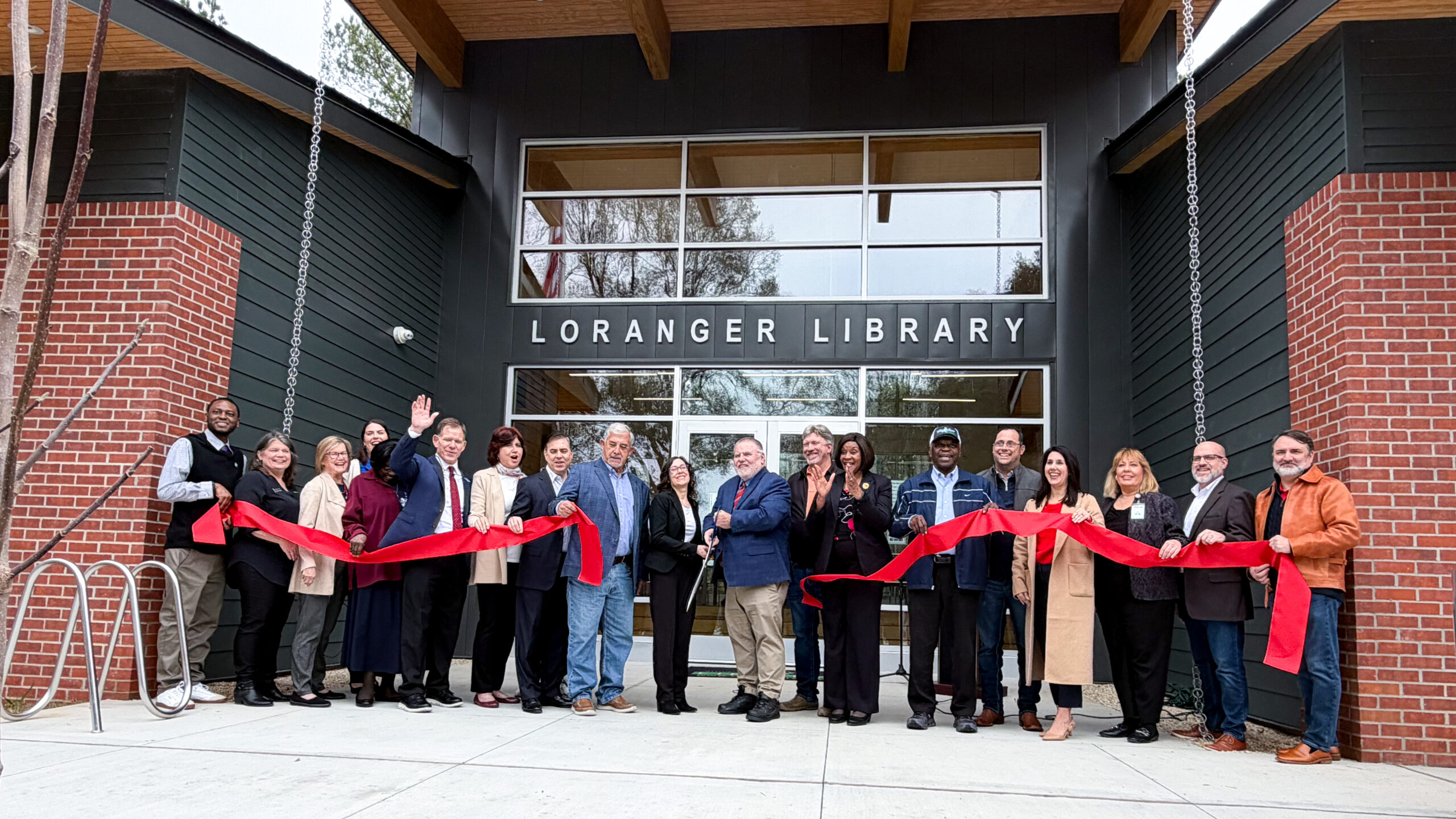
Tangipahoa Parish Library System Celebrates New Loranger Branch
January 27, 2026On January 23, the Tangipahoa Parish Library System hosted a ribbon-cutting ceremony to celebrate the opening of the new Loranger Branch. Designed as a modern and welcoming space, the library supports education, creativity, and lifelong learning through thoughtful design and......
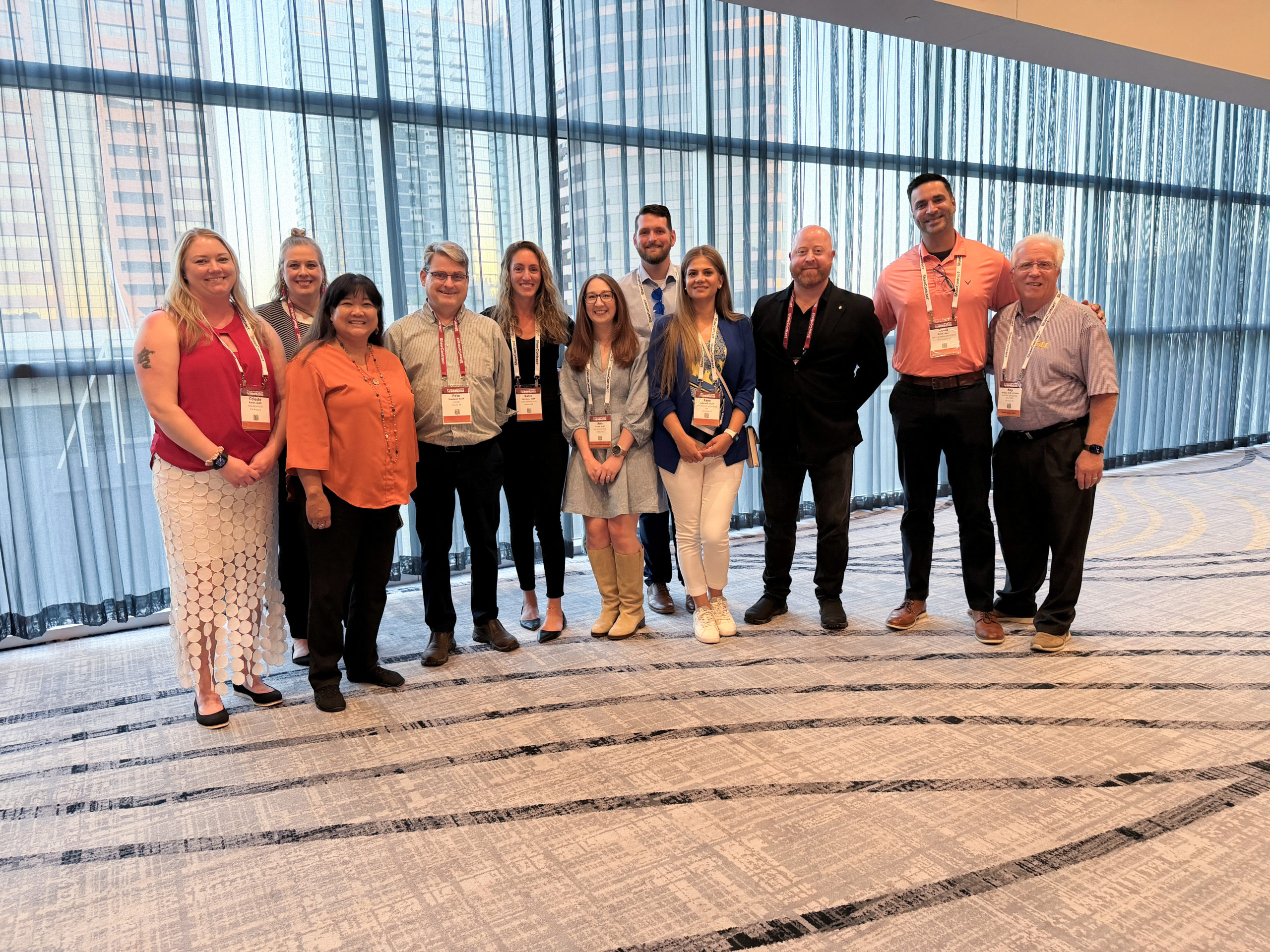
Rohit Sood, ALEP, Attends A4LE LearningSCAPES Conference in Phoenix
November 6, 2025H/S Principal Rohit Sood, ALEP, recently attended the A4LE LearningSCAPES Conference in Phoenix, joining fellow members of the A4LE Advanced Academy for a national discussion on the future of educational design. The event featured a special recognition of new ALEP......
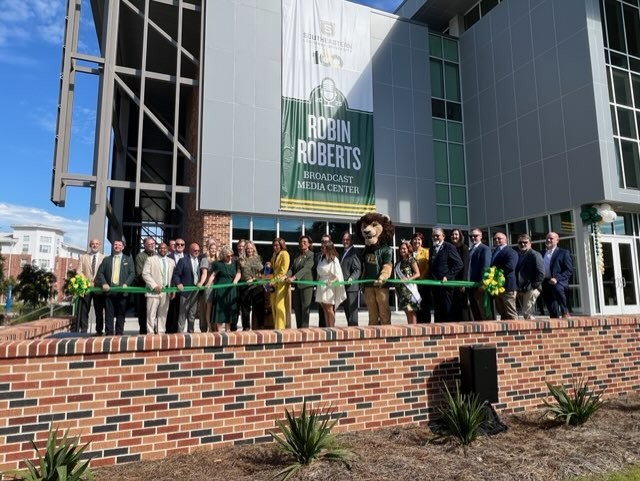
Renovated D Vickers Hall Unveiled, Featuring the Robin Roberts Broadcast Media Center
October 20, 2025On Friday, October 17, 2025, Southeastern Louisiana University celebrated a significant milestone with the dedication of the newly renovated D Vickers Hall and the state-of-the-art Robin Roberts Broadcasting Center in Hammond. The event was highlighted by a generous donation from......
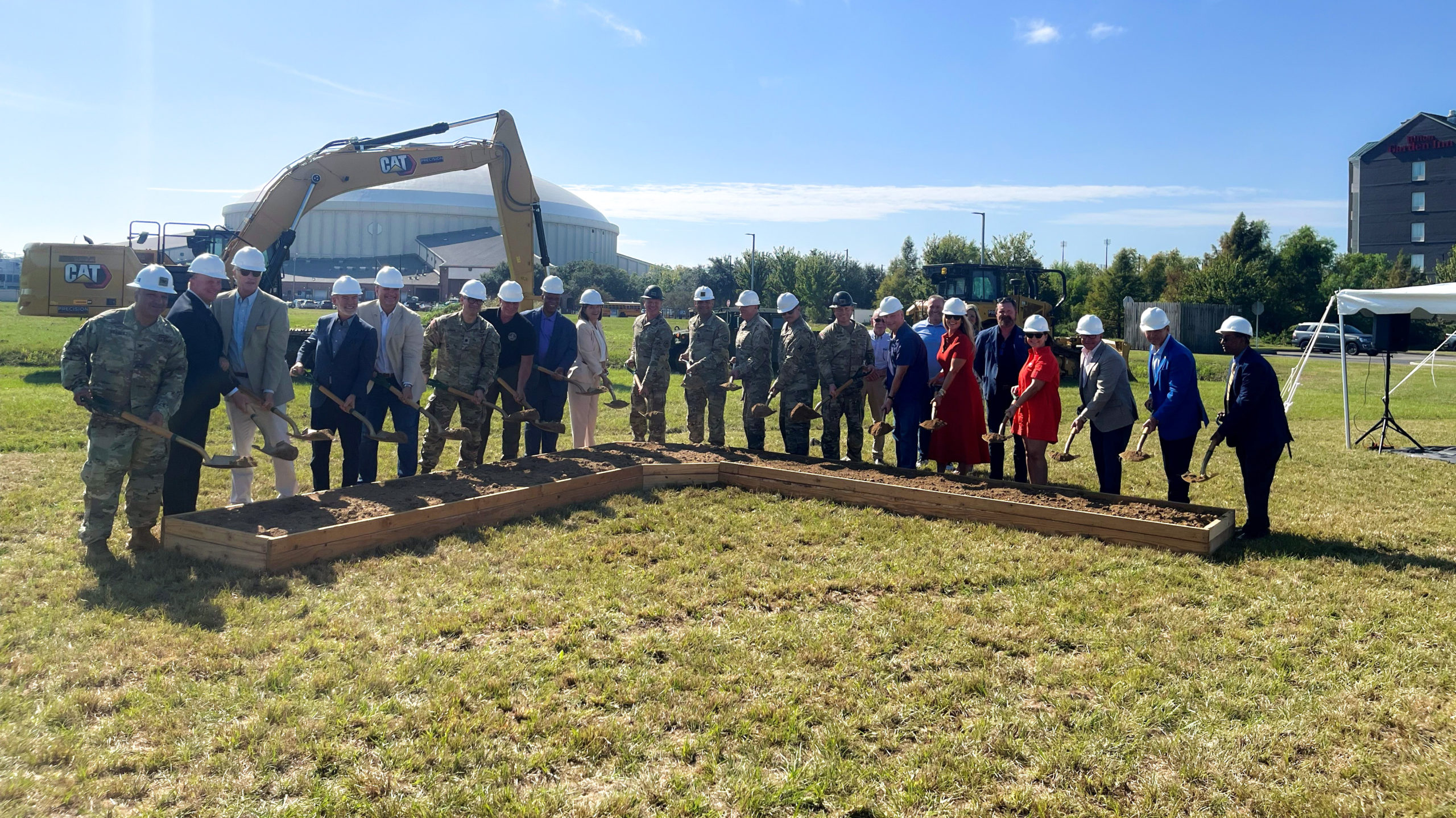
Louisiana Army National Guard Breaks Ground on Lafayette Readiness Center
October 13, 2025The Louisiana Army National Guard held a groundbreaking ceremony on October 8, 2025 for the new Readiness Center in Lafayette. Located on West Congress Street, this sustainably designed 83,943 sq, ft. facility will be highly energy-efficient, constructed from highly resilient,......
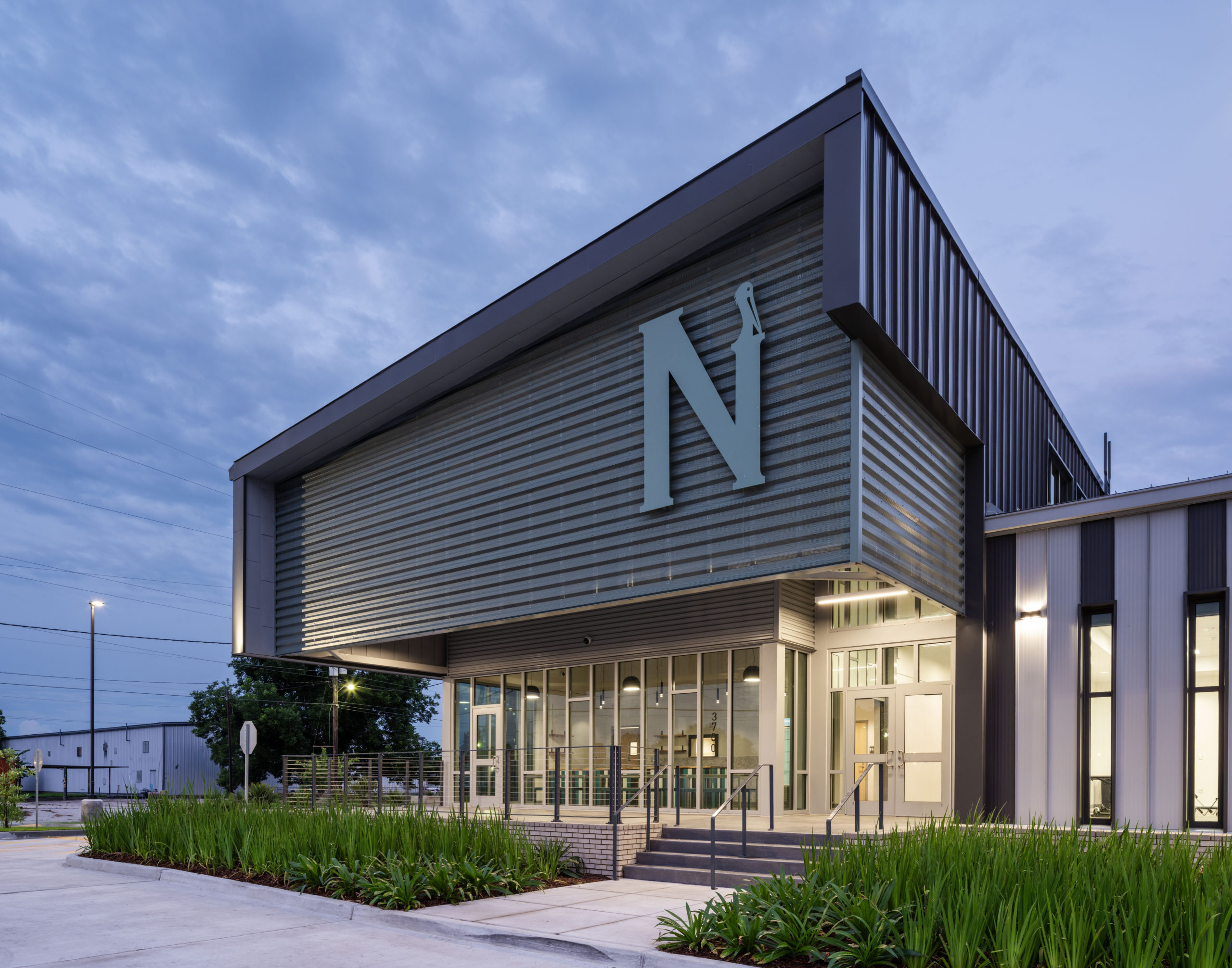
Nunez Community College Student Testing and Career Counseling Center Honored with AIA Louisiana Award of Merit
September 30, 2025Holly & Smith Architects is honored to announce that the Nunez Community College Student Testing and Career Counseling Center has been recognized with an Award of Merit at the 2025 AIA Louisiana Design Awards. This student-centered facility was envisioned as......
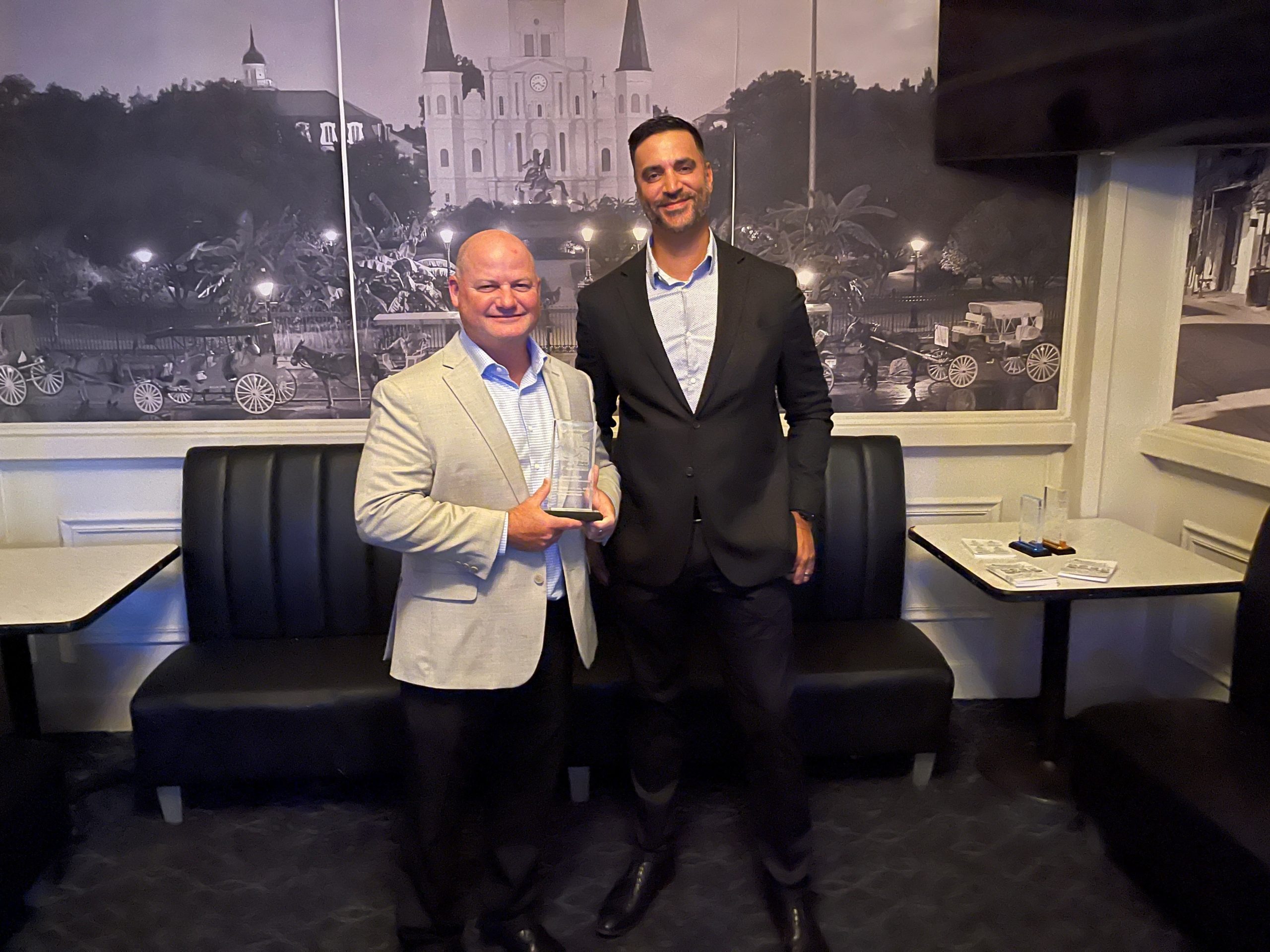
639 Desire Street Honored with AIA New Orleans Award of Merit for Historic Preservation and Restoration
July 23, 2025Holly & Smith Architects is honored to announce that our restoration of 639 Desire Street has been recognized with a 2025 AIA New Orleans Award of Merit in Historic Preservation and Restoration. Presented at the AIA New Orleans Design Awards......
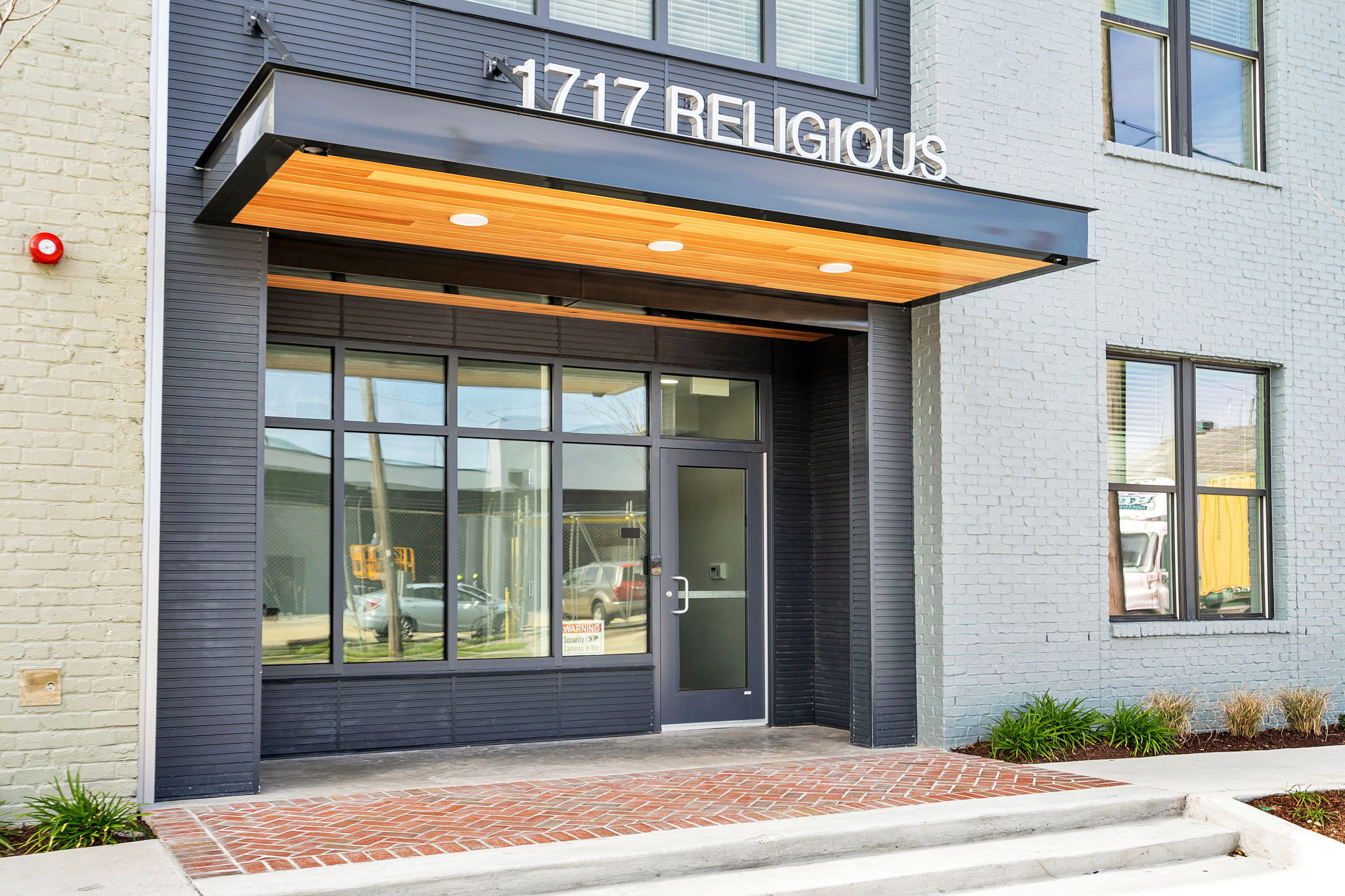
Celeste Landing Celebrates Grand Opening in New Orleans’ Lower Garden District
April 14, 2025Holly & Smith Architects (H/S) is proud to celebrate the grand opening of Celeste Landing, a transformative affordable housing development in New Orleans' Lower Garden District. Designed by H/S, the project combines the thoughtful restoration of a historic structure with......
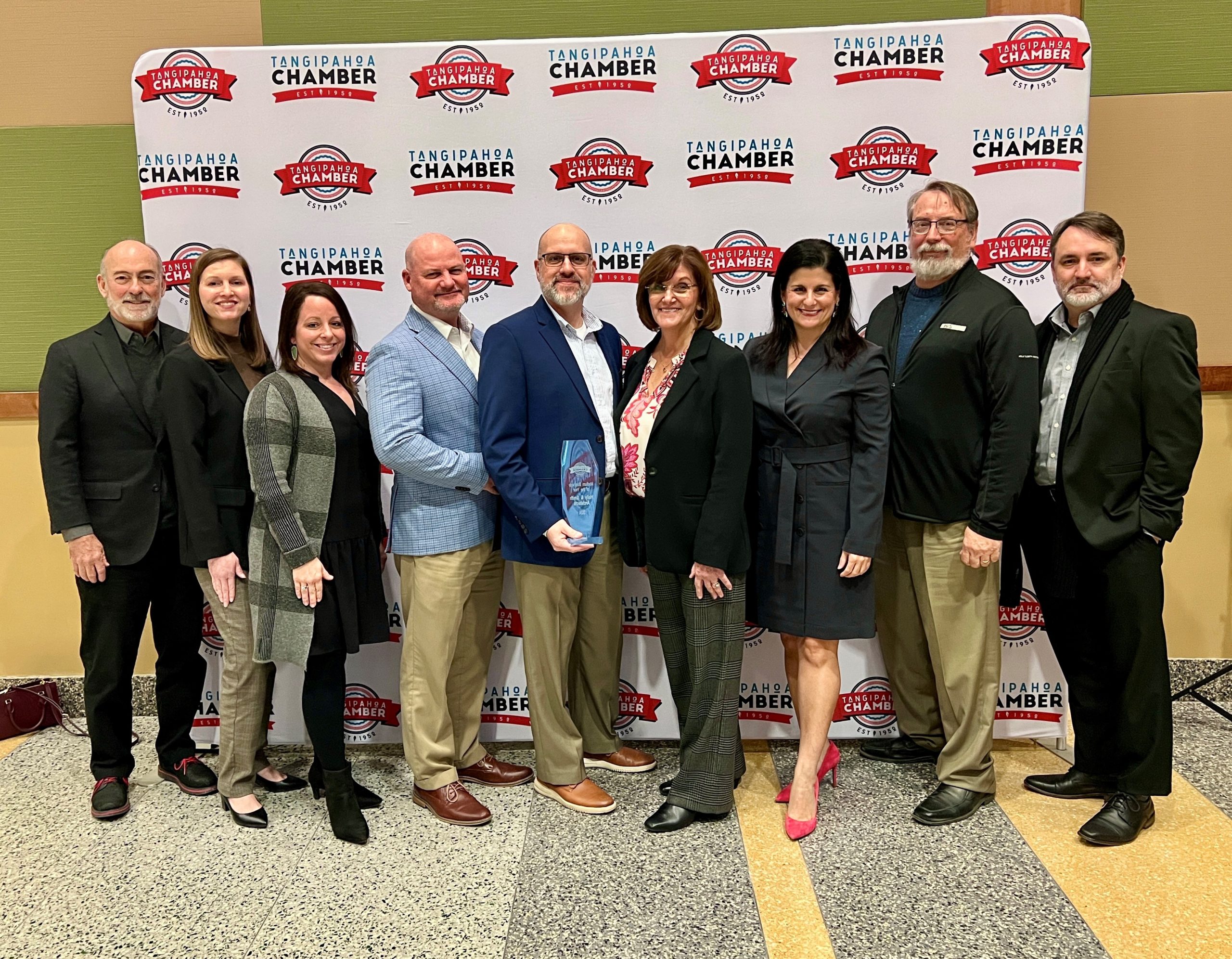
Holly & Smith Architects Named Medium Business of the Year by Tangipahoa Chamber
January 28, 2025Holly & Smith Architects (H/S) is proud to announce its recognition as Medium Business of the Year at the 2025 Tangipahoa Chamber Annual Installation and Awards Luncheon. This prestigious honor celebrates the firm’s longstanding commitment to excellence in design, innovation,......
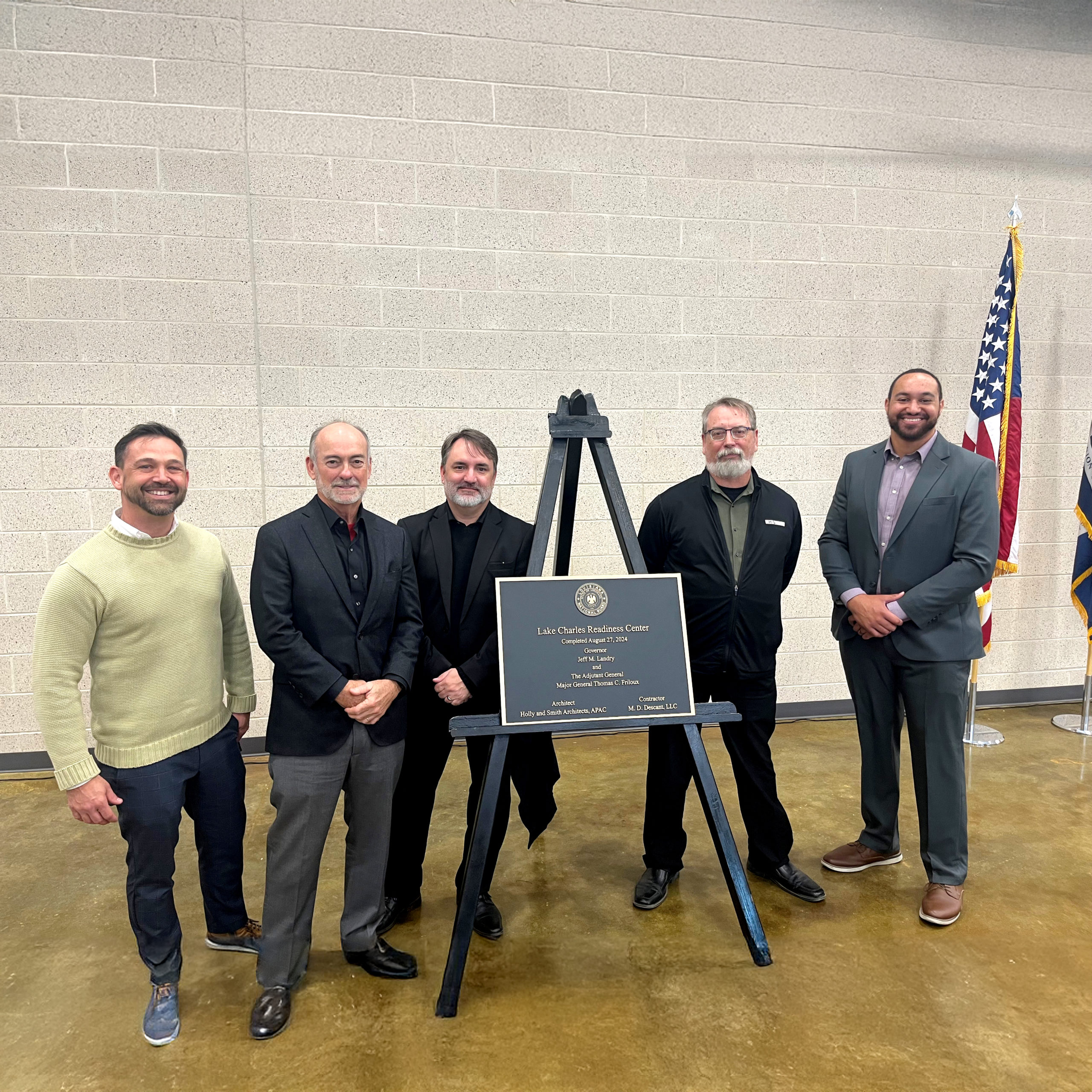
Ribbon-Cutting Ceremony Held for New Louisiana National Guard Readiness Center in Lake Charles
October 21, 2024The Louisiana National Guard celebrated the ribbon-cutting of the new Readiness Center at Chennault International Airport in Lake Charles today, marking a significant milestone for the 3rd Battalion, 156th Infantry Regiment. The new 60,391-square-foot facility, owned by the State of......
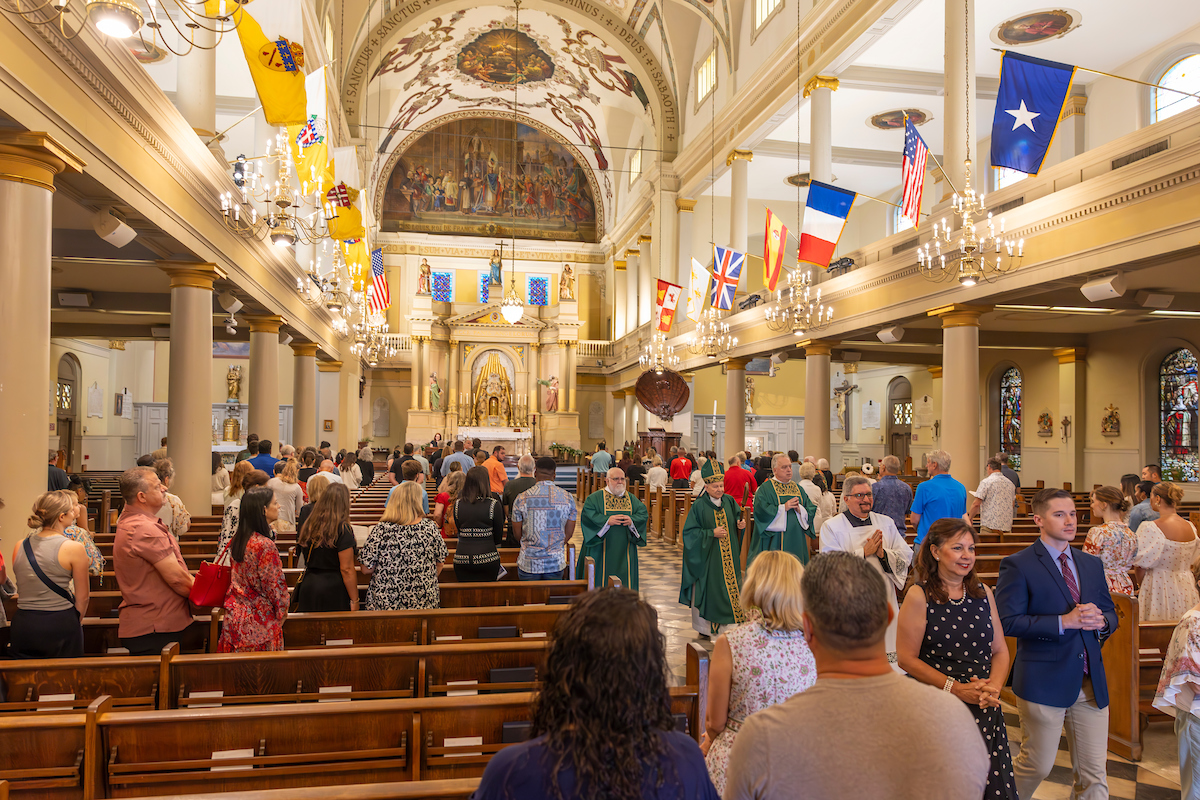
Holly & Smith Architects to lead St. Louis Cathedral renovation | Preservation Resource Center of New Orleans (prcno.org)
October 16, 2024Over the last year, Holly & Smith Architects has had the privilege of serving the Catholic Community Foundation, as well as the Archdiocese of New Orleans, in providing a study for the historic St. Louis Cathedral. The goal of this......

UL Lafayette Breaks Ground on New Engineering Building
August 6, 2024Holly & Smith Architects, in joint venture with The Sellers Group, is thrilled to announce the groundbreaking of the University of Louisiana at Lafayette’s new Engineering Building. This 64,700-square-foot facility is designed to meet the needs of UL Lafayette’s expanding......
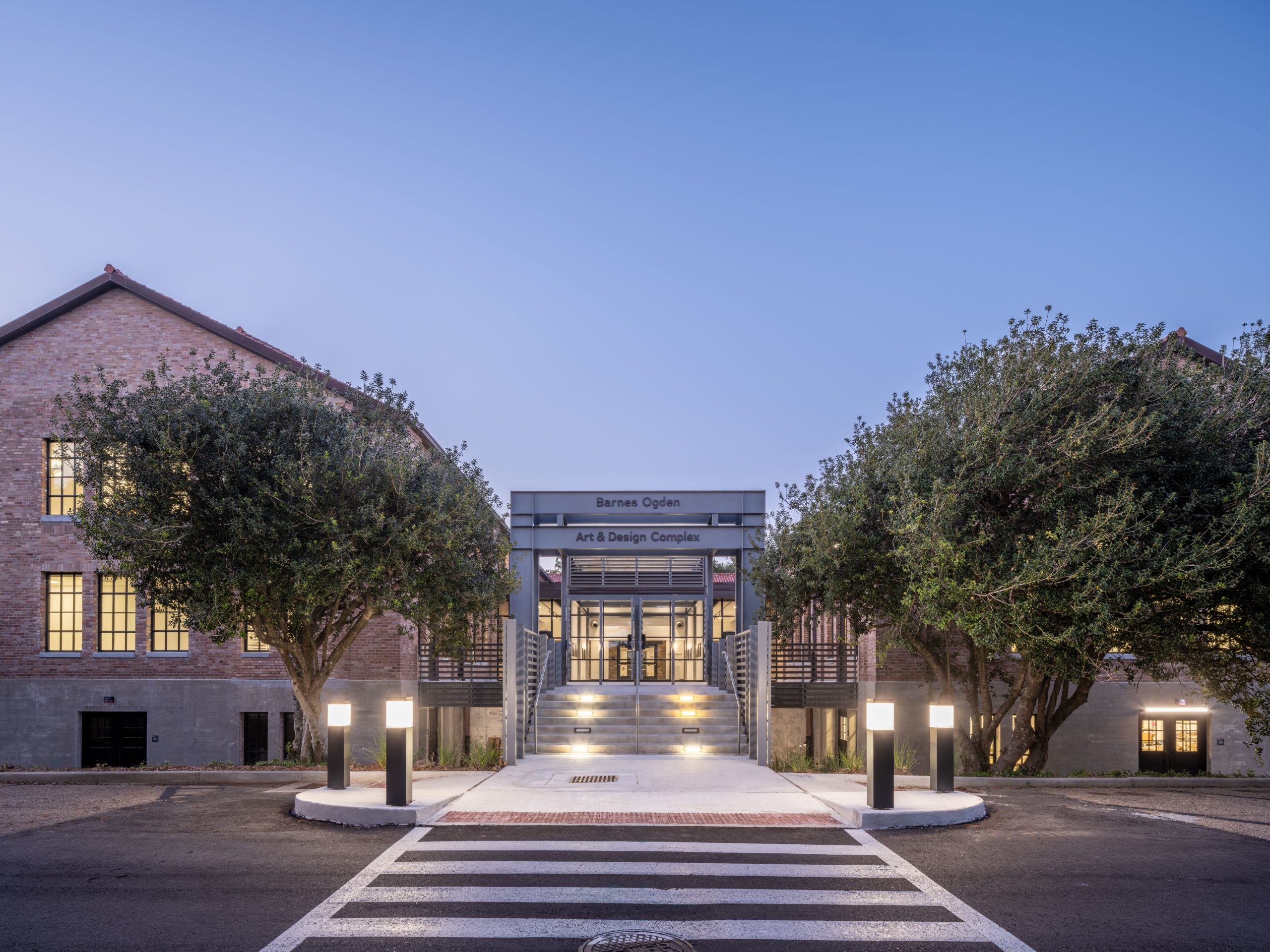
LSU Barnes Ogden Art and Design Complex, Kentwood Library Branch, and Stoa Group Headquarters each win at the AIA Baton Rouge Rose Awards Gala
July 17, 2024On Thursday, April 25th, AIA Baton Rouge held its annual Rose Awards Gala at The Water Campus, celebrating outstanding design projects in various categories. The H/S team was thrilled to receive the Gold Rose Award for LSU Barnes Ogden Art and......
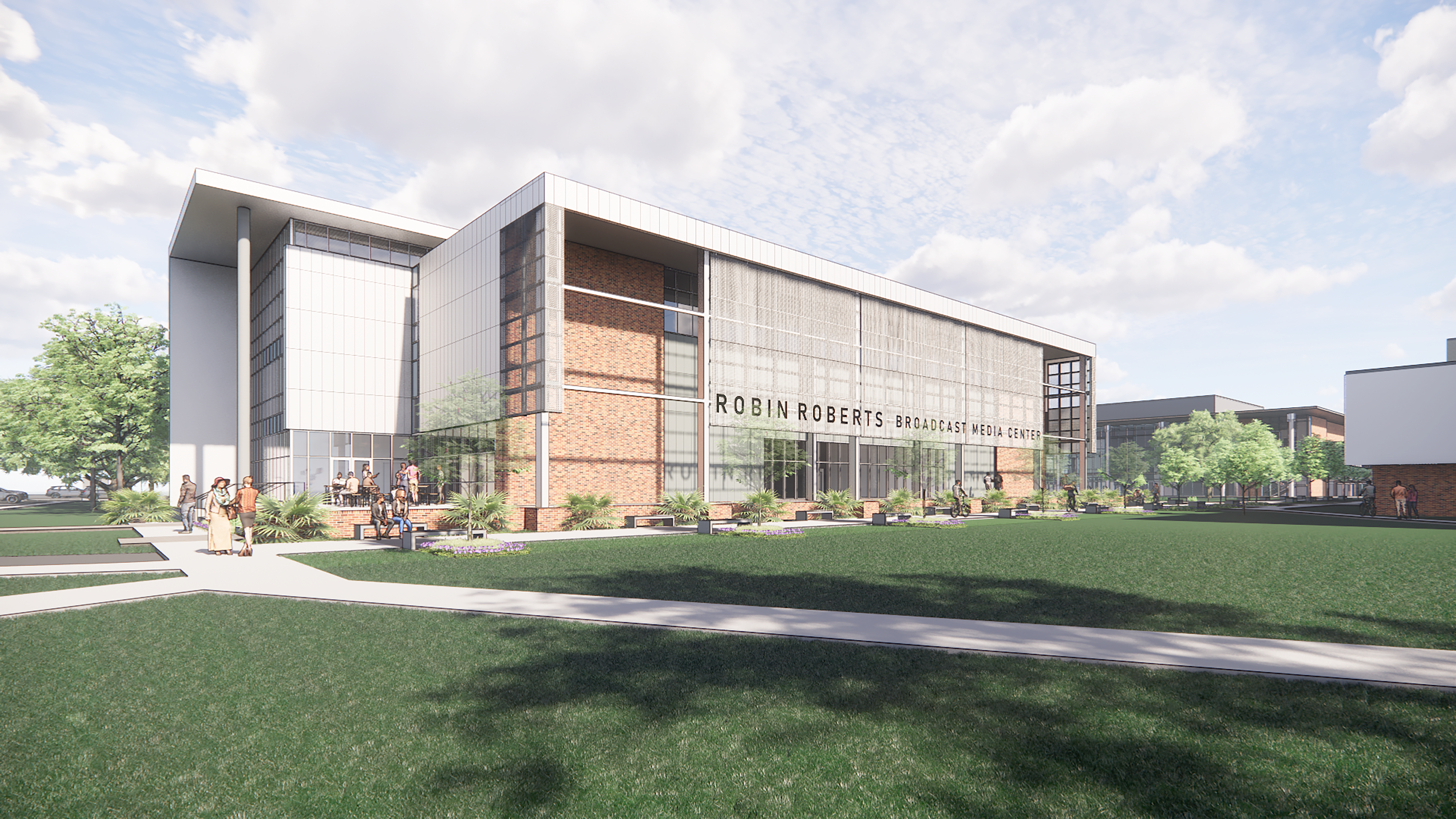
Southeastern Louisiana University breaks ground on new Robin Roberts Broadcast Media Center at D. Vickers Hall
November 16, 2023In a momentous ceremony attended by Good Morning America Co-Anchor Robin Roberts, Louisiana Governor John Bel Edwards, and representatives from Southeastern Louisiana University, the official groundbreaking for the Robin Roberts Broadcast Media Center and the $40 million renovation of D. Vickers Hall......
Holly & Smith Architects opens new office in Lafayette
June 21, 2022Allons a Lafayette…The Heart of Acadiana! Holly & Smith Architects is returning to its roots! We are thrilled to announce that the firm has expanded to southwest Louisiana with a new office in Lafayette. Around 40 years ago, both H/S......
Academy Place
The project includes the complete renovation of the historic Houma Elementary School. It is an ideal location for much needed affordable senior housing being immediately adjacent to downtown Houma with proximity to services, transit, and commercial. The Terrebonne Parish School Board had been operating school and administration uses at this property since the early 1900s. The owner/developer utilized both State and Federal Historic Tax Credits allowing for the historic character of the buildings to be restored and preserved for the future.
All 103 units will be age-restricted to seniors 62 and up comprising a new 56 unit, 47,000 sq. ft. three-story building with the additional 47 apartments located in the rehabilitated 29,491 sq. ft. historic elementary school and 12,731 sq. ft. annex. 94 units will be one-bedroom units, and 9 will be two-bedroom units. Sixty percent of the apartments will be income-restricted.
The original historic buildings were once the site of the Houma Elementary School, with the oldest building built in 1931 followed by a cafeteria annex in 1950. The site design is scaled to the surrounding historic downtown and serves to transition from the commercial properties with their larger scaled structures to the residential neighborhoods.
This change in scale is accomplished through exterior material changes on the façade and the rhythmic setback of building forms rather than a single monolithic building with a uniform exterior finish. The building form also permits landscaped outdoor spaces between the building envelope for residents’ use and enjoyment and neighborhood beautification.
The renovation met The Secretary of the Interior’s Standards for the treatment of historic properties and was developed in coordination with the State Historic Preservation Office (SHPO). The revitalization of this historic landmark is a great asset to the successful rejuvenation of Downtown Houma, while also fulfilling a great need for centrally located affordable senior housing.
The development is certified with Enterprise Green Communities and Energy Star 3.0 and incorporates many green building strategies, including durable materials, Energy Star lighting and appliances, and energy-efficient building components. All of these contribute to lower costs for tenants on utilities.
The existing one-story connection between the historic school and annex building has been upgraded with a new connecting structure that contains an elevator providing accessibility to upper floor residents. The existing parking lot has been reconfigured for efficiency. It is located behind the historic building’s street entrances, which will preserve the large front yards and oak trees and maintain the buildings’ existing emphasis as the focus of the streetscape facing the historic downtown.
Approved as a Green Communities certified development through the Enterprise Green Communities
FEATURED STORIES
Holly & Smith Announces Matthew Romano as a Newly Licensed Architect
July 8, 2026Holly & Smith Architects is proud to announce that Matthew Romano has successfully completed the Architect Registration Examination (ARE) and is now a licensed architect. Matt earned a Bachelor of Science in Architecture from the University of Louisiana at Lafayette......
Holly & Smith Announces Phoebe Roussel as a Newly Licensed Architect
February 2, 2026Holly & Smith Architects is proud to announce Phoebe Roussel has successfully completed her Architect Registration Examination (ARE) and is now a licensed architect. Phoebe graduated from University of Louisiana at Lafayette with a Bachelor of Architectural Studies in 2022,......
Tangipahoa Parish Library System Celebrates New Loranger Branch
January 27, 2026On January 23, the Tangipahoa Parish Library System hosted a ribbon-cutting ceremony to celebrate the opening of the new Loranger Branch. Designed as a modern and welcoming space, the library supports education, creativity, and lifelong learning through thoughtful design and......
Rohit Sood, ALEP, Attends A4LE LearningSCAPES Conference in Phoenix
November 6, 2025H/S Principal Rohit Sood, ALEP, recently attended the A4LE LearningSCAPES Conference in Phoenix, joining fellow members of the A4LE Advanced Academy for a national discussion on the future of educational design. The event featured a special recognition of new ALEP......
Renovated D Vickers Hall Unveiled, Featuring the Robin Roberts Broadcast Media Center
October 20, 2025On Friday, October 17, 2025, Southeastern Louisiana University celebrated a significant milestone with the dedication of the newly renovated D Vickers Hall and the state-of-the-art Robin Roberts Broadcasting Center in Hammond. The event was highlighted by a generous donation from......
Louisiana Army National Guard Breaks Ground on Lafayette Readiness Center
October 13, 2025The Louisiana Army National Guard held a groundbreaking ceremony on October 8, 2025 for the new Readiness Center in Lafayette. Located on West Congress Street, this sustainably designed 83,943 sq, ft. facility will be highly energy-efficient, constructed from highly resilient,......
Nunez Community College Student Testing and Career Counseling Center Honored with AIA Louisiana Award of Merit
September 30, 2025Holly & Smith Architects is honored to announce that the Nunez Community College Student Testing and Career Counseling Center has been recognized with an Award of Merit at the 2025 AIA Louisiana Design Awards. This student-centered facility was envisioned as......
639 Desire Street Honored with AIA New Orleans Award of Merit for Historic Preservation and Restoration
July 23, 2025Holly & Smith Architects is honored to announce that our restoration of 639 Desire Street has been recognized with a 2025 AIA New Orleans Award of Merit in Historic Preservation and Restoration. Presented at the AIA New Orleans Design Awards......
Celeste Landing Celebrates Grand Opening in New Orleans’ Lower Garden District
April 14, 2025Holly & Smith Architects (H/S) is proud to celebrate the grand opening of Celeste Landing, a transformative affordable housing development in New Orleans' Lower Garden District. Designed by H/S, the project combines the thoughtful restoration of a historic structure with......
Holly & Smith Architects Named Medium Business of the Year by Tangipahoa Chamber
January 28, 2025Holly & Smith Architects (H/S) is proud to announce its recognition as Medium Business of the Year at the 2025 Tangipahoa Chamber Annual Installation and Awards Luncheon. This prestigious honor celebrates the firm’s longstanding commitment to excellence in design, innovation,......
Ribbon-Cutting Ceremony Held for New Louisiana National Guard Readiness Center in Lake Charles
October 21, 2024The Louisiana National Guard celebrated the ribbon-cutting of the new Readiness Center at Chennault International Airport in Lake Charles today, marking a significant milestone for the 3rd Battalion, 156th Infantry Regiment. The new 60,391-square-foot facility, owned by the State of......
Holly & Smith Architects to lead St. Louis Cathedral renovation | Preservation Resource Center of New Orleans (prcno.org)
October 16, 2024Over the last year, Holly & Smith Architects has had the privilege of serving the Catholic Community Foundation, as well as the Archdiocese of New Orleans, in providing a study for the historic St. Louis Cathedral. The goal of this......
UL Lafayette Breaks Ground on New Engineering Building
August 6, 2024Holly & Smith Architects, in joint venture with The Sellers Group, is thrilled to announce the groundbreaking of the University of Louisiana at Lafayette’s new Engineering Building. This 64,700-square-foot facility is designed to meet the needs of UL Lafayette’s expanding......
LSU Barnes Ogden Art and Design Complex, Kentwood Library Branch, and Stoa Group Headquarters each win at the AIA Baton Rouge Rose Awards Gala
July 17, 2024On Thursday, April 25th, AIA Baton Rouge held its annual Rose Awards Gala at The Water Campus, celebrating outstanding design projects in various categories. The H/S team was thrilled to receive the Gold Rose Award for LSU Barnes Ogden Art and......
Southeastern Louisiana University breaks ground on new Robin Roberts Broadcast Media Center at D. Vickers Hall
November 16, 2023In a momentous ceremony attended by Good Morning America Co-Anchor Robin Roberts, Louisiana Governor John Bel Edwards, and representatives from Southeastern Louisiana University, the official groundbreaking for the Robin Roberts Broadcast Media Center and the $40 million renovation of D. Vickers Hall......
Holly & Smith Architects opens new office in Lafayette
June 21, 2022Allons a Lafayette…The Heart of Acadiana! Holly & Smith Architects is returning to its roots! We are thrilled to announce that the firm has expanded to southwest Louisiana with a new office in Lafayette. Around 40 years ago, both H/S......
The Josephine Event Center
The former Our Lady of Lourdes Church, a Catholic landmark built in 1925, has been converted into The Josephine Event Center. This is a significant historic structure in New Orleans, representing Spanish Mission Revival architecture. After suffering extensive damage during Hurricane Katrina in 2005, the church was deconsecrated and left vacant. Over time, neglect led to structural issues, including a failing foundation, roof leaks, and broken windows.
This project involved restoring and repurposing the church into a modern, multi-use event space. The goal was to preserve the building’s historic features while updating it with essential infrastructure to support a variety of community events such as weddings, concerts, Mardi Gras balls, and public gatherings.
The scope included rebuilding the foundation, replacing the roof, repairing walls and windows, and restoring key architectural elements such as the twin towers, vaulted ceilings, terrazzo flooring, and decorative altarpieces. The interior was carefully restored to highlight its original character, with modern upgrades including new HVAC, electrical, plumbing, lighting, sound systems, and accessibility features like an elevator and public restrooms.
This renovation successfully maintained the historical integrity of the church while transforming it into a functional, accessible community venue that now serves as a vibrant hub for cultural and social events.
Images © 2025 André Courville
FEATURED STORIES
Holly & Smith Announces Matthew Romano as a Newly Licensed Architect
July 8, 2026Holly & Smith Architects is proud to announce that Matthew Romano has successfully completed the Architect Registration Examination (ARE) and is now a licensed architect. Matt earned a Bachelor of Science in Architecture from the University of Louisiana at Lafayette......
Holly & Smith Announces Phoebe Roussel as a Newly Licensed Architect
February 2, 2026Holly & Smith Architects is proud to announce Phoebe Roussel has successfully completed her Architect Registration Examination (ARE) and is now a licensed architect. Phoebe graduated from University of Louisiana at Lafayette with a Bachelor of Architectural Studies in 2022,......
Tangipahoa Parish Library System Celebrates New Loranger Branch
January 27, 2026On January 23, the Tangipahoa Parish Library System hosted a ribbon-cutting ceremony to celebrate the opening of the new Loranger Branch. Designed as a modern and welcoming space, the library supports education, creativity, and lifelong learning through thoughtful design and......
Rohit Sood, ALEP, Attends A4LE LearningSCAPES Conference in Phoenix
November 6, 2025H/S Principal Rohit Sood, ALEP, recently attended the A4LE LearningSCAPES Conference in Phoenix, joining fellow members of the A4LE Advanced Academy for a national discussion on the future of educational design. The event featured a special recognition of new ALEP......
Renovated D Vickers Hall Unveiled, Featuring the Robin Roberts Broadcast Media Center
October 20, 2025On Friday, October 17, 2025, Southeastern Louisiana University celebrated a significant milestone with the dedication of the newly renovated D Vickers Hall and the state-of-the-art Robin Roberts Broadcasting Center in Hammond. The event was highlighted by a generous donation from......
Louisiana Army National Guard Breaks Ground on Lafayette Readiness Center
October 13, 2025The Louisiana Army National Guard held a groundbreaking ceremony on October 8, 2025 for the new Readiness Center in Lafayette. Located on West Congress Street, this sustainably designed 83,943 sq, ft. facility will be highly energy-efficient, constructed from highly resilient,......
Nunez Community College Student Testing and Career Counseling Center Honored with AIA Louisiana Award of Merit
September 30, 2025Holly & Smith Architects is honored to announce that the Nunez Community College Student Testing and Career Counseling Center has been recognized with an Award of Merit at the 2025 AIA Louisiana Design Awards. This student-centered facility was envisioned as......
639 Desire Street Honored with AIA New Orleans Award of Merit for Historic Preservation and Restoration
July 23, 2025Holly & Smith Architects is honored to announce that our restoration of 639 Desire Street has been recognized with a 2025 AIA New Orleans Award of Merit in Historic Preservation and Restoration. Presented at the AIA New Orleans Design Awards......
Celeste Landing Celebrates Grand Opening in New Orleans’ Lower Garden District
April 14, 2025Holly & Smith Architects (H/S) is proud to celebrate the grand opening of Celeste Landing, a transformative affordable housing development in New Orleans' Lower Garden District. Designed by H/S, the project combines the thoughtful restoration of a historic structure with......
Holly & Smith Architects Named Medium Business of the Year by Tangipahoa Chamber
January 28, 2025Holly & Smith Architects (H/S) is proud to announce its recognition as Medium Business of the Year at the 2025 Tangipahoa Chamber Annual Installation and Awards Luncheon. This prestigious honor celebrates the firm’s longstanding commitment to excellence in design, innovation,......
Ribbon-Cutting Ceremony Held for New Louisiana National Guard Readiness Center in Lake Charles
October 21, 2024The Louisiana National Guard celebrated the ribbon-cutting of the new Readiness Center at Chennault International Airport in Lake Charles today, marking a significant milestone for the 3rd Battalion, 156th Infantry Regiment. The new 60,391-square-foot facility, owned by the State of......
Holly & Smith Architects to lead St. Louis Cathedral renovation | Preservation Resource Center of New Orleans (prcno.org)
October 16, 2024Over the last year, Holly & Smith Architects has had the privilege of serving the Catholic Community Foundation, as well as the Archdiocese of New Orleans, in providing a study for the historic St. Louis Cathedral. The goal of this......
UL Lafayette Breaks Ground on New Engineering Building
August 6, 2024Holly & Smith Architects, in joint venture with The Sellers Group, is thrilled to announce the groundbreaking of the University of Louisiana at Lafayette’s new Engineering Building. This 64,700-square-foot facility is designed to meet the needs of UL Lafayette’s expanding......
LSU Barnes Ogden Art and Design Complex, Kentwood Library Branch, and Stoa Group Headquarters each win at the AIA Baton Rouge Rose Awards Gala
July 17, 2024On Thursday, April 25th, AIA Baton Rouge held its annual Rose Awards Gala at The Water Campus, celebrating outstanding design projects in various categories. The H/S team was thrilled to receive the Gold Rose Award for LSU Barnes Ogden Art and......
Southeastern Louisiana University breaks ground on new Robin Roberts Broadcast Media Center at D. Vickers Hall
November 16, 2023In a momentous ceremony attended by Good Morning America Co-Anchor Robin Roberts, Louisiana Governor John Bel Edwards, and representatives from Southeastern Louisiana University, the official groundbreaking for the Robin Roberts Broadcast Media Center and the $40 million renovation of D. Vickers Hall......
Holly & Smith Architects opens new office in Lafayette
June 21, 2022Allons a Lafayette…The Heart of Acadiana! Holly & Smith Architects is returning to its roots! We are thrilled to announce that the firm has expanded to southwest Louisiana with a new office in Lafayette. Around 40 years ago, both H/S......
223 E. Thomas Street
Originally constructed in 1917, the Dantone Building is a proud contributing structure within the Hammond Historic District. Once home to the Dantone Grocery and Fruit Market, the building also featured family living quarters on the second floor with rear access.
Our restoration and adaptive reuse of this historic structure preserved its architectural integrity while thoughtfully updating it for modern use. The design maintains a small commercial space at the street level and introduces a new one-bedroom apartment on the first floor, along with two residential units on the second floor.
Historic character was carefully preserved throughout. The 1960s-era storefront was removed and replaced with an entrance that more closely reflects the original design. The missing flat canopy was reintroduced along the street-facing façades using the building’s original anchorages. Original wood sash windows were fully restored, and the heart pine flooring was repaired and refinished to its former richness. The original staircase was also retained, reinforcing the building’s historic fabric.
A new rear courtyard was added, providing secure and private entry from the street while enhancing the livability of the residential units. With its distinctive brickwork in both running and Flemish bond, large double-hung sash windows, and a crenelated parapet, the revitalized Dantone Building continues to contribute to the historic and architectural narrative of downtown Hammond.
FEATURED STORIES
Holly & Smith Announces Matthew Romano as a Newly Licensed Architect
July 8, 2026Holly & Smith Architects is proud to announce that Matthew Romano has successfully completed the Architect Registration Examination (ARE) and is now a licensed architect. Matt earned a Bachelor of Science in Architecture from the University of Louisiana at Lafayette......
Holly & Smith Announces Phoebe Roussel as a Newly Licensed Architect
February 2, 2026Holly & Smith Architects is proud to announce Phoebe Roussel has successfully completed her Architect Registration Examination (ARE) and is now a licensed architect. Phoebe graduated from University of Louisiana at Lafayette with a Bachelor of Architectural Studies in 2022,......
Tangipahoa Parish Library System Celebrates New Loranger Branch
January 27, 2026On January 23, the Tangipahoa Parish Library System hosted a ribbon-cutting ceremony to celebrate the opening of the new Loranger Branch. Designed as a modern and welcoming space, the library supports education, creativity, and lifelong learning through thoughtful design and......
Rohit Sood, ALEP, Attends A4LE LearningSCAPES Conference in Phoenix
November 6, 2025H/S Principal Rohit Sood, ALEP, recently attended the A4LE LearningSCAPES Conference in Phoenix, joining fellow members of the A4LE Advanced Academy for a national discussion on the future of educational design. The event featured a special recognition of new ALEP......
Renovated D Vickers Hall Unveiled, Featuring the Robin Roberts Broadcast Media Center
October 20, 2025On Friday, October 17, 2025, Southeastern Louisiana University celebrated a significant milestone with the dedication of the newly renovated D Vickers Hall and the state-of-the-art Robin Roberts Broadcasting Center in Hammond. The event was highlighted by a generous donation from......
Louisiana Army National Guard Breaks Ground on Lafayette Readiness Center
October 13, 2025The Louisiana Army National Guard held a groundbreaking ceremony on October 8, 2025 for the new Readiness Center in Lafayette. Located on West Congress Street, this sustainably designed 83,943 sq, ft. facility will be highly energy-efficient, constructed from highly resilient,......
Nunez Community College Student Testing and Career Counseling Center Honored with AIA Louisiana Award of Merit
September 30, 2025Holly & Smith Architects is honored to announce that the Nunez Community College Student Testing and Career Counseling Center has been recognized with an Award of Merit at the 2025 AIA Louisiana Design Awards. This student-centered facility was envisioned as......
639 Desire Street Honored with AIA New Orleans Award of Merit for Historic Preservation and Restoration
July 23, 2025Holly & Smith Architects is honored to announce that our restoration of 639 Desire Street has been recognized with a 2025 AIA New Orleans Award of Merit in Historic Preservation and Restoration. Presented at the AIA New Orleans Design Awards......
Celeste Landing Celebrates Grand Opening in New Orleans’ Lower Garden District
April 14, 2025Holly & Smith Architects (H/S) is proud to celebrate the grand opening of Celeste Landing, a transformative affordable housing development in New Orleans' Lower Garden District. Designed by H/S, the project combines the thoughtful restoration of a historic structure with......
Holly & Smith Architects Named Medium Business of the Year by Tangipahoa Chamber
January 28, 2025Holly & Smith Architects (H/S) is proud to announce its recognition as Medium Business of the Year at the 2025 Tangipahoa Chamber Annual Installation and Awards Luncheon. This prestigious honor celebrates the firm’s longstanding commitment to excellence in design, innovation,......
Ribbon-Cutting Ceremony Held for New Louisiana National Guard Readiness Center in Lake Charles
October 21, 2024The Louisiana National Guard celebrated the ribbon-cutting of the new Readiness Center at Chennault International Airport in Lake Charles today, marking a significant milestone for the 3rd Battalion, 156th Infantry Regiment. The new 60,391-square-foot facility, owned by the State of......
Holly & Smith Architects to lead St. Louis Cathedral renovation | Preservation Resource Center of New Orleans (prcno.org)
October 16, 2024Over the last year, Holly & Smith Architects has had the privilege of serving the Catholic Community Foundation, as well as the Archdiocese of New Orleans, in providing a study for the historic St. Louis Cathedral. The goal of this......
UL Lafayette Breaks Ground on New Engineering Building
August 6, 2024Holly & Smith Architects, in joint venture with The Sellers Group, is thrilled to announce the groundbreaking of the University of Louisiana at Lafayette’s new Engineering Building. This 64,700-square-foot facility is designed to meet the needs of UL Lafayette’s expanding......
LSU Barnes Ogden Art and Design Complex, Kentwood Library Branch, and Stoa Group Headquarters each win at the AIA Baton Rouge Rose Awards Gala
July 17, 2024On Thursday, April 25th, AIA Baton Rouge held its annual Rose Awards Gala at The Water Campus, celebrating outstanding design projects in various categories. The H/S team was thrilled to receive the Gold Rose Award for LSU Barnes Ogden Art and......
Southeastern Louisiana University breaks ground on new Robin Roberts Broadcast Media Center at D. Vickers Hall
November 16, 2023In a momentous ceremony attended by Good Morning America Co-Anchor Robin Roberts, Louisiana Governor John Bel Edwards, and representatives from Southeastern Louisiana University, the official groundbreaking for the Robin Roberts Broadcast Media Center and the $40 million renovation of D. Vickers Hall......
Holly & Smith Architects opens new office in Lafayette
June 21, 2022Allons a Lafayette…The Heart of Acadiana! Holly & Smith Architects is returning to its roots! We are thrilled to announce that the firm has expanded to southwest Louisiana with a new office in Lafayette. Around 40 years ago, both H/S......
Julius Freyhan Building Renovations and Additions
Restoration and renovation of the 15,000 sq. ft. Julius Freyhan School building revitalizes this historic building into a museum, cultural center and conference center. The first floor contains administration offices, area for workshops, meeting rooms, and toilet facilities. The second floor houses the principal exhibition spaces of a history and heritage museum which highlights cultural, social, political, and economic contributions of the Jewish citizens in rural and urban communities between the mid-19th and mid-20th centuries in Louisiana and includes both permanent exhibits and itinerate exhibits. The third floor includes a restoration of the existing auditorium into a multipurpose/meeting space with a stage and adjacent support spaces. A vertical circulation component is included as a modernist intervention to maintain the historic integrity of the existing building while providing needed fire stair egress and elevator circulation.
FEATURED STORIES
Holly & Smith Announces Matthew Romano as a Newly Licensed Architect
July 8, 2026Holly & Smith Architects is proud to announce that Matthew Romano has successfully completed the Architect Registration Examination (ARE) and is now a licensed architect. Matt earned a Bachelor of Science in Architecture from the University of Louisiana at Lafayette......
Holly & Smith Announces Phoebe Roussel as a Newly Licensed Architect
February 2, 2026Holly & Smith Architects is proud to announce Phoebe Roussel has successfully completed her Architect Registration Examination (ARE) and is now a licensed architect. Phoebe graduated from University of Louisiana at Lafayette with a Bachelor of Architectural Studies in 2022,......
Tangipahoa Parish Library System Celebrates New Loranger Branch
January 27, 2026On January 23, the Tangipahoa Parish Library System hosted a ribbon-cutting ceremony to celebrate the opening of the new Loranger Branch. Designed as a modern and welcoming space, the library supports education, creativity, and lifelong learning through thoughtful design and......
Rohit Sood, ALEP, Attends A4LE LearningSCAPES Conference in Phoenix
November 6, 2025H/S Principal Rohit Sood, ALEP, recently attended the A4LE LearningSCAPES Conference in Phoenix, joining fellow members of the A4LE Advanced Academy for a national discussion on the future of educational design. The event featured a special recognition of new ALEP......
Renovated D Vickers Hall Unveiled, Featuring the Robin Roberts Broadcast Media Center
October 20, 2025On Friday, October 17, 2025, Southeastern Louisiana University celebrated a significant milestone with the dedication of the newly renovated D Vickers Hall and the state-of-the-art Robin Roberts Broadcasting Center in Hammond. The event was highlighted by a generous donation from......
Louisiana Army National Guard Breaks Ground on Lafayette Readiness Center
October 13, 2025The Louisiana Army National Guard held a groundbreaking ceremony on October 8, 2025 for the new Readiness Center in Lafayette. Located on West Congress Street, this sustainably designed 83,943 sq, ft. facility will be highly energy-efficient, constructed from highly resilient,......
Nunez Community College Student Testing and Career Counseling Center Honored with AIA Louisiana Award of Merit
September 30, 2025Holly & Smith Architects is honored to announce that the Nunez Community College Student Testing and Career Counseling Center has been recognized with an Award of Merit at the 2025 AIA Louisiana Design Awards. This student-centered facility was envisioned as......
639 Desire Street Honored with AIA New Orleans Award of Merit for Historic Preservation and Restoration
July 23, 2025Holly & Smith Architects is honored to announce that our restoration of 639 Desire Street has been recognized with a 2025 AIA New Orleans Award of Merit in Historic Preservation and Restoration. Presented at the AIA New Orleans Design Awards......
Celeste Landing Celebrates Grand Opening in New Orleans’ Lower Garden District
April 14, 2025Holly & Smith Architects (H/S) is proud to celebrate the grand opening of Celeste Landing, a transformative affordable housing development in New Orleans' Lower Garden District. Designed by H/S, the project combines the thoughtful restoration of a historic structure with......
Holly & Smith Architects Named Medium Business of the Year by Tangipahoa Chamber
January 28, 2025Holly & Smith Architects (H/S) is proud to announce its recognition as Medium Business of the Year at the 2025 Tangipahoa Chamber Annual Installation and Awards Luncheon. This prestigious honor celebrates the firm’s longstanding commitment to excellence in design, innovation,......
Ribbon-Cutting Ceremony Held for New Louisiana National Guard Readiness Center in Lake Charles
October 21, 2024The Louisiana National Guard celebrated the ribbon-cutting of the new Readiness Center at Chennault International Airport in Lake Charles today, marking a significant milestone for the 3rd Battalion, 156th Infantry Regiment. The new 60,391-square-foot facility, owned by the State of......
Holly & Smith Architects to lead St. Louis Cathedral renovation | Preservation Resource Center of New Orleans (prcno.org)
October 16, 2024Over the last year, Holly & Smith Architects has had the privilege of serving the Catholic Community Foundation, as well as the Archdiocese of New Orleans, in providing a study for the historic St. Louis Cathedral. The goal of this......
UL Lafayette Breaks Ground on New Engineering Building
August 6, 2024Holly & Smith Architects, in joint venture with The Sellers Group, is thrilled to announce the groundbreaking of the University of Louisiana at Lafayette’s new Engineering Building. This 64,700-square-foot facility is designed to meet the needs of UL Lafayette’s expanding......
LSU Barnes Ogden Art and Design Complex, Kentwood Library Branch, and Stoa Group Headquarters each win at the AIA Baton Rouge Rose Awards Gala
July 17, 2024On Thursday, April 25th, AIA Baton Rouge held its annual Rose Awards Gala at The Water Campus, celebrating outstanding design projects in various categories. The H/S team was thrilled to receive the Gold Rose Award for LSU Barnes Ogden Art and......
Southeastern Louisiana University breaks ground on new Robin Roberts Broadcast Media Center at D. Vickers Hall
November 16, 2023In a momentous ceremony attended by Good Morning America Co-Anchor Robin Roberts, Louisiana Governor John Bel Edwards, and representatives from Southeastern Louisiana University, the official groundbreaking for the Robin Roberts Broadcast Media Center and the $40 million renovation of D. Vickers Hall......
Holly & Smith Architects opens new office in Lafayette
June 21, 2022Allons a Lafayette…The Heart of Acadiana! Holly & Smith Architects is returning to its roots! We are thrilled to announce that the firm has expanded to southwest Louisiana with a new office in Lafayette. Around 40 years ago, both H/S......
639 Desire Street
The building, identified as a circa 1841 Center Hall House, was originally a single-level structure with a large, unfinished open attic. Initial research on-site revealed that the framing was of Norman post-and-beam construction with mortise, tenon and pegged connections from floor to wall and wall to roof. A historian was engaged to further investigate the building’s ownership history and confirm the exact date of construction, with findings estimating it to be from around 1841. Research also uncovered that a separate structure on the property, known as a “dependency,” served as the kitchen and servants’ quarters for the main house. Over time, later additions had been made to the property.
The developer sought to restore the building to its original center hall layout, finish the attic as a primary suite, and restore the dependency to its original form by removing the later additions. The project also aimed to secure tax credits, and a swimming pool was requested to be added to the site.
A key challenge was to preserve and respect the integrity of the Norman post-and-beam structure while modernizing the building to meet current standards. Simultaneously, it was essential to adhere to the Secretary of the Interior’s Standards for Rehabilitation to qualify for the available tax credits.
The final restoration recreated the original floor plan of the center hall house, renovated for long-term use. The project successfully met the requirements of the Historic District Landmarks Commission, the State Office of Historic Preservation, and the National Park Service’s Secretary of the Interior’s Standards for Rehabilitation.
FEATURED STORIES
Holly & Smith Announces Matthew Romano as a Newly Licensed Architect
July 8, 2026Holly & Smith Architects is proud to announce that Matthew Romano has successfully completed the Architect Registration Examination (ARE) and is now a licensed architect. Matt earned a Bachelor of Science in Architecture from the University of Louisiana at Lafayette......
Holly & Smith Announces Phoebe Roussel as a Newly Licensed Architect
February 2, 2026Holly & Smith Architects is proud to announce Phoebe Roussel has successfully completed her Architect Registration Examination (ARE) and is now a licensed architect. Phoebe graduated from University of Louisiana at Lafayette with a Bachelor of Architectural Studies in 2022,......
Tangipahoa Parish Library System Celebrates New Loranger Branch
January 27, 2026On January 23, the Tangipahoa Parish Library System hosted a ribbon-cutting ceremony to celebrate the opening of the new Loranger Branch. Designed as a modern and welcoming space, the library supports education, creativity, and lifelong learning through thoughtful design and......
Rohit Sood, ALEP, Attends A4LE LearningSCAPES Conference in Phoenix
November 6, 2025H/S Principal Rohit Sood, ALEP, recently attended the A4LE LearningSCAPES Conference in Phoenix, joining fellow members of the A4LE Advanced Academy for a national discussion on the future of educational design. The event featured a special recognition of new ALEP......
Renovated D Vickers Hall Unveiled, Featuring the Robin Roberts Broadcast Media Center
October 20, 2025On Friday, October 17, 2025, Southeastern Louisiana University celebrated a significant milestone with the dedication of the newly renovated D Vickers Hall and the state-of-the-art Robin Roberts Broadcasting Center in Hammond. The event was highlighted by a generous donation from......
Louisiana Army National Guard Breaks Ground on Lafayette Readiness Center
October 13, 2025The Louisiana Army National Guard held a groundbreaking ceremony on October 8, 2025 for the new Readiness Center in Lafayette. Located on West Congress Street, this sustainably designed 83,943 sq, ft. facility will be highly energy-efficient, constructed from highly resilient,......
Nunez Community College Student Testing and Career Counseling Center Honored with AIA Louisiana Award of Merit
September 30, 2025Holly & Smith Architects is honored to announce that the Nunez Community College Student Testing and Career Counseling Center has been recognized with an Award of Merit at the 2025 AIA Louisiana Design Awards. This student-centered facility was envisioned as......
639 Desire Street Honored with AIA New Orleans Award of Merit for Historic Preservation and Restoration
July 23, 2025Holly & Smith Architects is honored to announce that our restoration of 639 Desire Street has been recognized with a 2025 AIA New Orleans Award of Merit in Historic Preservation and Restoration. Presented at the AIA New Orleans Design Awards......
Celeste Landing Celebrates Grand Opening in New Orleans’ Lower Garden District
April 14, 2025Holly & Smith Architects (H/S) is proud to celebrate the grand opening of Celeste Landing, a transformative affordable housing development in New Orleans' Lower Garden District. Designed by H/S, the project combines the thoughtful restoration of a historic structure with......
Holly & Smith Architects Named Medium Business of the Year by Tangipahoa Chamber
January 28, 2025Holly & Smith Architects (H/S) is proud to announce its recognition as Medium Business of the Year at the 2025 Tangipahoa Chamber Annual Installation and Awards Luncheon. This prestigious honor celebrates the firm’s longstanding commitment to excellence in design, innovation,......
Ribbon-Cutting Ceremony Held for New Louisiana National Guard Readiness Center in Lake Charles
October 21, 2024The Louisiana National Guard celebrated the ribbon-cutting of the new Readiness Center at Chennault International Airport in Lake Charles today, marking a significant milestone for the 3rd Battalion, 156th Infantry Regiment. The new 60,391-square-foot facility, owned by the State of......
Holly & Smith Architects to lead St. Louis Cathedral renovation | Preservation Resource Center of New Orleans (prcno.org)
October 16, 2024Over the last year, Holly & Smith Architects has had the privilege of serving the Catholic Community Foundation, as well as the Archdiocese of New Orleans, in providing a study for the historic St. Louis Cathedral. The goal of this......
UL Lafayette Breaks Ground on New Engineering Building
August 6, 2024Holly & Smith Architects, in joint venture with The Sellers Group, is thrilled to announce the groundbreaking of the University of Louisiana at Lafayette’s new Engineering Building. This 64,700-square-foot facility is designed to meet the needs of UL Lafayette’s expanding......
LSU Barnes Ogden Art and Design Complex, Kentwood Library Branch, and Stoa Group Headquarters each win at the AIA Baton Rouge Rose Awards Gala
July 17, 2024On Thursday, April 25th, AIA Baton Rouge held its annual Rose Awards Gala at The Water Campus, celebrating outstanding design projects in various categories. The H/S team was thrilled to receive the Gold Rose Award for LSU Barnes Ogden Art and......
Southeastern Louisiana University breaks ground on new Robin Roberts Broadcast Media Center at D. Vickers Hall
November 16, 2023In a momentous ceremony attended by Good Morning America Co-Anchor Robin Roberts, Louisiana Governor John Bel Edwards, and representatives from Southeastern Louisiana University, the official groundbreaking for the Robin Roberts Broadcast Media Center and the $40 million renovation of D. Vickers Hall......
Holly & Smith Architects opens new office in Lafayette
June 21, 2022Allons a Lafayette…The Heart of Acadiana! Holly & Smith Architects is returning to its roots! We are thrilled to announce that the firm has expanded to southwest Louisiana with a new office in Lafayette. Around 40 years ago, both H/S......
The Moon at 631 Desire Street
The Moon at 631 Desire Street is the renovation of a historic Quonset Hut structure located in New Orleans, Louisiana. A Quonset Hut is a lightweight prefabricated structure of corrugated galvanized steel with a semicircular cross-section. Hundreds of thousands were produced during World War II, and the military surplus was sold to the public. The development of the prototype is considered one of the first pre-engineered metal buildings.
The Owners of 631 Desire, LLC saw an opportunity in this geometric structure with ribs spaced 4′ on center, to create a truly unique contemporary space within a very desirable historic neighborhood, known locally as the Bywater Neighborhood. This neighborhood is located on the Mississippi River, downriver from the historic French Quarter, and was formerly a neighborhood that housed people who worked on the river and related service industries. A bed and breakfast license was obtained, and a vision of a destination for visiting guests to call home while they explore the city of New Orleans. The Bywater Neighborhood is an attractive new neighborhood for guests from out of town to visit.
The building was originally used for storage and support space for a small service-related business. Like similar industrial types in the neighborhood, the structure was a diversion from the neighborhood vernacular, which primarily were Arts and Crafts era “shotgun” structures with ornate brackets and various levels of gingerbread detail. Before rehabilitation, the building exterior was deteriorated, but the main “bones” of the structure were intact and serviceable. There was a concrete floor and no utility services. The architects’ challenge was to find a way to take advantage of the 40′ x 80′ footprint.
The footprint included an enclosed 8′ wide alley that had, at some point, been roofed over with a lean to roof structure using similar structural elements. After an initial programming meeting with the developers, the following driving issues were determined with respect to the design of this facility:
-Internal courtyard that could be treated as an outdoor living room
– Secure and private access to the complex
– Natural light required in all habitable spaces
– Provide 6 bedrooms that had internally accessed bathrooms
– Flexible design that could allow multiple combinations of use
– Provide a living space for the manager
– Develop the rear building for future use as a meeting and event space
– Work with the Historic / Cultural District to obtain tax credits
– Provide a fresh modern environment
– Address the Mid Century Modern influences of the structure
After executing an initial analysis of the building, the architects quickly realized that the building with a structural spacing of 4′ on center could be treated like a loaf of bread. By removing specific slices, natural light could be acquired and used to enhance the living environment. This approach identified a central courtyard in which all en suite bedrooms could be located. The access was from the alley, where the old lean-to roof was removed and left open to the exterior. This allowed a private gate with a digital access lock to be installed. The bedrooms surrounded this courtyard, and the front apartment can be rented separately or can become the home base for all or a portion of the bedroom units that are being rented.
The exterior was stripped of its original deteriorated skin, and a new wood deck and metal skin were installed. The envelope was insulated using spray foam, and the curved interior ceilings were sheeted with corrugated metal. The street-facing façade was restored, and the windows facing the street were designed to emulate the existing doors that were originally in place. The exterior is in keeping with the original intent of the building. Yet, the interior & courtyard speak to the Mid Century Modern influence and is contemporary with details that reach back to the warehouse motif. The courtyard and alley were paved using concrete pavers, and a pylon was built to create an axis backdrop for a fountain centerpiece. The courtyard was then covered by a canvas awning to create shade and rain protection for the outdoor living area, which is cooled by the large ceiling and wall-mounted oscillating fans. The rear-building sloped roof was intercepted and shortened to allow a low sloped roof area to receive drainage and install mechanical equipment since there is no ground area to accommodate this within the property footprint.
The building is currently in operation and rented on a short term basis to individuals and groups coming to New Orleans to enjoy the city and the experience. In many cases, the Owners rented the entire complex to a single group, which caused the Owners to realize that they have developed a personalized complex that is considered a unique space that they now address as “Your Own Contemporary Boutique Hotel.”
FEATURED STORIES
Holly & Smith Announces Matthew Romano as a Newly Licensed Architect
July 8, 2026Holly & Smith Architects is proud to announce that Matthew Romano has successfully completed the Architect Registration Examination (ARE) and is now a licensed architect. Matt earned a Bachelor of Science in Architecture from the University of Louisiana at Lafayette......
Holly & Smith Announces Phoebe Roussel as a Newly Licensed Architect
February 2, 2026Holly & Smith Architects is proud to announce Phoebe Roussel has successfully completed her Architect Registration Examination (ARE) and is now a licensed architect. Phoebe graduated from University of Louisiana at Lafayette with a Bachelor of Architectural Studies in 2022,......
Tangipahoa Parish Library System Celebrates New Loranger Branch
January 27, 2026On January 23, the Tangipahoa Parish Library System hosted a ribbon-cutting ceremony to celebrate the opening of the new Loranger Branch. Designed as a modern and welcoming space, the library supports education, creativity, and lifelong learning through thoughtful design and......
Rohit Sood, ALEP, Attends A4LE LearningSCAPES Conference in Phoenix
November 6, 2025H/S Principal Rohit Sood, ALEP, recently attended the A4LE LearningSCAPES Conference in Phoenix, joining fellow members of the A4LE Advanced Academy for a national discussion on the future of educational design. The event featured a special recognition of new ALEP......
Renovated D Vickers Hall Unveiled, Featuring the Robin Roberts Broadcast Media Center
October 20, 2025On Friday, October 17, 2025, Southeastern Louisiana University celebrated a significant milestone with the dedication of the newly renovated D Vickers Hall and the state-of-the-art Robin Roberts Broadcasting Center in Hammond. The event was highlighted by a generous donation from......
Louisiana Army National Guard Breaks Ground on Lafayette Readiness Center
October 13, 2025The Louisiana Army National Guard held a groundbreaking ceremony on October 8, 2025 for the new Readiness Center in Lafayette. Located on West Congress Street, this sustainably designed 83,943 sq, ft. facility will be highly energy-efficient, constructed from highly resilient,......
Nunez Community College Student Testing and Career Counseling Center Honored with AIA Louisiana Award of Merit
September 30, 2025Holly & Smith Architects is honored to announce that the Nunez Community College Student Testing and Career Counseling Center has been recognized with an Award of Merit at the 2025 AIA Louisiana Design Awards. This student-centered facility was envisioned as......
639 Desire Street Honored with AIA New Orleans Award of Merit for Historic Preservation and Restoration
July 23, 2025Holly & Smith Architects is honored to announce that our restoration of 639 Desire Street has been recognized with a 2025 AIA New Orleans Award of Merit in Historic Preservation and Restoration. Presented at the AIA New Orleans Design Awards......
Celeste Landing Celebrates Grand Opening in New Orleans’ Lower Garden District
April 14, 2025Holly & Smith Architects (H/S) is proud to celebrate the grand opening of Celeste Landing, a transformative affordable housing development in New Orleans' Lower Garden District. Designed by H/S, the project combines the thoughtful restoration of a historic structure with......
Holly & Smith Architects Named Medium Business of the Year by Tangipahoa Chamber
January 28, 2025Holly & Smith Architects (H/S) is proud to announce its recognition as Medium Business of the Year at the 2025 Tangipahoa Chamber Annual Installation and Awards Luncheon. This prestigious honor celebrates the firm’s longstanding commitment to excellence in design, innovation,......
Ribbon-Cutting Ceremony Held for New Louisiana National Guard Readiness Center in Lake Charles
October 21, 2024The Louisiana National Guard celebrated the ribbon-cutting of the new Readiness Center at Chennault International Airport in Lake Charles today, marking a significant milestone for the 3rd Battalion, 156th Infantry Regiment. The new 60,391-square-foot facility, owned by the State of......
Holly & Smith Architects to lead St. Louis Cathedral renovation | Preservation Resource Center of New Orleans (prcno.org)
October 16, 2024Over the last year, Holly & Smith Architects has had the privilege of serving the Catholic Community Foundation, as well as the Archdiocese of New Orleans, in providing a study for the historic St. Louis Cathedral. The goal of this......
UL Lafayette Breaks Ground on New Engineering Building
August 6, 2024Holly & Smith Architects, in joint venture with The Sellers Group, is thrilled to announce the groundbreaking of the University of Louisiana at Lafayette’s new Engineering Building. This 64,700-square-foot facility is designed to meet the needs of UL Lafayette’s expanding......
LSU Barnes Ogden Art and Design Complex, Kentwood Library Branch, and Stoa Group Headquarters each win at the AIA Baton Rouge Rose Awards Gala
July 17, 2024On Thursday, April 25th, AIA Baton Rouge held its annual Rose Awards Gala at The Water Campus, celebrating outstanding design projects in various categories. The H/S team was thrilled to receive the Gold Rose Award for LSU Barnes Ogden Art and......
Southeastern Louisiana University breaks ground on new Robin Roberts Broadcast Media Center at D. Vickers Hall
November 16, 2023In a momentous ceremony attended by Good Morning America Co-Anchor Robin Roberts, Louisiana Governor John Bel Edwards, and representatives from Southeastern Louisiana University, the official groundbreaking for the Robin Roberts Broadcast Media Center and the $40 million renovation of D. Vickers Hall......
Holly & Smith Architects opens new office in Lafayette
June 21, 2022Allons a Lafayette…The Heart of Acadiana! Holly & Smith Architects is returning to its roots! We are thrilled to announce that the firm has expanded to southwest Louisiana with a new office in Lafayette. Around 40 years ago, both H/S......
1026 Dauphine St. Renovation
This unique one-story circa 1860 brick creole cottage has four bays including an asymmetrically placed carriageway entrance that divides the building and leads to the deep courtyard and a 2-story service building in the rear courtyard. On the north side of the carriageway is a small ten-foot-wide space originally used as a funeral home. The narrow one-room space was hardly sufficient to accommodate a single occupant.
The design team added one bedroom with windows opening to the courtyard under the existing roofline to the west, and a low headroom loft was added above the kitchen and the bathroom. The south side of the carriageway was a larger one bedroom and one bath space. The design team added an extra bedroom and bathroom into the attic. The front façade along Dauphine Street was renovated meticulously to the original design. The two-story service building in the courtyard had a wood balcony overlooking the courtyard which was in a serious state of disrepair and required extensive refurbishing in compliance with Vieux Carre Commission regulations.
The poorly conceived previous interior renovation added an interior stairwell (original stair was on the exterior) to access the second floor. This renovation structurally compromised the 2-story masonry service building to the point where it was tilting significantly to the north, approximately 12 inches out of plumb to the top of the parapet. The design team designed a steel frame on the interior of the building to stabilize the masonry walls due to the removal of pilasters and floor joists that allowed the structure to tilt. The new stairwell was installed around the new steel structure and the run was reversed to allow more usable space under the stair adjacent to the kitchen area. The new air conditioning equipment was installed in full compliance with the VCC and the exterior units were removed from the upper balcony.
FEATURED STORIES
Holly & Smith Announces Matthew Romano as a Newly Licensed Architect
July 8, 2026Holly & Smith Architects is proud to announce that Matthew Romano has successfully completed the Architect Registration Examination (ARE) and is now a licensed architect. Matt earned a Bachelor of Science in Architecture from the University of Louisiana at Lafayette......
Holly & Smith Announces Phoebe Roussel as a Newly Licensed Architect
February 2, 2026Holly & Smith Architects is proud to announce Phoebe Roussel has successfully completed her Architect Registration Examination (ARE) and is now a licensed architect. Phoebe graduated from University of Louisiana at Lafayette with a Bachelor of Architectural Studies in 2022,......
Tangipahoa Parish Library System Celebrates New Loranger Branch
January 27, 2026On January 23, the Tangipahoa Parish Library System hosted a ribbon-cutting ceremony to celebrate the opening of the new Loranger Branch. Designed as a modern and welcoming space, the library supports education, creativity, and lifelong learning through thoughtful design and......
Rohit Sood, ALEP, Attends A4LE LearningSCAPES Conference in Phoenix
November 6, 2025H/S Principal Rohit Sood, ALEP, recently attended the A4LE LearningSCAPES Conference in Phoenix, joining fellow members of the A4LE Advanced Academy for a national discussion on the future of educational design. The event featured a special recognition of new ALEP......
Renovated D Vickers Hall Unveiled, Featuring the Robin Roberts Broadcast Media Center
October 20, 2025On Friday, October 17, 2025, Southeastern Louisiana University celebrated a significant milestone with the dedication of the newly renovated D Vickers Hall and the state-of-the-art Robin Roberts Broadcasting Center in Hammond. The event was highlighted by a generous donation from......
Louisiana Army National Guard Breaks Ground on Lafayette Readiness Center
October 13, 2025The Louisiana Army National Guard held a groundbreaking ceremony on October 8, 2025 for the new Readiness Center in Lafayette. Located on West Congress Street, this sustainably designed 83,943 sq, ft. facility will be highly energy-efficient, constructed from highly resilient,......
Nunez Community College Student Testing and Career Counseling Center Honored with AIA Louisiana Award of Merit
September 30, 2025Holly & Smith Architects is honored to announce that the Nunez Community College Student Testing and Career Counseling Center has been recognized with an Award of Merit at the 2025 AIA Louisiana Design Awards. This student-centered facility was envisioned as......
639 Desire Street Honored with AIA New Orleans Award of Merit for Historic Preservation and Restoration
July 23, 2025Holly & Smith Architects is honored to announce that our restoration of 639 Desire Street has been recognized with a 2025 AIA New Orleans Award of Merit in Historic Preservation and Restoration. Presented at the AIA New Orleans Design Awards......
Celeste Landing Celebrates Grand Opening in New Orleans’ Lower Garden District
April 14, 2025Holly & Smith Architects (H/S) is proud to celebrate the grand opening of Celeste Landing, a transformative affordable housing development in New Orleans' Lower Garden District. Designed by H/S, the project combines the thoughtful restoration of a historic structure with......
Holly & Smith Architects Named Medium Business of the Year by Tangipahoa Chamber
January 28, 2025Holly & Smith Architects (H/S) is proud to announce its recognition as Medium Business of the Year at the 2025 Tangipahoa Chamber Annual Installation and Awards Luncheon. This prestigious honor celebrates the firm’s longstanding commitment to excellence in design, innovation,......
Ribbon-Cutting Ceremony Held for New Louisiana National Guard Readiness Center in Lake Charles
October 21, 2024The Louisiana National Guard celebrated the ribbon-cutting of the new Readiness Center at Chennault International Airport in Lake Charles today, marking a significant milestone for the 3rd Battalion, 156th Infantry Regiment. The new 60,391-square-foot facility, owned by the State of......
Holly & Smith Architects to lead St. Louis Cathedral renovation | Preservation Resource Center of New Orleans (prcno.org)
October 16, 2024Over the last year, Holly & Smith Architects has had the privilege of serving the Catholic Community Foundation, as well as the Archdiocese of New Orleans, in providing a study for the historic St. Louis Cathedral. The goal of this......
UL Lafayette Breaks Ground on New Engineering Building
August 6, 2024Holly & Smith Architects, in joint venture with The Sellers Group, is thrilled to announce the groundbreaking of the University of Louisiana at Lafayette’s new Engineering Building. This 64,700-square-foot facility is designed to meet the needs of UL Lafayette’s expanding......
LSU Barnes Ogden Art and Design Complex, Kentwood Library Branch, and Stoa Group Headquarters each win at the AIA Baton Rouge Rose Awards Gala
July 17, 2024On Thursday, April 25th, AIA Baton Rouge held its annual Rose Awards Gala at The Water Campus, celebrating outstanding design projects in various categories. The H/S team was thrilled to receive the Gold Rose Award for LSU Barnes Ogden Art and......
Southeastern Louisiana University breaks ground on new Robin Roberts Broadcast Media Center at D. Vickers Hall
November 16, 2023In a momentous ceremony attended by Good Morning America Co-Anchor Robin Roberts, Louisiana Governor John Bel Edwards, and representatives from Southeastern Louisiana University, the official groundbreaking for the Robin Roberts Broadcast Media Center and the $40 million renovation of D. Vickers Hall......
Holly & Smith Architects opens new office in Lafayette
June 21, 2022Allons a Lafayette…The Heart of Acadiana! Holly & Smith Architects is returning to its roots! We are thrilled to announce that the firm has expanded to southwest Louisiana with a new office in Lafayette. Around 40 years ago, both H/S......
Amite High School Gymnasium Renovation
The historic gymnasium, originally built in the 1930’s, had seen a lot of use over the past 80 years. Despite the numerous achievements of state championships & accolades, the facilities had seen better days. The building had endured several renovations, including many of the original historic windows being infilled with masonry. Although the seating capacity was large, the locker rooms and support facilities located beneath the seats were inadequate and the seating was not ADA accessible.
The H/S team proposed a radical solution which involved the removal of all the existing seating and the replacement of new retractable bleachers. New locker rooms and support facilities were provided in an addition to the rear of the gym. The original wood floor was replaced with a new high-performance wood athletic floor system and all the lighting and mechanical systems were replaced. In addition to the improvements to the interior, the exterior was also restored to its original condition. Original openings, that had since been closed in, were restored with new windows to match the original.
FEATURED STORIES
Holly & Smith Announces Matthew Romano as a Newly Licensed Architect
July 8, 2026Holly & Smith Architects is proud to announce that Matthew Romano has successfully completed the Architect Registration Examination (ARE) and is now a licensed architect. Matt earned a Bachelor of Science in Architecture from the University of Louisiana at Lafayette......
Holly & Smith Announces Phoebe Roussel as a Newly Licensed Architect
February 2, 2026Holly & Smith Architects is proud to announce Phoebe Roussel has successfully completed her Architect Registration Examination (ARE) and is now a licensed architect. Phoebe graduated from University of Louisiana at Lafayette with a Bachelor of Architectural Studies in 2022,......
Tangipahoa Parish Library System Celebrates New Loranger Branch
January 27, 2026On January 23, the Tangipahoa Parish Library System hosted a ribbon-cutting ceremony to celebrate the opening of the new Loranger Branch. Designed as a modern and welcoming space, the library supports education, creativity, and lifelong learning through thoughtful design and......
Rohit Sood, ALEP, Attends A4LE LearningSCAPES Conference in Phoenix
November 6, 2025H/S Principal Rohit Sood, ALEP, recently attended the A4LE LearningSCAPES Conference in Phoenix, joining fellow members of the A4LE Advanced Academy for a national discussion on the future of educational design. The event featured a special recognition of new ALEP......
Renovated D Vickers Hall Unveiled, Featuring the Robin Roberts Broadcast Media Center
October 20, 2025On Friday, October 17, 2025, Southeastern Louisiana University celebrated a significant milestone with the dedication of the newly renovated D Vickers Hall and the state-of-the-art Robin Roberts Broadcasting Center in Hammond. The event was highlighted by a generous donation from......
Louisiana Army National Guard Breaks Ground on Lafayette Readiness Center
October 13, 2025The Louisiana Army National Guard held a groundbreaking ceremony on October 8, 2025 for the new Readiness Center in Lafayette. Located on West Congress Street, this sustainably designed 83,943 sq, ft. facility will be highly energy-efficient, constructed from highly resilient,......
Nunez Community College Student Testing and Career Counseling Center Honored with AIA Louisiana Award of Merit
September 30, 2025Holly & Smith Architects is honored to announce that the Nunez Community College Student Testing and Career Counseling Center has been recognized with an Award of Merit at the 2025 AIA Louisiana Design Awards. This student-centered facility was envisioned as......
639 Desire Street Honored with AIA New Orleans Award of Merit for Historic Preservation and Restoration
July 23, 2025Holly & Smith Architects is honored to announce that our restoration of 639 Desire Street has been recognized with a 2025 AIA New Orleans Award of Merit in Historic Preservation and Restoration. Presented at the AIA New Orleans Design Awards......
Celeste Landing Celebrates Grand Opening in New Orleans’ Lower Garden District
April 14, 2025Holly & Smith Architects (H/S) is proud to celebrate the grand opening of Celeste Landing, a transformative affordable housing development in New Orleans' Lower Garden District. Designed by H/S, the project combines the thoughtful restoration of a historic structure with......
Holly & Smith Architects Named Medium Business of the Year by Tangipahoa Chamber
January 28, 2025Holly & Smith Architects (H/S) is proud to announce its recognition as Medium Business of the Year at the 2025 Tangipahoa Chamber Annual Installation and Awards Luncheon. This prestigious honor celebrates the firm’s longstanding commitment to excellence in design, innovation,......
Ribbon-Cutting Ceremony Held for New Louisiana National Guard Readiness Center in Lake Charles
October 21, 2024The Louisiana National Guard celebrated the ribbon-cutting of the new Readiness Center at Chennault International Airport in Lake Charles today, marking a significant milestone for the 3rd Battalion, 156th Infantry Regiment. The new 60,391-square-foot facility, owned by the State of......
Holly & Smith Architects to lead St. Louis Cathedral renovation | Preservation Resource Center of New Orleans (prcno.org)
October 16, 2024Over the last year, Holly & Smith Architects has had the privilege of serving the Catholic Community Foundation, as well as the Archdiocese of New Orleans, in providing a study for the historic St. Louis Cathedral. The goal of this......
UL Lafayette Breaks Ground on New Engineering Building
August 6, 2024Holly & Smith Architects, in joint venture with The Sellers Group, is thrilled to announce the groundbreaking of the University of Louisiana at Lafayette’s new Engineering Building. This 64,700-square-foot facility is designed to meet the needs of UL Lafayette’s expanding......
LSU Barnes Ogden Art and Design Complex, Kentwood Library Branch, and Stoa Group Headquarters each win at the AIA Baton Rouge Rose Awards Gala
July 17, 2024On Thursday, April 25th, AIA Baton Rouge held its annual Rose Awards Gala at The Water Campus, celebrating outstanding design projects in various categories. The H/S team was thrilled to receive the Gold Rose Award for LSU Barnes Ogden Art and......
Southeastern Louisiana University breaks ground on new Robin Roberts Broadcast Media Center at D. Vickers Hall
November 16, 2023In a momentous ceremony attended by Good Morning America Co-Anchor Robin Roberts, Louisiana Governor John Bel Edwards, and representatives from Southeastern Louisiana University, the official groundbreaking for the Robin Roberts Broadcast Media Center and the $40 million renovation of D. Vickers Hall......
Holly & Smith Architects opens new office in Lafayette
June 21, 2022Allons a Lafayette…The Heart of Acadiana! Holly & Smith Architects is returning to its roots! We are thrilled to announce that the firm has expanded to southwest Louisiana with a new office in Lafayette. Around 40 years ago, both H/S......
Baltzell Building
The Baltzell Building was first built in the late 1800s. It is located on what was referred to as the “Baltzell Block” in the historic downtown of Hammond, La. The Baltzell Building is one of the last historic buildings in the downtown area to be renovated. The building was first built as a two-story wood-frame structure, and it housed the Hammond Opera Company on the second floor. After a fire destroyed much of the building, the top story was removed, and the building was reconstructed as a one-story solid brick masonry structure with 15′ high ceilings. The fourth bay was later destroyed during another fire, except for the brick masonry, and it was never reconstructed. The building structure consists of a brick masonry wall that is continuous around all sides, with three brick masonry walls running east to west, dividing the structure into four bays. The east façade, running along Cypress Street, consists of four bays of wood storefront windows that continue up to 15′ with a brick masonry parapet wall above, featuring corbel detailing. The roof is a single slope that slopes toward the west, and the roof structure is made up of solid 2″ heart pine wood trusses.
With the new renovation to the Baltzell Building, the fourth bay was restored to its original character, which included reconstructing the storefront windows, canopy, and the brick masonry wall above. The original cast-iron columns in the fourth bay were salvaged after the fire and were restored and reinstalled as well. Reconstructing the façade of the fourth bay completes the building’s edge along Cypress Street.
The Baltzell Building was converted into seven townhomes, two lofts, and one commercial space in the first two storefront bays. The site plan features a central courtyard running north to south that connects the front units along Cypress St. with the back units towards the west. The courtyard space is open to above, where the original roof structure was removed and salvaged to be reused as screening elements in the tenant spaces. The courtyard was made continuous through the building by creating three 8’x12′ openings in the brick masonry walls that divide the four bays. The back units are accessible through the courtyard, which can be accessed from a South entrance along Morris Avenue and from an entrance lobby and corridor located at the fourth bay along Cypress Street. There are four large planters within the courtyard to allow for trees and vegetation, which all of the units have views. All of the back courtyard units also have a 5′ wide patio along the west wall where a portion of the original roof structure was removed and salvaged.
All of the units have sealed cast-in-place concrete floors on the first floor with bamboo flooring on the second floor, and the interior brick masonry walls are finished with cement plaster. The renovation of the Baltzell Building will help to foster the expansion of Hammond’s downtown in the southerly direction.
FEATURED STORIES
Holly & Smith Announces Matthew Romano as a Newly Licensed Architect
July 8, 2026Holly & Smith Architects is proud to announce that Matthew Romano has successfully completed the Architect Registration Examination (ARE) and is now a licensed architect. Matt earned a Bachelor of Science in Architecture from the University of Louisiana at Lafayette......
Holly & Smith Announces Phoebe Roussel as a Newly Licensed Architect
February 2, 2026Holly & Smith Architects is proud to announce Phoebe Roussel has successfully completed her Architect Registration Examination (ARE) and is now a licensed architect. Phoebe graduated from University of Louisiana at Lafayette with a Bachelor of Architectural Studies in 2022,......
Tangipahoa Parish Library System Celebrates New Loranger Branch
January 27, 2026On January 23, the Tangipahoa Parish Library System hosted a ribbon-cutting ceremony to celebrate the opening of the new Loranger Branch. Designed as a modern and welcoming space, the library supports education, creativity, and lifelong learning through thoughtful design and......
Rohit Sood, ALEP, Attends A4LE LearningSCAPES Conference in Phoenix
November 6, 2025H/S Principal Rohit Sood, ALEP, recently attended the A4LE LearningSCAPES Conference in Phoenix, joining fellow members of the A4LE Advanced Academy for a national discussion on the future of educational design. The event featured a special recognition of new ALEP......
Renovated D Vickers Hall Unveiled, Featuring the Robin Roberts Broadcast Media Center
October 20, 2025On Friday, October 17, 2025, Southeastern Louisiana University celebrated a significant milestone with the dedication of the newly renovated D Vickers Hall and the state-of-the-art Robin Roberts Broadcasting Center in Hammond. The event was highlighted by a generous donation from......
Louisiana Army National Guard Breaks Ground on Lafayette Readiness Center
October 13, 2025The Louisiana Army National Guard held a groundbreaking ceremony on October 8, 2025 for the new Readiness Center in Lafayette. Located on West Congress Street, this sustainably designed 83,943 sq, ft. facility will be highly energy-efficient, constructed from highly resilient,......
Nunez Community College Student Testing and Career Counseling Center Honored with AIA Louisiana Award of Merit
September 30, 2025Holly & Smith Architects is honored to announce that the Nunez Community College Student Testing and Career Counseling Center has been recognized with an Award of Merit at the 2025 AIA Louisiana Design Awards. This student-centered facility was envisioned as......
639 Desire Street Honored with AIA New Orleans Award of Merit for Historic Preservation and Restoration
July 23, 2025Holly & Smith Architects is honored to announce that our restoration of 639 Desire Street has been recognized with a 2025 AIA New Orleans Award of Merit in Historic Preservation and Restoration. Presented at the AIA New Orleans Design Awards......
Celeste Landing Celebrates Grand Opening in New Orleans’ Lower Garden District
April 14, 2025Holly & Smith Architects (H/S) is proud to celebrate the grand opening of Celeste Landing, a transformative affordable housing development in New Orleans' Lower Garden District. Designed by H/S, the project combines the thoughtful restoration of a historic structure with......
Holly & Smith Architects Named Medium Business of the Year by Tangipahoa Chamber
January 28, 2025Holly & Smith Architects (H/S) is proud to announce its recognition as Medium Business of the Year at the 2025 Tangipahoa Chamber Annual Installation and Awards Luncheon. This prestigious honor celebrates the firm’s longstanding commitment to excellence in design, innovation,......
Ribbon-Cutting Ceremony Held for New Louisiana National Guard Readiness Center in Lake Charles
October 21, 2024The Louisiana National Guard celebrated the ribbon-cutting of the new Readiness Center at Chennault International Airport in Lake Charles today, marking a significant milestone for the 3rd Battalion, 156th Infantry Regiment. The new 60,391-square-foot facility, owned by the State of......
Holly & Smith Architects to lead St. Louis Cathedral renovation | Preservation Resource Center of New Orleans (prcno.org)
October 16, 2024Over the last year, Holly & Smith Architects has had the privilege of serving the Catholic Community Foundation, as well as the Archdiocese of New Orleans, in providing a study for the historic St. Louis Cathedral. The goal of this......
UL Lafayette Breaks Ground on New Engineering Building
August 6, 2024Holly & Smith Architects, in joint venture with The Sellers Group, is thrilled to announce the groundbreaking of the University of Louisiana at Lafayette’s new Engineering Building. This 64,700-square-foot facility is designed to meet the needs of UL Lafayette’s expanding......
LSU Barnes Ogden Art and Design Complex, Kentwood Library Branch, and Stoa Group Headquarters each win at the AIA Baton Rouge Rose Awards Gala
July 17, 2024On Thursday, April 25th, AIA Baton Rouge held its annual Rose Awards Gala at The Water Campus, celebrating outstanding design projects in various categories. The H/S team was thrilled to receive the Gold Rose Award for LSU Barnes Ogden Art and......
Southeastern Louisiana University breaks ground on new Robin Roberts Broadcast Media Center at D. Vickers Hall
November 16, 2023In a momentous ceremony attended by Good Morning America Co-Anchor Robin Roberts, Louisiana Governor John Bel Edwards, and representatives from Southeastern Louisiana University, the official groundbreaking for the Robin Roberts Broadcast Media Center and the $40 million renovation of D. Vickers Hall......
Holly & Smith Architects opens new office in Lafayette
June 21, 2022Allons a Lafayette…The Heart of Acadiana! Holly & Smith Architects is returning to its roots! We are thrilled to announce that the firm has expanded to southwest Louisiana with a new office in Lafayette. Around 40 years ago, both H/S......
West Feliciana Parish Governmental Center
Holly and Smith Architects were commissioned by the West Feliciana Parish Police Jury to prepare a feasibility study for a new governmental complex. Through several masterplan and site studies, it was found that a combination of renovated structures and new buildings to be the most feasible for the project. The West Feliciana Governmental Center includes a 28,000 sq. ft. Annex connected to the existing West Feliciana Parish Courthouse through proximity and ground scape. The Annex and Court House serves as the primary parish facilities for the 20th Judicial Court System, Sheriff, Clerk of Court, and Tax Assessor public agencies. The courtrooms incorporate state-of-the-art sound systems and recording capabilities on the third floor overlooking the historic district of St. Francisville, and the Sheriff’s headquarters is situated to serve Prisoner holding and transportation through an underground Sallyport. All public offices open into a three-story atrium including a winding monumental stair through the spaces. This portion of the facility was simply designed to honor the existing historic courthouse and its monumental copper dome. Insensitive renovations throughout the past century have plagued the existing courthouse. The project includes renovations to preserve the existing facility and to restore the interior and exterior features to original conditions, as well as incorporate modern mechanical, electrical, and acoustical systems concealed from view. The newly constructed Annex through its design pays respect to the existing Court House and surrounding context.
FEATURED STORIES
Holly & Smith Announces Matthew Romano as a Newly Licensed Architect
July 8, 2026Holly & Smith Architects is proud to announce that Matthew Romano has successfully completed the Architect Registration Examination (ARE) and is now a licensed architect. Matt earned a Bachelor of Science in Architecture from the University of Louisiana at Lafayette......
Holly & Smith Announces Phoebe Roussel as a Newly Licensed Architect
February 2, 2026Holly & Smith Architects is proud to announce Phoebe Roussel has successfully completed her Architect Registration Examination (ARE) and is now a licensed architect. Phoebe graduated from University of Louisiana at Lafayette with a Bachelor of Architectural Studies in 2022,......
Tangipahoa Parish Library System Celebrates New Loranger Branch
January 27, 2026On January 23, the Tangipahoa Parish Library System hosted a ribbon-cutting ceremony to celebrate the opening of the new Loranger Branch. Designed as a modern and welcoming space, the library supports education, creativity, and lifelong learning through thoughtful design and......
Rohit Sood, ALEP, Attends A4LE LearningSCAPES Conference in Phoenix
November 6, 2025H/S Principal Rohit Sood, ALEP, recently attended the A4LE LearningSCAPES Conference in Phoenix, joining fellow members of the A4LE Advanced Academy for a national discussion on the future of educational design. The event featured a special recognition of new ALEP......
Renovated D Vickers Hall Unveiled, Featuring the Robin Roberts Broadcast Media Center
October 20, 2025On Friday, October 17, 2025, Southeastern Louisiana University celebrated a significant milestone with the dedication of the newly renovated D Vickers Hall and the state-of-the-art Robin Roberts Broadcasting Center in Hammond. The event was highlighted by a generous donation from......
Louisiana Army National Guard Breaks Ground on Lafayette Readiness Center
October 13, 2025The Louisiana Army National Guard held a groundbreaking ceremony on October 8, 2025 for the new Readiness Center in Lafayette. Located on West Congress Street, this sustainably designed 83,943 sq, ft. facility will be highly energy-efficient, constructed from highly resilient,......
Nunez Community College Student Testing and Career Counseling Center Honored with AIA Louisiana Award of Merit
September 30, 2025Holly & Smith Architects is honored to announce that the Nunez Community College Student Testing and Career Counseling Center has been recognized with an Award of Merit at the 2025 AIA Louisiana Design Awards. This student-centered facility was envisioned as......
639 Desire Street Honored with AIA New Orleans Award of Merit for Historic Preservation and Restoration
July 23, 2025Holly & Smith Architects is honored to announce that our restoration of 639 Desire Street has been recognized with a 2025 AIA New Orleans Award of Merit in Historic Preservation and Restoration. Presented at the AIA New Orleans Design Awards......
Celeste Landing Celebrates Grand Opening in New Orleans’ Lower Garden District
April 14, 2025Holly & Smith Architects (H/S) is proud to celebrate the grand opening of Celeste Landing, a transformative affordable housing development in New Orleans' Lower Garden District. Designed by H/S, the project combines the thoughtful restoration of a historic structure with......
Holly & Smith Architects Named Medium Business of the Year by Tangipahoa Chamber
January 28, 2025Holly & Smith Architects (H/S) is proud to announce its recognition as Medium Business of the Year at the 2025 Tangipahoa Chamber Annual Installation and Awards Luncheon. This prestigious honor celebrates the firm’s longstanding commitment to excellence in design, innovation,......
Ribbon-Cutting Ceremony Held for New Louisiana National Guard Readiness Center in Lake Charles
October 21, 2024The Louisiana National Guard celebrated the ribbon-cutting of the new Readiness Center at Chennault International Airport in Lake Charles today, marking a significant milestone for the 3rd Battalion, 156th Infantry Regiment. The new 60,391-square-foot facility, owned by the State of......
Holly & Smith Architects to lead St. Louis Cathedral renovation | Preservation Resource Center of New Orleans (prcno.org)
October 16, 2024Over the last year, Holly & Smith Architects has had the privilege of serving the Catholic Community Foundation, as well as the Archdiocese of New Orleans, in providing a study for the historic St. Louis Cathedral. The goal of this......
UL Lafayette Breaks Ground on New Engineering Building
August 6, 2024Holly & Smith Architects, in joint venture with The Sellers Group, is thrilled to announce the groundbreaking of the University of Louisiana at Lafayette’s new Engineering Building. This 64,700-square-foot facility is designed to meet the needs of UL Lafayette’s expanding......
LSU Barnes Ogden Art and Design Complex, Kentwood Library Branch, and Stoa Group Headquarters each win at the AIA Baton Rouge Rose Awards Gala
July 17, 2024On Thursday, April 25th, AIA Baton Rouge held its annual Rose Awards Gala at The Water Campus, celebrating outstanding design projects in various categories. The H/S team was thrilled to receive the Gold Rose Award for LSU Barnes Ogden Art and......
Southeastern Louisiana University breaks ground on new Robin Roberts Broadcast Media Center at D. Vickers Hall
November 16, 2023In a momentous ceremony attended by Good Morning America Co-Anchor Robin Roberts, Louisiana Governor John Bel Edwards, and representatives from Southeastern Louisiana University, the official groundbreaking for the Robin Roberts Broadcast Media Center and the $40 million renovation of D. Vickers Hall......
Holly & Smith Architects opens new office in Lafayette
June 21, 2022Allons a Lafayette…The Heart of Acadiana! Holly & Smith Architects is returning to its roots! We are thrilled to announce that the firm has expanded to southwest Louisiana with a new office in Lafayette. Around 40 years ago, both H/S......
Temple Sinai Restoration
The rehabilitation of historic Temple Sinai, which was built in 1903, is slated to be the first undertaking in the Julius Freyhan Foundation’s vision to create a new cultural center that will be used as a community center and museum which showcases the contributions of the early Jewish population of St. Francisville. The scope of this endeavor, which was funded by donations and a grant from the National Park Service, includes the complete exterior and interior rehabilitation of the existing synagogue, the demolition of a circa-1950’s addition at the rear of the synagogue, and the construction of a new service building which provides the synagogue with public restrooms and support spaces while not affecting the spatial integrity of the synagogue interior.Temple Sinai was restored to reflect its original form and materials. The new service building’s design was developed to allow it to blend into the site and allow the adjacent historic structures to take center-stage whilst still retaining a unique contemporary character of its own.
FEATURED STORIES
Holly & Smith Announces Matthew Romano as a Newly Licensed Architect
July 8, 2026Holly & Smith Architects is proud to announce that Matthew Romano has successfully completed the Architect Registration Examination (ARE) and is now a licensed architect. Matt earned a Bachelor of Science in Architecture from the University of Louisiana at Lafayette......
Holly & Smith Announces Phoebe Roussel as a Newly Licensed Architect
February 2, 2026Holly & Smith Architects is proud to announce Phoebe Roussel has successfully completed her Architect Registration Examination (ARE) and is now a licensed architect. Phoebe graduated from University of Louisiana at Lafayette with a Bachelor of Architectural Studies in 2022,......
Tangipahoa Parish Library System Celebrates New Loranger Branch
January 27, 2026On January 23, the Tangipahoa Parish Library System hosted a ribbon-cutting ceremony to celebrate the opening of the new Loranger Branch. Designed as a modern and welcoming space, the library supports education, creativity, and lifelong learning through thoughtful design and......
Rohit Sood, ALEP, Attends A4LE LearningSCAPES Conference in Phoenix
November 6, 2025H/S Principal Rohit Sood, ALEP, recently attended the A4LE LearningSCAPES Conference in Phoenix, joining fellow members of the A4LE Advanced Academy for a national discussion on the future of educational design. The event featured a special recognition of new ALEP......
Renovated D Vickers Hall Unveiled, Featuring the Robin Roberts Broadcast Media Center
October 20, 2025On Friday, October 17, 2025, Southeastern Louisiana University celebrated a significant milestone with the dedication of the newly renovated D Vickers Hall and the state-of-the-art Robin Roberts Broadcasting Center in Hammond. The event was highlighted by a generous donation from......
Louisiana Army National Guard Breaks Ground on Lafayette Readiness Center
October 13, 2025The Louisiana Army National Guard held a groundbreaking ceremony on October 8, 2025 for the new Readiness Center in Lafayette. Located on West Congress Street, this sustainably designed 83,943 sq, ft. facility will be highly energy-efficient, constructed from highly resilient,......
Nunez Community College Student Testing and Career Counseling Center Honored with AIA Louisiana Award of Merit
September 30, 2025Holly & Smith Architects is honored to announce that the Nunez Community College Student Testing and Career Counseling Center has been recognized with an Award of Merit at the 2025 AIA Louisiana Design Awards. This student-centered facility was envisioned as......
639 Desire Street Honored with AIA New Orleans Award of Merit for Historic Preservation and Restoration
July 23, 2025Holly & Smith Architects is honored to announce that our restoration of 639 Desire Street has been recognized with a 2025 AIA New Orleans Award of Merit in Historic Preservation and Restoration. Presented at the AIA New Orleans Design Awards......
Celeste Landing Celebrates Grand Opening in New Orleans’ Lower Garden District
April 14, 2025Holly & Smith Architects (H/S) is proud to celebrate the grand opening of Celeste Landing, a transformative affordable housing development in New Orleans' Lower Garden District. Designed by H/S, the project combines the thoughtful restoration of a historic structure with......
Holly & Smith Architects Named Medium Business of the Year by Tangipahoa Chamber
January 28, 2025Holly & Smith Architects (H/S) is proud to announce its recognition as Medium Business of the Year at the 2025 Tangipahoa Chamber Annual Installation and Awards Luncheon. This prestigious honor celebrates the firm’s longstanding commitment to excellence in design, innovation,......
Ribbon-Cutting Ceremony Held for New Louisiana National Guard Readiness Center in Lake Charles
October 21, 2024The Louisiana National Guard celebrated the ribbon-cutting of the new Readiness Center at Chennault International Airport in Lake Charles today, marking a significant milestone for the 3rd Battalion, 156th Infantry Regiment. The new 60,391-square-foot facility, owned by the State of......
Holly & Smith Architects to lead St. Louis Cathedral renovation | Preservation Resource Center of New Orleans (prcno.org)
October 16, 2024Over the last year, Holly & Smith Architects has had the privilege of serving the Catholic Community Foundation, as well as the Archdiocese of New Orleans, in providing a study for the historic St. Louis Cathedral. The goal of this......
UL Lafayette Breaks Ground on New Engineering Building
August 6, 2024Holly & Smith Architects, in joint venture with The Sellers Group, is thrilled to announce the groundbreaking of the University of Louisiana at Lafayette’s new Engineering Building. This 64,700-square-foot facility is designed to meet the needs of UL Lafayette’s expanding......
LSU Barnes Ogden Art and Design Complex, Kentwood Library Branch, and Stoa Group Headquarters each win at the AIA Baton Rouge Rose Awards Gala
July 17, 2024On Thursday, April 25th, AIA Baton Rouge held its annual Rose Awards Gala at The Water Campus, celebrating outstanding design projects in various categories. The H/S team was thrilled to receive the Gold Rose Award for LSU Barnes Ogden Art and......
Southeastern Louisiana University breaks ground on new Robin Roberts Broadcast Media Center at D. Vickers Hall
November 16, 2023In a momentous ceremony attended by Good Morning America Co-Anchor Robin Roberts, Louisiana Governor John Bel Edwards, and representatives from Southeastern Louisiana University, the official groundbreaking for the Robin Roberts Broadcast Media Center and the $40 million renovation of D. Vickers Hall......
Holly & Smith Architects opens new office in Lafayette
June 21, 2022Allons a Lafayette…The Heart of Acadiana! Holly & Smith Architects is returning to its roots! We are thrilled to announce that the firm has expanded to southwest Louisiana with a new office in Lafayette. Around 40 years ago, both H/S......
Saik Hotel Adaptive Reuse
This turn of the century two-story historic hotel was renovated into four apartments and a commercial wine store. The adaptive reuse uncovered (below years of bad remodeling) cast iron columns, cypress windows and heart pine flooring. The renovation was recognized for design excellence by the Louisiana State Preservation Office.
FEATURED STORIES
Holly & Smith Announces Matthew Romano as a Newly Licensed Architect
July 8, 2026Holly & Smith Architects is proud to announce that Matthew Romano has successfully completed the Architect Registration Examination (ARE) and is now a licensed architect. Matt earned a Bachelor of Science in Architecture from the University of Louisiana at Lafayette......
Holly & Smith Announces Phoebe Roussel as a Newly Licensed Architect
February 2, 2026Holly & Smith Architects is proud to announce Phoebe Roussel has successfully completed her Architect Registration Examination (ARE) and is now a licensed architect. Phoebe graduated from University of Louisiana at Lafayette with a Bachelor of Architectural Studies in 2022,......
Tangipahoa Parish Library System Celebrates New Loranger Branch
January 27, 2026On January 23, the Tangipahoa Parish Library System hosted a ribbon-cutting ceremony to celebrate the opening of the new Loranger Branch. Designed as a modern and welcoming space, the library supports education, creativity, and lifelong learning through thoughtful design and......
Rohit Sood, ALEP, Attends A4LE LearningSCAPES Conference in Phoenix
November 6, 2025H/S Principal Rohit Sood, ALEP, recently attended the A4LE LearningSCAPES Conference in Phoenix, joining fellow members of the A4LE Advanced Academy for a national discussion on the future of educational design. The event featured a special recognition of new ALEP......
Renovated D Vickers Hall Unveiled, Featuring the Robin Roberts Broadcast Media Center
October 20, 2025On Friday, October 17, 2025, Southeastern Louisiana University celebrated a significant milestone with the dedication of the newly renovated D Vickers Hall and the state-of-the-art Robin Roberts Broadcasting Center in Hammond. The event was highlighted by a generous donation from......
Louisiana Army National Guard Breaks Ground on Lafayette Readiness Center
October 13, 2025The Louisiana Army National Guard held a groundbreaking ceremony on October 8, 2025 for the new Readiness Center in Lafayette. Located on West Congress Street, this sustainably designed 83,943 sq, ft. facility will be highly energy-efficient, constructed from highly resilient,......
Nunez Community College Student Testing and Career Counseling Center Honored with AIA Louisiana Award of Merit
September 30, 2025Holly & Smith Architects is honored to announce that the Nunez Community College Student Testing and Career Counseling Center has been recognized with an Award of Merit at the 2025 AIA Louisiana Design Awards. This student-centered facility was envisioned as......
639 Desire Street Honored with AIA New Orleans Award of Merit for Historic Preservation and Restoration
July 23, 2025Holly & Smith Architects is honored to announce that our restoration of 639 Desire Street has been recognized with a 2025 AIA New Orleans Award of Merit in Historic Preservation and Restoration. Presented at the AIA New Orleans Design Awards......
Celeste Landing Celebrates Grand Opening in New Orleans’ Lower Garden District
April 14, 2025Holly & Smith Architects (H/S) is proud to celebrate the grand opening of Celeste Landing, a transformative affordable housing development in New Orleans' Lower Garden District. Designed by H/S, the project combines the thoughtful restoration of a historic structure with......
Holly & Smith Architects Named Medium Business of the Year by Tangipahoa Chamber
January 28, 2025Holly & Smith Architects (H/S) is proud to announce its recognition as Medium Business of the Year at the 2025 Tangipahoa Chamber Annual Installation and Awards Luncheon. This prestigious honor celebrates the firm’s longstanding commitment to excellence in design, innovation,......
Ribbon-Cutting Ceremony Held for New Louisiana National Guard Readiness Center in Lake Charles
October 21, 2024The Louisiana National Guard celebrated the ribbon-cutting of the new Readiness Center at Chennault International Airport in Lake Charles today, marking a significant milestone for the 3rd Battalion, 156th Infantry Regiment. The new 60,391-square-foot facility, owned by the State of......
Holly & Smith Architects to lead St. Louis Cathedral renovation | Preservation Resource Center of New Orleans (prcno.org)
October 16, 2024Over the last year, Holly & Smith Architects has had the privilege of serving the Catholic Community Foundation, as well as the Archdiocese of New Orleans, in providing a study for the historic St. Louis Cathedral. The goal of this......
UL Lafayette Breaks Ground on New Engineering Building
August 6, 2024Holly & Smith Architects, in joint venture with The Sellers Group, is thrilled to announce the groundbreaking of the University of Louisiana at Lafayette’s new Engineering Building. This 64,700-square-foot facility is designed to meet the needs of UL Lafayette’s expanding......
LSU Barnes Ogden Art and Design Complex, Kentwood Library Branch, and Stoa Group Headquarters each win at the AIA Baton Rouge Rose Awards Gala
July 17, 2024On Thursday, April 25th, AIA Baton Rouge held its annual Rose Awards Gala at The Water Campus, celebrating outstanding design projects in various categories. The H/S team was thrilled to receive the Gold Rose Award for LSU Barnes Ogden Art and......
Southeastern Louisiana University breaks ground on new Robin Roberts Broadcast Media Center at D. Vickers Hall
November 16, 2023In a momentous ceremony attended by Good Morning America Co-Anchor Robin Roberts, Louisiana Governor John Bel Edwards, and representatives from Southeastern Louisiana University, the official groundbreaking for the Robin Roberts Broadcast Media Center and the $40 million renovation of D. Vickers Hall......
Holly & Smith Architects opens new office in Lafayette
June 21, 2022Allons a Lafayette…The Heart of Acadiana! Holly & Smith Architects is returning to its roots! We are thrilled to announce that the firm has expanded to southwest Louisiana with a new office in Lafayette. Around 40 years ago, both H/S......
Ritz Theatre Adaptive Reuse
This adaptive reuse of a historic 1905 theatre that was abandoned and in extreme disrepair, involved a total reworking of the interior space. Years of decay and water damage allowed for only the exterior shell to be salvaged. A garage inserted at the ground level provides parking for the seven townhouse units above. The garage door was specifically designed to mimic the storefront entrance to the theatre. Above this entrance, the original marquee and neon sign was restored with historic accuracy. A heavily landscaped alley to the north of the building allows for entrance into the units front doors. Every tenant has their own private entry from the courtyard or the garage directly into their apartment. The alley allows north light to illuminate the apartments living rooms and bedroom. A vertical connection between the upper and lower floors makes for a voluminous space. The buildings original bow-shaped steel trusses support an exposed painted wood ceiling while the walls juxtapose them creating dynamic and engaging spaces.
FEATURED STORIES
Holly & Smith Announces Matthew Romano as a Newly Licensed Architect
July 8, 2026Holly & Smith Architects is proud to announce that Matthew Romano has successfully completed the Architect Registration Examination (ARE) and is now a licensed architect. Matt earned a Bachelor of Science in Architecture from the University of Louisiana at Lafayette......
Holly & Smith Announces Phoebe Roussel as a Newly Licensed Architect
February 2, 2026Holly & Smith Architects is proud to announce Phoebe Roussel has successfully completed her Architect Registration Examination (ARE) and is now a licensed architect. Phoebe graduated from University of Louisiana at Lafayette with a Bachelor of Architectural Studies in 2022,......
Tangipahoa Parish Library System Celebrates New Loranger Branch
January 27, 2026On January 23, the Tangipahoa Parish Library System hosted a ribbon-cutting ceremony to celebrate the opening of the new Loranger Branch. Designed as a modern and welcoming space, the library supports education, creativity, and lifelong learning through thoughtful design and......
Rohit Sood, ALEP, Attends A4LE LearningSCAPES Conference in Phoenix
November 6, 2025H/S Principal Rohit Sood, ALEP, recently attended the A4LE LearningSCAPES Conference in Phoenix, joining fellow members of the A4LE Advanced Academy for a national discussion on the future of educational design. The event featured a special recognition of new ALEP......
Renovated D Vickers Hall Unveiled, Featuring the Robin Roberts Broadcast Media Center
October 20, 2025On Friday, October 17, 2025, Southeastern Louisiana University celebrated a significant milestone with the dedication of the newly renovated D Vickers Hall and the state-of-the-art Robin Roberts Broadcasting Center in Hammond. The event was highlighted by a generous donation from......
Louisiana Army National Guard Breaks Ground on Lafayette Readiness Center
October 13, 2025The Louisiana Army National Guard held a groundbreaking ceremony on October 8, 2025 for the new Readiness Center in Lafayette. Located on West Congress Street, this sustainably designed 83,943 sq, ft. facility will be highly energy-efficient, constructed from highly resilient,......
Nunez Community College Student Testing and Career Counseling Center Honored with AIA Louisiana Award of Merit
September 30, 2025Holly & Smith Architects is honored to announce that the Nunez Community College Student Testing and Career Counseling Center has been recognized with an Award of Merit at the 2025 AIA Louisiana Design Awards. This student-centered facility was envisioned as......
639 Desire Street Honored with AIA New Orleans Award of Merit for Historic Preservation and Restoration
July 23, 2025Holly & Smith Architects is honored to announce that our restoration of 639 Desire Street has been recognized with a 2025 AIA New Orleans Award of Merit in Historic Preservation and Restoration. Presented at the AIA New Orleans Design Awards......
Celeste Landing Celebrates Grand Opening in New Orleans’ Lower Garden District
April 14, 2025Holly & Smith Architects (H/S) is proud to celebrate the grand opening of Celeste Landing, a transformative affordable housing development in New Orleans' Lower Garden District. Designed by H/S, the project combines the thoughtful restoration of a historic structure with......
Holly & Smith Architects Named Medium Business of the Year by Tangipahoa Chamber
January 28, 2025Holly & Smith Architects (H/S) is proud to announce its recognition as Medium Business of the Year at the 2025 Tangipahoa Chamber Annual Installation and Awards Luncheon. This prestigious honor celebrates the firm’s longstanding commitment to excellence in design, innovation,......
Ribbon-Cutting Ceremony Held for New Louisiana National Guard Readiness Center in Lake Charles
October 21, 2024The Louisiana National Guard celebrated the ribbon-cutting of the new Readiness Center at Chennault International Airport in Lake Charles today, marking a significant milestone for the 3rd Battalion, 156th Infantry Regiment. The new 60,391-square-foot facility, owned by the State of......
Holly & Smith Architects to lead St. Louis Cathedral renovation | Preservation Resource Center of New Orleans (prcno.org)
October 16, 2024Over the last year, Holly & Smith Architects has had the privilege of serving the Catholic Community Foundation, as well as the Archdiocese of New Orleans, in providing a study for the historic St. Louis Cathedral. The goal of this......
UL Lafayette Breaks Ground on New Engineering Building
August 6, 2024Holly & Smith Architects, in joint venture with The Sellers Group, is thrilled to announce the groundbreaking of the University of Louisiana at Lafayette’s new Engineering Building. This 64,700-square-foot facility is designed to meet the needs of UL Lafayette’s expanding......
LSU Barnes Ogden Art and Design Complex, Kentwood Library Branch, and Stoa Group Headquarters each win at the AIA Baton Rouge Rose Awards Gala
July 17, 2024On Thursday, April 25th, AIA Baton Rouge held its annual Rose Awards Gala at The Water Campus, celebrating outstanding design projects in various categories. The H/S team was thrilled to receive the Gold Rose Award for LSU Barnes Ogden Art and......
Southeastern Louisiana University breaks ground on new Robin Roberts Broadcast Media Center at D. Vickers Hall
November 16, 2023In a momentous ceremony attended by Good Morning America Co-Anchor Robin Roberts, Louisiana Governor John Bel Edwards, and representatives from Southeastern Louisiana University, the official groundbreaking for the Robin Roberts Broadcast Media Center and the $40 million renovation of D. Vickers Hall......
Holly & Smith Architects opens new office in Lafayette
June 21, 2022Allons a Lafayette…The Heart of Acadiana! Holly & Smith Architects is returning to its roots! We are thrilled to announce that the firm has expanded to southwest Louisiana with a new office in Lafayette. Around 40 years ago, both H/S......
Ponchatoula Junior High School
This circa 1938 three-story building was formally the Ponchatoula High School facility. The growing community was in need of an expansion of its Junior High School. This need coupled with the desire to save the vintage structure played into a major renovation and addition project. The designers respected the original lines of the building and drew from the vocabulary of the period to redevelop this state of the facility.
FEATURED STORIES
Holly & Smith Announces Matthew Romano as a Newly Licensed Architect
July 8, 2026Holly & Smith Architects is proud to announce that Matthew Romano has successfully completed the Architect Registration Examination (ARE) and is now a licensed architect. Matt earned a Bachelor of Science in Architecture from the University of Louisiana at Lafayette......
Holly & Smith Announces Phoebe Roussel as a Newly Licensed Architect
February 2, 2026Holly & Smith Architects is proud to announce Phoebe Roussel has successfully completed her Architect Registration Examination (ARE) and is now a licensed architect. Phoebe graduated from University of Louisiana at Lafayette with a Bachelor of Architectural Studies in 2022,......
Tangipahoa Parish Library System Celebrates New Loranger Branch
January 27, 2026On January 23, the Tangipahoa Parish Library System hosted a ribbon-cutting ceremony to celebrate the opening of the new Loranger Branch. Designed as a modern and welcoming space, the library supports education, creativity, and lifelong learning through thoughtful design and......
Rohit Sood, ALEP, Attends A4LE LearningSCAPES Conference in Phoenix
November 6, 2025H/S Principal Rohit Sood, ALEP, recently attended the A4LE LearningSCAPES Conference in Phoenix, joining fellow members of the A4LE Advanced Academy for a national discussion on the future of educational design. The event featured a special recognition of new ALEP......
Renovated D Vickers Hall Unveiled, Featuring the Robin Roberts Broadcast Media Center
October 20, 2025On Friday, October 17, 2025, Southeastern Louisiana University celebrated a significant milestone with the dedication of the newly renovated D Vickers Hall and the state-of-the-art Robin Roberts Broadcasting Center in Hammond. The event was highlighted by a generous donation from......
Louisiana Army National Guard Breaks Ground on Lafayette Readiness Center
October 13, 2025The Louisiana Army National Guard held a groundbreaking ceremony on October 8, 2025 for the new Readiness Center in Lafayette. Located on West Congress Street, this sustainably designed 83,943 sq, ft. facility will be highly energy-efficient, constructed from highly resilient,......
Nunez Community College Student Testing and Career Counseling Center Honored with AIA Louisiana Award of Merit
September 30, 2025Holly & Smith Architects is honored to announce that the Nunez Community College Student Testing and Career Counseling Center has been recognized with an Award of Merit at the 2025 AIA Louisiana Design Awards. This student-centered facility was envisioned as......
639 Desire Street Honored with AIA New Orleans Award of Merit for Historic Preservation and Restoration
July 23, 2025Holly & Smith Architects is honored to announce that our restoration of 639 Desire Street has been recognized with a 2025 AIA New Orleans Award of Merit in Historic Preservation and Restoration. Presented at the AIA New Orleans Design Awards......
Celeste Landing Celebrates Grand Opening in New Orleans’ Lower Garden District
April 14, 2025Holly & Smith Architects (H/S) is proud to celebrate the grand opening of Celeste Landing, a transformative affordable housing development in New Orleans' Lower Garden District. Designed by H/S, the project combines the thoughtful restoration of a historic structure with......
Holly & Smith Architects Named Medium Business of the Year by Tangipahoa Chamber
January 28, 2025Holly & Smith Architects (H/S) is proud to announce its recognition as Medium Business of the Year at the 2025 Tangipahoa Chamber Annual Installation and Awards Luncheon. This prestigious honor celebrates the firm’s longstanding commitment to excellence in design, innovation,......
Ribbon-Cutting Ceremony Held for New Louisiana National Guard Readiness Center in Lake Charles
October 21, 2024The Louisiana National Guard celebrated the ribbon-cutting of the new Readiness Center at Chennault International Airport in Lake Charles today, marking a significant milestone for the 3rd Battalion, 156th Infantry Regiment. The new 60,391-square-foot facility, owned by the State of......
Holly & Smith Architects to lead St. Louis Cathedral renovation | Preservation Resource Center of New Orleans (prcno.org)
October 16, 2024Over the last year, Holly & Smith Architects has had the privilege of serving the Catholic Community Foundation, as well as the Archdiocese of New Orleans, in providing a study for the historic St. Louis Cathedral. The goal of this......
UL Lafayette Breaks Ground on New Engineering Building
August 6, 2024Holly & Smith Architects, in joint venture with The Sellers Group, is thrilled to announce the groundbreaking of the University of Louisiana at Lafayette’s new Engineering Building. This 64,700-square-foot facility is designed to meet the needs of UL Lafayette’s expanding......
LSU Barnes Ogden Art and Design Complex, Kentwood Library Branch, and Stoa Group Headquarters each win at the AIA Baton Rouge Rose Awards Gala
July 17, 2024On Thursday, April 25th, AIA Baton Rouge held its annual Rose Awards Gala at The Water Campus, celebrating outstanding design projects in various categories. The H/S team was thrilled to receive the Gold Rose Award for LSU Barnes Ogden Art and......
Southeastern Louisiana University breaks ground on new Robin Roberts Broadcast Media Center at D. Vickers Hall
November 16, 2023In a momentous ceremony attended by Good Morning America Co-Anchor Robin Roberts, Louisiana Governor John Bel Edwards, and representatives from Southeastern Louisiana University, the official groundbreaking for the Robin Roberts Broadcast Media Center and the $40 million renovation of D. Vickers Hall......
Holly & Smith Architects opens new office in Lafayette
June 21, 2022Allons a Lafayette…The Heart of Acadiana! Holly & Smith Architects is returning to its roots! We are thrilled to announce that the firm has expanded to southwest Louisiana with a new office in Lafayette. Around 40 years ago, both H/S......
Paris Parker Salon & Day Spa
This project is an adaptive reuse of over 100-year old historic structures into a 10,000 sq. ft. mixed-use facility. The first level consists of a salon, day spa, and cafe, with the second level being six apartment units. The design adheres to tax credit guidelines. Historic functional spaces remained with the bank lobby becoming the salon, offices becoming spa treatment room, retail transforming into the cafe, and second-floor offices adapted into apartments. A carriageway was created through the main facade into a courtyard to access apartments on the second floor. Maintain and enhance existing historic building materials.
FEATURED STORIES
Holly & Smith Announces Matthew Romano as a Newly Licensed Architect
July 8, 2026Holly & Smith Architects is proud to announce that Matthew Romano has successfully completed the Architect Registration Examination (ARE) and is now a licensed architect. Matt earned a Bachelor of Science in Architecture from the University of Louisiana at Lafayette......
Holly & Smith Announces Phoebe Roussel as a Newly Licensed Architect
February 2, 2026Holly & Smith Architects is proud to announce Phoebe Roussel has successfully completed her Architect Registration Examination (ARE) and is now a licensed architect. Phoebe graduated from University of Louisiana at Lafayette with a Bachelor of Architectural Studies in 2022,......
Tangipahoa Parish Library System Celebrates New Loranger Branch
January 27, 2026On January 23, the Tangipahoa Parish Library System hosted a ribbon-cutting ceremony to celebrate the opening of the new Loranger Branch. Designed as a modern and welcoming space, the library supports education, creativity, and lifelong learning through thoughtful design and......
Rohit Sood, ALEP, Attends A4LE LearningSCAPES Conference in Phoenix
November 6, 2025H/S Principal Rohit Sood, ALEP, recently attended the A4LE LearningSCAPES Conference in Phoenix, joining fellow members of the A4LE Advanced Academy for a national discussion on the future of educational design. The event featured a special recognition of new ALEP......
Renovated D Vickers Hall Unveiled, Featuring the Robin Roberts Broadcast Media Center
October 20, 2025On Friday, October 17, 2025, Southeastern Louisiana University celebrated a significant milestone with the dedication of the newly renovated D Vickers Hall and the state-of-the-art Robin Roberts Broadcasting Center in Hammond. The event was highlighted by a generous donation from......
Louisiana Army National Guard Breaks Ground on Lafayette Readiness Center
October 13, 2025The Louisiana Army National Guard held a groundbreaking ceremony on October 8, 2025 for the new Readiness Center in Lafayette. Located on West Congress Street, this sustainably designed 83,943 sq, ft. facility will be highly energy-efficient, constructed from highly resilient,......
Nunez Community College Student Testing and Career Counseling Center Honored with AIA Louisiana Award of Merit
September 30, 2025Holly & Smith Architects is honored to announce that the Nunez Community College Student Testing and Career Counseling Center has been recognized with an Award of Merit at the 2025 AIA Louisiana Design Awards. This student-centered facility was envisioned as......
639 Desire Street Honored with AIA New Orleans Award of Merit for Historic Preservation and Restoration
July 23, 2025Holly & Smith Architects is honored to announce that our restoration of 639 Desire Street has been recognized with a 2025 AIA New Orleans Award of Merit in Historic Preservation and Restoration. Presented at the AIA New Orleans Design Awards......
Celeste Landing Celebrates Grand Opening in New Orleans’ Lower Garden District
April 14, 2025Holly & Smith Architects (H/S) is proud to celebrate the grand opening of Celeste Landing, a transformative affordable housing development in New Orleans' Lower Garden District. Designed by H/S, the project combines the thoughtful restoration of a historic structure with......
Holly & Smith Architects Named Medium Business of the Year by Tangipahoa Chamber
January 28, 2025Holly & Smith Architects (H/S) is proud to announce its recognition as Medium Business of the Year at the 2025 Tangipahoa Chamber Annual Installation and Awards Luncheon. This prestigious honor celebrates the firm’s longstanding commitment to excellence in design, innovation,......
Ribbon-Cutting Ceremony Held for New Louisiana National Guard Readiness Center in Lake Charles
October 21, 2024The Louisiana National Guard celebrated the ribbon-cutting of the new Readiness Center at Chennault International Airport in Lake Charles today, marking a significant milestone for the 3rd Battalion, 156th Infantry Regiment. The new 60,391-square-foot facility, owned by the State of......
Holly & Smith Architects to lead St. Louis Cathedral renovation | Preservation Resource Center of New Orleans (prcno.org)
October 16, 2024Over the last year, Holly & Smith Architects has had the privilege of serving the Catholic Community Foundation, as well as the Archdiocese of New Orleans, in providing a study for the historic St. Louis Cathedral. The goal of this......
UL Lafayette Breaks Ground on New Engineering Building
August 6, 2024Holly & Smith Architects, in joint venture with The Sellers Group, is thrilled to announce the groundbreaking of the University of Louisiana at Lafayette’s new Engineering Building. This 64,700-square-foot facility is designed to meet the needs of UL Lafayette’s expanding......
LSU Barnes Ogden Art and Design Complex, Kentwood Library Branch, and Stoa Group Headquarters each win at the AIA Baton Rouge Rose Awards Gala
July 17, 2024On Thursday, April 25th, AIA Baton Rouge held its annual Rose Awards Gala at The Water Campus, celebrating outstanding design projects in various categories. The H/S team was thrilled to receive the Gold Rose Award for LSU Barnes Ogden Art and......
Southeastern Louisiana University breaks ground on new Robin Roberts Broadcast Media Center at D. Vickers Hall
November 16, 2023In a momentous ceremony attended by Good Morning America Co-Anchor Robin Roberts, Louisiana Governor John Bel Edwards, and representatives from Southeastern Louisiana University, the official groundbreaking for the Robin Roberts Broadcast Media Center and the $40 million renovation of D. Vickers Hall......
Holly & Smith Architects opens new office in Lafayette
June 21, 2022Allons a Lafayette…The Heart of Acadiana! Holly & Smith Architects is returning to its roots! We are thrilled to announce that the firm has expanded to southwest Louisiana with a new office in Lafayette. Around 40 years ago, both H/S......
Neill Corporation Headquarters
The 20,100 sq. ft. project consists of the renovation and addition to a 1950’s modernist-style school building for a multi-state distributor of health/ beauty care products. The design reflects the attributes and goals of the Neill Corporation: openness — work areas flow together and have extensive natural light, natural/organic — exposed and raw materials such as brick, wood and steel, progressive/technological — expression of technology through exposed ductwork and electrical/computer systems. The building strives to be harmonious with the people it serves and the neighborhood in which it is a part.
FEATURED STORIES
Holly & Smith Announces Matthew Romano as a Newly Licensed Architect
July 8, 2026Holly & Smith Architects is proud to announce that Matthew Romano has successfully completed the Architect Registration Examination (ARE) and is now a licensed architect. Matt earned a Bachelor of Science in Architecture from the University of Louisiana at Lafayette......
Holly & Smith Announces Phoebe Roussel as a Newly Licensed Architect
February 2, 2026Holly & Smith Architects is proud to announce Phoebe Roussel has successfully completed her Architect Registration Examination (ARE) and is now a licensed architect. Phoebe graduated from University of Louisiana at Lafayette with a Bachelor of Architectural Studies in 2022,......
Tangipahoa Parish Library System Celebrates New Loranger Branch
January 27, 2026On January 23, the Tangipahoa Parish Library System hosted a ribbon-cutting ceremony to celebrate the opening of the new Loranger Branch. Designed as a modern and welcoming space, the library supports education, creativity, and lifelong learning through thoughtful design and......
Rohit Sood, ALEP, Attends A4LE LearningSCAPES Conference in Phoenix
November 6, 2025H/S Principal Rohit Sood, ALEP, recently attended the A4LE LearningSCAPES Conference in Phoenix, joining fellow members of the A4LE Advanced Academy for a national discussion on the future of educational design. The event featured a special recognition of new ALEP......
Renovated D Vickers Hall Unveiled, Featuring the Robin Roberts Broadcast Media Center
October 20, 2025On Friday, October 17, 2025, Southeastern Louisiana University celebrated a significant milestone with the dedication of the newly renovated D Vickers Hall and the state-of-the-art Robin Roberts Broadcasting Center in Hammond. The event was highlighted by a generous donation from......
Louisiana Army National Guard Breaks Ground on Lafayette Readiness Center
October 13, 2025The Louisiana Army National Guard held a groundbreaking ceremony on October 8, 2025 for the new Readiness Center in Lafayette. Located on West Congress Street, this sustainably designed 83,943 sq, ft. facility will be highly energy-efficient, constructed from highly resilient,......
Nunez Community College Student Testing and Career Counseling Center Honored with AIA Louisiana Award of Merit
September 30, 2025Holly & Smith Architects is honored to announce that the Nunez Community College Student Testing and Career Counseling Center has been recognized with an Award of Merit at the 2025 AIA Louisiana Design Awards. This student-centered facility was envisioned as......
639 Desire Street Honored with AIA New Orleans Award of Merit for Historic Preservation and Restoration
July 23, 2025Holly & Smith Architects is honored to announce that our restoration of 639 Desire Street has been recognized with a 2025 AIA New Orleans Award of Merit in Historic Preservation and Restoration. Presented at the AIA New Orleans Design Awards......
Celeste Landing Celebrates Grand Opening in New Orleans’ Lower Garden District
April 14, 2025Holly & Smith Architects (H/S) is proud to celebrate the grand opening of Celeste Landing, a transformative affordable housing development in New Orleans' Lower Garden District. Designed by H/S, the project combines the thoughtful restoration of a historic structure with......
Holly & Smith Architects Named Medium Business of the Year by Tangipahoa Chamber
January 28, 2025Holly & Smith Architects (H/S) is proud to announce its recognition as Medium Business of the Year at the 2025 Tangipahoa Chamber Annual Installation and Awards Luncheon. This prestigious honor celebrates the firm’s longstanding commitment to excellence in design, innovation,......
Ribbon-Cutting Ceremony Held for New Louisiana National Guard Readiness Center in Lake Charles
October 21, 2024The Louisiana National Guard celebrated the ribbon-cutting of the new Readiness Center at Chennault International Airport in Lake Charles today, marking a significant milestone for the 3rd Battalion, 156th Infantry Regiment. The new 60,391-square-foot facility, owned by the State of......
Holly & Smith Architects to lead St. Louis Cathedral renovation | Preservation Resource Center of New Orleans (prcno.org)
October 16, 2024Over the last year, Holly & Smith Architects has had the privilege of serving the Catholic Community Foundation, as well as the Archdiocese of New Orleans, in providing a study for the historic St. Louis Cathedral. The goal of this......
UL Lafayette Breaks Ground on New Engineering Building
August 6, 2024Holly & Smith Architects, in joint venture with The Sellers Group, is thrilled to announce the groundbreaking of the University of Louisiana at Lafayette’s new Engineering Building. This 64,700-square-foot facility is designed to meet the needs of UL Lafayette’s expanding......
LSU Barnes Ogden Art and Design Complex, Kentwood Library Branch, and Stoa Group Headquarters each win at the AIA Baton Rouge Rose Awards Gala
July 17, 2024On Thursday, April 25th, AIA Baton Rouge held its annual Rose Awards Gala at The Water Campus, celebrating outstanding design projects in various categories. The H/S team was thrilled to receive the Gold Rose Award for LSU Barnes Ogden Art and......
Southeastern Louisiana University breaks ground on new Robin Roberts Broadcast Media Center at D. Vickers Hall
November 16, 2023In a momentous ceremony attended by Good Morning America Co-Anchor Robin Roberts, Louisiana Governor John Bel Edwards, and representatives from Southeastern Louisiana University, the official groundbreaking for the Robin Roberts Broadcast Media Center and the $40 million renovation of D. Vickers Hall......
Holly & Smith Architects opens new office in Lafayette
June 21, 2022Allons a Lafayette…The Heart of Acadiana! Holly & Smith Architects is returning to its roots! We are thrilled to announce that the firm has expanded to southwest Louisiana with a new office in Lafayette. Around 40 years ago, both H/S......
Morgan & Lindsey Apartments
The Morgan & Lindsey Apartments is an adaptive reuse of an historic circa 1890’s building located in Historic Downtown Hammond. The developers purchased a mid-block, 14,000 sq.ft., two-story former department store with second floor storage. The building had rear access from an alley and a storefront facing main street. The building was significantly renovated in the 1930’s into the Art Deco style with plaster and ceramic tile facade and aluminum storefront.The adaptive reuse required removal of the center portion of the building to accommodate an exterior courtyard which allowed access into eight apartment units located behind and above a boutique storefront which maintained the original historic facade in order to qualify for historic tax credits. The eight residential units are accessed by exterior stairs and balconies within the new courtyard. The overall volume of the historic building allowed for a parking garage at the rear, accessed from the alley, with split-level units above. The adaptive reuse concept has been recognized for its innovative design and conformance with the historic guidelines.
FEATURED STORIES
Holly & Smith Announces Matthew Romano as a Newly Licensed Architect
July 8, 2026Holly & Smith Architects is proud to announce that Matthew Romano has successfully completed the Architect Registration Examination (ARE) and is now a licensed architect. Matt earned a Bachelor of Science in Architecture from the University of Louisiana at Lafayette......
Holly & Smith Announces Phoebe Roussel as a Newly Licensed Architect
February 2, 2026Holly & Smith Architects is proud to announce Phoebe Roussel has successfully completed her Architect Registration Examination (ARE) and is now a licensed architect. Phoebe graduated from University of Louisiana at Lafayette with a Bachelor of Architectural Studies in 2022,......
Tangipahoa Parish Library System Celebrates New Loranger Branch
January 27, 2026On January 23, the Tangipahoa Parish Library System hosted a ribbon-cutting ceremony to celebrate the opening of the new Loranger Branch. Designed as a modern and welcoming space, the library supports education, creativity, and lifelong learning through thoughtful design and......
Rohit Sood, ALEP, Attends A4LE LearningSCAPES Conference in Phoenix
November 6, 2025H/S Principal Rohit Sood, ALEP, recently attended the A4LE LearningSCAPES Conference in Phoenix, joining fellow members of the A4LE Advanced Academy for a national discussion on the future of educational design. The event featured a special recognition of new ALEP......
Renovated D Vickers Hall Unveiled, Featuring the Robin Roberts Broadcast Media Center
October 20, 2025On Friday, October 17, 2025, Southeastern Louisiana University celebrated a significant milestone with the dedication of the newly renovated D Vickers Hall and the state-of-the-art Robin Roberts Broadcasting Center in Hammond. The event was highlighted by a generous donation from......
Louisiana Army National Guard Breaks Ground on Lafayette Readiness Center
October 13, 2025The Louisiana Army National Guard held a groundbreaking ceremony on October 8, 2025 for the new Readiness Center in Lafayette. Located on West Congress Street, this sustainably designed 83,943 sq, ft. facility will be highly energy-efficient, constructed from highly resilient,......
Nunez Community College Student Testing and Career Counseling Center Honored with AIA Louisiana Award of Merit
September 30, 2025Holly & Smith Architects is honored to announce that the Nunez Community College Student Testing and Career Counseling Center has been recognized with an Award of Merit at the 2025 AIA Louisiana Design Awards. This student-centered facility was envisioned as......
639 Desire Street Honored with AIA New Orleans Award of Merit for Historic Preservation and Restoration
July 23, 2025Holly & Smith Architects is honored to announce that our restoration of 639 Desire Street has been recognized with a 2025 AIA New Orleans Award of Merit in Historic Preservation and Restoration. Presented at the AIA New Orleans Design Awards......
Celeste Landing Celebrates Grand Opening in New Orleans’ Lower Garden District
April 14, 2025Holly & Smith Architects (H/S) is proud to celebrate the grand opening of Celeste Landing, a transformative affordable housing development in New Orleans' Lower Garden District. Designed by H/S, the project combines the thoughtful restoration of a historic structure with......
Holly & Smith Architects Named Medium Business of the Year by Tangipahoa Chamber
January 28, 2025Holly & Smith Architects (H/S) is proud to announce its recognition as Medium Business of the Year at the 2025 Tangipahoa Chamber Annual Installation and Awards Luncheon. This prestigious honor celebrates the firm’s longstanding commitment to excellence in design, innovation,......
Ribbon-Cutting Ceremony Held for New Louisiana National Guard Readiness Center in Lake Charles
October 21, 2024The Louisiana National Guard celebrated the ribbon-cutting of the new Readiness Center at Chennault International Airport in Lake Charles today, marking a significant milestone for the 3rd Battalion, 156th Infantry Regiment. The new 60,391-square-foot facility, owned by the State of......
Holly & Smith Architects to lead St. Louis Cathedral renovation | Preservation Resource Center of New Orleans (prcno.org)
October 16, 2024Over the last year, Holly & Smith Architects has had the privilege of serving the Catholic Community Foundation, as well as the Archdiocese of New Orleans, in providing a study for the historic St. Louis Cathedral. The goal of this......
UL Lafayette Breaks Ground on New Engineering Building
August 6, 2024Holly & Smith Architects, in joint venture with The Sellers Group, is thrilled to announce the groundbreaking of the University of Louisiana at Lafayette’s new Engineering Building. This 64,700-square-foot facility is designed to meet the needs of UL Lafayette’s expanding......
LSU Barnes Ogden Art and Design Complex, Kentwood Library Branch, and Stoa Group Headquarters each win at the AIA Baton Rouge Rose Awards Gala
July 17, 2024On Thursday, April 25th, AIA Baton Rouge held its annual Rose Awards Gala at The Water Campus, celebrating outstanding design projects in various categories. The H/S team was thrilled to receive the Gold Rose Award for LSU Barnes Ogden Art and......
Southeastern Louisiana University breaks ground on new Robin Roberts Broadcast Media Center at D. Vickers Hall
November 16, 2023In a momentous ceremony attended by Good Morning America Co-Anchor Robin Roberts, Louisiana Governor John Bel Edwards, and representatives from Southeastern Louisiana University, the official groundbreaking for the Robin Roberts Broadcast Media Center and the $40 million renovation of D. Vickers Hall......
Holly & Smith Architects opens new office in Lafayette
June 21, 2022Allons a Lafayette…The Heart of Acadiana! Holly & Smith Architects is returning to its roots! We are thrilled to announce that the firm has expanded to southwest Louisiana with a new office in Lafayette. Around 40 years ago, both H/S......
Manresa – Renovations to Xavier Hall
Renovations, restoration, and addition to the existing 12,740 sq. ft. 100-year-old Xavier Hall Building involving the replacement and expansion of the existing kitchen and dining hall to increase capacity and enhance circulation for dining service, food preparation, and storage. Interior modifications include relocating the Jesuit Priest’s offices to a reconciliation building (Our Lady of Good Counsel) and second-floor expansion of living quarters. As part of the renovation, the exterior facade was addressed relative to refinishing and providing a restored building envelope for thermal, air, and moisture considerations.
FEATURED STORIES
Holly & Smith Announces Matthew Romano as a Newly Licensed Architect
July 8, 2026Holly & Smith Architects is proud to announce that Matthew Romano has successfully completed the Architect Registration Examination (ARE) and is now a licensed architect. Matt earned a Bachelor of Science in Architecture from the University of Louisiana at Lafayette......
Holly & Smith Announces Phoebe Roussel as a Newly Licensed Architect
February 2, 2026Holly & Smith Architects is proud to announce Phoebe Roussel has successfully completed her Architect Registration Examination (ARE) and is now a licensed architect. Phoebe graduated from University of Louisiana at Lafayette with a Bachelor of Architectural Studies in 2022,......
Tangipahoa Parish Library System Celebrates New Loranger Branch
January 27, 2026On January 23, the Tangipahoa Parish Library System hosted a ribbon-cutting ceremony to celebrate the opening of the new Loranger Branch. Designed as a modern and welcoming space, the library supports education, creativity, and lifelong learning through thoughtful design and......
Rohit Sood, ALEP, Attends A4LE LearningSCAPES Conference in Phoenix
November 6, 2025H/S Principal Rohit Sood, ALEP, recently attended the A4LE LearningSCAPES Conference in Phoenix, joining fellow members of the A4LE Advanced Academy for a national discussion on the future of educational design. The event featured a special recognition of new ALEP......
Renovated D Vickers Hall Unveiled, Featuring the Robin Roberts Broadcast Media Center
October 20, 2025On Friday, October 17, 2025, Southeastern Louisiana University celebrated a significant milestone with the dedication of the newly renovated D Vickers Hall and the state-of-the-art Robin Roberts Broadcasting Center in Hammond. The event was highlighted by a generous donation from......
Louisiana Army National Guard Breaks Ground on Lafayette Readiness Center
October 13, 2025The Louisiana Army National Guard held a groundbreaking ceremony on October 8, 2025 for the new Readiness Center in Lafayette. Located on West Congress Street, this sustainably designed 83,943 sq, ft. facility will be highly energy-efficient, constructed from highly resilient,......
Nunez Community College Student Testing and Career Counseling Center Honored with AIA Louisiana Award of Merit
September 30, 2025Holly & Smith Architects is honored to announce that the Nunez Community College Student Testing and Career Counseling Center has been recognized with an Award of Merit at the 2025 AIA Louisiana Design Awards. This student-centered facility was envisioned as......
639 Desire Street Honored with AIA New Orleans Award of Merit for Historic Preservation and Restoration
July 23, 2025Holly & Smith Architects is honored to announce that our restoration of 639 Desire Street has been recognized with a 2025 AIA New Orleans Award of Merit in Historic Preservation and Restoration. Presented at the AIA New Orleans Design Awards......
Celeste Landing Celebrates Grand Opening in New Orleans’ Lower Garden District
April 14, 2025Holly & Smith Architects (H/S) is proud to celebrate the grand opening of Celeste Landing, a transformative affordable housing development in New Orleans' Lower Garden District. Designed by H/S, the project combines the thoughtful restoration of a historic structure with......
Holly & Smith Architects Named Medium Business of the Year by Tangipahoa Chamber
January 28, 2025Holly & Smith Architects (H/S) is proud to announce its recognition as Medium Business of the Year at the 2025 Tangipahoa Chamber Annual Installation and Awards Luncheon. This prestigious honor celebrates the firm’s longstanding commitment to excellence in design, innovation,......
Ribbon-Cutting Ceremony Held for New Louisiana National Guard Readiness Center in Lake Charles
October 21, 2024The Louisiana National Guard celebrated the ribbon-cutting of the new Readiness Center at Chennault International Airport in Lake Charles today, marking a significant milestone for the 3rd Battalion, 156th Infantry Regiment. The new 60,391-square-foot facility, owned by the State of......
Holly & Smith Architects to lead St. Louis Cathedral renovation | Preservation Resource Center of New Orleans (prcno.org)
October 16, 2024Over the last year, Holly & Smith Architects has had the privilege of serving the Catholic Community Foundation, as well as the Archdiocese of New Orleans, in providing a study for the historic St. Louis Cathedral. The goal of this......
UL Lafayette Breaks Ground on New Engineering Building
August 6, 2024Holly & Smith Architects, in joint venture with The Sellers Group, is thrilled to announce the groundbreaking of the University of Louisiana at Lafayette’s new Engineering Building. This 64,700-square-foot facility is designed to meet the needs of UL Lafayette’s expanding......
LSU Barnes Ogden Art and Design Complex, Kentwood Library Branch, and Stoa Group Headquarters each win at the AIA Baton Rouge Rose Awards Gala
July 17, 2024On Thursday, April 25th, AIA Baton Rouge held its annual Rose Awards Gala at The Water Campus, celebrating outstanding design projects in various categories. The H/S team was thrilled to receive the Gold Rose Award for LSU Barnes Ogden Art and......
Southeastern Louisiana University breaks ground on new Robin Roberts Broadcast Media Center at D. Vickers Hall
November 16, 2023In a momentous ceremony attended by Good Morning America Co-Anchor Robin Roberts, Louisiana Governor John Bel Edwards, and representatives from Southeastern Louisiana University, the official groundbreaking for the Robin Roberts Broadcast Media Center and the $40 million renovation of D. Vickers Hall......
Holly & Smith Architects opens new office in Lafayette
June 21, 2022Allons a Lafayette…The Heart of Acadiana! Holly & Smith Architects is returning to its roots! We are thrilled to announce that the firm has expanded to southwest Louisiana with a new office in Lafayette. Around 40 years ago, both H/S......
Hammond Train Depot/Chamber Offices
The Hammond Chamber of Commerce received a donation for the historic railroad station. The depot was built in 1912. The architects recommended complete historic restoration of the exterior facade and adaptive reuse of the interiors. The historic 1912 brick structure consists of 3 components separated by breezeways. The south breezeway is to house the Tangipahoa Parish Clerk of Court satellite office, the middle component will house the Chamber of Commerce offices and meeting room, and the north component will house the Amtrak Station. The original building program included the restaurant, Beanery, in the south component. The central component contained the passenger rail waiting room, ticket booth, control tower, restrooms, colored waiting area and restrooms. The north component contained the freight depot. The historic structure is the symbol of Hammond, Louisiana.
The building was designed by Illinois Gulf Central Railroad in-house architects in Chicago. Through the use of historic photographs and the actual construction documents, the architects were able to restore the original exterior design. The adaptive reuse of the central component changed the waiting room for the passenger train to the board/meeting room for the Chamber of Commerce, the restrooms were renovated in their location, the ticket booth and control tower were renovated into a meeting room, the colored waiting room, bathrooms and storage areas were converted into the chamber offices. The northern component which houses the original freight depot has been altered the most throughout the years. A new Amtrak ticket office, waiting, restroom and luggage storage were added into the interior.
FEATURED STORIES
Holly & Smith Announces Matthew Romano as a Newly Licensed Architect
July 8, 2026Holly & Smith Architects is proud to announce that Matthew Romano has successfully completed the Architect Registration Examination (ARE) and is now a licensed architect. Matt earned a Bachelor of Science in Architecture from the University of Louisiana at Lafayette......
Holly & Smith Announces Phoebe Roussel as a Newly Licensed Architect
February 2, 2026Holly & Smith Architects is proud to announce Phoebe Roussel has successfully completed her Architect Registration Examination (ARE) and is now a licensed architect. Phoebe graduated from University of Louisiana at Lafayette with a Bachelor of Architectural Studies in 2022,......
Tangipahoa Parish Library System Celebrates New Loranger Branch
January 27, 2026On January 23, the Tangipahoa Parish Library System hosted a ribbon-cutting ceremony to celebrate the opening of the new Loranger Branch. Designed as a modern and welcoming space, the library supports education, creativity, and lifelong learning through thoughtful design and......
Rohit Sood, ALEP, Attends A4LE LearningSCAPES Conference in Phoenix
November 6, 2025H/S Principal Rohit Sood, ALEP, recently attended the A4LE LearningSCAPES Conference in Phoenix, joining fellow members of the A4LE Advanced Academy for a national discussion on the future of educational design. The event featured a special recognition of new ALEP......
Renovated D Vickers Hall Unveiled, Featuring the Robin Roberts Broadcast Media Center
October 20, 2025On Friday, October 17, 2025, Southeastern Louisiana University celebrated a significant milestone with the dedication of the newly renovated D Vickers Hall and the state-of-the-art Robin Roberts Broadcasting Center in Hammond. The event was highlighted by a generous donation from......
Louisiana Army National Guard Breaks Ground on Lafayette Readiness Center
October 13, 2025The Louisiana Army National Guard held a groundbreaking ceremony on October 8, 2025 for the new Readiness Center in Lafayette. Located on West Congress Street, this sustainably designed 83,943 sq, ft. facility will be highly energy-efficient, constructed from highly resilient,......
Nunez Community College Student Testing and Career Counseling Center Honored with AIA Louisiana Award of Merit
September 30, 2025Holly & Smith Architects is honored to announce that the Nunez Community College Student Testing and Career Counseling Center has been recognized with an Award of Merit at the 2025 AIA Louisiana Design Awards. This student-centered facility was envisioned as......
639 Desire Street Honored with AIA New Orleans Award of Merit for Historic Preservation and Restoration
July 23, 2025Holly & Smith Architects is honored to announce that our restoration of 639 Desire Street has been recognized with a 2025 AIA New Orleans Award of Merit in Historic Preservation and Restoration. Presented at the AIA New Orleans Design Awards......
Celeste Landing Celebrates Grand Opening in New Orleans’ Lower Garden District
April 14, 2025Holly & Smith Architects (H/S) is proud to celebrate the grand opening of Celeste Landing, a transformative affordable housing development in New Orleans' Lower Garden District. Designed by H/S, the project combines the thoughtful restoration of a historic structure with......
Holly & Smith Architects Named Medium Business of the Year by Tangipahoa Chamber
January 28, 2025Holly & Smith Architects (H/S) is proud to announce its recognition as Medium Business of the Year at the 2025 Tangipahoa Chamber Annual Installation and Awards Luncheon. This prestigious honor celebrates the firm’s longstanding commitment to excellence in design, innovation,......
Ribbon-Cutting Ceremony Held for New Louisiana National Guard Readiness Center in Lake Charles
October 21, 2024The Louisiana National Guard celebrated the ribbon-cutting of the new Readiness Center at Chennault International Airport in Lake Charles today, marking a significant milestone for the 3rd Battalion, 156th Infantry Regiment. The new 60,391-square-foot facility, owned by the State of......
Holly & Smith Architects to lead St. Louis Cathedral renovation | Preservation Resource Center of New Orleans (prcno.org)
October 16, 2024Over the last year, Holly & Smith Architects has had the privilege of serving the Catholic Community Foundation, as well as the Archdiocese of New Orleans, in providing a study for the historic St. Louis Cathedral. The goal of this......
UL Lafayette Breaks Ground on New Engineering Building
August 6, 2024Holly & Smith Architects, in joint venture with The Sellers Group, is thrilled to announce the groundbreaking of the University of Louisiana at Lafayette’s new Engineering Building. This 64,700-square-foot facility is designed to meet the needs of UL Lafayette’s expanding......
LSU Barnes Ogden Art and Design Complex, Kentwood Library Branch, and Stoa Group Headquarters each win at the AIA Baton Rouge Rose Awards Gala
July 17, 2024On Thursday, April 25th, AIA Baton Rouge held its annual Rose Awards Gala at The Water Campus, celebrating outstanding design projects in various categories. The H/S team was thrilled to receive the Gold Rose Award for LSU Barnes Ogden Art and......
Southeastern Louisiana University breaks ground on new Robin Roberts Broadcast Media Center at D. Vickers Hall
November 16, 2023In a momentous ceremony attended by Good Morning America Co-Anchor Robin Roberts, Louisiana Governor John Bel Edwards, and representatives from Southeastern Louisiana University, the official groundbreaking for the Robin Roberts Broadcast Media Center and the $40 million renovation of D. Vickers Hall......
Holly & Smith Architects opens new office in Lafayette
June 21, 2022Allons a Lafayette…The Heart of Acadiana! Holly & Smith Architects is returning to its roots! We are thrilled to announce that the firm has expanded to southwest Louisiana with a new office in Lafayette. Around 40 years ago, both H/S......
Fagan Building
This building was originally built around the turn of the 20th Century in the early 1890’s and was constructed with the post office on the ground floor and doctor’s offices on the second floor. The building had several unique features in its original design. The first is that the building was set back approximately 10 feet from the sidewalk with a metal canopy extending from the base of the building to the edge of the sidewalk and aligned with the face of most of the buildings on Thomas Street. The second unique feature of this building is the pressed tin exterior façade. This pressed tin was highly ornate and covered the entire face of the building. The third unique feature was that the interior of the second floor was also ornate pressed tin walls and ceilings. The project scope included renovations to the ground floor into a restaurant space which extended through the building to an alley access on the back side. The second floor was a complete and total renovation back to its original character (including the pressed tin restoration) and the addition of a rooftop terrace off the back of the apartment. The windows and the pressed tin façade were refurbished to their original appearance and the meticulous revitalization restored the unique and only pressed tin façade building in Historic Downtown Hammond.
FEATURED STORIES
Holly & Smith Announces Matthew Romano as a Newly Licensed Architect
July 8, 2026Holly & Smith Architects is proud to announce that Matthew Romano has successfully completed the Architect Registration Examination (ARE) and is now a licensed architect. Matt earned a Bachelor of Science in Architecture from the University of Louisiana at Lafayette......
Holly & Smith Announces Phoebe Roussel as a Newly Licensed Architect
February 2, 2026Holly & Smith Architects is proud to announce Phoebe Roussel has successfully completed her Architect Registration Examination (ARE) and is now a licensed architect. Phoebe graduated from University of Louisiana at Lafayette with a Bachelor of Architectural Studies in 2022,......
Tangipahoa Parish Library System Celebrates New Loranger Branch
January 27, 2026On January 23, the Tangipahoa Parish Library System hosted a ribbon-cutting ceremony to celebrate the opening of the new Loranger Branch. Designed as a modern and welcoming space, the library supports education, creativity, and lifelong learning through thoughtful design and......
Rohit Sood, ALEP, Attends A4LE LearningSCAPES Conference in Phoenix
November 6, 2025H/S Principal Rohit Sood, ALEP, recently attended the A4LE LearningSCAPES Conference in Phoenix, joining fellow members of the A4LE Advanced Academy for a national discussion on the future of educational design. The event featured a special recognition of new ALEP......
Renovated D Vickers Hall Unveiled, Featuring the Robin Roberts Broadcast Media Center
October 20, 2025On Friday, October 17, 2025, Southeastern Louisiana University celebrated a significant milestone with the dedication of the newly renovated D Vickers Hall and the state-of-the-art Robin Roberts Broadcasting Center in Hammond. The event was highlighted by a generous donation from......
Louisiana Army National Guard Breaks Ground on Lafayette Readiness Center
October 13, 2025The Louisiana Army National Guard held a groundbreaking ceremony on October 8, 2025 for the new Readiness Center in Lafayette. Located on West Congress Street, this sustainably designed 83,943 sq, ft. facility will be highly energy-efficient, constructed from highly resilient,......
Nunez Community College Student Testing and Career Counseling Center Honored with AIA Louisiana Award of Merit
September 30, 2025Holly & Smith Architects is honored to announce that the Nunez Community College Student Testing and Career Counseling Center has been recognized with an Award of Merit at the 2025 AIA Louisiana Design Awards. This student-centered facility was envisioned as......
639 Desire Street Honored with AIA New Orleans Award of Merit for Historic Preservation and Restoration
July 23, 2025Holly & Smith Architects is honored to announce that our restoration of 639 Desire Street has been recognized with a 2025 AIA New Orleans Award of Merit in Historic Preservation and Restoration. Presented at the AIA New Orleans Design Awards......
Celeste Landing Celebrates Grand Opening in New Orleans’ Lower Garden District
April 14, 2025Holly & Smith Architects (H/S) is proud to celebrate the grand opening of Celeste Landing, a transformative affordable housing development in New Orleans' Lower Garden District. Designed by H/S, the project combines the thoughtful restoration of a historic structure with......
Holly & Smith Architects Named Medium Business of the Year by Tangipahoa Chamber
January 28, 2025Holly & Smith Architects (H/S) is proud to announce its recognition as Medium Business of the Year at the 2025 Tangipahoa Chamber Annual Installation and Awards Luncheon. This prestigious honor celebrates the firm’s longstanding commitment to excellence in design, innovation,......
Ribbon-Cutting Ceremony Held for New Louisiana National Guard Readiness Center in Lake Charles
October 21, 2024The Louisiana National Guard celebrated the ribbon-cutting of the new Readiness Center at Chennault International Airport in Lake Charles today, marking a significant milestone for the 3rd Battalion, 156th Infantry Regiment. The new 60,391-square-foot facility, owned by the State of......
Holly & Smith Architects to lead St. Louis Cathedral renovation | Preservation Resource Center of New Orleans (prcno.org)
October 16, 2024Over the last year, Holly & Smith Architects has had the privilege of serving the Catholic Community Foundation, as well as the Archdiocese of New Orleans, in providing a study for the historic St. Louis Cathedral. The goal of this......
UL Lafayette Breaks Ground on New Engineering Building
August 6, 2024Holly & Smith Architects, in joint venture with The Sellers Group, is thrilled to announce the groundbreaking of the University of Louisiana at Lafayette’s new Engineering Building. This 64,700-square-foot facility is designed to meet the needs of UL Lafayette’s expanding......
LSU Barnes Ogden Art and Design Complex, Kentwood Library Branch, and Stoa Group Headquarters each win at the AIA Baton Rouge Rose Awards Gala
July 17, 2024On Thursday, April 25th, AIA Baton Rouge held its annual Rose Awards Gala at The Water Campus, celebrating outstanding design projects in various categories. The H/S team was thrilled to receive the Gold Rose Award for LSU Barnes Ogden Art and......
Southeastern Louisiana University breaks ground on new Robin Roberts Broadcast Media Center at D. Vickers Hall
November 16, 2023In a momentous ceremony attended by Good Morning America Co-Anchor Robin Roberts, Louisiana Governor John Bel Edwards, and representatives from Southeastern Louisiana University, the official groundbreaking for the Robin Roberts Broadcast Media Center and the $40 million renovation of D. Vickers Hall......
Holly & Smith Architects opens new office in Lafayette
June 21, 2022Allons a Lafayette…The Heart of Acadiana! Holly & Smith Architects is returning to its roots! We are thrilled to announce that the firm has expanded to southwest Louisiana with a new office in Lafayette. Around 40 years ago, both H/S......
Columbia Theatre for the Performing Arts
Saving the 1928 Columbia Theater in historic downtown and creating a modern performing arts and conference center were the primary goals of a cooperative venture composed of state, city, and University entities. The building, vacant for fifteen years, was slated for demolition if not for these groups’ tenacity. The rehabilitated theater hosts dramatic and musical events and community theater groups, traveling music acts, and small Broadway productions. The restored sidewalk awning, expanded three-story-high lobby, and the monumental stair into the theater rejuvenate and enhance the original ceremonial promenade and grandeur of the roaring twenties. The missing pieces of the puzzle fell in place when the neighboring property owners contributed to the endeavor by selling and donating the two adjacent buildings. To maintain the spatial integrity of the original house volume and acoustics, these adjacent buildings were used to house support functions such as mechanical and electrical, vertical circulation, dressing rooms, storage administration, and multi-functional conference space. The previously inadequate lobby and stage within the theater were increased and designed to accommodate the demands of a modern, multi-functional arts facility. The house auditorium and lobby have been renovated with sensitivity to the original style and detail while meeting current code and sightline requirements. The theater accommodates 950 patrons, and the adjacent conference center offers up to three separate meeting areas for several hundred individuals. When patrons walk through the door to see a performance, the building’s beauty is the first piece of art they embrace.
FEATURED STORIES
Holly & Smith Announces Matthew Romano as a Newly Licensed Architect
July 8, 2026Holly & Smith Architects is proud to announce that Matthew Romano has successfully completed the Architect Registration Examination (ARE) and is now a licensed architect. Matt earned a Bachelor of Science in Architecture from the University of Louisiana at Lafayette......
Holly & Smith Announces Phoebe Roussel as a Newly Licensed Architect
February 2, 2026Holly & Smith Architects is proud to announce Phoebe Roussel has successfully completed her Architect Registration Examination (ARE) and is now a licensed architect. Phoebe graduated from University of Louisiana at Lafayette with a Bachelor of Architectural Studies in 2022,......
Tangipahoa Parish Library System Celebrates New Loranger Branch
January 27, 2026On January 23, the Tangipahoa Parish Library System hosted a ribbon-cutting ceremony to celebrate the opening of the new Loranger Branch. Designed as a modern and welcoming space, the library supports education, creativity, and lifelong learning through thoughtful design and......
Rohit Sood, ALEP, Attends A4LE LearningSCAPES Conference in Phoenix
November 6, 2025H/S Principal Rohit Sood, ALEP, recently attended the A4LE LearningSCAPES Conference in Phoenix, joining fellow members of the A4LE Advanced Academy for a national discussion on the future of educational design. The event featured a special recognition of new ALEP......
Renovated D Vickers Hall Unveiled, Featuring the Robin Roberts Broadcast Media Center
October 20, 2025On Friday, October 17, 2025, Southeastern Louisiana University celebrated a significant milestone with the dedication of the newly renovated D Vickers Hall and the state-of-the-art Robin Roberts Broadcasting Center in Hammond. The event was highlighted by a generous donation from......
Louisiana Army National Guard Breaks Ground on Lafayette Readiness Center
October 13, 2025The Louisiana Army National Guard held a groundbreaking ceremony on October 8, 2025 for the new Readiness Center in Lafayette. Located on West Congress Street, this sustainably designed 83,943 sq, ft. facility will be highly energy-efficient, constructed from highly resilient,......
Nunez Community College Student Testing and Career Counseling Center Honored with AIA Louisiana Award of Merit
September 30, 2025Holly & Smith Architects is honored to announce that the Nunez Community College Student Testing and Career Counseling Center has been recognized with an Award of Merit at the 2025 AIA Louisiana Design Awards. This student-centered facility was envisioned as......
639 Desire Street Honored with AIA New Orleans Award of Merit for Historic Preservation and Restoration
July 23, 2025Holly & Smith Architects is honored to announce that our restoration of 639 Desire Street has been recognized with a 2025 AIA New Orleans Award of Merit in Historic Preservation and Restoration. Presented at the AIA New Orleans Design Awards......
Celeste Landing Celebrates Grand Opening in New Orleans’ Lower Garden District
April 14, 2025Holly & Smith Architects (H/S) is proud to celebrate the grand opening of Celeste Landing, a transformative affordable housing development in New Orleans' Lower Garden District. Designed by H/S, the project combines the thoughtful restoration of a historic structure with......
Holly & Smith Architects Named Medium Business of the Year by Tangipahoa Chamber
January 28, 2025Holly & Smith Architects (H/S) is proud to announce its recognition as Medium Business of the Year at the 2025 Tangipahoa Chamber Annual Installation and Awards Luncheon. This prestigious honor celebrates the firm’s longstanding commitment to excellence in design, innovation,......
Ribbon-Cutting Ceremony Held for New Louisiana National Guard Readiness Center in Lake Charles
October 21, 2024The Louisiana National Guard celebrated the ribbon-cutting of the new Readiness Center at Chennault International Airport in Lake Charles today, marking a significant milestone for the 3rd Battalion, 156th Infantry Regiment. The new 60,391-square-foot facility, owned by the State of......
Holly & Smith Architects to lead St. Louis Cathedral renovation | Preservation Resource Center of New Orleans (prcno.org)
October 16, 2024Over the last year, Holly & Smith Architects has had the privilege of serving the Catholic Community Foundation, as well as the Archdiocese of New Orleans, in providing a study for the historic St. Louis Cathedral. The goal of this......
UL Lafayette Breaks Ground on New Engineering Building
August 6, 2024Holly & Smith Architects, in joint venture with The Sellers Group, is thrilled to announce the groundbreaking of the University of Louisiana at Lafayette’s new Engineering Building. This 64,700-square-foot facility is designed to meet the needs of UL Lafayette’s expanding......
LSU Barnes Ogden Art and Design Complex, Kentwood Library Branch, and Stoa Group Headquarters each win at the AIA Baton Rouge Rose Awards Gala
July 17, 2024On Thursday, April 25th, AIA Baton Rouge held its annual Rose Awards Gala at The Water Campus, celebrating outstanding design projects in various categories. The H/S team was thrilled to receive the Gold Rose Award for LSU Barnes Ogden Art and......
Southeastern Louisiana University breaks ground on new Robin Roberts Broadcast Media Center at D. Vickers Hall
November 16, 2023In a momentous ceremony attended by Good Morning America Co-Anchor Robin Roberts, Louisiana Governor John Bel Edwards, and representatives from Southeastern Louisiana University, the official groundbreaking for the Robin Roberts Broadcast Media Center and the $40 million renovation of D. Vickers Hall......
Holly & Smith Architects opens new office in Lafayette
June 21, 2022Allons a Lafayette…The Heart of Acadiana! Holly & Smith Architects is returning to its roots! We are thrilled to announce that the firm has expanded to southwest Louisiana with a new office in Lafayette. Around 40 years ago, both H/S......
Cate Building
This landmark building, occupying a dominant corner of the historic downtown Hammond, Louisiana, had been vacant and dilapidated for several years. The owners, wanting to take advantage of historic renovation tax credits, decided to follow suit with the trend of the successful revitalization of the downtown neighborhood. Retail and a grocery occupy the ground level street fronts while upscale residential takes up the second floor. The exterior facades are restored with historical accuracy and minimal additions to fulfill the tax credit incentive requirements. The interior spaces were alive with a wealth of exposed antique heart pine structural elements. Every attempt was made to allow these elements to remain exposed.
FEATURED STORIES
Holly & Smith Announces Matthew Romano as a Newly Licensed Architect
July 8, 2026Holly & Smith Architects is proud to announce that Matthew Romano has successfully completed the Architect Registration Examination (ARE) and is now a licensed architect. Matt earned a Bachelor of Science in Architecture from the University of Louisiana at Lafayette......
Holly & Smith Announces Phoebe Roussel as a Newly Licensed Architect
February 2, 2026Holly & Smith Architects is proud to announce Phoebe Roussel has successfully completed her Architect Registration Examination (ARE) and is now a licensed architect. Phoebe graduated from University of Louisiana at Lafayette with a Bachelor of Architectural Studies in 2022,......
Tangipahoa Parish Library System Celebrates New Loranger Branch
January 27, 2026On January 23, the Tangipahoa Parish Library System hosted a ribbon-cutting ceremony to celebrate the opening of the new Loranger Branch. Designed as a modern and welcoming space, the library supports education, creativity, and lifelong learning through thoughtful design and......
Rohit Sood, ALEP, Attends A4LE LearningSCAPES Conference in Phoenix
November 6, 2025H/S Principal Rohit Sood, ALEP, recently attended the A4LE LearningSCAPES Conference in Phoenix, joining fellow members of the A4LE Advanced Academy for a national discussion on the future of educational design. The event featured a special recognition of new ALEP......
Renovated D Vickers Hall Unveiled, Featuring the Robin Roberts Broadcast Media Center
October 20, 2025On Friday, October 17, 2025, Southeastern Louisiana University celebrated a significant milestone with the dedication of the newly renovated D Vickers Hall and the state-of-the-art Robin Roberts Broadcasting Center in Hammond. The event was highlighted by a generous donation from......
Louisiana Army National Guard Breaks Ground on Lafayette Readiness Center
October 13, 2025The Louisiana Army National Guard held a groundbreaking ceremony on October 8, 2025 for the new Readiness Center in Lafayette. Located on West Congress Street, this sustainably designed 83,943 sq, ft. facility will be highly energy-efficient, constructed from highly resilient,......
Nunez Community College Student Testing and Career Counseling Center Honored with AIA Louisiana Award of Merit
September 30, 2025Holly & Smith Architects is honored to announce that the Nunez Community College Student Testing and Career Counseling Center has been recognized with an Award of Merit at the 2025 AIA Louisiana Design Awards. This student-centered facility was envisioned as......
639 Desire Street Honored with AIA New Orleans Award of Merit for Historic Preservation and Restoration
July 23, 2025Holly & Smith Architects is honored to announce that our restoration of 639 Desire Street has been recognized with a 2025 AIA New Orleans Award of Merit in Historic Preservation and Restoration. Presented at the AIA New Orleans Design Awards......
Celeste Landing Celebrates Grand Opening in New Orleans’ Lower Garden District
April 14, 2025Holly & Smith Architects (H/S) is proud to celebrate the grand opening of Celeste Landing, a transformative affordable housing development in New Orleans' Lower Garden District. Designed by H/S, the project combines the thoughtful restoration of a historic structure with......
Holly & Smith Architects Named Medium Business of the Year by Tangipahoa Chamber
January 28, 2025Holly & Smith Architects (H/S) is proud to announce its recognition as Medium Business of the Year at the 2025 Tangipahoa Chamber Annual Installation and Awards Luncheon. This prestigious honor celebrates the firm’s longstanding commitment to excellence in design, innovation,......
Ribbon-Cutting Ceremony Held for New Louisiana National Guard Readiness Center in Lake Charles
October 21, 2024The Louisiana National Guard celebrated the ribbon-cutting of the new Readiness Center at Chennault International Airport in Lake Charles today, marking a significant milestone for the 3rd Battalion, 156th Infantry Regiment. The new 60,391-square-foot facility, owned by the State of......
Holly & Smith Architects to lead St. Louis Cathedral renovation | Preservation Resource Center of New Orleans (prcno.org)
October 16, 2024Over the last year, Holly & Smith Architects has had the privilege of serving the Catholic Community Foundation, as well as the Archdiocese of New Orleans, in providing a study for the historic St. Louis Cathedral. The goal of this......
UL Lafayette Breaks Ground on New Engineering Building
August 6, 2024Holly & Smith Architects, in joint venture with The Sellers Group, is thrilled to announce the groundbreaking of the University of Louisiana at Lafayette’s new Engineering Building. This 64,700-square-foot facility is designed to meet the needs of UL Lafayette’s expanding......
LSU Barnes Ogden Art and Design Complex, Kentwood Library Branch, and Stoa Group Headquarters each win at the AIA Baton Rouge Rose Awards Gala
July 17, 2024On Thursday, April 25th, AIA Baton Rouge held its annual Rose Awards Gala at The Water Campus, celebrating outstanding design projects in various categories. The H/S team was thrilled to receive the Gold Rose Award for LSU Barnes Ogden Art and......
Southeastern Louisiana University breaks ground on new Robin Roberts Broadcast Media Center at D. Vickers Hall
November 16, 2023In a momentous ceremony attended by Good Morning America Co-Anchor Robin Roberts, Louisiana Governor John Bel Edwards, and representatives from Southeastern Louisiana University, the official groundbreaking for the Robin Roberts Broadcast Media Center and the $40 million renovation of D. Vickers Hall......
Holly & Smith Architects opens new office in Lafayette
June 21, 2022Allons a Lafayette…The Heart of Acadiana! Holly & Smith Architects is returning to its roots! We are thrilled to announce that the firm has expanded to southwest Louisiana with a new office in Lafayette. Around 40 years ago, both H/S......
Brock Elementary Renovations and Additions
Brock Elementary School in Slidell, Louisiana was severely damaged by Hurricane Katrina and underwent extensive renovations and additions. The building now houses 21 classrooms for grades Kindergarten through 5th grade, gymnasium, library, and cafeteria. The existing building consists of load-bearing masonry walls composed of exterior brick masonry and interior structural clay tile. Brick wainscot was also existing within the corridors, but had been painted during the life of the building. Portland cement plaster was existing above the brick wainscot and within all classrooms and office spaces, and the second floor and roof are framed in wood. One portion of the building severely damaged by the hurricane storm surge required complete demolition and replacement. The majority of the classrooms had existing wood floors over concrete, but were irreparably damaged by standing water within the building. Other limited improvements included updating the building to meet ADA Accessibility Guidelines. Extensive termite damage within the portions of the structure. Since this project was not designated by FEMA as an “improved” project, the scope was very limited.
All finishes within the buildings required removal and replacement. Existing wood floors at the first floor were removed and replaced with a concrete topping and VCT. Features such as interior brick wainscot were exposed by removing paint from the original construction to illustrate the beauty of the original building. Plaster surfaces were repaired to original condition and painted. All of the original steel windows were replaced due to advanced corrosion and the presence of lead paint. Exterior brick was cleaned and damaged mortar joints were repointed to match the existing. The original building was conditioned only by window units within the classrooms, however a new HVAC system composed of water-source heat pumps was utilized to condition the entirety of the building. While the majority of the interface with FEMA was performed by the Owner, however collaboration with the Owner and FEMA took place throughout the design and construction of the project. Additionally, an extensive review and breakdown of the construction cost was mandated by FEMA; this was lead by H/S in conjunction with the Contractor to provide the necessary documentation for the funds to be released.
FEATURED STORIES
Holly & Smith Announces Matthew Romano as a Newly Licensed Architect
July 8, 2026Holly & Smith Architects is proud to announce that Matthew Romano has successfully completed the Architect Registration Examination (ARE) and is now a licensed architect. Matt earned a Bachelor of Science in Architecture from the University of Louisiana at Lafayette......
Holly & Smith Announces Phoebe Roussel as a Newly Licensed Architect
February 2, 2026Holly & Smith Architects is proud to announce Phoebe Roussel has successfully completed her Architect Registration Examination (ARE) and is now a licensed architect. Phoebe graduated from University of Louisiana at Lafayette with a Bachelor of Architectural Studies in 2022,......
Tangipahoa Parish Library System Celebrates New Loranger Branch
January 27, 2026On January 23, the Tangipahoa Parish Library System hosted a ribbon-cutting ceremony to celebrate the opening of the new Loranger Branch. Designed as a modern and welcoming space, the library supports education, creativity, and lifelong learning through thoughtful design and......
Rohit Sood, ALEP, Attends A4LE LearningSCAPES Conference in Phoenix
November 6, 2025H/S Principal Rohit Sood, ALEP, recently attended the A4LE LearningSCAPES Conference in Phoenix, joining fellow members of the A4LE Advanced Academy for a national discussion on the future of educational design. The event featured a special recognition of new ALEP......
Renovated D Vickers Hall Unveiled, Featuring the Robin Roberts Broadcast Media Center
October 20, 2025On Friday, October 17, 2025, Southeastern Louisiana University celebrated a significant milestone with the dedication of the newly renovated D Vickers Hall and the state-of-the-art Robin Roberts Broadcasting Center in Hammond. The event was highlighted by a generous donation from......
Louisiana Army National Guard Breaks Ground on Lafayette Readiness Center
October 13, 2025The Louisiana Army National Guard held a groundbreaking ceremony on October 8, 2025 for the new Readiness Center in Lafayette. Located on West Congress Street, this sustainably designed 83,943 sq, ft. facility will be highly energy-efficient, constructed from highly resilient,......
Nunez Community College Student Testing and Career Counseling Center Honored with AIA Louisiana Award of Merit
September 30, 2025Holly & Smith Architects is honored to announce that the Nunez Community College Student Testing and Career Counseling Center has been recognized with an Award of Merit at the 2025 AIA Louisiana Design Awards. This student-centered facility was envisioned as......
639 Desire Street Honored with AIA New Orleans Award of Merit for Historic Preservation and Restoration
July 23, 2025Holly & Smith Architects is honored to announce that our restoration of 639 Desire Street has been recognized with a 2025 AIA New Orleans Award of Merit in Historic Preservation and Restoration. Presented at the AIA New Orleans Design Awards......
Celeste Landing Celebrates Grand Opening in New Orleans’ Lower Garden District
April 14, 2025Holly & Smith Architects (H/S) is proud to celebrate the grand opening of Celeste Landing, a transformative affordable housing development in New Orleans' Lower Garden District. Designed by H/S, the project combines the thoughtful restoration of a historic structure with......
Holly & Smith Architects Named Medium Business of the Year by Tangipahoa Chamber
January 28, 2025Holly & Smith Architects (H/S) is proud to announce its recognition as Medium Business of the Year at the 2025 Tangipahoa Chamber Annual Installation and Awards Luncheon. This prestigious honor celebrates the firm’s longstanding commitment to excellence in design, innovation,......
Ribbon-Cutting Ceremony Held for New Louisiana National Guard Readiness Center in Lake Charles
October 21, 2024The Louisiana National Guard celebrated the ribbon-cutting of the new Readiness Center at Chennault International Airport in Lake Charles today, marking a significant milestone for the 3rd Battalion, 156th Infantry Regiment. The new 60,391-square-foot facility, owned by the State of......
Holly & Smith Architects to lead St. Louis Cathedral renovation | Preservation Resource Center of New Orleans (prcno.org)
October 16, 2024Over the last year, Holly & Smith Architects has had the privilege of serving the Catholic Community Foundation, as well as the Archdiocese of New Orleans, in providing a study for the historic St. Louis Cathedral. The goal of this......
UL Lafayette Breaks Ground on New Engineering Building
August 6, 2024Holly & Smith Architects, in joint venture with The Sellers Group, is thrilled to announce the groundbreaking of the University of Louisiana at Lafayette’s new Engineering Building. This 64,700-square-foot facility is designed to meet the needs of UL Lafayette’s expanding......
LSU Barnes Ogden Art and Design Complex, Kentwood Library Branch, and Stoa Group Headquarters each win at the AIA Baton Rouge Rose Awards Gala
July 17, 2024On Thursday, April 25th, AIA Baton Rouge held its annual Rose Awards Gala at The Water Campus, celebrating outstanding design projects in various categories. The H/S team was thrilled to receive the Gold Rose Award for LSU Barnes Ogden Art and......
Southeastern Louisiana University breaks ground on new Robin Roberts Broadcast Media Center at D. Vickers Hall
November 16, 2023In a momentous ceremony attended by Good Morning America Co-Anchor Robin Roberts, Louisiana Governor John Bel Edwards, and representatives from Southeastern Louisiana University, the official groundbreaking for the Robin Roberts Broadcast Media Center and the $40 million renovation of D. Vickers Hall......
Holly & Smith Architects opens new office in Lafayette
June 21, 2022Allons a Lafayette…The Heart of Acadiana! Holly & Smith Architects is returning to its roots! We are thrilled to announce that the firm has expanded to southwest Louisiana with a new office in Lafayette. Around 40 years ago, both H/S......
Hodding Carter House Renovations
The House was originally constructed out of heart pine and cypress in 1904 by James McCarrol, the prominent lumber man in the Hammond area. Pulitzer Prize winning journalist, Hodding Carter, spent his childhood in this residence during the depression era. The house demonstrates the Queen Anne style with its wraparound gallery and ornate gables. The owners desired a complete renovation and restoration to the existing structure and a master suite one story addition. In response to the elegant Queen Anne style, the addition created a new octagon turret as the connecting element between the addition and the existing structure. The octagon, a traditional style, acts as a transition between the two story existing structure and the one story addition. The second story screen porch built over the porte cochere was removed back to the original historic roof line. The two car carport was constructed separate from the house connected by a colonnade using the same detailing as the columns on the veranda.
FEATURED STORIES
Holly & Smith Announces Matthew Romano as a Newly Licensed Architect
July 8, 2026Holly & Smith Architects is proud to announce that Matthew Romano has successfully completed the Architect Registration Examination (ARE) and is now a licensed architect. Matt earned a Bachelor of Science in Architecture from the University of Louisiana at Lafayette......
Holly & Smith Announces Phoebe Roussel as a Newly Licensed Architect
February 2, 2026Holly & Smith Architects is proud to announce Phoebe Roussel has successfully completed her Architect Registration Examination (ARE) and is now a licensed architect. Phoebe graduated from University of Louisiana at Lafayette with a Bachelor of Architectural Studies in 2022,......
Tangipahoa Parish Library System Celebrates New Loranger Branch
January 27, 2026On January 23, the Tangipahoa Parish Library System hosted a ribbon-cutting ceremony to celebrate the opening of the new Loranger Branch. Designed as a modern and welcoming space, the library supports education, creativity, and lifelong learning through thoughtful design and......
Rohit Sood, ALEP, Attends A4LE LearningSCAPES Conference in Phoenix
November 6, 2025H/S Principal Rohit Sood, ALEP, recently attended the A4LE LearningSCAPES Conference in Phoenix, joining fellow members of the A4LE Advanced Academy for a national discussion on the future of educational design. The event featured a special recognition of new ALEP......
Renovated D Vickers Hall Unveiled, Featuring the Robin Roberts Broadcast Media Center
October 20, 2025On Friday, October 17, 2025, Southeastern Louisiana University celebrated a significant milestone with the dedication of the newly renovated D Vickers Hall and the state-of-the-art Robin Roberts Broadcasting Center in Hammond. The event was highlighted by a generous donation from......
Louisiana Army National Guard Breaks Ground on Lafayette Readiness Center
October 13, 2025The Louisiana Army National Guard held a groundbreaking ceremony on October 8, 2025 for the new Readiness Center in Lafayette. Located on West Congress Street, this sustainably designed 83,943 sq, ft. facility will be highly energy-efficient, constructed from highly resilient,......
Nunez Community College Student Testing and Career Counseling Center Honored with AIA Louisiana Award of Merit
September 30, 2025Holly & Smith Architects is honored to announce that the Nunez Community College Student Testing and Career Counseling Center has been recognized with an Award of Merit at the 2025 AIA Louisiana Design Awards. This student-centered facility was envisioned as......
639 Desire Street Honored with AIA New Orleans Award of Merit for Historic Preservation and Restoration
July 23, 2025Holly & Smith Architects is honored to announce that our restoration of 639 Desire Street has been recognized with a 2025 AIA New Orleans Award of Merit in Historic Preservation and Restoration. Presented at the AIA New Orleans Design Awards......
Celeste Landing Celebrates Grand Opening in New Orleans’ Lower Garden District
April 14, 2025Holly & Smith Architects (H/S) is proud to celebrate the grand opening of Celeste Landing, a transformative affordable housing development in New Orleans' Lower Garden District. Designed by H/S, the project combines the thoughtful restoration of a historic structure with......
Holly & Smith Architects Named Medium Business of the Year by Tangipahoa Chamber
January 28, 2025Holly & Smith Architects (H/S) is proud to announce its recognition as Medium Business of the Year at the 2025 Tangipahoa Chamber Annual Installation and Awards Luncheon. This prestigious honor celebrates the firm’s longstanding commitment to excellence in design, innovation,......
Ribbon-Cutting Ceremony Held for New Louisiana National Guard Readiness Center in Lake Charles
October 21, 2024The Louisiana National Guard celebrated the ribbon-cutting of the new Readiness Center at Chennault International Airport in Lake Charles today, marking a significant milestone for the 3rd Battalion, 156th Infantry Regiment. The new 60,391-square-foot facility, owned by the State of......
Holly & Smith Architects to lead St. Louis Cathedral renovation | Preservation Resource Center of New Orleans (prcno.org)
October 16, 2024Over the last year, Holly & Smith Architects has had the privilege of serving the Catholic Community Foundation, as well as the Archdiocese of New Orleans, in providing a study for the historic St. Louis Cathedral. The goal of this......
UL Lafayette Breaks Ground on New Engineering Building
August 6, 2024Holly & Smith Architects, in joint venture with The Sellers Group, is thrilled to announce the groundbreaking of the University of Louisiana at Lafayette’s new Engineering Building. This 64,700-square-foot facility is designed to meet the needs of UL Lafayette’s expanding......
LSU Barnes Ogden Art and Design Complex, Kentwood Library Branch, and Stoa Group Headquarters each win at the AIA Baton Rouge Rose Awards Gala
July 17, 2024On Thursday, April 25th, AIA Baton Rouge held its annual Rose Awards Gala at The Water Campus, celebrating outstanding design projects in various categories. The H/S team was thrilled to receive the Gold Rose Award for LSU Barnes Ogden Art and......
Southeastern Louisiana University breaks ground on new Robin Roberts Broadcast Media Center at D. Vickers Hall
November 16, 2023In a momentous ceremony attended by Good Morning America Co-Anchor Robin Roberts, Louisiana Governor John Bel Edwards, and representatives from Southeastern Louisiana University, the official groundbreaking for the Robin Roberts Broadcast Media Center and the $40 million renovation of D. Vickers Hall......
Holly & Smith Architects opens new office in Lafayette
June 21, 2022Allons a Lafayette…The Heart of Acadiana! Holly & Smith Architects is returning to its roots! We are thrilled to announce that the firm has expanded to southwest Louisiana with a new office in Lafayette. Around 40 years ago, both H/S......