
Category: Work
Stoa Group Headquarters
The new office headquarters for Stoa Group is a 16,000 sq. ft., two-story structure in the heart of downtown Hammond, Louisiana. The majority of the first floor is designed as speculative office space for future tenants. Stoa Group, a development company specializing in multi-family residential, occupies the entire second floor. At Stoa Group, they strive to provide their residents with an elevated way of life. They do this by promoting exceptional community culture and providing exceptional homes on pristine properties that employ the newest tools. They also believe in preserving and taking care of their surrounding communities, so they chose to house their headquarters in historic downtown Hammond. The building is sited directly on the property line as a corner property, aligning with the existing street façade, with employee parking in the rear. Materials for the new building include dark gray modular brick, clear anodized aluminum storefront, prefinished aluminum canopy, painted exposed steel columns and beams, and galvalume corrugated siding. An interior architectural stair provides access to the second floor at the center of the building. The interior spaces comprise staff and executive offices, a large staff training classroom, and a staff breakroom with a “coffee shop” vibe. The first floor beneath the training room is an open-air patio with outdoor seating.
FEATURED STORIES

Holly & Smith Announces Matthew Romano as a Newly Licensed Architect
July 8, 2026Holly & Smith Architects is proud to announce that Matthew Romano has successfully completed the Architect Registration Examination (ARE) and is now a licensed architect. Matt earned a Bachelor of Science in Architecture from the University of Louisiana at Lafayette......

Holly & Smith Announces Phoebe Roussel as a Newly Licensed Architect
February 2, 2026Holly & Smith Architects is proud to announce Phoebe Roussel has successfully completed her Architect Registration Examination (ARE) and is now a licensed architect. Phoebe graduated from University of Louisiana at Lafayette with a Bachelor of Architectural Studies in 2022,......
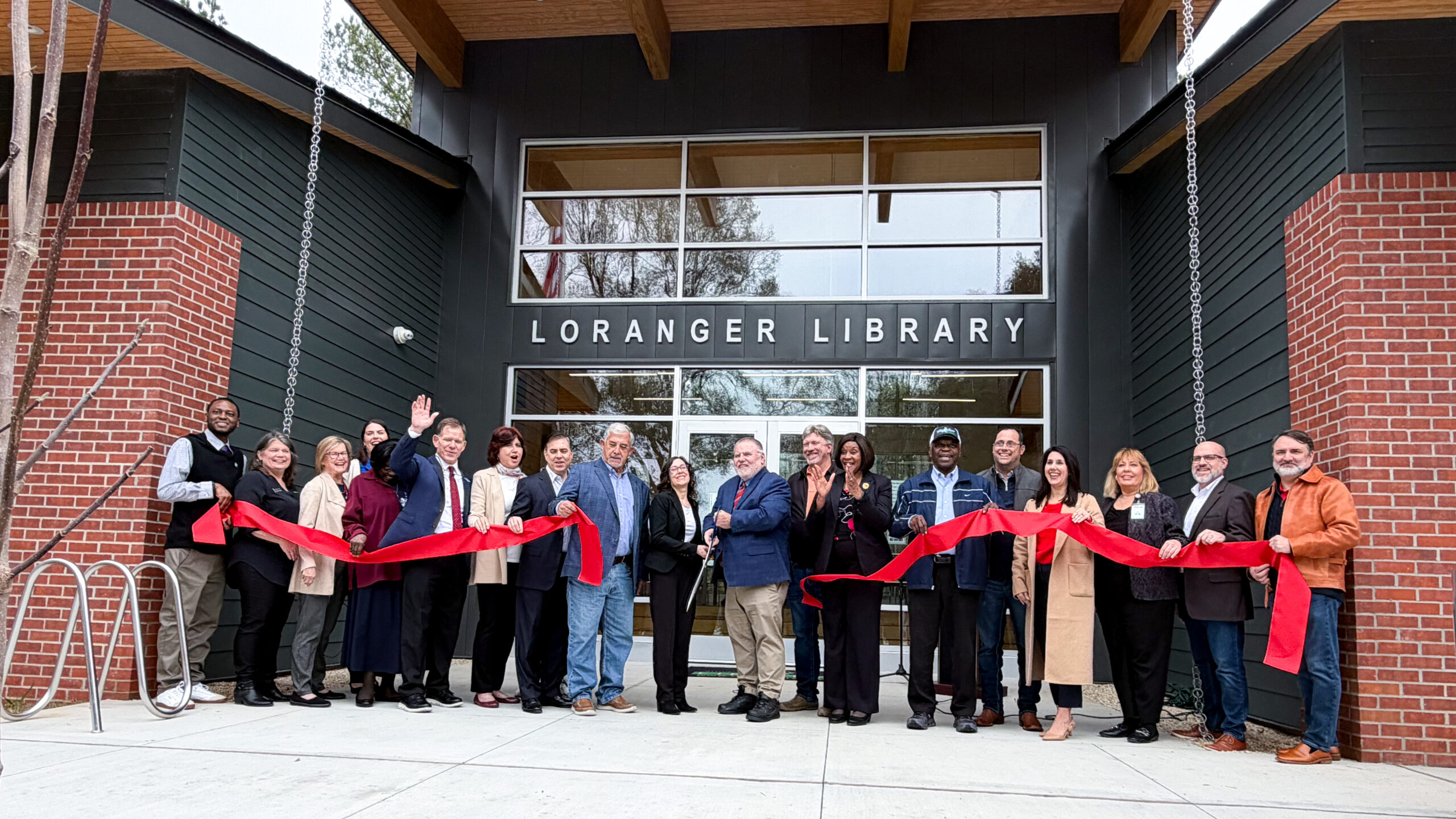
Tangipahoa Parish Library System Celebrates New Loranger Branch
January 27, 2026On January 23, the Tangipahoa Parish Library System hosted a ribbon-cutting ceremony to celebrate the opening of the new Loranger Branch. Designed as a modern and welcoming space, the library supports education, creativity, and lifelong learning through thoughtful design and......
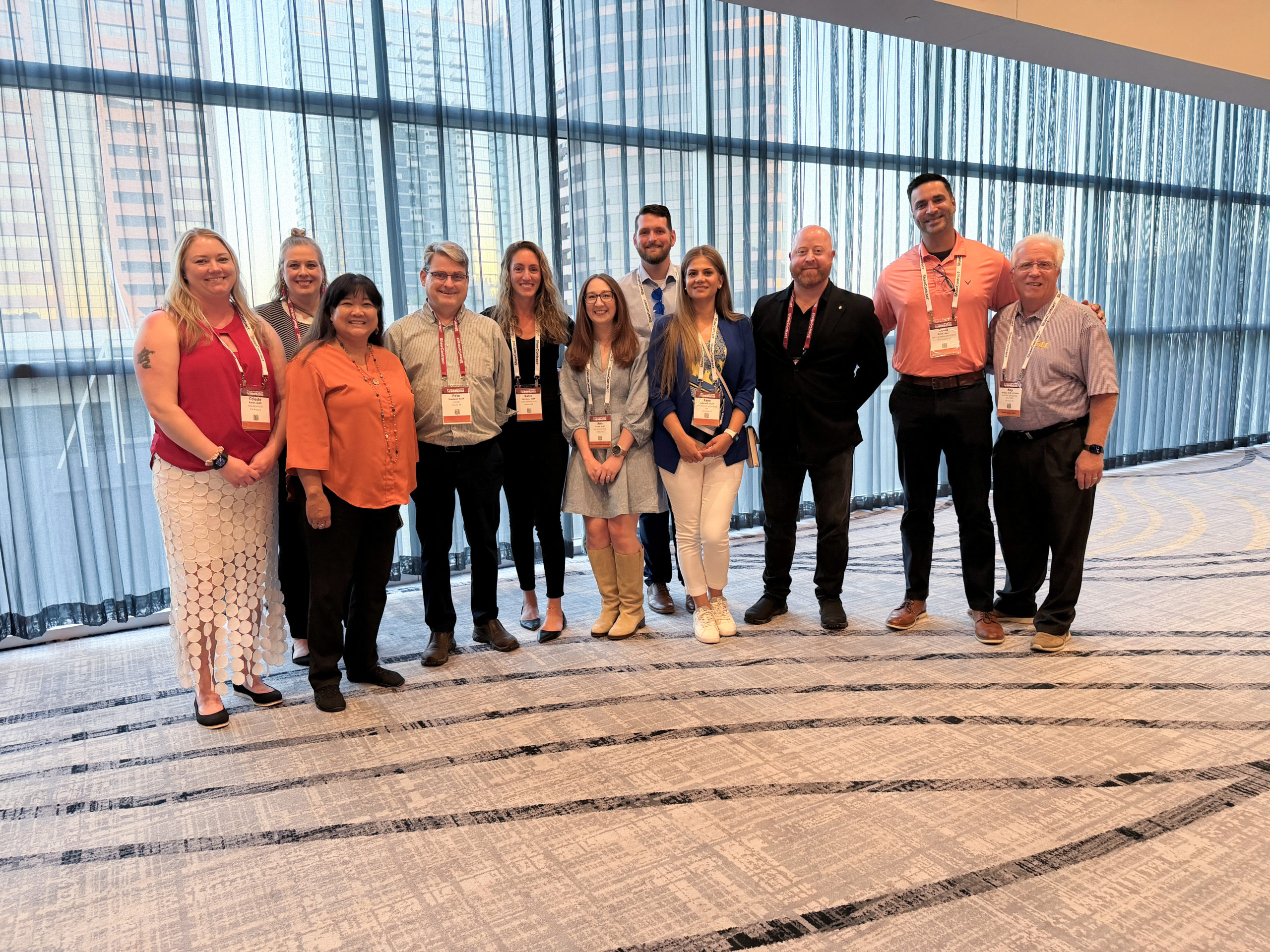
Rohit Sood, ALEP, Attends A4LE LearningSCAPES Conference in Phoenix
November 6, 2025H/S Principal Rohit Sood, ALEP, recently attended the A4LE LearningSCAPES Conference in Phoenix, joining fellow members of the A4LE Advanced Academy for a national discussion on the future of educational design. The event featured a special recognition of new ALEP......
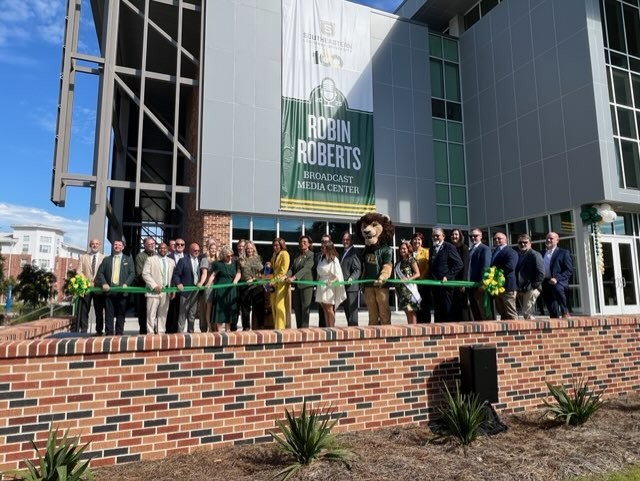
Renovated D Vickers Hall Unveiled, Featuring the Robin Roberts Broadcast Media Center
October 20, 2025On Friday, October 17, 2025, Southeastern Louisiana University celebrated a significant milestone with the dedication of the newly renovated D Vickers Hall and the state-of-the-art Robin Roberts Broadcasting Center in Hammond. The event was highlighted by a generous donation from......
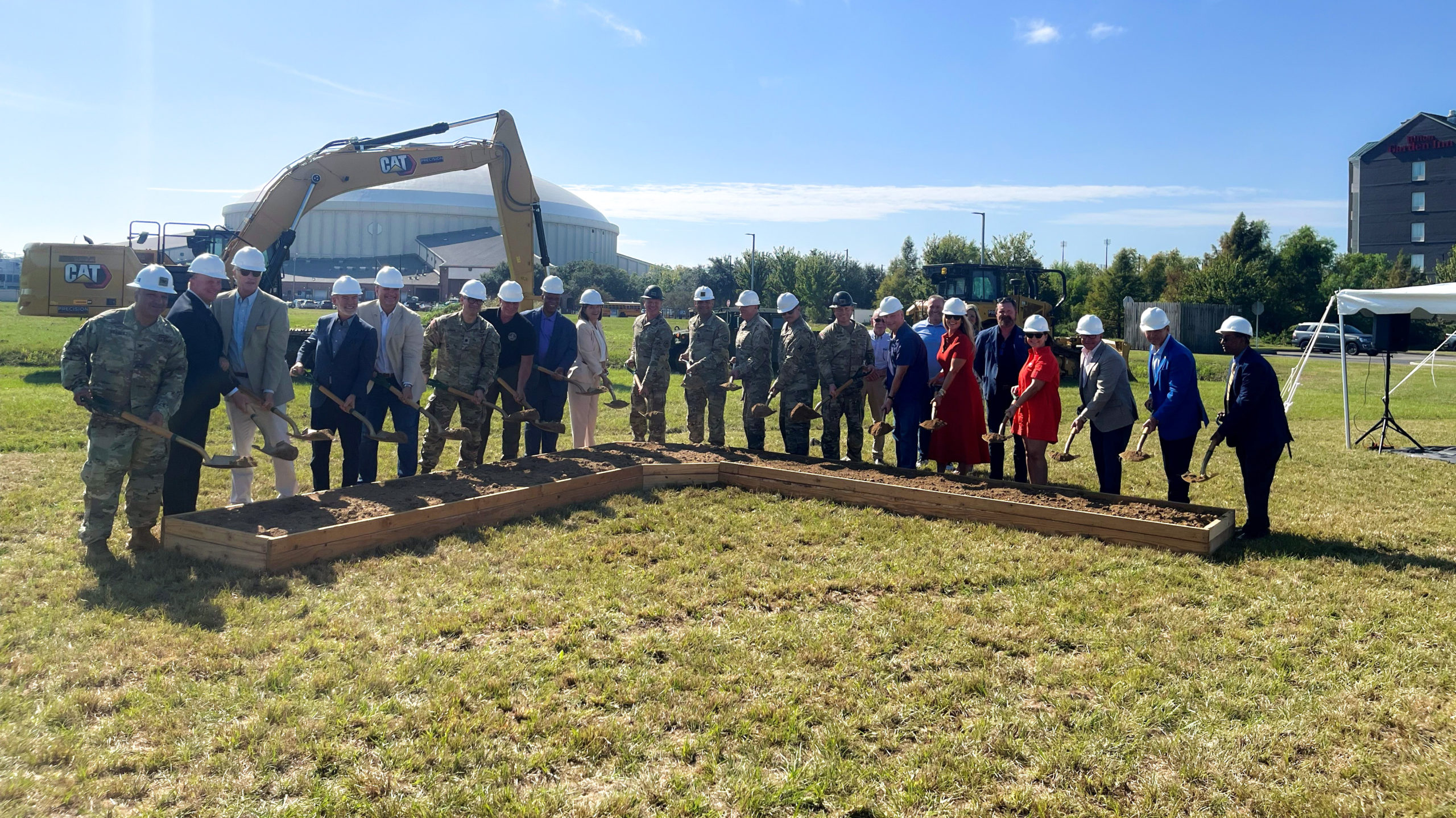
Louisiana Army National Guard Breaks Ground on Lafayette Readiness Center
October 13, 2025The Louisiana Army National Guard held a groundbreaking ceremony on October 8, 2025 for the new Readiness Center in Lafayette. Located on West Congress Street, this sustainably designed 83,943 sq, ft. facility will be highly energy-efficient, constructed from highly resilient,......
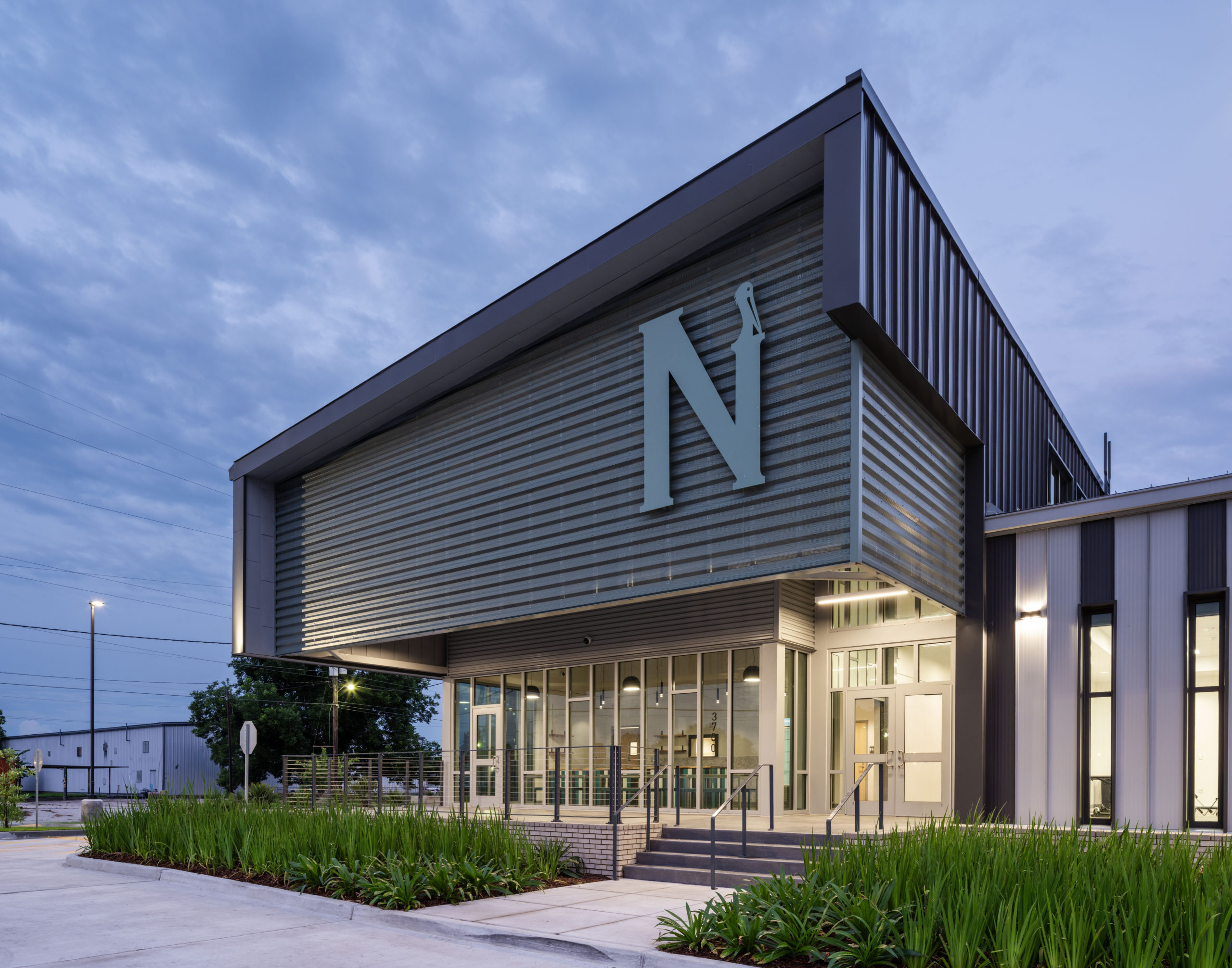
Nunez Community College Student Testing and Career Counseling Center Honored with AIA Louisiana Award of Merit
September 30, 2025Holly & Smith Architects is honored to announce that the Nunez Community College Student Testing and Career Counseling Center has been recognized with an Award of Merit at the 2025 AIA Louisiana Design Awards. This student-centered facility was envisioned as......
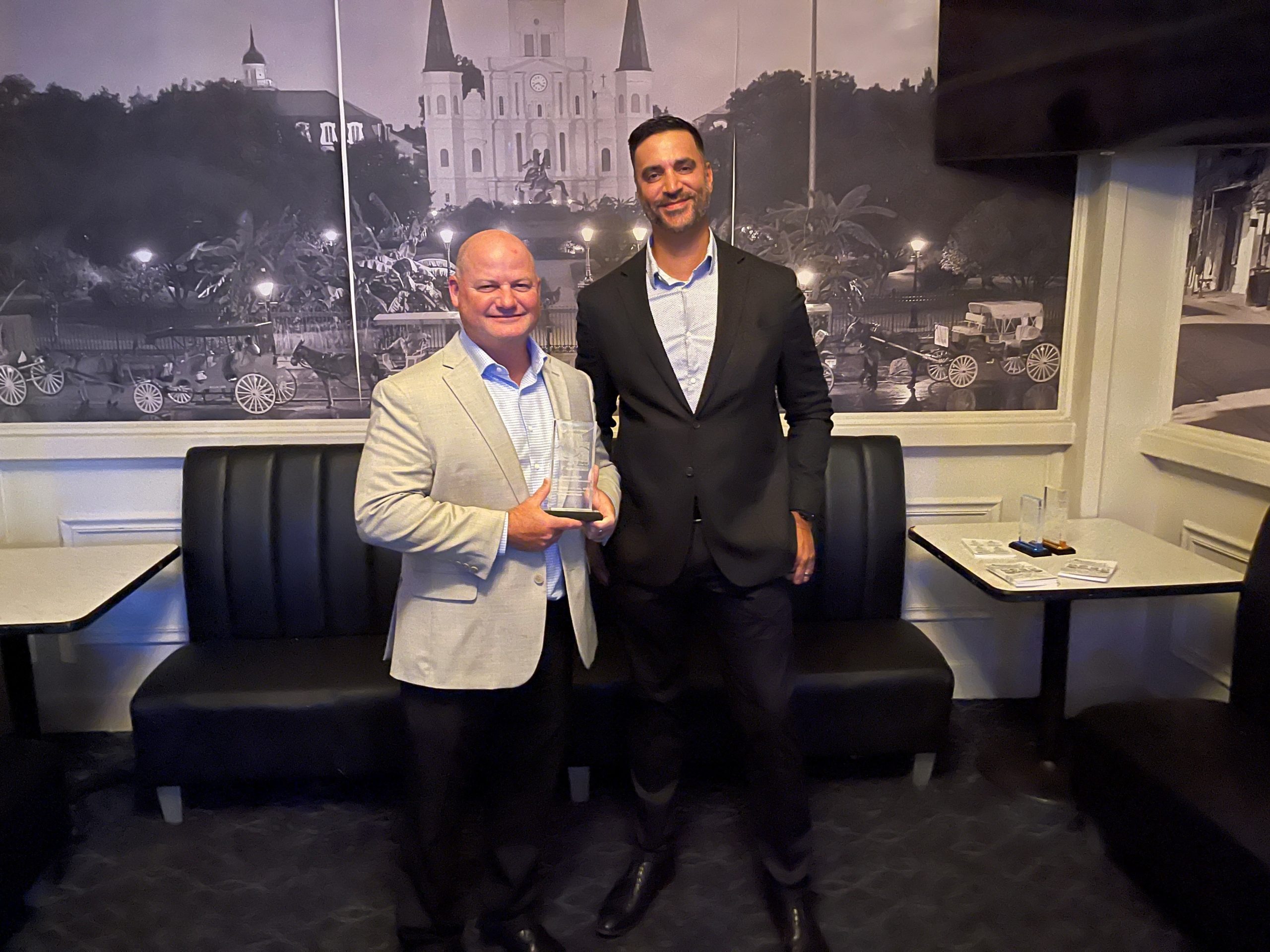
639 Desire Street Honored with AIA New Orleans Award of Merit for Historic Preservation and Restoration
July 23, 2025Holly & Smith Architects is honored to announce that our restoration of 639 Desire Street has been recognized with a 2025 AIA New Orleans Award of Merit in Historic Preservation and Restoration. Presented at the AIA New Orleans Design Awards......
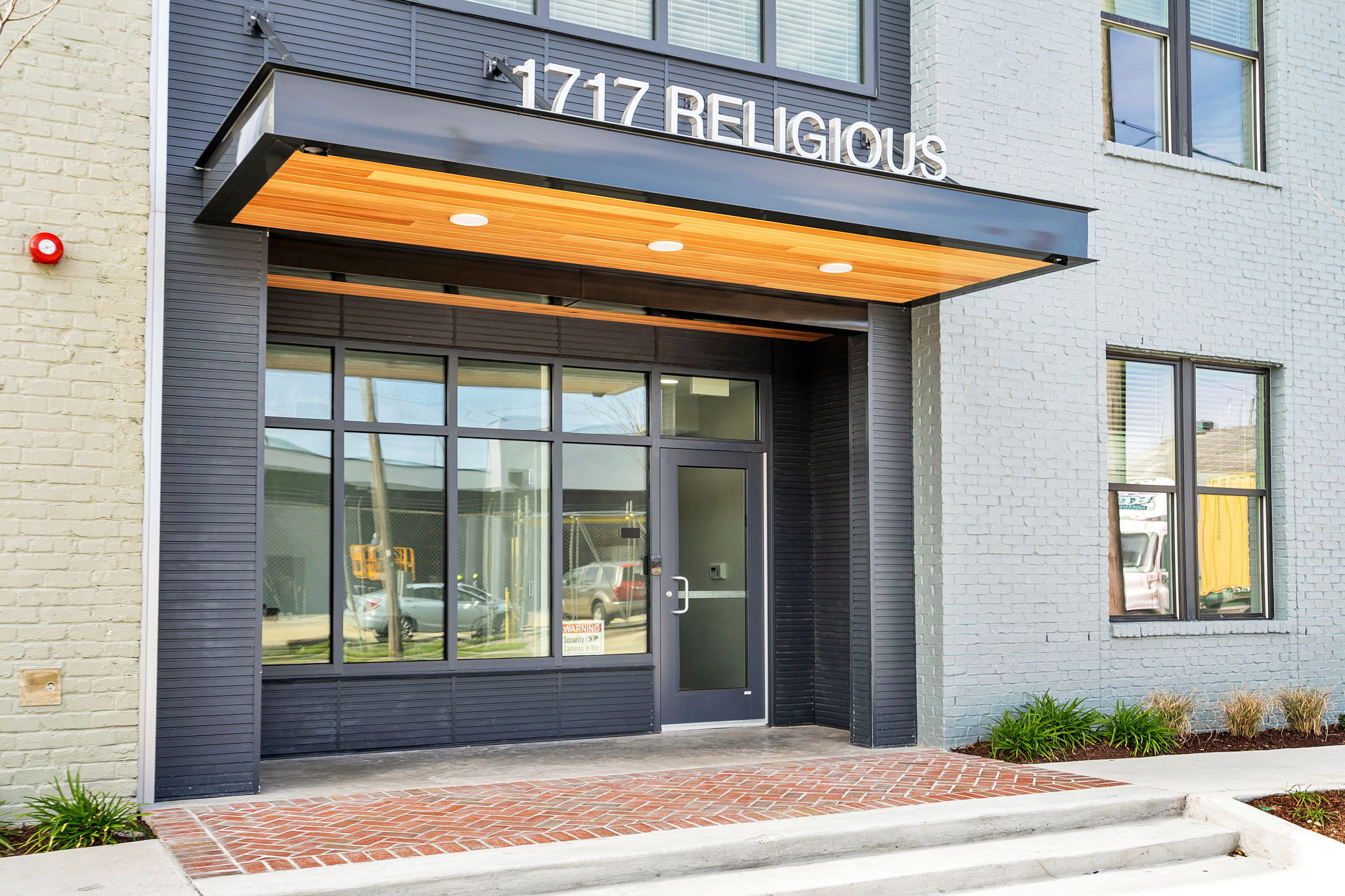
Celeste Landing Celebrates Grand Opening in New Orleans’ Lower Garden District
April 14, 2025Holly & Smith Architects (H/S) is proud to celebrate the grand opening of Celeste Landing, a transformative affordable housing development in New Orleans' Lower Garden District. Designed by H/S, the project combines the thoughtful restoration of a historic structure with......
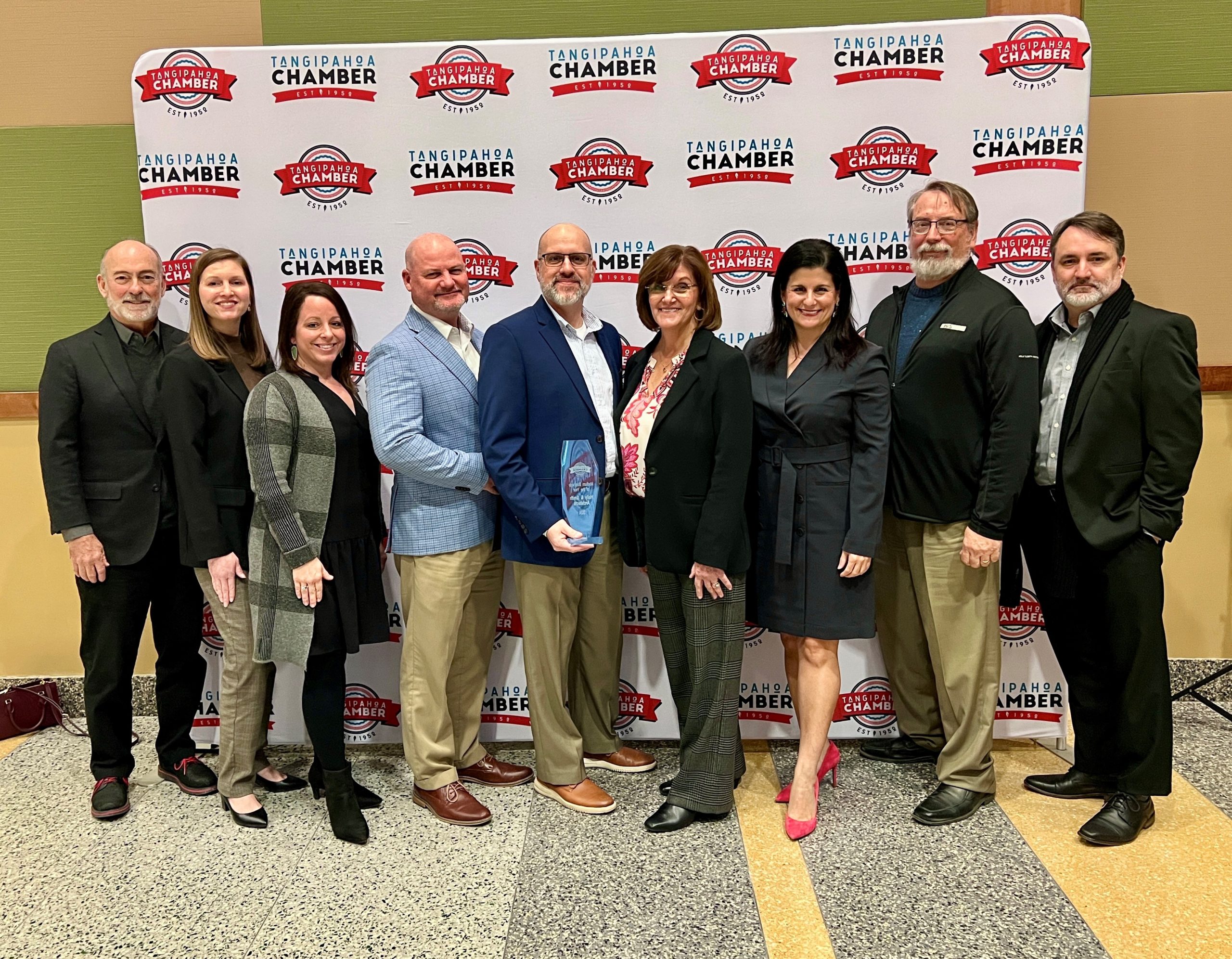
Holly & Smith Architects Named Medium Business of the Year by Tangipahoa Chamber
January 28, 2025Holly & Smith Architects (H/S) is proud to announce its recognition as Medium Business of the Year at the 2025 Tangipahoa Chamber Annual Installation and Awards Luncheon. This prestigious honor celebrates the firm’s longstanding commitment to excellence in design, innovation,......
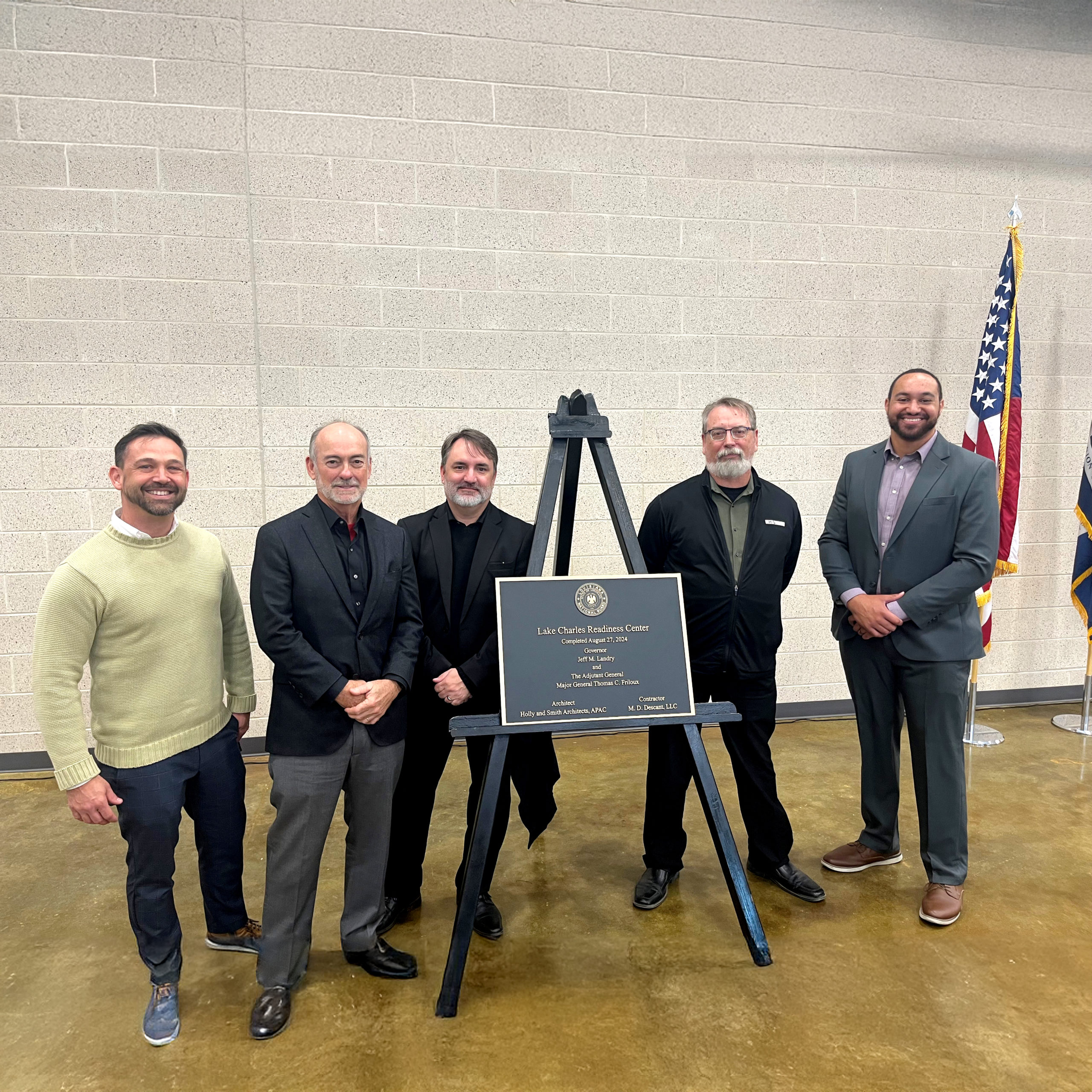
Ribbon-Cutting Ceremony Held for New Louisiana National Guard Readiness Center in Lake Charles
October 21, 2024The Louisiana National Guard celebrated the ribbon-cutting of the new Readiness Center at Chennault International Airport in Lake Charles today, marking a significant milestone for the 3rd Battalion, 156th Infantry Regiment. The new 60,391-square-foot facility, owned by the State of......
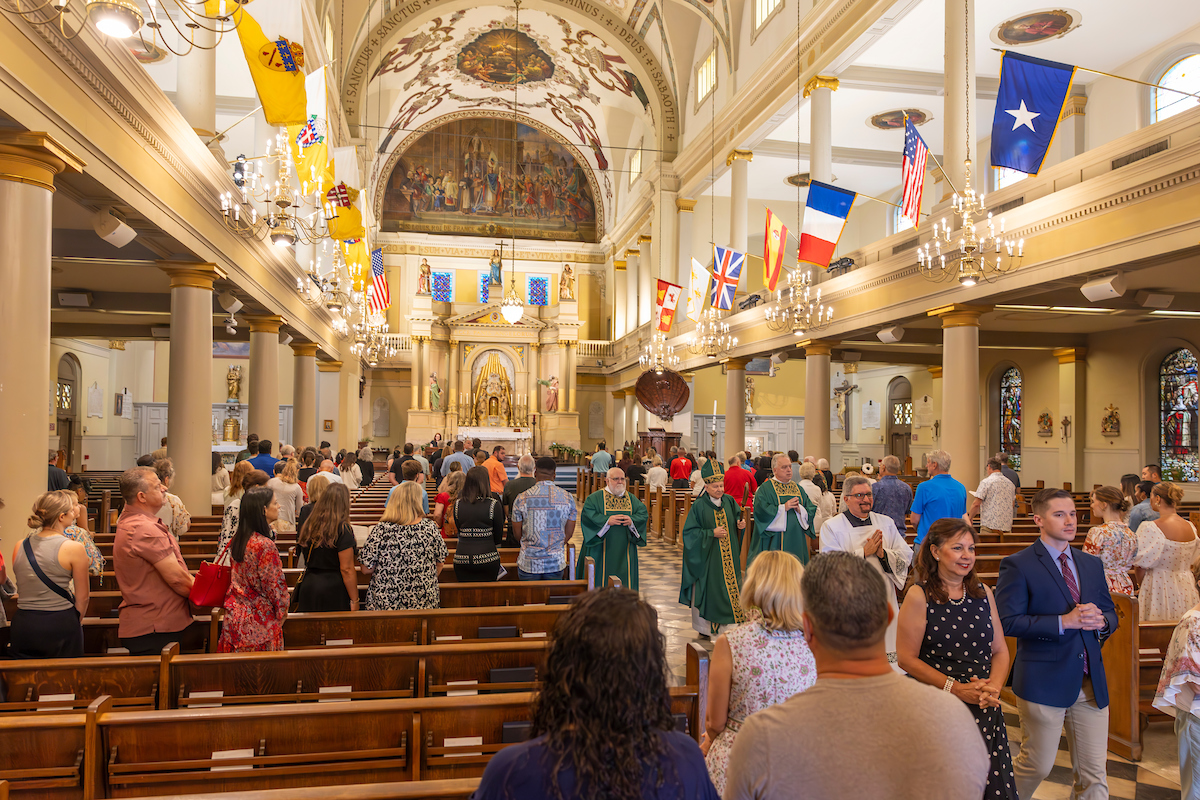
Holly & Smith Architects to lead St. Louis Cathedral renovation | Preservation Resource Center of New Orleans (prcno.org)
October 16, 2024Over the last year, Holly & Smith Architects has had the privilege of serving the Catholic Community Foundation, as well as the Archdiocese of New Orleans, in providing a study for the historic St. Louis Cathedral. The goal of this......

UL Lafayette Breaks Ground on New Engineering Building
August 6, 2024Holly & Smith Architects, in joint venture with The Sellers Group, is thrilled to announce the groundbreaking of the University of Louisiana at Lafayette’s new Engineering Building. This 64,700-square-foot facility is designed to meet the needs of UL Lafayette’s expanding......
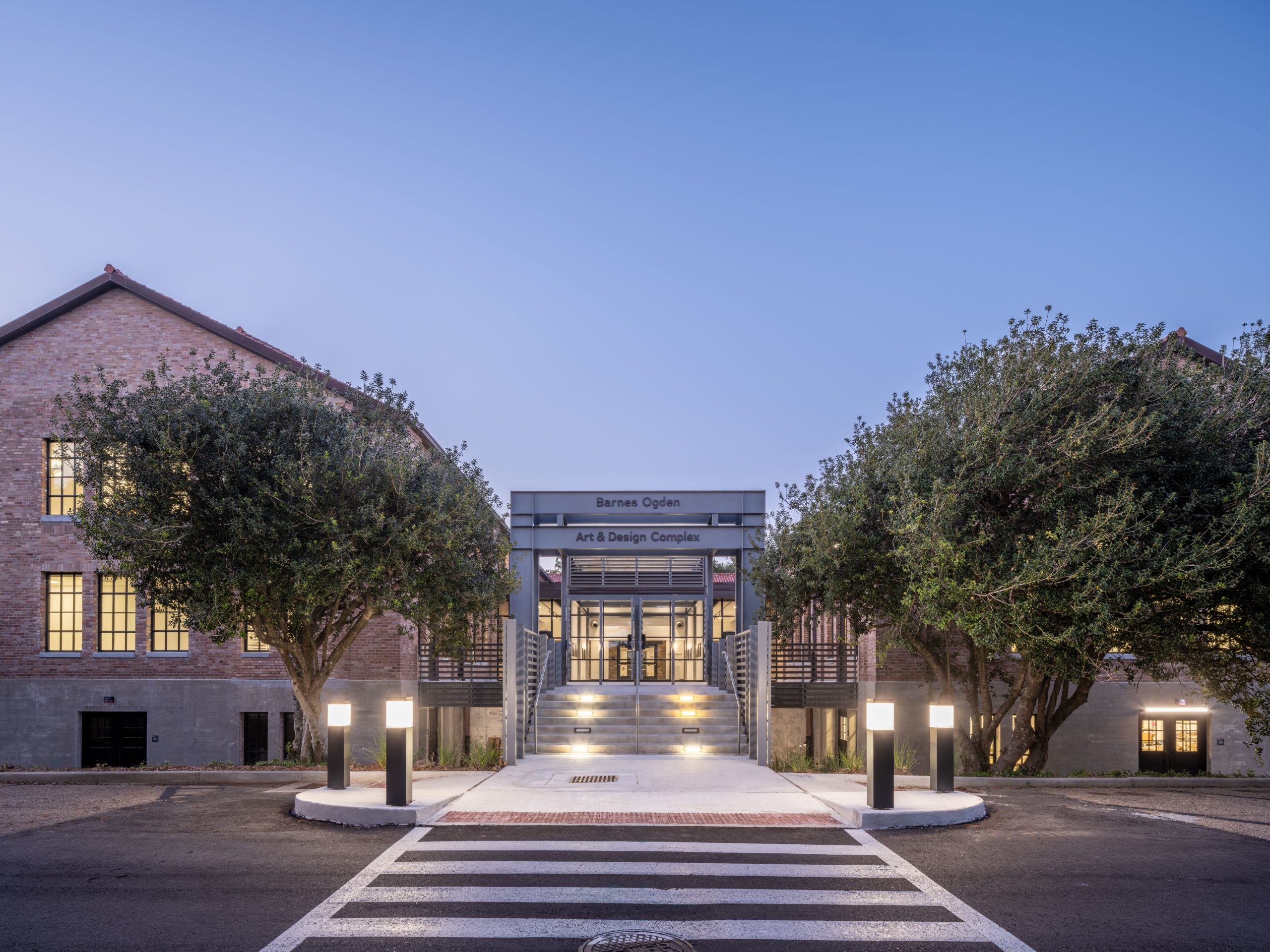
LSU Barnes Ogden Art and Design Complex, Kentwood Library Branch, and Stoa Group Headquarters each win at the AIA Baton Rouge Rose Awards Gala
July 17, 2024On Thursday, April 25th, AIA Baton Rouge held its annual Rose Awards Gala at The Water Campus, celebrating outstanding design projects in various categories. The H/S team was thrilled to receive the Gold Rose Award for LSU Barnes Ogden Art and......
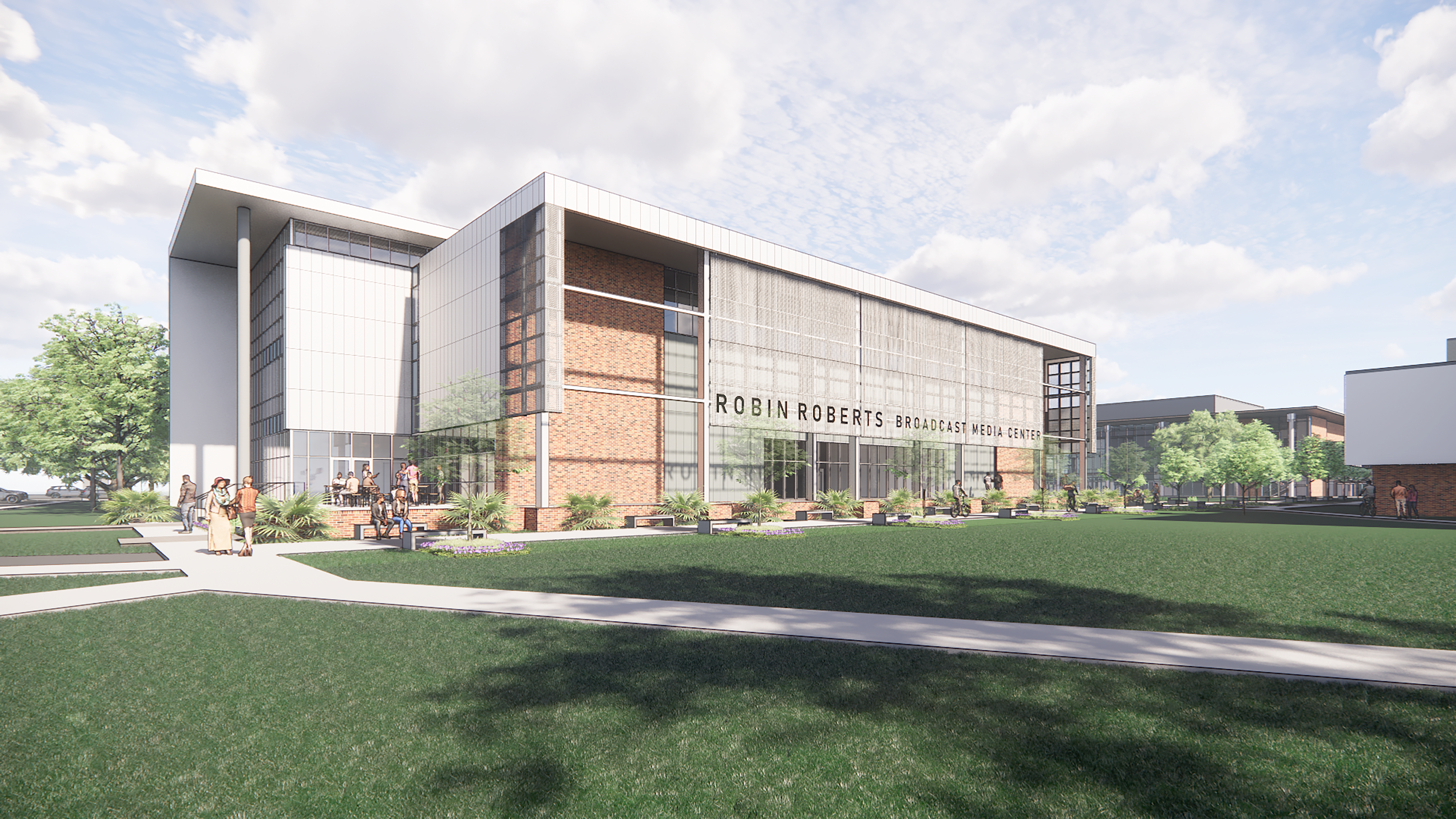
Southeastern Louisiana University breaks ground on new Robin Roberts Broadcast Media Center at D. Vickers Hall
November 16, 2023In a momentous ceremony attended by Good Morning America Co-Anchor Robin Roberts, Louisiana Governor John Bel Edwards, and representatives from Southeastern Louisiana University, the official groundbreaking for the Robin Roberts Broadcast Media Center and the $40 million renovation of D. Vickers Hall......
Holly & Smith Architects opens new office in Lafayette
June 21, 2022Allons a Lafayette…The Heart of Acadiana! Holly & Smith Architects is returning to its roots! We are thrilled to announce that the firm has expanded to southwest Louisiana with a new office in Lafayette. Around 40 years ago, both H/S......
Lake Charles National Guard Readiness Center
The Louisiana National Guard Readiness Center located in Calcasieu Parish, near Chennault Airport will be 60,391 sq. ft. The site is at the intersection of Legion Street/Sen. J. Bennett Johnston Ave. and Interstate I-210. The facility will house the Readiness Center, a general purpose training bay, detached unheated storage, personal vehicle parking, and parking for 82 military vehicles and trailers. The facility will house 21 permanent occupants and 120 reserve occupants for a total of 141 soldiers.
Silver-level certification from the U.S. Green Building Council’s Leadership in Energy and Environmental Design (LEED)
FEATURED STORIES
Holly & Smith Announces Matthew Romano as a Newly Licensed Architect
July 8, 2026Holly & Smith Architects is proud to announce that Matthew Romano has successfully completed the Architect Registration Examination (ARE) and is now a licensed architect. Matt earned a Bachelor of Science in Architecture from the University of Louisiana at Lafayette......
Holly & Smith Announces Phoebe Roussel as a Newly Licensed Architect
February 2, 2026Holly & Smith Architects is proud to announce Phoebe Roussel has successfully completed her Architect Registration Examination (ARE) and is now a licensed architect. Phoebe graduated from University of Louisiana at Lafayette with a Bachelor of Architectural Studies in 2022,......
Tangipahoa Parish Library System Celebrates New Loranger Branch
January 27, 2026On January 23, the Tangipahoa Parish Library System hosted a ribbon-cutting ceremony to celebrate the opening of the new Loranger Branch. Designed as a modern and welcoming space, the library supports education, creativity, and lifelong learning through thoughtful design and......
Rohit Sood, ALEP, Attends A4LE LearningSCAPES Conference in Phoenix
November 6, 2025H/S Principal Rohit Sood, ALEP, recently attended the A4LE LearningSCAPES Conference in Phoenix, joining fellow members of the A4LE Advanced Academy for a national discussion on the future of educational design. The event featured a special recognition of new ALEP......
Renovated D Vickers Hall Unveiled, Featuring the Robin Roberts Broadcast Media Center
October 20, 2025On Friday, October 17, 2025, Southeastern Louisiana University celebrated a significant milestone with the dedication of the newly renovated D Vickers Hall and the state-of-the-art Robin Roberts Broadcasting Center in Hammond. The event was highlighted by a generous donation from......
Louisiana Army National Guard Breaks Ground on Lafayette Readiness Center
October 13, 2025The Louisiana Army National Guard held a groundbreaking ceremony on October 8, 2025 for the new Readiness Center in Lafayette. Located on West Congress Street, this sustainably designed 83,943 sq, ft. facility will be highly energy-efficient, constructed from highly resilient,......
Nunez Community College Student Testing and Career Counseling Center Honored with AIA Louisiana Award of Merit
September 30, 2025Holly & Smith Architects is honored to announce that the Nunez Community College Student Testing and Career Counseling Center has been recognized with an Award of Merit at the 2025 AIA Louisiana Design Awards. This student-centered facility was envisioned as......
639 Desire Street Honored with AIA New Orleans Award of Merit for Historic Preservation and Restoration
July 23, 2025Holly & Smith Architects is honored to announce that our restoration of 639 Desire Street has been recognized with a 2025 AIA New Orleans Award of Merit in Historic Preservation and Restoration. Presented at the AIA New Orleans Design Awards......
Celeste Landing Celebrates Grand Opening in New Orleans’ Lower Garden District
April 14, 2025Holly & Smith Architects (H/S) is proud to celebrate the grand opening of Celeste Landing, a transformative affordable housing development in New Orleans' Lower Garden District. Designed by H/S, the project combines the thoughtful restoration of a historic structure with......
Holly & Smith Architects Named Medium Business of the Year by Tangipahoa Chamber
January 28, 2025Holly & Smith Architects (H/S) is proud to announce its recognition as Medium Business of the Year at the 2025 Tangipahoa Chamber Annual Installation and Awards Luncheon. This prestigious honor celebrates the firm’s longstanding commitment to excellence in design, innovation,......
Ribbon-Cutting Ceremony Held for New Louisiana National Guard Readiness Center in Lake Charles
October 21, 2024The Louisiana National Guard celebrated the ribbon-cutting of the new Readiness Center at Chennault International Airport in Lake Charles today, marking a significant milestone for the 3rd Battalion, 156th Infantry Regiment. The new 60,391-square-foot facility, owned by the State of......
Holly & Smith Architects to lead St. Louis Cathedral renovation | Preservation Resource Center of New Orleans (prcno.org)
October 16, 2024Over the last year, Holly & Smith Architects has had the privilege of serving the Catholic Community Foundation, as well as the Archdiocese of New Orleans, in providing a study for the historic St. Louis Cathedral. The goal of this......
UL Lafayette Breaks Ground on New Engineering Building
August 6, 2024Holly & Smith Architects, in joint venture with The Sellers Group, is thrilled to announce the groundbreaking of the University of Louisiana at Lafayette’s new Engineering Building. This 64,700-square-foot facility is designed to meet the needs of UL Lafayette’s expanding......
LSU Barnes Ogden Art and Design Complex, Kentwood Library Branch, and Stoa Group Headquarters each win at the AIA Baton Rouge Rose Awards Gala
July 17, 2024On Thursday, April 25th, AIA Baton Rouge held its annual Rose Awards Gala at The Water Campus, celebrating outstanding design projects in various categories. The H/S team was thrilled to receive the Gold Rose Award for LSU Barnes Ogden Art and......
Southeastern Louisiana University breaks ground on new Robin Roberts Broadcast Media Center at D. Vickers Hall
November 16, 2023In a momentous ceremony attended by Good Morning America Co-Anchor Robin Roberts, Louisiana Governor John Bel Edwards, and representatives from Southeastern Louisiana University, the official groundbreaking for the Robin Roberts Broadcast Media Center and the $40 million renovation of D. Vickers Hall......
Holly & Smith Architects opens new office in Lafayette
June 21, 2022Allons a Lafayette…The Heart of Acadiana! Holly & Smith Architects is returning to its roots! We are thrilled to announce that the firm has expanded to southwest Louisiana with a new office in Lafayette. Around 40 years ago, both H/S......
Kentwood Library Branch
In a semi-rural community committed to revitalizing its underutilized downtown, a new library branch in Kentwood, Louisiana has transformed an abandoned brownfield site. With a comprehensive program encompassing office and workspaces, a service desk, restrooms, stacks, a youth area, computers, indoor and outdoor community rooms, and a cutting-edge interactive omni-globe, this new building has become the centerpiece of the neighborhood’s urban fabric.
The design embraces the downtown context, situating the library’s facade at the property line, adorned with an elegant canopy and clerestory windows. A meticulously crafted masonry wall maintains the building’s presence along the sidewalk, creating an outdoor gathering space accentuated by a brise-soleil. Historic concrete steps were preserved and run the entire length of the block, now complemented by a new brick-screened access ramp meeting code requirements.
The planning parti thoughtfully addresses the street entry and rear parking entry, where a strategically positioned lobby and service desk create a seamless transition between the public spaces and functional work areas. The structural system displays steel columns and pine timber beams. Cypress ceilings, soffits, and pine timber pay homage to the area’s rich timber industry heritage, utilizing locally sourced lumber to establish a sense of belonging.
More than just a library, this project catalyzes neighborhood improvement, providing the community with valuable access to high-speed internet, fostering gatherings, and serving traditional library patrons and modern innovations. Revitalizing a neglected brownfield site and integrating it with the urban fabric makes this library branch a beacon of progress, connecting the community and ushering in a vibrant future.
FEATURED STORIES
Holly & Smith Announces Matthew Romano as a Newly Licensed Architect
July 8, 2026Holly & Smith Architects is proud to announce that Matthew Romano has successfully completed the Architect Registration Examination (ARE) and is now a licensed architect. Matt earned a Bachelor of Science in Architecture from the University of Louisiana at Lafayette......
Holly & Smith Announces Phoebe Roussel as a Newly Licensed Architect
February 2, 2026Holly & Smith Architects is proud to announce Phoebe Roussel has successfully completed her Architect Registration Examination (ARE) and is now a licensed architect. Phoebe graduated from University of Louisiana at Lafayette with a Bachelor of Architectural Studies in 2022,......
Tangipahoa Parish Library System Celebrates New Loranger Branch
January 27, 2026On January 23, the Tangipahoa Parish Library System hosted a ribbon-cutting ceremony to celebrate the opening of the new Loranger Branch. Designed as a modern and welcoming space, the library supports education, creativity, and lifelong learning through thoughtful design and......
Rohit Sood, ALEP, Attends A4LE LearningSCAPES Conference in Phoenix
November 6, 2025H/S Principal Rohit Sood, ALEP, recently attended the A4LE LearningSCAPES Conference in Phoenix, joining fellow members of the A4LE Advanced Academy for a national discussion on the future of educational design. The event featured a special recognition of new ALEP......
Renovated D Vickers Hall Unveiled, Featuring the Robin Roberts Broadcast Media Center
October 20, 2025On Friday, October 17, 2025, Southeastern Louisiana University celebrated a significant milestone with the dedication of the newly renovated D Vickers Hall and the state-of-the-art Robin Roberts Broadcasting Center in Hammond. The event was highlighted by a generous donation from......
Louisiana Army National Guard Breaks Ground on Lafayette Readiness Center
October 13, 2025The Louisiana Army National Guard held a groundbreaking ceremony on October 8, 2025 for the new Readiness Center in Lafayette. Located on West Congress Street, this sustainably designed 83,943 sq, ft. facility will be highly energy-efficient, constructed from highly resilient,......
Nunez Community College Student Testing and Career Counseling Center Honored with AIA Louisiana Award of Merit
September 30, 2025Holly & Smith Architects is honored to announce that the Nunez Community College Student Testing and Career Counseling Center has been recognized with an Award of Merit at the 2025 AIA Louisiana Design Awards. This student-centered facility was envisioned as......
639 Desire Street Honored with AIA New Orleans Award of Merit for Historic Preservation and Restoration
July 23, 2025Holly & Smith Architects is honored to announce that our restoration of 639 Desire Street has been recognized with a 2025 AIA New Orleans Award of Merit in Historic Preservation and Restoration. Presented at the AIA New Orleans Design Awards......
Celeste Landing Celebrates Grand Opening in New Orleans’ Lower Garden District
April 14, 2025Holly & Smith Architects (H/S) is proud to celebrate the grand opening of Celeste Landing, a transformative affordable housing development in New Orleans' Lower Garden District. Designed by H/S, the project combines the thoughtful restoration of a historic structure with......
Holly & Smith Architects Named Medium Business of the Year by Tangipahoa Chamber
January 28, 2025Holly & Smith Architects (H/S) is proud to announce its recognition as Medium Business of the Year at the 2025 Tangipahoa Chamber Annual Installation and Awards Luncheon. This prestigious honor celebrates the firm’s longstanding commitment to excellence in design, innovation,......
Ribbon-Cutting Ceremony Held for New Louisiana National Guard Readiness Center in Lake Charles
October 21, 2024The Louisiana National Guard celebrated the ribbon-cutting of the new Readiness Center at Chennault International Airport in Lake Charles today, marking a significant milestone for the 3rd Battalion, 156th Infantry Regiment. The new 60,391-square-foot facility, owned by the State of......
Holly & Smith Architects to lead St. Louis Cathedral renovation | Preservation Resource Center of New Orleans (prcno.org)
October 16, 2024Over the last year, Holly & Smith Architects has had the privilege of serving the Catholic Community Foundation, as well as the Archdiocese of New Orleans, in providing a study for the historic St. Louis Cathedral. The goal of this......
UL Lafayette Breaks Ground on New Engineering Building
August 6, 2024Holly & Smith Architects, in joint venture with The Sellers Group, is thrilled to announce the groundbreaking of the University of Louisiana at Lafayette’s new Engineering Building. This 64,700-square-foot facility is designed to meet the needs of UL Lafayette’s expanding......
LSU Barnes Ogden Art and Design Complex, Kentwood Library Branch, and Stoa Group Headquarters each win at the AIA Baton Rouge Rose Awards Gala
July 17, 2024On Thursday, April 25th, AIA Baton Rouge held its annual Rose Awards Gala at The Water Campus, celebrating outstanding design projects in various categories. The H/S team was thrilled to receive the Gold Rose Award for LSU Barnes Ogden Art and......
Southeastern Louisiana University breaks ground on new Robin Roberts Broadcast Media Center at D. Vickers Hall
November 16, 2023In a momentous ceremony attended by Good Morning America Co-Anchor Robin Roberts, Louisiana Governor John Bel Edwards, and representatives from Southeastern Louisiana University, the official groundbreaking for the Robin Roberts Broadcast Media Center and the $40 million renovation of D. Vickers Hall......
Holly & Smith Architects opens new office in Lafayette
June 21, 2022Allons a Lafayette…The Heart of Acadiana! Holly & Smith Architects is returning to its roots! We are thrilled to announce that the firm has expanded to southwest Louisiana with a new office in Lafayette. Around 40 years ago, both H/S......
Square 71
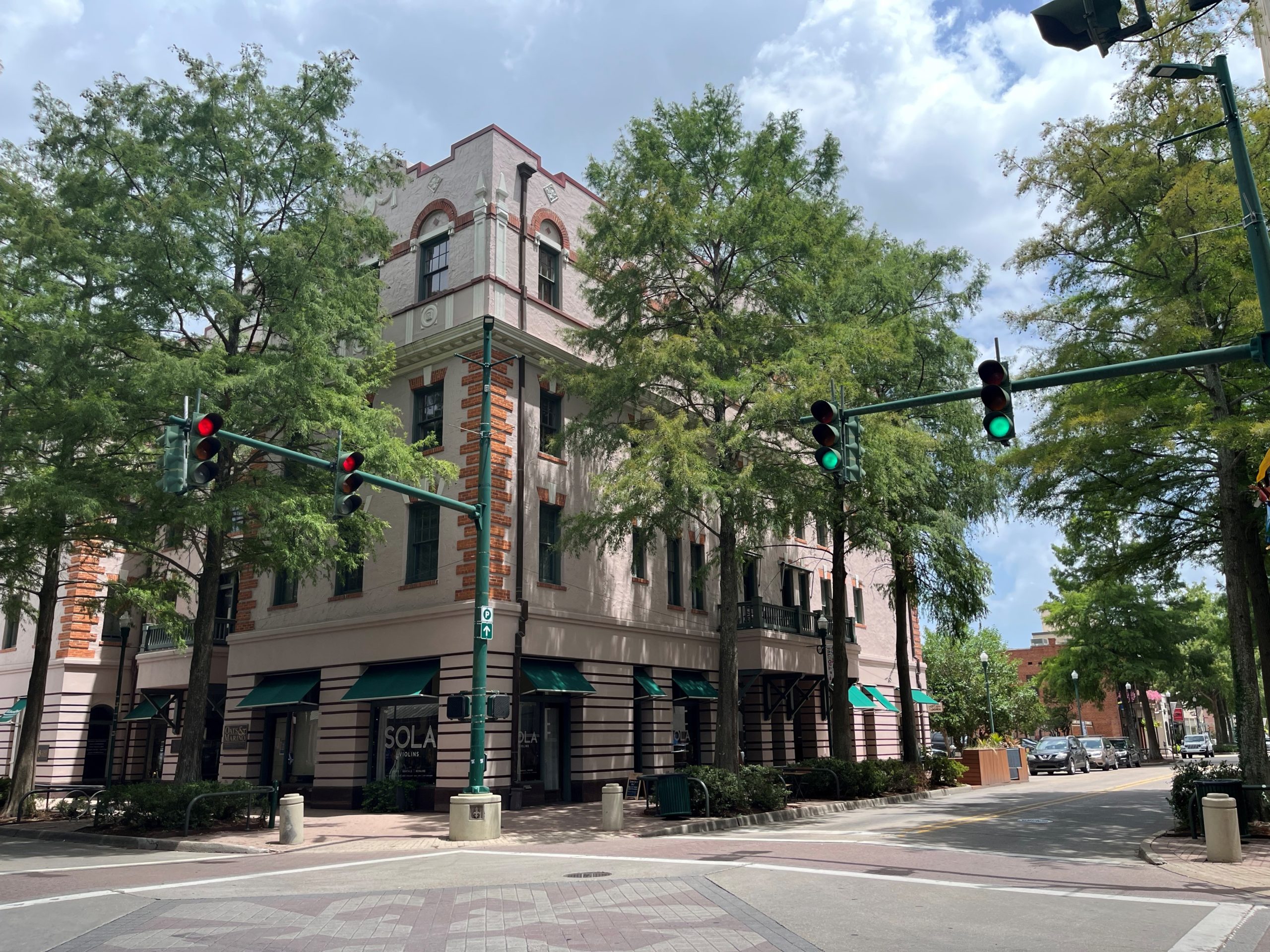
The O’Krepki Family acquired a city block in the Hammond Downtown Development across the street from the Municipal Historic District. This city block contained old warehouse buildings that were underutilized at a critical location in the rapidly improving historic district in downtown Hammond, Louisiana. The goal was to modernize the entire city block into a mixed-use development, with office/retail on the ground floor and apartments/condominiums above. The master plan showed following zoning recommendations of zero outlined development, with the buildings located on the sidewalk surrounding the entire block and parking contained in the center of the development.
Square 71 on the northeast quadrant on the block is Phase 1 of the master plan. The two-story design created storefronts on the street at the ground floor with apartments above on the Oak Street facade and a 2-story commercial lease space on the corner of Oak Street and Morris Avenue. A restaurant is located on the ground floor with a yoga studio located above on the corner, and there are two other commercial tenants. Design includes balconies at the 3 apartments along Oak Street and a wrought iron steel balcony at the 2nd floor of the lease space. The design consists of brick veneer in keeping with the vernacular of the Hammond Historic District.
FEATURED STORIES
Holly & Smith Announces Matthew Romano as a Newly Licensed Architect
July 8, 2026Holly & Smith Architects is proud to announce that Matthew Romano has successfully completed the Architect Registration Examination (ARE) and is now a licensed architect. Matt earned a Bachelor of Science in Architecture from the University of Louisiana at Lafayette......
Holly & Smith Announces Phoebe Roussel as a Newly Licensed Architect
February 2, 2026Holly & Smith Architects is proud to announce Phoebe Roussel has successfully completed her Architect Registration Examination (ARE) and is now a licensed architect. Phoebe graduated from University of Louisiana at Lafayette with a Bachelor of Architectural Studies in 2022,......
Tangipahoa Parish Library System Celebrates New Loranger Branch
January 27, 2026On January 23, the Tangipahoa Parish Library System hosted a ribbon-cutting ceremony to celebrate the opening of the new Loranger Branch. Designed as a modern and welcoming space, the library supports education, creativity, and lifelong learning through thoughtful design and......
Rohit Sood, ALEP, Attends A4LE LearningSCAPES Conference in Phoenix
November 6, 2025H/S Principal Rohit Sood, ALEP, recently attended the A4LE LearningSCAPES Conference in Phoenix, joining fellow members of the A4LE Advanced Academy for a national discussion on the future of educational design. The event featured a special recognition of new ALEP......
Renovated D Vickers Hall Unveiled, Featuring the Robin Roberts Broadcast Media Center
October 20, 2025On Friday, October 17, 2025, Southeastern Louisiana University celebrated a significant milestone with the dedication of the newly renovated D Vickers Hall and the state-of-the-art Robin Roberts Broadcasting Center in Hammond. The event was highlighted by a generous donation from......
Louisiana Army National Guard Breaks Ground on Lafayette Readiness Center
October 13, 2025The Louisiana Army National Guard held a groundbreaking ceremony on October 8, 2025 for the new Readiness Center in Lafayette. Located on West Congress Street, this sustainably designed 83,943 sq, ft. facility will be highly energy-efficient, constructed from highly resilient,......
Nunez Community College Student Testing and Career Counseling Center Honored with AIA Louisiana Award of Merit
September 30, 2025Holly & Smith Architects is honored to announce that the Nunez Community College Student Testing and Career Counseling Center has been recognized with an Award of Merit at the 2025 AIA Louisiana Design Awards. This student-centered facility was envisioned as......
639 Desire Street Honored with AIA New Orleans Award of Merit for Historic Preservation and Restoration
July 23, 2025Holly & Smith Architects is honored to announce that our restoration of 639 Desire Street has been recognized with a 2025 AIA New Orleans Award of Merit in Historic Preservation and Restoration. Presented at the AIA New Orleans Design Awards......
Celeste Landing Celebrates Grand Opening in New Orleans’ Lower Garden District
April 14, 2025Holly & Smith Architects (H/S) is proud to celebrate the grand opening of Celeste Landing, a transformative affordable housing development in New Orleans' Lower Garden District. Designed by H/S, the project combines the thoughtful restoration of a historic structure with......
Holly & Smith Architects Named Medium Business of the Year by Tangipahoa Chamber
January 28, 2025Holly & Smith Architects (H/S) is proud to announce its recognition as Medium Business of the Year at the 2025 Tangipahoa Chamber Annual Installation and Awards Luncheon. This prestigious honor celebrates the firm’s longstanding commitment to excellence in design, innovation,......
Ribbon-Cutting Ceremony Held for New Louisiana National Guard Readiness Center in Lake Charles
October 21, 2024The Louisiana National Guard celebrated the ribbon-cutting of the new Readiness Center at Chennault International Airport in Lake Charles today, marking a significant milestone for the 3rd Battalion, 156th Infantry Regiment. The new 60,391-square-foot facility, owned by the State of......
Holly & Smith Architects to lead St. Louis Cathedral renovation | Preservation Resource Center of New Orleans (prcno.org)
October 16, 2024Over the last year, Holly & Smith Architects has had the privilege of serving the Catholic Community Foundation, as well as the Archdiocese of New Orleans, in providing a study for the historic St. Louis Cathedral. The goal of this......
UL Lafayette Breaks Ground on New Engineering Building
August 6, 2024Holly & Smith Architects, in joint venture with The Sellers Group, is thrilled to announce the groundbreaking of the University of Louisiana at Lafayette’s new Engineering Building. This 64,700-square-foot facility is designed to meet the needs of UL Lafayette’s expanding......
LSU Barnes Ogden Art and Design Complex, Kentwood Library Branch, and Stoa Group Headquarters each win at the AIA Baton Rouge Rose Awards Gala
July 17, 2024On Thursday, April 25th, AIA Baton Rouge held its annual Rose Awards Gala at The Water Campus, celebrating outstanding design projects in various categories. The H/S team was thrilled to receive the Gold Rose Award for LSU Barnes Ogden Art and......
Southeastern Louisiana University breaks ground on new Robin Roberts Broadcast Media Center at D. Vickers Hall
November 16, 2023In a momentous ceremony attended by Good Morning America Co-Anchor Robin Roberts, Louisiana Governor John Bel Edwards, and representatives from Southeastern Louisiana University, the official groundbreaking for the Robin Roberts Broadcast Media Center and the $40 million renovation of D. Vickers Hall......
Holly & Smith Architects opens new office in Lafayette
June 21, 2022Allons a Lafayette…The Heart of Acadiana! Holly & Smith Architects is returning to its roots! We are thrilled to announce that the firm has expanded to southwest Louisiana with a new office in Lafayette. Around 40 years ago, both H/S......
Environmental Services Building
The 18,980 sq. ft. Environmental Services Building houses the Tangipahoa Parish Government’s headquarters for the departments of Building Permitting, Planning, and Environmental Health. The building is subdivided into three main areas which correspond to the three departments. The large volume entry space is flanked on two sides by Building Permitting and Environmental Health and leads visitors to the Planning Department and a large multi-purpose meeting space. The new building is on axis with the existing South Tangipahoa Parish Health Unit which was also designed by Holly and Smith Architects in 1997.
FEATURED STORIES
Holly & Smith Announces Matthew Romano as a Newly Licensed Architect
July 8, 2026Holly & Smith Architects is proud to announce that Matthew Romano has successfully completed the Architect Registration Examination (ARE) and is now a licensed architect. Matt earned a Bachelor of Science in Architecture from the University of Louisiana at Lafayette......
Holly & Smith Announces Phoebe Roussel as a Newly Licensed Architect
February 2, 2026Holly & Smith Architects is proud to announce Phoebe Roussel has successfully completed her Architect Registration Examination (ARE) and is now a licensed architect. Phoebe graduated from University of Louisiana at Lafayette with a Bachelor of Architectural Studies in 2022,......
Tangipahoa Parish Library System Celebrates New Loranger Branch
January 27, 2026On January 23, the Tangipahoa Parish Library System hosted a ribbon-cutting ceremony to celebrate the opening of the new Loranger Branch. Designed as a modern and welcoming space, the library supports education, creativity, and lifelong learning through thoughtful design and......
Rohit Sood, ALEP, Attends A4LE LearningSCAPES Conference in Phoenix
November 6, 2025H/S Principal Rohit Sood, ALEP, recently attended the A4LE LearningSCAPES Conference in Phoenix, joining fellow members of the A4LE Advanced Academy for a national discussion on the future of educational design. The event featured a special recognition of new ALEP......
Renovated D Vickers Hall Unveiled, Featuring the Robin Roberts Broadcast Media Center
October 20, 2025On Friday, October 17, 2025, Southeastern Louisiana University celebrated a significant milestone with the dedication of the newly renovated D Vickers Hall and the state-of-the-art Robin Roberts Broadcasting Center in Hammond. The event was highlighted by a generous donation from......
Louisiana Army National Guard Breaks Ground on Lafayette Readiness Center
October 13, 2025The Louisiana Army National Guard held a groundbreaking ceremony on October 8, 2025 for the new Readiness Center in Lafayette. Located on West Congress Street, this sustainably designed 83,943 sq, ft. facility will be highly energy-efficient, constructed from highly resilient,......
Nunez Community College Student Testing and Career Counseling Center Honored with AIA Louisiana Award of Merit
September 30, 2025Holly & Smith Architects is honored to announce that the Nunez Community College Student Testing and Career Counseling Center has been recognized with an Award of Merit at the 2025 AIA Louisiana Design Awards. This student-centered facility was envisioned as......
639 Desire Street Honored with AIA New Orleans Award of Merit for Historic Preservation and Restoration
July 23, 2025Holly & Smith Architects is honored to announce that our restoration of 639 Desire Street has been recognized with a 2025 AIA New Orleans Award of Merit in Historic Preservation and Restoration. Presented at the AIA New Orleans Design Awards......
Celeste Landing Celebrates Grand Opening in New Orleans’ Lower Garden District
April 14, 2025Holly & Smith Architects (H/S) is proud to celebrate the grand opening of Celeste Landing, a transformative affordable housing development in New Orleans' Lower Garden District. Designed by H/S, the project combines the thoughtful restoration of a historic structure with......
Holly & Smith Architects Named Medium Business of the Year by Tangipahoa Chamber
January 28, 2025Holly & Smith Architects (H/S) is proud to announce its recognition as Medium Business of the Year at the 2025 Tangipahoa Chamber Annual Installation and Awards Luncheon. This prestigious honor celebrates the firm’s longstanding commitment to excellence in design, innovation,......
Ribbon-Cutting Ceremony Held for New Louisiana National Guard Readiness Center in Lake Charles
October 21, 2024The Louisiana National Guard celebrated the ribbon-cutting of the new Readiness Center at Chennault International Airport in Lake Charles today, marking a significant milestone for the 3rd Battalion, 156th Infantry Regiment. The new 60,391-square-foot facility, owned by the State of......
Holly & Smith Architects to lead St. Louis Cathedral renovation | Preservation Resource Center of New Orleans (prcno.org)
October 16, 2024Over the last year, Holly & Smith Architects has had the privilege of serving the Catholic Community Foundation, as well as the Archdiocese of New Orleans, in providing a study for the historic St. Louis Cathedral. The goal of this......
UL Lafayette Breaks Ground on New Engineering Building
August 6, 2024Holly & Smith Architects, in joint venture with The Sellers Group, is thrilled to announce the groundbreaking of the University of Louisiana at Lafayette’s new Engineering Building. This 64,700-square-foot facility is designed to meet the needs of UL Lafayette’s expanding......
LSU Barnes Ogden Art and Design Complex, Kentwood Library Branch, and Stoa Group Headquarters each win at the AIA Baton Rouge Rose Awards Gala
July 17, 2024On Thursday, April 25th, AIA Baton Rouge held its annual Rose Awards Gala at The Water Campus, celebrating outstanding design projects in various categories. The H/S team was thrilled to receive the Gold Rose Award for LSU Barnes Ogden Art and......
Southeastern Louisiana University breaks ground on new Robin Roberts Broadcast Media Center at D. Vickers Hall
November 16, 2023In a momentous ceremony attended by Good Morning America Co-Anchor Robin Roberts, Louisiana Governor John Bel Edwards, and representatives from Southeastern Louisiana University, the official groundbreaking for the Robin Roberts Broadcast Media Center and the $40 million renovation of D. Vickers Hall......
Holly & Smith Architects opens new office in Lafayette
June 21, 2022Allons a Lafayette…The Heart of Acadiana! Holly & Smith Architects is returning to its roots! We are thrilled to announce that the firm has expanded to southwest Louisiana with a new office in Lafayette. Around 40 years ago, both H/S......
NOPD 4th District Police Station
The project is an 18,600 sq. ft. two-story police headquarters to replace original facilities that are no longer able to service the needs of the community. The building shares a site and material palette with the new NOFD 8th District Police Station creating a new civic campus for the community. Central to the building’s layout is a large open entrance lobby with an adjacent meeting space connected to a public plaza. These spaces can be used by the community enforcing the mission of Community-Oriented Policing and neighborhood engagement.
FEATURED STORIES
Holly & Smith Announces Matthew Romano as a Newly Licensed Architect
July 8, 2026Holly & Smith Architects is proud to announce that Matthew Romano has successfully completed the Architect Registration Examination (ARE) and is now a licensed architect. Matt earned a Bachelor of Science in Architecture from the University of Louisiana at Lafayette......
Holly & Smith Announces Phoebe Roussel as a Newly Licensed Architect
February 2, 2026Holly & Smith Architects is proud to announce Phoebe Roussel has successfully completed her Architect Registration Examination (ARE) and is now a licensed architect. Phoebe graduated from University of Louisiana at Lafayette with a Bachelor of Architectural Studies in 2022,......
Tangipahoa Parish Library System Celebrates New Loranger Branch
January 27, 2026On January 23, the Tangipahoa Parish Library System hosted a ribbon-cutting ceremony to celebrate the opening of the new Loranger Branch. Designed as a modern and welcoming space, the library supports education, creativity, and lifelong learning through thoughtful design and......
Rohit Sood, ALEP, Attends A4LE LearningSCAPES Conference in Phoenix
November 6, 2025H/S Principal Rohit Sood, ALEP, recently attended the A4LE LearningSCAPES Conference in Phoenix, joining fellow members of the A4LE Advanced Academy for a national discussion on the future of educational design. The event featured a special recognition of new ALEP......
Renovated D Vickers Hall Unveiled, Featuring the Robin Roberts Broadcast Media Center
October 20, 2025On Friday, October 17, 2025, Southeastern Louisiana University celebrated a significant milestone with the dedication of the newly renovated D Vickers Hall and the state-of-the-art Robin Roberts Broadcasting Center in Hammond. The event was highlighted by a generous donation from......
Louisiana Army National Guard Breaks Ground on Lafayette Readiness Center
October 13, 2025The Louisiana Army National Guard held a groundbreaking ceremony on October 8, 2025 for the new Readiness Center in Lafayette. Located on West Congress Street, this sustainably designed 83,943 sq, ft. facility will be highly energy-efficient, constructed from highly resilient,......
Nunez Community College Student Testing and Career Counseling Center Honored with AIA Louisiana Award of Merit
September 30, 2025Holly & Smith Architects is honored to announce that the Nunez Community College Student Testing and Career Counseling Center has been recognized with an Award of Merit at the 2025 AIA Louisiana Design Awards. This student-centered facility was envisioned as......
639 Desire Street Honored with AIA New Orleans Award of Merit for Historic Preservation and Restoration
July 23, 2025Holly & Smith Architects is honored to announce that our restoration of 639 Desire Street has been recognized with a 2025 AIA New Orleans Award of Merit in Historic Preservation and Restoration. Presented at the AIA New Orleans Design Awards......
Celeste Landing Celebrates Grand Opening in New Orleans’ Lower Garden District
April 14, 2025Holly & Smith Architects (H/S) is proud to celebrate the grand opening of Celeste Landing, a transformative affordable housing development in New Orleans' Lower Garden District. Designed by H/S, the project combines the thoughtful restoration of a historic structure with......
Holly & Smith Architects Named Medium Business of the Year by Tangipahoa Chamber
January 28, 2025Holly & Smith Architects (H/S) is proud to announce its recognition as Medium Business of the Year at the 2025 Tangipahoa Chamber Annual Installation and Awards Luncheon. This prestigious honor celebrates the firm’s longstanding commitment to excellence in design, innovation,......
Ribbon-Cutting Ceremony Held for New Louisiana National Guard Readiness Center in Lake Charles
October 21, 2024The Louisiana National Guard celebrated the ribbon-cutting of the new Readiness Center at Chennault International Airport in Lake Charles today, marking a significant milestone for the 3rd Battalion, 156th Infantry Regiment. The new 60,391-square-foot facility, owned by the State of......
Holly & Smith Architects to lead St. Louis Cathedral renovation | Preservation Resource Center of New Orleans (prcno.org)
October 16, 2024Over the last year, Holly & Smith Architects has had the privilege of serving the Catholic Community Foundation, as well as the Archdiocese of New Orleans, in providing a study for the historic St. Louis Cathedral. The goal of this......
UL Lafayette Breaks Ground on New Engineering Building
August 6, 2024Holly & Smith Architects, in joint venture with The Sellers Group, is thrilled to announce the groundbreaking of the University of Louisiana at Lafayette’s new Engineering Building. This 64,700-square-foot facility is designed to meet the needs of UL Lafayette’s expanding......
LSU Barnes Ogden Art and Design Complex, Kentwood Library Branch, and Stoa Group Headquarters each win at the AIA Baton Rouge Rose Awards Gala
July 17, 2024On Thursday, April 25th, AIA Baton Rouge held its annual Rose Awards Gala at The Water Campus, celebrating outstanding design projects in various categories. The H/S team was thrilled to receive the Gold Rose Award for LSU Barnes Ogden Art and......
Southeastern Louisiana University breaks ground on new Robin Roberts Broadcast Media Center at D. Vickers Hall
November 16, 2023In a momentous ceremony attended by Good Morning America Co-Anchor Robin Roberts, Louisiana Governor John Bel Edwards, and representatives from Southeastern Louisiana University, the official groundbreaking for the Robin Roberts Broadcast Media Center and the $40 million renovation of D. Vickers Hall......
Holly & Smith Architects opens new office in Lafayette
June 21, 2022Allons a Lafayette…The Heart of Acadiana! Holly & Smith Architects is returning to its roots! We are thrilled to announce that the firm has expanded to southwest Louisiana with a new office in Lafayette. Around 40 years ago, both H/S......
Entergy Service Center – Luling
The new Service Center located in Luling, Louisiana provides a modernized facility for the company’s Distribution Department. It consists of open office spaces, a variety of meeting rooms, assembly rooms, and a warehouse, which are all intended for general operation and storm recovery. The office design provides a flexible layout that can be easily modified in the future as plan changes are necessary due to the departments’ growth or redistribution. Hardened rooms capable of withstanding major hurricanes and tornados are provided for use by critical staff during emergency storm events. The site and yard design makes accommodations for various types of vehicle circulation and provides lay down area for the service center operation.
FEATURED STORIES
Holly & Smith Announces Matthew Romano as a Newly Licensed Architect
July 8, 2026Holly & Smith Architects is proud to announce that Matthew Romano has successfully completed the Architect Registration Examination (ARE) and is now a licensed architect. Matt earned a Bachelor of Science in Architecture from the University of Louisiana at Lafayette......
Holly & Smith Announces Phoebe Roussel as a Newly Licensed Architect
February 2, 2026Holly & Smith Architects is proud to announce Phoebe Roussel has successfully completed her Architect Registration Examination (ARE) and is now a licensed architect. Phoebe graduated from University of Louisiana at Lafayette with a Bachelor of Architectural Studies in 2022,......
Tangipahoa Parish Library System Celebrates New Loranger Branch
January 27, 2026On January 23, the Tangipahoa Parish Library System hosted a ribbon-cutting ceremony to celebrate the opening of the new Loranger Branch. Designed as a modern and welcoming space, the library supports education, creativity, and lifelong learning through thoughtful design and......
Rohit Sood, ALEP, Attends A4LE LearningSCAPES Conference in Phoenix
November 6, 2025H/S Principal Rohit Sood, ALEP, recently attended the A4LE LearningSCAPES Conference in Phoenix, joining fellow members of the A4LE Advanced Academy for a national discussion on the future of educational design. The event featured a special recognition of new ALEP......
Renovated D Vickers Hall Unveiled, Featuring the Robin Roberts Broadcast Media Center
October 20, 2025On Friday, October 17, 2025, Southeastern Louisiana University celebrated a significant milestone with the dedication of the newly renovated D Vickers Hall and the state-of-the-art Robin Roberts Broadcasting Center in Hammond. The event was highlighted by a generous donation from......
Louisiana Army National Guard Breaks Ground on Lafayette Readiness Center
October 13, 2025The Louisiana Army National Guard held a groundbreaking ceremony on October 8, 2025 for the new Readiness Center in Lafayette. Located on West Congress Street, this sustainably designed 83,943 sq, ft. facility will be highly energy-efficient, constructed from highly resilient,......
Nunez Community College Student Testing and Career Counseling Center Honored with AIA Louisiana Award of Merit
September 30, 2025Holly & Smith Architects is honored to announce that the Nunez Community College Student Testing and Career Counseling Center has been recognized with an Award of Merit at the 2025 AIA Louisiana Design Awards. This student-centered facility was envisioned as......
639 Desire Street Honored with AIA New Orleans Award of Merit for Historic Preservation and Restoration
July 23, 2025Holly & Smith Architects is honored to announce that our restoration of 639 Desire Street has been recognized with a 2025 AIA New Orleans Award of Merit in Historic Preservation and Restoration. Presented at the AIA New Orleans Design Awards......
Celeste Landing Celebrates Grand Opening in New Orleans’ Lower Garden District
April 14, 2025Holly & Smith Architects (H/S) is proud to celebrate the grand opening of Celeste Landing, a transformative affordable housing development in New Orleans' Lower Garden District. Designed by H/S, the project combines the thoughtful restoration of a historic structure with......
Holly & Smith Architects Named Medium Business of the Year by Tangipahoa Chamber
January 28, 2025Holly & Smith Architects (H/S) is proud to announce its recognition as Medium Business of the Year at the 2025 Tangipahoa Chamber Annual Installation and Awards Luncheon. This prestigious honor celebrates the firm’s longstanding commitment to excellence in design, innovation,......
Ribbon-Cutting Ceremony Held for New Louisiana National Guard Readiness Center in Lake Charles
October 21, 2024The Louisiana National Guard celebrated the ribbon-cutting of the new Readiness Center at Chennault International Airport in Lake Charles today, marking a significant milestone for the 3rd Battalion, 156th Infantry Regiment. The new 60,391-square-foot facility, owned by the State of......
Holly & Smith Architects to lead St. Louis Cathedral renovation | Preservation Resource Center of New Orleans (prcno.org)
October 16, 2024Over the last year, Holly & Smith Architects has had the privilege of serving the Catholic Community Foundation, as well as the Archdiocese of New Orleans, in providing a study for the historic St. Louis Cathedral. The goal of this......
UL Lafayette Breaks Ground on New Engineering Building
August 6, 2024Holly & Smith Architects, in joint venture with The Sellers Group, is thrilled to announce the groundbreaking of the University of Louisiana at Lafayette’s new Engineering Building. This 64,700-square-foot facility is designed to meet the needs of UL Lafayette’s expanding......
LSU Barnes Ogden Art and Design Complex, Kentwood Library Branch, and Stoa Group Headquarters each win at the AIA Baton Rouge Rose Awards Gala
July 17, 2024On Thursday, April 25th, AIA Baton Rouge held its annual Rose Awards Gala at The Water Campus, celebrating outstanding design projects in various categories. The H/S team was thrilled to receive the Gold Rose Award for LSU Barnes Ogden Art and......
Southeastern Louisiana University breaks ground on new Robin Roberts Broadcast Media Center at D. Vickers Hall
November 16, 2023In a momentous ceremony attended by Good Morning America Co-Anchor Robin Roberts, Louisiana Governor John Bel Edwards, and representatives from Southeastern Louisiana University, the official groundbreaking for the Robin Roberts Broadcast Media Center and the $40 million renovation of D. Vickers Hall......
Holly & Smith Architects opens new office in Lafayette
June 21, 2022Allons a Lafayette…The Heart of Acadiana! Holly & Smith Architects is returning to its roots! We are thrilled to announce that the firm has expanded to southwest Louisiana with a new office in Lafayette. Around 40 years ago, both H/S......
Tangipahoa Consolidated Gravity and Drainage District No. 1 Offices
The new office building for the Tangipahoa Consolidated Gravity and Drainage District No. 1 was inspired by the form and space created by large steel corrugated drain pipe. The building uses a quonset type roof structure typically used for barns and machine shop applications. On the exterior, a cement board rain screen cladding material is used with exposed fasteners. Internal spaces include a large high volume board room meeting space on one end with reception, a break room and offices in the remainder. The building is oriented with broad north and south exposure to minimize solar heat gain.
FEATURED STORIES
Holly & Smith Announces Matthew Romano as a Newly Licensed Architect
July 8, 2026Holly & Smith Architects is proud to announce that Matthew Romano has successfully completed the Architect Registration Examination (ARE) and is now a licensed architect. Matt earned a Bachelor of Science in Architecture from the University of Louisiana at Lafayette......
Holly & Smith Announces Phoebe Roussel as a Newly Licensed Architect
February 2, 2026Holly & Smith Architects is proud to announce Phoebe Roussel has successfully completed her Architect Registration Examination (ARE) and is now a licensed architect. Phoebe graduated from University of Louisiana at Lafayette with a Bachelor of Architectural Studies in 2022,......
Tangipahoa Parish Library System Celebrates New Loranger Branch
January 27, 2026On January 23, the Tangipahoa Parish Library System hosted a ribbon-cutting ceremony to celebrate the opening of the new Loranger Branch. Designed as a modern and welcoming space, the library supports education, creativity, and lifelong learning through thoughtful design and......
Rohit Sood, ALEP, Attends A4LE LearningSCAPES Conference in Phoenix
November 6, 2025H/S Principal Rohit Sood, ALEP, recently attended the A4LE LearningSCAPES Conference in Phoenix, joining fellow members of the A4LE Advanced Academy for a national discussion on the future of educational design. The event featured a special recognition of new ALEP......
Renovated D Vickers Hall Unveiled, Featuring the Robin Roberts Broadcast Media Center
October 20, 2025On Friday, October 17, 2025, Southeastern Louisiana University celebrated a significant milestone with the dedication of the newly renovated D Vickers Hall and the state-of-the-art Robin Roberts Broadcasting Center in Hammond. The event was highlighted by a generous donation from......
Louisiana Army National Guard Breaks Ground on Lafayette Readiness Center
October 13, 2025The Louisiana Army National Guard held a groundbreaking ceremony on October 8, 2025 for the new Readiness Center in Lafayette. Located on West Congress Street, this sustainably designed 83,943 sq, ft. facility will be highly energy-efficient, constructed from highly resilient,......
Nunez Community College Student Testing and Career Counseling Center Honored with AIA Louisiana Award of Merit
September 30, 2025Holly & Smith Architects is honored to announce that the Nunez Community College Student Testing and Career Counseling Center has been recognized with an Award of Merit at the 2025 AIA Louisiana Design Awards. This student-centered facility was envisioned as......
639 Desire Street Honored with AIA New Orleans Award of Merit for Historic Preservation and Restoration
July 23, 2025Holly & Smith Architects is honored to announce that our restoration of 639 Desire Street has been recognized with a 2025 AIA New Orleans Award of Merit in Historic Preservation and Restoration. Presented at the AIA New Orleans Design Awards......
Celeste Landing Celebrates Grand Opening in New Orleans’ Lower Garden District
April 14, 2025Holly & Smith Architects (H/S) is proud to celebrate the grand opening of Celeste Landing, a transformative affordable housing development in New Orleans' Lower Garden District. Designed by H/S, the project combines the thoughtful restoration of a historic structure with......
Holly & Smith Architects Named Medium Business of the Year by Tangipahoa Chamber
January 28, 2025Holly & Smith Architects (H/S) is proud to announce its recognition as Medium Business of the Year at the 2025 Tangipahoa Chamber Annual Installation and Awards Luncheon. This prestigious honor celebrates the firm’s longstanding commitment to excellence in design, innovation,......
Ribbon-Cutting Ceremony Held for New Louisiana National Guard Readiness Center in Lake Charles
October 21, 2024The Louisiana National Guard celebrated the ribbon-cutting of the new Readiness Center at Chennault International Airport in Lake Charles today, marking a significant milestone for the 3rd Battalion, 156th Infantry Regiment. The new 60,391-square-foot facility, owned by the State of......
Holly & Smith Architects to lead St. Louis Cathedral renovation | Preservation Resource Center of New Orleans (prcno.org)
October 16, 2024Over the last year, Holly & Smith Architects has had the privilege of serving the Catholic Community Foundation, as well as the Archdiocese of New Orleans, in providing a study for the historic St. Louis Cathedral. The goal of this......
UL Lafayette Breaks Ground on New Engineering Building
August 6, 2024Holly & Smith Architects, in joint venture with The Sellers Group, is thrilled to announce the groundbreaking of the University of Louisiana at Lafayette’s new Engineering Building. This 64,700-square-foot facility is designed to meet the needs of UL Lafayette’s expanding......
LSU Barnes Ogden Art and Design Complex, Kentwood Library Branch, and Stoa Group Headquarters each win at the AIA Baton Rouge Rose Awards Gala
July 17, 2024On Thursday, April 25th, AIA Baton Rouge held its annual Rose Awards Gala at The Water Campus, celebrating outstanding design projects in various categories. The H/S team was thrilled to receive the Gold Rose Award for LSU Barnes Ogden Art and......
Southeastern Louisiana University breaks ground on new Robin Roberts Broadcast Media Center at D. Vickers Hall
November 16, 2023In a momentous ceremony attended by Good Morning America Co-Anchor Robin Roberts, Louisiana Governor John Bel Edwards, and representatives from Southeastern Louisiana University, the official groundbreaking for the Robin Roberts Broadcast Media Center and the $40 million renovation of D. Vickers Hall......
Holly & Smith Architects opens new office in Lafayette
June 21, 2022Allons a Lafayette…The Heart of Acadiana! Holly & Smith Architects is returning to its roots! We are thrilled to announce that the firm has expanded to southwest Louisiana with a new office in Lafayette. Around 40 years ago, both H/S......
Franklinton Readiness Center
The 41,321 sq. ft. Readiness Center is located within the Franklinton Industrial Park in Franklinton, La. This project includes the Readiness Center, a Maintenance Building, POV parking and parking for 147 military vehicles. The facility will house 3 full time occupants and 105 part time occupants for a total of 108 soldiers. The hours of operation will consist of administration for 5 days per week with 2 day training assembly 2-3 times per month.
The building is designed to achieve a Silver LEED Certification. The materials consist of concrete block and brick masonry walls with an air space, R-19 rigid board insulation, and membrane water proofing. All glazing is “Blast Rated” as required for the VERY LOW/LOW Threat Assessment. The glazing, as proposed, will be positioned to minimize the penetration of direct sunlight into the space while maximizing the daylighting of those active areas. The glazing system is a curtain wall system with insulated tinted and reflective glass that meets both the ATFP blast resistance and the International Building Code – 2012 large missile (hurricane) projectiles. Polycarbonate glazing is used in the glazed openings of the Assembly Hall. The roofing system is a standing seam metal roof with double folded seams with insulation on a heavy gauge structural steel deck. The roofing system is designed to resist 120 mph winds, Exposure “C”, Importance Factor 1.15, Factor of Safety 2. Exterior Doors consist of insulated galvanized steel doors and frames, aluminum and glass doors and frames and rolling insulated overhead doors, all designed to meet the ATFP Blast Ratings and IBC- 2003 requirements.
The 12.392 acres, accommodates all of the POV and Military Vehicle Parking as well as a flammable material storage building with a control waste storage handling room, the Wash Rack, Fueling Station, and Parking for the Fueling Truck. An oil/water separator is provided to serve the Fueling Truck Pad, the Wash Rack, and the Fueling Station and Tank. A 50kW solar power system was provided and interconnected to the power distribution system. The site storm water management plan was designed for both LEED SS Credits 6.1 & 6.2, Storm water Design – Quantity and Quality Control. The project retains all excess storm water runoff on-site by the design and construction of a bio-retention/detention pond in the northwest portion of the project site.
Gold-level certification from the U.S. Green Building Council’s Leadership in Energy and Environmental Design (LEED)
FEATURED STORIES
Holly & Smith Announces Matthew Romano as a Newly Licensed Architect
July 8, 2026Holly & Smith Architects is proud to announce that Matthew Romano has successfully completed the Architect Registration Examination (ARE) and is now a licensed architect. Matt earned a Bachelor of Science in Architecture from the University of Louisiana at Lafayette......
Holly & Smith Announces Phoebe Roussel as a Newly Licensed Architect
February 2, 2026Holly & Smith Architects is proud to announce Phoebe Roussel has successfully completed her Architect Registration Examination (ARE) and is now a licensed architect. Phoebe graduated from University of Louisiana at Lafayette with a Bachelor of Architectural Studies in 2022,......
Tangipahoa Parish Library System Celebrates New Loranger Branch
January 27, 2026On January 23, the Tangipahoa Parish Library System hosted a ribbon-cutting ceremony to celebrate the opening of the new Loranger Branch. Designed as a modern and welcoming space, the library supports education, creativity, and lifelong learning through thoughtful design and......
Rohit Sood, ALEP, Attends A4LE LearningSCAPES Conference in Phoenix
November 6, 2025H/S Principal Rohit Sood, ALEP, recently attended the A4LE LearningSCAPES Conference in Phoenix, joining fellow members of the A4LE Advanced Academy for a national discussion on the future of educational design. The event featured a special recognition of new ALEP......
Renovated D Vickers Hall Unveiled, Featuring the Robin Roberts Broadcast Media Center
October 20, 2025On Friday, October 17, 2025, Southeastern Louisiana University celebrated a significant milestone with the dedication of the newly renovated D Vickers Hall and the state-of-the-art Robin Roberts Broadcasting Center in Hammond. The event was highlighted by a generous donation from......
Louisiana Army National Guard Breaks Ground on Lafayette Readiness Center
October 13, 2025The Louisiana Army National Guard held a groundbreaking ceremony on October 8, 2025 for the new Readiness Center in Lafayette. Located on West Congress Street, this sustainably designed 83,943 sq, ft. facility will be highly energy-efficient, constructed from highly resilient,......
Nunez Community College Student Testing and Career Counseling Center Honored with AIA Louisiana Award of Merit
September 30, 2025Holly & Smith Architects is honored to announce that the Nunez Community College Student Testing and Career Counseling Center has been recognized with an Award of Merit at the 2025 AIA Louisiana Design Awards. This student-centered facility was envisioned as......
639 Desire Street Honored with AIA New Orleans Award of Merit for Historic Preservation and Restoration
July 23, 2025Holly & Smith Architects is honored to announce that our restoration of 639 Desire Street has been recognized with a 2025 AIA New Orleans Award of Merit in Historic Preservation and Restoration. Presented at the AIA New Orleans Design Awards......
Celeste Landing Celebrates Grand Opening in New Orleans’ Lower Garden District
April 14, 2025Holly & Smith Architects (H/S) is proud to celebrate the grand opening of Celeste Landing, a transformative affordable housing development in New Orleans' Lower Garden District. Designed by H/S, the project combines the thoughtful restoration of a historic structure with......
Holly & Smith Architects Named Medium Business of the Year by Tangipahoa Chamber
January 28, 2025Holly & Smith Architects (H/S) is proud to announce its recognition as Medium Business of the Year at the 2025 Tangipahoa Chamber Annual Installation and Awards Luncheon. This prestigious honor celebrates the firm’s longstanding commitment to excellence in design, innovation,......
Ribbon-Cutting Ceremony Held for New Louisiana National Guard Readiness Center in Lake Charles
October 21, 2024The Louisiana National Guard celebrated the ribbon-cutting of the new Readiness Center at Chennault International Airport in Lake Charles today, marking a significant milestone for the 3rd Battalion, 156th Infantry Regiment. The new 60,391-square-foot facility, owned by the State of......
Holly & Smith Architects to lead St. Louis Cathedral renovation | Preservation Resource Center of New Orleans (prcno.org)
October 16, 2024Over the last year, Holly & Smith Architects has had the privilege of serving the Catholic Community Foundation, as well as the Archdiocese of New Orleans, in providing a study for the historic St. Louis Cathedral. The goal of this......
UL Lafayette Breaks Ground on New Engineering Building
August 6, 2024Holly & Smith Architects, in joint venture with The Sellers Group, is thrilled to announce the groundbreaking of the University of Louisiana at Lafayette’s new Engineering Building. This 64,700-square-foot facility is designed to meet the needs of UL Lafayette’s expanding......
LSU Barnes Ogden Art and Design Complex, Kentwood Library Branch, and Stoa Group Headquarters each win at the AIA Baton Rouge Rose Awards Gala
July 17, 2024On Thursday, April 25th, AIA Baton Rouge held its annual Rose Awards Gala at The Water Campus, celebrating outstanding design projects in various categories. The H/S team was thrilled to receive the Gold Rose Award for LSU Barnes Ogden Art and......
Southeastern Louisiana University breaks ground on new Robin Roberts Broadcast Media Center at D. Vickers Hall
November 16, 2023In a momentous ceremony attended by Good Morning America Co-Anchor Robin Roberts, Louisiana Governor John Bel Edwards, and representatives from Southeastern Louisiana University, the official groundbreaking for the Robin Roberts Broadcast Media Center and the $40 million renovation of D. Vickers Hall......
Holly & Smith Architects opens new office in Lafayette
June 21, 2022Allons a Lafayette…The Heart of Acadiana! Holly & Smith Architects is returning to its roots! We are thrilled to announce that the firm has expanded to southwest Louisiana with a new office in Lafayette. Around 40 years ago, both H/S......
200 Downtown
200 Downtown is an urban infill, mixed-use development located on a vacant site in downtown Hammond, La. The first floor’s primary use is commercial office space with some two story town-house apartments. The second floor contains two bedroom and one bedroom apartments. There are a total of 11 residential units and 2 commercial office spaces.
The L-shaped building is sited at zero lot lines along the corner street front. Although not required by zoning, the owner desired some parking for the development. Parking is located behind the building and is hidden. A continuous porch gallery and balcony spans across the rear facing a green space buffering the parking lot. Horizontal wood slat walls screen views to the exterior stairs.
FEATURED STORIES
Holly & Smith Announces Matthew Romano as a Newly Licensed Architect
July 8, 2026Holly & Smith Architects is proud to announce that Matthew Romano has successfully completed the Architect Registration Examination (ARE) and is now a licensed architect. Matt earned a Bachelor of Science in Architecture from the University of Louisiana at Lafayette......
Holly & Smith Announces Phoebe Roussel as a Newly Licensed Architect
February 2, 2026Holly & Smith Architects is proud to announce Phoebe Roussel has successfully completed her Architect Registration Examination (ARE) and is now a licensed architect. Phoebe graduated from University of Louisiana at Lafayette with a Bachelor of Architectural Studies in 2022,......
Tangipahoa Parish Library System Celebrates New Loranger Branch
January 27, 2026On January 23, the Tangipahoa Parish Library System hosted a ribbon-cutting ceremony to celebrate the opening of the new Loranger Branch. Designed as a modern and welcoming space, the library supports education, creativity, and lifelong learning through thoughtful design and......
Rohit Sood, ALEP, Attends A4LE LearningSCAPES Conference in Phoenix
November 6, 2025H/S Principal Rohit Sood, ALEP, recently attended the A4LE LearningSCAPES Conference in Phoenix, joining fellow members of the A4LE Advanced Academy for a national discussion on the future of educational design. The event featured a special recognition of new ALEP......
Renovated D Vickers Hall Unveiled, Featuring the Robin Roberts Broadcast Media Center
October 20, 2025On Friday, October 17, 2025, Southeastern Louisiana University celebrated a significant milestone with the dedication of the newly renovated D Vickers Hall and the state-of-the-art Robin Roberts Broadcasting Center in Hammond. The event was highlighted by a generous donation from......
Louisiana Army National Guard Breaks Ground on Lafayette Readiness Center
October 13, 2025The Louisiana Army National Guard held a groundbreaking ceremony on October 8, 2025 for the new Readiness Center in Lafayette. Located on West Congress Street, this sustainably designed 83,943 sq, ft. facility will be highly energy-efficient, constructed from highly resilient,......
Nunez Community College Student Testing and Career Counseling Center Honored with AIA Louisiana Award of Merit
September 30, 2025Holly & Smith Architects is honored to announce that the Nunez Community College Student Testing and Career Counseling Center has been recognized with an Award of Merit at the 2025 AIA Louisiana Design Awards. This student-centered facility was envisioned as......
639 Desire Street Honored with AIA New Orleans Award of Merit for Historic Preservation and Restoration
July 23, 2025Holly & Smith Architects is honored to announce that our restoration of 639 Desire Street has been recognized with a 2025 AIA New Orleans Award of Merit in Historic Preservation and Restoration. Presented at the AIA New Orleans Design Awards......
Celeste Landing Celebrates Grand Opening in New Orleans’ Lower Garden District
April 14, 2025Holly & Smith Architects (H/S) is proud to celebrate the grand opening of Celeste Landing, a transformative affordable housing development in New Orleans' Lower Garden District. Designed by H/S, the project combines the thoughtful restoration of a historic structure with......
Holly & Smith Architects Named Medium Business of the Year by Tangipahoa Chamber
January 28, 2025Holly & Smith Architects (H/S) is proud to announce its recognition as Medium Business of the Year at the 2025 Tangipahoa Chamber Annual Installation and Awards Luncheon. This prestigious honor celebrates the firm’s longstanding commitment to excellence in design, innovation,......
Ribbon-Cutting Ceremony Held for New Louisiana National Guard Readiness Center in Lake Charles
October 21, 2024The Louisiana National Guard celebrated the ribbon-cutting of the new Readiness Center at Chennault International Airport in Lake Charles today, marking a significant milestone for the 3rd Battalion, 156th Infantry Regiment. The new 60,391-square-foot facility, owned by the State of......
Holly & Smith Architects to lead St. Louis Cathedral renovation | Preservation Resource Center of New Orleans (prcno.org)
October 16, 2024Over the last year, Holly & Smith Architects has had the privilege of serving the Catholic Community Foundation, as well as the Archdiocese of New Orleans, in providing a study for the historic St. Louis Cathedral. The goal of this......
UL Lafayette Breaks Ground on New Engineering Building
August 6, 2024Holly & Smith Architects, in joint venture with The Sellers Group, is thrilled to announce the groundbreaking of the University of Louisiana at Lafayette’s new Engineering Building. This 64,700-square-foot facility is designed to meet the needs of UL Lafayette’s expanding......
LSU Barnes Ogden Art and Design Complex, Kentwood Library Branch, and Stoa Group Headquarters each win at the AIA Baton Rouge Rose Awards Gala
July 17, 2024On Thursday, April 25th, AIA Baton Rouge held its annual Rose Awards Gala at The Water Campus, celebrating outstanding design projects in various categories. The H/S team was thrilled to receive the Gold Rose Award for LSU Barnes Ogden Art and......
Southeastern Louisiana University breaks ground on new Robin Roberts Broadcast Media Center at D. Vickers Hall
November 16, 2023In a momentous ceremony attended by Good Morning America Co-Anchor Robin Roberts, Louisiana Governor John Bel Edwards, and representatives from Southeastern Louisiana University, the official groundbreaking for the Robin Roberts Broadcast Media Center and the $40 million renovation of D. Vickers Hall......
Holly & Smith Architects opens new office in Lafayette
June 21, 2022Allons a Lafayette…The Heart of Acadiana! Holly & Smith Architects is returning to its roots! We are thrilled to announce that the firm has expanded to southwest Louisiana with a new office in Lafayette. Around 40 years ago, both H/S......
Baltzell Building
The Baltzell Building was first built in the late 1800s. It is located on what was referred to as the “Baltzell Block” in the historic downtown of Hammond, La. The Baltzell Building is one of the last historic buildings in the downtown area to be renovated. The building was first built as a two-story wood-frame structure, and it housed the Hammond Opera Company on the second floor. After a fire destroyed much of the building, the top story was removed, and the building was reconstructed as a one-story solid brick masonry structure with 15′ high ceilings. The fourth bay was later destroyed during another fire, except for the brick masonry, and it was never reconstructed. The building structure consists of a brick masonry wall that is continuous around all sides, with three brick masonry walls running east to west, dividing the structure into four bays. The east façade, running along Cypress Street, consists of four bays of wood storefront windows that continue up to 15′ with a brick masonry parapet wall above, featuring corbel detailing. The roof is a single slope that slopes toward the west, and the roof structure is made up of solid 2″ heart pine wood trusses.
With the new renovation to the Baltzell Building, the fourth bay was restored to its original character, which included reconstructing the storefront windows, canopy, and the brick masonry wall above. The original cast-iron columns in the fourth bay were salvaged after the fire and were restored and reinstalled as well. Reconstructing the façade of the fourth bay completes the building’s edge along Cypress Street.
The Baltzell Building was converted into seven townhomes, two lofts, and one commercial space in the first two storefront bays. The site plan features a central courtyard running north to south that connects the front units along Cypress St. with the back units towards the west. The courtyard space is open to above, where the original roof structure was removed and salvaged to be reused as screening elements in the tenant spaces. The courtyard was made continuous through the building by creating three 8’x12′ openings in the brick masonry walls that divide the four bays. The back units are accessible through the courtyard, which can be accessed from a South entrance along Morris Avenue and from an entrance lobby and corridor located at the fourth bay along Cypress Street. There are four large planters within the courtyard to allow for trees and vegetation, which all of the units have views. All of the back courtyard units also have a 5′ wide patio along the west wall where a portion of the original roof structure was removed and salvaged.
All of the units have sealed cast-in-place concrete floors on the first floor with bamboo flooring on the second floor, and the interior brick masonry walls are finished with cement plaster. The renovation of the Baltzell Building will help to foster the expansion of Hammond’s downtown in the southerly direction.
FEATURED STORIES
Holly & Smith Announces Matthew Romano as a Newly Licensed Architect
July 8, 2026Holly & Smith Architects is proud to announce that Matthew Romano has successfully completed the Architect Registration Examination (ARE) and is now a licensed architect. Matt earned a Bachelor of Science in Architecture from the University of Louisiana at Lafayette......
Holly & Smith Announces Phoebe Roussel as a Newly Licensed Architect
February 2, 2026Holly & Smith Architects is proud to announce Phoebe Roussel has successfully completed her Architect Registration Examination (ARE) and is now a licensed architect. Phoebe graduated from University of Louisiana at Lafayette with a Bachelor of Architectural Studies in 2022,......
Tangipahoa Parish Library System Celebrates New Loranger Branch
January 27, 2026On January 23, the Tangipahoa Parish Library System hosted a ribbon-cutting ceremony to celebrate the opening of the new Loranger Branch. Designed as a modern and welcoming space, the library supports education, creativity, and lifelong learning through thoughtful design and......
Rohit Sood, ALEP, Attends A4LE LearningSCAPES Conference in Phoenix
November 6, 2025H/S Principal Rohit Sood, ALEP, recently attended the A4LE LearningSCAPES Conference in Phoenix, joining fellow members of the A4LE Advanced Academy for a national discussion on the future of educational design. The event featured a special recognition of new ALEP......
Renovated D Vickers Hall Unveiled, Featuring the Robin Roberts Broadcast Media Center
October 20, 2025On Friday, October 17, 2025, Southeastern Louisiana University celebrated a significant milestone with the dedication of the newly renovated D Vickers Hall and the state-of-the-art Robin Roberts Broadcasting Center in Hammond. The event was highlighted by a generous donation from......
Louisiana Army National Guard Breaks Ground on Lafayette Readiness Center
October 13, 2025The Louisiana Army National Guard held a groundbreaking ceremony on October 8, 2025 for the new Readiness Center in Lafayette. Located on West Congress Street, this sustainably designed 83,943 sq, ft. facility will be highly energy-efficient, constructed from highly resilient,......
Nunez Community College Student Testing and Career Counseling Center Honored with AIA Louisiana Award of Merit
September 30, 2025Holly & Smith Architects is honored to announce that the Nunez Community College Student Testing and Career Counseling Center has been recognized with an Award of Merit at the 2025 AIA Louisiana Design Awards. This student-centered facility was envisioned as......
639 Desire Street Honored with AIA New Orleans Award of Merit for Historic Preservation and Restoration
July 23, 2025Holly & Smith Architects is honored to announce that our restoration of 639 Desire Street has been recognized with a 2025 AIA New Orleans Award of Merit in Historic Preservation and Restoration. Presented at the AIA New Orleans Design Awards......
Celeste Landing Celebrates Grand Opening in New Orleans’ Lower Garden District
April 14, 2025Holly & Smith Architects (H/S) is proud to celebrate the grand opening of Celeste Landing, a transformative affordable housing development in New Orleans' Lower Garden District. Designed by H/S, the project combines the thoughtful restoration of a historic structure with......
Holly & Smith Architects Named Medium Business of the Year by Tangipahoa Chamber
January 28, 2025Holly & Smith Architects (H/S) is proud to announce its recognition as Medium Business of the Year at the 2025 Tangipahoa Chamber Annual Installation and Awards Luncheon. This prestigious honor celebrates the firm’s longstanding commitment to excellence in design, innovation,......
Ribbon-Cutting Ceremony Held for New Louisiana National Guard Readiness Center in Lake Charles
October 21, 2024The Louisiana National Guard celebrated the ribbon-cutting of the new Readiness Center at Chennault International Airport in Lake Charles today, marking a significant milestone for the 3rd Battalion, 156th Infantry Regiment. The new 60,391-square-foot facility, owned by the State of......
Holly & Smith Architects to lead St. Louis Cathedral renovation | Preservation Resource Center of New Orleans (prcno.org)
October 16, 2024Over the last year, Holly & Smith Architects has had the privilege of serving the Catholic Community Foundation, as well as the Archdiocese of New Orleans, in providing a study for the historic St. Louis Cathedral. The goal of this......
UL Lafayette Breaks Ground on New Engineering Building
August 6, 2024Holly & Smith Architects, in joint venture with The Sellers Group, is thrilled to announce the groundbreaking of the University of Louisiana at Lafayette’s new Engineering Building. This 64,700-square-foot facility is designed to meet the needs of UL Lafayette’s expanding......
LSU Barnes Ogden Art and Design Complex, Kentwood Library Branch, and Stoa Group Headquarters each win at the AIA Baton Rouge Rose Awards Gala
July 17, 2024On Thursday, April 25th, AIA Baton Rouge held its annual Rose Awards Gala at The Water Campus, celebrating outstanding design projects in various categories. The H/S team was thrilled to receive the Gold Rose Award for LSU Barnes Ogden Art and......
Southeastern Louisiana University breaks ground on new Robin Roberts Broadcast Media Center at D. Vickers Hall
November 16, 2023In a momentous ceremony attended by Good Morning America Co-Anchor Robin Roberts, Louisiana Governor John Bel Edwards, and representatives from Southeastern Louisiana University, the official groundbreaking for the Robin Roberts Broadcast Media Center and the $40 million renovation of D. Vickers Hall......
Holly & Smith Architects opens new office in Lafayette
June 21, 2022Allons a Lafayette…The Heart of Acadiana! Holly & Smith Architects is returning to its roots! We are thrilled to announce that the firm has expanded to southwest Louisiana with a new office in Lafayette. Around 40 years ago, both H/S......
West Feliciana Parish Governmental Center
Holly and Smith Architects were commissioned by the West Feliciana Parish Police Jury to prepare a feasibility study for a new governmental complex. Through several masterplan and site studies, it was found that a combination of renovated structures and new buildings to be the most feasible for the project. The West Feliciana Governmental Center includes a 28,000 sq. ft. Annex connected to the existing West Feliciana Parish Courthouse through proximity and ground scape. The Annex and Court House serves as the primary parish facilities for the 20th Judicial Court System, Sheriff, Clerk of Court, and Tax Assessor public agencies. The courtrooms incorporate state-of-the-art sound systems and recording capabilities on the third floor overlooking the historic district of St. Francisville, and the Sheriff’s headquarters is situated to serve Prisoner holding and transportation through an underground Sallyport. All public offices open into a three-story atrium including a winding monumental stair through the spaces. This portion of the facility was simply designed to honor the existing historic courthouse and its monumental copper dome. Insensitive renovations throughout the past century have plagued the existing courthouse. The project includes renovations to preserve the existing facility and to restore the interior and exterior features to original conditions, as well as incorporate modern mechanical, electrical, and acoustical systems concealed from view. The newly constructed Annex through its design pays respect to the existing Court House and surrounding context.
FEATURED STORIES
Holly & Smith Announces Matthew Romano as a Newly Licensed Architect
July 8, 2026Holly & Smith Architects is proud to announce that Matthew Romano has successfully completed the Architect Registration Examination (ARE) and is now a licensed architect. Matt earned a Bachelor of Science in Architecture from the University of Louisiana at Lafayette......
Holly & Smith Announces Phoebe Roussel as a Newly Licensed Architect
February 2, 2026Holly & Smith Architects is proud to announce Phoebe Roussel has successfully completed her Architect Registration Examination (ARE) and is now a licensed architect. Phoebe graduated from University of Louisiana at Lafayette with a Bachelor of Architectural Studies in 2022,......
Tangipahoa Parish Library System Celebrates New Loranger Branch
January 27, 2026On January 23, the Tangipahoa Parish Library System hosted a ribbon-cutting ceremony to celebrate the opening of the new Loranger Branch. Designed as a modern and welcoming space, the library supports education, creativity, and lifelong learning through thoughtful design and......
Rohit Sood, ALEP, Attends A4LE LearningSCAPES Conference in Phoenix
November 6, 2025H/S Principal Rohit Sood, ALEP, recently attended the A4LE LearningSCAPES Conference in Phoenix, joining fellow members of the A4LE Advanced Academy for a national discussion on the future of educational design. The event featured a special recognition of new ALEP......
Renovated D Vickers Hall Unveiled, Featuring the Robin Roberts Broadcast Media Center
October 20, 2025On Friday, October 17, 2025, Southeastern Louisiana University celebrated a significant milestone with the dedication of the newly renovated D Vickers Hall and the state-of-the-art Robin Roberts Broadcasting Center in Hammond. The event was highlighted by a generous donation from......
Louisiana Army National Guard Breaks Ground on Lafayette Readiness Center
October 13, 2025The Louisiana Army National Guard held a groundbreaking ceremony on October 8, 2025 for the new Readiness Center in Lafayette. Located on West Congress Street, this sustainably designed 83,943 sq, ft. facility will be highly energy-efficient, constructed from highly resilient,......
Nunez Community College Student Testing and Career Counseling Center Honored with AIA Louisiana Award of Merit
September 30, 2025Holly & Smith Architects is honored to announce that the Nunez Community College Student Testing and Career Counseling Center has been recognized with an Award of Merit at the 2025 AIA Louisiana Design Awards. This student-centered facility was envisioned as......
639 Desire Street Honored with AIA New Orleans Award of Merit for Historic Preservation and Restoration
July 23, 2025Holly & Smith Architects is honored to announce that our restoration of 639 Desire Street has been recognized with a 2025 AIA New Orleans Award of Merit in Historic Preservation and Restoration. Presented at the AIA New Orleans Design Awards......
Celeste Landing Celebrates Grand Opening in New Orleans’ Lower Garden District
April 14, 2025Holly & Smith Architects (H/S) is proud to celebrate the grand opening of Celeste Landing, a transformative affordable housing development in New Orleans' Lower Garden District. Designed by H/S, the project combines the thoughtful restoration of a historic structure with......
Holly & Smith Architects Named Medium Business of the Year by Tangipahoa Chamber
January 28, 2025Holly & Smith Architects (H/S) is proud to announce its recognition as Medium Business of the Year at the 2025 Tangipahoa Chamber Annual Installation and Awards Luncheon. This prestigious honor celebrates the firm’s longstanding commitment to excellence in design, innovation,......
Ribbon-Cutting Ceremony Held for New Louisiana National Guard Readiness Center in Lake Charles
October 21, 2024The Louisiana National Guard celebrated the ribbon-cutting of the new Readiness Center at Chennault International Airport in Lake Charles today, marking a significant milestone for the 3rd Battalion, 156th Infantry Regiment. The new 60,391-square-foot facility, owned by the State of......
Holly & Smith Architects to lead St. Louis Cathedral renovation | Preservation Resource Center of New Orleans (prcno.org)
October 16, 2024Over the last year, Holly & Smith Architects has had the privilege of serving the Catholic Community Foundation, as well as the Archdiocese of New Orleans, in providing a study for the historic St. Louis Cathedral. The goal of this......
UL Lafayette Breaks Ground on New Engineering Building
August 6, 2024Holly & Smith Architects, in joint venture with The Sellers Group, is thrilled to announce the groundbreaking of the University of Louisiana at Lafayette’s new Engineering Building. This 64,700-square-foot facility is designed to meet the needs of UL Lafayette’s expanding......
LSU Barnes Ogden Art and Design Complex, Kentwood Library Branch, and Stoa Group Headquarters each win at the AIA Baton Rouge Rose Awards Gala
July 17, 2024On Thursday, April 25th, AIA Baton Rouge held its annual Rose Awards Gala at The Water Campus, celebrating outstanding design projects in various categories. The H/S team was thrilled to receive the Gold Rose Award for LSU Barnes Ogden Art and......
Southeastern Louisiana University breaks ground on new Robin Roberts Broadcast Media Center at D. Vickers Hall
November 16, 2023In a momentous ceremony attended by Good Morning America Co-Anchor Robin Roberts, Louisiana Governor John Bel Edwards, and representatives from Southeastern Louisiana University, the official groundbreaking for the Robin Roberts Broadcast Media Center and the $40 million renovation of D. Vickers Hall......
Holly & Smith Architects opens new office in Lafayette
June 21, 2022Allons a Lafayette…The Heart of Acadiana! Holly & Smith Architects is returning to its roots! We are thrilled to announce that the firm has expanded to southwest Louisiana with a new office in Lafayette. Around 40 years ago, both H/S......
W.C.C. Claiborne Building
The Claiborne Building program evolved out of the State mandate to consolidate numerous state governmental agencies into a new campus surrounding the 1930’s expressive Capitol building. The design incorporates an eight-story, 476,000 sq. ft. office block, with three atriums to bring natural light into the interior, an 1800 car parking garage and an extensive landscaped promenade connecting to the Capitol Annex. The massing and abstracted ornament of the building relate to the rich Art Deco style of the Louisiana State Capitol. Holly & Smith Architects are responsible for the design of the project for the Joint Venture.
FEATURED STORIES
Holly & Smith Announces Matthew Romano as a Newly Licensed Architect
July 8, 2026Holly & Smith Architects is proud to announce that Matthew Romano has successfully completed the Architect Registration Examination (ARE) and is now a licensed architect. Matt earned a Bachelor of Science in Architecture from the University of Louisiana at Lafayette......
Holly & Smith Announces Phoebe Roussel as a Newly Licensed Architect
February 2, 2026Holly & Smith Architects is proud to announce Phoebe Roussel has successfully completed her Architect Registration Examination (ARE) and is now a licensed architect. Phoebe graduated from University of Louisiana at Lafayette with a Bachelor of Architectural Studies in 2022,......
Tangipahoa Parish Library System Celebrates New Loranger Branch
January 27, 2026On January 23, the Tangipahoa Parish Library System hosted a ribbon-cutting ceremony to celebrate the opening of the new Loranger Branch. Designed as a modern and welcoming space, the library supports education, creativity, and lifelong learning through thoughtful design and......
Rohit Sood, ALEP, Attends A4LE LearningSCAPES Conference in Phoenix
November 6, 2025H/S Principal Rohit Sood, ALEP, recently attended the A4LE LearningSCAPES Conference in Phoenix, joining fellow members of the A4LE Advanced Academy for a national discussion on the future of educational design. The event featured a special recognition of new ALEP......
Renovated D Vickers Hall Unveiled, Featuring the Robin Roberts Broadcast Media Center
October 20, 2025On Friday, October 17, 2025, Southeastern Louisiana University celebrated a significant milestone with the dedication of the newly renovated D Vickers Hall and the state-of-the-art Robin Roberts Broadcasting Center in Hammond. The event was highlighted by a generous donation from......
Louisiana Army National Guard Breaks Ground on Lafayette Readiness Center
October 13, 2025The Louisiana Army National Guard held a groundbreaking ceremony on October 8, 2025 for the new Readiness Center in Lafayette. Located on West Congress Street, this sustainably designed 83,943 sq, ft. facility will be highly energy-efficient, constructed from highly resilient,......
Nunez Community College Student Testing and Career Counseling Center Honored with AIA Louisiana Award of Merit
September 30, 2025Holly & Smith Architects is honored to announce that the Nunez Community College Student Testing and Career Counseling Center has been recognized with an Award of Merit at the 2025 AIA Louisiana Design Awards. This student-centered facility was envisioned as......
639 Desire Street Honored with AIA New Orleans Award of Merit for Historic Preservation and Restoration
July 23, 2025Holly & Smith Architects is honored to announce that our restoration of 639 Desire Street has been recognized with a 2025 AIA New Orleans Award of Merit in Historic Preservation and Restoration. Presented at the AIA New Orleans Design Awards......
Celeste Landing Celebrates Grand Opening in New Orleans’ Lower Garden District
April 14, 2025Holly & Smith Architects (H/S) is proud to celebrate the grand opening of Celeste Landing, a transformative affordable housing development in New Orleans' Lower Garden District. Designed by H/S, the project combines the thoughtful restoration of a historic structure with......
Holly & Smith Architects Named Medium Business of the Year by Tangipahoa Chamber
January 28, 2025Holly & Smith Architects (H/S) is proud to announce its recognition as Medium Business of the Year at the 2025 Tangipahoa Chamber Annual Installation and Awards Luncheon. This prestigious honor celebrates the firm’s longstanding commitment to excellence in design, innovation,......
Ribbon-Cutting Ceremony Held for New Louisiana National Guard Readiness Center in Lake Charles
October 21, 2024The Louisiana National Guard celebrated the ribbon-cutting of the new Readiness Center at Chennault International Airport in Lake Charles today, marking a significant milestone for the 3rd Battalion, 156th Infantry Regiment. The new 60,391-square-foot facility, owned by the State of......
Holly & Smith Architects to lead St. Louis Cathedral renovation | Preservation Resource Center of New Orleans (prcno.org)
October 16, 2024Over the last year, Holly & Smith Architects has had the privilege of serving the Catholic Community Foundation, as well as the Archdiocese of New Orleans, in providing a study for the historic St. Louis Cathedral. The goal of this......
UL Lafayette Breaks Ground on New Engineering Building
August 6, 2024Holly & Smith Architects, in joint venture with The Sellers Group, is thrilled to announce the groundbreaking of the University of Louisiana at Lafayette’s new Engineering Building. This 64,700-square-foot facility is designed to meet the needs of UL Lafayette’s expanding......
LSU Barnes Ogden Art and Design Complex, Kentwood Library Branch, and Stoa Group Headquarters each win at the AIA Baton Rouge Rose Awards Gala
July 17, 2024On Thursday, April 25th, AIA Baton Rouge held its annual Rose Awards Gala at The Water Campus, celebrating outstanding design projects in various categories. The H/S team was thrilled to receive the Gold Rose Award for LSU Barnes Ogden Art and......
Southeastern Louisiana University breaks ground on new Robin Roberts Broadcast Media Center at D. Vickers Hall
November 16, 2023In a momentous ceremony attended by Good Morning America Co-Anchor Robin Roberts, Louisiana Governor John Bel Edwards, and representatives from Southeastern Louisiana University, the official groundbreaking for the Robin Roberts Broadcast Media Center and the $40 million renovation of D. Vickers Hall......
Holly & Smith Architects opens new office in Lafayette
June 21, 2022Allons a Lafayette…The Heart of Acadiana! Holly & Smith Architects is returning to its roots! We are thrilled to announce that the firm has expanded to southwest Louisiana with a new office in Lafayette. Around 40 years ago, both H/S......
Tangipahoa Parish Tourism Commission Building
Tangipahoa Parish’s geographical footprint is long and narrow. This is because the significant towns of the parish follow the north-south route of the Illinois Central Railroad like a string of pearls. Within each of these small towns there was historically an architectural gem; the train station and/or depot. The Tourism Center’s design was inspired from the spirit of this typology. The Building is located along Interstate 55 in Hammond, Louisiana. Now that the automobile has taken over as the dominant means of transportation (in lieu of the train), I-55 parallels the railroad on a north-south route and is the main artery for Tangipahoa Parish. The Tourism Center contains a large meeting, an interpretive museum space and staff offices. The high volume space in the center contains the interpretive museum and is the main public space for visitors to the building.
FEATURED STORIES
Holly & Smith Announces Matthew Romano as a Newly Licensed Architect
July 8, 2026Holly & Smith Architects is proud to announce that Matthew Romano has successfully completed the Architect Registration Examination (ARE) and is now a licensed architect. Matt earned a Bachelor of Science in Architecture from the University of Louisiana at Lafayette......
Holly & Smith Announces Phoebe Roussel as a Newly Licensed Architect
February 2, 2026Holly & Smith Architects is proud to announce Phoebe Roussel has successfully completed her Architect Registration Examination (ARE) and is now a licensed architect. Phoebe graduated from University of Louisiana at Lafayette with a Bachelor of Architectural Studies in 2022,......
Tangipahoa Parish Library System Celebrates New Loranger Branch
January 27, 2026On January 23, the Tangipahoa Parish Library System hosted a ribbon-cutting ceremony to celebrate the opening of the new Loranger Branch. Designed as a modern and welcoming space, the library supports education, creativity, and lifelong learning through thoughtful design and......
Rohit Sood, ALEP, Attends A4LE LearningSCAPES Conference in Phoenix
November 6, 2025H/S Principal Rohit Sood, ALEP, recently attended the A4LE LearningSCAPES Conference in Phoenix, joining fellow members of the A4LE Advanced Academy for a national discussion on the future of educational design. The event featured a special recognition of new ALEP......
Renovated D Vickers Hall Unveiled, Featuring the Robin Roberts Broadcast Media Center
October 20, 2025On Friday, October 17, 2025, Southeastern Louisiana University celebrated a significant milestone with the dedication of the newly renovated D Vickers Hall and the state-of-the-art Robin Roberts Broadcasting Center in Hammond. The event was highlighted by a generous donation from......
Louisiana Army National Guard Breaks Ground on Lafayette Readiness Center
October 13, 2025The Louisiana Army National Guard held a groundbreaking ceremony on October 8, 2025 for the new Readiness Center in Lafayette. Located on West Congress Street, this sustainably designed 83,943 sq, ft. facility will be highly energy-efficient, constructed from highly resilient,......
Nunez Community College Student Testing and Career Counseling Center Honored with AIA Louisiana Award of Merit
September 30, 2025Holly & Smith Architects is honored to announce that the Nunez Community College Student Testing and Career Counseling Center has been recognized with an Award of Merit at the 2025 AIA Louisiana Design Awards. This student-centered facility was envisioned as......
639 Desire Street Honored with AIA New Orleans Award of Merit for Historic Preservation and Restoration
July 23, 2025Holly & Smith Architects is honored to announce that our restoration of 639 Desire Street has been recognized with a 2025 AIA New Orleans Award of Merit in Historic Preservation and Restoration. Presented at the AIA New Orleans Design Awards......
Celeste Landing Celebrates Grand Opening in New Orleans’ Lower Garden District
April 14, 2025Holly & Smith Architects (H/S) is proud to celebrate the grand opening of Celeste Landing, a transformative affordable housing development in New Orleans' Lower Garden District. Designed by H/S, the project combines the thoughtful restoration of a historic structure with......
Holly & Smith Architects Named Medium Business of the Year by Tangipahoa Chamber
January 28, 2025Holly & Smith Architects (H/S) is proud to announce its recognition as Medium Business of the Year at the 2025 Tangipahoa Chamber Annual Installation and Awards Luncheon. This prestigious honor celebrates the firm’s longstanding commitment to excellence in design, innovation,......
Ribbon-Cutting Ceremony Held for New Louisiana National Guard Readiness Center in Lake Charles
October 21, 2024The Louisiana National Guard celebrated the ribbon-cutting of the new Readiness Center at Chennault International Airport in Lake Charles today, marking a significant milestone for the 3rd Battalion, 156th Infantry Regiment. The new 60,391-square-foot facility, owned by the State of......
Holly & Smith Architects to lead St. Louis Cathedral renovation | Preservation Resource Center of New Orleans (prcno.org)
October 16, 2024Over the last year, Holly & Smith Architects has had the privilege of serving the Catholic Community Foundation, as well as the Archdiocese of New Orleans, in providing a study for the historic St. Louis Cathedral. The goal of this......
UL Lafayette Breaks Ground on New Engineering Building
August 6, 2024Holly & Smith Architects, in joint venture with The Sellers Group, is thrilled to announce the groundbreaking of the University of Louisiana at Lafayette’s new Engineering Building. This 64,700-square-foot facility is designed to meet the needs of UL Lafayette’s expanding......
LSU Barnes Ogden Art and Design Complex, Kentwood Library Branch, and Stoa Group Headquarters each win at the AIA Baton Rouge Rose Awards Gala
July 17, 2024On Thursday, April 25th, AIA Baton Rouge held its annual Rose Awards Gala at The Water Campus, celebrating outstanding design projects in various categories. The H/S team was thrilled to receive the Gold Rose Award for LSU Barnes Ogden Art and......
Southeastern Louisiana University breaks ground on new Robin Roberts Broadcast Media Center at D. Vickers Hall
November 16, 2023In a momentous ceremony attended by Good Morning America Co-Anchor Robin Roberts, Louisiana Governor John Bel Edwards, and representatives from Southeastern Louisiana University, the official groundbreaking for the Robin Roberts Broadcast Media Center and the $40 million renovation of D. Vickers Hall......
Holly & Smith Architects opens new office in Lafayette
June 21, 2022Allons a Lafayette…The Heart of Acadiana! Holly & Smith Architects is returning to its roots! We are thrilled to announce that the firm has expanded to southwest Louisiana with a new office in Lafayette. Around 40 years ago, both H/S......
Tangipahoa Parish Courthouse Annex
The Tangipahoa Parish Courthouse Annex was designed to accommodate the offices of the Tangipahoa Parish Government. The government requested a new permanent facility that would be up to date but still fit in the rural vernacular in which it was situated. At approximately 10,000 sq. ft. the building layout consists of one large Council Chamber meeting room with office spaces arranged around a central hallway circling this center meeting room. The central council chamber room has high ceilings with clerestory windows allowing natural light into this space. The use of material such as St. Joe brick on the exterior and red oak wood trim on the interior seek to integrate the building with its rural surroundings yet still provide a new interesting facade into the existing city scape of Amite, Louisiana.
FEATURED STORIES
Holly & Smith Announces Matthew Romano as a Newly Licensed Architect
July 8, 2026Holly & Smith Architects is proud to announce that Matthew Romano has successfully completed the Architect Registration Examination (ARE) and is now a licensed architect. Matt earned a Bachelor of Science in Architecture from the University of Louisiana at Lafayette......
Holly & Smith Announces Phoebe Roussel as a Newly Licensed Architect
February 2, 2026Holly & Smith Architects is proud to announce Phoebe Roussel has successfully completed her Architect Registration Examination (ARE) and is now a licensed architect. Phoebe graduated from University of Louisiana at Lafayette with a Bachelor of Architectural Studies in 2022,......
Tangipahoa Parish Library System Celebrates New Loranger Branch
January 27, 2026On January 23, the Tangipahoa Parish Library System hosted a ribbon-cutting ceremony to celebrate the opening of the new Loranger Branch. Designed as a modern and welcoming space, the library supports education, creativity, and lifelong learning through thoughtful design and......
Rohit Sood, ALEP, Attends A4LE LearningSCAPES Conference in Phoenix
November 6, 2025H/S Principal Rohit Sood, ALEP, recently attended the A4LE LearningSCAPES Conference in Phoenix, joining fellow members of the A4LE Advanced Academy for a national discussion on the future of educational design. The event featured a special recognition of new ALEP......
Renovated D Vickers Hall Unveiled, Featuring the Robin Roberts Broadcast Media Center
October 20, 2025On Friday, October 17, 2025, Southeastern Louisiana University celebrated a significant milestone with the dedication of the newly renovated D Vickers Hall and the state-of-the-art Robin Roberts Broadcasting Center in Hammond. The event was highlighted by a generous donation from......
Louisiana Army National Guard Breaks Ground on Lafayette Readiness Center
October 13, 2025The Louisiana Army National Guard held a groundbreaking ceremony on October 8, 2025 for the new Readiness Center in Lafayette. Located on West Congress Street, this sustainably designed 83,943 sq, ft. facility will be highly energy-efficient, constructed from highly resilient,......
Nunez Community College Student Testing and Career Counseling Center Honored with AIA Louisiana Award of Merit
September 30, 2025Holly & Smith Architects is honored to announce that the Nunez Community College Student Testing and Career Counseling Center has been recognized with an Award of Merit at the 2025 AIA Louisiana Design Awards. This student-centered facility was envisioned as......
639 Desire Street Honored with AIA New Orleans Award of Merit for Historic Preservation and Restoration
July 23, 2025Holly & Smith Architects is honored to announce that our restoration of 639 Desire Street has been recognized with a 2025 AIA New Orleans Award of Merit in Historic Preservation and Restoration. Presented at the AIA New Orleans Design Awards......
Celeste Landing Celebrates Grand Opening in New Orleans’ Lower Garden District
April 14, 2025Holly & Smith Architects (H/S) is proud to celebrate the grand opening of Celeste Landing, a transformative affordable housing development in New Orleans' Lower Garden District. Designed by H/S, the project combines the thoughtful restoration of a historic structure with......
Holly & Smith Architects Named Medium Business of the Year by Tangipahoa Chamber
January 28, 2025Holly & Smith Architects (H/S) is proud to announce its recognition as Medium Business of the Year at the 2025 Tangipahoa Chamber Annual Installation and Awards Luncheon. This prestigious honor celebrates the firm’s longstanding commitment to excellence in design, innovation,......
Ribbon-Cutting Ceremony Held for New Louisiana National Guard Readiness Center in Lake Charles
October 21, 2024The Louisiana National Guard celebrated the ribbon-cutting of the new Readiness Center at Chennault International Airport in Lake Charles today, marking a significant milestone for the 3rd Battalion, 156th Infantry Regiment. The new 60,391-square-foot facility, owned by the State of......
Holly & Smith Architects to lead St. Louis Cathedral renovation | Preservation Resource Center of New Orleans (prcno.org)
October 16, 2024Over the last year, Holly & Smith Architects has had the privilege of serving the Catholic Community Foundation, as well as the Archdiocese of New Orleans, in providing a study for the historic St. Louis Cathedral. The goal of this......
UL Lafayette Breaks Ground on New Engineering Building
August 6, 2024Holly & Smith Architects, in joint venture with The Sellers Group, is thrilled to announce the groundbreaking of the University of Louisiana at Lafayette’s new Engineering Building. This 64,700-square-foot facility is designed to meet the needs of UL Lafayette’s expanding......
LSU Barnes Ogden Art and Design Complex, Kentwood Library Branch, and Stoa Group Headquarters each win at the AIA Baton Rouge Rose Awards Gala
July 17, 2024On Thursday, April 25th, AIA Baton Rouge held its annual Rose Awards Gala at The Water Campus, celebrating outstanding design projects in various categories. The H/S team was thrilled to receive the Gold Rose Award for LSU Barnes Ogden Art and......
Southeastern Louisiana University breaks ground on new Robin Roberts Broadcast Media Center at D. Vickers Hall
November 16, 2023In a momentous ceremony attended by Good Morning America Co-Anchor Robin Roberts, Louisiana Governor John Bel Edwards, and representatives from Southeastern Louisiana University, the official groundbreaking for the Robin Roberts Broadcast Media Center and the $40 million renovation of D. Vickers Hall......
Holly & Smith Architects opens new office in Lafayette
June 21, 2022Allons a Lafayette…The Heart of Acadiana! Holly & Smith Architects is returning to its roots! We are thrilled to announce that the firm has expanded to southwest Louisiana with a new office in Lafayette. Around 40 years ago, both H/S......
Saik Hotel Adaptive Reuse
This turn of the century two-story historic hotel was renovated into four apartments and a commercial wine store. The adaptive reuse uncovered (below years of bad remodeling) cast iron columns, cypress windows and heart pine flooring. The renovation was recognized for design excellence by the Louisiana State Preservation Office.
FEATURED STORIES
Holly & Smith Announces Matthew Romano as a Newly Licensed Architect
July 8, 2026Holly & Smith Architects is proud to announce that Matthew Romano has successfully completed the Architect Registration Examination (ARE) and is now a licensed architect. Matt earned a Bachelor of Science in Architecture from the University of Louisiana at Lafayette......
Holly & Smith Announces Phoebe Roussel as a Newly Licensed Architect
February 2, 2026Holly & Smith Architects is proud to announce Phoebe Roussel has successfully completed her Architect Registration Examination (ARE) and is now a licensed architect. Phoebe graduated from University of Louisiana at Lafayette with a Bachelor of Architectural Studies in 2022,......
Tangipahoa Parish Library System Celebrates New Loranger Branch
January 27, 2026On January 23, the Tangipahoa Parish Library System hosted a ribbon-cutting ceremony to celebrate the opening of the new Loranger Branch. Designed as a modern and welcoming space, the library supports education, creativity, and lifelong learning through thoughtful design and......
Rohit Sood, ALEP, Attends A4LE LearningSCAPES Conference in Phoenix
November 6, 2025H/S Principal Rohit Sood, ALEP, recently attended the A4LE LearningSCAPES Conference in Phoenix, joining fellow members of the A4LE Advanced Academy for a national discussion on the future of educational design. The event featured a special recognition of new ALEP......
Renovated D Vickers Hall Unveiled, Featuring the Robin Roberts Broadcast Media Center
October 20, 2025On Friday, October 17, 2025, Southeastern Louisiana University celebrated a significant milestone with the dedication of the newly renovated D Vickers Hall and the state-of-the-art Robin Roberts Broadcasting Center in Hammond. The event was highlighted by a generous donation from......
Louisiana Army National Guard Breaks Ground on Lafayette Readiness Center
October 13, 2025The Louisiana Army National Guard held a groundbreaking ceremony on October 8, 2025 for the new Readiness Center in Lafayette. Located on West Congress Street, this sustainably designed 83,943 sq, ft. facility will be highly energy-efficient, constructed from highly resilient,......
Nunez Community College Student Testing and Career Counseling Center Honored with AIA Louisiana Award of Merit
September 30, 2025Holly & Smith Architects is honored to announce that the Nunez Community College Student Testing and Career Counseling Center has been recognized with an Award of Merit at the 2025 AIA Louisiana Design Awards. This student-centered facility was envisioned as......
639 Desire Street Honored with AIA New Orleans Award of Merit for Historic Preservation and Restoration
July 23, 2025Holly & Smith Architects is honored to announce that our restoration of 639 Desire Street has been recognized with a 2025 AIA New Orleans Award of Merit in Historic Preservation and Restoration. Presented at the AIA New Orleans Design Awards......
Celeste Landing Celebrates Grand Opening in New Orleans’ Lower Garden District
April 14, 2025Holly & Smith Architects (H/S) is proud to celebrate the grand opening of Celeste Landing, a transformative affordable housing development in New Orleans' Lower Garden District. Designed by H/S, the project combines the thoughtful restoration of a historic structure with......
Holly & Smith Architects Named Medium Business of the Year by Tangipahoa Chamber
January 28, 2025Holly & Smith Architects (H/S) is proud to announce its recognition as Medium Business of the Year at the 2025 Tangipahoa Chamber Annual Installation and Awards Luncheon. This prestigious honor celebrates the firm’s longstanding commitment to excellence in design, innovation,......
Ribbon-Cutting Ceremony Held for New Louisiana National Guard Readiness Center in Lake Charles
October 21, 2024The Louisiana National Guard celebrated the ribbon-cutting of the new Readiness Center at Chennault International Airport in Lake Charles today, marking a significant milestone for the 3rd Battalion, 156th Infantry Regiment. The new 60,391-square-foot facility, owned by the State of......
Holly & Smith Architects to lead St. Louis Cathedral renovation | Preservation Resource Center of New Orleans (prcno.org)
October 16, 2024Over the last year, Holly & Smith Architects has had the privilege of serving the Catholic Community Foundation, as well as the Archdiocese of New Orleans, in providing a study for the historic St. Louis Cathedral. The goal of this......
UL Lafayette Breaks Ground on New Engineering Building
August 6, 2024Holly & Smith Architects, in joint venture with The Sellers Group, is thrilled to announce the groundbreaking of the University of Louisiana at Lafayette’s new Engineering Building. This 64,700-square-foot facility is designed to meet the needs of UL Lafayette’s expanding......
LSU Barnes Ogden Art and Design Complex, Kentwood Library Branch, and Stoa Group Headquarters each win at the AIA Baton Rouge Rose Awards Gala
July 17, 2024On Thursday, April 25th, AIA Baton Rouge held its annual Rose Awards Gala at The Water Campus, celebrating outstanding design projects in various categories. The H/S team was thrilled to receive the Gold Rose Award for LSU Barnes Ogden Art and......
Southeastern Louisiana University breaks ground on new Robin Roberts Broadcast Media Center at D. Vickers Hall
November 16, 2023In a momentous ceremony attended by Good Morning America Co-Anchor Robin Roberts, Louisiana Governor John Bel Edwards, and representatives from Southeastern Louisiana University, the official groundbreaking for the Robin Roberts Broadcast Media Center and the $40 million renovation of D. Vickers Hall......
Holly & Smith Architects opens new office in Lafayette
June 21, 2022Allons a Lafayette…The Heart of Acadiana! Holly & Smith Architects is returning to its roots! We are thrilled to announce that the firm has expanded to southwest Louisiana with a new office in Lafayette. Around 40 years ago, both H/S......
Russell B. Long Federal Building and Courthouse
The structure is a significant addition to the city and the gateway to the historic downtown district of Baton Rouge. The site is adjacent to the existing 1932 Art Moderne Federal Courthouse. A large grove of mature oak trees gives character to the site. The new building is designed to respond to the specific goals of the owner; (1) save and incorporate the live oak trees into the design; (2) make reference to the 1932 Courthouse with color, architectural treatment and scale; and (3) provide modern, effective facilities for the United States District Courthouse and Federal Government. Compatibility between the new and old courthouse is achieved by the use of simulated limestone architectural concrete panels with intricate detailing sensitive to the 1932’s limestone detailing. Also, the massing was reduced to relate the existing courthouse by use of the basement areas with below grade gardens.
FEATURED STORIES
Holly & Smith Announces Matthew Romano as a Newly Licensed Architect
July 8, 2026Holly & Smith Architects is proud to announce that Matthew Romano has successfully completed the Architect Registration Examination (ARE) and is now a licensed architect. Matt earned a Bachelor of Science in Architecture from the University of Louisiana at Lafayette......
Holly & Smith Announces Phoebe Roussel as a Newly Licensed Architect
February 2, 2026Holly & Smith Architects is proud to announce Phoebe Roussel has successfully completed her Architect Registration Examination (ARE) and is now a licensed architect. Phoebe graduated from University of Louisiana at Lafayette with a Bachelor of Architectural Studies in 2022,......
Tangipahoa Parish Library System Celebrates New Loranger Branch
January 27, 2026On January 23, the Tangipahoa Parish Library System hosted a ribbon-cutting ceremony to celebrate the opening of the new Loranger Branch. Designed as a modern and welcoming space, the library supports education, creativity, and lifelong learning through thoughtful design and......
Rohit Sood, ALEP, Attends A4LE LearningSCAPES Conference in Phoenix
November 6, 2025H/S Principal Rohit Sood, ALEP, recently attended the A4LE LearningSCAPES Conference in Phoenix, joining fellow members of the A4LE Advanced Academy for a national discussion on the future of educational design. The event featured a special recognition of new ALEP......
Renovated D Vickers Hall Unveiled, Featuring the Robin Roberts Broadcast Media Center
October 20, 2025On Friday, October 17, 2025, Southeastern Louisiana University celebrated a significant milestone with the dedication of the newly renovated D Vickers Hall and the state-of-the-art Robin Roberts Broadcasting Center in Hammond. The event was highlighted by a generous donation from......
Louisiana Army National Guard Breaks Ground on Lafayette Readiness Center
October 13, 2025The Louisiana Army National Guard held a groundbreaking ceremony on October 8, 2025 for the new Readiness Center in Lafayette. Located on West Congress Street, this sustainably designed 83,943 sq, ft. facility will be highly energy-efficient, constructed from highly resilient,......
Nunez Community College Student Testing and Career Counseling Center Honored with AIA Louisiana Award of Merit
September 30, 2025Holly & Smith Architects is honored to announce that the Nunez Community College Student Testing and Career Counseling Center has been recognized with an Award of Merit at the 2025 AIA Louisiana Design Awards. This student-centered facility was envisioned as......
639 Desire Street Honored with AIA New Orleans Award of Merit for Historic Preservation and Restoration
July 23, 2025Holly & Smith Architects is honored to announce that our restoration of 639 Desire Street has been recognized with a 2025 AIA New Orleans Award of Merit in Historic Preservation and Restoration. Presented at the AIA New Orleans Design Awards......
Celeste Landing Celebrates Grand Opening in New Orleans’ Lower Garden District
April 14, 2025Holly & Smith Architects (H/S) is proud to celebrate the grand opening of Celeste Landing, a transformative affordable housing development in New Orleans' Lower Garden District. Designed by H/S, the project combines the thoughtful restoration of a historic structure with......
Holly & Smith Architects Named Medium Business of the Year by Tangipahoa Chamber
January 28, 2025Holly & Smith Architects (H/S) is proud to announce its recognition as Medium Business of the Year at the 2025 Tangipahoa Chamber Annual Installation and Awards Luncheon. This prestigious honor celebrates the firm’s longstanding commitment to excellence in design, innovation,......
Ribbon-Cutting Ceremony Held for New Louisiana National Guard Readiness Center in Lake Charles
October 21, 2024The Louisiana National Guard celebrated the ribbon-cutting of the new Readiness Center at Chennault International Airport in Lake Charles today, marking a significant milestone for the 3rd Battalion, 156th Infantry Regiment. The new 60,391-square-foot facility, owned by the State of......
Holly & Smith Architects to lead St. Louis Cathedral renovation | Preservation Resource Center of New Orleans (prcno.org)
October 16, 2024Over the last year, Holly & Smith Architects has had the privilege of serving the Catholic Community Foundation, as well as the Archdiocese of New Orleans, in providing a study for the historic St. Louis Cathedral. The goal of this......
UL Lafayette Breaks Ground on New Engineering Building
August 6, 2024Holly & Smith Architects, in joint venture with The Sellers Group, is thrilled to announce the groundbreaking of the University of Louisiana at Lafayette’s new Engineering Building. This 64,700-square-foot facility is designed to meet the needs of UL Lafayette’s expanding......
LSU Barnes Ogden Art and Design Complex, Kentwood Library Branch, and Stoa Group Headquarters each win at the AIA Baton Rouge Rose Awards Gala
July 17, 2024On Thursday, April 25th, AIA Baton Rouge held its annual Rose Awards Gala at The Water Campus, celebrating outstanding design projects in various categories. The H/S team was thrilled to receive the Gold Rose Award for LSU Barnes Ogden Art and......
Southeastern Louisiana University breaks ground on new Robin Roberts Broadcast Media Center at D. Vickers Hall
November 16, 2023In a momentous ceremony attended by Good Morning America Co-Anchor Robin Roberts, Louisiana Governor John Bel Edwards, and representatives from Southeastern Louisiana University, the official groundbreaking for the Robin Roberts Broadcast Media Center and the $40 million renovation of D. Vickers Hall......
Holly & Smith Architects opens new office in Lafayette
June 21, 2022Allons a Lafayette…The Heart of Acadiana! Holly & Smith Architects is returning to its roots! We are thrilled to announce that the firm has expanded to southwest Louisiana with a new office in Lafayette. Around 40 years ago, both H/S......
Paris Parker Salon & Day Spa
This project is an adaptive reuse of over 100-year old historic structures into a 10,000 sq. ft. mixed-use facility. The first level consists of a salon, day spa, and cafe, with the second level being six apartment units. The design adheres to tax credit guidelines. Historic functional spaces remained with the bank lobby becoming the salon, offices becoming spa treatment room, retail transforming into the cafe, and second-floor offices adapted into apartments. A carriageway was created through the main facade into a courtyard to access apartments on the second floor. Maintain and enhance existing historic building materials.
FEATURED STORIES
Holly & Smith Announces Matthew Romano as a Newly Licensed Architect
July 8, 2026Holly & Smith Architects is proud to announce that Matthew Romano has successfully completed the Architect Registration Examination (ARE) and is now a licensed architect. Matt earned a Bachelor of Science in Architecture from the University of Louisiana at Lafayette......
Holly & Smith Announces Phoebe Roussel as a Newly Licensed Architect
February 2, 2026Holly & Smith Architects is proud to announce Phoebe Roussel has successfully completed her Architect Registration Examination (ARE) and is now a licensed architect. Phoebe graduated from University of Louisiana at Lafayette with a Bachelor of Architectural Studies in 2022,......
Tangipahoa Parish Library System Celebrates New Loranger Branch
January 27, 2026On January 23, the Tangipahoa Parish Library System hosted a ribbon-cutting ceremony to celebrate the opening of the new Loranger Branch. Designed as a modern and welcoming space, the library supports education, creativity, and lifelong learning through thoughtful design and......
Rohit Sood, ALEP, Attends A4LE LearningSCAPES Conference in Phoenix
November 6, 2025H/S Principal Rohit Sood, ALEP, recently attended the A4LE LearningSCAPES Conference in Phoenix, joining fellow members of the A4LE Advanced Academy for a national discussion on the future of educational design. The event featured a special recognition of new ALEP......
Renovated D Vickers Hall Unveiled, Featuring the Robin Roberts Broadcast Media Center
October 20, 2025On Friday, October 17, 2025, Southeastern Louisiana University celebrated a significant milestone with the dedication of the newly renovated D Vickers Hall and the state-of-the-art Robin Roberts Broadcasting Center in Hammond. The event was highlighted by a generous donation from......
Louisiana Army National Guard Breaks Ground on Lafayette Readiness Center
October 13, 2025The Louisiana Army National Guard held a groundbreaking ceremony on October 8, 2025 for the new Readiness Center in Lafayette. Located on West Congress Street, this sustainably designed 83,943 sq, ft. facility will be highly energy-efficient, constructed from highly resilient,......
Nunez Community College Student Testing and Career Counseling Center Honored with AIA Louisiana Award of Merit
September 30, 2025Holly & Smith Architects is honored to announce that the Nunez Community College Student Testing and Career Counseling Center has been recognized with an Award of Merit at the 2025 AIA Louisiana Design Awards. This student-centered facility was envisioned as......
639 Desire Street Honored with AIA New Orleans Award of Merit for Historic Preservation and Restoration
July 23, 2025Holly & Smith Architects is honored to announce that our restoration of 639 Desire Street has been recognized with a 2025 AIA New Orleans Award of Merit in Historic Preservation and Restoration. Presented at the AIA New Orleans Design Awards......
Celeste Landing Celebrates Grand Opening in New Orleans’ Lower Garden District
April 14, 2025Holly & Smith Architects (H/S) is proud to celebrate the grand opening of Celeste Landing, a transformative affordable housing development in New Orleans' Lower Garden District. Designed by H/S, the project combines the thoughtful restoration of a historic structure with......
Holly & Smith Architects Named Medium Business of the Year by Tangipahoa Chamber
January 28, 2025Holly & Smith Architects (H/S) is proud to announce its recognition as Medium Business of the Year at the 2025 Tangipahoa Chamber Annual Installation and Awards Luncheon. This prestigious honor celebrates the firm’s longstanding commitment to excellence in design, innovation,......
Ribbon-Cutting Ceremony Held for New Louisiana National Guard Readiness Center in Lake Charles
October 21, 2024The Louisiana National Guard celebrated the ribbon-cutting of the new Readiness Center at Chennault International Airport in Lake Charles today, marking a significant milestone for the 3rd Battalion, 156th Infantry Regiment. The new 60,391-square-foot facility, owned by the State of......
Holly & Smith Architects to lead St. Louis Cathedral renovation | Preservation Resource Center of New Orleans (prcno.org)
October 16, 2024Over the last year, Holly & Smith Architects has had the privilege of serving the Catholic Community Foundation, as well as the Archdiocese of New Orleans, in providing a study for the historic St. Louis Cathedral. The goal of this......
UL Lafayette Breaks Ground on New Engineering Building
August 6, 2024Holly & Smith Architects, in joint venture with The Sellers Group, is thrilled to announce the groundbreaking of the University of Louisiana at Lafayette’s new Engineering Building. This 64,700-square-foot facility is designed to meet the needs of UL Lafayette’s expanding......
LSU Barnes Ogden Art and Design Complex, Kentwood Library Branch, and Stoa Group Headquarters each win at the AIA Baton Rouge Rose Awards Gala
July 17, 2024On Thursday, April 25th, AIA Baton Rouge held its annual Rose Awards Gala at The Water Campus, celebrating outstanding design projects in various categories. The H/S team was thrilled to receive the Gold Rose Award for LSU Barnes Ogden Art and......
Southeastern Louisiana University breaks ground on new Robin Roberts Broadcast Media Center at D. Vickers Hall
November 16, 2023In a momentous ceremony attended by Good Morning America Co-Anchor Robin Roberts, Louisiana Governor John Bel Edwards, and representatives from Southeastern Louisiana University, the official groundbreaking for the Robin Roberts Broadcast Media Center and the $40 million renovation of D. Vickers Hall......
Holly & Smith Architects opens new office in Lafayette
June 21, 2022Allons a Lafayette…The Heart of Acadiana! Holly & Smith Architects is returning to its roots! We are thrilled to announce that the firm has expanded to southwest Louisiana with a new office in Lafayette. Around 40 years ago, both H/S......
Offices For Daigle Fisse, P.L.C.
The design goal was to provide an architecture that was conducive to the core values of the firm’s practice. These were to combine the legal skills and litigation experience found in large metropolitan firms with the community values and virtues of a smaller more personal practice. A great majority of design focus was given to the attorney client interaction, as well as business to community interface. This is apparent in the special relationship between the main entry lobby, the entry forecourt and the main conference area. The entry court, lobby and conference provide a continuous dialogue of space which can be opened to each other for communal gatherings. Several options were studied involving the organization of 5 basic program elements. Lobby and shared auxiliary spaces at center, principal lawyer office wing (north), additional lawyer office wing (south), Conference space and entry court at front.These program elements were also identified in elevation and three dimensional massing. The repetitive rhythm of the bracketed columns reference the wooded rural context. At night the spaces shine like a beacon in the forest.
FEATURED STORIES
Holly & Smith Announces Matthew Romano as a Newly Licensed Architect
July 8, 2026Holly & Smith Architects is proud to announce that Matthew Romano has successfully completed the Architect Registration Examination (ARE) and is now a licensed architect. Matt earned a Bachelor of Science in Architecture from the University of Louisiana at Lafayette......
Holly & Smith Announces Phoebe Roussel as a Newly Licensed Architect
February 2, 2026Holly & Smith Architects is proud to announce Phoebe Roussel has successfully completed her Architect Registration Examination (ARE) and is now a licensed architect. Phoebe graduated from University of Louisiana at Lafayette with a Bachelor of Architectural Studies in 2022,......
Tangipahoa Parish Library System Celebrates New Loranger Branch
January 27, 2026On January 23, the Tangipahoa Parish Library System hosted a ribbon-cutting ceremony to celebrate the opening of the new Loranger Branch. Designed as a modern and welcoming space, the library supports education, creativity, and lifelong learning through thoughtful design and......
Rohit Sood, ALEP, Attends A4LE LearningSCAPES Conference in Phoenix
November 6, 2025H/S Principal Rohit Sood, ALEP, recently attended the A4LE LearningSCAPES Conference in Phoenix, joining fellow members of the A4LE Advanced Academy for a national discussion on the future of educational design. The event featured a special recognition of new ALEP......
Renovated D Vickers Hall Unveiled, Featuring the Robin Roberts Broadcast Media Center
October 20, 2025On Friday, October 17, 2025, Southeastern Louisiana University celebrated a significant milestone with the dedication of the newly renovated D Vickers Hall and the state-of-the-art Robin Roberts Broadcasting Center in Hammond. The event was highlighted by a generous donation from......
Louisiana Army National Guard Breaks Ground on Lafayette Readiness Center
October 13, 2025The Louisiana Army National Guard held a groundbreaking ceremony on October 8, 2025 for the new Readiness Center in Lafayette. Located on West Congress Street, this sustainably designed 83,943 sq, ft. facility will be highly energy-efficient, constructed from highly resilient,......
Nunez Community College Student Testing and Career Counseling Center Honored with AIA Louisiana Award of Merit
September 30, 2025Holly & Smith Architects is honored to announce that the Nunez Community College Student Testing and Career Counseling Center has been recognized with an Award of Merit at the 2025 AIA Louisiana Design Awards. This student-centered facility was envisioned as......
639 Desire Street Honored with AIA New Orleans Award of Merit for Historic Preservation and Restoration
July 23, 2025Holly & Smith Architects is honored to announce that our restoration of 639 Desire Street has been recognized with a 2025 AIA New Orleans Award of Merit in Historic Preservation and Restoration. Presented at the AIA New Orleans Design Awards......
Celeste Landing Celebrates Grand Opening in New Orleans’ Lower Garden District
April 14, 2025Holly & Smith Architects (H/S) is proud to celebrate the grand opening of Celeste Landing, a transformative affordable housing development in New Orleans' Lower Garden District. Designed by H/S, the project combines the thoughtful restoration of a historic structure with......
Holly & Smith Architects Named Medium Business of the Year by Tangipahoa Chamber
January 28, 2025Holly & Smith Architects (H/S) is proud to announce its recognition as Medium Business of the Year at the 2025 Tangipahoa Chamber Annual Installation and Awards Luncheon. This prestigious honor celebrates the firm’s longstanding commitment to excellence in design, innovation,......
Ribbon-Cutting Ceremony Held for New Louisiana National Guard Readiness Center in Lake Charles
October 21, 2024The Louisiana National Guard celebrated the ribbon-cutting of the new Readiness Center at Chennault International Airport in Lake Charles today, marking a significant milestone for the 3rd Battalion, 156th Infantry Regiment. The new 60,391-square-foot facility, owned by the State of......
Holly & Smith Architects to lead St. Louis Cathedral renovation | Preservation Resource Center of New Orleans (prcno.org)
October 16, 2024Over the last year, Holly & Smith Architects has had the privilege of serving the Catholic Community Foundation, as well as the Archdiocese of New Orleans, in providing a study for the historic St. Louis Cathedral. The goal of this......
UL Lafayette Breaks Ground on New Engineering Building
August 6, 2024Holly & Smith Architects, in joint venture with The Sellers Group, is thrilled to announce the groundbreaking of the University of Louisiana at Lafayette’s new Engineering Building. This 64,700-square-foot facility is designed to meet the needs of UL Lafayette’s expanding......
LSU Barnes Ogden Art and Design Complex, Kentwood Library Branch, and Stoa Group Headquarters each win at the AIA Baton Rouge Rose Awards Gala
July 17, 2024On Thursday, April 25th, AIA Baton Rouge held its annual Rose Awards Gala at The Water Campus, celebrating outstanding design projects in various categories. The H/S team was thrilled to receive the Gold Rose Award for LSU Barnes Ogden Art and......
Southeastern Louisiana University breaks ground on new Robin Roberts Broadcast Media Center at D. Vickers Hall
November 16, 2023In a momentous ceremony attended by Good Morning America Co-Anchor Robin Roberts, Louisiana Governor John Bel Edwards, and representatives from Southeastern Louisiana University, the official groundbreaking for the Robin Roberts Broadcast Media Center and the $40 million renovation of D. Vickers Hall......
Holly & Smith Architects opens new office in Lafayette
June 21, 2022Allons a Lafayette…The Heart of Acadiana! Holly & Smith Architects is returning to its roots! We are thrilled to announce that the firm has expanded to southwest Louisiana with a new office in Lafayette. Around 40 years ago, both H/S......
Offices at River Highland
A master planned professional office park providing space that can be used as a single tenant 4,200 sq. ft. space or as two separate office suites – 1,500 sq. ft. and 2,700 sq. ft. Each suite is designed with a separate reception area, offices, meeting room, baths, storage, kitchen area and convenient parking. An architectural language was developed as a “kit of parts”, which could be manipulated and applied in various combinations to provide a homogeneous design amongst the 11 individual buildings.
FEATURED STORIES
Holly & Smith Announces Matthew Romano as a Newly Licensed Architect
July 8, 2026Holly & Smith Architects is proud to announce that Matthew Romano has successfully completed the Architect Registration Examination (ARE) and is now a licensed architect. Matt earned a Bachelor of Science in Architecture from the University of Louisiana at Lafayette......
Holly & Smith Announces Phoebe Roussel as a Newly Licensed Architect
February 2, 2026Holly & Smith Architects is proud to announce Phoebe Roussel has successfully completed her Architect Registration Examination (ARE) and is now a licensed architect. Phoebe graduated from University of Louisiana at Lafayette with a Bachelor of Architectural Studies in 2022,......
Tangipahoa Parish Library System Celebrates New Loranger Branch
January 27, 2026On January 23, the Tangipahoa Parish Library System hosted a ribbon-cutting ceremony to celebrate the opening of the new Loranger Branch. Designed as a modern and welcoming space, the library supports education, creativity, and lifelong learning through thoughtful design and......
Rohit Sood, ALEP, Attends A4LE LearningSCAPES Conference in Phoenix
November 6, 2025H/S Principal Rohit Sood, ALEP, recently attended the A4LE LearningSCAPES Conference in Phoenix, joining fellow members of the A4LE Advanced Academy for a national discussion on the future of educational design. The event featured a special recognition of new ALEP......
Renovated D Vickers Hall Unveiled, Featuring the Robin Roberts Broadcast Media Center
October 20, 2025On Friday, October 17, 2025, Southeastern Louisiana University celebrated a significant milestone with the dedication of the newly renovated D Vickers Hall and the state-of-the-art Robin Roberts Broadcasting Center in Hammond. The event was highlighted by a generous donation from......
Louisiana Army National Guard Breaks Ground on Lafayette Readiness Center
October 13, 2025The Louisiana Army National Guard held a groundbreaking ceremony on October 8, 2025 for the new Readiness Center in Lafayette. Located on West Congress Street, this sustainably designed 83,943 sq, ft. facility will be highly energy-efficient, constructed from highly resilient,......
Nunez Community College Student Testing and Career Counseling Center Honored with AIA Louisiana Award of Merit
September 30, 2025Holly & Smith Architects is honored to announce that the Nunez Community College Student Testing and Career Counseling Center has been recognized with an Award of Merit at the 2025 AIA Louisiana Design Awards. This student-centered facility was envisioned as......
639 Desire Street Honored with AIA New Orleans Award of Merit for Historic Preservation and Restoration
July 23, 2025Holly & Smith Architects is honored to announce that our restoration of 639 Desire Street has been recognized with a 2025 AIA New Orleans Award of Merit in Historic Preservation and Restoration. Presented at the AIA New Orleans Design Awards......
Celeste Landing Celebrates Grand Opening in New Orleans’ Lower Garden District
April 14, 2025Holly & Smith Architects (H/S) is proud to celebrate the grand opening of Celeste Landing, a transformative affordable housing development in New Orleans' Lower Garden District. Designed by H/S, the project combines the thoughtful restoration of a historic structure with......
Holly & Smith Architects Named Medium Business of the Year by Tangipahoa Chamber
January 28, 2025Holly & Smith Architects (H/S) is proud to announce its recognition as Medium Business of the Year at the 2025 Tangipahoa Chamber Annual Installation and Awards Luncheon. This prestigious honor celebrates the firm’s longstanding commitment to excellence in design, innovation,......
Ribbon-Cutting Ceremony Held for New Louisiana National Guard Readiness Center in Lake Charles
October 21, 2024The Louisiana National Guard celebrated the ribbon-cutting of the new Readiness Center at Chennault International Airport in Lake Charles today, marking a significant milestone for the 3rd Battalion, 156th Infantry Regiment. The new 60,391-square-foot facility, owned by the State of......
Holly & Smith Architects to lead St. Louis Cathedral renovation | Preservation Resource Center of New Orleans (prcno.org)
October 16, 2024Over the last year, Holly & Smith Architects has had the privilege of serving the Catholic Community Foundation, as well as the Archdiocese of New Orleans, in providing a study for the historic St. Louis Cathedral. The goal of this......
UL Lafayette Breaks Ground on New Engineering Building
August 6, 2024Holly & Smith Architects, in joint venture with The Sellers Group, is thrilled to announce the groundbreaking of the University of Louisiana at Lafayette’s new Engineering Building. This 64,700-square-foot facility is designed to meet the needs of UL Lafayette’s expanding......
LSU Barnes Ogden Art and Design Complex, Kentwood Library Branch, and Stoa Group Headquarters each win at the AIA Baton Rouge Rose Awards Gala
July 17, 2024On Thursday, April 25th, AIA Baton Rouge held its annual Rose Awards Gala at The Water Campus, celebrating outstanding design projects in various categories. The H/S team was thrilled to receive the Gold Rose Award for LSU Barnes Ogden Art and......
Southeastern Louisiana University breaks ground on new Robin Roberts Broadcast Media Center at D. Vickers Hall
November 16, 2023In a momentous ceremony attended by Good Morning America Co-Anchor Robin Roberts, Louisiana Governor John Bel Edwards, and representatives from Southeastern Louisiana University, the official groundbreaking for the Robin Roberts Broadcast Media Center and the $40 million renovation of D. Vickers Hall......
Holly & Smith Architects opens new office in Lafayette
June 21, 2022Allons a Lafayette…The Heart of Acadiana! Holly & Smith Architects is returning to its roots! We are thrilled to announce that the firm has expanded to southwest Louisiana with a new office in Lafayette. Around 40 years ago, both H/S......
Neill Corporation Headquarters
The 20,100 sq. ft. project consists of the renovation and addition to a 1950’s modernist-style school building for a multi-state distributor of health/ beauty care products. The design reflects the attributes and goals of the Neill Corporation: openness — work areas flow together and have extensive natural light, natural/organic — exposed and raw materials such as brick, wood and steel, progressive/technological — expression of technology through exposed ductwork and electrical/computer systems. The building strives to be harmonious with the people it serves and the neighborhood in which it is a part.
FEATURED STORIES
Holly & Smith Announces Matthew Romano as a Newly Licensed Architect
July 8, 2026Holly & Smith Architects is proud to announce that Matthew Romano has successfully completed the Architect Registration Examination (ARE) and is now a licensed architect. Matt earned a Bachelor of Science in Architecture from the University of Louisiana at Lafayette......
Holly & Smith Announces Phoebe Roussel as a Newly Licensed Architect
February 2, 2026Holly & Smith Architects is proud to announce Phoebe Roussel has successfully completed her Architect Registration Examination (ARE) and is now a licensed architect. Phoebe graduated from University of Louisiana at Lafayette with a Bachelor of Architectural Studies in 2022,......
Tangipahoa Parish Library System Celebrates New Loranger Branch
January 27, 2026On January 23, the Tangipahoa Parish Library System hosted a ribbon-cutting ceremony to celebrate the opening of the new Loranger Branch. Designed as a modern and welcoming space, the library supports education, creativity, and lifelong learning through thoughtful design and......
Rohit Sood, ALEP, Attends A4LE LearningSCAPES Conference in Phoenix
November 6, 2025H/S Principal Rohit Sood, ALEP, recently attended the A4LE LearningSCAPES Conference in Phoenix, joining fellow members of the A4LE Advanced Academy for a national discussion on the future of educational design. The event featured a special recognition of new ALEP......
Renovated D Vickers Hall Unveiled, Featuring the Robin Roberts Broadcast Media Center
October 20, 2025On Friday, October 17, 2025, Southeastern Louisiana University celebrated a significant milestone with the dedication of the newly renovated D Vickers Hall and the state-of-the-art Robin Roberts Broadcasting Center in Hammond. The event was highlighted by a generous donation from......
Louisiana Army National Guard Breaks Ground on Lafayette Readiness Center
October 13, 2025The Louisiana Army National Guard held a groundbreaking ceremony on October 8, 2025 for the new Readiness Center in Lafayette. Located on West Congress Street, this sustainably designed 83,943 sq, ft. facility will be highly energy-efficient, constructed from highly resilient,......
Nunez Community College Student Testing and Career Counseling Center Honored with AIA Louisiana Award of Merit
September 30, 2025Holly & Smith Architects is honored to announce that the Nunez Community College Student Testing and Career Counseling Center has been recognized with an Award of Merit at the 2025 AIA Louisiana Design Awards. This student-centered facility was envisioned as......
639 Desire Street Honored with AIA New Orleans Award of Merit for Historic Preservation and Restoration
July 23, 2025Holly & Smith Architects is honored to announce that our restoration of 639 Desire Street has been recognized with a 2025 AIA New Orleans Award of Merit in Historic Preservation and Restoration. Presented at the AIA New Orleans Design Awards......
Celeste Landing Celebrates Grand Opening in New Orleans’ Lower Garden District
April 14, 2025Holly & Smith Architects (H/S) is proud to celebrate the grand opening of Celeste Landing, a transformative affordable housing development in New Orleans' Lower Garden District. Designed by H/S, the project combines the thoughtful restoration of a historic structure with......
Holly & Smith Architects Named Medium Business of the Year by Tangipahoa Chamber
January 28, 2025Holly & Smith Architects (H/S) is proud to announce its recognition as Medium Business of the Year at the 2025 Tangipahoa Chamber Annual Installation and Awards Luncheon. This prestigious honor celebrates the firm’s longstanding commitment to excellence in design, innovation,......
Ribbon-Cutting Ceremony Held for New Louisiana National Guard Readiness Center in Lake Charles
October 21, 2024The Louisiana National Guard celebrated the ribbon-cutting of the new Readiness Center at Chennault International Airport in Lake Charles today, marking a significant milestone for the 3rd Battalion, 156th Infantry Regiment. The new 60,391-square-foot facility, owned by the State of......
Holly & Smith Architects to lead St. Louis Cathedral renovation | Preservation Resource Center of New Orleans (prcno.org)
October 16, 2024Over the last year, Holly & Smith Architects has had the privilege of serving the Catholic Community Foundation, as well as the Archdiocese of New Orleans, in providing a study for the historic St. Louis Cathedral. The goal of this......
UL Lafayette Breaks Ground on New Engineering Building
August 6, 2024Holly & Smith Architects, in joint venture with The Sellers Group, is thrilled to announce the groundbreaking of the University of Louisiana at Lafayette’s new Engineering Building. This 64,700-square-foot facility is designed to meet the needs of UL Lafayette’s expanding......
LSU Barnes Ogden Art and Design Complex, Kentwood Library Branch, and Stoa Group Headquarters each win at the AIA Baton Rouge Rose Awards Gala
July 17, 2024On Thursday, April 25th, AIA Baton Rouge held its annual Rose Awards Gala at The Water Campus, celebrating outstanding design projects in various categories. The H/S team was thrilled to receive the Gold Rose Award for LSU Barnes Ogden Art and......
Southeastern Louisiana University breaks ground on new Robin Roberts Broadcast Media Center at D. Vickers Hall
November 16, 2023In a momentous ceremony attended by Good Morning America Co-Anchor Robin Roberts, Louisiana Governor John Bel Edwards, and representatives from Southeastern Louisiana University, the official groundbreaking for the Robin Roberts Broadcast Media Center and the $40 million renovation of D. Vickers Hall......
Holly & Smith Architects opens new office in Lafayette
June 21, 2022Allons a Lafayette…The Heart of Acadiana! Holly & Smith Architects is returning to its roots! We are thrilled to announce that the firm has expanded to southwest Louisiana with a new office in Lafayette. Around 40 years ago, both H/S......
Louisiana Army National Guard Readiness Center
The new Readiness Center’s vertical facilities consist of multi-level administrative spaces, assembly areas, training bays and related ancillary spaces. The project consists of a total of 114,891 sq. ft. of enclosed building. The main administration building consists of 97,611 sq. ft. with a separate physical fitness building of 4,788 sq. ft., a maintenance bay of 5,692 sf and an unheated storage facility of 6,589 sq. ft. The buildings were designed using materials, systems equipment and features to obtain the required green building SPiRiT Gold rating. A prefinished aluminum exterior shading device system is used on the southwest and northeast facades to minimize solar gain. All roof water runoff (with the exception of the kitchen) were to be collected with gutters and downspouts that lead to a retention pond feature. The runoff was to be stored and used for site irrigation. The materials were selected for their long life cycle. This building was designed for a 70-year life cycle on materials. H/S was commissioned to provide the initial design concept as well as 35% complete construction documents. These preliminary documents were put out for bid to design-build teams who then completed the documents and construction.
FEATURED STORIES
Holly & Smith Announces Matthew Romano as a Newly Licensed Architect
July 8, 2026Holly & Smith Architects is proud to announce that Matthew Romano has successfully completed the Architect Registration Examination (ARE) and is now a licensed architect. Matt earned a Bachelor of Science in Architecture from the University of Louisiana at Lafayette......
Holly & Smith Announces Phoebe Roussel as a Newly Licensed Architect
February 2, 2026Holly & Smith Architects is proud to announce Phoebe Roussel has successfully completed her Architect Registration Examination (ARE) and is now a licensed architect. Phoebe graduated from University of Louisiana at Lafayette with a Bachelor of Architectural Studies in 2022,......
Tangipahoa Parish Library System Celebrates New Loranger Branch
January 27, 2026On January 23, the Tangipahoa Parish Library System hosted a ribbon-cutting ceremony to celebrate the opening of the new Loranger Branch. Designed as a modern and welcoming space, the library supports education, creativity, and lifelong learning through thoughtful design and......
Rohit Sood, ALEP, Attends A4LE LearningSCAPES Conference in Phoenix
November 6, 2025H/S Principal Rohit Sood, ALEP, recently attended the A4LE LearningSCAPES Conference in Phoenix, joining fellow members of the A4LE Advanced Academy for a national discussion on the future of educational design. The event featured a special recognition of new ALEP......
Renovated D Vickers Hall Unveiled, Featuring the Robin Roberts Broadcast Media Center
October 20, 2025On Friday, October 17, 2025, Southeastern Louisiana University celebrated a significant milestone with the dedication of the newly renovated D Vickers Hall and the state-of-the-art Robin Roberts Broadcasting Center in Hammond. The event was highlighted by a generous donation from......
Louisiana Army National Guard Breaks Ground on Lafayette Readiness Center
October 13, 2025The Louisiana Army National Guard held a groundbreaking ceremony on October 8, 2025 for the new Readiness Center in Lafayette. Located on West Congress Street, this sustainably designed 83,943 sq, ft. facility will be highly energy-efficient, constructed from highly resilient,......
Nunez Community College Student Testing and Career Counseling Center Honored with AIA Louisiana Award of Merit
September 30, 2025Holly & Smith Architects is honored to announce that the Nunez Community College Student Testing and Career Counseling Center has been recognized with an Award of Merit at the 2025 AIA Louisiana Design Awards. This student-centered facility was envisioned as......
639 Desire Street Honored with AIA New Orleans Award of Merit for Historic Preservation and Restoration
July 23, 2025Holly & Smith Architects is honored to announce that our restoration of 639 Desire Street has been recognized with a 2025 AIA New Orleans Award of Merit in Historic Preservation and Restoration. Presented at the AIA New Orleans Design Awards......
Celeste Landing Celebrates Grand Opening in New Orleans’ Lower Garden District
April 14, 2025Holly & Smith Architects (H/S) is proud to celebrate the grand opening of Celeste Landing, a transformative affordable housing development in New Orleans' Lower Garden District. Designed by H/S, the project combines the thoughtful restoration of a historic structure with......
Holly & Smith Architects Named Medium Business of the Year by Tangipahoa Chamber
January 28, 2025Holly & Smith Architects (H/S) is proud to announce its recognition as Medium Business of the Year at the 2025 Tangipahoa Chamber Annual Installation and Awards Luncheon. This prestigious honor celebrates the firm’s longstanding commitment to excellence in design, innovation,......
Ribbon-Cutting Ceremony Held for New Louisiana National Guard Readiness Center in Lake Charles
October 21, 2024The Louisiana National Guard celebrated the ribbon-cutting of the new Readiness Center at Chennault International Airport in Lake Charles today, marking a significant milestone for the 3rd Battalion, 156th Infantry Regiment. The new 60,391-square-foot facility, owned by the State of......
Holly & Smith Architects to lead St. Louis Cathedral renovation | Preservation Resource Center of New Orleans (prcno.org)
October 16, 2024Over the last year, Holly & Smith Architects has had the privilege of serving the Catholic Community Foundation, as well as the Archdiocese of New Orleans, in providing a study for the historic St. Louis Cathedral. The goal of this......
UL Lafayette Breaks Ground on New Engineering Building
August 6, 2024Holly & Smith Architects, in joint venture with The Sellers Group, is thrilled to announce the groundbreaking of the University of Louisiana at Lafayette’s new Engineering Building. This 64,700-square-foot facility is designed to meet the needs of UL Lafayette’s expanding......
LSU Barnes Ogden Art and Design Complex, Kentwood Library Branch, and Stoa Group Headquarters each win at the AIA Baton Rouge Rose Awards Gala
July 17, 2024On Thursday, April 25th, AIA Baton Rouge held its annual Rose Awards Gala at The Water Campus, celebrating outstanding design projects in various categories. The H/S team was thrilled to receive the Gold Rose Award for LSU Barnes Ogden Art and......
Southeastern Louisiana University breaks ground on new Robin Roberts Broadcast Media Center at D. Vickers Hall
November 16, 2023In a momentous ceremony attended by Good Morning America Co-Anchor Robin Roberts, Louisiana Governor John Bel Edwards, and representatives from Southeastern Louisiana University, the official groundbreaking for the Robin Roberts Broadcast Media Center and the $40 million renovation of D. Vickers Hall......
Holly & Smith Architects opens new office in Lafayette
June 21, 2022Allons a Lafayette…The Heart of Acadiana! Holly & Smith Architects is returning to its roots! We are thrilled to announce that the firm has expanded to southwest Louisiana with a new office in Lafayette. Around 40 years ago, both H/S......
Louisiana Army National Guard Field Maintenance Shop 13
The new Field Maintenance Shop No. 13 is a vehicle maintenance shop for the Louisiana Army Air National Guard. After Hurricane Katrina, the Federal and State government invested over 100 million dollars in the relocation of the aviation and support facilities previously located at the Lakefront Airport in New Orleans. A long term partnering with the City of Hammond and the Hammond Regional Airport made this venture possible. The facility consist of vehicle work bay spaces, assembly areas, training bays and related ancillary spaces for servicing military vehicles at the new North Shore facility. The project consists of a total of 15,764 sf of enclosed building. The buildings have been designed using materials, systems equipment and features to be energy efficient and to obtain the required green building SPiRiT Silver rating. The durable materials used have been selected for their long life cycle and to complement the other buildings on campus. The building was a design build project between H/S Architects and The Lemoine Company. The total construction cost was $11,500,000 and included the utility infrastructure for the entire campus.
FEATURED STORIES
Holly & Smith Announces Matthew Romano as a Newly Licensed Architect
July 8, 2026Holly & Smith Architects is proud to announce that Matthew Romano has successfully completed the Architect Registration Examination (ARE) and is now a licensed architect. Matt earned a Bachelor of Science in Architecture from the University of Louisiana at Lafayette......
Holly & Smith Announces Phoebe Roussel as a Newly Licensed Architect
February 2, 2026Holly & Smith Architects is proud to announce Phoebe Roussel has successfully completed her Architect Registration Examination (ARE) and is now a licensed architect. Phoebe graduated from University of Louisiana at Lafayette with a Bachelor of Architectural Studies in 2022,......
Tangipahoa Parish Library System Celebrates New Loranger Branch
January 27, 2026On January 23, the Tangipahoa Parish Library System hosted a ribbon-cutting ceremony to celebrate the opening of the new Loranger Branch. Designed as a modern and welcoming space, the library supports education, creativity, and lifelong learning through thoughtful design and......
Rohit Sood, ALEP, Attends A4LE LearningSCAPES Conference in Phoenix
November 6, 2025H/S Principal Rohit Sood, ALEP, recently attended the A4LE LearningSCAPES Conference in Phoenix, joining fellow members of the A4LE Advanced Academy for a national discussion on the future of educational design. The event featured a special recognition of new ALEP......
Renovated D Vickers Hall Unveiled, Featuring the Robin Roberts Broadcast Media Center
October 20, 2025On Friday, October 17, 2025, Southeastern Louisiana University celebrated a significant milestone with the dedication of the newly renovated D Vickers Hall and the state-of-the-art Robin Roberts Broadcasting Center in Hammond. The event was highlighted by a generous donation from......
Louisiana Army National Guard Breaks Ground on Lafayette Readiness Center
October 13, 2025The Louisiana Army National Guard held a groundbreaking ceremony on October 8, 2025 for the new Readiness Center in Lafayette. Located on West Congress Street, this sustainably designed 83,943 sq, ft. facility will be highly energy-efficient, constructed from highly resilient,......
Nunez Community College Student Testing and Career Counseling Center Honored with AIA Louisiana Award of Merit
September 30, 2025Holly & Smith Architects is honored to announce that the Nunez Community College Student Testing and Career Counseling Center has been recognized with an Award of Merit at the 2025 AIA Louisiana Design Awards. This student-centered facility was envisioned as......
639 Desire Street Honored with AIA New Orleans Award of Merit for Historic Preservation and Restoration
July 23, 2025Holly & Smith Architects is honored to announce that our restoration of 639 Desire Street has been recognized with a 2025 AIA New Orleans Award of Merit in Historic Preservation and Restoration. Presented at the AIA New Orleans Design Awards......
Celeste Landing Celebrates Grand Opening in New Orleans’ Lower Garden District
April 14, 2025Holly & Smith Architects (H/S) is proud to celebrate the grand opening of Celeste Landing, a transformative affordable housing development in New Orleans' Lower Garden District. Designed by H/S, the project combines the thoughtful restoration of a historic structure with......
Holly & Smith Architects Named Medium Business of the Year by Tangipahoa Chamber
January 28, 2025Holly & Smith Architects (H/S) is proud to announce its recognition as Medium Business of the Year at the 2025 Tangipahoa Chamber Annual Installation and Awards Luncheon. This prestigious honor celebrates the firm’s longstanding commitment to excellence in design, innovation,......
Ribbon-Cutting Ceremony Held for New Louisiana National Guard Readiness Center in Lake Charles
October 21, 2024The Louisiana National Guard celebrated the ribbon-cutting of the new Readiness Center at Chennault International Airport in Lake Charles today, marking a significant milestone for the 3rd Battalion, 156th Infantry Regiment. The new 60,391-square-foot facility, owned by the State of......
Holly & Smith Architects to lead St. Louis Cathedral renovation | Preservation Resource Center of New Orleans (prcno.org)
October 16, 2024Over the last year, Holly & Smith Architects has had the privilege of serving the Catholic Community Foundation, as well as the Archdiocese of New Orleans, in providing a study for the historic St. Louis Cathedral. The goal of this......
UL Lafayette Breaks Ground on New Engineering Building
August 6, 2024Holly & Smith Architects, in joint venture with The Sellers Group, is thrilled to announce the groundbreaking of the University of Louisiana at Lafayette’s new Engineering Building. This 64,700-square-foot facility is designed to meet the needs of UL Lafayette’s expanding......
LSU Barnes Ogden Art and Design Complex, Kentwood Library Branch, and Stoa Group Headquarters each win at the AIA Baton Rouge Rose Awards Gala
July 17, 2024On Thursday, April 25th, AIA Baton Rouge held its annual Rose Awards Gala at The Water Campus, celebrating outstanding design projects in various categories. The H/S team was thrilled to receive the Gold Rose Award for LSU Barnes Ogden Art and......
Southeastern Louisiana University breaks ground on new Robin Roberts Broadcast Media Center at D. Vickers Hall
November 16, 2023In a momentous ceremony attended by Good Morning America Co-Anchor Robin Roberts, Louisiana Governor John Bel Edwards, and representatives from Southeastern Louisiana University, the official groundbreaking for the Robin Roberts Broadcast Media Center and the $40 million renovation of D. Vickers Hall......
Holly & Smith Architects opens new office in Lafayette
June 21, 2022Allons a Lafayette…The Heart of Acadiana! Holly & Smith Architects is returning to its roots! We are thrilled to announce that the firm has expanded to southwest Louisiana with a new office in Lafayette. Around 40 years ago, both H/S......
Iberville State Office Building
Conceived as one of the brother buildings by the Capitol Park Interpretive Master Plan, the Iberville Building houses the Department of Social Services and forms one half of the new Capitol Park gateway. The 270,000 sq.ft., 9-story office building design is in cooperation with its adjacent gateway brother, the Bienville Building, to complete a group of four buildings facing the Louisiana State Capitol. The gateway concept draws from history in that the exploring brothers, Iberville and Bienville, discovered a gulf route to the mouth of the Mississippi River, the gate to Louisiana. The buildings both incorporate a third-floor roof terrace facing the capitol and a nine-story linear tower element. The elevator shafts are positioned so that exiting the cab provides a profound direct view of the WPA art deco design of the Louisiana state capitol and its expansive formal gardens. The majority of the buildings (including the Iberville) within the capitol park complex reference the forms and details of the WPA art deco influence. Primary materials include precast concrete panels, glass curtain walls, and aluminum wall panels. The tower is detailed with seven protruding curtain elements, serving as illuminated lanterns to contribute to the gateway marking.
FEATURED STORIES
Holly & Smith Announces Matthew Romano as a Newly Licensed Architect
July 8, 2026Holly & Smith Architects is proud to announce that Matthew Romano has successfully completed the Architect Registration Examination (ARE) and is now a licensed architect. Matt earned a Bachelor of Science in Architecture from the University of Louisiana at Lafayette......
Holly & Smith Announces Phoebe Roussel as a Newly Licensed Architect
February 2, 2026Holly & Smith Architects is proud to announce Phoebe Roussel has successfully completed her Architect Registration Examination (ARE) and is now a licensed architect. Phoebe graduated from University of Louisiana at Lafayette with a Bachelor of Architectural Studies in 2022,......
Tangipahoa Parish Library System Celebrates New Loranger Branch
January 27, 2026On January 23, the Tangipahoa Parish Library System hosted a ribbon-cutting ceremony to celebrate the opening of the new Loranger Branch. Designed as a modern and welcoming space, the library supports education, creativity, and lifelong learning through thoughtful design and......
Rohit Sood, ALEP, Attends A4LE LearningSCAPES Conference in Phoenix
November 6, 2025H/S Principal Rohit Sood, ALEP, recently attended the A4LE LearningSCAPES Conference in Phoenix, joining fellow members of the A4LE Advanced Academy for a national discussion on the future of educational design. The event featured a special recognition of new ALEP......
Renovated D Vickers Hall Unveiled, Featuring the Robin Roberts Broadcast Media Center
October 20, 2025On Friday, October 17, 2025, Southeastern Louisiana University celebrated a significant milestone with the dedication of the newly renovated D Vickers Hall and the state-of-the-art Robin Roberts Broadcasting Center in Hammond. The event was highlighted by a generous donation from......
Louisiana Army National Guard Breaks Ground on Lafayette Readiness Center
October 13, 2025The Louisiana Army National Guard held a groundbreaking ceremony on October 8, 2025 for the new Readiness Center in Lafayette. Located on West Congress Street, this sustainably designed 83,943 sq, ft. facility will be highly energy-efficient, constructed from highly resilient,......
Nunez Community College Student Testing and Career Counseling Center Honored with AIA Louisiana Award of Merit
September 30, 2025Holly & Smith Architects is honored to announce that the Nunez Community College Student Testing and Career Counseling Center has been recognized with an Award of Merit at the 2025 AIA Louisiana Design Awards. This student-centered facility was envisioned as......
639 Desire Street Honored with AIA New Orleans Award of Merit for Historic Preservation and Restoration
July 23, 2025Holly & Smith Architects is honored to announce that our restoration of 639 Desire Street has been recognized with a 2025 AIA New Orleans Award of Merit in Historic Preservation and Restoration. Presented at the AIA New Orleans Design Awards......
Celeste Landing Celebrates Grand Opening in New Orleans’ Lower Garden District
April 14, 2025Holly & Smith Architects (H/S) is proud to celebrate the grand opening of Celeste Landing, a transformative affordable housing development in New Orleans' Lower Garden District. Designed by H/S, the project combines the thoughtful restoration of a historic structure with......
Holly & Smith Architects Named Medium Business of the Year by Tangipahoa Chamber
January 28, 2025Holly & Smith Architects (H/S) is proud to announce its recognition as Medium Business of the Year at the 2025 Tangipahoa Chamber Annual Installation and Awards Luncheon. This prestigious honor celebrates the firm’s longstanding commitment to excellence in design, innovation,......
Ribbon-Cutting Ceremony Held for New Louisiana National Guard Readiness Center in Lake Charles
October 21, 2024The Louisiana National Guard celebrated the ribbon-cutting of the new Readiness Center at Chennault International Airport in Lake Charles today, marking a significant milestone for the 3rd Battalion, 156th Infantry Regiment. The new 60,391-square-foot facility, owned by the State of......
Holly & Smith Architects to lead St. Louis Cathedral renovation | Preservation Resource Center of New Orleans (prcno.org)
October 16, 2024Over the last year, Holly & Smith Architects has had the privilege of serving the Catholic Community Foundation, as well as the Archdiocese of New Orleans, in providing a study for the historic St. Louis Cathedral. The goal of this......
UL Lafayette Breaks Ground on New Engineering Building
August 6, 2024Holly & Smith Architects, in joint venture with The Sellers Group, is thrilled to announce the groundbreaking of the University of Louisiana at Lafayette’s new Engineering Building. This 64,700-square-foot facility is designed to meet the needs of UL Lafayette’s expanding......
LSU Barnes Ogden Art and Design Complex, Kentwood Library Branch, and Stoa Group Headquarters each win at the AIA Baton Rouge Rose Awards Gala
July 17, 2024On Thursday, April 25th, AIA Baton Rouge held its annual Rose Awards Gala at The Water Campus, celebrating outstanding design projects in various categories. The H/S team was thrilled to receive the Gold Rose Award for LSU Barnes Ogden Art and......
Southeastern Louisiana University breaks ground on new Robin Roberts Broadcast Media Center at D. Vickers Hall
November 16, 2023In a momentous ceremony attended by Good Morning America Co-Anchor Robin Roberts, Louisiana Governor John Bel Edwards, and representatives from Southeastern Louisiana University, the official groundbreaking for the Robin Roberts Broadcast Media Center and the $40 million renovation of D. Vickers Hall......
Holly & Smith Architects opens new office in Lafayette
June 21, 2022Allons a Lafayette…The Heart of Acadiana! Holly & Smith Architects is returning to its roots! We are thrilled to announce that the firm has expanded to southwest Louisiana with a new office in Lafayette. Around 40 years ago, both H/S......
Holly & Smith Architects Office Renovation
As a follow-up to the H/S new brand image’s unveiling in 2008, we completed a renovation of our Hammond office’s exterior storefront, lobby, and conference room. Holly & Smith Architects’ main office in Hammond, Louisiana, was first renovated in 1984 when Michael Holly obtained an old building in historic downtown Hammond. At that time, the Hammond Downtown, including our building, was in serious need of repair. H/S’s renovated office was one of the first buildings renovated in what is now, almost 30 years later, a fully renovated historic district.
At the time, the building’s renovated design responded to the popular design focus of Postmodernism. In the past, this approach had served the firm well, but as times have changed, the firm’s design focus has changed. The new storefront entry is a more modern approach that utilizes cutting-edge structural glazing technologies to overcome an unfortunate unavoidable predicament, due-west exposure. The structural glass is composed of 2 layers of 3/8″ thick glass laminated with a PVB interlayer for impact protection, high-performance Low-E, and patterned with 1/8″ horizontal silkscreened frit lines. All of these factors allow a certain degree of transparency while still combatting the harsh due-west sun.
On the interior, a system of similar type glass suspended from above creates a ceiling within the lobby. This ceiling extends out of the front face of the storefront as a glass canopy above the 4” x 9” pivoting entry door. The reception desk has been fully redesigned, utilizing a 3″ thick heart pine top with black bronze facing. Behind the reception desk is a screen wall faced with alternating slats of antique heart pine and sinker cypress. Inserted within the slats are randomly placed slivers of 1″ thick blue acrylic. As a main focus in the lobby, a 52″ touch screen monitor was installed to displays images of H/S work and a touch screen interface to the H/S website.
The conference room has also been renovated to include new lighting, a full-height natural cork display surface, and a new conference table. The new conference table, custom fabricated from clear powder-coated steel and antique heart pine, rotates 90 degrees to allow for varying presentation scenarios.
The new entry spaces of H/S’sH/S’s Hammond office portray the firm’s passionately inspired design focus, which is rooted in a regionally responsive and progressive approach to architecture.
FEATURED STORIES
Holly & Smith Announces Matthew Romano as a Newly Licensed Architect
July 8, 2026Holly & Smith Architects is proud to announce that Matthew Romano has successfully completed the Architect Registration Examination (ARE) and is now a licensed architect. Matt earned a Bachelor of Science in Architecture from the University of Louisiana at Lafayette......
Holly & Smith Announces Phoebe Roussel as a Newly Licensed Architect
February 2, 2026Holly & Smith Architects is proud to announce Phoebe Roussel has successfully completed her Architect Registration Examination (ARE) and is now a licensed architect. Phoebe graduated from University of Louisiana at Lafayette with a Bachelor of Architectural Studies in 2022,......
Tangipahoa Parish Library System Celebrates New Loranger Branch
January 27, 2026On January 23, the Tangipahoa Parish Library System hosted a ribbon-cutting ceremony to celebrate the opening of the new Loranger Branch. Designed as a modern and welcoming space, the library supports education, creativity, and lifelong learning through thoughtful design and......
Rohit Sood, ALEP, Attends A4LE LearningSCAPES Conference in Phoenix
November 6, 2025H/S Principal Rohit Sood, ALEP, recently attended the A4LE LearningSCAPES Conference in Phoenix, joining fellow members of the A4LE Advanced Academy for a national discussion on the future of educational design. The event featured a special recognition of new ALEP......
Renovated D Vickers Hall Unveiled, Featuring the Robin Roberts Broadcast Media Center
October 20, 2025On Friday, October 17, 2025, Southeastern Louisiana University celebrated a significant milestone with the dedication of the newly renovated D Vickers Hall and the state-of-the-art Robin Roberts Broadcasting Center in Hammond. The event was highlighted by a generous donation from......
Louisiana Army National Guard Breaks Ground on Lafayette Readiness Center
October 13, 2025The Louisiana Army National Guard held a groundbreaking ceremony on October 8, 2025 for the new Readiness Center in Lafayette. Located on West Congress Street, this sustainably designed 83,943 sq, ft. facility will be highly energy-efficient, constructed from highly resilient,......
Nunez Community College Student Testing and Career Counseling Center Honored with AIA Louisiana Award of Merit
September 30, 2025Holly & Smith Architects is honored to announce that the Nunez Community College Student Testing and Career Counseling Center has been recognized with an Award of Merit at the 2025 AIA Louisiana Design Awards. This student-centered facility was envisioned as......
639 Desire Street Honored with AIA New Orleans Award of Merit for Historic Preservation and Restoration
July 23, 2025Holly & Smith Architects is honored to announce that our restoration of 639 Desire Street has been recognized with a 2025 AIA New Orleans Award of Merit in Historic Preservation and Restoration. Presented at the AIA New Orleans Design Awards......
Celeste Landing Celebrates Grand Opening in New Orleans’ Lower Garden District
April 14, 2025Holly & Smith Architects (H/S) is proud to celebrate the grand opening of Celeste Landing, a transformative affordable housing development in New Orleans' Lower Garden District. Designed by H/S, the project combines the thoughtful restoration of a historic structure with......
Holly & Smith Architects Named Medium Business of the Year by Tangipahoa Chamber
January 28, 2025Holly & Smith Architects (H/S) is proud to announce its recognition as Medium Business of the Year at the 2025 Tangipahoa Chamber Annual Installation and Awards Luncheon. This prestigious honor celebrates the firm’s longstanding commitment to excellence in design, innovation,......
Ribbon-Cutting Ceremony Held for New Louisiana National Guard Readiness Center in Lake Charles
October 21, 2024The Louisiana National Guard celebrated the ribbon-cutting of the new Readiness Center at Chennault International Airport in Lake Charles today, marking a significant milestone for the 3rd Battalion, 156th Infantry Regiment. The new 60,391-square-foot facility, owned by the State of......
Holly & Smith Architects to lead St. Louis Cathedral renovation | Preservation Resource Center of New Orleans (prcno.org)
October 16, 2024Over the last year, Holly & Smith Architects has had the privilege of serving the Catholic Community Foundation, as well as the Archdiocese of New Orleans, in providing a study for the historic St. Louis Cathedral. The goal of this......
UL Lafayette Breaks Ground on New Engineering Building
August 6, 2024Holly & Smith Architects, in joint venture with The Sellers Group, is thrilled to announce the groundbreaking of the University of Louisiana at Lafayette’s new Engineering Building. This 64,700-square-foot facility is designed to meet the needs of UL Lafayette’s expanding......
LSU Barnes Ogden Art and Design Complex, Kentwood Library Branch, and Stoa Group Headquarters each win at the AIA Baton Rouge Rose Awards Gala
July 17, 2024On Thursday, April 25th, AIA Baton Rouge held its annual Rose Awards Gala at The Water Campus, celebrating outstanding design projects in various categories. The H/S team was thrilled to receive the Gold Rose Award for LSU Barnes Ogden Art and......
Southeastern Louisiana University breaks ground on new Robin Roberts Broadcast Media Center at D. Vickers Hall
November 16, 2023In a momentous ceremony attended by Good Morning America Co-Anchor Robin Roberts, Louisiana Governor John Bel Edwards, and representatives from Southeastern Louisiana University, the official groundbreaking for the Robin Roberts Broadcast Media Center and the $40 million renovation of D. Vickers Hall......
Holly & Smith Architects opens new office in Lafayette
June 21, 2022Allons a Lafayette…The Heart of Acadiana! Holly & Smith Architects is returning to its roots! We are thrilled to announce that the firm has expanded to southwest Louisiana with a new office in Lafayette. Around 40 years ago, both H/S......
Hammond Train Depot/Chamber Offices
The Hammond Chamber of Commerce received a donation for the historic railroad station. The depot was built in 1912. The architects recommended complete historic restoration of the exterior facade and adaptive reuse of the interiors. The historic 1912 brick structure consists of 3 components separated by breezeways. The south breezeway is to house the Tangipahoa Parish Clerk of Court satellite office, the middle component will house the Chamber of Commerce offices and meeting room, and the north component will house the Amtrak Station. The original building program included the restaurant, Beanery, in the south component. The central component contained the passenger rail waiting room, ticket booth, control tower, restrooms, colored waiting area and restrooms. The north component contained the freight depot. The historic structure is the symbol of Hammond, Louisiana.
The building was designed by Illinois Gulf Central Railroad in-house architects in Chicago. Through the use of historic photographs and the actual construction documents, the architects were able to restore the original exterior design. The adaptive reuse of the central component changed the waiting room for the passenger train to the board/meeting room for the Chamber of Commerce, the restrooms were renovated in their location, the ticket booth and control tower were renovated into a meeting room, the colored waiting room, bathrooms and storage areas were converted into the chamber offices. The northern component which houses the original freight depot has been altered the most throughout the years. A new Amtrak ticket office, waiting, restroom and luggage storage were added into the interior.
FEATURED STORIES
Holly & Smith Announces Matthew Romano as a Newly Licensed Architect
July 8, 2026Holly & Smith Architects is proud to announce that Matthew Romano has successfully completed the Architect Registration Examination (ARE) and is now a licensed architect. Matt earned a Bachelor of Science in Architecture from the University of Louisiana at Lafayette......
Holly & Smith Announces Phoebe Roussel as a Newly Licensed Architect
February 2, 2026Holly & Smith Architects is proud to announce Phoebe Roussel has successfully completed her Architect Registration Examination (ARE) and is now a licensed architect. Phoebe graduated from University of Louisiana at Lafayette with a Bachelor of Architectural Studies in 2022,......
Tangipahoa Parish Library System Celebrates New Loranger Branch
January 27, 2026On January 23, the Tangipahoa Parish Library System hosted a ribbon-cutting ceremony to celebrate the opening of the new Loranger Branch. Designed as a modern and welcoming space, the library supports education, creativity, and lifelong learning through thoughtful design and......
Rohit Sood, ALEP, Attends A4LE LearningSCAPES Conference in Phoenix
November 6, 2025H/S Principal Rohit Sood, ALEP, recently attended the A4LE LearningSCAPES Conference in Phoenix, joining fellow members of the A4LE Advanced Academy for a national discussion on the future of educational design. The event featured a special recognition of new ALEP......
Renovated D Vickers Hall Unveiled, Featuring the Robin Roberts Broadcast Media Center
October 20, 2025On Friday, October 17, 2025, Southeastern Louisiana University celebrated a significant milestone with the dedication of the newly renovated D Vickers Hall and the state-of-the-art Robin Roberts Broadcasting Center in Hammond. The event was highlighted by a generous donation from......
Louisiana Army National Guard Breaks Ground on Lafayette Readiness Center
October 13, 2025The Louisiana Army National Guard held a groundbreaking ceremony on October 8, 2025 for the new Readiness Center in Lafayette. Located on West Congress Street, this sustainably designed 83,943 sq, ft. facility will be highly energy-efficient, constructed from highly resilient,......
Nunez Community College Student Testing and Career Counseling Center Honored with AIA Louisiana Award of Merit
September 30, 2025Holly & Smith Architects is honored to announce that the Nunez Community College Student Testing and Career Counseling Center has been recognized with an Award of Merit at the 2025 AIA Louisiana Design Awards. This student-centered facility was envisioned as......
639 Desire Street Honored with AIA New Orleans Award of Merit for Historic Preservation and Restoration
July 23, 2025Holly & Smith Architects is honored to announce that our restoration of 639 Desire Street has been recognized with a 2025 AIA New Orleans Award of Merit in Historic Preservation and Restoration. Presented at the AIA New Orleans Design Awards......
Celeste Landing Celebrates Grand Opening in New Orleans’ Lower Garden District
April 14, 2025Holly & Smith Architects (H/S) is proud to celebrate the grand opening of Celeste Landing, a transformative affordable housing development in New Orleans' Lower Garden District. Designed by H/S, the project combines the thoughtful restoration of a historic structure with......
Holly & Smith Architects Named Medium Business of the Year by Tangipahoa Chamber
January 28, 2025Holly & Smith Architects (H/S) is proud to announce its recognition as Medium Business of the Year at the 2025 Tangipahoa Chamber Annual Installation and Awards Luncheon. This prestigious honor celebrates the firm’s longstanding commitment to excellence in design, innovation,......
Ribbon-Cutting Ceremony Held for New Louisiana National Guard Readiness Center in Lake Charles
October 21, 2024The Louisiana National Guard celebrated the ribbon-cutting of the new Readiness Center at Chennault International Airport in Lake Charles today, marking a significant milestone for the 3rd Battalion, 156th Infantry Regiment. The new 60,391-square-foot facility, owned by the State of......
Holly & Smith Architects to lead St. Louis Cathedral renovation | Preservation Resource Center of New Orleans (prcno.org)
October 16, 2024Over the last year, Holly & Smith Architects has had the privilege of serving the Catholic Community Foundation, as well as the Archdiocese of New Orleans, in providing a study for the historic St. Louis Cathedral. The goal of this......
UL Lafayette Breaks Ground on New Engineering Building
August 6, 2024Holly & Smith Architects, in joint venture with The Sellers Group, is thrilled to announce the groundbreaking of the University of Louisiana at Lafayette’s new Engineering Building. This 64,700-square-foot facility is designed to meet the needs of UL Lafayette’s expanding......
LSU Barnes Ogden Art and Design Complex, Kentwood Library Branch, and Stoa Group Headquarters each win at the AIA Baton Rouge Rose Awards Gala
July 17, 2024On Thursday, April 25th, AIA Baton Rouge held its annual Rose Awards Gala at The Water Campus, celebrating outstanding design projects in various categories. The H/S team was thrilled to receive the Gold Rose Award for LSU Barnes Ogden Art and......
Southeastern Louisiana University breaks ground on new Robin Roberts Broadcast Media Center at D. Vickers Hall
November 16, 2023In a momentous ceremony attended by Good Morning America Co-Anchor Robin Roberts, Louisiana Governor John Bel Edwards, and representatives from Southeastern Louisiana University, the official groundbreaking for the Robin Roberts Broadcast Media Center and the $40 million renovation of D. Vickers Hall......
Holly & Smith Architects opens new office in Lafayette
June 21, 2022Allons a Lafayette…The Heart of Acadiana! Holly & Smith Architects is returning to its roots! We are thrilled to announce that the firm has expanded to southwest Louisiana with a new office in Lafayette. Around 40 years ago, both H/S......
Florida Parishes Bank
The main branch for the Florida Parishes Bank is a 15,000 sq. ft. new building which was conceived as a gateway building to the historic downtown of Hammond, La. It’s sited at the convergence of two main one-way highways that mark the transition from the downtown to the first expanses of urban sprawl. The high profile site warranted the inclusion of a iconic stair tower element which occurs on the axis of the converged highway. The clients desire for a “friendly and welcoming” image prompted the development of variations of familiar brick forms and shingled roofs. The site is heavily landscaped and parking spaces are separated with strips of green. Variations in colored concrete is used to distinguish between drives, spaces and pedestrian areas.
FEATURED STORIES
Holly & Smith Announces Matthew Romano as a Newly Licensed Architect
July 8, 2026Holly & Smith Architects is proud to announce that Matthew Romano has successfully completed the Architect Registration Examination (ARE) and is now a licensed architect. Matt earned a Bachelor of Science in Architecture from the University of Louisiana at Lafayette......
Holly & Smith Announces Phoebe Roussel as a Newly Licensed Architect
February 2, 2026Holly & Smith Architects is proud to announce Phoebe Roussel has successfully completed her Architect Registration Examination (ARE) and is now a licensed architect. Phoebe graduated from University of Louisiana at Lafayette with a Bachelor of Architectural Studies in 2022,......
Tangipahoa Parish Library System Celebrates New Loranger Branch
January 27, 2026On January 23, the Tangipahoa Parish Library System hosted a ribbon-cutting ceremony to celebrate the opening of the new Loranger Branch. Designed as a modern and welcoming space, the library supports education, creativity, and lifelong learning through thoughtful design and......
Rohit Sood, ALEP, Attends A4LE LearningSCAPES Conference in Phoenix
November 6, 2025H/S Principal Rohit Sood, ALEP, recently attended the A4LE LearningSCAPES Conference in Phoenix, joining fellow members of the A4LE Advanced Academy for a national discussion on the future of educational design. The event featured a special recognition of new ALEP......
Renovated D Vickers Hall Unveiled, Featuring the Robin Roberts Broadcast Media Center
October 20, 2025On Friday, October 17, 2025, Southeastern Louisiana University celebrated a significant milestone with the dedication of the newly renovated D Vickers Hall and the state-of-the-art Robin Roberts Broadcasting Center in Hammond. The event was highlighted by a generous donation from......
Louisiana Army National Guard Breaks Ground on Lafayette Readiness Center
October 13, 2025The Louisiana Army National Guard held a groundbreaking ceremony on October 8, 2025 for the new Readiness Center in Lafayette. Located on West Congress Street, this sustainably designed 83,943 sq, ft. facility will be highly energy-efficient, constructed from highly resilient,......
Nunez Community College Student Testing and Career Counseling Center Honored with AIA Louisiana Award of Merit
September 30, 2025Holly & Smith Architects is honored to announce that the Nunez Community College Student Testing and Career Counseling Center has been recognized with an Award of Merit at the 2025 AIA Louisiana Design Awards. This student-centered facility was envisioned as......
639 Desire Street Honored with AIA New Orleans Award of Merit for Historic Preservation and Restoration
July 23, 2025Holly & Smith Architects is honored to announce that our restoration of 639 Desire Street has been recognized with a 2025 AIA New Orleans Award of Merit in Historic Preservation and Restoration. Presented at the AIA New Orleans Design Awards......
Celeste Landing Celebrates Grand Opening in New Orleans’ Lower Garden District
April 14, 2025Holly & Smith Architects (H/S) is proud to celebrate the grand opening of Celeste Landing, a transformative affordable housing development in New Orleans' Lower Garden District. Designed by H/S, the project combines the thoughtful restoration of a historic structure with......
Holly & Smith Architects Named Medium Business of the Year by Tangipahoa Chamber
January 28, 2025Holly & Smith Architects (H/S) is proud to announce its recognition as Medium Business of the Year at the 2025 Tangipahoa Chamber Annual Installation and Awards Luncheon. This prestigious honor celebrates the firm’s longstanding commitment to excellence in design, innovation,......
Ribbon-Cutting Ceremony Held for New Louisiana National Guard Readiness Center in Lake Charles
October 21, 2024The Louisiana National Guard celebrated the ribbon-cutting of the new Readiness Center at Chennault International Airport in Lake Charles today, marking a significant milestone for the 3rd Battalion, 156th Infantry Regiment. The new 60,391-square-foot facility, owned by the State of......
Holly & Smith Architects to lead St. Louis Cathedral renovation | Preservation Resource Center of New Orleans (prcno.org)
October 16, 2024Over the last year, Holly & Smith Architects has had the privilege of serving the Catholic Community Foundation, as well as the Archdiocese of New Orleans, in providing a study for the historic St. Louis Cathedral. The goal of this......
UL Lafayette Breaks Ground on New Engineering Building
August 6, 2024Holly & Smith Architects, in joint venture with The Sellers Group, is thrilled to announce the groundbreaking of the University of Louisiana at Lafayette’s new Engineering Building. This 64,700-square-foot facility is designed to meet the needs of UL Lafayette’s expanding......
LSU Barnes Ogden Art and Design Complex, Kentwood Library Branch, and Stoa Group Headquarters each win at the AIA Baton Rouge Rose Awards Gala
July 17, 2024On Thursday, April 25th, AIA Baton Rouge held its annual Rose Awards Gala at The Water Campus, celebrating outstanding design projects in various categories. The H/S team was thrilled to receive the Gold Rose Award for LSU Barnes Ogden Art and......
Southeastern Louisiana University breaks ground on new Robin Roberts Broadcast Media Center at D. Vickers Hall
November 16, 2023In a momentous ceremony attended by Good Morning America Co-Anchor Robin Roberts, Louisiana Governor John Bel Edwards, and representatives from Southeastern Louisiana University, the official groundbreaking for the Robin Roberts Broadcast Media Center and the $40 million renovation of D. Vickers Hall......
Holly & Smith Architects opens new office in Lafayette
June 21, 2022Allons a Lafayette…The Heart of Acadiana! Holly & Smith Architects is returning to its roots! We are thrilled to announce that the firm has expanded to southwest Louisiana with a new office in Lafayette. Around 40 years ago, both H/S......
Fidelity Homestead Bank
On the heels of hurricane Katrina, Fidelity Homestead was looking to establish a presence in Hammond, Louisiana. This new branch was envisioned as a flagship location, with spaces programmed for the potential temporary relocation of personnel from New Orleans in the event of disaster.
The form of the building takes on a residential quality, inspired by the core mission of the client: assisting individuals in obtaining and financing a home. It is further influenced by the historic Hammond neighborhood of the Iowa District, filled with traditional, Louisiana vernacular residences. These influences are combined with the specific, programmatic needs of the client to create a highly functional and distinctive facility.
FEATURED STORIES
Holly & Smith Announces Matthew Romano as a Newly Licensed Architect
July 8, 2026Holly & Smith Architects is proud to announce that Matthew Romano has successfully completed the Architect Registration Examination (ARE) and is now a licensed architect. Matt earned a Bachelor of Science in Architecture from the University of Louisiana at Lafayette......
Holly & Smith Announces Phoebe Roussel as a Newly Licensed Architect
February 2, 2026Holly & Smith Architects is proud to announce Phoebe Roussel has successfully completed her Architect Registration Examination (ARE) and is now a licensed architect. Phoebe graduated from University of Louisiana at Lafayette with a Bachelor of Architectural Studies in 2022,......
Tangipahoa Parish Library System Celebrates New Loranger Branch
January 27, 2026On January 23, the Tangipahoa Parish Library System hosted a ribbon-cutting ceremony to celebrate the opening of the new Loranger Branch. Designed as a modern and welcoming space, the library supports education, creativity, and lifelong learning through thoughtful design and......
Rohit Sood, ALEP, Attends A4LE LearningSCAPES Conference in Phoenix
November 6, 2025H/S Principal Rohit Sood, ALEP, recently attended the A4LE LearningSCAPES Conference in Phoenix, joining fellow members of the A4LE Advanced Academy for a national discussion on the future of educational design. The event featured a special recognition of new ALEP......
Renovated D Vickers Hall Unveiled, Featuring the Robin Roberts Broadcast Media Center
October 20, 2025On Friday, October 17, 2025, Southeastern Louisiana University celebrated a significant milestone with the dedication of the newly renovated D Vickers Hall and the state-of-the-art Robin Roberts Broadcasting Center in Hammond. The event was highlighted by a generous donation from......
Louisiana Army National Guard Breaks Ground on Lafayette Readiness Center
October 13, 2025The Louisiana Army National Guard held a groundbreaking ceremony on October 8, 2025 for the new Readiness Center in Lafayette. Located on West Congress Street, this sustainably designed 83,943 sq, ft. facility will be highly energy-efficient, constructed from highly resilient,......
Nunez Community College Student Testing and Career Counseling Center Honored with AIA Louisiana Award of Merit
September 30, 2025Holly & Smith Architects is honored to announce that the Nunez Community College Student Testing and Career Counseling Center has been recognized with an Award of Merit at the 2025 AIA Louisiana Design Awards. This student-centered facility was envisioned as......
639 Desire Street Honored with AIA New Orleans Award of Merit for Historic Preservation and Restoration
July 23, 2025Holly & Smith Architects is honored to announce that our restoration of 639 Desire Street has been recognized with a 2025 AIA New Orleans Award of Merit in Historic Preservation and Restoration. Presented at the AIA New Orleans Design Awards......
Celeste Landing Celebrates Grand Opening in New Orleans’ Lower Garden District
April 14, 2025Holly & Smith Architects (H/S) is proud to celebrate the grand opening of Celeste Landing, a transformative affordable housing development in New Orleans' Lower Garden District. Designed by H/S, the project combines the thoughtful restoration of a historic structure with......
Holly & Smith Architects Named Medium Business of the Year by Tangipahoa Chamber
January 28, 2025Holly & Smith Architects (H/S) is proud to announce its recognition as Medium Business of the Year at the 2025 Tangipahoa Chamber Annual Installation and Awards Luncheon. This prestigious honor celebrates the firm’s longstanding commitment to excellence in design, innovation,......
Ribbon-Cutting Ceremony Held for New Louisiana National Guard Readiness Center in Lake Charles
October 21, 2024The Louisiana National Guard celebrated the ribbon-cutting of the new Readiness Center at Chennault International Airport in Lake Charles today, marking a significant milestone for the 3rd Battalion, 156th Infantry Regiment. The new 60,391-square-foot facility, owned by the State of......
Holly & Smith Architects to lead St. Louis Cathedral renovation | Preservation Resource Center of New Orleans (prcno.org)
October 16, 2024Over the last year, Holly & Smith Architects has had the privilege of serving the Catholic Community Foundation, as well as the Archdiocese of New Orleans, in providing a study for the historic St. Louis Cathedral. The goal of this......
UL Lafayette Breaks Ground on New Engineering Building
August 6, 2024Holly & Smith Architects, in joint venture with The Sellers Group, is thrilled to announce the groundbreaking of the University of Louisiana at Lafayette’s new Engineering Building. This 64,700-square-foot facility is designed to meet the needs of UL Lafayette’s expanding......
LSU Barnes Ogden Art and Design Complex, Kentwood Library Branch, and Stoa Group Headquarters each win at the AIA Baton Rouge Rose Awards Gala
July 17, 2024On Thursday, April 25th, AIA Baton Rouge held its annual Rose Awards Gala at The Water Campus, celebrating outstanding design projects in various categories. The H/S team was thrilled to receive the Gold Rose Award for LSU Barnes Ogden Art and......
Southeastern Louisiana University breaks ground on new Robin Roberts Broadcast Media Center at D. Vickers Hall
November 16, 2023In a momentous ceremony attended by Good Morning America Co-Anchor Robin Roberts, Louisiana Governor John Bel Edwards, and representatives from Southeastern Louisiana University, the official groundbreaking for the Robin Roberts Broadcast Media Center and the $40 million renovation of D. Vickers Hall......
Holly & Smith Architects opens new office in Lafayette
June 21, 2022Allons a Lafayette…The Heart of Acadiana! Holly & Smith Architects is returning to its roots! We are thrilled to announce that the firm has expanded to southwest Louisiana with a new office in Lafayette. Around 40 years ago, both H/S......
Cate Building
This landmark building, occupying a dominant corner of the historic downtown Hammond, Louisiana, had been vacant and dilapidated for several years. The owners, wanting to take advantage of historic renovation tax credits, decided to follow suit with the trend of the successful revitalization of the downtown neighborhood. Retail and a grocery occupy the ground level street fronts while upscale residential takes up the second floor. The exterior facades are restored with historical accuracy and minimal additions to fulfill the tax credit incentive requirements. The interior spaces were alive with a wealth of exposed antique heart pine structural elements. Every attempt was made to allow these elements to remain exposed.
FEATURED STORIES
Holly & Smith Announces Matthew Romano as a Newly Licensed Architect
July 8, 2026Holly & Smith Architects is proud to announce that Matthew Romano has successfully completed the Architect Registration Examination (ARE) and is now a licensed architect. Matt earned a Bachelor of Science in Architecture from the University of Louisiana at Lafayette......
Holly & Smith Announces Phoebe Roussel as a Newly Licensed Architect
February 2, 2026Holly & Smith Architects is proud to announce Phoebe Roussel has successfully completed her Architect Registration Examination (ARE) and is now a licensed architect. Phoebe graduated from University of Louisiana at Lafayette with a Bachelor of Architectural Studies in 2022,......
Tangipahoa Parish Library System Celebrates New Loranger Branch
January 27, 2026On January 23, the Tangipahoa Parish Library System hosted a ribbon-cutting ceremony to celebrate the opening of the new Loranger Branch. Designed as a modern and welcoming space, the library supports education, creativity, and lifelong learning through thoughtful design and......
Rohit Sood, ALEP, Attends A4LE LearningSCAPES Conference in Phoenix
November 6, 2025H/S Principal Rohit Sood, ALEP, recently attended the A4LE LearningSCAPES Conference in Phoenix, joining fellow members of the A4LE Advanced Academy for a national discussion on the future of educational design. The event featured a special recognition of new ALEP......
Renovated D Vickers Hall Unveiled, Featuring the Robin Roberts Broadcast Media Center
October 20, 2025On Friday, October 17, 2025, Southeastern Louisiana University celebrated a significant milestone with the dedication of the newly renovated D Vickers Hall and the state-of-the-art Robin Roberts Broadcasting Center in Hammond. The event was highlighted by a generous donation from......
Louisiana Army National Guard Breaks Ground on Lafayette Readiness Center
October 13, 2025The Louisiana Army National Guard held a groundbreaking ceremony on October 8, 2025 for the new Readiness Center in Lafayette. Located on West Congress Street, this sustainably designed 83,943 sq, ft. facility will be highly energy-efficient, constructed from highly resilient,......
Nunez Community College Student Testing and Career Counseling Center Honored with AIA Louisiana Award of Merit
September 30, 2025Holly & Smith Architects is honored to announce that the Nunez Community College Student Testing and Career Counseling Center has been recognized with an Award of Merit at the 2025 AIA Louisiana Design Awards. This student-centered facility was envisioned as......
639 Desire Street Honored with AIA New Orleans Award of Merit for Historic Preservation and Restoration
July 23, 2025Holly & Smith Architects is honored to announce that our restoration of 639 Desire Street has been recognized with a 2025 AIA New Orleans Award of Merit in Historic Preservation and Restoration. Presented at the AIA New Orleans Design Awards......
Celeste Landing Celebrates Grand Opening in New Orleans’ Lower Garden District
April 14, 2025Holly & Smith Architects (H/S) is proud to celebrate the grand opening of Celeste Landing, a transformative affordable housing development in New Orleans' Lower Garden District. Designed by H/S, the project combines the thoughtful restoration of a historic structure with......
Holly & Smith Architects Named Medium Business of the Year by Tangipahoa Chamber
January 28, 2025Holly & Smith Architects (H/S) is proud to announce its recognition as Medium Business of the Year at the 2025 Tangipahoa Chamber Annual Installation and Awards Luncheon. This prestigious honor celebrates the firm’s longstanding commitment to excellence in design, innovation,......
Ribbon-Cutting Ceremony Held for New Louisiana National Guard Readiness Center in Lake Charles
October 21, 2024The Louisiana National Guard celebrated the ribbon-cutting of the new Readiness Center at Chennault International Airport in Lake Charles today, marking a significant milestone for the 3rd Battalion, 156th Infantry Regiment. The new 60,391-square-foot facility, owned by the State of......
Holly & Smith Architects to lead St. Louis Cathedral renovation | Preservation Resource Center of New Orleans (prcno.org)
October 16, 2024Over the last year, Holly & Smith Architects has had the privilege of serving the Catholic Community Foundation, as well as the Archdiocese of New Orleans, in providing a study for the historic St. Louis Cathedral. The goal of this......
UL Lafayette Breaks Ground on New Engineering Building
August 6, 2024Holly & Smith Architects, in joint venture with The Sellers Group, is thrilled to announce the groundbreaking of the University of Louisiana at Lafayette’s new Engineering Building. This 64,700-square-foot facility is designed to meet the needs of UL Lafayette’s expanding......
LSU Barnes Ogden Art and Design Complex, Kentwood Library Branch, and Stoa Group Headquarters each win at the AIA Baton Rouge Rose Awards Gala
July 17, 2024On Thursday, April 25th, AIA Baton Rouge held its annual Rose Awards Gala at The Water Campus, celebrating outstanding design projects in various categories. The H/S team was thrilled to receive the Gold Rose Award for LSU Barnes Ogden Art and......
Southeastern Louisiana University breaks ground on new Robin Roberts Broadcast Media Center at D. Vickers Hall
November 16, 2023In a momentous ceremony attended by Good Morning America Co-Anchor Robin Roberts, Louisiana Governor John Bel Edwards, and representatives from Southeastern Louisiana University, the official groundbreaking for the Robin Roberts Broadcast Media Center and the $40 million renovation of D. Vickers Hall......
Holly & Smith Architects opens new office in Lafayette
June 21, 2022Allons a Lafayette…The Heart of Acadiana! Holly & Smith Architects is returning to its roots! We are thrilled to announce that the firm has expanded to southwest Louisiana with a new office in Lafayette. Around 40 years ago, both H/S......
Bill Hood Nissan
FEATURED STORIES
Holly & Smith Announces Matthew Romano as a Newly Licensed Architect
July 8, 2026Holly & Smith Architects is proud to announce that Matthew Romano has successfully completed the Architect Registration Examination (ARE) and is now a licensed architect. Matt earned a Bachelor of Science in Architecture from the University of Louisiana at Lafayette......
Holly & Smith Announces Phoebe Roussel as a Newly Licensed Architect
February 2, 2026Holly & Smith Architects is proud to announce Phoebe Roussel has successfully completed her Architect Registration Examination (ARE) and is now a licensed architect. Phoebe graduated from University of Louisiana at Lafayette with a Bachelor of Architectural Studies in 2022,......
Tangipahoa Parish Library System Celebrates New Loranger Branch
January 27, 2026On January 23, the Tangipahoa Parish Library System hosted a ribbon-cutting ceremony to celebrate the opening of the new Loranger Branch. Designed as a modern and welcoming space, the library supports education, creativity, and lifelong learning through thoughtful design and......
Rohit Sood, ALEP, Attends A4LE LearningSCAPES Conference in Phoenix
November 6, 2025H/S Principal Rohit Sood, ALEP, recently attended the A4LE LearningSCAPES Conference in Phoenix, joining fellow members of the A4LE Advanced Academy for a national discussion on the future of educational design. The event featured a special recognition of new ALEP......
Renovated D Vickers Hall Unveiled, Featuring the Robin Roberts Broadcast Media Center
October 20, 2025On Friday, October 17, 2025, Southeastern Louisiana University celebrated a significant milestone with the dedication of the newly renovated D Vickers Hall and the state-of-the-art Robin Roberts Broadcasting Center in Hammond. The event was highlighted by a generous donation from......
Louisiana Army National Guard Breaks Ground on Lafayette Readiness Center
October 13, 2025The Louisiana Army National Guard held a groundbreaking ceremony on October 8, 2025 for the new Readiness Center in Lafayette. Located on West Congress Street, this sustainably designed 83,943 sq, ft. facility will be highly energy-efficient, constructed from highly resilient,......
Nunez Community College Student Testing and Career Counseling Center Honored with AIA Louisiana Award of Merit
September 30, 2025Holly & Smith Architects is honored to announce that the Nunez Community College Student Testing and Career Counseling Center has been recognized with an Award of Merit at the 2025 AIA Louisiana Design Awards. This student-centered facility was envisioned as......
639 Desire Street Honored with AIA New Orleans Award of Merit for Historic Preservation and Restoration
July 23, 2025Holly & Smith Architects is honored to announce that our restoration of 639 Desire Street has been recognized with a 2025 AIA New Orleans Award of Merit in Historic Preservation and Restoration. Presented at the AIA New Orleans Design Awards......
Celeste Landing Celebrates Grand Opening in New Orleans’ Lower Garden District
April 14, 2025Holly & Smith Architects (H/S) is proud to celebrate the grand opening of Celeste Landing, a transformative affordable housing development in New Orleans' Lower Garden District. Designed by H/S, the project combines the thoughtful restoration of a historic structure with......
Holly & Smith Architects Named Medium Business of the Year by Tangipahoa Chamber
January 28, 2025Holly & Smith Architects (H/S) is proud to announce its recognition as Medium Business of the Year at the 2025 Tangipahoa Chamber Annual Installation and Awards Luncheon. This prestigious honor celebrates the firm’s longstanding commitment to excellence in design, innovation,......
Ribbon-Cutting Ceremony Held for New Louisiana National Guard Readiness Center in Lake Charles
October 21, 2024The Louisiana National Guard celebrated the ribbon-cutting of the new Readiness Center at Chennault International Airport in Lake Charles today, marking a significant milestone for the 3rd Battalion, 156th Infantry Regiment. The new 60,391-square-foot facility, owned by the State of......
Holly & Smith Architects to lead St. Louis Cathedral renovation | Preservation Resource Center of New Orleans (prcno.org)
October 16, 2024Over the last year, Holly & Smith Architects has had the privilege of serving the Catholic Community Foundation, as well as the Archdiocese of New Orleans, in providing a study for the historic St. Louis Cathedral. The goal of this......
UL Lafayette Breaks Ground on New Engineering Building
August 6, 2024Holly & Smith Architects, in joint venture with The Sellers Group, is thrilled to announce the groundbreaking of the University of Louisiana at Lafayette’s new Engineering Building. This 64,700-square-foot facility is designed to meet the needs of UL Lafayette’s expanding......
LSU Barnes Ogden Art and Design Complex, Kentwood Library Branch, and Stoa Group Headquarters each win at the AIA Baton Rouge Rose Awards Gala
July 17, 2024On Thursday, April 25th, AIA Baton Rouge held its annual Rose Awards Gala at The Water Campus, celebrating outstanding design projects in various categories. The H/S team was thrilled to receive the Gold Rose Award for LSU Barnes Ogden Art and......
Southeastern Louisiana University breaks ground on new Robin Roberts Broadcast Media Center at D. Vickers Hall
November 16, 2023In a momentous ceremony attended by Good Morning America Co-Anchor Robin Roberts, Louisiana Governor John Bel Edwards, and representatives from Southeastern Louisiana University, the official groundbreaking for the Robin Roberts Broadcast Media Center and the $40 million renovation of D. Vickers Hall......
Holly & Smith Architects opens new office in Lafayette
June 21, 2022Allons a Lafayette…The Heart of Acadiana! Holly & Smith Architects is returning to its roots! We are thrilled to announce that the firm has expanded to southwest Louisiana with a new office in Lafayette. Around 40 years ago, both H/S......
Bill Hood Mazda
FEATURED STORIES
Holly & Smith Announces Matthew Romano as a Newly Licensed Architect
July 8, 2026Holly & Smith Architects is proud to announce that Matthew Romano has successfully completed the Architect Registration Examination (ARE) and is now a licensed architect. Matt earned a Bachelor of Science in Architecture from the University of Louisiana at Lafayette......
Holly & Smith Announces Phoebe Roussel as a Newly Licensed Architect
February 2, 2026Holly & Smith Architects is proud to announce Phoebe Roussel has successfully completed her Architect Registration Examination (ARE) and is now a licensed architect. Phoebe graduated from University of Louisiana at Lafayette with a Bachelor of Architectural Studies in 2022,......
Tangipahoa Parish Library System Celebrates New Loranger Branch
January 27, 2026On January 23, the Tangipahoa Parish Library System hosted a ribbon-cutting ceremony to celebrate the opening of the new Loranger Branch. Designed as a modern and welcoming space, the library supports education, creativity, and lifelong learning through thoughtful design and......
Rohit Sood, ALEP, Attends A4LE LearningSCAPES Conference in Phoenix
November 6, 2025H/S Principal Rohit Sood, ALEP, recently attended the A4LE LearningSCAPES Conference in Phoenix, joining fellow members of the A4LE Advanced Academy for a national discussion on the future of educational design. The event featured a special recognition of new ALEP......
Renovated D Vickers Hall Unveiled, Featuring the Robin Roberts Broadcast Media Center
October 20, 2025On Friday, October 17, 2025, Southeastern Louisiana University celebrated a significant milestone with the dedication of the newly renovated D Vickers Hall and the state-of-the-art Robin Roberts Broadcasting Center in Hammond. The event was highlighted by a generous donation from......
Louisiana Army National Guard Breaks Ground on Lafayette Readiness Center
October 13, 2025The Louisiana Army National Guard held a groundbreaking ceremony on October 8, 2025 for the new Readiness Center in Lafayette. Located on West Congress Street, this sustainably designed 83,943 sq, ft. facility will be highly energy-efficient, constructed from highly resilient,......
Nunez Community College Student Testing and Career Counseling Center Honored with AIA Louisiana Award of Merit
September 30, 2025Holly & Smith Architects is honored to announce that the Nunez Community College Student Testing and Career Counseling Center has been recognized with an Award of Merit at the 2025 AIA Louisiana Design Awards. This student-centered facility was envisioned as......
639 Desire Street Honored with AIA New Orleans Award of Merit for Historic Preservation and Restoration
July 23, 2025Holly & Smith Architects is honored to announce that our restoration of 639 Desire Street has been recognized with a 2025 AIA New Orleans Award of Merit in Historic Preservation and Restoration. Presented at the AIA New Orleans Design Awards......
Celeste Landing Celebrates Grand Opening in New Orleans’ Lower Garden District
April 14, 2025Holly & Smith Architects (H/S) is proud to celebrate the grand opening of Celeste Landing, a transformative affordable housing development in New Orleans' Lower Garden District. Designed by H/S, the project combines the thoughtful restoration of a historic structure with......
Holly & Smith Architects Named Medium Business of the Year by Tangipahoa Chamber
January 28, 2025Holly & Smith Architects (H/S) is proud to announce its recognition as Medium Business of the Year at the 2025 Tangipahoa Chamber Annual Installation and Awards Luncheon. This prestigious honor celebrates the firm’s longstanding commitment to excellence in design, innovation,......
Ribbon-Cutting Ceremony Held for New Louisiana National Guard Readiness Center in Lake Charles
October 21, 2024The Louisiana National Guard celebrated the ribbon-cutting of the new Readiness Center at Chennault International Airport in Lake Charles today, marking a significant milestone for the 3rd Battalion, 156th Infantry Regiment. The new 60,391-square-foot facility, owned by the State of......
Holly & Smith Architects to lead St. Louis Cathedral renovation | Preservation Resource Center of New Orleans (prcno.org)
October 16, 2024Over the last year, Holly & Smith Architects has had the privilege of serving the Catholic Community Foundation, as well as the Archdiocese of New Orleans, in providing a study for the historic St. Louis Cathedral. The goal of this......
UL Lafayette Breaks Ground on New Engineering Building
August 6, 2024Holly & Smith Architects, in joint venture with The Sellers Group, is thrilled to announce the groundbreaking of the University of Louisiana at Lafayette’s new Engineering Building. This 64,700-square-foot facility is designed to meet the needs of UL Lafayette’s expanding......
LSU Barnes Ogden Art and Design Complex, Kentwood Library Branch, and Stoa Group Headquarters each win at the AIA Baton Rouge Rose Awards Gala
July 17, 2024On Thursday, April 25th, AIA Baton Rouge held its annual Rose Awards Gala at The Water Campus, celebrating outstanding design projects in various categories. The H/S team was thrilled to receive the Gold Rose Award for LSU Barnes Ogden Art and......
Southeastern Louisiana University breaks ground on new Robin Roberts Broadcast Media Center at D. Vickers Hall
November 16, 2023In a momentous ceremony attended by Good Morning America Co-Anchor Robin Roberts, Louisiana Governor John Bel Edwards, and representatives from Southeastern Louisiana University, the official groundbreaking for the Robin Roberts Broadcast Media Center and the $40 million renovation of D. Vickers Hall......
Holly & Smith Architects opens new office in Lafayette
June 21, 2022Allons a Lafayette…The Heart of Acadiana! Holly & Smith Architects is returning to its roots! We are thrilled to announce that the firm has expanded to southwest Louisiana with a new office in Lafayette. Around 40 years ago, both H/S......
Bill Hood Hyundai
FEATURED STORIES
Holly & Smith Announces Matthew Romano as a Newly Licensed Architect
July 8, 2026Holly & Smith Architects is proud to announce that Matthew Romano has successfully completed the Architect Registration Examination (ARE) and is now a licensed architect. Matt earned a Bachelor of Science in Architecture from the University of Louisiana at Lafayette......
Holly & Smith Announces Phoebe Roussel as a Newly Licensed Architect
February 2, 2026Holly & Smith Architects is proud to announce Phoebe Roussel has successfully completed her Architect Registration Examination (ARE) and is now a licensed architect. Phoebe graduated from University of Louisiana at Lafayette with a Bachelor of Architectural Studies in 2022,......
Tangipahoa Parish Library System Celebrates New Loranger Branch
January 27, 2026On January 23, the Tangipahoa Parish Library System hosted a ribbon-cutting ceremony to celebrate the opening of the new Loranger Branch. Designed as a modern and welcoming space, the library supports education, creativity, and lifelong learning through thoughtful design and......
Rohit Sood, ALEP, Attends A4LE LearningSCAPES Conference in Phoenix
November 6, 2025H/S Principal Rohit Sood, ALEP, recently attended the A4LE LearningSCAPES Conference in Phoenix, joining fellow members of the A4LE Advanced Academy for a national discussion on the future of educational design. The event featured a special recognition of new ALEP......
Renovated D Vickers Hall Unveiled, Featuring the Robin Roberts Broadcast Media Center
October 20, 2025On Friday, October 17, 2025, Southeastern Louisiana University celebrated a significant milestone with the dedication of the newly renovated D Vickers Hall and the state-of-the-art Robin Roberts Broadcasting Center in Hammond. The event was highlighted by a generous donation from......
Louisiana Army National Guard Breaks Ground on Lafayette Readiness Center
October 13, 2025The Louisiana Army National Guard held a groundbreaking ceremony on October 8, 2025 for the new Readiness Center in Lafayette. Located on West Congress Street, this sustainably designed 83,943 sq, ft. facility will be highly energy-efficient, constructed from highly resilient,......
Nunez Community College Student Testing and Career Counseling Center Honored with AIA Louisiana Award of Merit
September 30, 2025Holly & Smith Architects is honored to announce that the Nunez Community College Student Testing and Career Counseling Center has been recognized with an Award of Merit at the 2025 AIA Louisiana Design Awards. This student-centered facility was envisioned as......
639 Desire Street Honored with AIA New Orleans Award of Merit for Historic Preservation and Restoration
July 23, 2025Holly & Smith Architects is honored to announce that our restoration of 639 Desire Street has been recognized with a 2025 AIA New Orleans Award of Merit in Historic Preservation and Restoration. Presented at the AIA New Orleans Design Awards......
Celeste Landing Celebrates Grand Opening in New Orleans’ Lower Garden District
April 14, 2025Holly & Smith Architects (H/S) is proud to celebrate the grand opening of Celeste Landing, a transformative affordable housing development in New Orleans' Lower Garden District. Designed by H/S, the project combines the thoughtful restoration of a historic structure with......
Holly & Smith Architects Named Medium Business of the Year by Tangipahoa Chamber
January 28, 2025Holly & Smith Architects (H/S) is proud to announce its recognition as Medium Business of the Year at the 2025 Tangipahoa Chamber Annual Installation and Awards Luncheon. This prestigious honor celebrates the firm’s longstanding commitment to excellence in design, innovation,......
Ribbon-Cutting Ceremony Held for New Louisiana National Guard Readiness Center in Lake Charles
October 21, 2024The Louisiana National Guard celebrated the ribbon-cutting of the new Readiness Center at Chennault International Airport in Lake Charles today, marking a significant milestone for the 3rd Battalion, 156th Infantry Regiment. The new 60,391-square-foot facility, owned by the State of......
Holly & Smith Architects to lead St. Louis Cathedral renovation | Preservation Resource Center of New Orleans (prcno.org)
October 16, 2024Over the last year, Holly & Smith Architects has had the privilege of serving the Catholic Community Foundation, as well as the Archdiocese of New Orleans, in providing a study for the historic St. Louis Cathedral. The goal of this......
UL Lafayette Breaks Ground on New Engineering Building
August 6, 2024Holly & Smith Architects, in joint venture with The Sellers Group, is thrilled to announce the groundbreaking of the University of Louisiana at Lafayette’s new Engineering Building. This 64,700-square-foot facility is designed to meet the needs of UL Lafayette’s expanding......
LSU Barnes Ogden Art and Design Complex, Kentwood Library Branch, and Stoa Group Headquarters each win at the AIA Baton Rouge Rose Awards Gala
July 17, 2024On Thursday, April 25th, AIA Baton Rouge held its annual Rose Awards Gala at The Water Campus, celebrating outstanding design projects in various categories. The H/S team was thrilled to receive the Gold Rose Award for LSU Barnes Ogden Art and......
Southeastern Louisiana University breaks ground on new Robin Roberts Broadcast Media Center at D. Vickers Hall
November 16, 2023In a momentous ceremony attended by Good Morning America Co-Anchor Robin Roberts, Louisiana Governor John Bel Edwards, and representatives from Southeastern Louisiana University, the official groundbreaking for the Robin Roberts Broadcast Media Center and the $40 million renovation of D. Vickers Hall......
Holly & Smith Architects opens new office in Lafayette
June 21, 2022Allons a Lafayette…The Heart of Acadiana! Holly & Smith Architects is returning to its roots! We are thrilled to announce that the firm has expanded to southwest Louisiana with a new office in Lafayette. Around 40 years ago, both H/S......
Bill Hood Ford Renovations
FEATURED STORIES
Holly & Smith Announces Matthew Romano as a Newly Licensed Architect
July 8, 2026Holly & Smith Architects is proud to announce that Matthew Romano has successfully completed the Architect Registration Examination (ARE) and is now a licensed architect. Matt earned a Bachelor of Science in Architecture from the University of Louisiana at Lafayette......
Holly & Smith Announces Phoebe Roussel as a Newly Licensed Architect
February 2, 2026Holly & Smith Architects is proud to announce Phoebe Roussel has successfully completed her Architect Registration Examination (ARE) and is now a licensed architect. Phoebe graduated from University of Louisiana at Lafayette with a Bachelor of Architectural Studies in 2022,......
Tangipahoa Parish Library System Celebrates New Loranger Branch
January 27, 2026On January 23, the Tangipahoa Parish Library System hosted a ribbon-cutting ceremony to celebrate the opening of the new Loranger Branch. Designed as a modern and welcoming space, the library supports education, creativity, and lifelong learning through thoughtful design and......
Rohit Sood, ALEP, Attends A4LE LearningSCAPES Conference in Phoenix
November 6, 2025H/S Principal Rohit Sood, ALEP, recently attended the A4LE LearningSCAPES Conference in Phoenix, joining fellow members of the A4LE Advanced Academy for a national discussion on the future of educational design. The event featured a special recognition of new ALEP......
Renovated D Vickers Hall Unveiled, Featuring the Robin Roberts Broadcast Media Center
October 20, 2025On Friday, October 17, 2025, Southeastern Louisiana University celebrated a significant milestone with the dedication of the newly renovated D Vickers Hall and the state-of-the-art Robin Roberts Broadcasting Center in Hammond. The event was highlighted by a generous donation from......
Louisiana Army National Guard Breaks Ground on Lafayette Readiness Center
October 13, 2025The Louisiana Army National Guard held a groundbreaking ceremony on October 8, 2025 for the new Readiness Center in Lafayette. Located on West Congress Street, this sustainably designed 83,943 sq, ft. facility will be highly energy-efficient, constructed from highly resilient,......
Nunez Community College Student Testing and Career Counseling Center Honored with AIA Louisiana Award of Merit
September 30, 2025Holly & Smith Architects is honored to announce that the Nunez Community College Student Testing and Career Counseling Center has been recognized with an Award of Merit at the 2025 AIA Louisiana Design Awards. This student-centered facility was envisioned as......
639 Desire Street Honored with AIA New Orleans Award of Merit for Historic Preservation and Restoration
July 23, 2025Holly & Smith Architects is honored to announce that our restoration of 639 Desire Street has been recognized with a 2025 AIA New Orleans Award of Merit in Historic Preservation and Restoration. Presented at the AIA New Orleans Design Awards......
Celeste Landing Celebrates Grand Opening in New Orleans’ Lower Garden District
April 14, 2025Holly & Smith Architects (H/S) is proud to celebrate the grand opening of Celeste Landing, a transformative affordable housing development in New Orleans' Lower Garden District. Designed by H/S, the project combines the thoughtful restoration of a historic structure with......
Holly & Smith Architects Named Medium Business of the Year by Tangipahoa Chamber
January 28, 2025Holly & Smith Architects (H/S) is proud to announce its recognition as Medium Business of the Year at the 2025 Tangipahoa Chamber Annual Installation and Awards Luncheon. This prestigious honor celebrates the firm’s longstanding commitment to excellence in design, innovation,......
Ribbon-Cutting Ceremony Held for New Louisiana National Guard Readiness Center in Lake Charles
October 21, 2024The Louisiana National Guard celebrated the ribbon-cutting of the new Readiness Center at Chennault International Airport in Lake Charles today, marking a significant milestone for the 3rd Battalion, 156th Infantry Regiment. The new 60,391-square-foot facility, owned by the State of......
Holly & Smith Architects to lead St. Louis Cathedral renovation | Preservation Resource Center of New Orleans (prcno.org)
October 16, 2024Over the last year, Holly & Smith Architects has had the privilege of serving the Catholic Community Foundation, as well as the Archdiocese of New Orleans, in providing a study for the historic St. Louis Cathedral. The goal of this......
UL Lafayette Breaks Ground on New Engineering Building
August 6, 2024Holly & Smith Architects, in joint venture with The Sellers Group, is thrilled to announce the groundbreaking of the University of Louisiana at Lafayette’s new Engineering Building. This 64,700-square-foot facility is designed to meet the needs of UL Lafayette’s expanding......
LSU Barnes Ogden Art and Design Complex, Kentwood Library Branch, and Stoa Group Headquarters each win at the AIA Baton Rouge Rose Awards Gala
July 17, 2024On Thursday, April 25th, AIA Baton Rouge held its annual Rose Awards Gala at The Water Campus, celebrating outstanding design projects in various categories. The H/S team was thrilled to receive the Gold Rose Award for LSU Barnes Ogden Art and......
Southeastern Louisiana University breaks ground on new Robin Roberts Broadcast Media Center at D. Vickers Hall
November 16, 2023In a momentous ceremony attended by Good Morning America Co-Anchor Robin Roberts, Louisiana Governor John Bel Edwards, and representatives from Southeastern Louisiana University, the official groundbreaking for the Robin Roberts Broadcast Media Center and the $40 million renovation of D. Vickers Hall......
Holly & Smith Architects opens new office in Lafayette
June 21, 2022Allons a Lafayette…The Heart of Acadiana! Holly & Smith Architects is returning to its roots! We are thrilled to announce that the firm has expanded to southwest Louisiana with a new office in Lafayette. Around 40 years ago, both H/S......
Armed Forces Reserve Center & Field Maintenance Shop
The new Armed Forces Reserve Center and Field Maintenance Shop was designed to serve the needs of the Louisiana National Guard Marine and Army Reserve Units located in the Baton Rouge Area as well as functioning as the headquarters for all units of the Louisiana National Guard throughout the state. The Reserve Center portion of the complex houses the Administrative, Storage, and Assembly/Training Spaces for each branch of Service. The Facility Maintenance Shop is also used by all three branches of service. The facility architecture has a rich historic style as seen in various elements such as the cast stone columns, brick arches, and decorative cupolas. The building look reflects traditional Louisiana architecture combined with a hint of contemporary influence.
FEATURED STORIES
Holly & Smith Announces Matthew Romano as a Newly Licensed Architect
July 8, 2026Holly & Smith Architects is proud to announce that Matthew Romano has successfully completed the Architect Registration Examination (ARE) and is now a licensed architect. Matt earned a Bachelor of Science in Architecture from the University of Louisiana at Lafayette......
Holly & Smith Announces Phoebe Roussel as a Newly Licensed Architect
February 2, 2026Holly & Smith Architects is proud to announce Phoebe Roussel has successfully completed her Architect Registration Examination (ARE) and is now a licensed architect. Phoebe graduated from University of Louisiana at Lafayette with a Bachelor of Architectural Studies in 2022,......
Tangipahoa Parish Library System Celebrates New Loranger Branch
January 27, 2026On January 23, the Tangipahoa Parish Library System hosted a ribbon-cutting ceremony to celebrate the opening of the new Loranger Branch. Designed as a modern and welcoming space, the library supports education, creativity, and lifelong learning through thoughtful design and......
Rohit Sood, ALEP, Attends A4LE LearningSCAPES Conference in Phoenix
November 6, 2025H/S Principal Rohit Sood, ALEP, recently attended the A4LE LearningSCAPES Conference in Phoenix, joining fellow members of the A4LE Advanced Academy for a national discussion on the future of educational design. The event featured a special recognition of new ALEP......
Renovated D Vickers Hall Unveiled, Featuring the Robin Roberts Broadcast Media Center
October 20, 2025On Friday, October 17, 2025, Southeastern Louisiana University celebrated a significant milestone with the dedication of the newly renovated D Vickers Hall and the state-of-the-art Robin Roberts Broadcasting Center in Hammond. The event was highlighted by a generous donation from......
Louisiana Army National Guard Breaks Ground on Lafayette Readiness Center
October 13, 2025The Louisiana Army National Guard held a groundbreaking ceremony on October 8, 2025 for the new Readiness Center in Lafayette. Located on West Congress Street, this sustainably designed 83,943 sq, ft. facility will be highly energy-efficient, constructed from highly resilient,......
Nunez Community College Student Testing and Career Counseling Center Honored with AIA Louisiana Award of Merit
September 30, 2025Holly & Smith Architects is honored to announce that the Nunez Community College Student Testing and Career Counseling Center has been recognized with an Award of Merit at the 2025 AIA Louisiana Design Awards. This student-centered facility was envisioned as......
639 Desire Street Honored with AIA New Orleans Award of Merit for Historic Preservation and Restoration
July 23, 2025Holly & Smith Architects is honored to announce that our restoration of 639 Desire Street has been recognized with a 2025 AIA New Orleans Award of Merit in Historic Preservation and Restoration. Presented at the AIA New Orleans Design Awards......
Celeste Landing Celebrates Grand Opening in New Orleans’ Lower Garden District
April 14, 2025Holly & Smith Architects (H/S) is proud to celebrate the grand opening of Celeste Landing, a transformative affordable housing development in New Orleans' Lower Garden District. Designed by H/S, the project combines the thoughtful restoration of a historic structure with......
Holly & Smith Architects Named Medium Business of the Year by Tangipahoa Chamber
January 28, 2025Holly & Smith Architects (H/S) is proud to announce its recognition as Medium Business of the Year at the 2025 Tangipahoa Chamber Annual Installation and Awards Luncheon. This prestigious honor celebrates the firm’s longstanding commitment to excellence in design, innovation,......
Ribbon-Cutting Ceremony Held for New Louisiana National Guard Readiness Center in Lake Charles
October 21, 2024The Louisiana National Guard celebrated the ribbon-cutting of the new Readiness Center at Chennault International Airport in Lake Charles today, marking a significant milestone for the 3rd Battalion, 156th Infantry Regiment. The new 60,391-square-foot facility, owned by the State of......
Holly & Smith Architects to lead St. Louis Cathedral renovation | Preservation Resource Center of New Orleans (prcno.org)
October 16, 2024Over the last year, Holly & Smith Architects has had the privilege of serving the Catholic Community Foundation, as well as the Archdiocese of New Orleans, in providing a study for the historic St. Louis Cathedral. The goal of this......
UL Lafayette Breaks Ground on New Engineering Building
August 6, 2024Holly & Smith Architects, in joint venture with The Sellers Group, is thrilled to announce the groundbreaking of the University of Louisiana at Lafayette’s new Engineering Building. This 64,700-square-foot facility is designed to meet the needs of UL Lafayette’s expanding......
LSU Barnes Ogden Art and Design Complex, Kentwood Library Branch, and Stoa Group Headquarters each win at the AIA Baton Rouge Rose Awards Gala
July 17, 2024On Thursday, April 25th, AIA Baton Rouge held its annual Rose Awards Gala at The Water Campus, celebrating outstanding design projects in various categories. The H/S team was thrilled to receive the Gold Rose Award for LSU Barnes Ogden Art and......
Southeastern Louisiana University breaks ground on new Robin Roberts Broadcast Media Center at D. Vickers Hall
November 16, 2023In a momentous ceremony attended by Good Morning America Co-Anchor Robin Roberts, Louisiana Governor John Bel Edwards, and representatives from Southeastern Louisiana University, the official groundbreaking for the Robin Roberts Broadcast Media Center and the $40 million renovation of D. Vickers Hall......
Holly & Smith Architects opens new office in Lafayette
June 21, 2022Allons a Lafayette…The Heart of Acadiana! Holly & Smith Architects is returning to its roots! We are thrilled to announce that the firm has expanded to southwest Louisiana with a new office in Lafayette. Around 40 years ago, both H/S......
Albany Plaza Shopping Center
Albany Plaza is a three-tenant shopping center facing the main highway in Albany, Louisiana. It features exposed wood trusses, corrugated metal ceilings, and perforated metal sign bands. By repeating the design elements, material selection, and color palette from Channell Drugstore & Dutchtown Drugstore – two other retail outlets for the same client – a brand identity is established
FEATURED STORIES
Holly & Smith Announces Matthew Romano as a Newly Licensed Architect
July 8, 2026Holly & Smith Architects is proud to announce that Matthew Romano has successfully completed the Architect Registration Examination (ARE) and is now a licensed architect. Matt earned a Bachelor of Science in Architecture from the University of Louisiana at Lafayette......
Holly & Smith Announces Phoebe Roussel as a Newly Licensed Architect
February 2, 2026Holly & Smith Architects is proud to announce Phoebe Roussel has successfully completed her Architect Registration Examination (ARE) and is now a licensed architect. Phoebe graduated from University of Louisiana at Lafayette with a Bachelor of Architectural Studies in 2022,......
Tangipahoa Parish Library System Celebrates New Loranger Branch
January 27, 2026On January 23, the Tangipahoa Parish Library System hosted a ribbon-cutting ceremony to celebrate the opening of the new Loranger Branch. Designed as a modern and welcoming space, the library supports education, creativity, and lifelong learning through thoughtful design and......
Rohit Sood, ALEP, Attends A4LE LearningSCAPES Conference in Phoenix
November 6, 2025H/S Principal Rohit Sood, ALEP, recently attended the A4LE LearningSCAPES Conference in Phoenix, joining fellow members of the A4LE Advanced Academy for a national discussion on the future of educational design. The event featured a special recognition of new ALEP......
Renovated D Vickers Hall Unveiled, Featuring the Robin Roberts Broadcast Media Center
October 20, 2025On Friday, October 17, 2025, Southeastern Louisiana University celebrated a significant milestone with the dedication of the newly renovated D Vickers Hall and the state-of-the-art Robin Roberts Broadcasting Center in Hammond. The event was highlighted by a generous donation from......
Louisiana Army National Guard Breaks Ground on Lafayette Readiness Center
October 13, 2025The Louisiana Army National Guard held a groundbreaking ceremony on October 8, 2025 for the new Readiness Center in Lafayette. Located on West Congress Street, this sustainably designed 83,943 sq, ft. facility will be highly energy-efficient, constructed from highly resilient,......
Nunez Community College Student Testing and Career Counseling Center Honored with AIA Louisiana Award of Merit
September 30, 2025Holly & Smith Architects is honored to announce that the Nunez Community College Student Testing and Career Counseling Center has been recognized with an Award of Merit at the 2025 AIA Louisiana Design Awards. This student-centered facility was envisioned as......
639 Desire Street Honored with AIA New Orleans Award of Merit for Historic Preservation and Restoration
July 23, 2025Holly & Smith Architects is honored to announce that our restoration of 639 Desire Street has been recognized with a 2025 AIA New Orleans Award of Merit in Historic Preservation and Restoration. Presented at the AIA New Orleans Design Awards......
Celeste Landing Celebrates Grand Opening in New Orleans’ Lower Garden District
April 14, 2025Holly & Smith Architects (H/S) is proud to celebrate the grand opening of Celeste Landing, a transformative affordable housing development in New Orleans' Lower Garden District. Designed by H/S, the project combines the thoughtful restoration of a historic structure with......
Holly & Smith Architects Named Medium Business of the Year by Tangipahoa Chamber
January 28, 2025Holly & Smith Architects (H/S) is proud to announce its recognition as Medium Business of the Year at the 2025 Tangipahoa Chamber Annual Installation and Awards Luncheon. This prestigious honor celebrates the firm’s longstanding commitment to excellence in design, innovation,......
Ribbon-Cutting Ceremony Held for New Louisiana National Guard Readiness Center in Lake Charles
October 21, 2024The Louisiana National Guard celebrated the ribbon-cutting of the new Readiness Center at Chennault International Airport in Lake Charles today, marking a significant milestone for the 3rd Battalion, 156th Infantry Regiment. The new 60,391-square-foot facility, owned by the State of......
Holly & Smith Architects to lead St. Louis Cathedral renovation | Preservation Resource Center of New Orleans (prcno.org)
October 16, 2024Over the last year, Holly & Smith Architects has had the privilege of serving the Catholic Community Foundation, as well as the Archdiocese of New Orleans, in providing a study for the historic St. Louis Cathedral. The goal of this......
UL Lafayette Breaks Ground on New Engineering Building
August 6, 2024Holly & Smith Architects, in joint venture with The Sellers Group, is thrilled to announce the groundbreaking of the University of Louisiana at Lafayette’s new Engineering Building. This 64,700-square-foot facility is designed to meet the needs of UL Lafayette’s expanding......
LSU Barnes Ogden Art and Design Complex, Kentwood Library Branch, and Stoa Group Headquarters each win at the AIA Baton Rouge Rose Awards Gala
July 17, 2024On Thursday, April 25th, AIA Baton Rouge held its annual Rose Awards Gala at The Water Campus, celebrating outstanding design projects in various categories. The H/S team was thrilled to receive the Gold Rose Award for LSU Barnes Ogden Art and......
Southeastern Louisiana University breaks ground on new Robin Roberts Broadcast Media Center at D. Vickers Hall
November 16, 2023In a momentous ceremony attended by Good Morning America Co-Anchor Robin Roberts, Louisiana Governor John Bel Edwards, and representatives from Southeastern Louisiana University, the official groundbreaking for the Robin Roberts Broadcast Media Center and the $40 million renovation of D. Vickers Hall......
Holly & Smith Architects opens new office in Lafayette
June 21, 2022Allons a Lafayette…The Heart of Acadiana! Holly & Smith Architects is returning to its roots! We are thrilled to announce that the firm has expanded to southwest Louisiana with a new office in Lafayette. Around 40 years ago, both H/S......
New Orleans City Park Golf Course Maintenance Buildings
Following the devastation of Hurricane Katrina, the entire City Park Golf Course campus was completely destroyed. As part of the park restoration and rehabilitation, the previous (3) courses of City Park were consolidated into (2) courses. In an effort to provide a draw for PGA Tournaments, the new design consisted of a Premier PGA Certified Course (South) and General Public Course (North). In addition, updates to the park included a new Clubhouse and Cart Barn.
Holly & Smith Architects, in a Design-Build delivery with F.H. Myers, provided the Design and Construction for the new Golf Course Maintenance Facilities. Buildings within this complex included: 1) The Maintenance Building, which provided; (3) maintenance bays, lawn equipment storage, staff lockers, break room, restrooms, showers, and office administration areas; 2) Equipment and Fertilizer Storage Building; 3) Soil / Sand Storage Bins; 4) Equipment Fueling Station; 5) Equipment Wash Bays with sub-surface Environmental Protection; 6) The overall site development included Storm Water Management Retention per the City of New Orleans.
The Maintenance Facility opened to service the course in the summer of 2017 according to schedule and soon anticipates hosting the Zurich Classic.
FEATURED STORIES
Holly & Smith Announces Matthew Romano as a Newly Licensed Architect
July 8, 2026Holly & Smith Architects is proud to announce that Matthew Romano has successfully completed the Architect Registration Examination (ARE) and is now a licensed architect. Matt earned a Bachelor of Science in Architecture from the University of Louisiana at Lafayette......
Holly & Smith Announces Phoebe Roussel as a Newly Licensed Architect
February 2, 2026Holly & Smith Architects is proud to announce Phoebe Roussel has successfully completed her Architect Registration Examination (ARE) and is now a licensed architect. Phoebe graduated from University of Louisiana at Lafayette with a Bachelor of Architectural Studies in 2022,......
Tangipahoa Parish Library System Celebrates New Loranger Branch
January 27, 2026On January 23, the Tangipahoa Parish Library System hosted a ribbon-cutting ceremony to celebrate the opening of the new Loranger Branch. Designed as a modern and welcoming space, the library supports education, creativity, and lifelong learning through thoughtful design and......
Rohit Sood, ALEP, Attends A4LE LearningSCAPES Conference in Phoenix
November 6, 2025H/S Principal Rohit Sood, ALEP, recently attended the A4LE LearningSCAPES Conference in Phoenix, joining fellow members of the A4LE Advanced Academy for a national discussion on the future of educational design. The event featured a special recognition of new ALEP......
Renovated D Vickers Hall Unveiled, Featuring the Robin Roberts Broadcast Media Center
October 20, 2025On Friday, October 17, 2025, Southeastern Louisiana University celebrated a significant milestone with the dedication of the newly renovated D Vickers Hall and the state-of-the-art Robin Roberts Broadcasting Center in Hammond. The event was highlighted by a generous donation from......
Louisiana Army National Guard Breaks Ground on Lafayette Readiness Center
October 13, 2025The Louisiana Army National Guard held a groundbreaking ceremony on October 8, 2025 for the new Readiness Center in Lafayette. Located on West Congress Street, this sustainably designed 83,943 sq, ft. facility will be highly energy-efficient, constructed from highly resilient,......
Nunez Community College Student Testing and Career Counseling Center Honored with AIA Louisiana Award of Merit
September 30, 2025Holly & Smith Architects is honored to announce that the Nunez Community College Student Testing and Career Counseling Center has been recognized with an Award of Merit at the 2025 AIA Louisiana Design Awards. This student-centered facility was envisioned as......
639 Desire Street Honored with AIA New Orleans Award of Merit for Historic Preservation and Restoration
July 23, 2025Holly & Smith Architects is honored to announce that our restoration of 639 Desire Street has been recognized with a 2025 AIA New Orleans Award of Merit in Historic Preservation and Restoration. Presented at the AIA New Orleans Design Awards......
Celeste Landing Celebrates Grand Opening in New Orleans’ Lower Garden District
April 14, 2025Holly & Smith Architects (H/S) is proud to celebrate the grand opening of Celeste Landing, a transformative affordable housing development in New Orleans' Lower Garden District. Designed by H/S, the project combines the thoughtful restoration of a historic structure with......
Holly & Smith Architects Named Medium Business of the Year by Tangipahoa Chamber
January 28, 2025Holly & Smith Architects (H/S) is proud to announce its recognition as Medium Business of the Year at the 2025 Tangipahoa Chamber Annual Installation and Awards Luncheon. This prestigious honor celebrates the firm’s longstanding commitment to excellence in design, innovation,......
Ribbon-Cutting Ceremony Held for New Louisiana National Guard Readiness Center in Lake Charles
October 21, 2024The Louisiana National Guard celebrated the ribbon-cutting of the new Readiness Center at Chennault International Airport in Lake Charles today, marking a significant milestone for the 3rd Battalion, 156th Infantry Regiment. The new 60,391-square-foot facility, owned by the State of......
Holly & Smith Architects to lead St. Louis Cathedral renovation | Preservation Resource Center of New Orleans (prcno.org)
October 16, 2024Over the last year, Holly & Smith Architects has had the privilege of serving the Catholic Community Foundation, as well as the Archdiocese of New Orleans, in providing a study for the historic St. Louis Cathedral. The goal of this......
UL Lafayette Breaks Ground on New Engineering Building
August 6, 2024Holly & Smith Architects, in joint venture with The Sellers Group, is thrilled to announce the groundbreaking of the University of Louisiana at Lafayette’s new Engineering Building. This 64,700-square-foot facility is designed to meet the needs of UL Lafayette’s expanding......
LSU Barnes Ogden Art and Design Complex, Kentwood Library Branch, and Stoa Group Headquarters each win at the AIA Baton Rouge Rose Awards Gala
July 17, 2024On Thursday, April 25th, AIA Baton Rouge held its annual Rose Awards Gala at The Water Campus, celebrating outstanding design projects in various categories. The H/S team was thrilled to receive the Gold Rose Award for LSU Barnes Ogden Art and......
Southeastern Louisiana University breaks ground on new Robin Roberts Broadcast Media Center at D. Vickers Hall
November 16, 2023In a momentous ceremony attended by Good Morning America Co-Anchor Robin Roberts, Louisiana Governor John Bel Edwards, and representatives from Southeastern Louisiana University, the official groundbreaking for the Robin Roberts Broadcast Media Center and the $40 million renovation of D. Vickers Hall......
Holly & Smith Architects opens new office in Lafayette
June 21, 2022Allons a Lafayette…The Heart of Acadiana! Holly & Smith Architects is returning to its roots! We are thrilled to announce that the firm has expanded to southwest Louisiana with a new office in Lafayette. Around 40 years ago, both H/S......